Latest Entries »

Uniquely Yucay

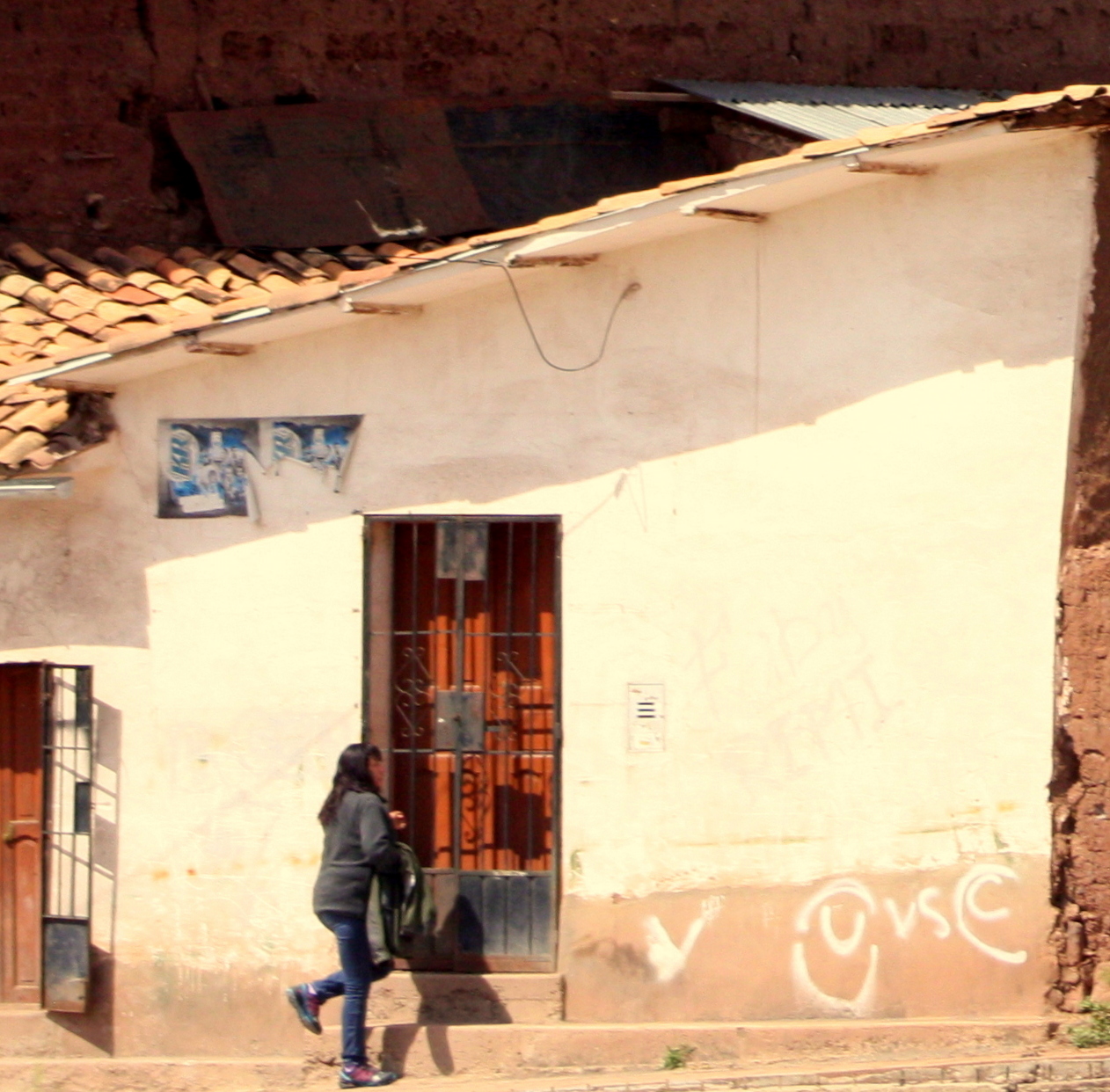
Early morning on a Yucay street.

Early morning on a Yucay street.

Yucay is a village located along the river road about halfway between Pisac and Ollantaytambo, and one that many tourists pass through without a second look.

With plenty of time until Peru Rail departs for the Machu Picchu station, a stroll through its streets promises a richer glimpse into daily life in the Sacred Valley.

There’s a slight chill in the air on this early Saturday morning.

The village sits in the shadows of the ever-present mountains, and the sun has not yet broken through the clouds that hover and swirl hypnotically about their peaks.

The first person to appear on the waking streets is a  woman in colorful native dress, an improbably large load wrapped in the brightly colored blanket slung across her back.

It’s a sight that will repeat itself countless times on this trip.
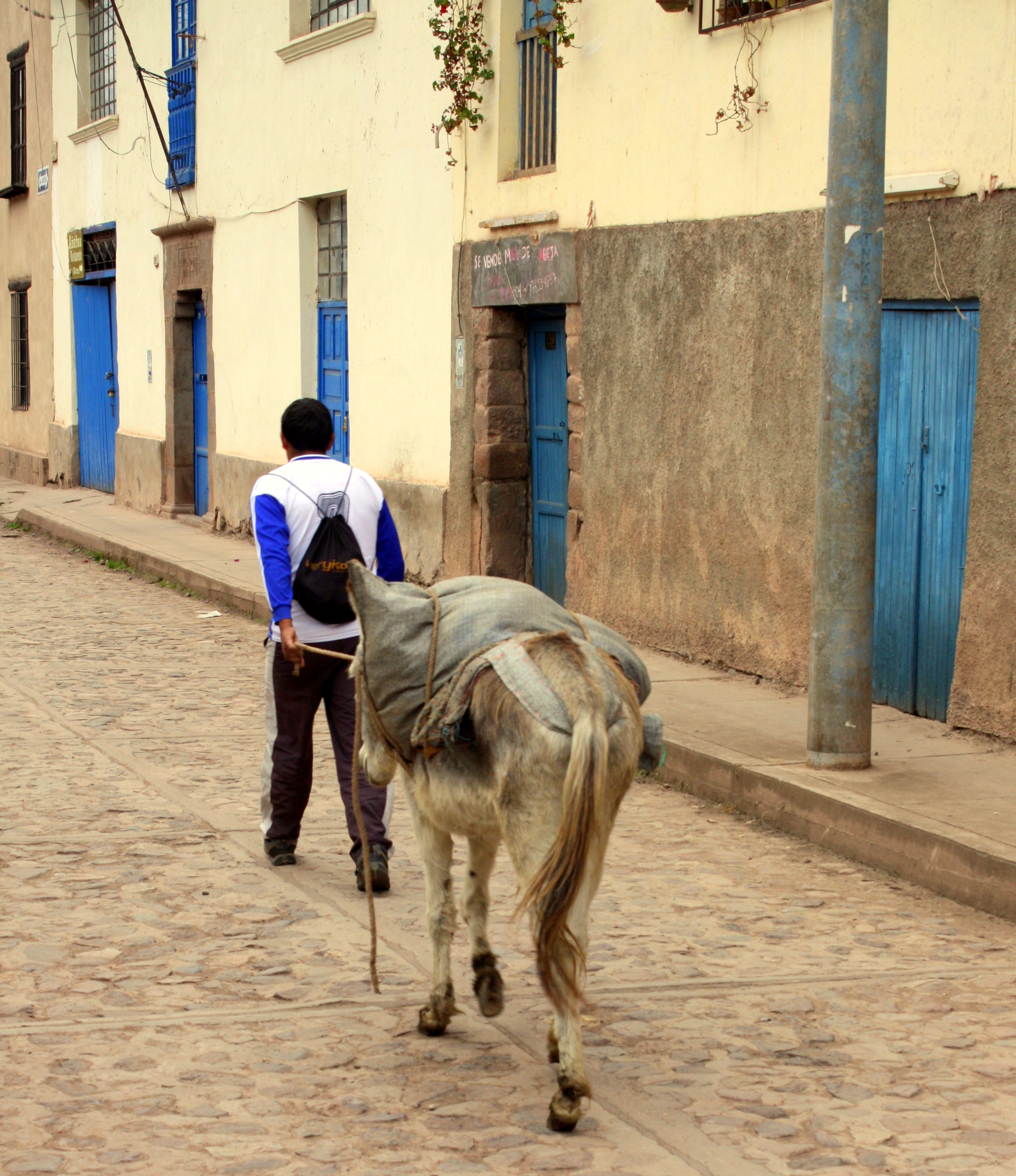
Man and mule... both with backpacks.

Man and mule… both with backpacks.

In the next block, the sound of mule shoes on pavement pace out the route of a man leading his beast off to a day of labor.
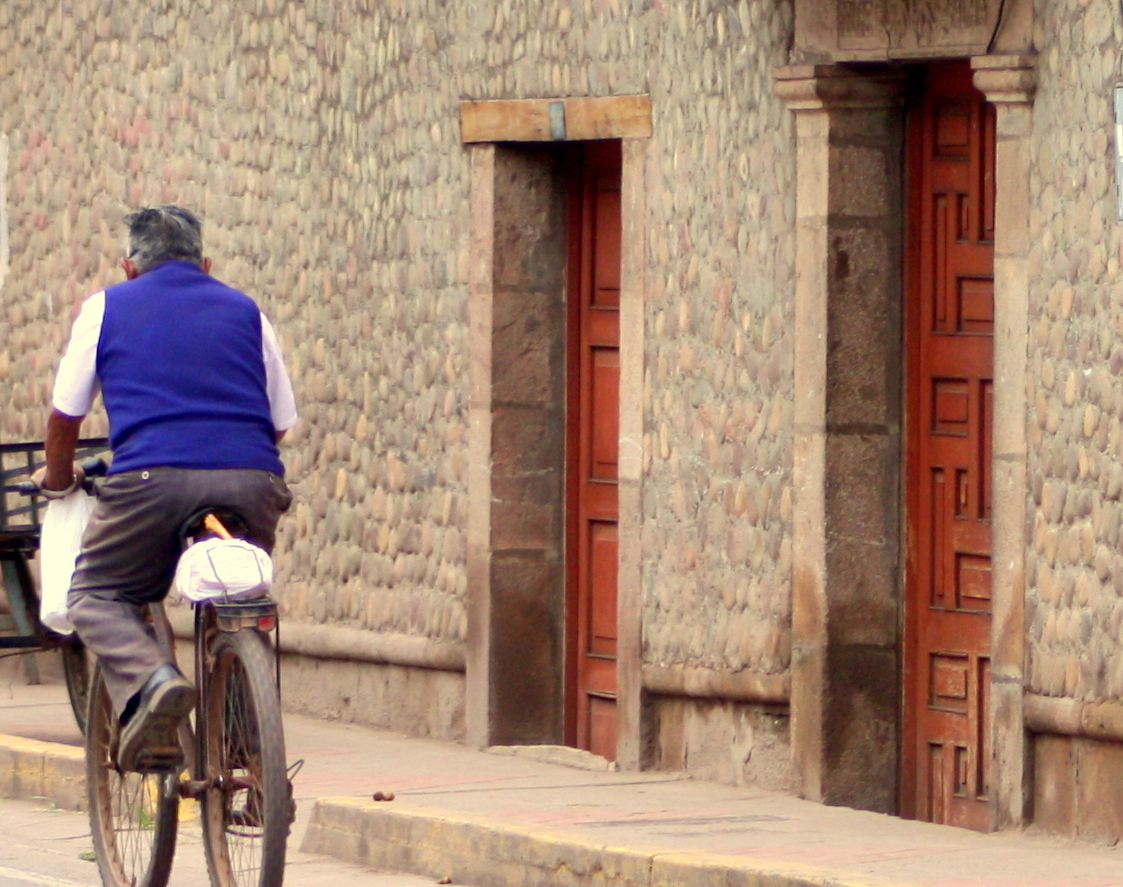
There's hardly a car to be seen in the village.

There’s hardly a car to be seen in the village.

Another man passes on a bicycle, a small sack of groceries dangling from his handlebars.  There is hardly a car parked on these streets, and I wonder how far these people have ever traveled from home.
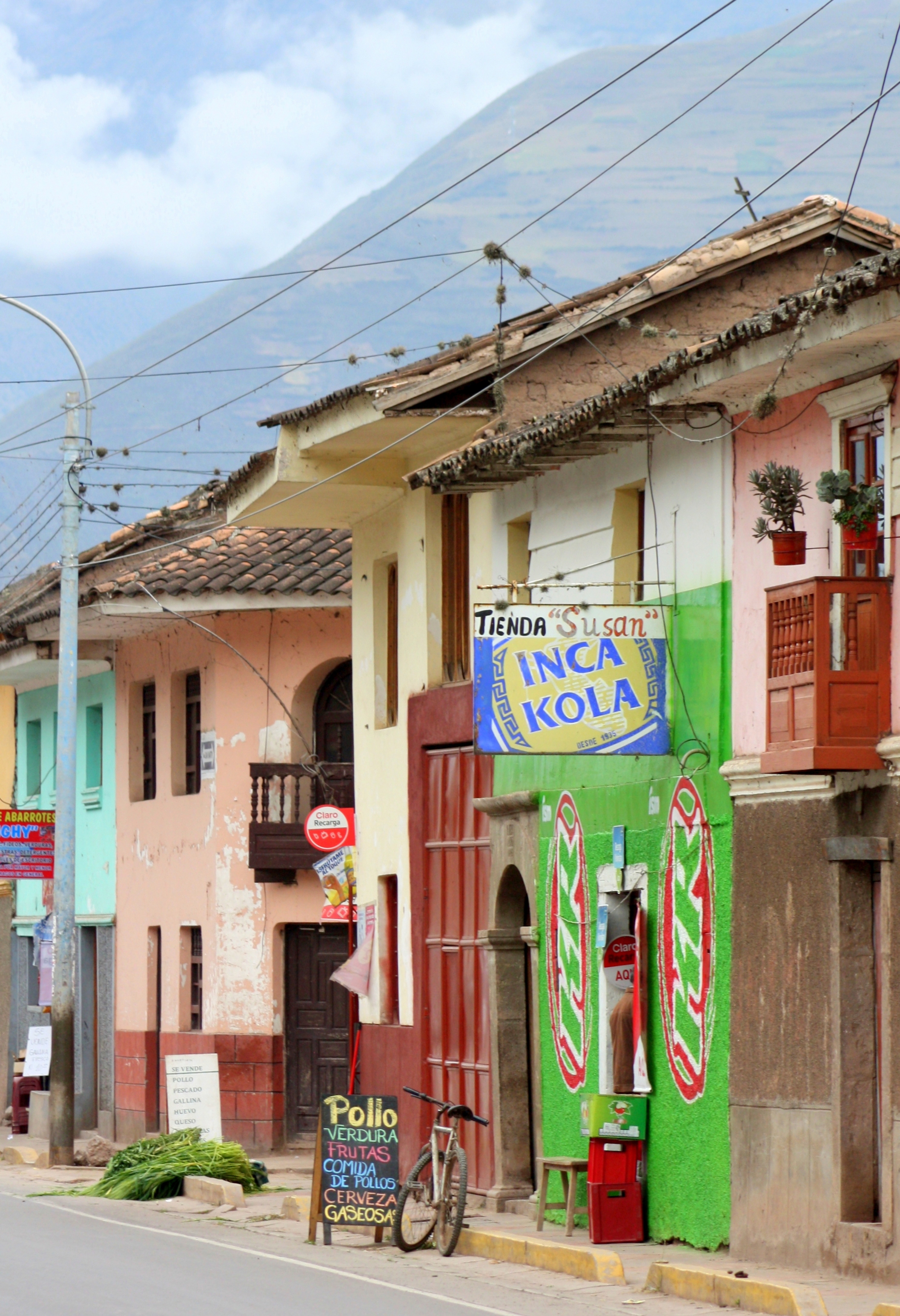
It can't be a grocery without an Inca Kola sign!

It can’t be a grocery without an Inca Kola sign!

The ubiquitous Inka Kola signs hangs from a signpost in front of a neighborhood grocery store, a reminder that – incredibly – I’ve seen no Coca-Cola signs since entering the Sacred Valley.

Home on Yucay's main street.

Home on Yucay’s main street.

The colors of the homes are warm and inviting.

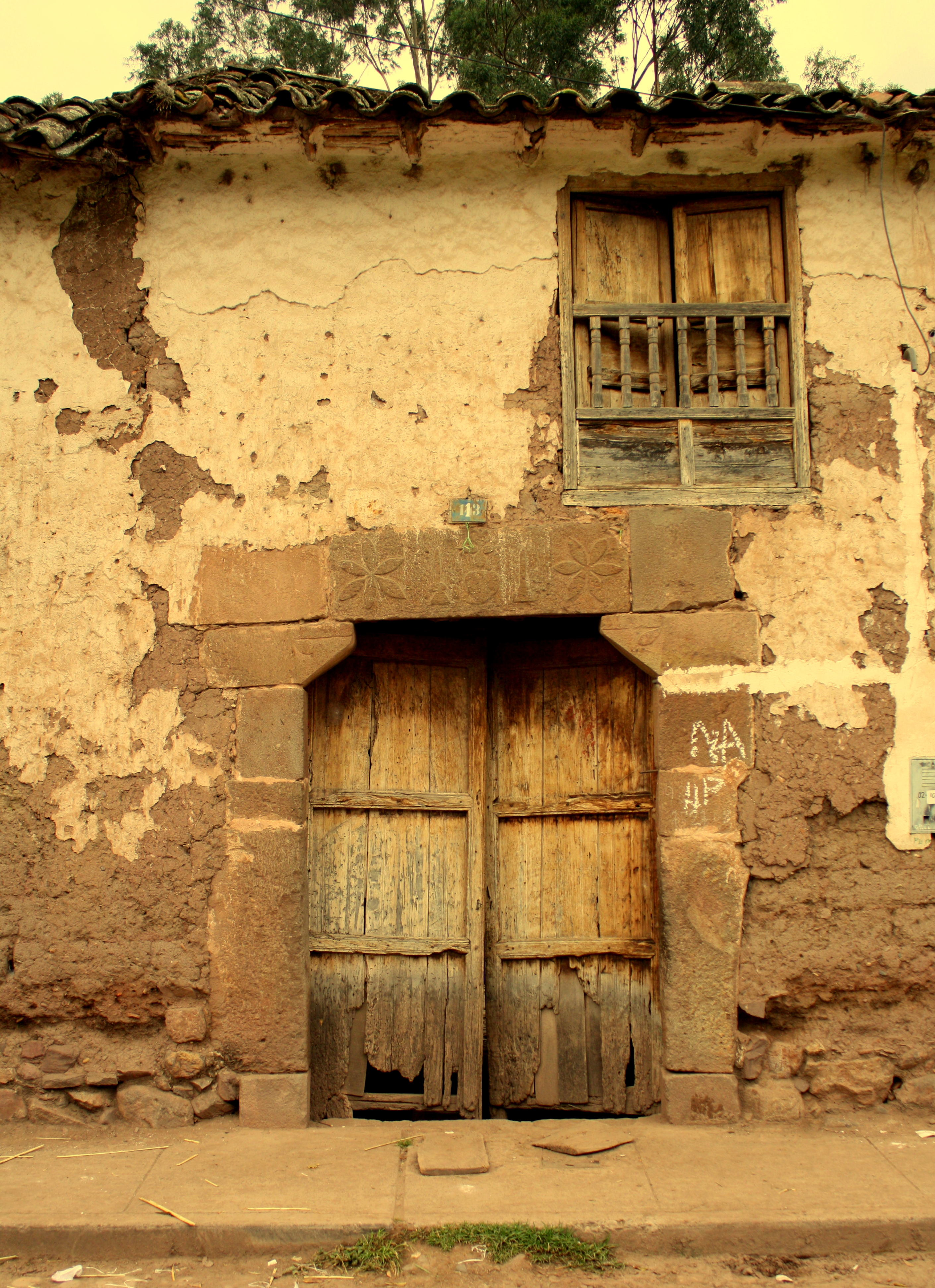
Sun-baked stucco in ochres and beiges.  Old adobe brick with bits of straw poking through the surface.

Home along Yucay's main street.

Home along Yucay’s main street.

The oldest homes have been here for more than a century.

The oldest homes have been here for more than a century.


Everywhere richly stained wood is fashioned into windows, doors and balconies that imitate the Spanish Colonial style.  They recall for me the villages of New Mexico around Santa Fe.

There’s a tranquility in this valley which surpasses the inspiration of its awe-inspiring natural setting.   Things move at a measured pace, and time is meted not in hours and days, but in plantings and harvests.  All of the villagers I encounter are gentle in spirit and steeped a quiet dignity.   Among them there’s a palpable sense of mutual respect and community that brings to mind the words written in 1542 by Fray Bartolomeo de las Casas, who described them as…

Breakfast is on and the neighborhood begins to stir.

Breakfast is on and the neighborhood begins to stir.

…”the most guileless, the most devoid of wickedness and duplicity… the most humble, patient, and peaceable, holding no grudges, neither excitable nor quarrelsome… devoid of rancors, hatreds, or desire for vengeance.”

The aroma of a simmering guizado begins to drift from curbside kitchen, and waking villagers begin to gather around them for breakfast.

As they talk, I can hear bits of conversation conducted not in Spanish, but in the Quechua which once served as the lingua franca of the Incas’ empire.

It’s the day before Mother’s Day, and village mothers have already begun to fill the seats beneath a soccer field canopy in anticipation of a public holiday observance.

Yucay mothers take their place of honor before a Mother's Day celebration.

Yucay mothers take their place of honor before a Mother’s Day celebration.

As I walk past the Templo Santiago Apostol de Yucay, an attendant opens the doors of the church… an irresistible invitation to a visit.

Elaborate tableau behind the altar at Templo Santiago Apostol de Yucay.

Elaborate tableau behind the altar at Templo Santiago Apostol de Yucay.


The attendant proudly informs that although this church dates from 1650 – more than 100 years after the Conquest –  the destruction of  earlier churches by earthquakes have left this the oldest surviving Catholic church in the Sacred Valley.


The building itself is simple and unassuming, but the altarpiece and other devotional works are carved in wood and gilded in gold and silver foil.


They’re well worth the visit, even though they beg the question of  wealth the  church accumulated under the Conquest.
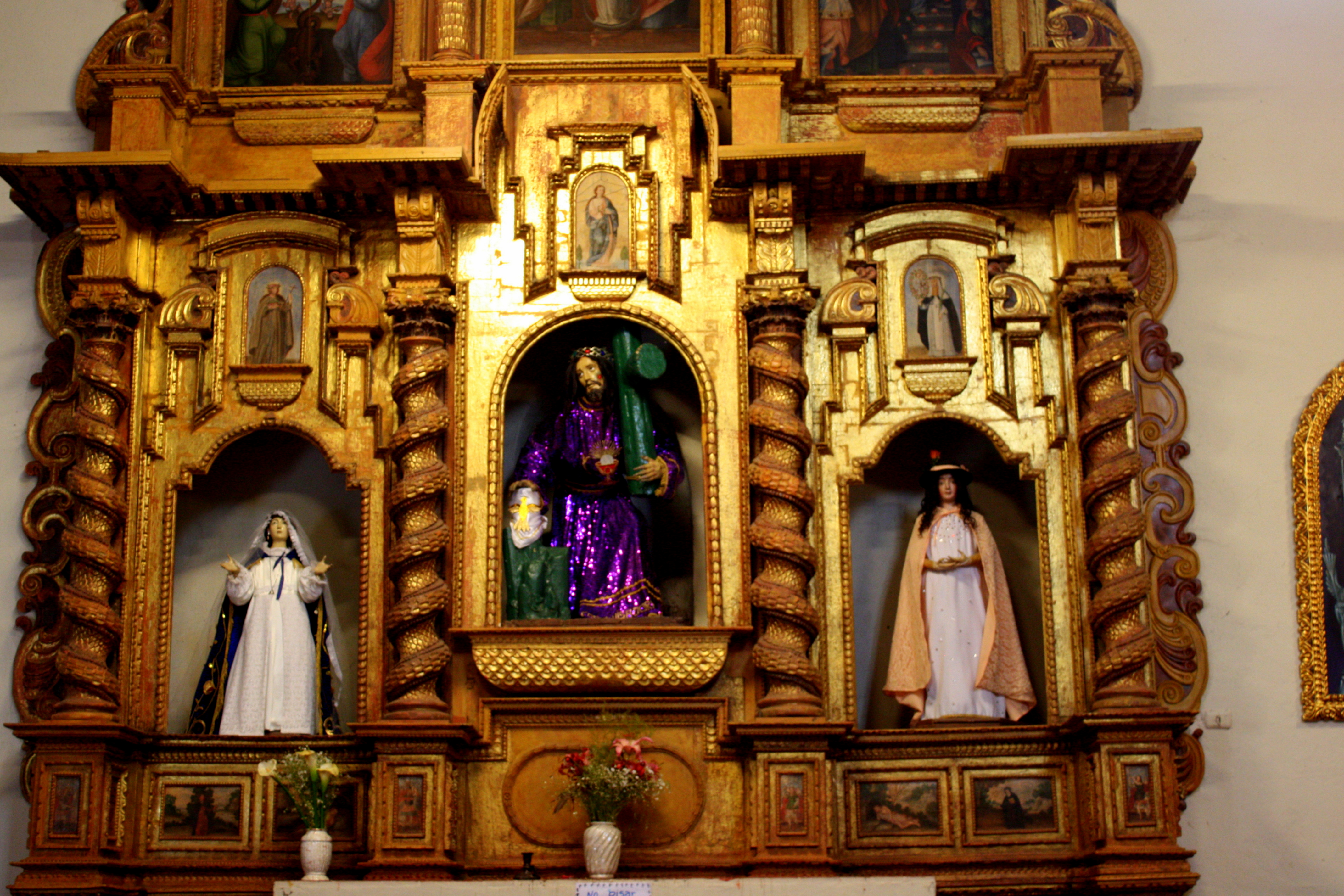
Detail from the Templo Santiago Apostol de Yucay

Detail from the Templo Santiago Apostol de Yucay

As the morning walk nears its end, I hear the chatter and laughter of women’s voices behind me and turn to see a trio of nuns, making their way along the sidewalk.  It seems a fitting epilogue to the morning walk.

Sisters walking Yucay's main street.

Sisters walking Yucay’s main street.

In only a few hours until the train departs Ollantaytambo station, which means that I’ll be overlooking Machu Picchu in less than 24 hours.  Come along for the ride!
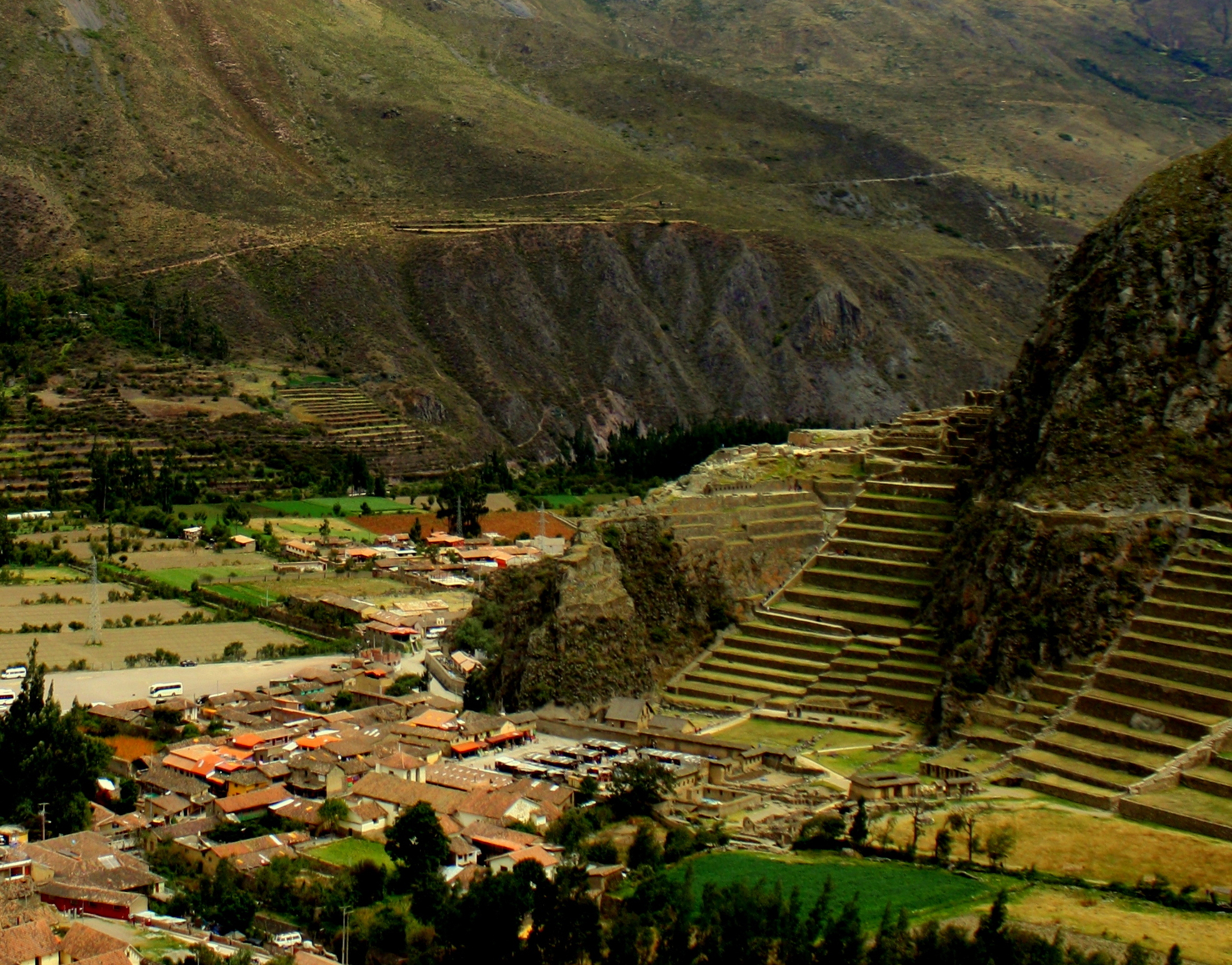
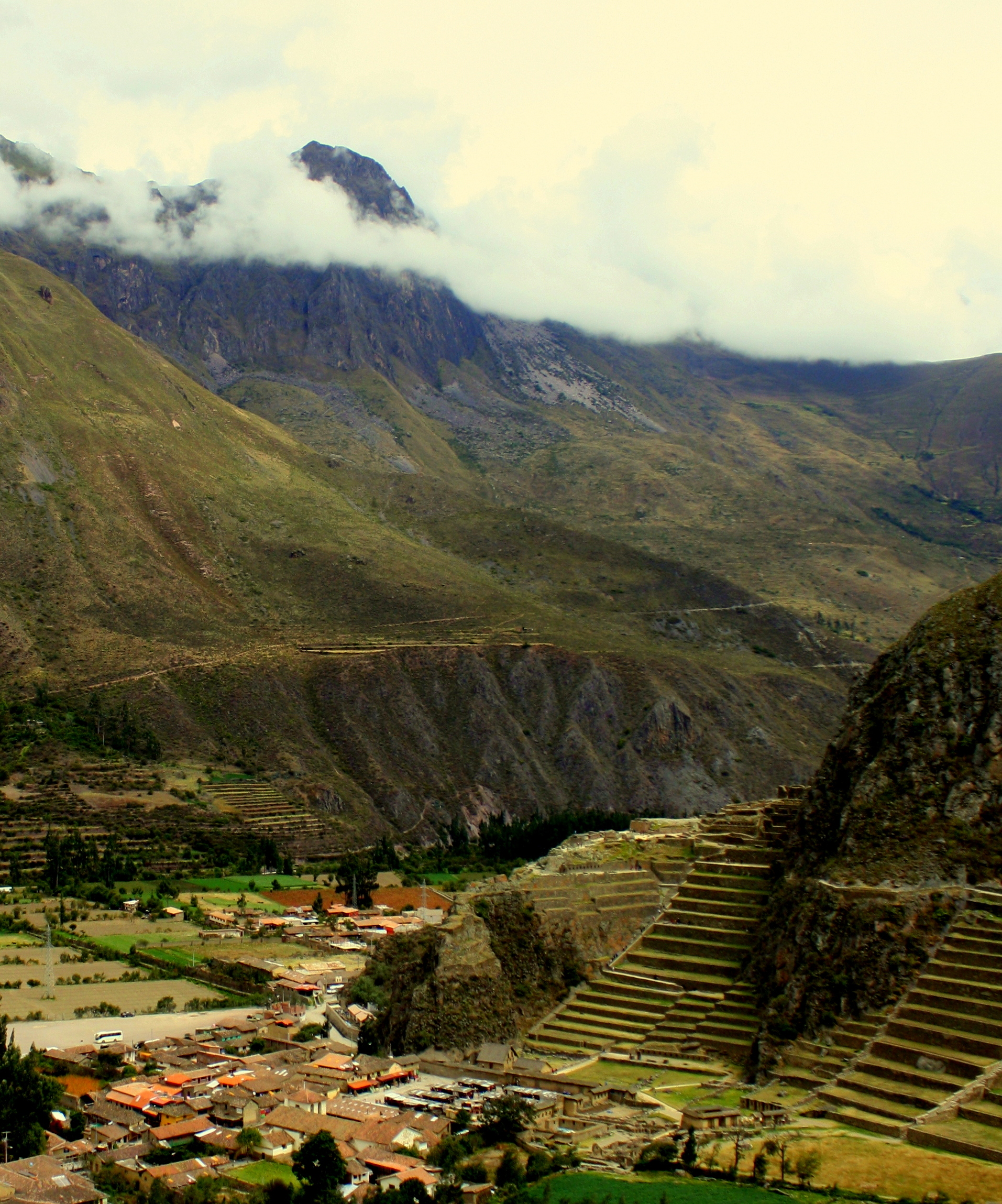
Town, terraces, and ruins of Ollentaytambo

Town, terraces, and ruins of Ollentaytambo

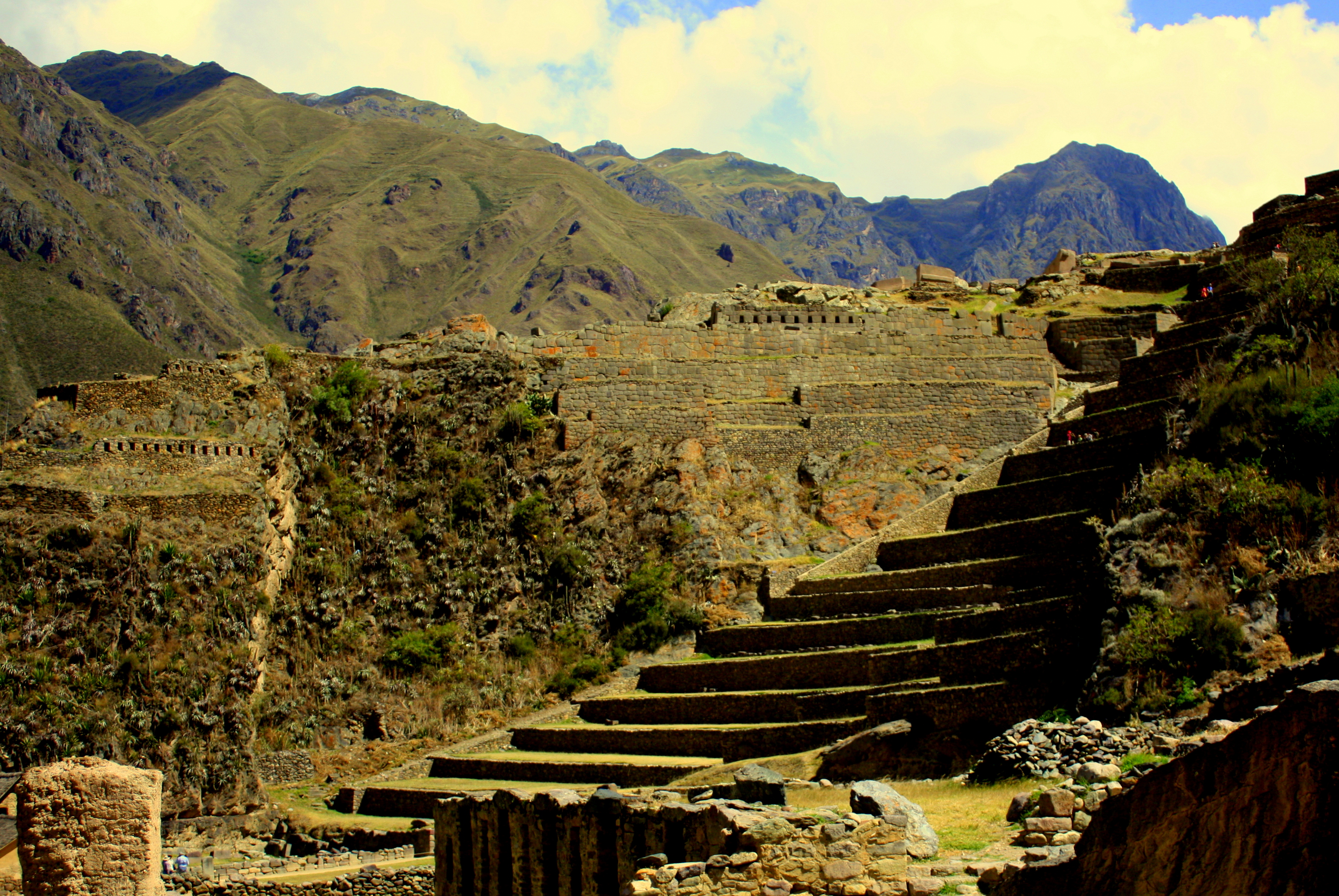
Ollantaytambo is where the Inca ruins come most alive.

Here the terraces creep down the mountainside to the very edge of a town in which many Inca structures survive and have been continuously inhabited by their descendants.

It was also once a stronghold of the last independent Inca ruler, Manco II, during his eight year rebellion against the Spanish that ended deep in the mountains at Vilcabamba.

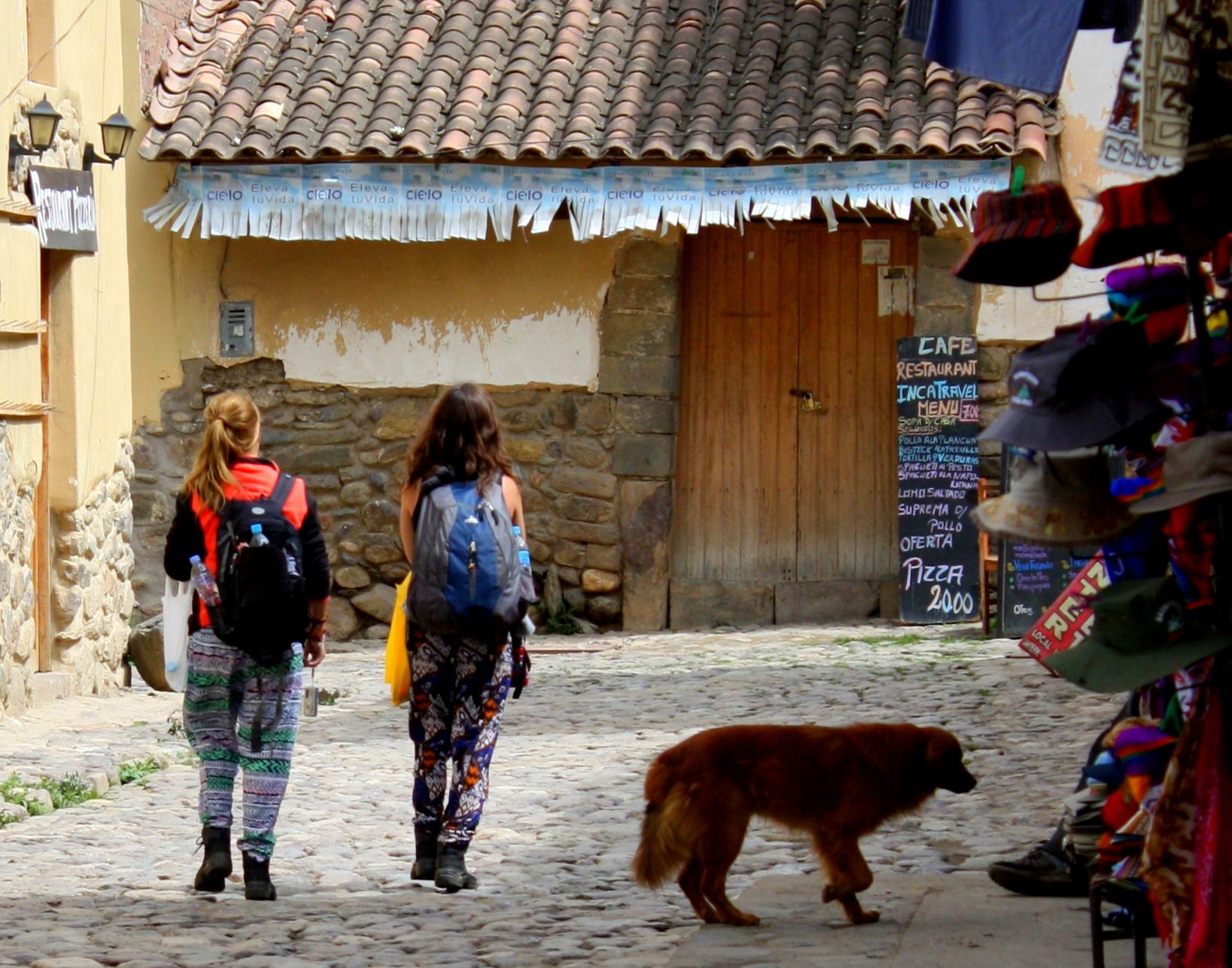
Ollentaytambo is a popular stay-over for backpackers on their way to Machu Picchu

Ollentaytambo is a popular stay-over for backpackers on their way to Machu Picchu


Ollantaytambo is the last stop on the Perú Rail line before the Machu Picchu station in Aguascalientes

It’s also a popular stopover for the many backpackers who pick up a connection to the last leg of the  Inca Trail just a few miles down the track.

Those hikers not staying in any of the town’s hostels or lodges cluster around the wi-fi cafes, lounging on their packs and checking email on their iPhones.


Man in native dress sits next to a Cusqueña beer truck.

Man in native dress sits next to a Cusqueña beer truck.

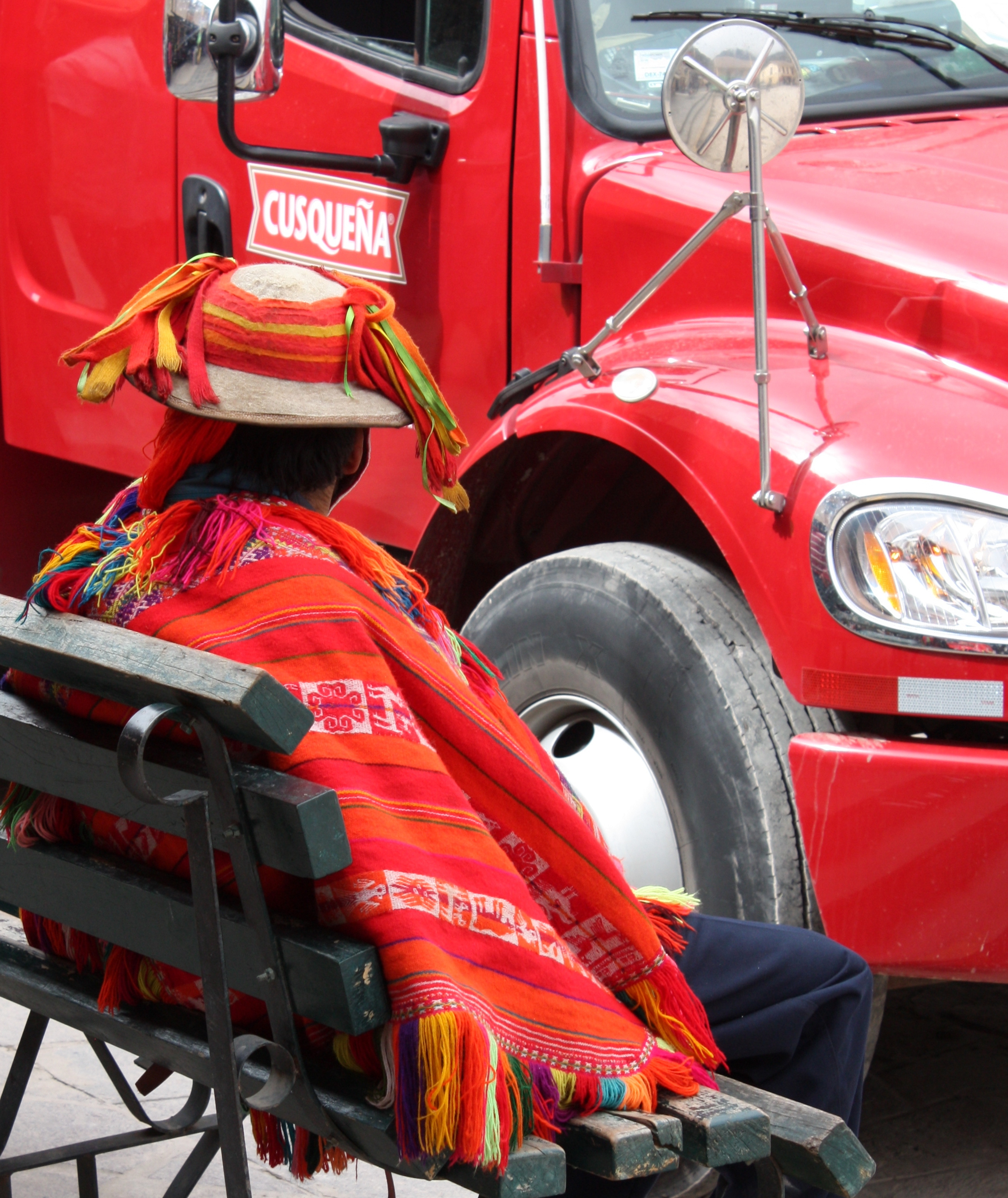
On the central plaza, a man in native garb sits, chameleon-like, next to a Cusqueña beer truck of the same color.  The brew, a lager style, is Perú’s most popular beer, although at least two microbreweries now operate out of Lima.

Two women in native dress wait for tourists to arrive

Two women in native dress wait for tourists to arrive

Across the plaza, women in native dress offer to pose for pictures.  Even after only a couple of days in country, the differences in dress among the native peoples is already beginning to sort itself out.

Original Inca walls, streets, and aqueduct

Original Inca walls, streets, and aqueduct

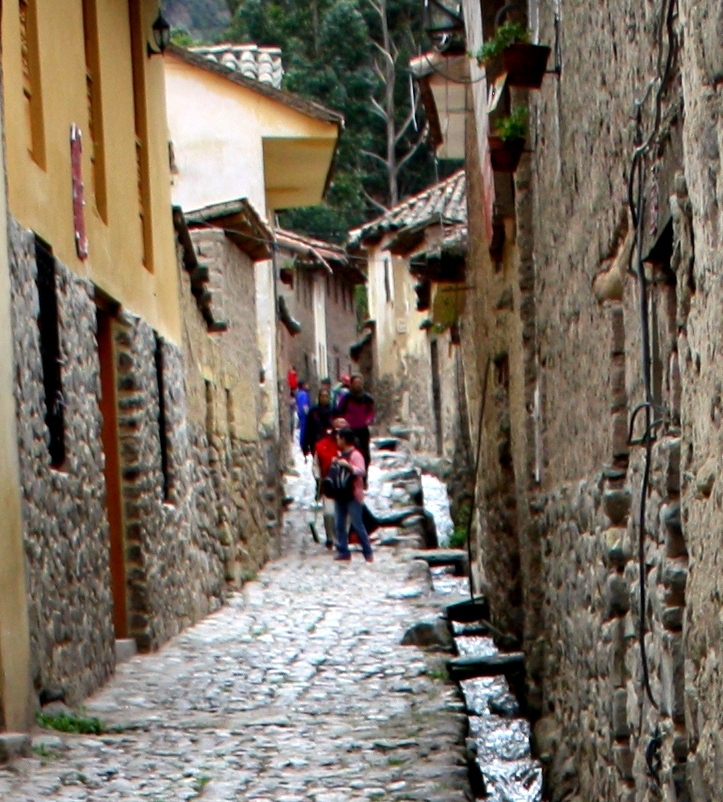
Ollantaytambo’s narrow streets appear unchanged since they were built by the Inca.

They pass between signature walls of stone rising a full story and fitted seamlessly together without benefit of mortar.

Aqueduct gutters along each lane still carry fresh water from the mountains as they did when first built.

Only the telltale design of Spanish Colonial structures erected on these foundations testify to the Conquest.

Ollentaytambo street scene

Ollentaytambo street scene


Ollantaytambo seems to absorb the visitor into a time warp.

It’s often possible to stand at a corner and see nothing in any direction that gives a hint of the five centuries that have passed since people first walked these streets.


Entrance to traditional Inca home.

Entrance to traditional Inca home.

One home is occupied as a living museum in which the caretakers live just as their Inca ancestors once did.

Corn is only one of the foods air-cured by the Incas.

Corn is only one of the foods air-cured by the Incas.

It’s cool and dim inside.  Ears of corn and lines of fish are suspended from the ceiling, curing in the dry, cool air.  (The word ‘jerky’ comes from the Quechua term “ch’arki”, which means “dried meat”)

Stones used to hand-grind corn.

Stones used to hand-grind corn.


Worn stones bear witness to centuries of corn tediously hand-milled.

Corn has been a staple in the Peruvian diet for over 3,000 years, and many varieties are unique to the area.

It’s used to make everything from bread to chicha morada, a refreshing, non-alcoholic beverage made from boiled purple corn.

Guinea pigs - cuy - on the hoof.

Guinea pigs – cuy – on the hoof.

Guinea pigs graze on the dirt floor, fattening up for their unforeseen slaughter.

These animals are native to the region, and have served as a source of protein among the indigenous peoples for thousands of years.

Guinea pig – cuy  – is still to be found on Sacred Valley restaurant menus .

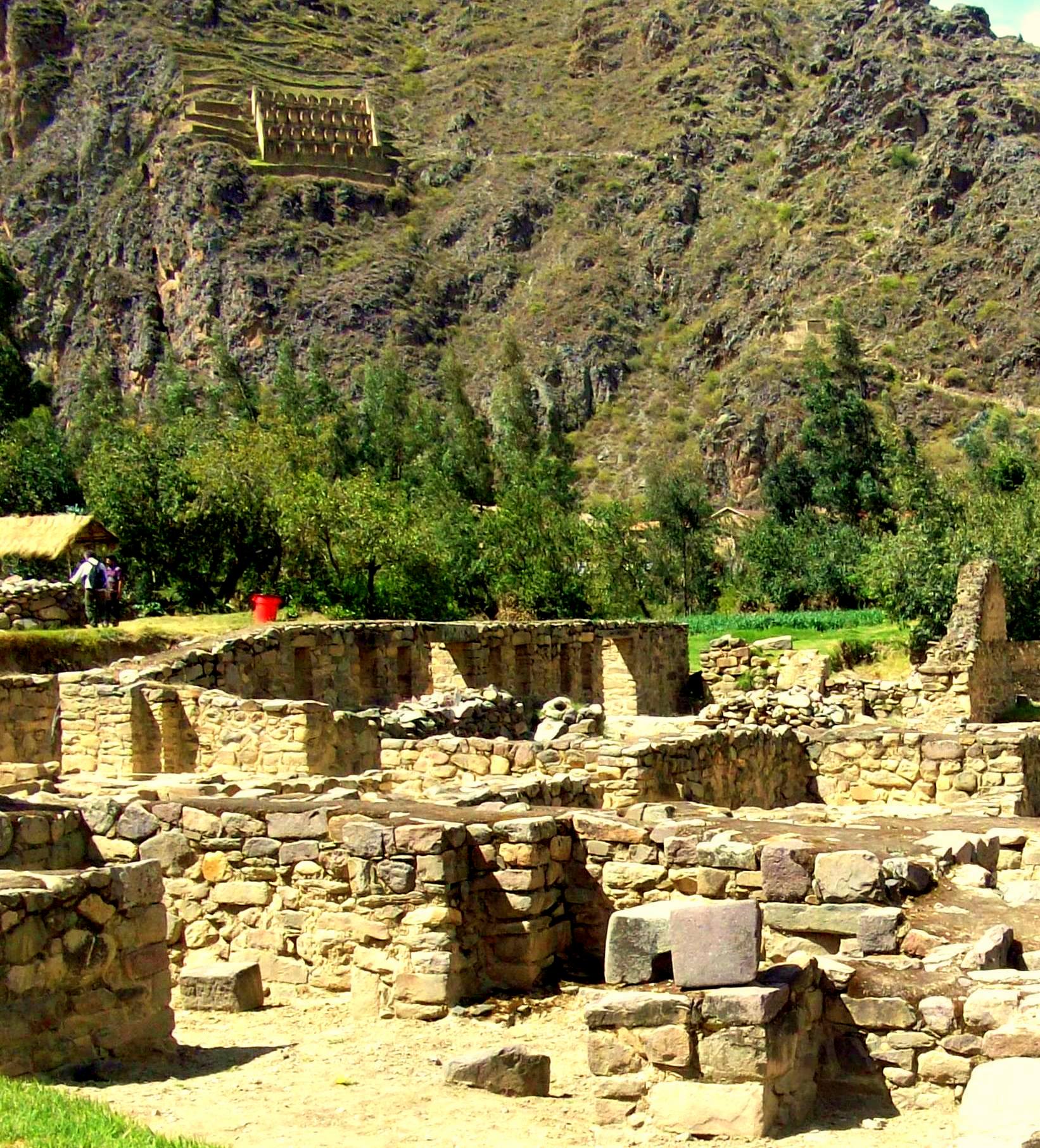
Main ruins in foreground, Inca granary in background on mountain.

Main ruins in foreground, Inca granary in background on mountain.

Most of the archeological site lies on the west end of the town, but a trail up the mountain opposite it leads to several isolated structures above.  A climb to explore them offers a tempting opportunity for a panoramic view of the entire area that’s too much to resist.

These granaries stand about 50 tall, placed to take advantage of cool, dry breezes.

These granaries stand about 50 tall, placed to take advantage of cool, dry breezes.

The climb along a narrow trail with steep drop-offs ascends several hundred feet and the hike takes around half an hour.  The buildings that were barely visible from the town below are now revealed to be granaries, each silo standing nearly 50 feet tall.

View of the main ruin from the slope opposite.

View of the main ruin from the slope opposite.

The hike is worth it, though, because the main part of the site is spectacularly visible in its entirety from this vantage point.

Town in foreground, ruins to right, quarry on the cloud-covered mountain.

Town in foreground, ruins to right, quarry on the cloud-covered mountain.

Towering in the distance across the river is the cloud-wrapped  peak from which the stone for this monumental construction was quarried.

As I survey the panorama from my perch at more than 9,000  it crosses my mind that the Egyptians had to contend with no mountains when they hauled the massive stones with which they built the pyramids.

I can be only more impressed by the Incas’ ingenuity and perseverance.

My train to Aguascalientes and Machu Picchu leaves at mid-day tomorrow, and I’ve got an idea about what to do with a free morning.  Come along and see.

Street scene in Pisac, Peru

Street scene in Pisac, Peru

It’s only a few blocks drive along Pisac’s narrow streets before the central plaza appears.  Only one side of the plaza is visible on this Thursday morning, and scattered among its handicraft shops are a café with wi-fi, a pizzeria, and an ATM.

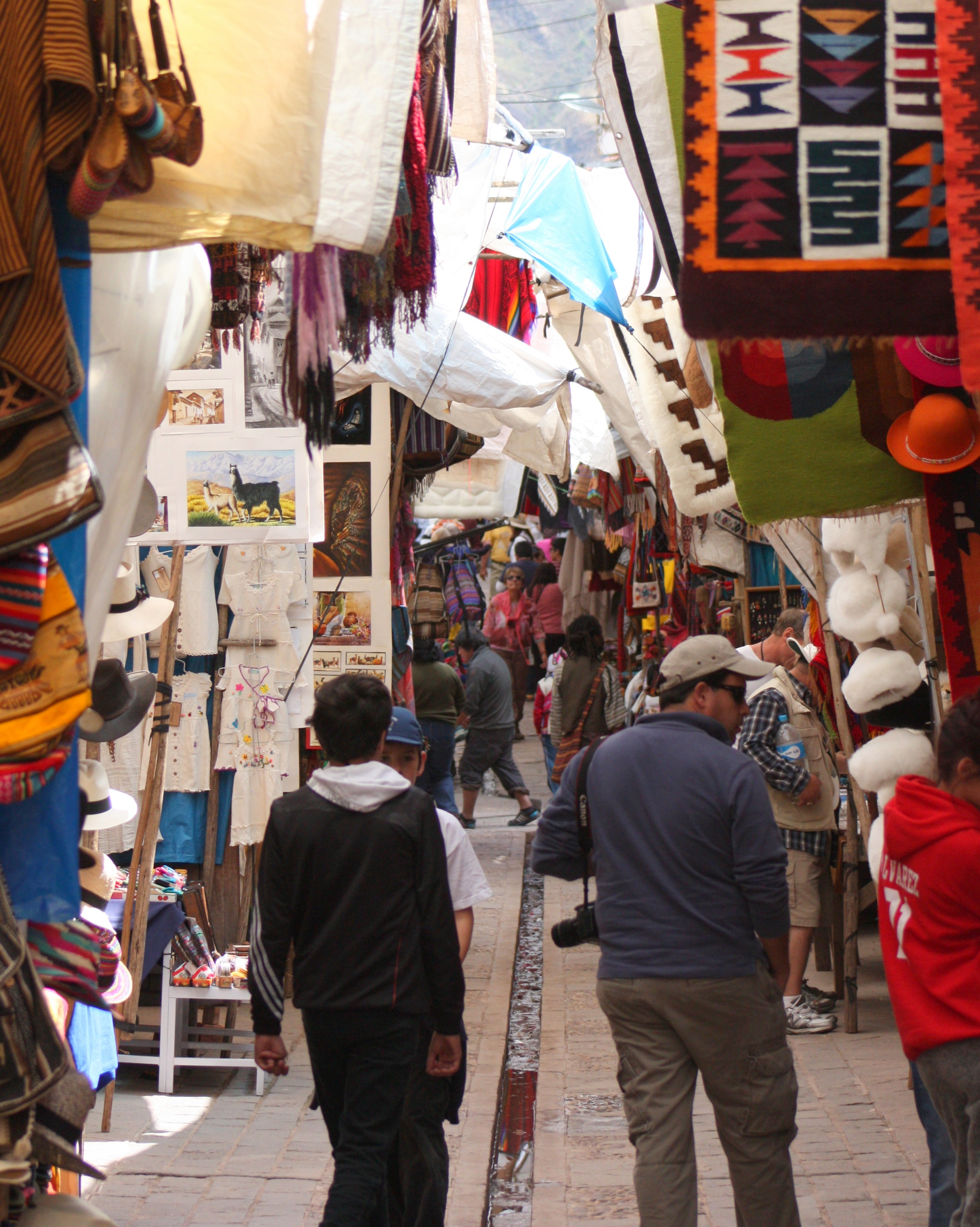
Artisans' market lane, Pisac, Peru

Artisans’ market lane, Pisac, Peru

The other sides are hidden by the sea of market stalls which covers the plaza, sheltered by a canopy of plastic tarps connected overhead one to the other and billowing in the occasional breeze. Pisac has the looks of a place able to house no more than a couple of thousand souls, but today is a market day and the stalls spill into narrow side-streets.

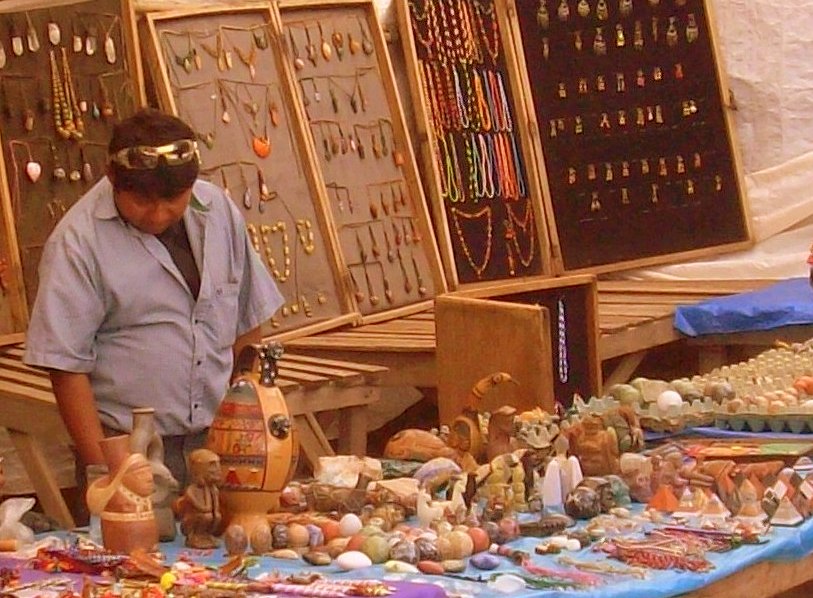
Jewelry vendor at the artisan market, Pisac, Peru

Jewelry vendor at the artisan market, Pisac, Peru

The quality and originality of the work offered here blurs the distinction between artisanship and art. The unquestioned centerpiece of this market is an awe-inspiring array of hand-woven textiles in brilliant natural dyes that employ both traditional and original designs. Here these fabrics can be found fashioned into everything from alpaca sweaters and scarves to sturdy backpacks.

Native artisan weaving on a simple belt loom

Native artisan weaving on a simple belt loom

There’s also plenty of visually arresting work in wood, leather, and stone – including acres of jewelry – and artisans can sometimes be seen working on a new piece while tending shop. A knowledgeable collector with deep enough pockets can find great values here, but no small number of the more moderately priced items turn out to be available at artisan markets across Perú.

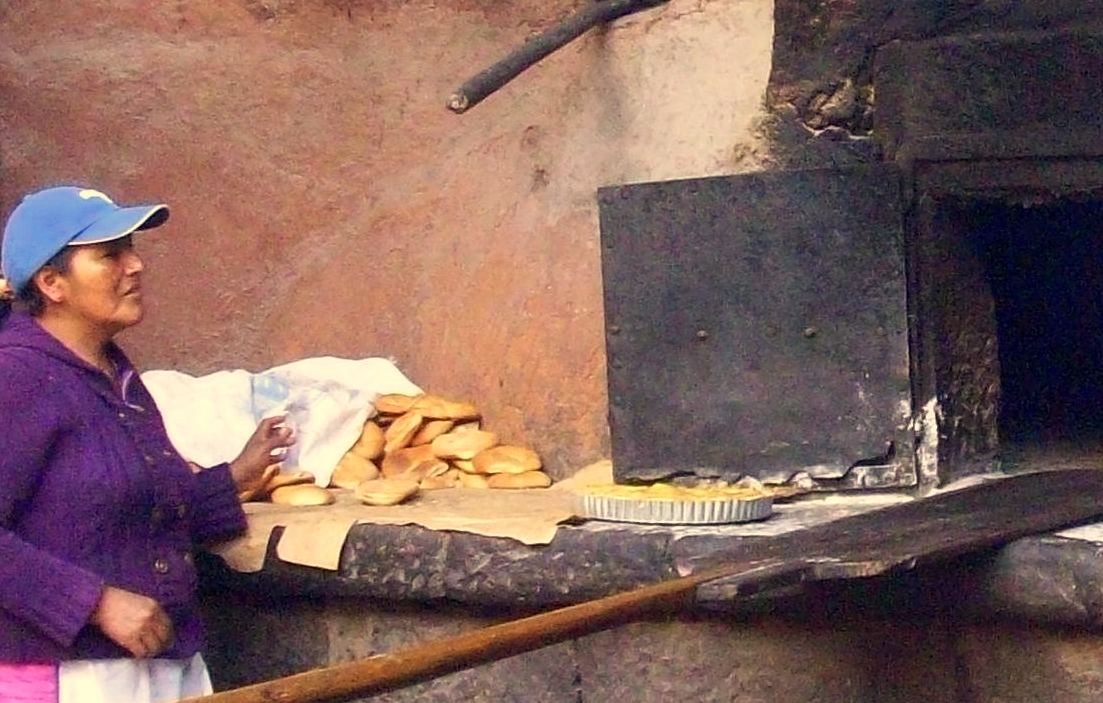
Artisan bakery at the market, Pisac, Peru

Artisan bakery at the market, Pisac, Peru

The smell of freshly baked bread drifts from a brick oven, and there’s no way to resist sampling a still-warm loaf before departing.  A dozen guinea pigs –  soon to be  bound for the dinner table – graze in a nearby pen.

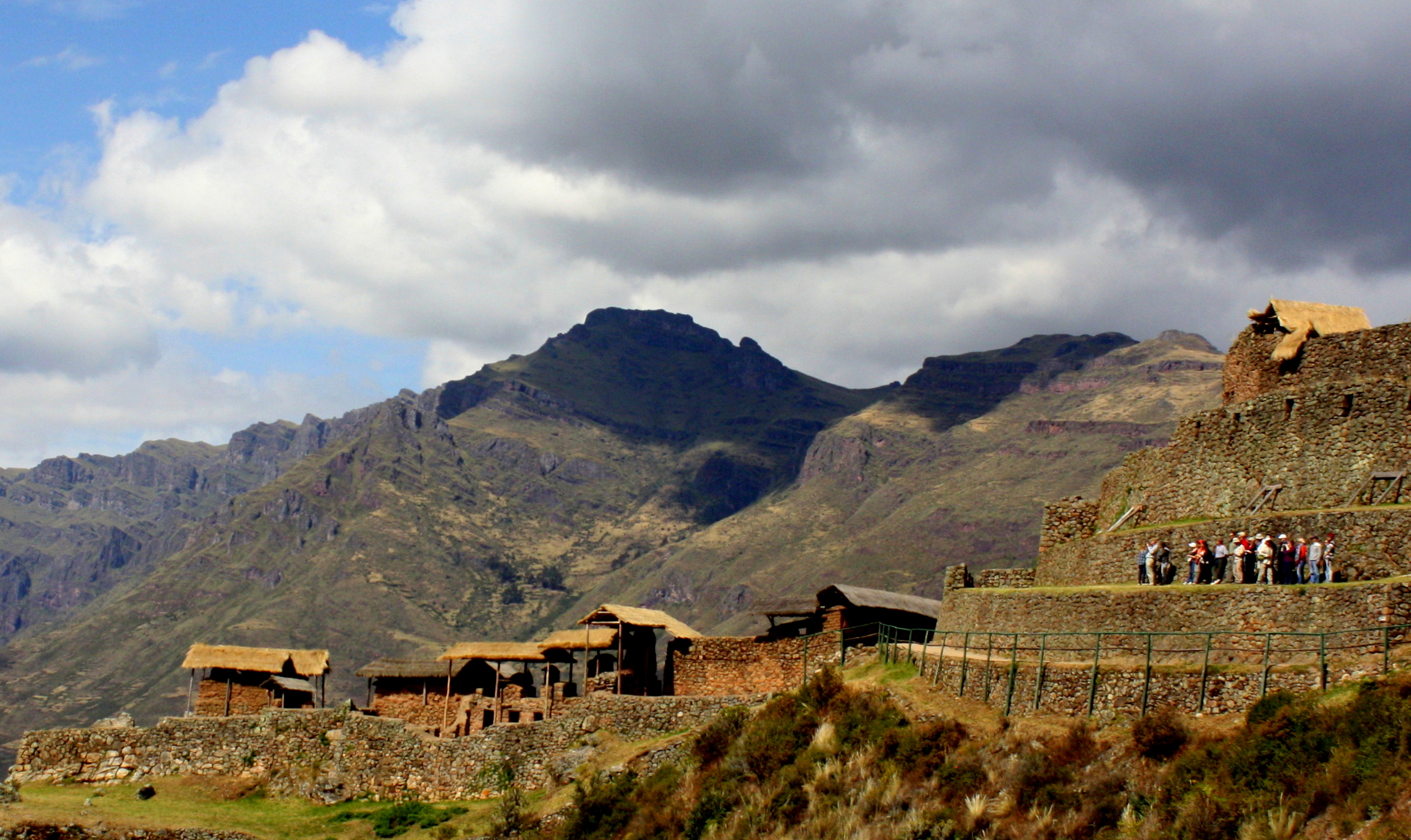
The Spanish built the present-day town of Pisac along the Urubamba River half a century after the Conquest, but the surviving terraces of its predecessor, Inca Pisac, are still draped across the mountains above less than three miles drive away.

View from terrace of the Pisac ruins

View from terrace of the Pisac ruins

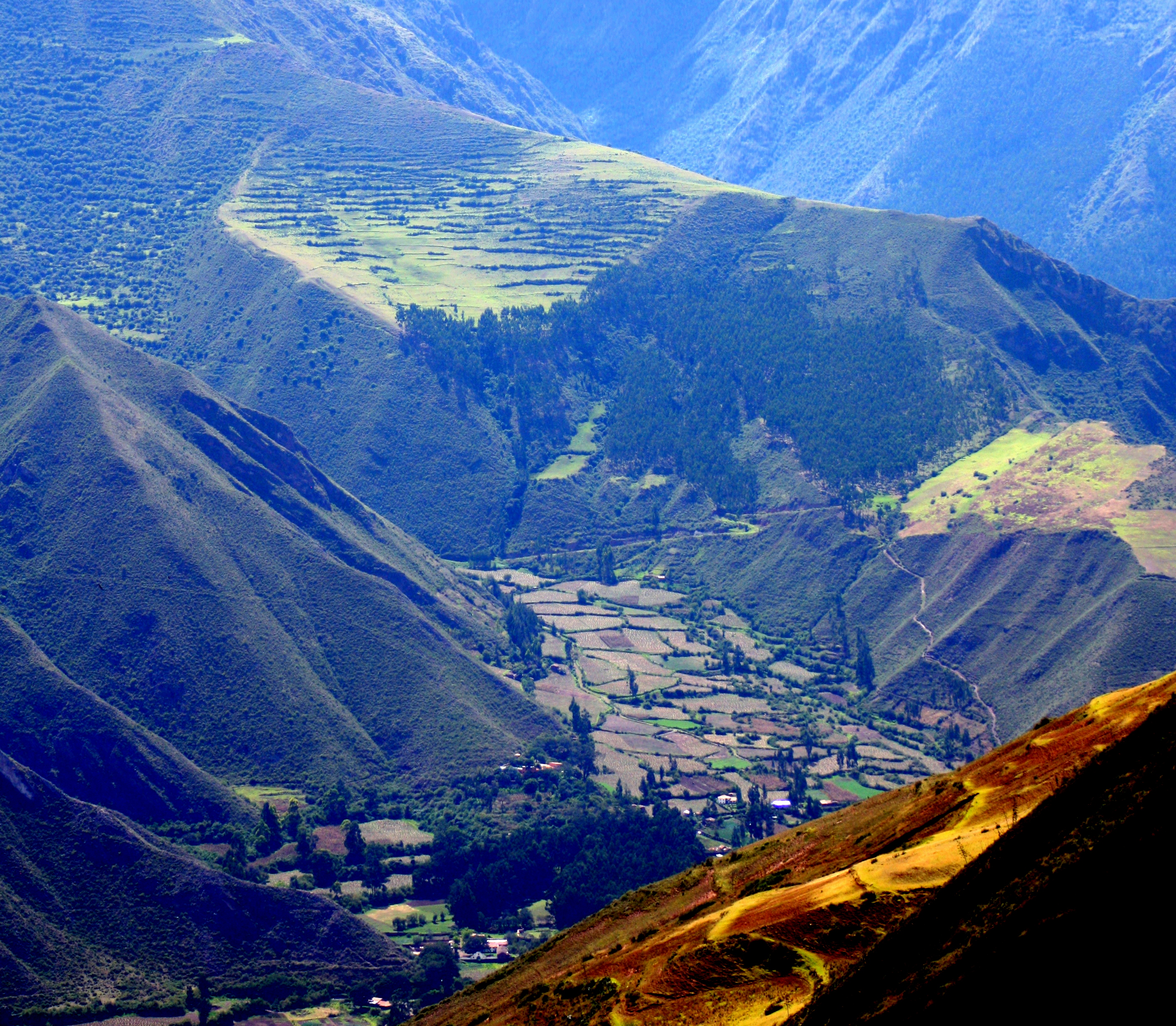
The signature terraces – stacked 40 high –  are visible throughout much of the switch-backed drive from the market.  Their design takes advantage of mountain runoff by channeling it through the fields on its way to the river below.

The terraces also served to prevent erosion and landslides, and contained rich soil hauled from the valley below that enabled Inca farmers to produce crops otherwise unsustainable at these altitudes.

Farmers' homes top the terraces

Farmers’ homes top the terraces

Stonework first visible as no more than a thin line along the terrace crown resolves itself at closer range into the buildings of a village which once housed several hundred inhabitants.

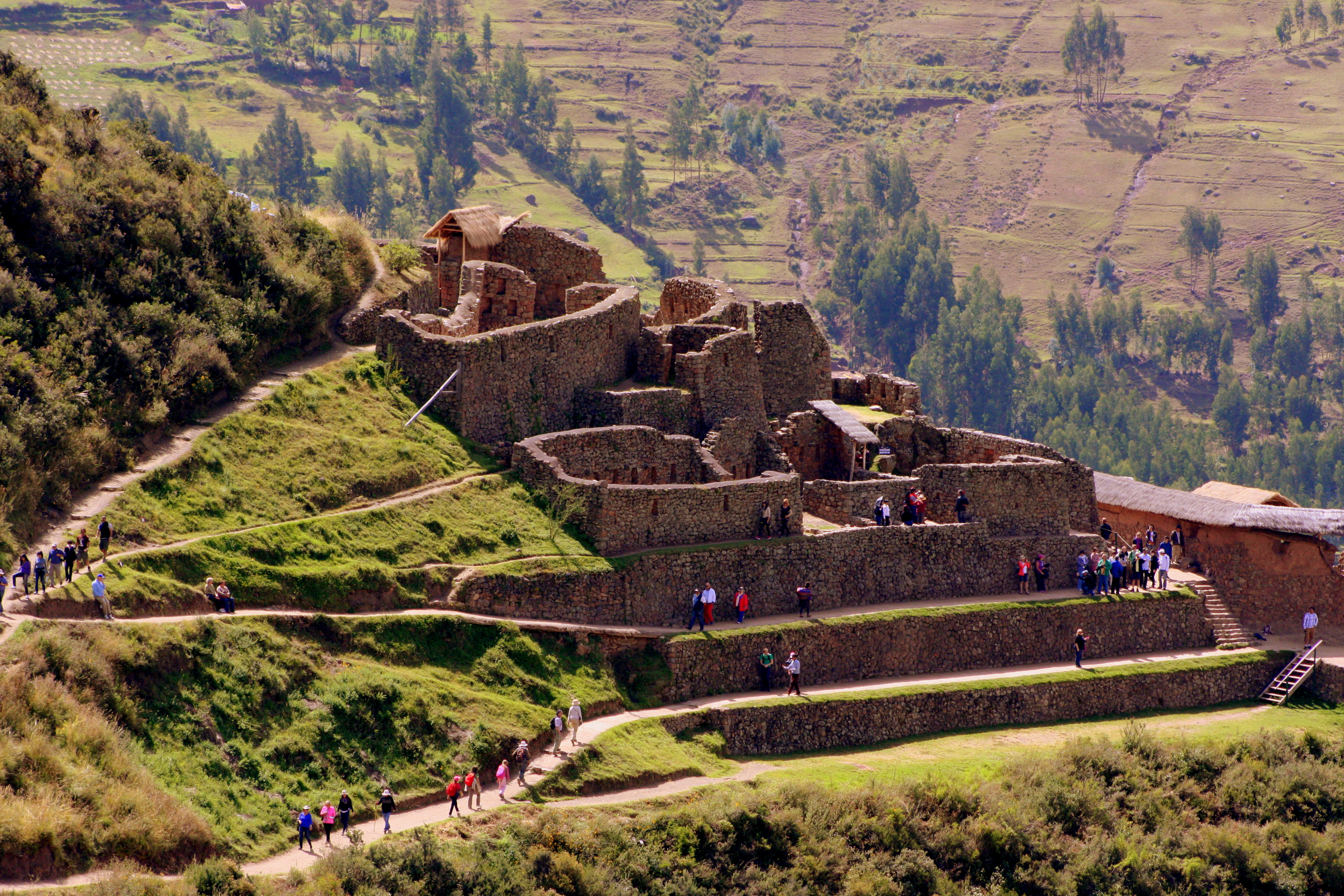
Inca ruins at Pisac, Peru

Inca ruins at Pisac, Peru

The buildings are scattered across nearly two square miles of the slope, and include fortifications, aqueducts, granaries, homes, and ceremonial spaces.

Ramparts above homes and terraces, Pisac, Peru

Ramparts above homes and terraces, Pisac, Peru

The ramparts of the Q’allaqasa – the citadel – contain 20 towers that overlook the site from a perch on the ridge above the terraces.

Ramparts seen from above, ruins at Pisac, Peru

Ramparts seen from above, ruins at Pisac, Peru

At the temple to the sun god,  shadows cast by a rock outcropping known to the Incas as “the hitching post of the sun” are believed to mark the change of seasons.

Inca burial caves, Pisac, Peru

Inca burial caves, Pisac, Peru

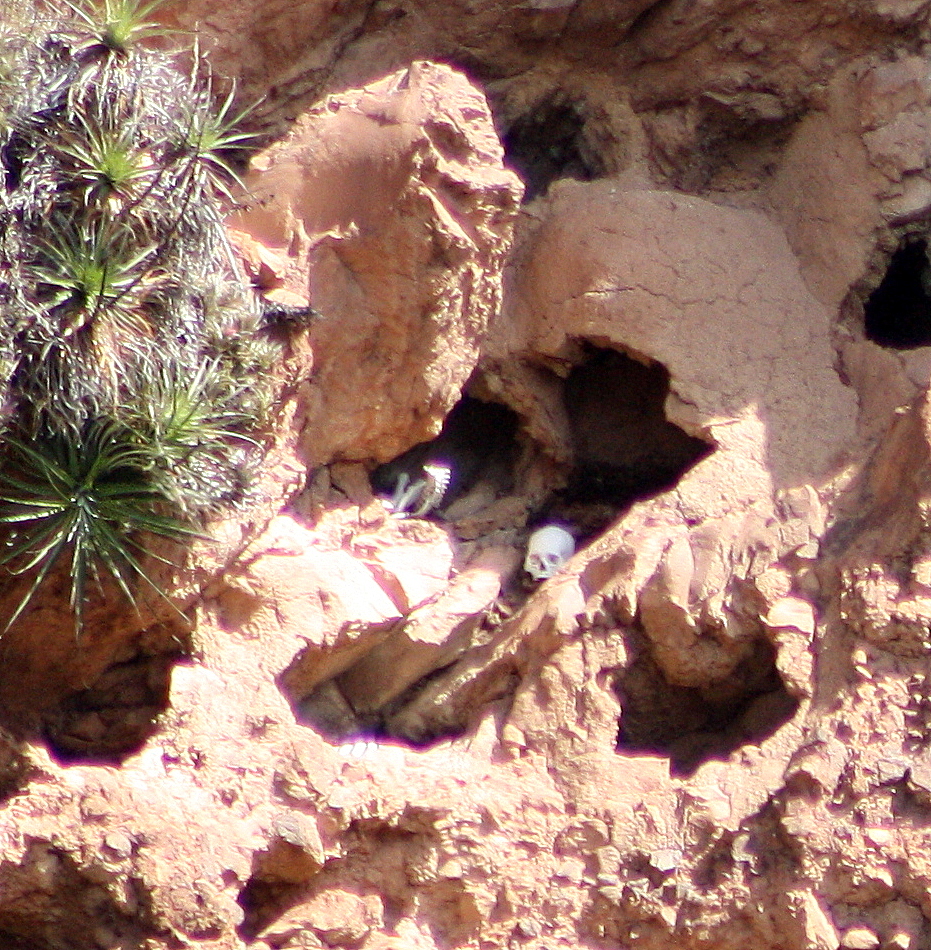
What appear to be the mouths of small caves in a nearly inaccessible hillside across a ravine from the settlement are actually the face of an Inca cemetery not yet fully excavated by archeologists.

Incredibly enough, skeletons are still visible in some of the open-air crypts.

Close-up of Inca burial caves, Pisac, Peru

Close-up of Inca burial caves, Pisac, Peru

Two thoughts stay with me on the ride back down the mountain.

The first thought is that while lowlanders’ perspective of mountains is bottom-up, the Inca hung their fields from mountain ridges and villages which anchored them, connected by mountain trails known only to them.

Perhaps this is unsurprising, since the Inca migrated to the Sacred Valley from higher altitudes to the south, but it reflects a valuation of geography that’s fundamentally different from that of the Spanish conquerors.

The second thought is sheer amazement that the Inca society – without benefit of the wheel, the arch, or the horse – managed to produce such monumental architecture in the space of about only 100 years.   It begs the question of what contribution the Inca might have made to human development if not for the Conquest.

Tomorrow is reserved for even more spectacular ruins and charming village of Ollantaytambo, where urban Inca construction can be seen in homes still in use today.

01 Leaving Cusco

Leaving Cusco

The drive from Lima to Cusco takes 13 hours, but the flight takes little more than an hour, and the view of the Andes from the air is nothing short of breathtaking.

02 Sacred Valley mapCusco sits at an ear-popping altitude of 11,152 feet, so it’s not a complete surprise that dried coca leaves – the age-old Andean cure for altitude sickness – sit in a bushel basket at the airport gift shop, free for the taking.  The leaf – chewed like tobacco – has a bitter taste, and many prefer the widely available coca tea instead.  Try using it in combination with muña oil, another native botanical remedy, for even better effect.

04 Steet scene near Poroy

Street scene near Poroy

Many visitors to the Sacred Valley first spend a few days seeing the Cusco sites before moving on, but there are a couple of good reasons to save Cusco for last.

One is that that the Valley is 2,000 feet lower than Cusco, so the traveler can breathe a bit easier.

Another is that observing daily life in the Valley’s farms and villages provides valuable context for the monumental, ceremonial sites in Cusco and at Machu Picchu.

03 Mountains near Chinchero IMG_6949

Mountains near Chinchero

Homes and businesses thin out quickly beyond Poroy as the road climbs another 1,000 feet to Chinchero before beginning its descent into the Valley.

05 Andes seen from near Chinchero IMG_6948

Andes seen from near Chichero

Scenic lookouts along the route offer stunning panoramic views, and from this vantage point snow-capped Andes are clearly visible in the distance.

06 Farms and mountains near Chinchero IMG_6950

Farms and mountains near Chinchero

As the road drops down into the valley it passes through small villages surrounded by checker-boarded farmlands.

Alpaca, goats, and cattle graze in meadows, and the first of the Inca agriculture terraces begin to appear.

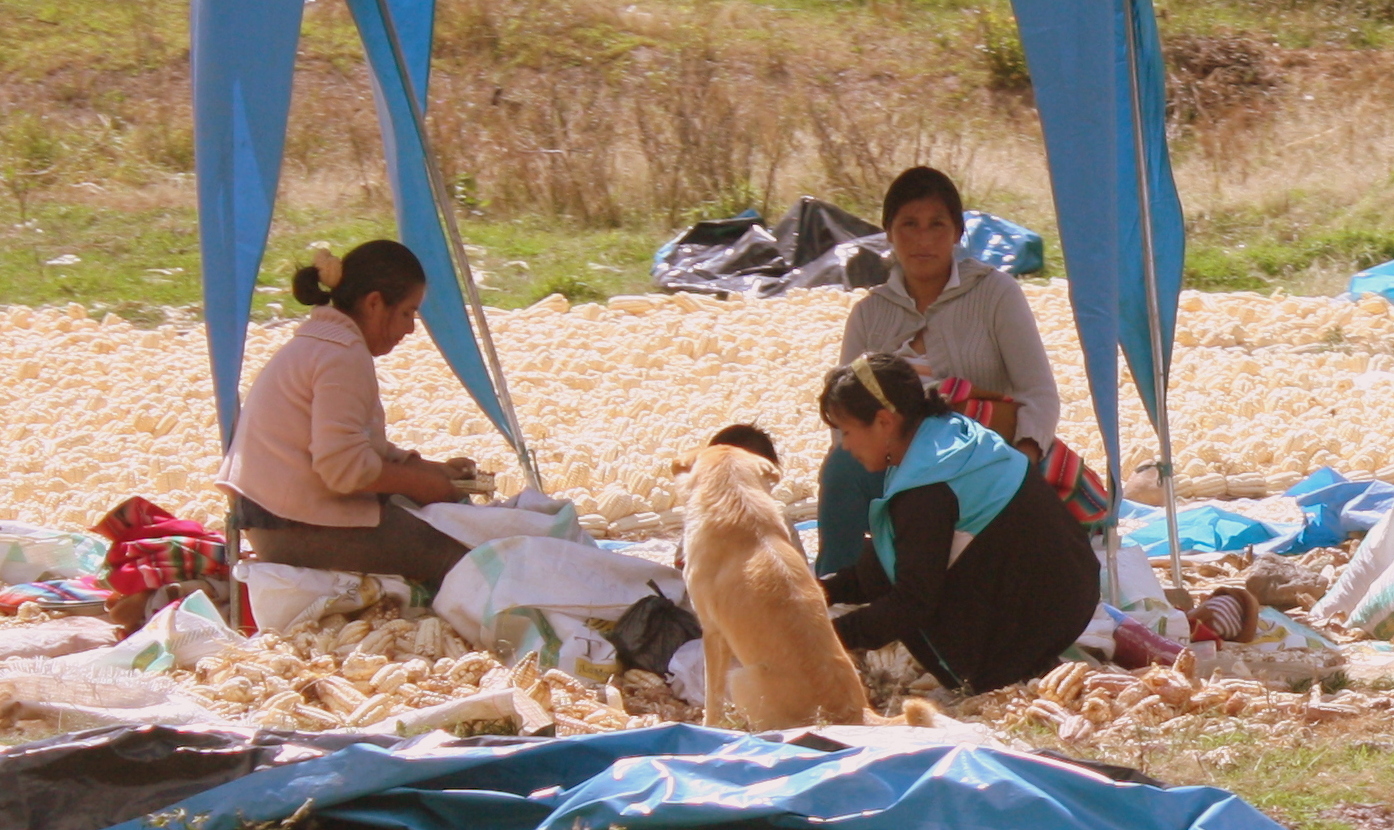
07 Drying the corn harvest for winter

Women drying the corn harvest for winter storage

Cusco sits 13 degrees of latitude below the equator, and on this trip in May it’s just weeks away from the winter solstice.

The harvest season is nearly ended, and farmers have laid their corn and potatoes out to cure under the sun in cool, dry mountain air, just as their Inca ancestors did.


People here live a life of back-breaking labor, and although they live simply, everyone appears well-fed and sheltered.

There’s an air of hope, and improvements to roads and bridges, along with additions to homes and small businesses, are common sights in even the smallest villages.


08 Quinoa drying in the sun

Stalks of quinoa drying in the sun

Potatoes and quinoa are both native to the Andes, and both are dietary staples.  The quinoa crop has also just been harvested and stalks dry in the sun.

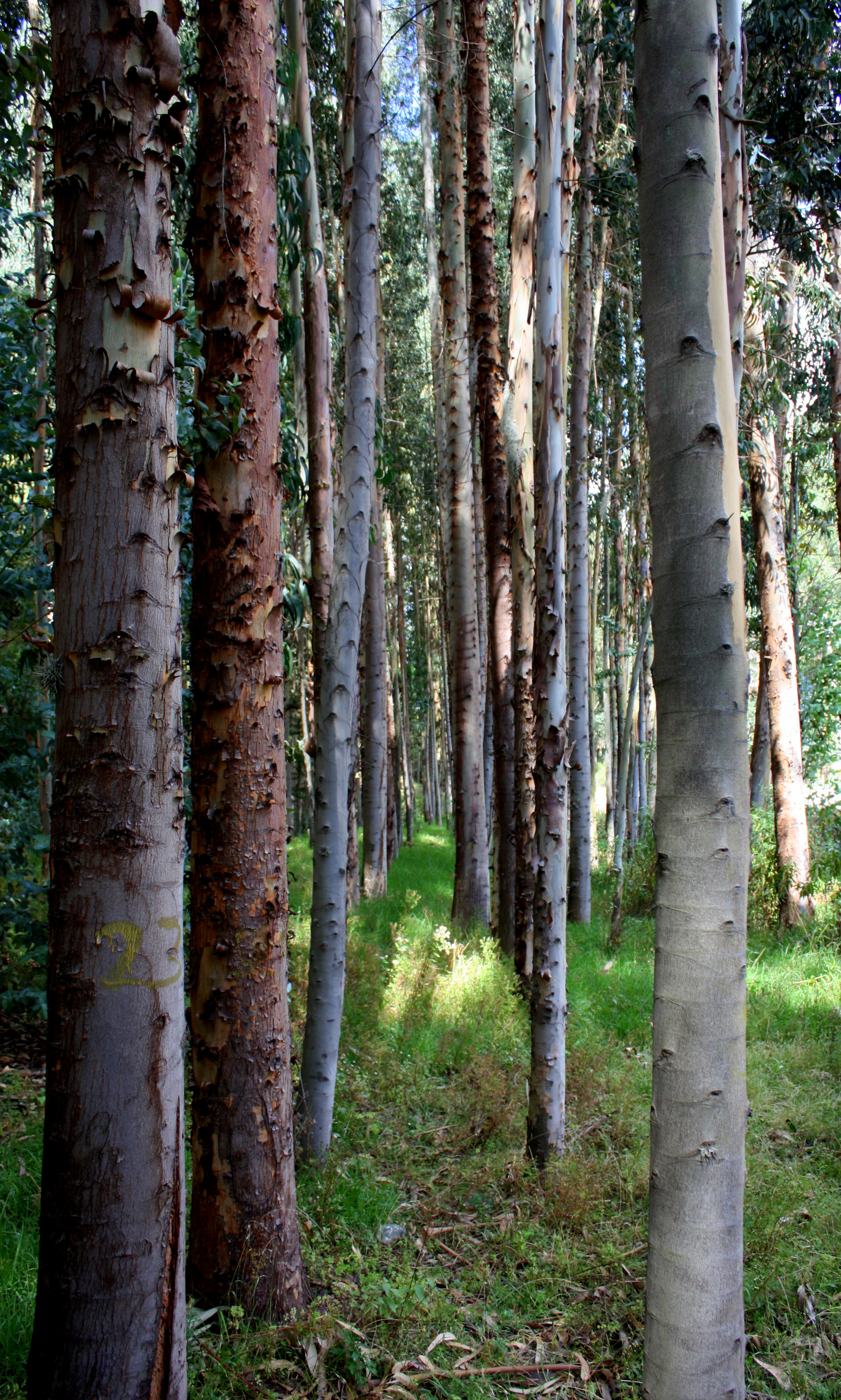
09 Stand of eucalyptus trees

Stand of eucalytus trees

Timber is scarce at high altitudes, and eucalyptus trees were imported from Australia to Peru in the mid-1800’s in an effort to develop a ready and renewable source.  The tree is now today so ubiquitous in the Valley that concerns have been raised there and elsewhere about its invasiveness.

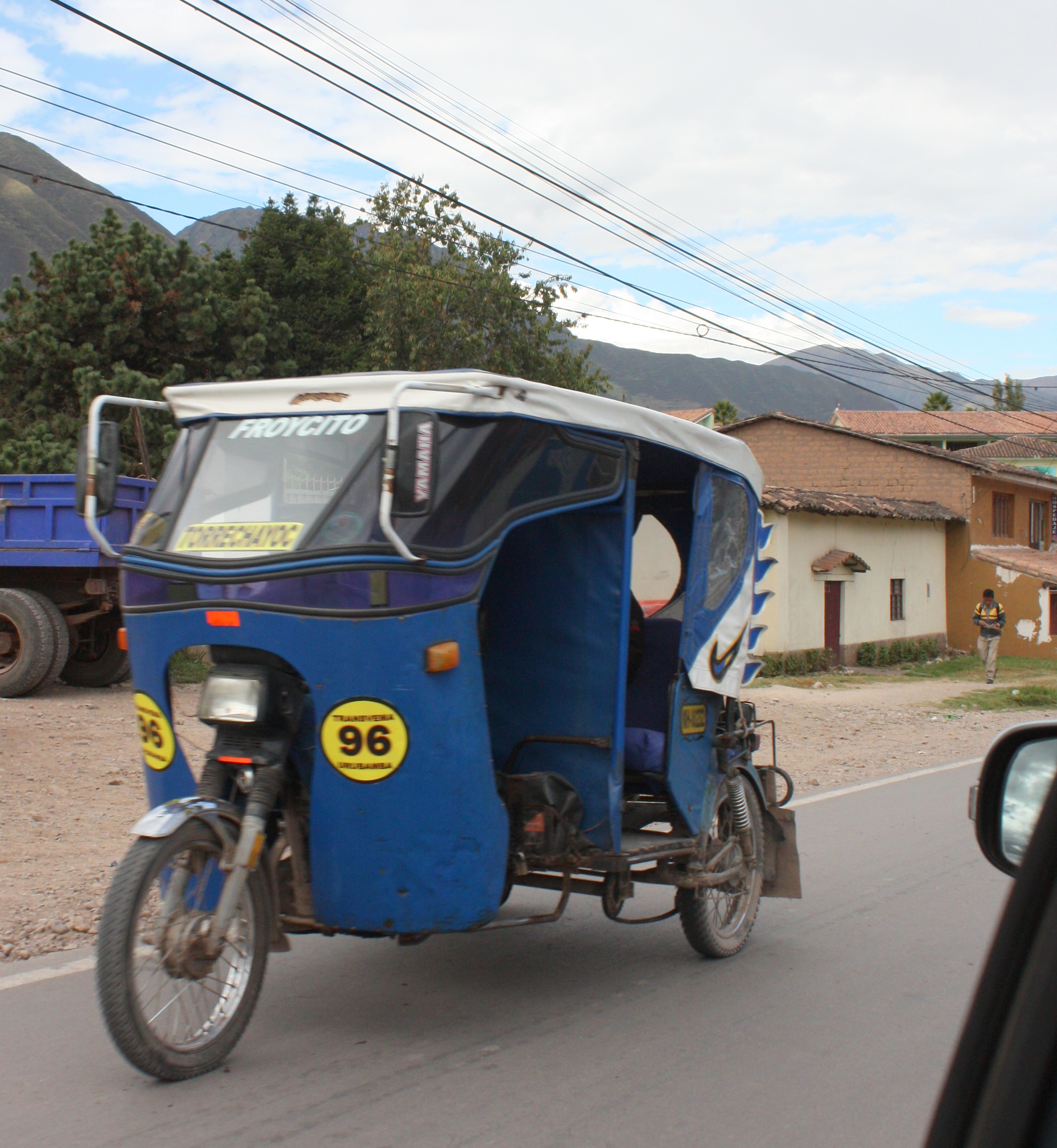
10 Motorcyle taxi near Urubamba

Motorcyle taxi near Urubamba

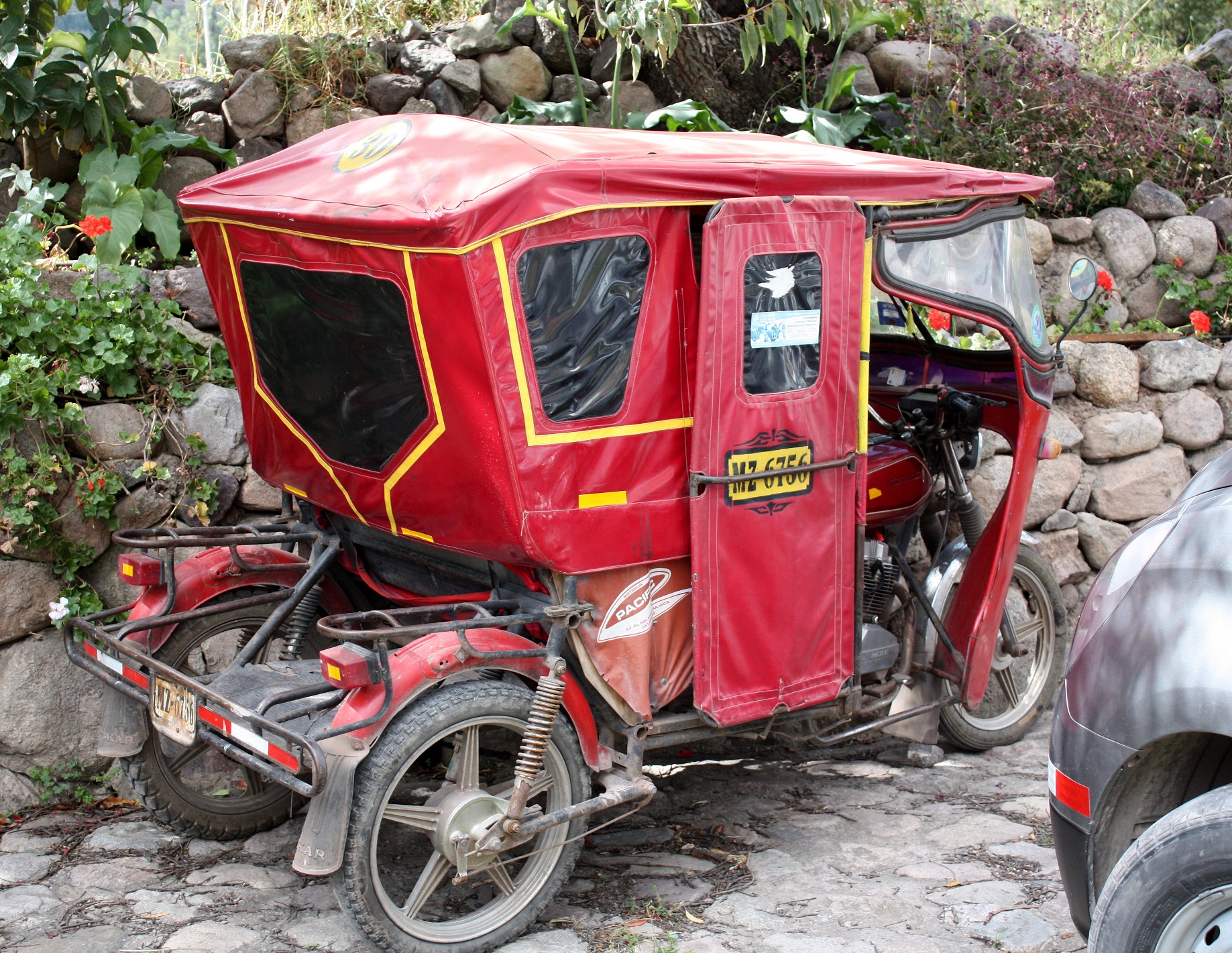
Even though many families own no car, there is schedule train service and bus service between many of the villages, but the most common form of public transportation is a sort of three-wheeled rickshaw, powered sometimes by a bicycle and at others powered by a motorcycle.

The ride from Cusco to Urubamba, including photo ops, has taken well under two hours, and from there it’s a short and scenic drive along the river to Pisac’s artisan market and Inca ruins.

Street in Ollentaytambo, Peru

Street in Ollentaytambo, Peru

Machu Picchu is the first image which comes to mind at the mention of the word Perú, but any visitor who limits a tour of this incredibly diverse country to the iconic ruin will only scratch its surface.

Motorcycle taxi in Urubamba, Peru

Motorcycle taxi in Urubamba, Peru

In fact, the real dilemma in planning a tour of Perú is not what to leave in, but what to leave out.

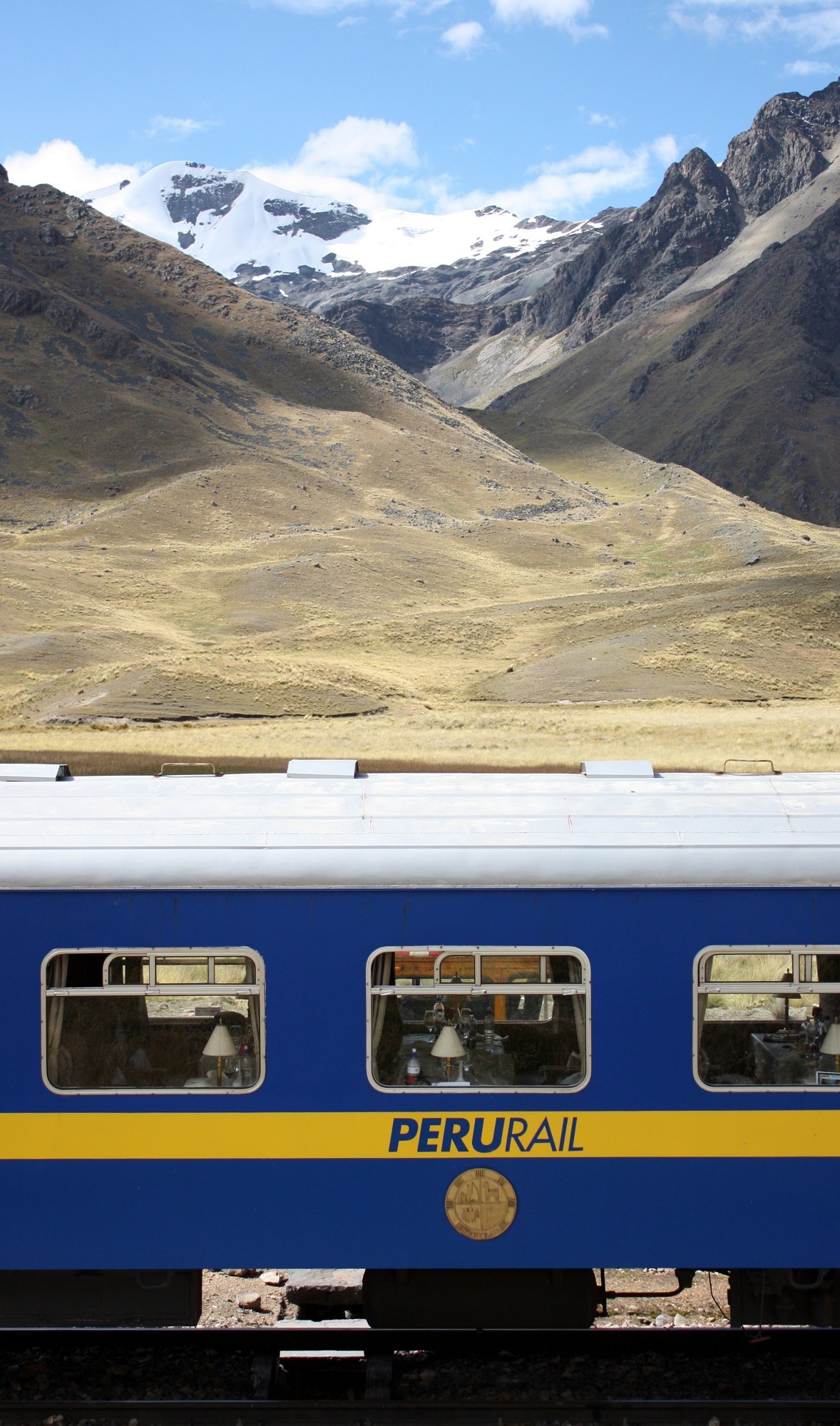
The Andes Explorer stops at La Raya, Peru

The Andes Explorer stops at La Raya, Peru

Archeological sites in the Incas’ Sacred Valley which tell which the story of the Incas’ rise and fall are a tour essential, but a visitor could easily spend a month elsewhere without retracing any steps.

Floating islands near las Islas Uros, Peru

Floating islands near las Islas Uros, Peru

Peru is large enough to stretch from the U.S.\Canadian border to the Gulf of Mexico.

Terrain ranging from Pacific beaches to mountain peaks and rain forests has spawned dozens of micro-climates that produce a staggering and often unique array of plant and animal life.

Lake Titicaca as seen from Isla Taquile, Peru

Lake Titicaca as seen from Isla Taquile, Peru

Pre-Incan ruins sit side by side with west coast beaches on the northern Pacific coast. the NAZCA lines score the surface of the arid south, and dugouts ply the jungle headwaters of the Amazon

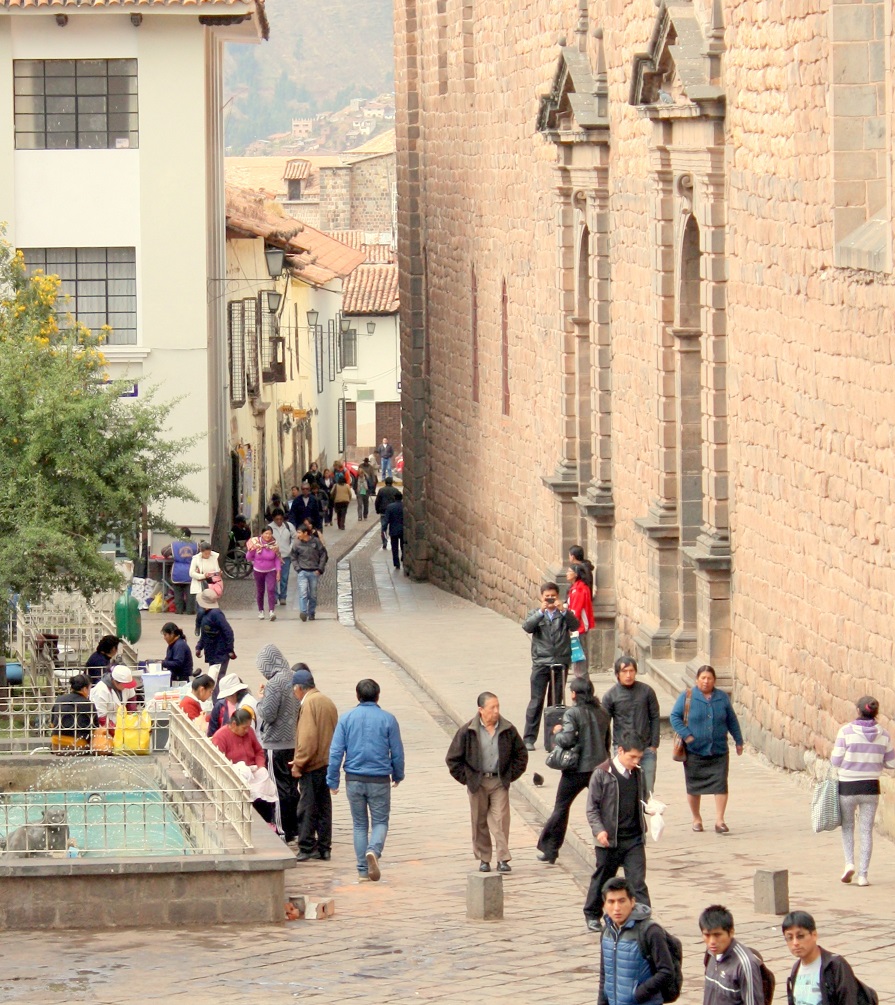
Street in historic center of Cusco, Peru

Street in historic center of Cusco, Peru

The Quechua language spoken by the descendants of the Inca is only one of a dozen languages spoken by nearly 100 indigenous tribes and clans, each with their own distinctive dress and customs.


This trip is planned for two weeks, so the itinerary narrows down to these destinations:

  • The Incas’ Sacred Valley, from Cusco to Machu Picchu.
  • Lake Titicaca, arriving via stunning views from the Andean Explorer train, with service that hearkens back to the golden days of rail travel.
  • Perú’s oceanfront capital Lima, brimming both with Spanish colonial charm and glittering high rises towering above gardens, promenades, and world-class restaurants.

The trip begins here!
 

Some tips on travel to Perú:

  • Security is outstanding.  The streets feel safe and police are rarely out of eyesight wherever tourists most often gather.
  • Wireless is widely available in cafes, restaurants, and hotels in areas most frequented by tourists.
  • Electricity is 220 volts, so an adapter for 110 volt appliances is a must unless you intend to turn them into a toasters.  Consider whether you’ll also need a 3-to-2 prong outlet adapter; most electrical outlets are ungrounded (2-prong).
  • Take altitude very seriously unless you want to spend a day of your vacation in a clinic.  Thin, dry mountain air means less oxygen, faster dehydration, and less protection from the sun.  Make the going easier with a hat, long-sleeved shirts, sun block and sunglasses, lip balm and skin moisturizer and water, water, water.  Consider also taking along an altitude medication such as Diamox.  The coca leaves and tea which are widely available in hotels reflect the centuries-old practice and learning of Andean peoples, and they know what they’re talking about.
  • Not every site is ADA compliant. Visitors with mobility issues can have a fulfilling experience, but many of the archeological and many cultural sites require a good walk or climb to be fully appreciated.
  • Use of shared transportation or a taxi for ground travel anywhere in Peru is highly recommended;  traffic both in the city and in the countryside is an organized chaos, the rules of which defy comprehension by the uninitiated.
  • And, of course, take your camera; the stunning landscape and picturesque people make it practically impossible to take a bad photo.

Pompeii unearthed

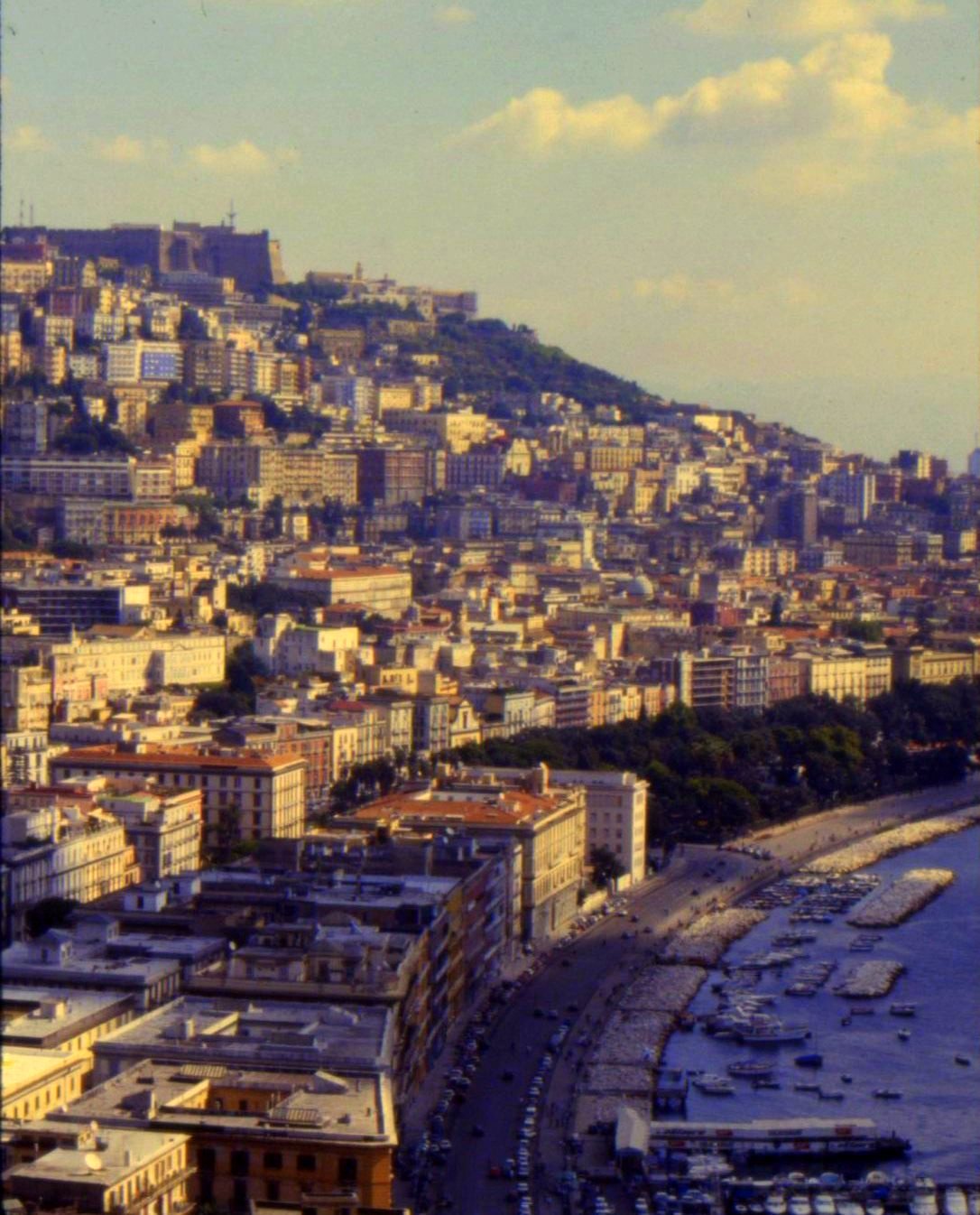
The city of Naples wraps around its namesake bay

The city of Naples wraps around its namesake bay

With only two days remaining after the cruise ship docks for the final time at Rome’s port of Civitavecchia, I opt to spend one of them visiting Pompeii, which 3 hours away via the autostrada just below Naples.

A travel oasis along the way looks far more like a page out of the Dean & Deluca catalog than an Interstate eatery.

Cured hams hang in the window and a bank of glistening espresso machines sits behind a long marble counter.

There seems to be no such thing as fast food in Italy, and taste confirms that it’s for delectably good reason.


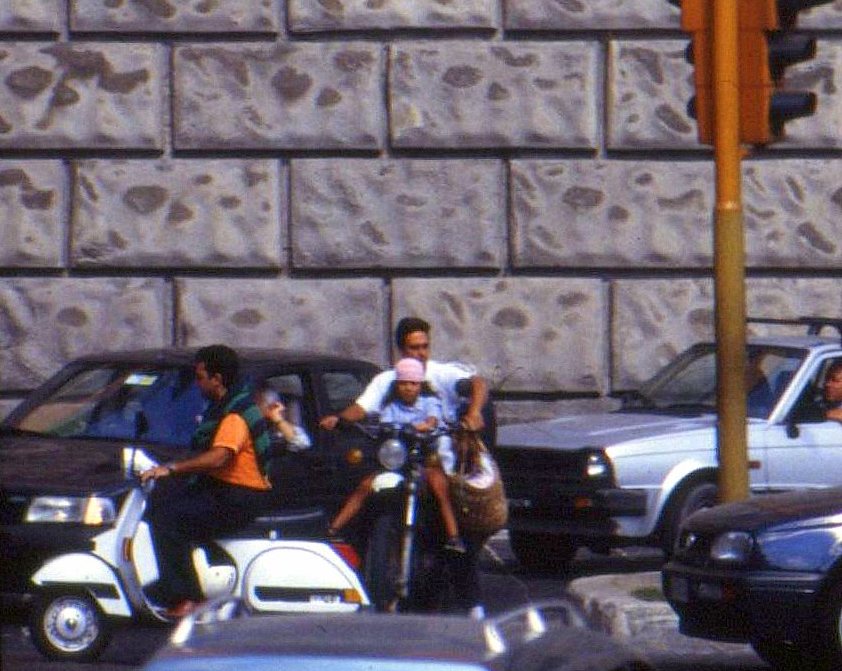
Ubiquitous Vespas weave through street traffic

Ubiquitous Vespas weave through street traffic

An hour or so outside of Naples the road passes a hilltop crowned by the monastery of Monte Cassino.

Founded by Saint Benedict on the site of a former Roman temple to Apollo, it has been repeatedly sacked by invading armies and destroyed three times, the last during a bloody four month siege of an entrenched German army early in 1944.


About 15 miles short of Pompeii, the route passes through Naples.  The old part of the city is the vintage Italy of ‘50’s cinema.  Palm trees line the harbor and ferries carry day-trippers to the Isle of Capri clearly visible on the horizon 30 miles away.

Faded elegance still adorns the city

Faded elegance still adorns the city

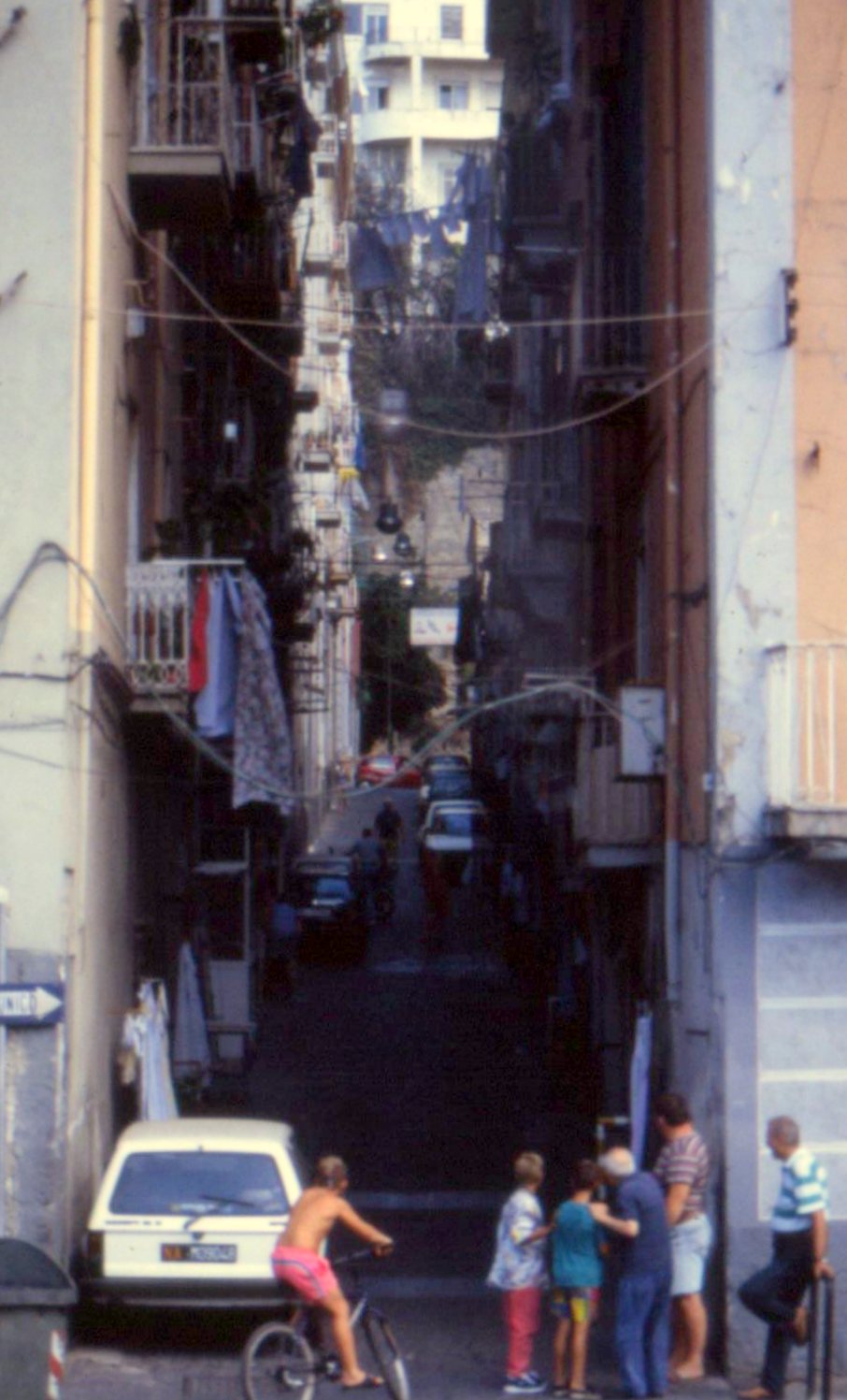
Tenement streets climb hillsides

Tenement streets climb hillsides

Narrow streets climb hillsides through ancient tenements broken from time to time by the uninspired concrete architecture of post-war buildings that mark the scars of more than 200 Allied bombings. Poverty is rampant in many of these neighborhoods, where over 100 clans of the Camorra – the local version of the Mafia – control not only criminal activity, but thousands of legitimate businesses.  Visitors are warned not to wander unfamiliar streets here alone. There’s no lingering here; Pompeii beckons!
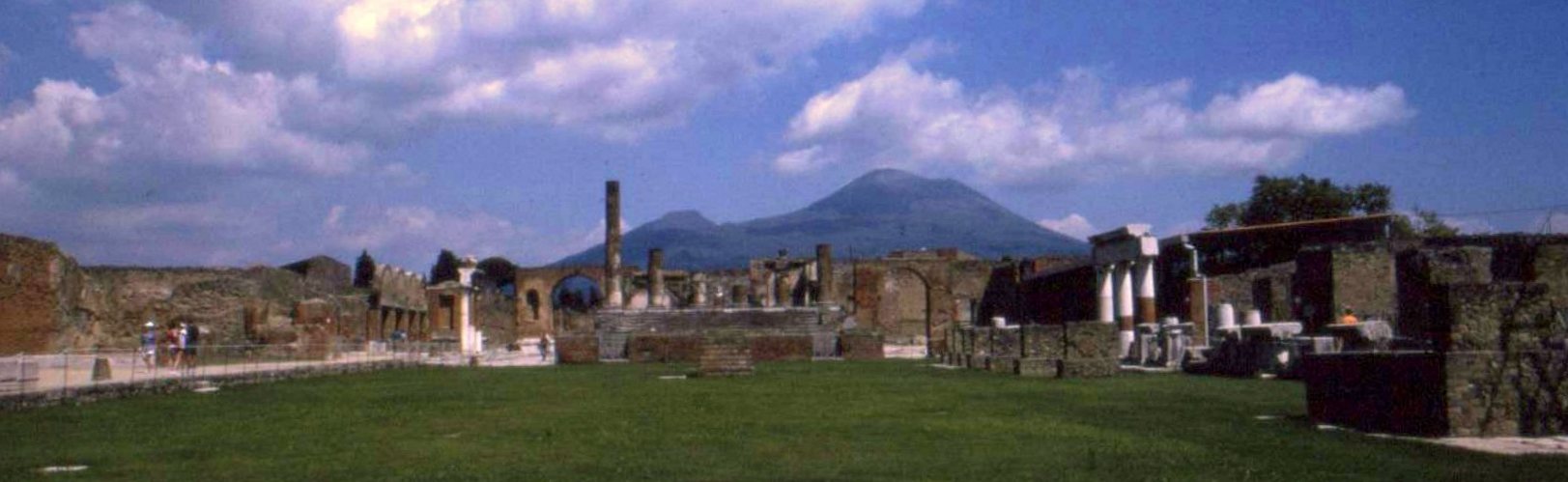
Vesuvius smolders less than 5 miles behind Pompeii

Vesuvius smolders less than 5 miles behind Pompeii

Mount Vesuvius squats between Naples and Pompeii, towering nearly a mile high and squeezing the coast road against the sea.  It’s experienced more than 30 major eruptions since the one that buried Pompeii in 79 A.D., the last occurring shortly after the arrival of Allied armies in 1944.

Many buildins survive intact

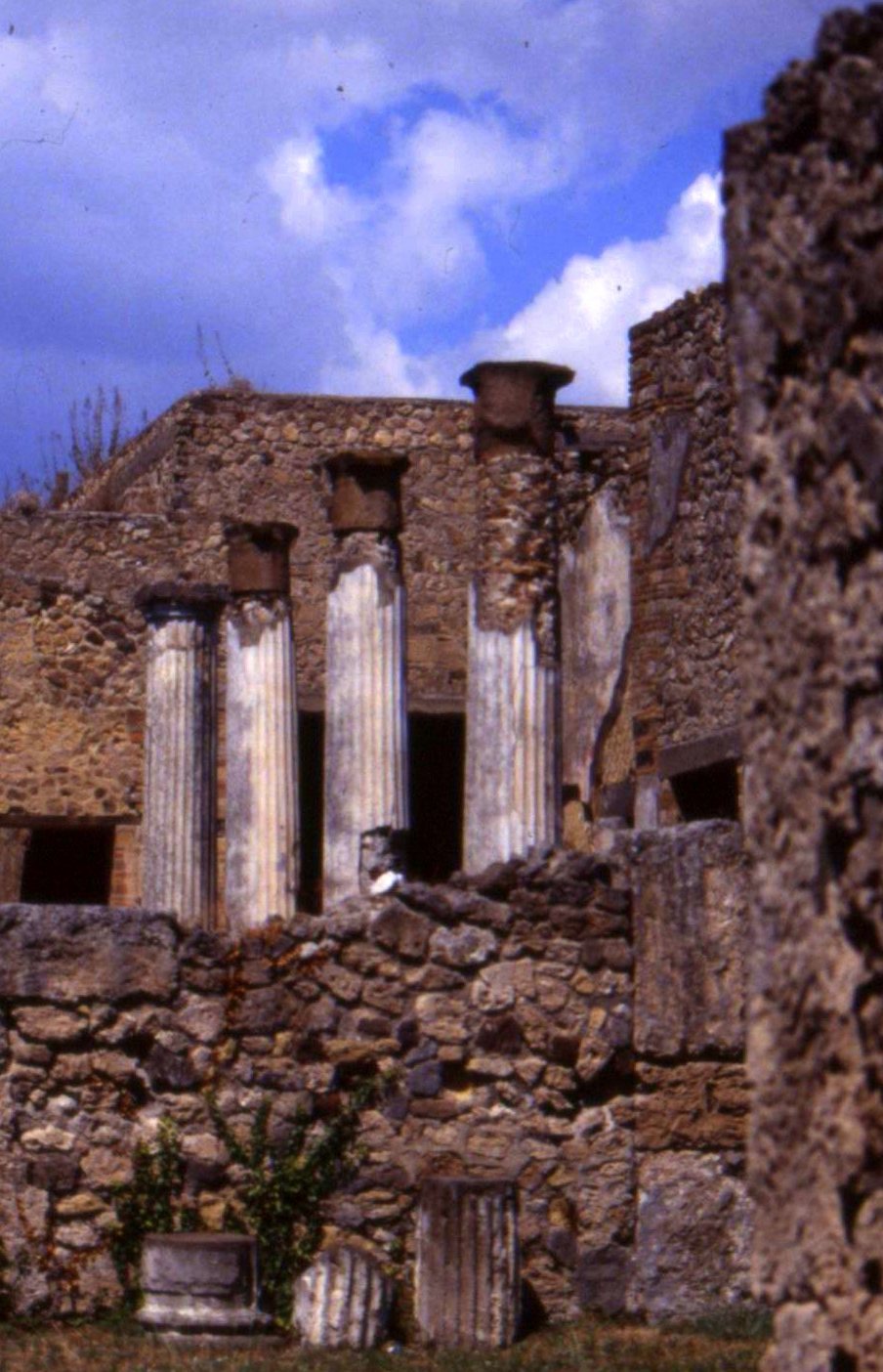
Many buildings survive intact

The first sight of Pompeii’s streets is breathlessly arresting.  Unlike other often-vandalized ruins, it was protected for 17 centuries by a cocoon of volcanic ash.

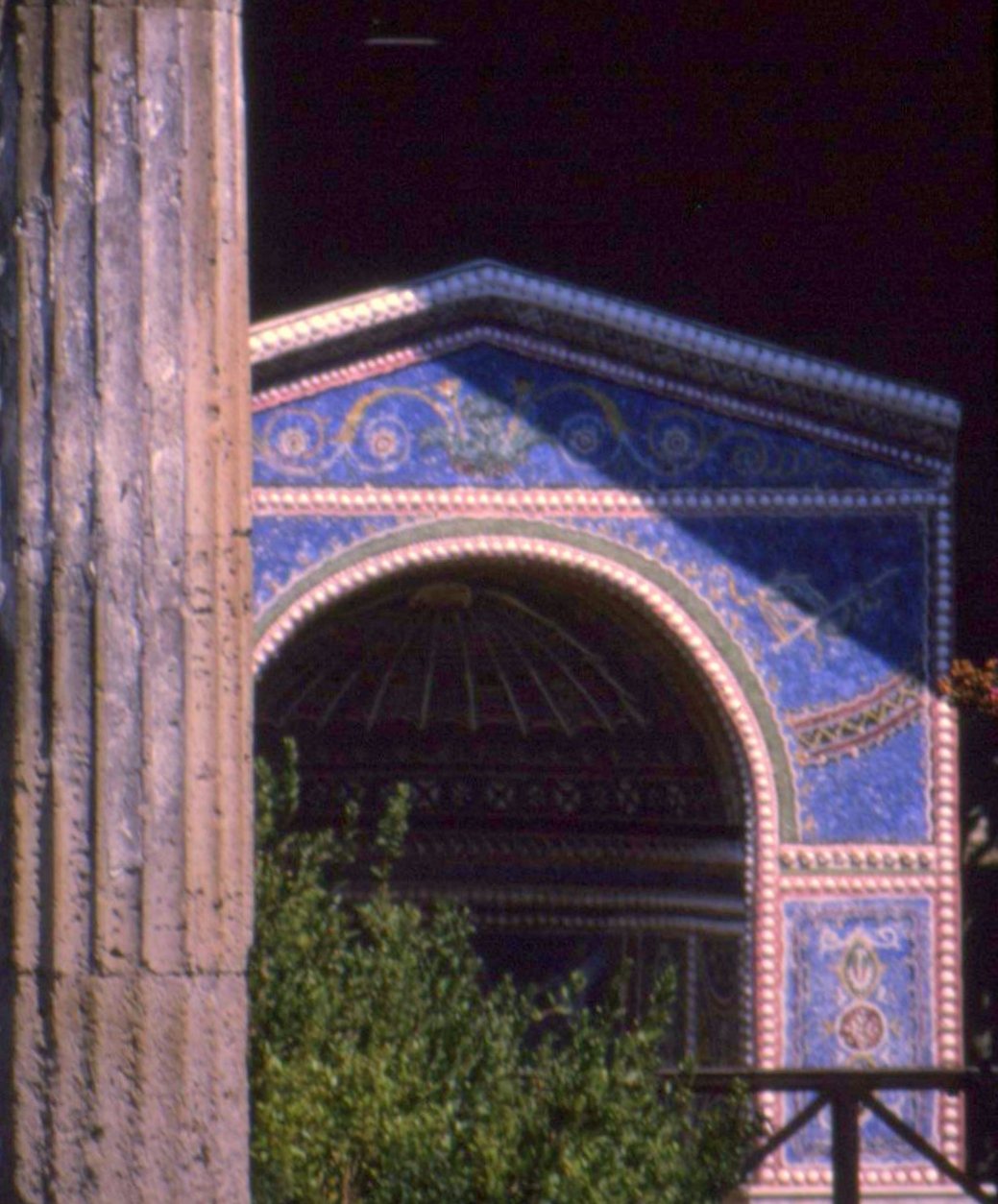
Frescoes and mosaics survive in abundance

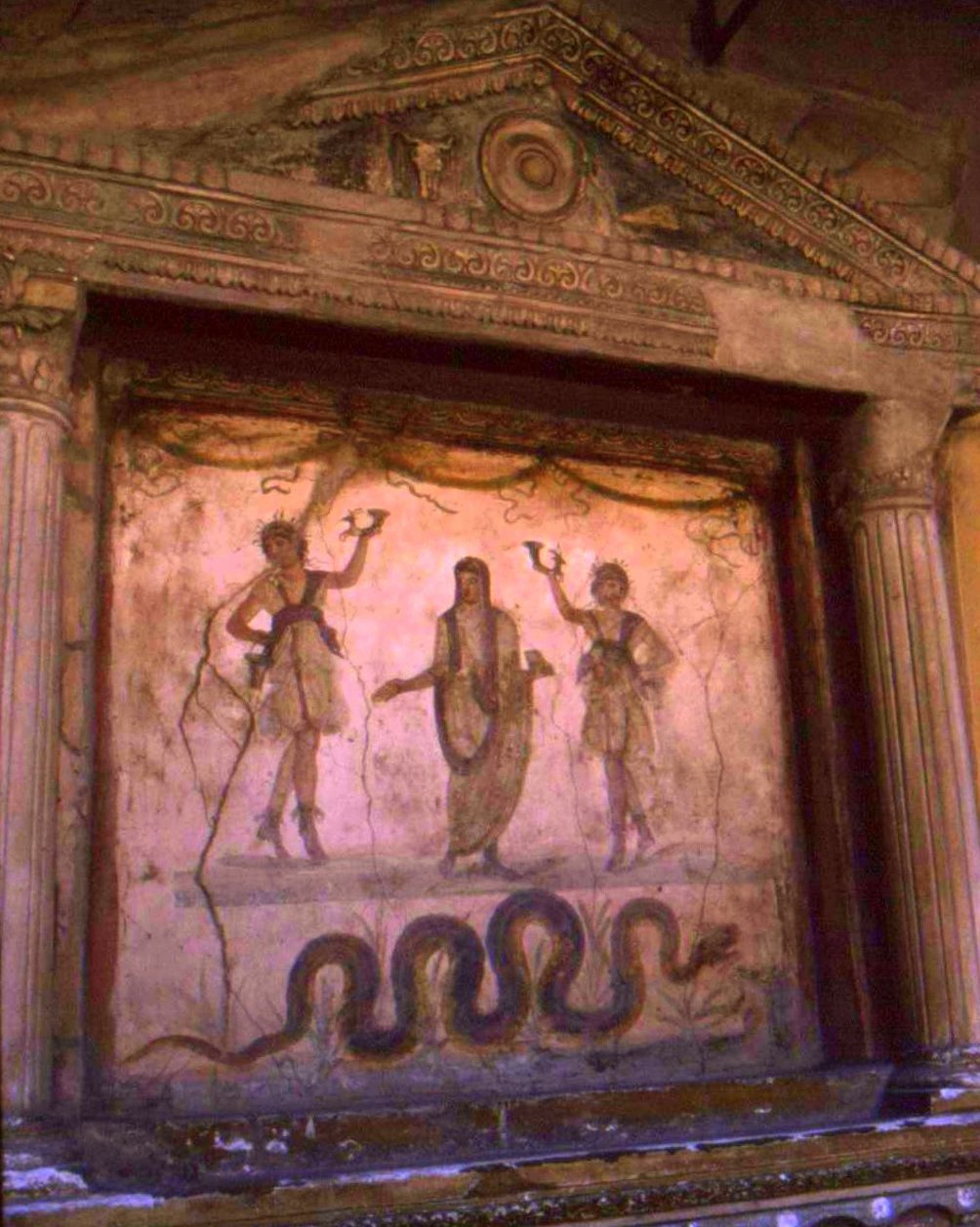
Frescoes and mosaics survive in abundance


The power of this place is not just the number of buildings left remarkably intact, but the distinctive window afforded into the daily lives not only of well-to-do Romans who vacationed there, but the service workers who supported their leisure. Artifacts excavated over the last 300 years and now on display are personal and intimate.  Makeup cases and hair combs.  Pocket change.  Beautiful mosaics and frescos in still-vibrant colors adorn the floors and walls of spacious villas, many featuring portraits of their owners.

Fountains and pools are abundant

Fountains and pools are abundant

This city of 20,000 boasted an amphitheater, forum, gymnasium and hotel.  Fountains and public baths were once fed by an aqueduct.

A bakery stands idle

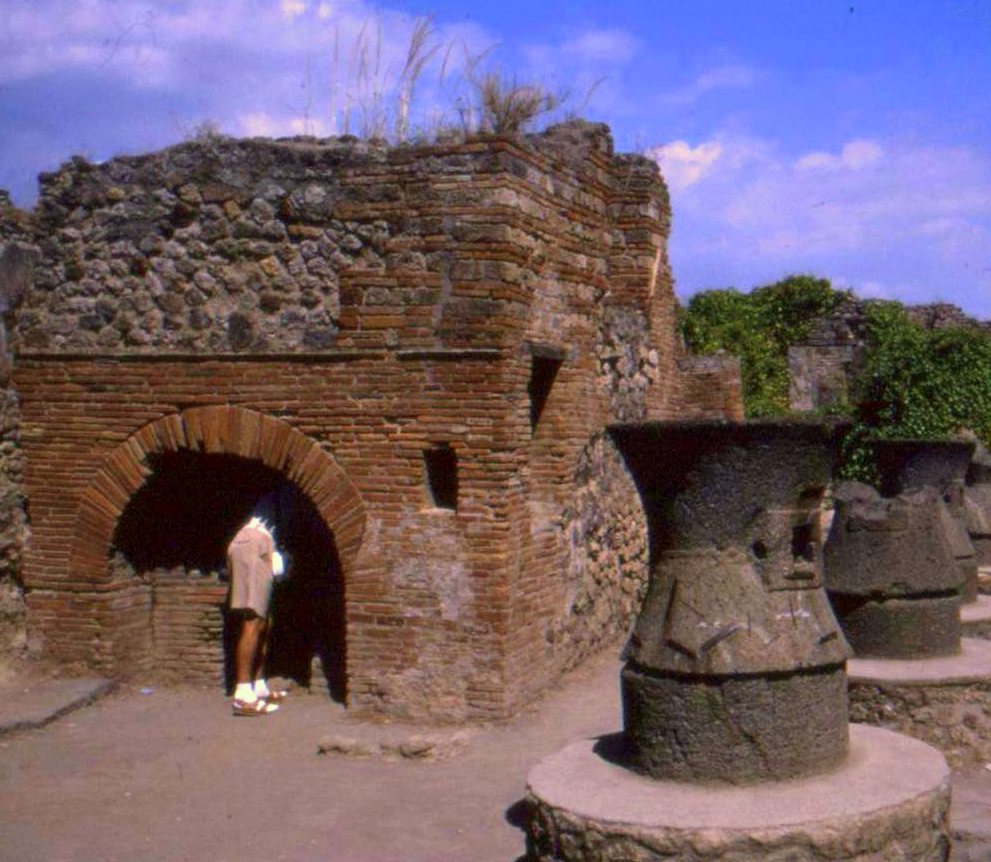
A bakery stands idle


A wine bar endlessly awaits the arrival of fresh amphoras

A wine bar endlessly awaits the arrival of fresh amphoras

At vacant curbside food stalls, brick ovens stand at the ready and empty stands await the arrival of wine amphoras.

Wheel ruts are carved into paved streets

Wheel ruts are carved into paved streets


Tracks are worn into stone streets by chariot and wagon wheels.  The cubicles of a bordello stand open in invitation and graffiti and pornography adorn street walls.


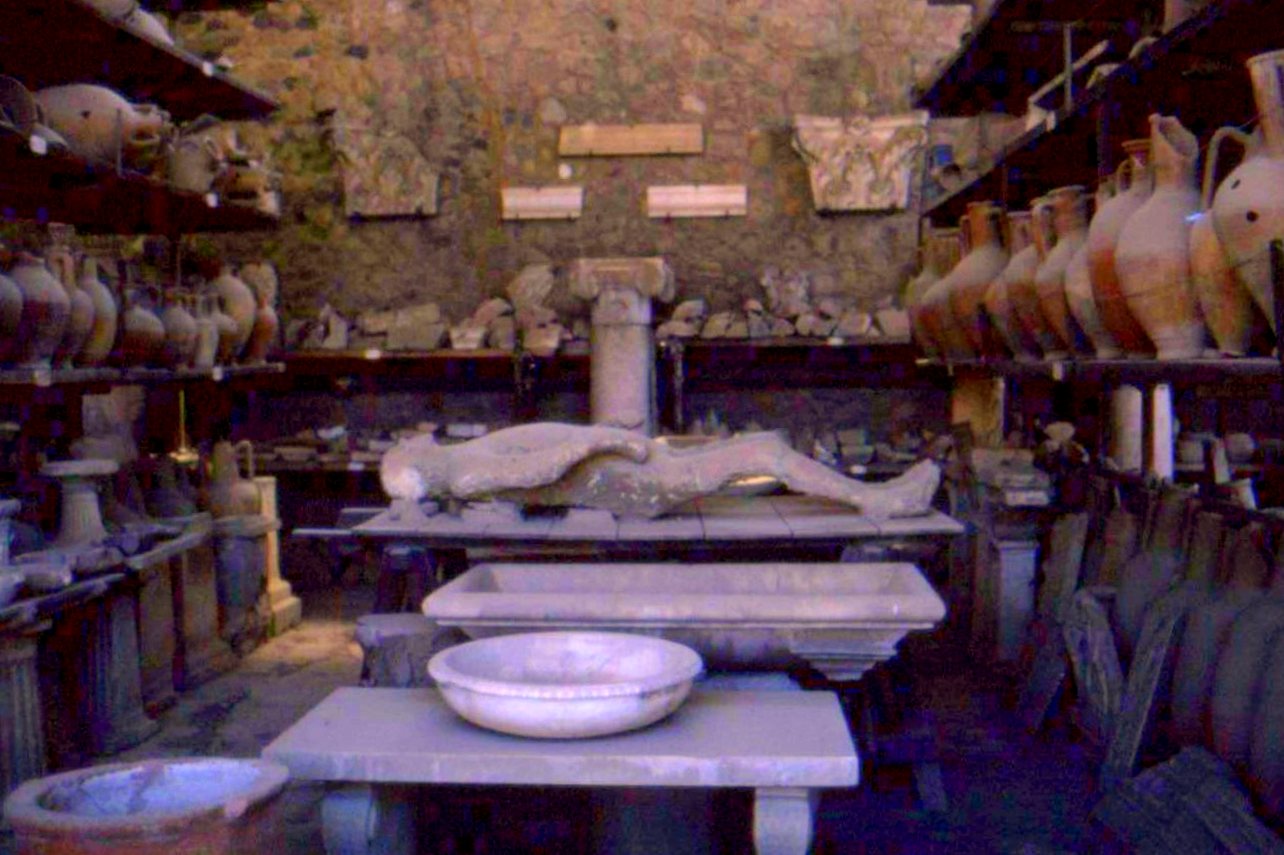
By far the most startling of artifacts, though, are plaster castings made of victims – residents and even household pets – entombed in volcanic ash by the tragedy, their flesh long ago wasted away to leave only vacant impressions. It’s otherwise hard to dismiss the illusion that the residents have just stepped out, to shortly return.

A plaster mummy cast from an ashen mold

A plaster mummy cast from an ashen mold

Vibrantly colored mosaics survive

Vibrantly colored mosaics survive

Before the long ride back to Rome there’s dinner – and an obligatory taste of the local limoncello liqueur – at a charming hotel restaurant in nearby Sorrento, which marks the beginning of the hairpin thread of highway that travels the scenic Amalfi coast.

By the time I step again onto Rome’s Via Veneto and pass through the lobby of the Hotel Excelsior17 hours have passed, but it’s a delicious exhaustion! In the morning it’s on to Da Vinci Airport and the flight back to the States, the fresh memories of a week-long Mediterranean cruise still playing in my head.
If you’ve missed any of the earlier posts for this cruise – or want to revisit any –  you’ll find them here:


Gone full circle

Cajititlan Aztec ceremony 2012-02-02 04

The Jalisco villages of Cajititlan and San Juan Evangelista face each other across a couple of kilometers of lake, but on the day of my visit they’re also separated by 300 years of Mexican history.

I can’t take credit for planning this trip to Cajititlan on the Día de la Candelaria (Candlemas) but – as these photos show – the timing couldn’t have been more fortuitous.

Cajititlan Aztec ceremony 2012-02-02 01


Candlemas observes the Biblical presentation of the infant Jesus at the temple in Jerusalem 40 days after his birth, but here it’s also the last observance of the Christmas holiday season.

Figures of the baby Jesus first displayed in Nativity scenes on Christmas Eve are given presents from the Magi on el Día de los Reyes (King’s Day, January 6).

On the Día de la Candelaria (February 2) they’re dressed in fine clothes and presented at the church for blessing.  Family and friends also traditionally gather on this day to eat tamales.

Cajititlan Aztec ceremony 2012-02-02 02

In Mexico, this holiday is a follow-on to Kings’ Day, when children receive gifts and families and friends break share generous loaves of Rosca de Reyes, a special sweet bread with a figurine hidden inside.

Whoever finds the figurines in their portion must host a party on the Día de la Candelaria.

Cajititlan Aztec ceremony 2012-02-02 03


We arrive in Cajititlan to find streets jammed with cars that surround blocks of the city center cordoned off for a great street festival.

Cajititlan Aztec ceremony 2012-02-02 06

On the approach to the central plaza and the local parish church, the sound of drumbeats grows ever louder.

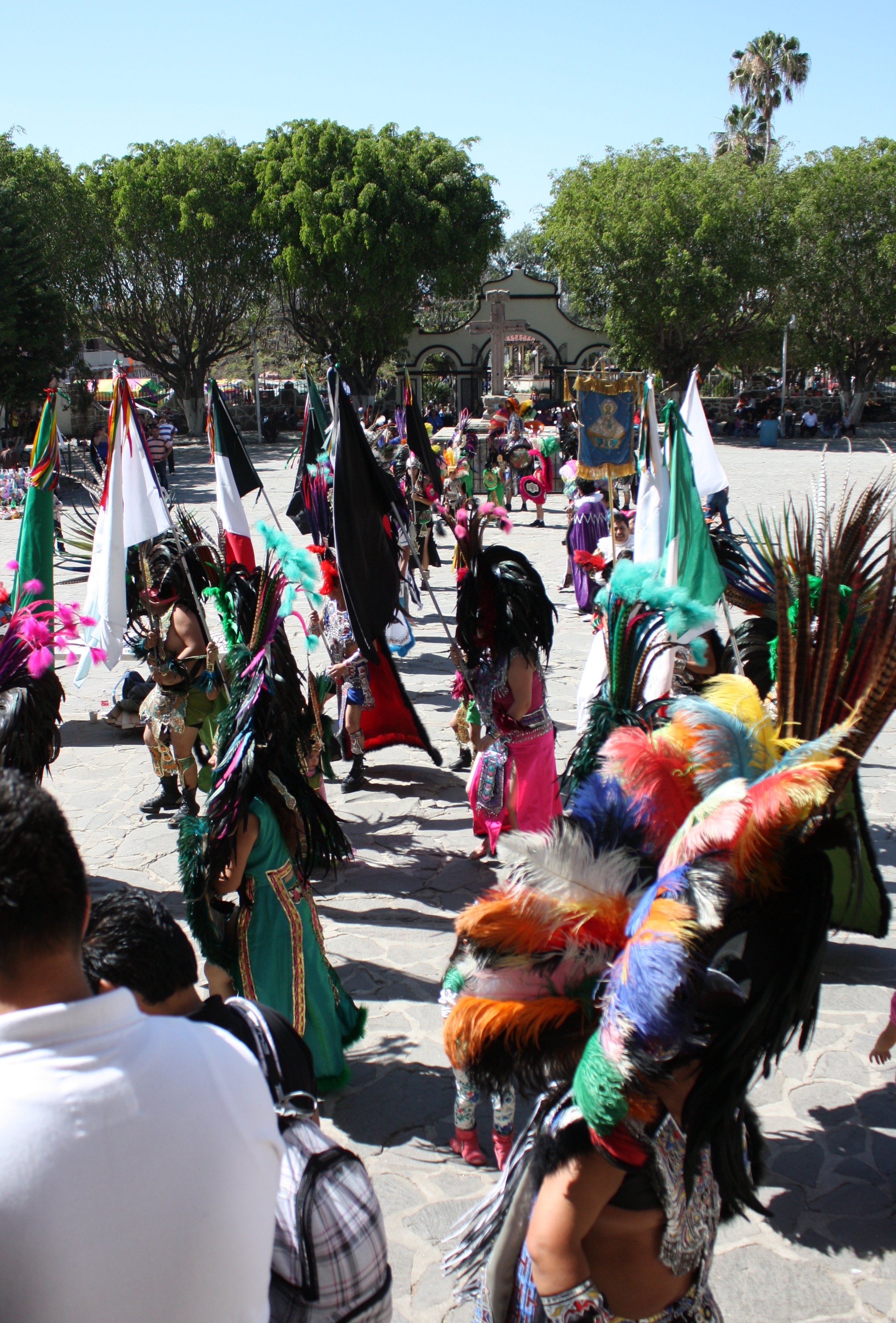
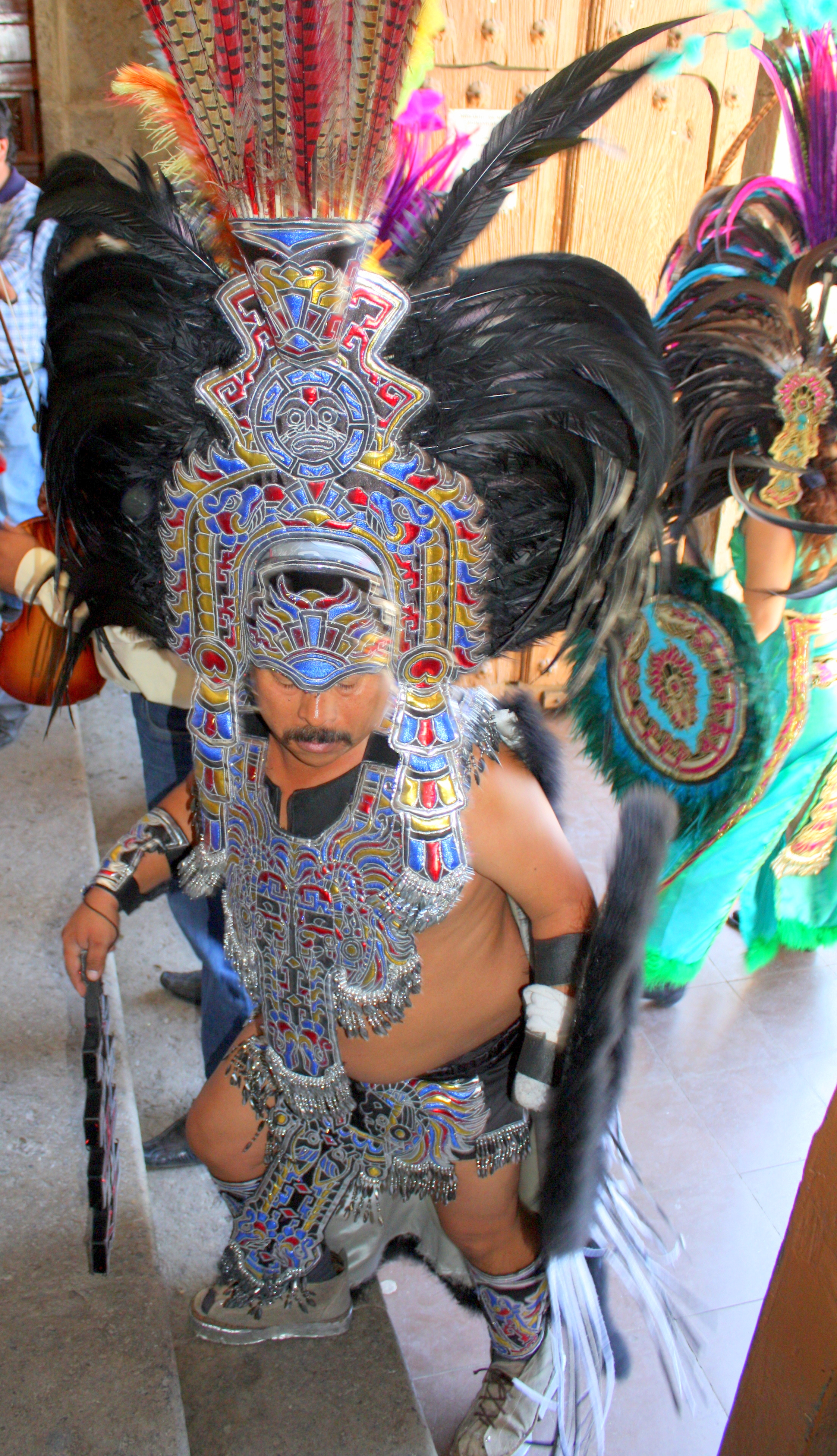
The narrow street opens suddenly onto the plaza, where at least 40 dancers in full Aztec ceremonial garb move about in intricately choreographed lines.

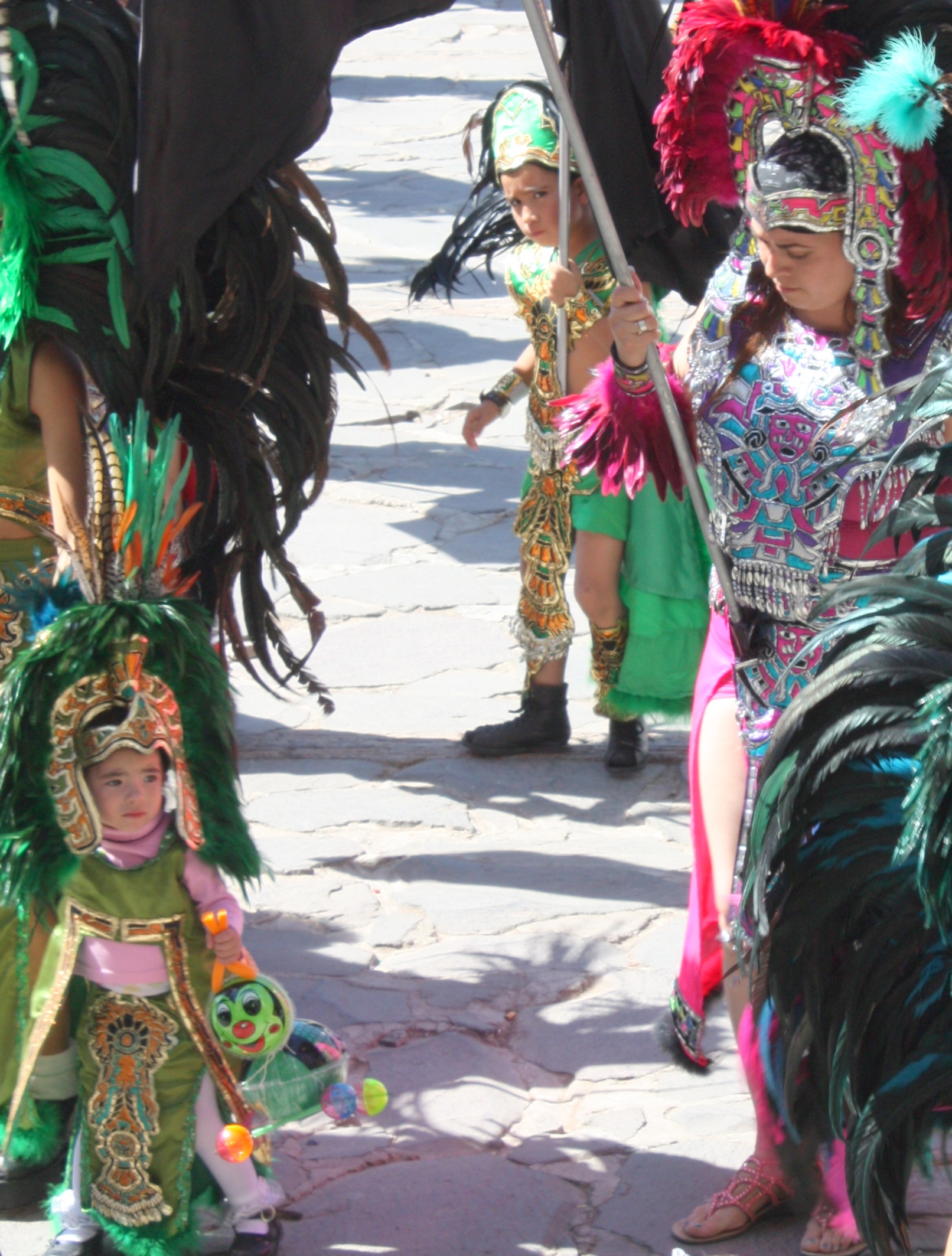
The costumes are elaborate and the pageantry is stunning. The dancers are men and women of all ages, and even a few children participate.

Cajititlan Aztec ceremony 2012-02-02 05

As I draw closer I can hear faint strains of a violin, and in a moment see a fiddler walking among the dancers, an impresario guiding the procession toward the church.

Cajititlan Aztec ceremony 2012-02-02 09


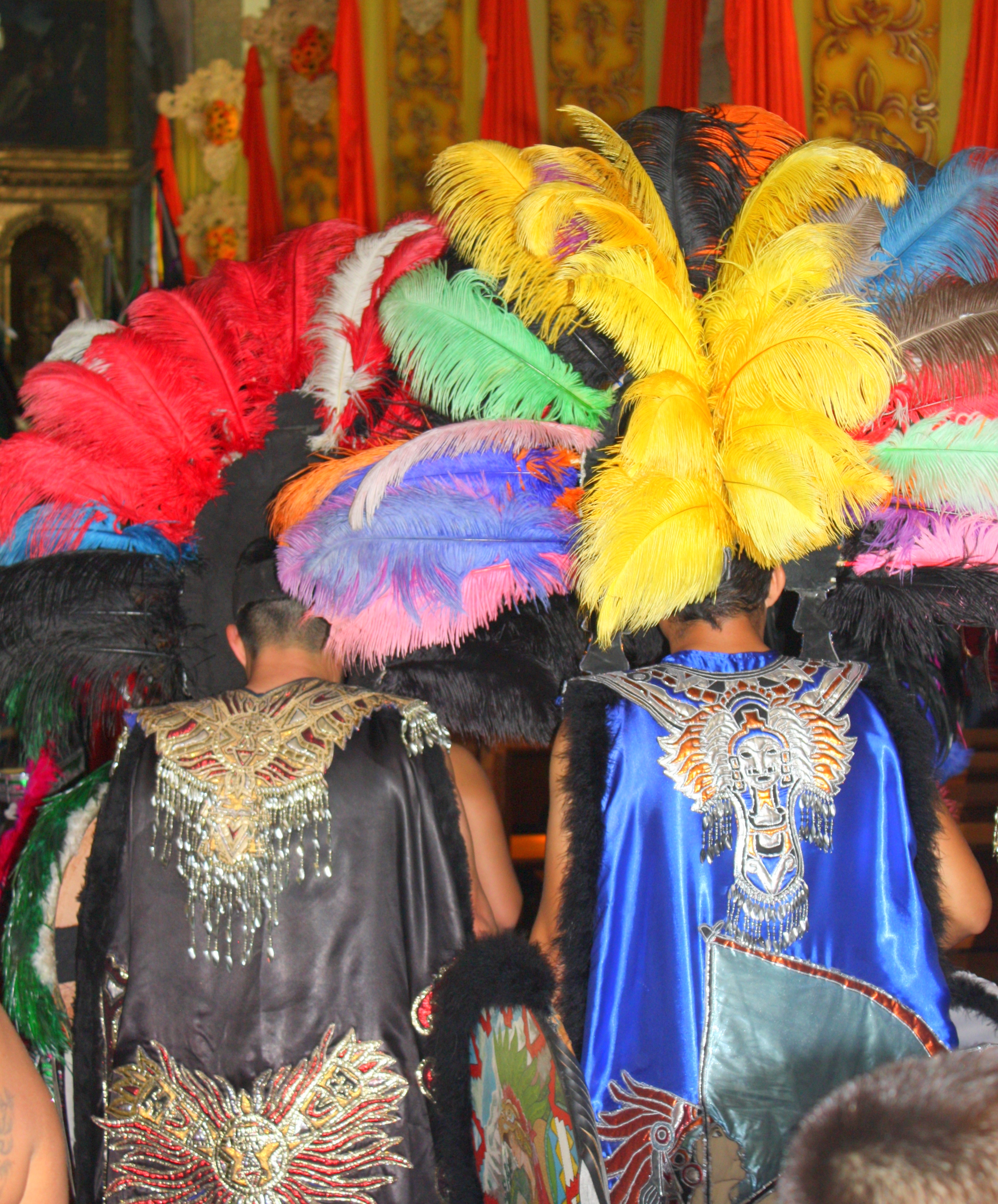
The church is packed as the procession makes its way up the central aisle toward the altar, the drums continuing their steady beat.

Cajititlan Aztec ceremony 2012-02-02 08

Cajititlan Aztec ceremony 2012-02-02 10

Cajititlan Aztec ceremony 2012-02-02 11

It’s startling to see this spectacle of pagan-rooted pageantry occupy a place of Christian worship.

Cajititlan Aztec ceremony 2012-02-02 12

As as the ceremony ends and the procession backs slowly down the aisle and back into the sun-washed plaza, though, its leader makes the sign of the cross and kisses his fingers.

I study the dancers more closely, and can see crosses hanging around the necks of many.

Cajititlan Aztec ceremony 2012-02-02 07

Nearly 500 years after the Conquest, and 400 years after native artisans surreptitiously integrated icons of their native religion into the design of the church in nearby San Juan Evangelista, native tradition has re-emerged as such an integral part of mainstream Catholic ceremony in Mexico that it’s no longer possible to imagine one without the other.

Things have, indeed come full circle.


Read the 3 other posts about my trip around Lake Cajitlan:…

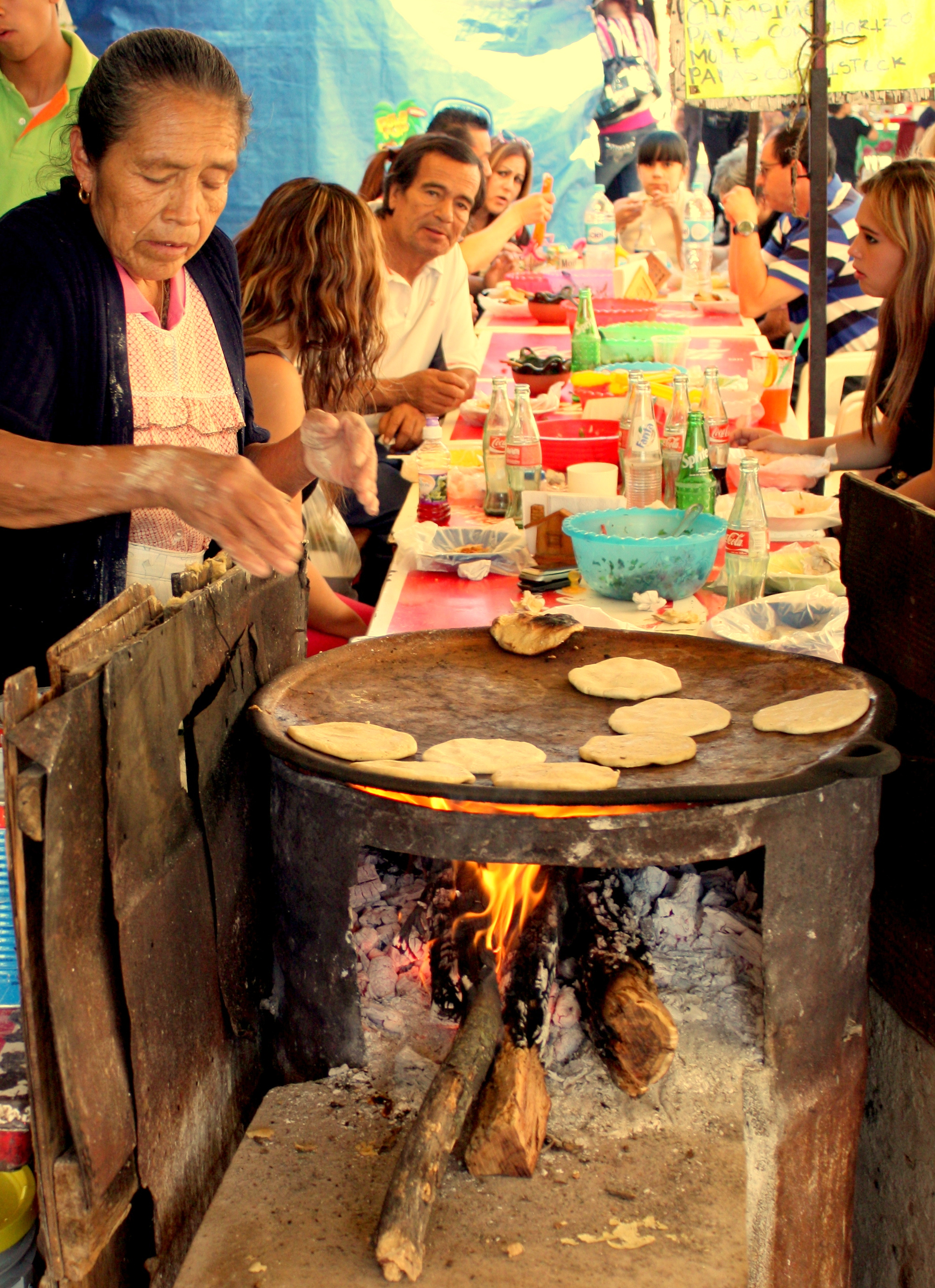
Made-from-scratch tortillas on a wood-fired, clay comal

Made-from-scratch tortillas on a wood-fired, clay comal

No less than for county fairs north of the border there’s both a sameness to Mexican village fiestas and yet always some feature that uniquely ties each to a single place.


Cajititlan’s fiesta del Día de la Candelaria proves itself no exception.


As the ceremony on the plaza ends we plunge into a street fair which begins at its edge, lining the curbs of a dozen or more square blocks that slope gently down to the lake.


Canopied booths line both sides of the cobblestone streets and the crowd threads its way through the narrow passages between.

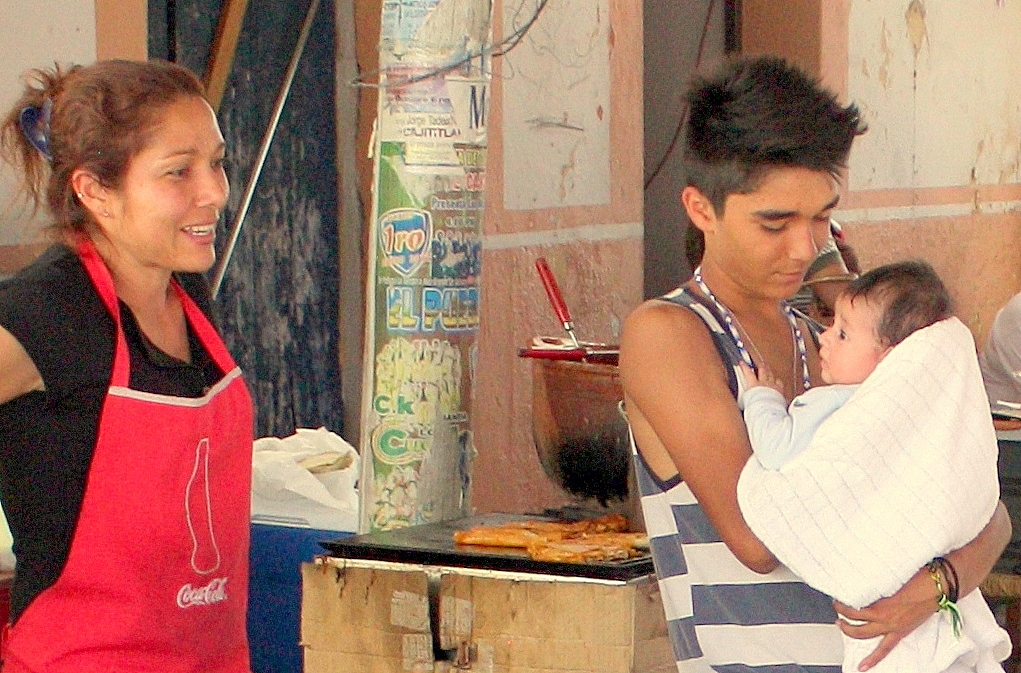
A young fathers cradles his infant son

A young fathers cradles his infant son


The crowd is a mix of villagers and day-trippers from nearby Guadalajara; I seem to be the only gringo within eyesight and the sense of total immersion is a refreshing break from gringi-fied Ajijic.

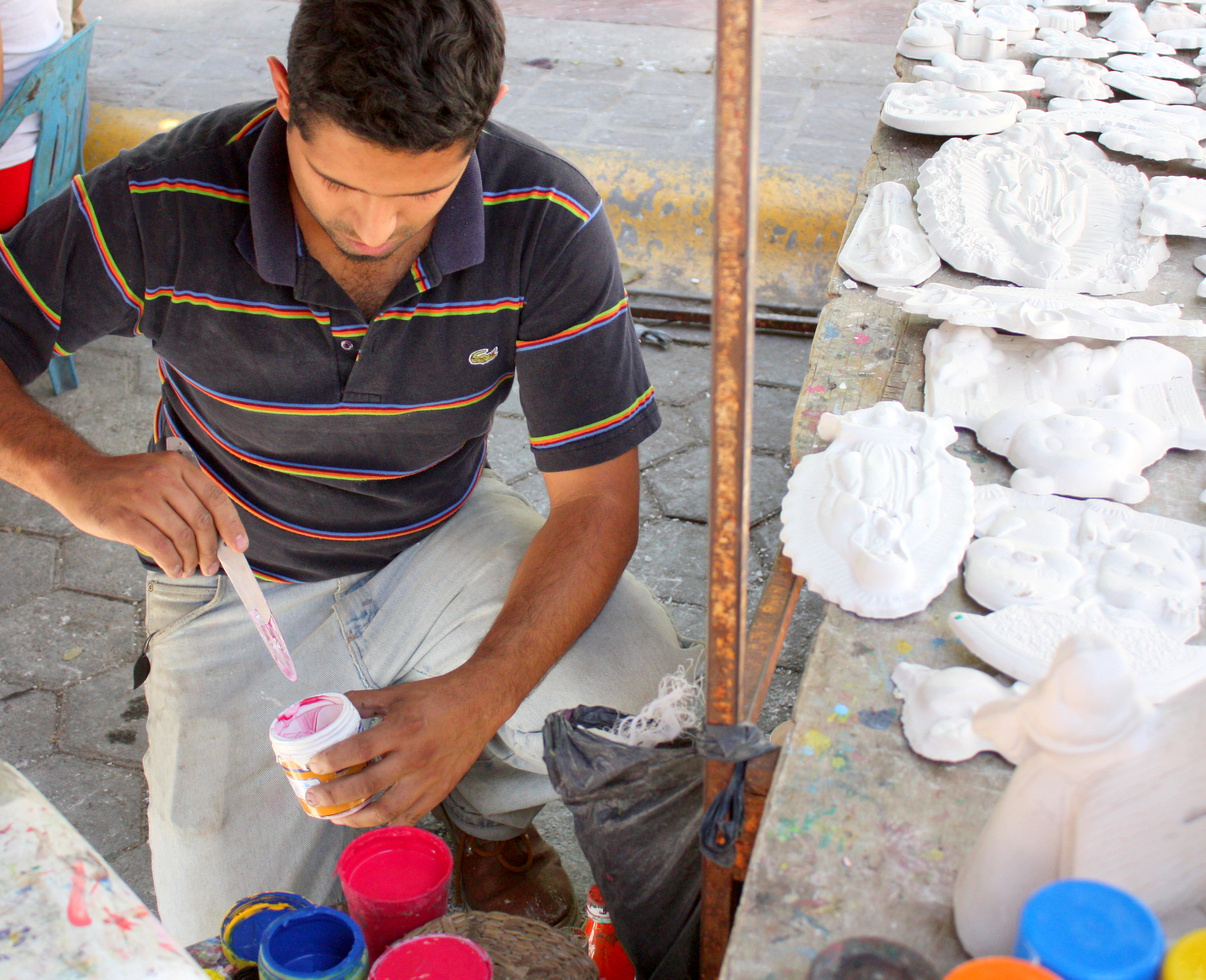
An artisan prepares to apply color to plaster masks

An artisan prepares to apply color to plaster masks


Market stalls feature the predictable mix of street food, artisan crafts, household items, bootleg CD’s and DVD’s, and clothing.

Diners sit family-style at long tables where women hand-form tortillas from masa ground on-the-spot using stone metates and grilled on clay comals over wood fires.

Tacos don’t get any fresher than this!

Roscas de Reyes, King's Day bread

Roscas de Reyes, King’s Day bread


The very last of the Roscas de Reyes – the King’s Day sweet bread – sit forlorn on a baker’s rack in their final day-old sale of the year.

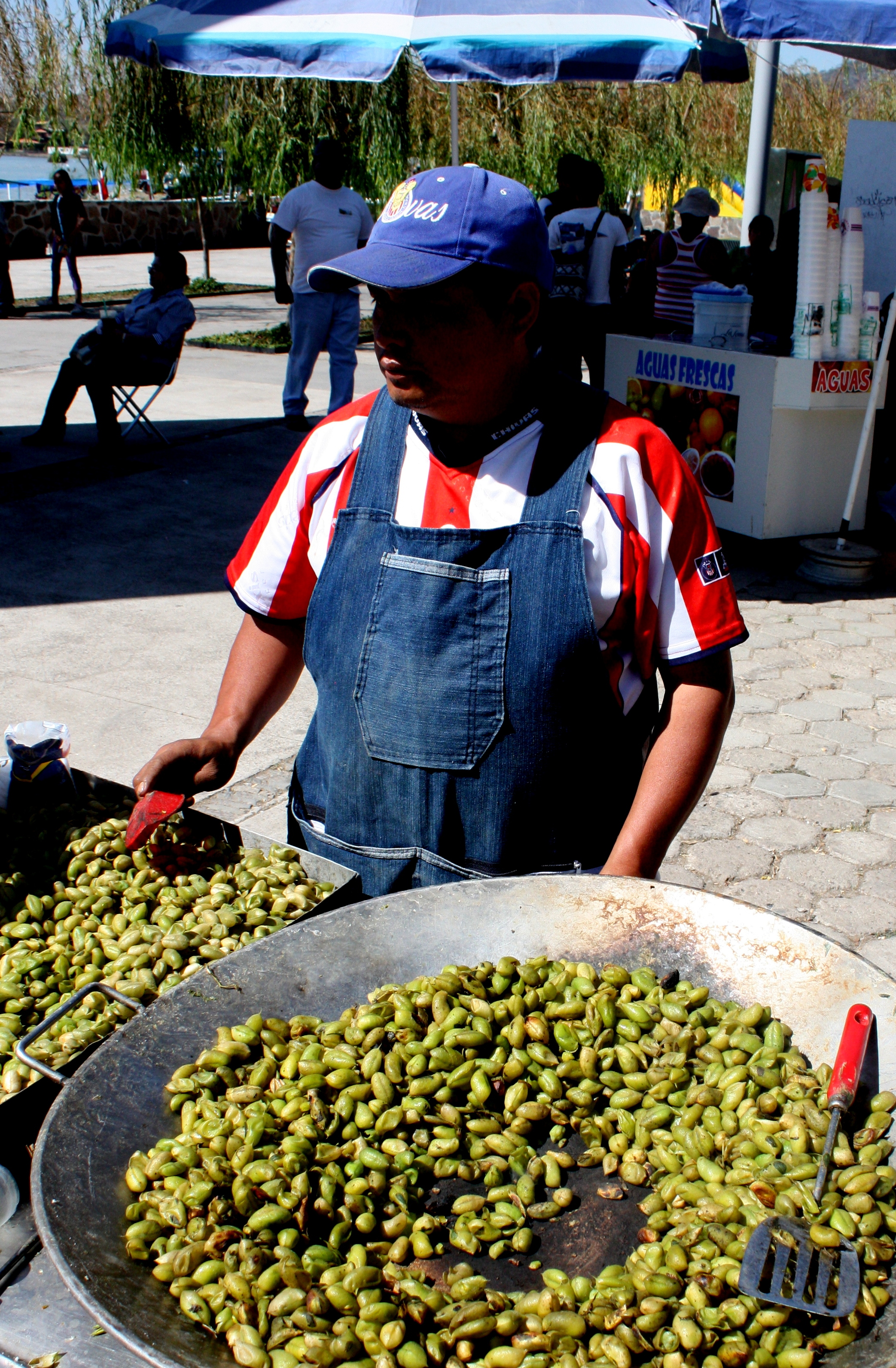
A street vendor cooks unshelled garbanzo beans

A street vendor cooks unshelled garbanzo beans


We pass a centuries-old building that once housed a convent.  It’s closed to the public on this holiday, but I make a mental note to see it on a future visit.


A street vendor cooks bright, unshelled garbanzo beans over a gas-fired griddle.

I buy a small bag and pop the steaming beans free of their pods, eating them by handfuls.  Delicious!

Corn roasts over glowing embers curbside.


Freshly roasted corn cool on a curbside grill

Freshly roasted corn cool on a curbside grill


Under expansive canopies pitched in the soft breeze along the malecon at the water’s edge, a guitarist strolls among families singing ranchera as his listeners share the season’s traditional tamales.

Families share tamales under a canopy along the malecon

Families share tamales under a canopy along the malecon

Weekenders depart from the pier on Cajititlan's malecon

Weekenders depart from the pier on Cajititlan’s malecon


At the pier along the malecon families board small launches for leisurely cruises on the lake.

A musician plays for the crowd on Cajititlan's malecon

A musician plays for the crowd on Cajititlan’s malecon

Nearby a musician absently fingers the keyboard of his accordion, squeezing out tunes so often played that his fingers move unthinkingly over the buttons and keys.

Parish church on the plaza in Cajititlan

Parish church on the plaza in Cajititlan

I can’t help but smile in satisfaction as we retrace our steps to my parked car, passing the now deserted plaza.

This fiesta has been a perfect ending to a perfect day spent driving the villages around Lake Cajititlan.

The bright lights of cosmopolitan Guadalajara are but 30 minutes’ drive away, but here in the country villages along the lake traditional Mexico is alive and well.


Read other posts about my trip around Lake Cajititlan:…

Mexico’s coded past

Cemetery and church in San Juan Evangelista

Cemetery and church in San Juan Evangelista

I’d have counted it a very rewarding day if it ended with my visit to the studio of barra (clay working) maestro Martín Ibarra Morales in Jalisco’s San Juan Evangelista.

I turned out instead that the studio visit was but a taste of what would soon reveal itself along the shores of Lake Cajititlan.

Spanish soldiers and Catholic missionaries arrived here on horseback within 50 years of Columbus’ first arrival in the New World and within 10 after Tenochtitlan (now Mexico City) fell to Cortes, pressing toward the Pacific Ocean and ever in search of more gold.

From its first expansion beyond the boundaries of the Roman Empire, Catholicism has time and again promoted conversion of pagan peoples by incorporating aspects of their religions into its own imagery and rituals.

In few places is its chameleon bent as widely evident as in Mexico, and nowhere in my experience as pervasively as in San Juan Evangelista.

San Juan Evangelista 2013-02-15 02 stone arches

Stone arches at the church of San Juan Evangelista

Martín guides me and my Mexican artist and friend Jesús López Vega across the street to where a church dating from the 1600’s stands adjacent to a graveyard.

San Juan Evangelista 2013-02-15 03 church facade

Front facade, church of San Juan Evangelista

Like many buildings of the period in this part of the world, this church was constructed by indigenous craftsman under the direction of priests.

Martín explains the facade imagery to Jesús.

Martín explains the facade imagery to Jesús.

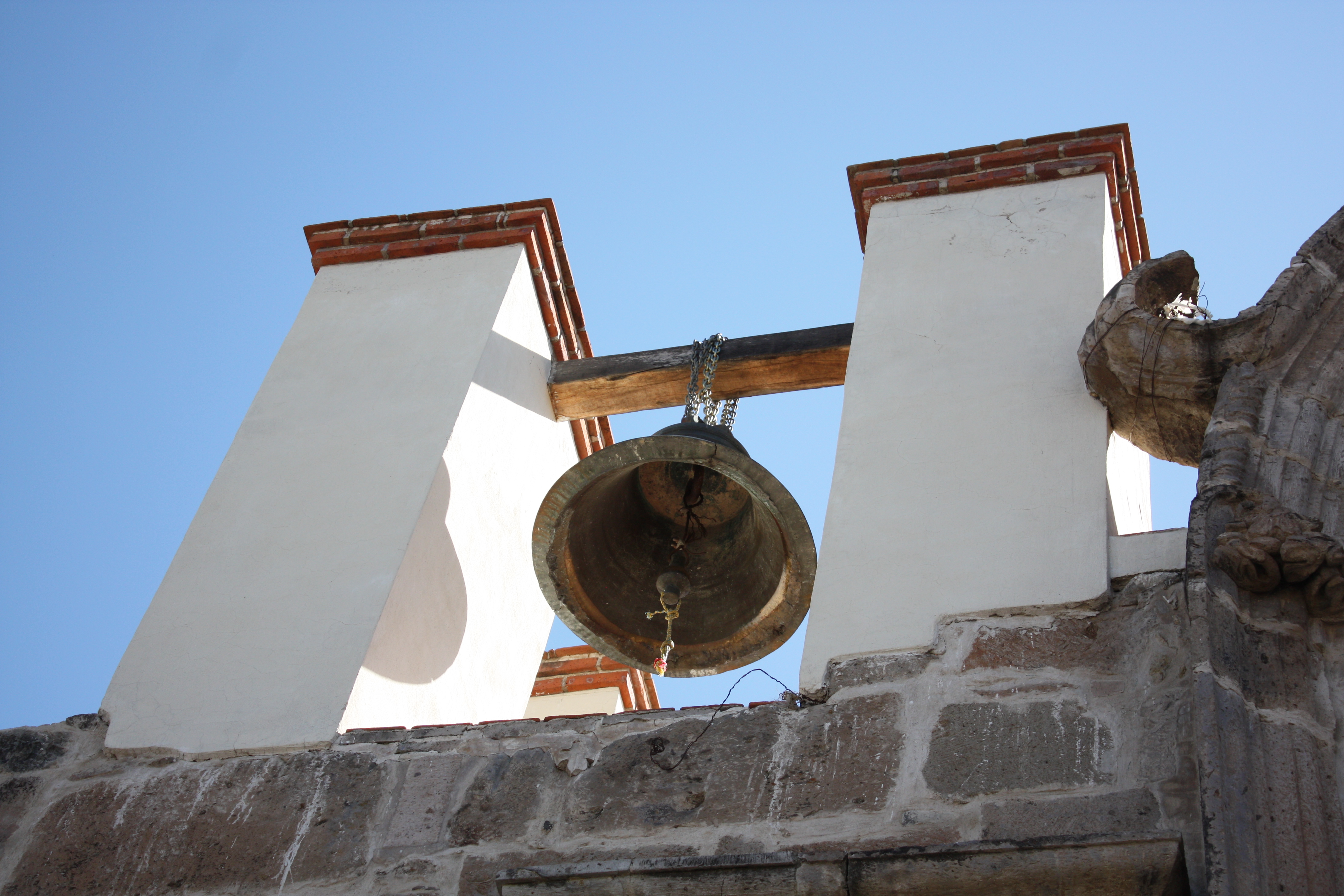
Church belltower in San Juan Evangelista

Church belltower in San Juan Evangelista

To the untrained eye it looks like many Spanish Catholic churches, but Martin knows better and he shares his insights as he points out features of the building’s architectural detail.  It becomes quickly apparent that things are not what they first might seem.

If the priests believed that ministrations backed by Spanish arms would quickly and irrevocably convert native peoples to Christianity, they were indulging far more in wishful thinking than they were ever to know.

Detail of church facade, San Juan Evangelista

Detail of church facade, San Juan Evangelista

Hidden within the elaborate stone façade are icons of the native religion, speaking in seditious code to a people conquered, but undefeated.

In Christian tradition the serpent is a personification of the Devil, but in native religion the plumed serpent is a deity that archeologists say first appeared in Mexico about the time that Christ was born.

Martín sketches in the dust

Martín sketches in the dust

Soon the artist in Martín can resist no longer and he stoops to reproduce the façade’s scrollwork in the dust, showing how its unusual double-scroll pattern is actually a serpent.

Doorway in carved cantera stone

Doorway in carved cantera stone

Feline faces that adorn drain spouts just below the roof line high above are decidedly un-Christian images of jaguars.

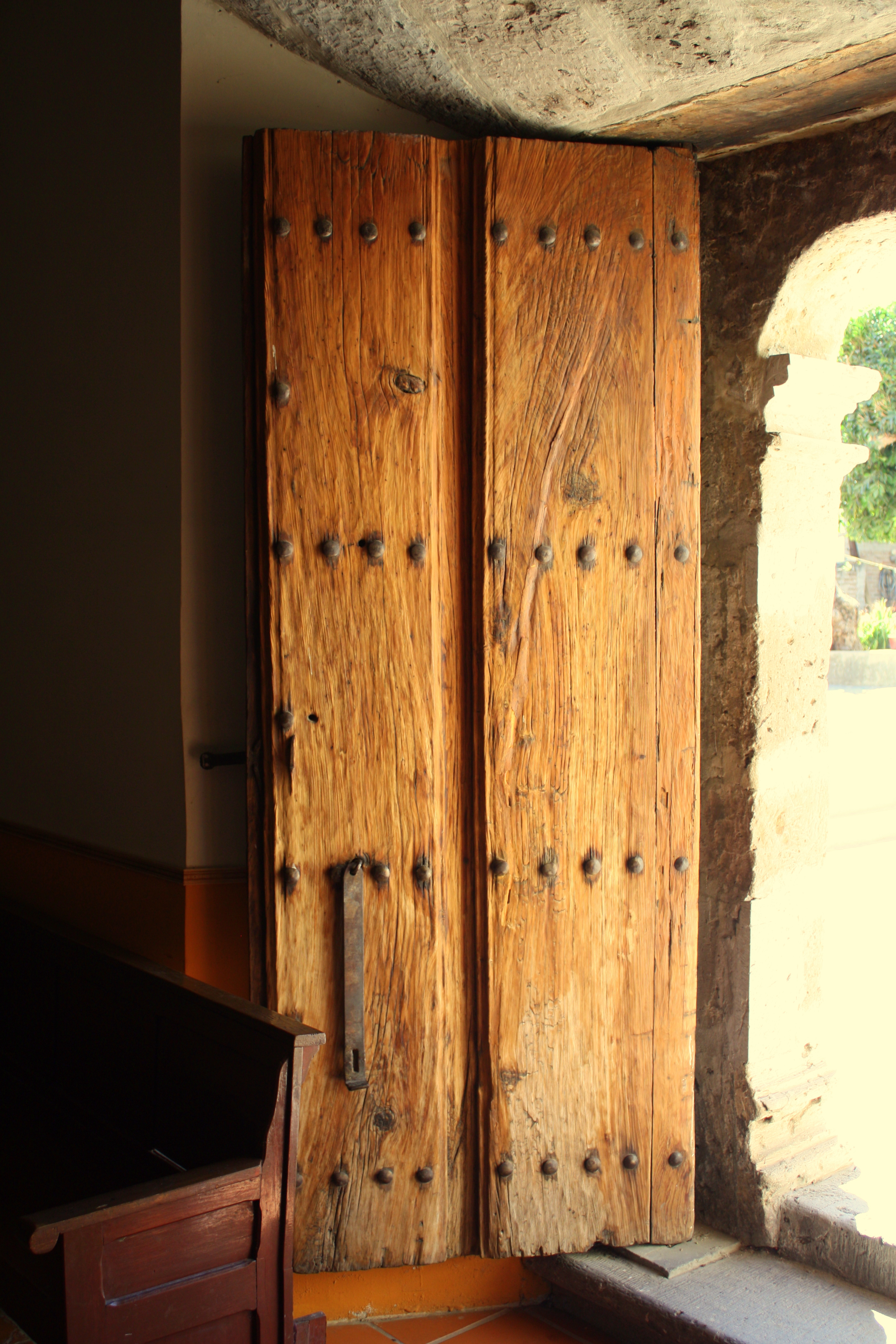
Worn and weathered church door, San Juan Evangelista

Worn and weathered church door, San Juan Evangelista

We enter the church through a side door that shows every sign of being part of the original construction, its edge worn smooth by worshipers’ hands over the course of more than 300 years.

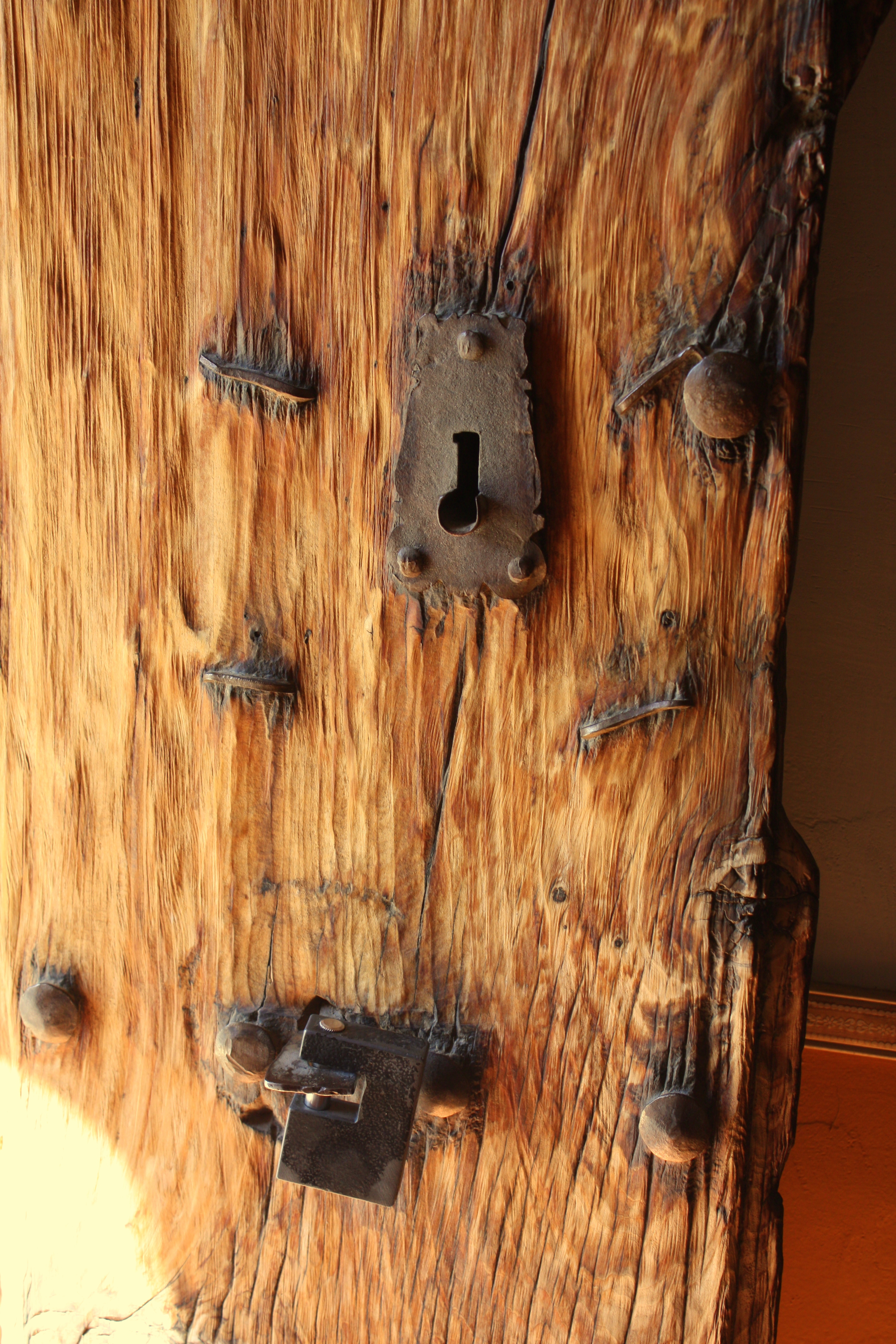
Church door lock and hasp

Church door lock and hasp

Inside, Martín points out more indigenous icons hidden within the three-story-high carved imagery behind the altar, and in designs of carved cantera stone above the doorways.

He recounts a story long told in his village that priests discovered – years after completion of the construction – that the native workers had hollowed out statues of saints which adorn the interior, and placed within their hollowed spaces images of their native gods.

Church alter tableau in carved and gilded wookd

Church alter tableau in carved and gilded wood

Detail of church alter tableau, San Juan Evangelista

Detail of church alter tableau, San Juan Evangelista

It’s a remarkable demonstration of faith and passive resistance that can’t help but inspire.

If I concluded on the strength of this visit that such pagan imagery within Catholic churches was a thing of the distant past, though, my view was soon to be set on its ear by what I next saw as we rounded the western edge of the lake and doubled back on the other side toward the town of Cajititlan…

More on this blog about Mexico’s native artisans…

Maestro in clay

Martin Ibarra Morales 2012-02-02 01

Jesús enters through door in an adobe wall

I first met maestro Martín Ibarra Morales last November when – as one of the artisans invited to Ajijic’s annual Feria Maestros del Arte – he and his family were my houseguests.

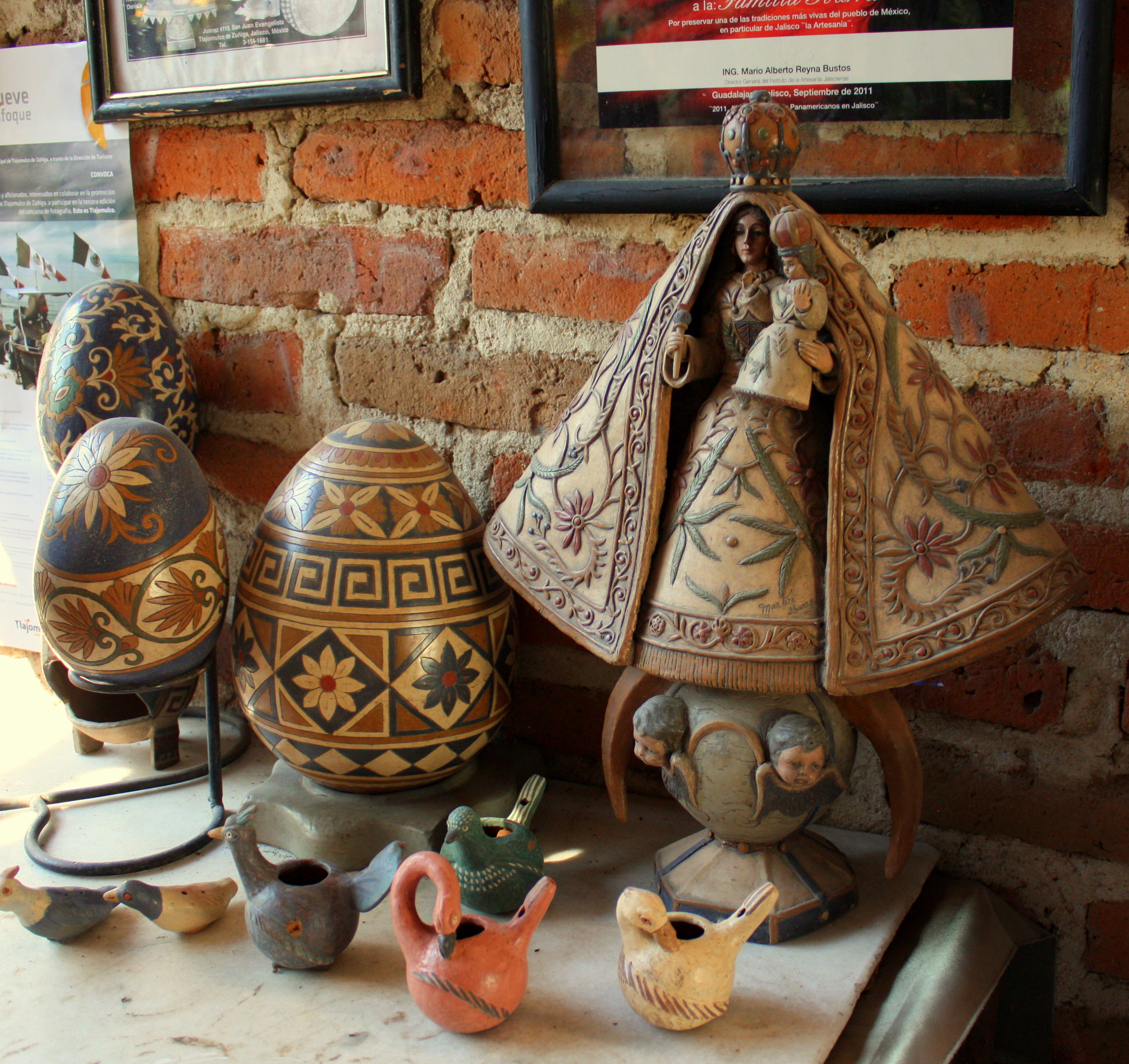
Egg-shaped globes, clay virgin, and clay whistles

Egg-shaped globes, clay virgin, and clay whistles

Martín is a clay sculptor whose work is collected worldwide.  His renowned artisan father taught him his craft, and he’s most well-known for his intricately formed and painted virgins and globes.

Martin Ibarra Morales 2012-02-02 03

He lives on the shore of Lake Chapala’s smaller cousin, Lake Cajititlan, in the village of San Juan Evangelista which is – as the crow flies – not 15 kilometers from Ajijic.  The driveable route around the mountain is about twice the distance.

Martin Ibarra Morales 2012-02-02 04

Clay mask with an unforgettable face

Traveling with me is friend and Ajijic artist Jesús López Vega, who has an abiding interest in native artisans and is a welcome bridge over the gaps in my Spanish.

Martin Ibarra Morales 2012-02-02 05

Sol y luna motif

Our directions fail us just a few blocks short of our destination, but we park along the principal plaza opposite the church and graveyard and strangers direct us to a home walled in adobe brick; Martín is clearly also a local celebrity.

A small foyer opens into open air patio, its brick walls adorned with framed news clippings and certificates of recognition, and tables covered with some of the maestro’s work.

Martin Ibarra Morales 2012-02-02 06

Not an inch of unused studio space

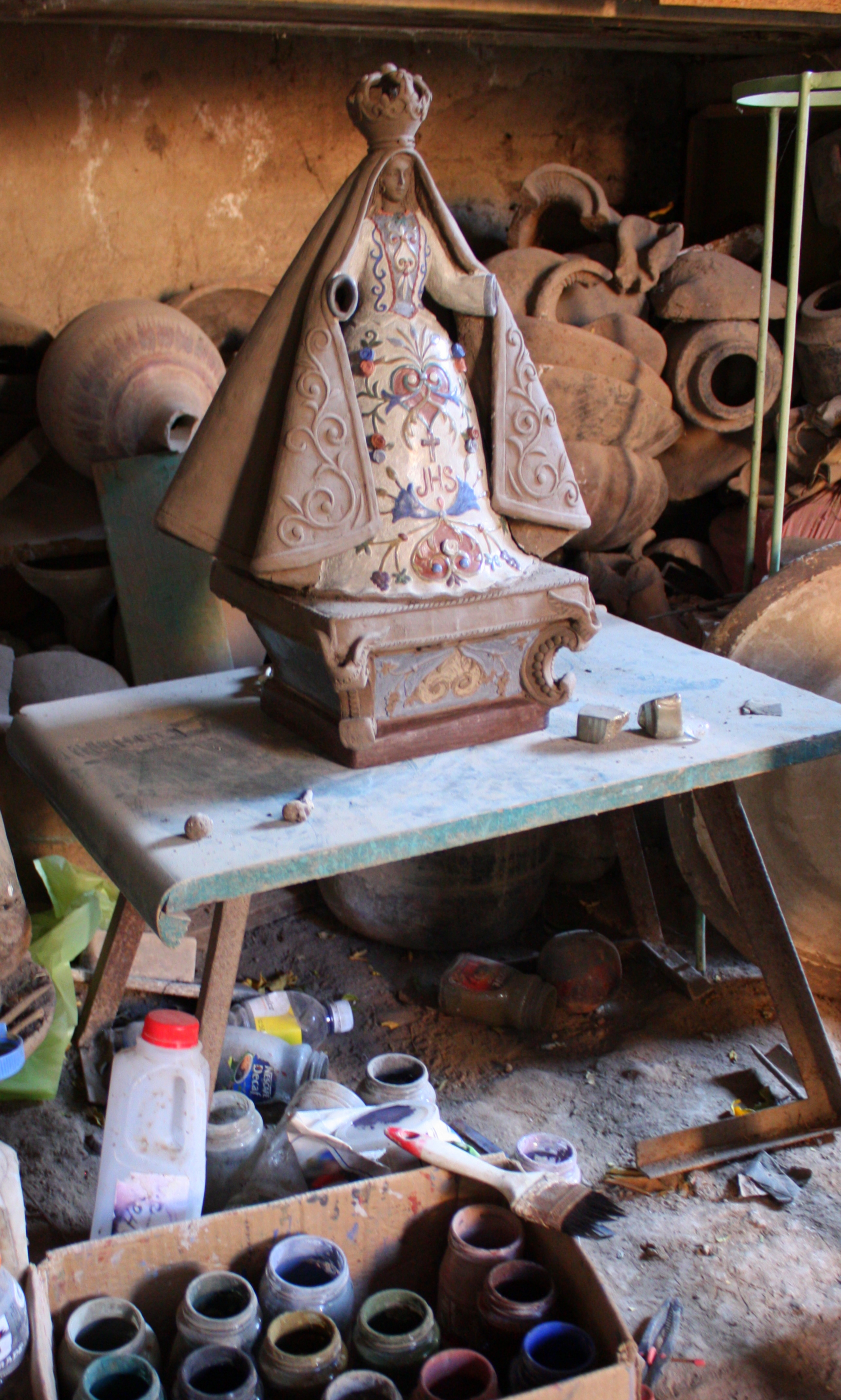
Clay virgin, nearly finished

Clay virgin, nearly finished

We turn the corner into the studio, a Spartan room in aged brick and stucco.

On a table at its center sits one of Martín’s celebrated virgins, which looks to my untrained eye nearly finished.

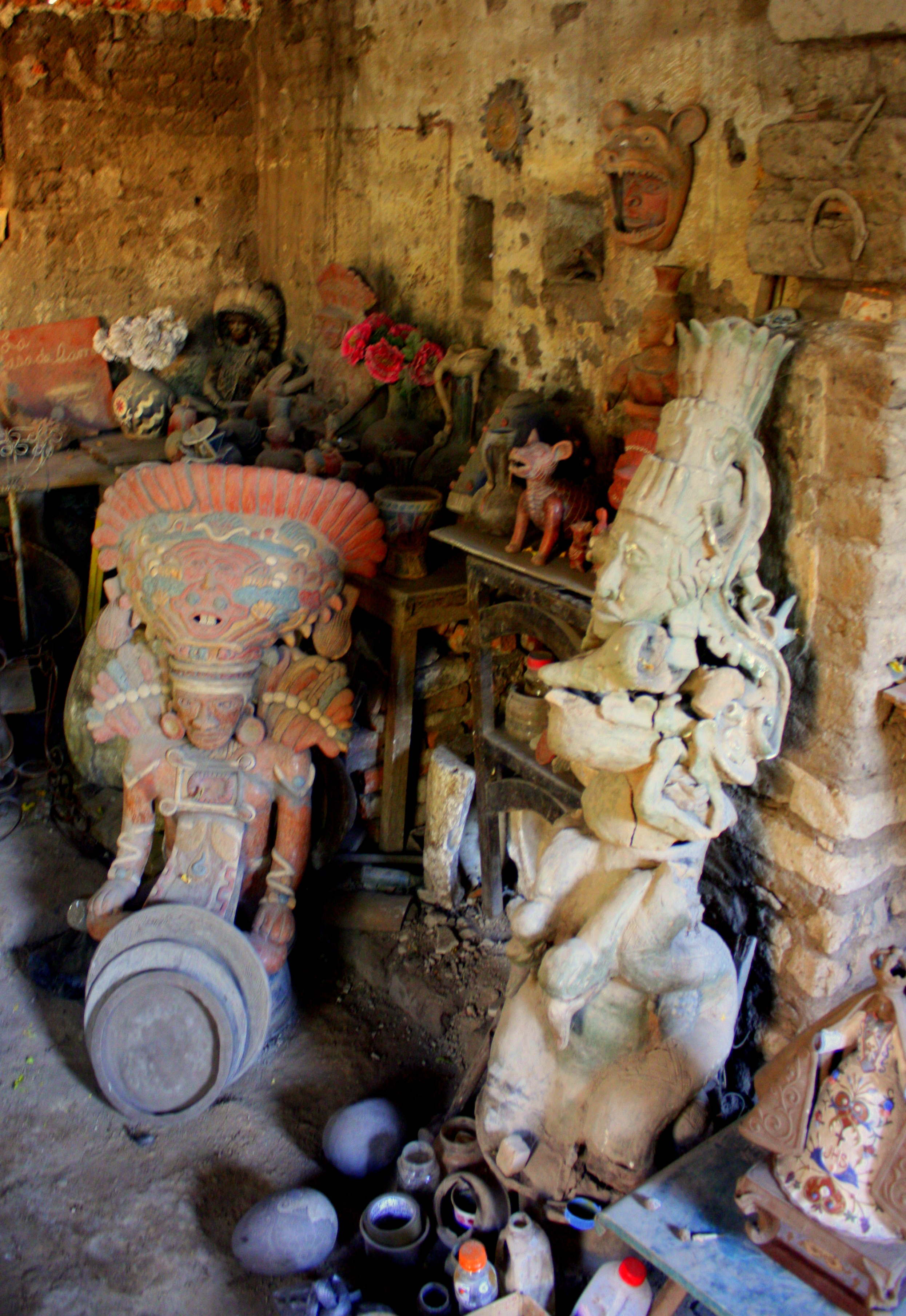
Work in progress covers every inch of the studio

Work in progress covers every inch of the studio

Martin and his articulate hands

Martin and his articulate hands

Works in almost every stage of completion seem to take up every square inch of the room, ranging in size from clay whistles that rest easily in the palm to Aztec statuary nearly as tall as Martín’s diminutive frame.

Jesus and Martin compare notes

Jesús and Martín compare notes

Martín is soft-spoken, but not shy, and as he warms to the conversation he talks animatedly, punctuating remarks with his hands.  Often he’ll move the conversation to a quickly sketched explanation of his point.

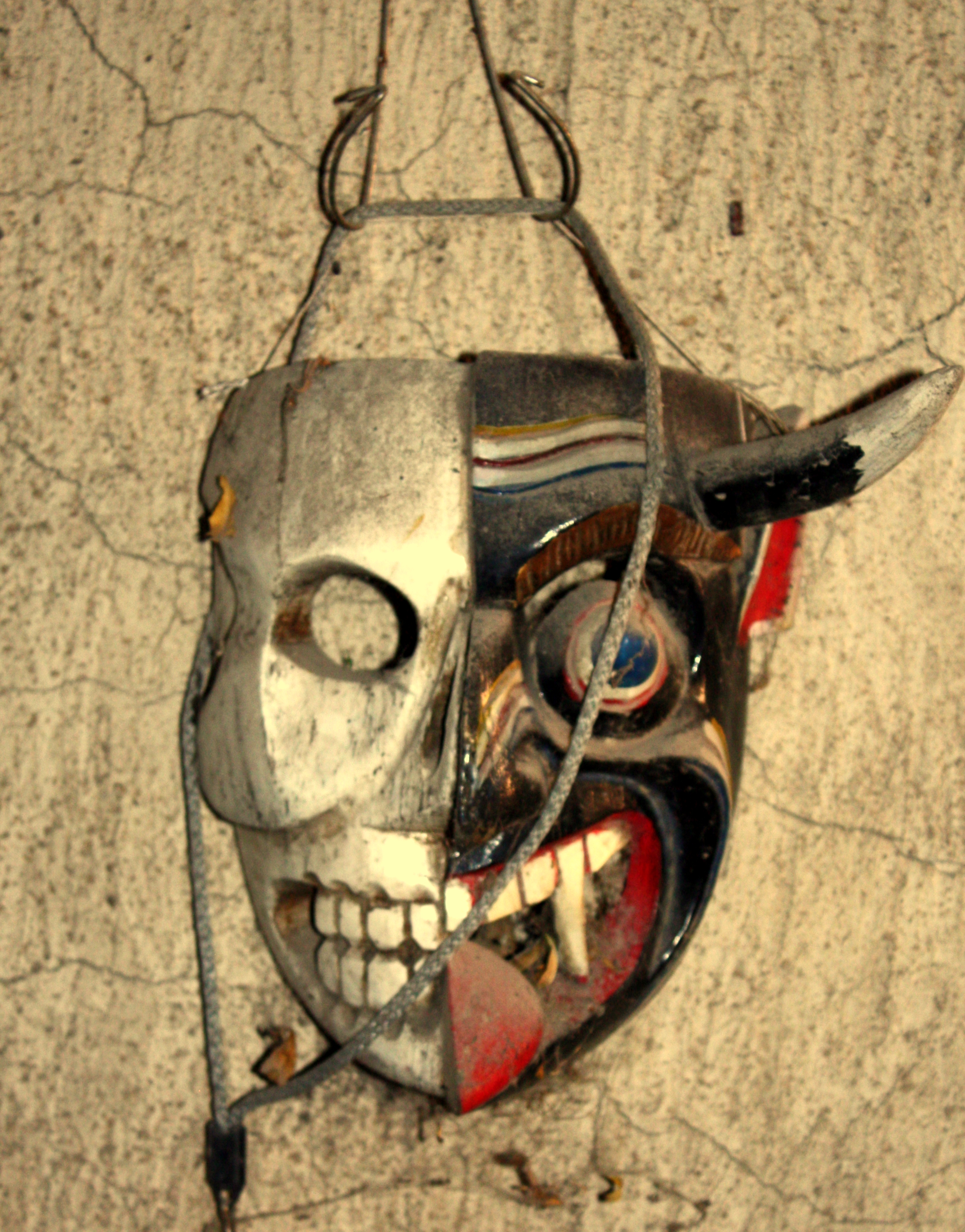
Martin Ibarra Morales 2012-02-02 12

Joker or devil?

He and my artist friend Jesús quickly plunge into rapid-fire Spanish, comparing notes from old texts of art history that trace the origins of their work back to pre-Hispanic traditions.

Their Spanish soon races past me and I wander the studio as they talk.

Timeless theme

Timeless theme

A statue looking for all the world like a recently excavated museum piece stares at me impassively.

A devilish mask simultaneously smiles and leers at me from the wall behind it.

Finished work sits above the kiln

Finished work sits above the kiln

In one corner finished work sits on a mantel above a brick kiln, its face smoked black by decades of use.

Jesús and Martin

Jesus and Martin

Just as it seems that the visit is about to draw to a close, Martín points through the gate past the cemetery to the church beyond, and asks if we would like him to take us on a tour.

Church yard cemetery just across the street

Church yard cemetery just across the street

It’s a hospitality not to be refused, and we walk into the bright sunlight and across the street.  What he shows us there turns out to be as memorable an experience as the opportunity to see his workspace, and it’s the topic of my next post, so stay tuned…

More about Martin Ibarra Morales…