Tag Archive: Lake Chapala, México


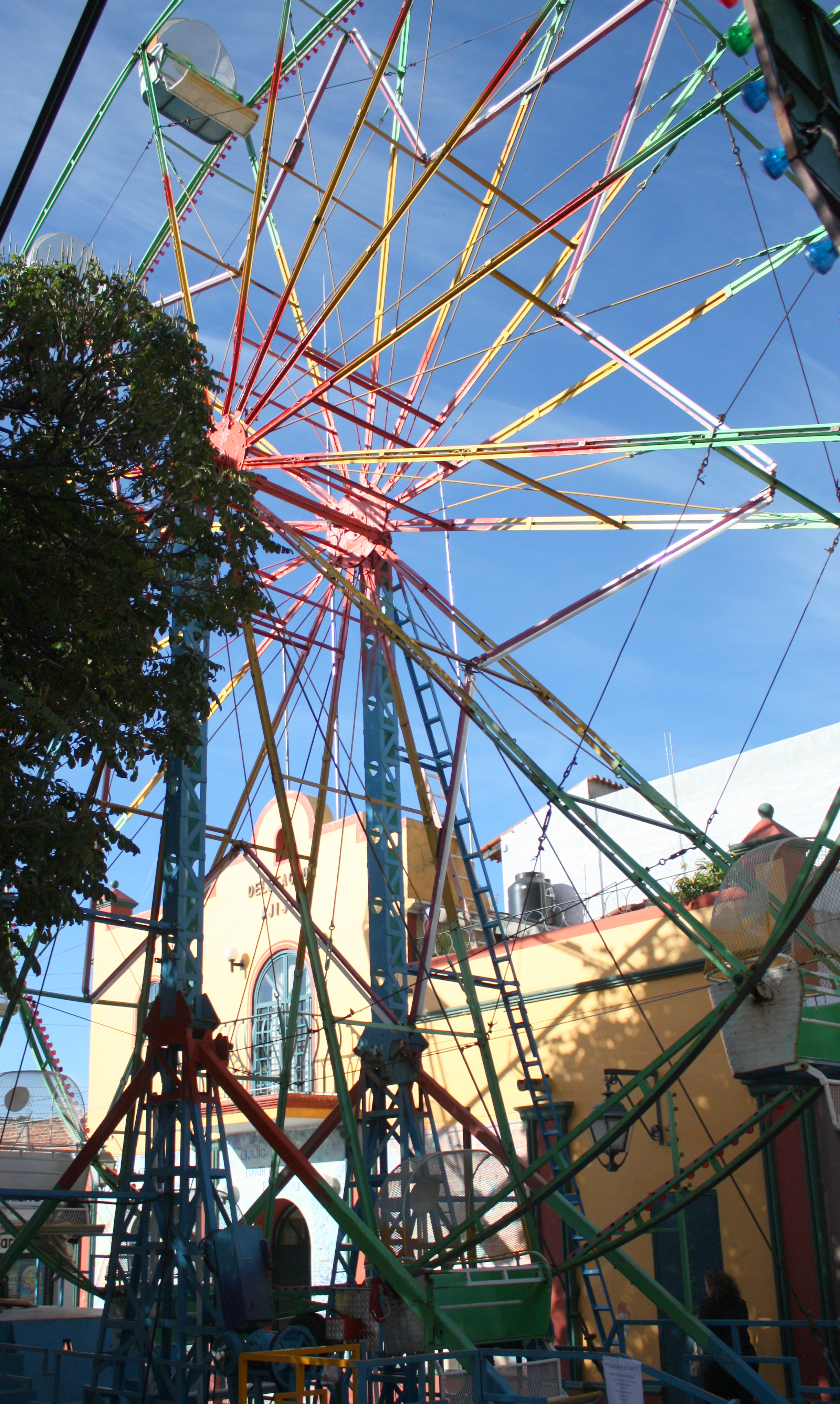
Ferris wheel looms over the municipal Delegación building

The Tuesday sun is not long risen and there’s a slight chill in the air as I walk into the village over cobblestone streets.

On other weekdays I would be passing workers headed to their jobs and schoolchildren on their way to class, but this day is different.
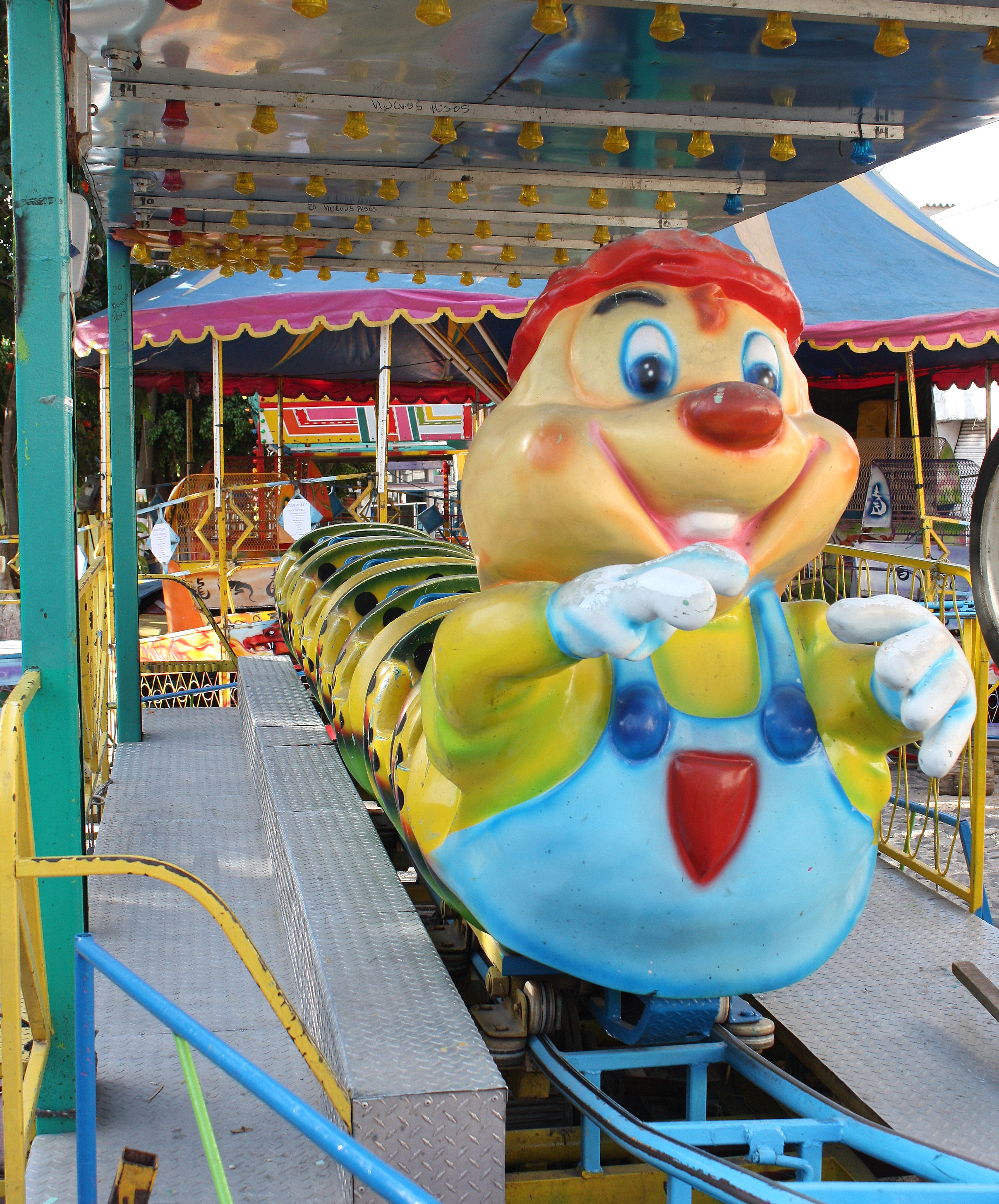
Carnival ride awaits the start of Fiesta

Here in Ajijic it’s the day before the beginning of the fiesta patronale – the patron saint Fiesta de San Andres, and as I turn toward the plaza the street is already blocked by waiting carnival rides.
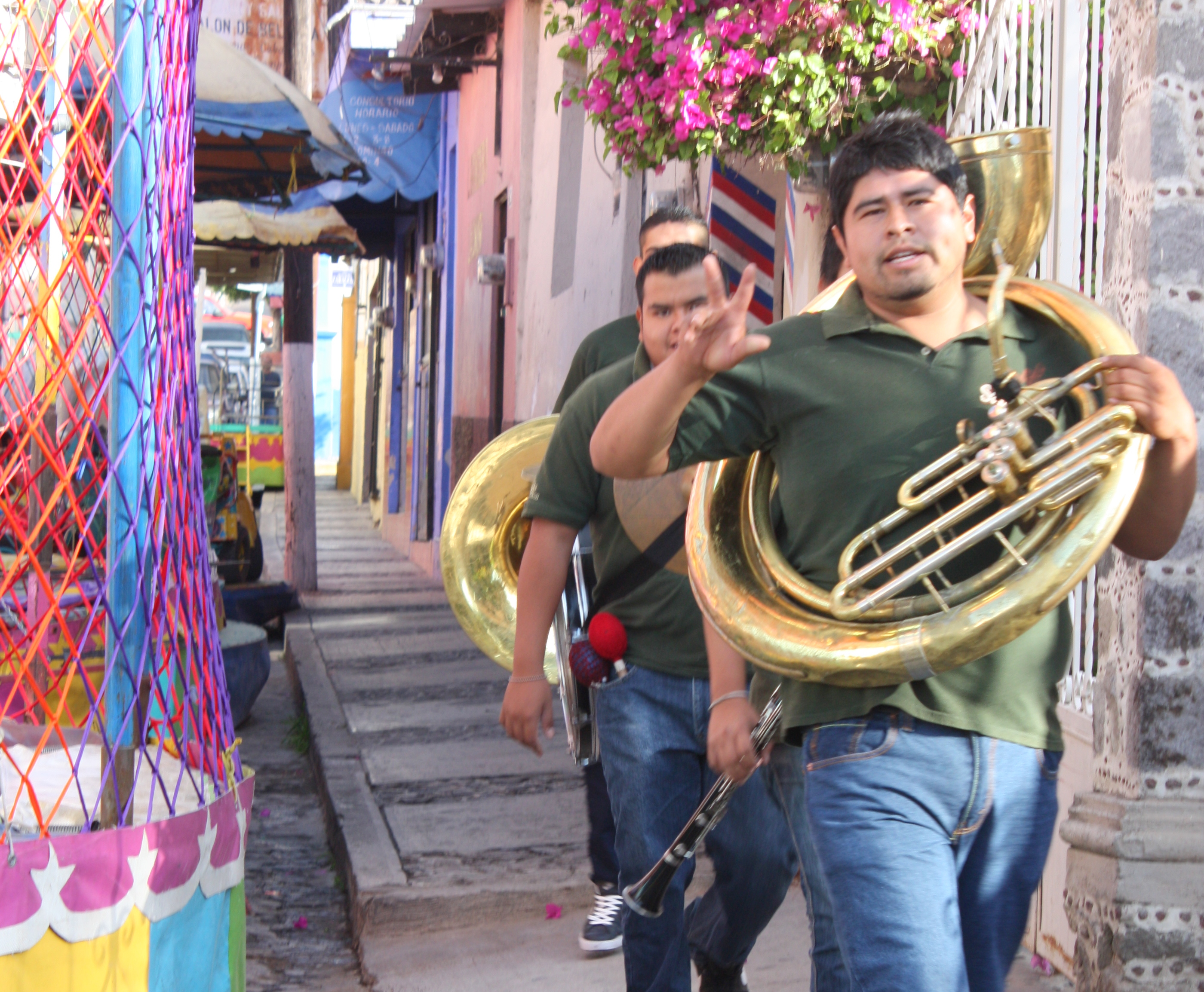
Band member rush to meet the parade

It’s also the 112th anniversary of the start of the Mexican Revolution… the Dia de la Revolución.

A trio of bass band musicians passes me hastily, rushing toward the Revolution Day parade assembly point, which stretches for several blocks at the eastern end of the village.

I follow them through the plaza past a mural that celebrates the Revolution.
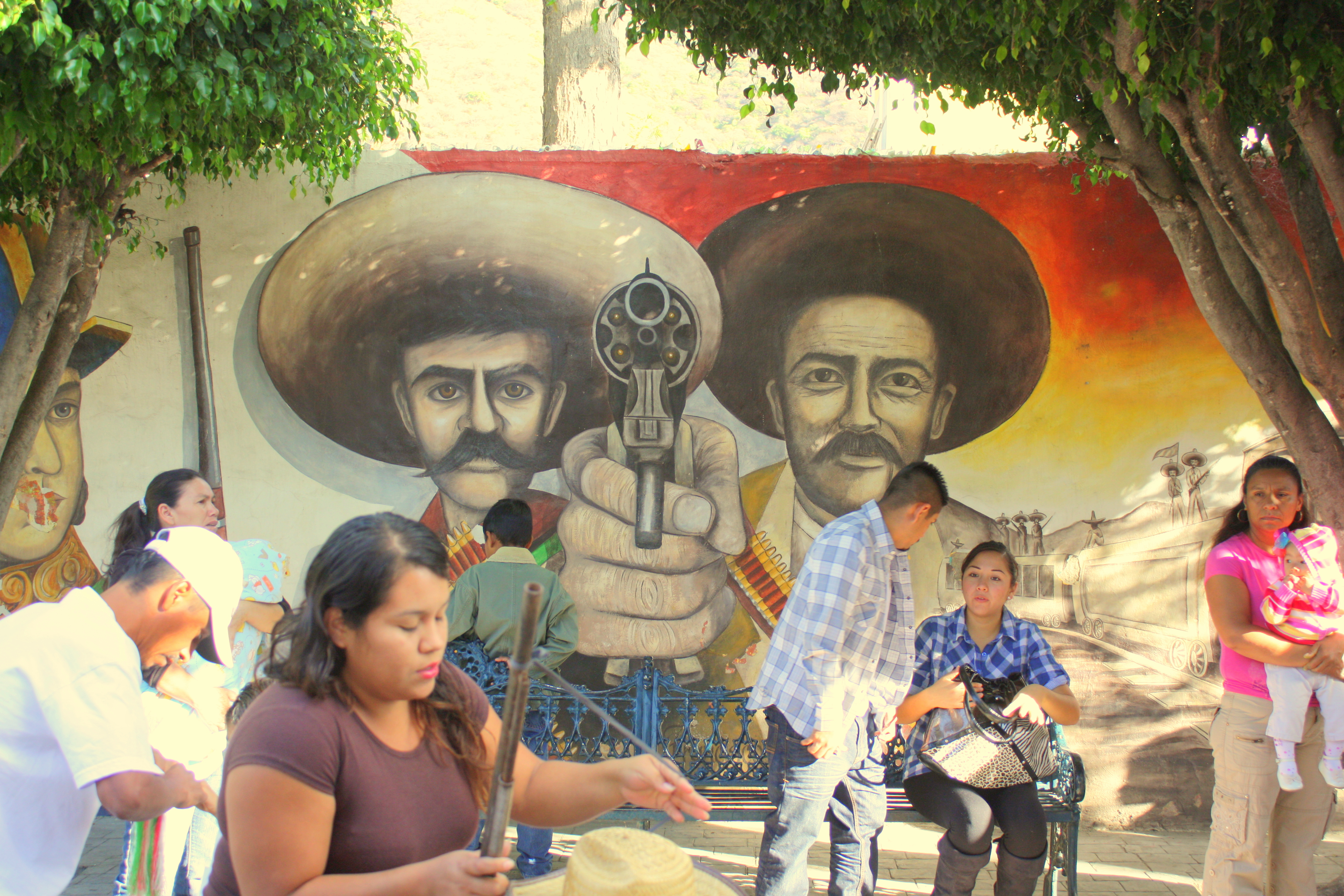
Wall mural of Revolutionary heroes just off the Plaza
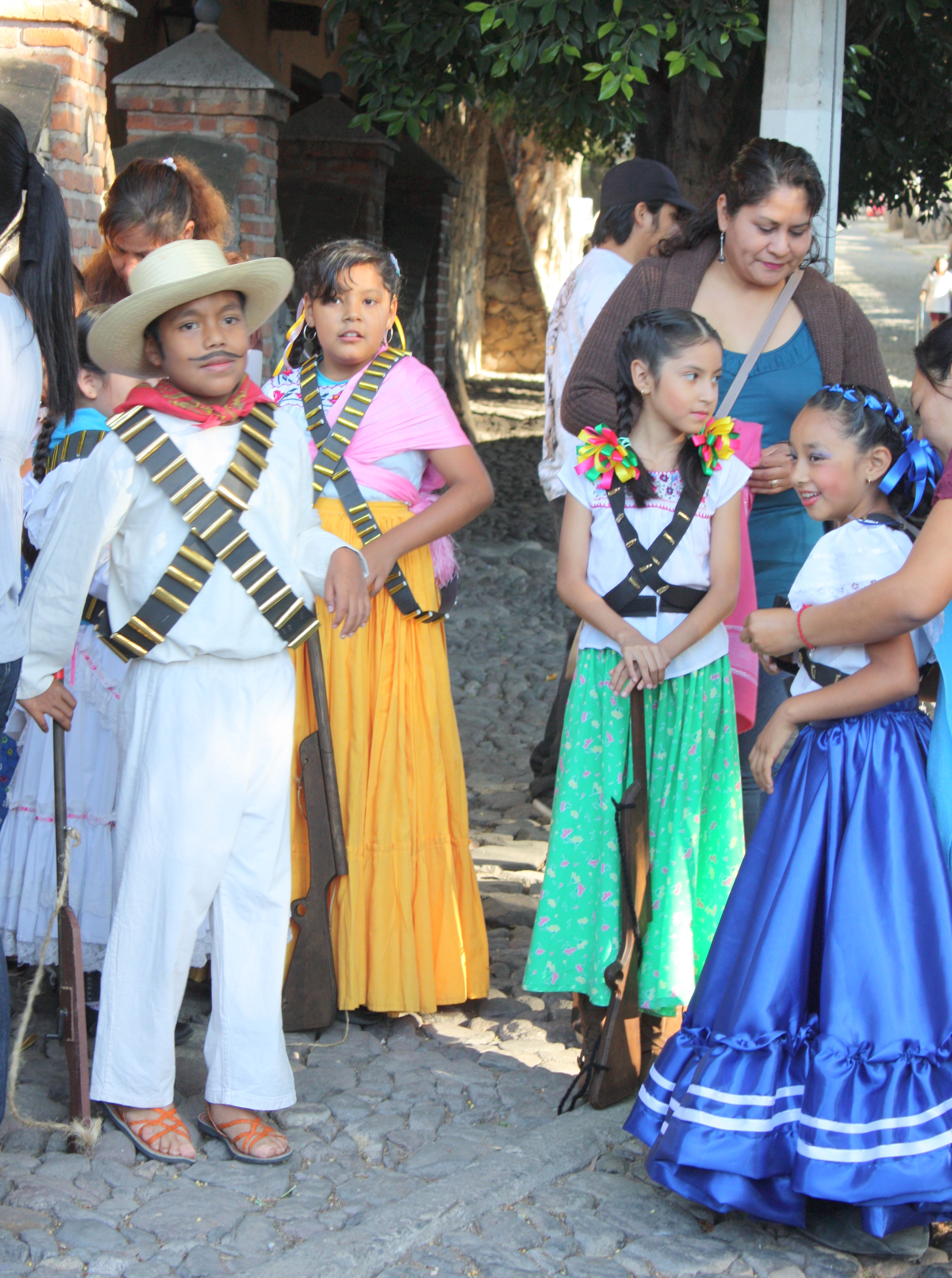
Costumed children awaiting the start of the parade

Milling about the parade’s starting point are hundreds of children in costumes ranging from drum-and-bugle corps to heroes of the Revolution, and parents everywhere are making last minute adjustments to fidgeting ninos.
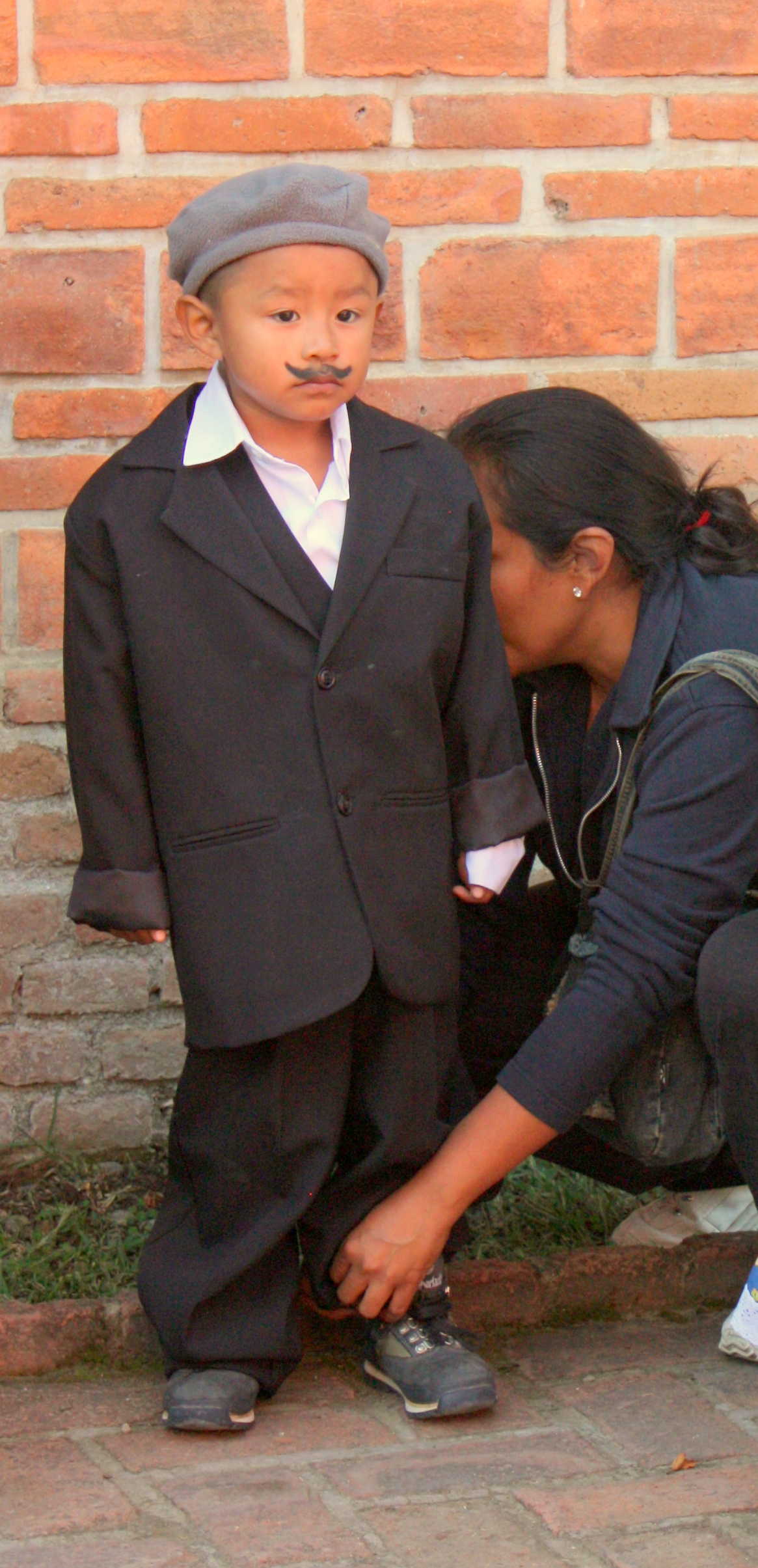
A mother makes last minute costume adjustments

The scene gives me pause for reflection.  American independence, the American Revolution, and the framing of the U.S. constitution unfolded as a virtually unified event spanning only 13 years.  In Mexico these events occurred separately over more than a century, the outcome of each many times cast into doubt.
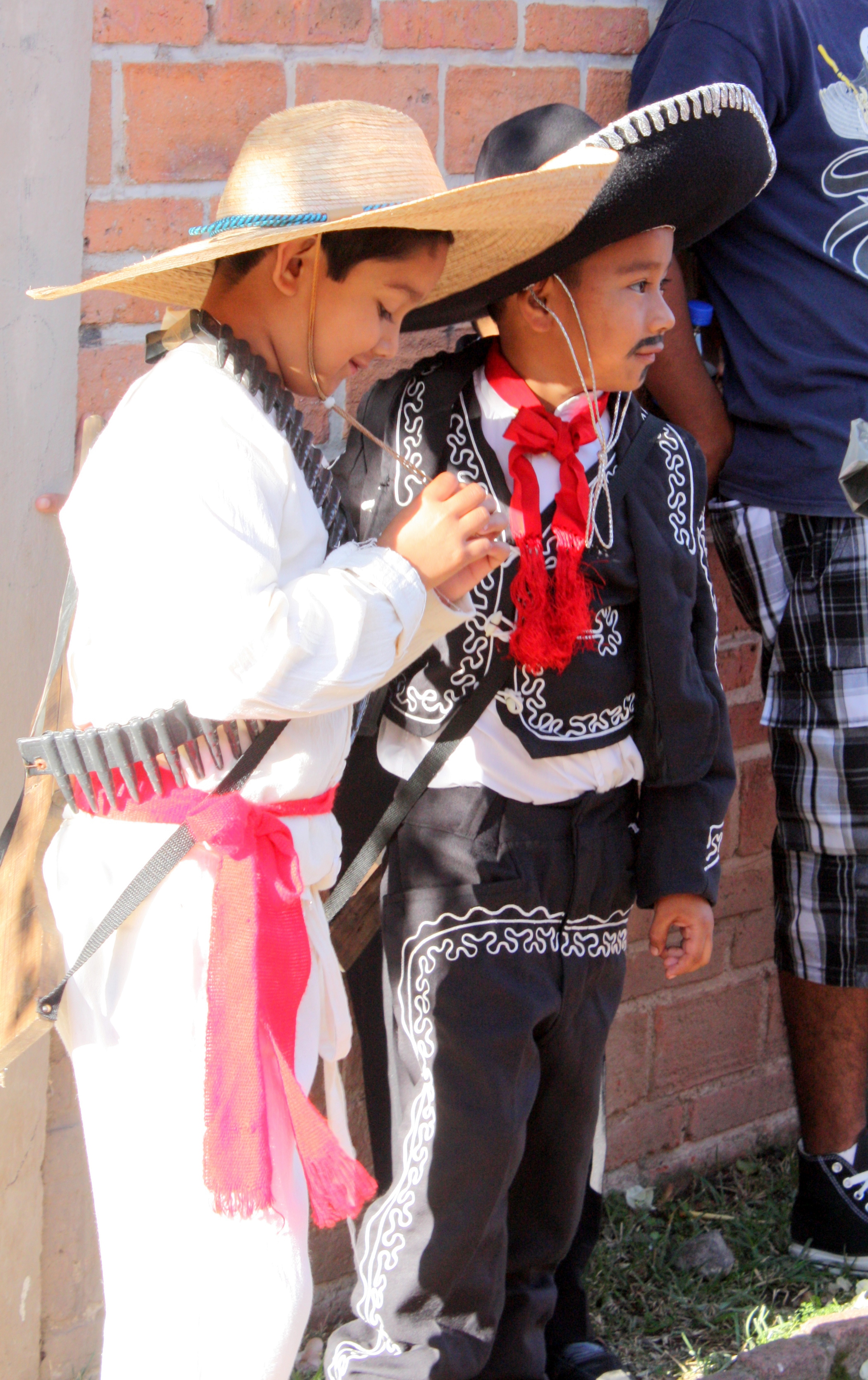
Two costumed boys pass time before the parade

There’s a case to be made that the Mexican Revolution is still a work in progress.  Its memory is still fresh; the parents of the children in today’s parade grew up at the feet of grandparents who survived it.

Sweeping the street on the parade route

Sweeping the street on the parade route


Today education and information technology are giving their children the tools to better practice democracy and hold their government more accountable for the promises made by the Revolution.


The parade participants have begun to queue up in marching order. Along the route women are sweeping the cobblestones.

Waiting for the parade to pass

Families are collecting in windows and doorways in anticipation.


The last census pegged Ajijic’s population at around 10,000 persons.  At least 1,500 are children participating in today’s procession and easily twice that number line the streets to watch them.
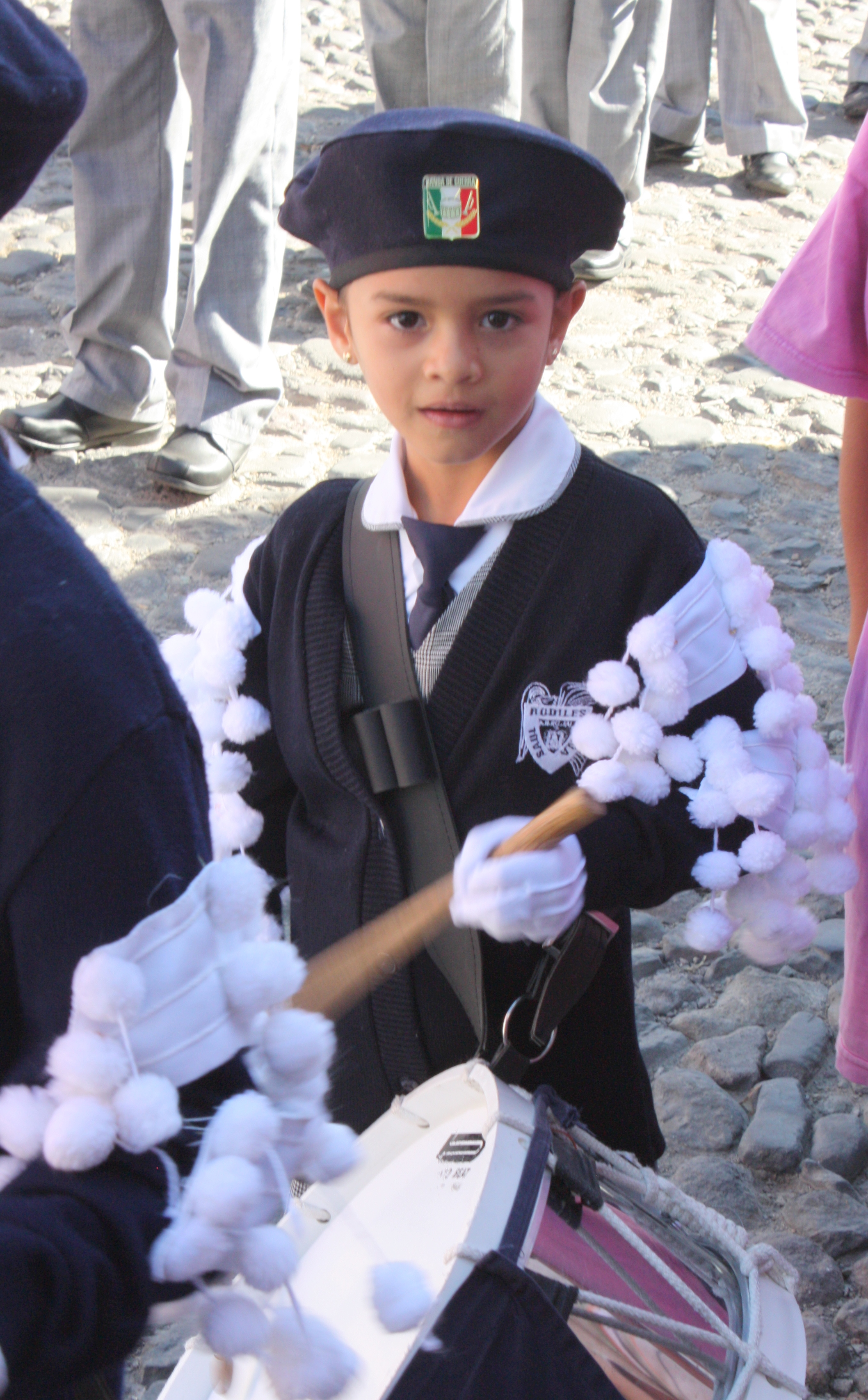
Little drummer girl
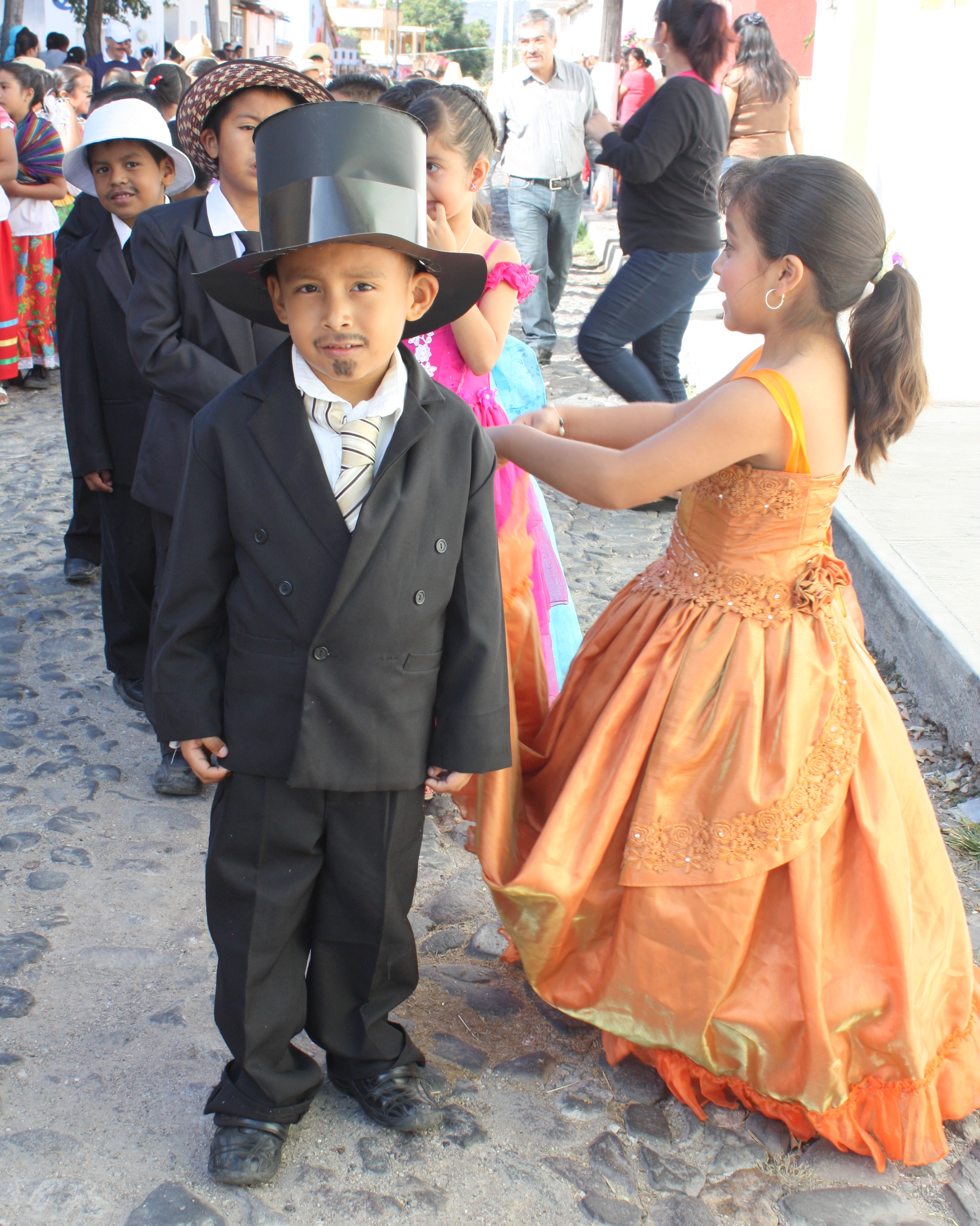
'Franciso Madero' pauses along the parade route

‘Franciso Madero’ pauses along the parade route


Bands and drum corps keep the procession moving as teams of gymnasts pause at every block to build human pyramids.

Other teams wave bandannas, hoops, or batons in synchronized drills.

It has the look of small town patriotic parades all across North America except for the setting… and children in traditional Mexican costume dressed as miniatures of the heroes of the Revolution.
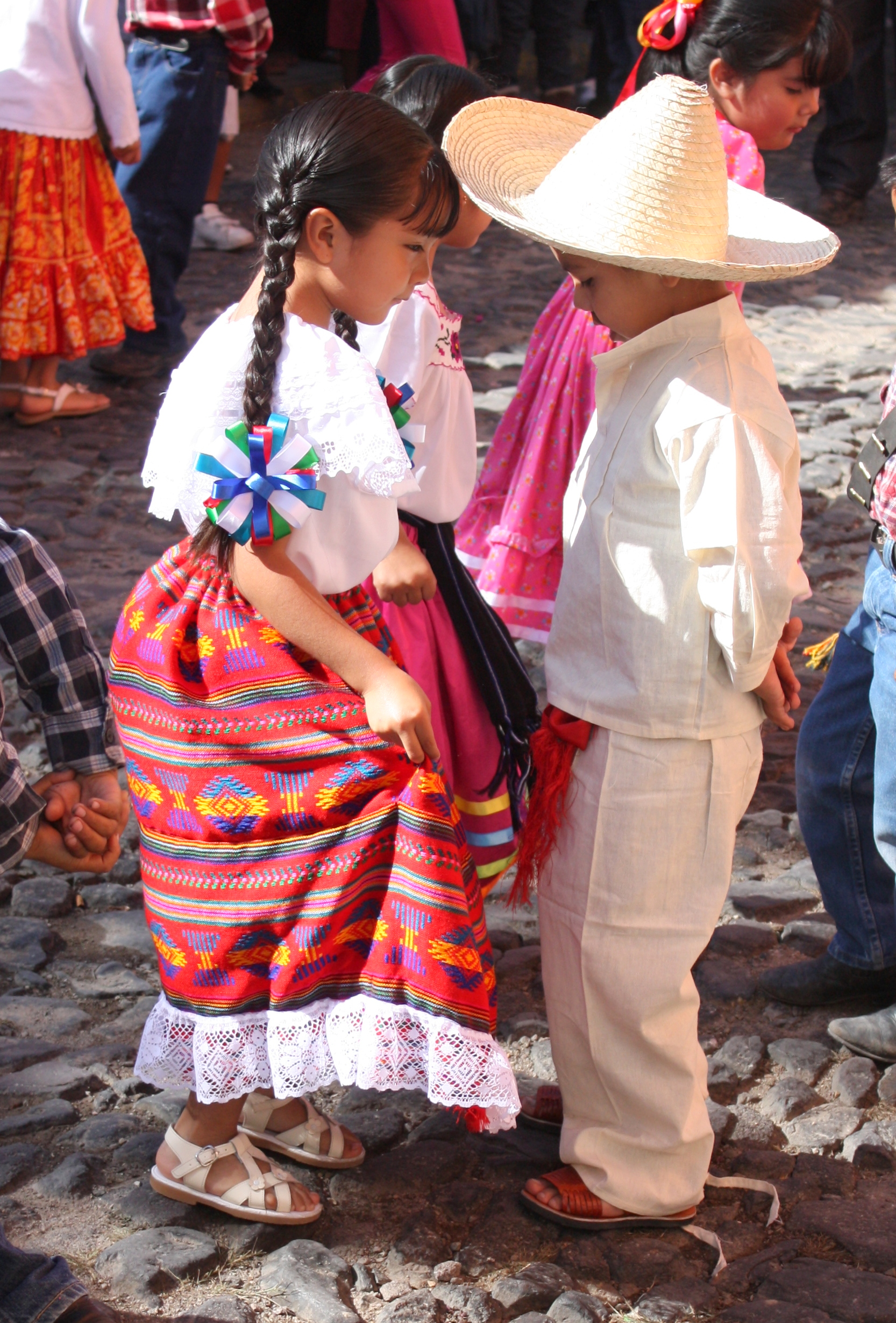
Youngsters perform a traditional folk dance

Madero.  Zapata.  Villa.  The youngest ride in the ever-present pickup truck float, arranged in tableaus that recall historical events.


Costumed children create an historical tableau
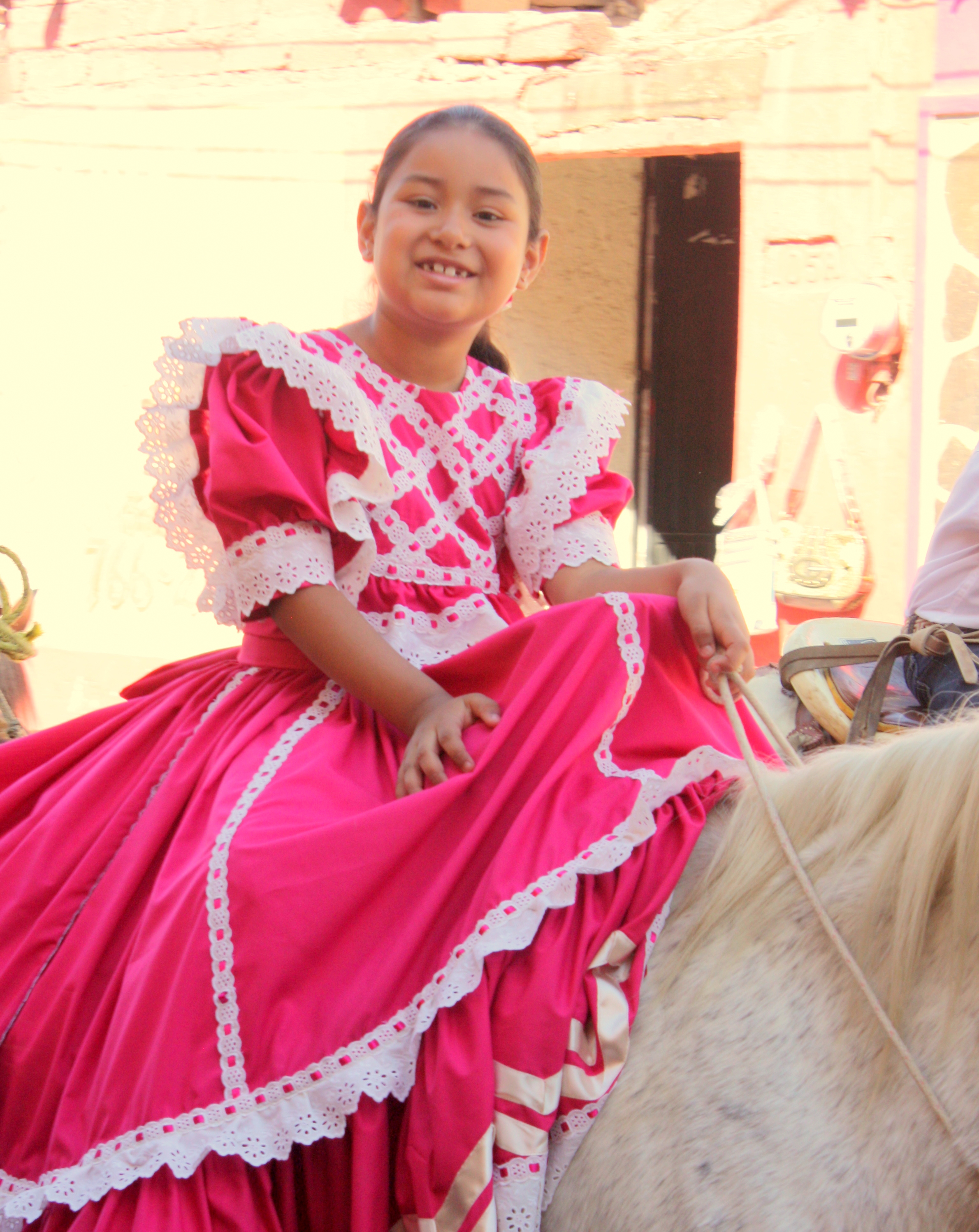
A charro-in-training astride her mount

And because Ajijic is undeniably Jalisciense, the parade would not be complete without the charros, whose horses amazingly dance across the cobblestones to the sound of traditional Mexican tunes.
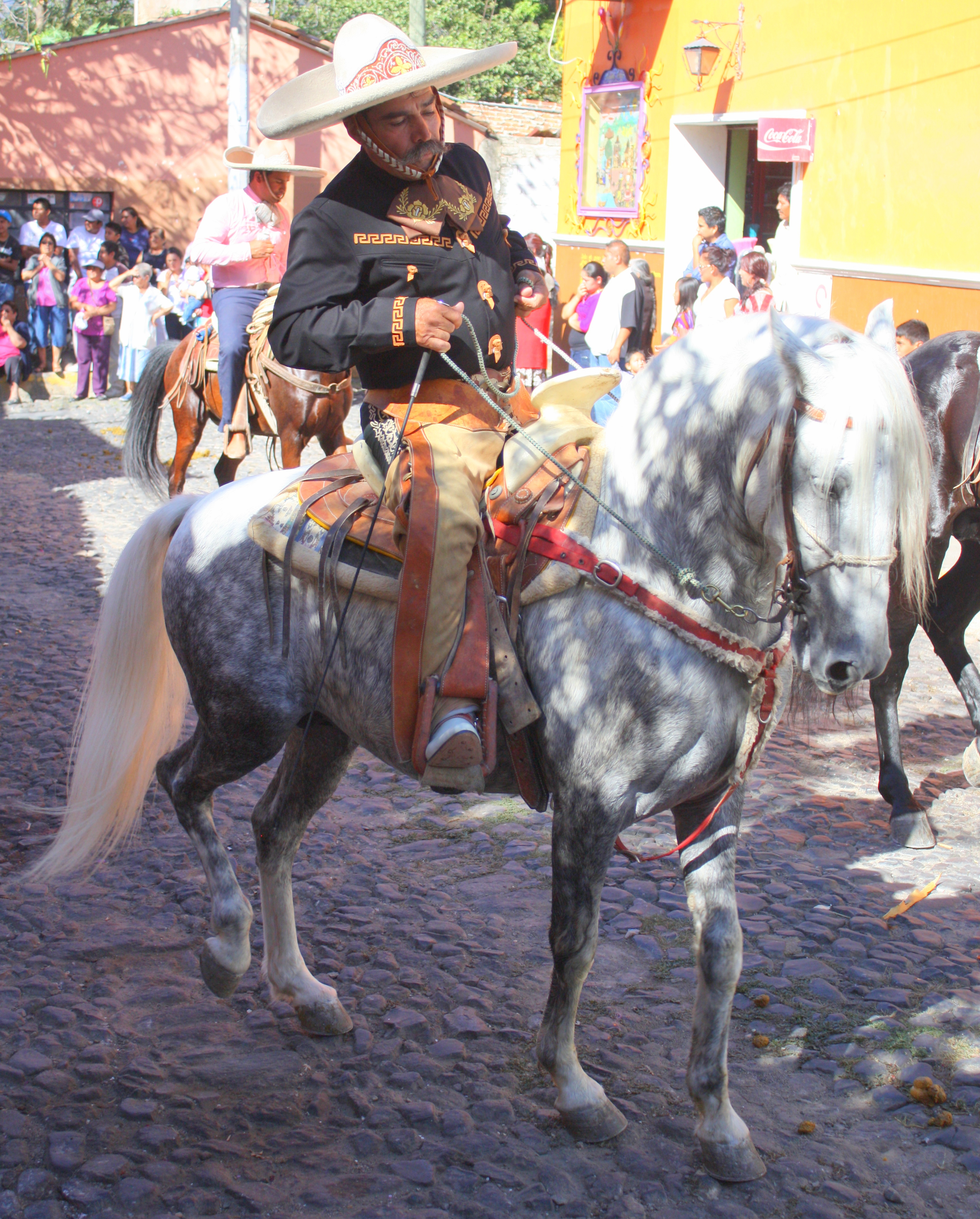
A charro puts his dancing horse through its routines

In the morning 10 days of fiesta begins, and there will be no need for an alarm clock, because the boom of fireworks, clanging church bells, and blaring brass bands will do the job before sunup!

The artisan as art

Mexico’s folk art is at risk of becoming an endangered species! Industrialization and urbanization – not to mention cheap Chinese knock-offs – are driving local artists to leave their villages and forsake their craft for work in the cities.

All natural fabric dyes are made from plants and insects

The good news is that there is a strong antidote in Ajijic’s Feria Maestros Del Arte, which this weekend celebrates its eleventh year.


A ceramic octopus in fanciful colors

Painstakingly painted detail

The Feria is a standout among area venues for artists and artisans not only for the quality, breadth, and originality of its work, but for its single inspired purpose of protecting and preserving Mexico’s community of indigent artists and their artistic traditions.


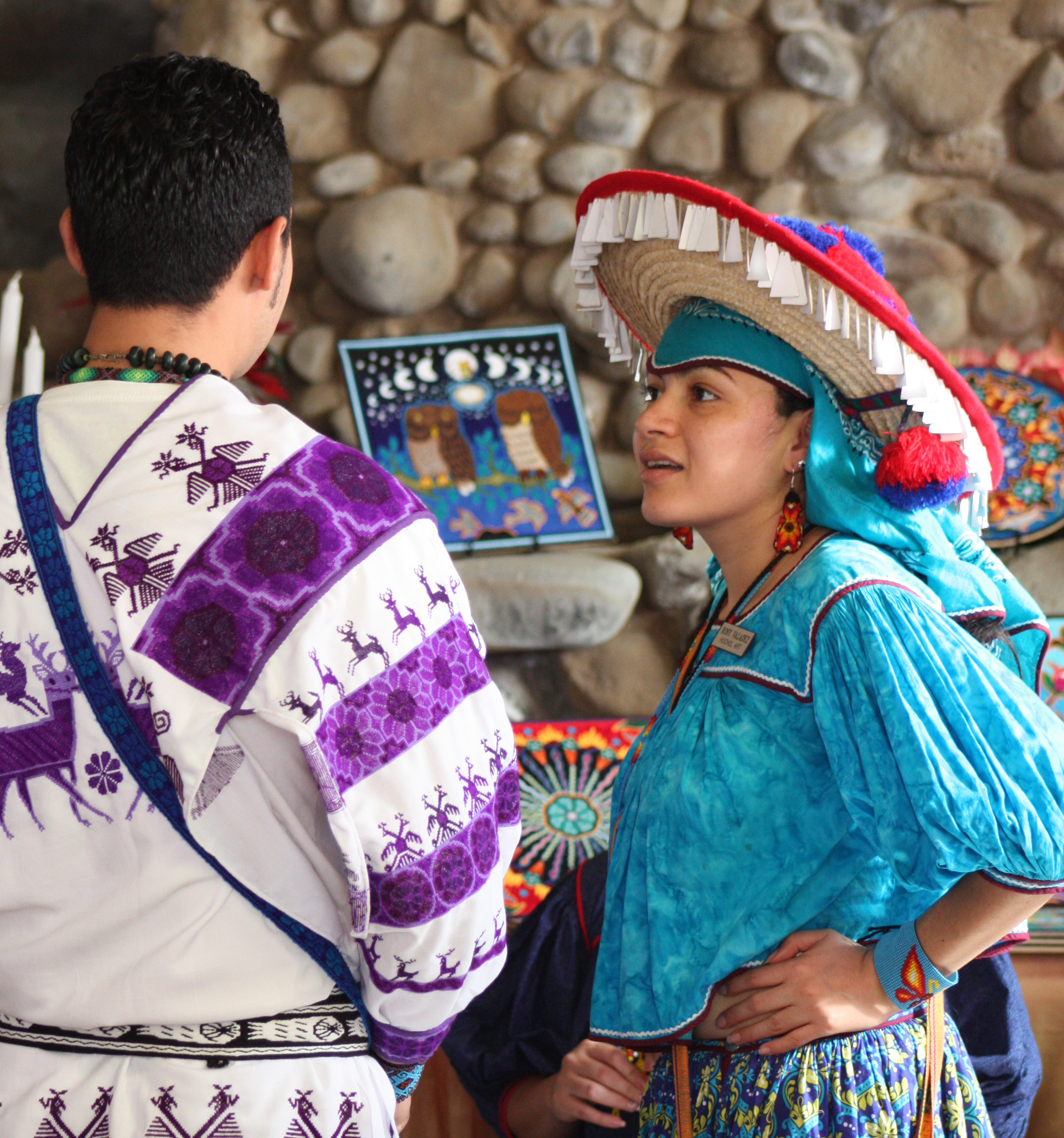
Artisans in bright traditional garb

Artisans in bright traditional garb

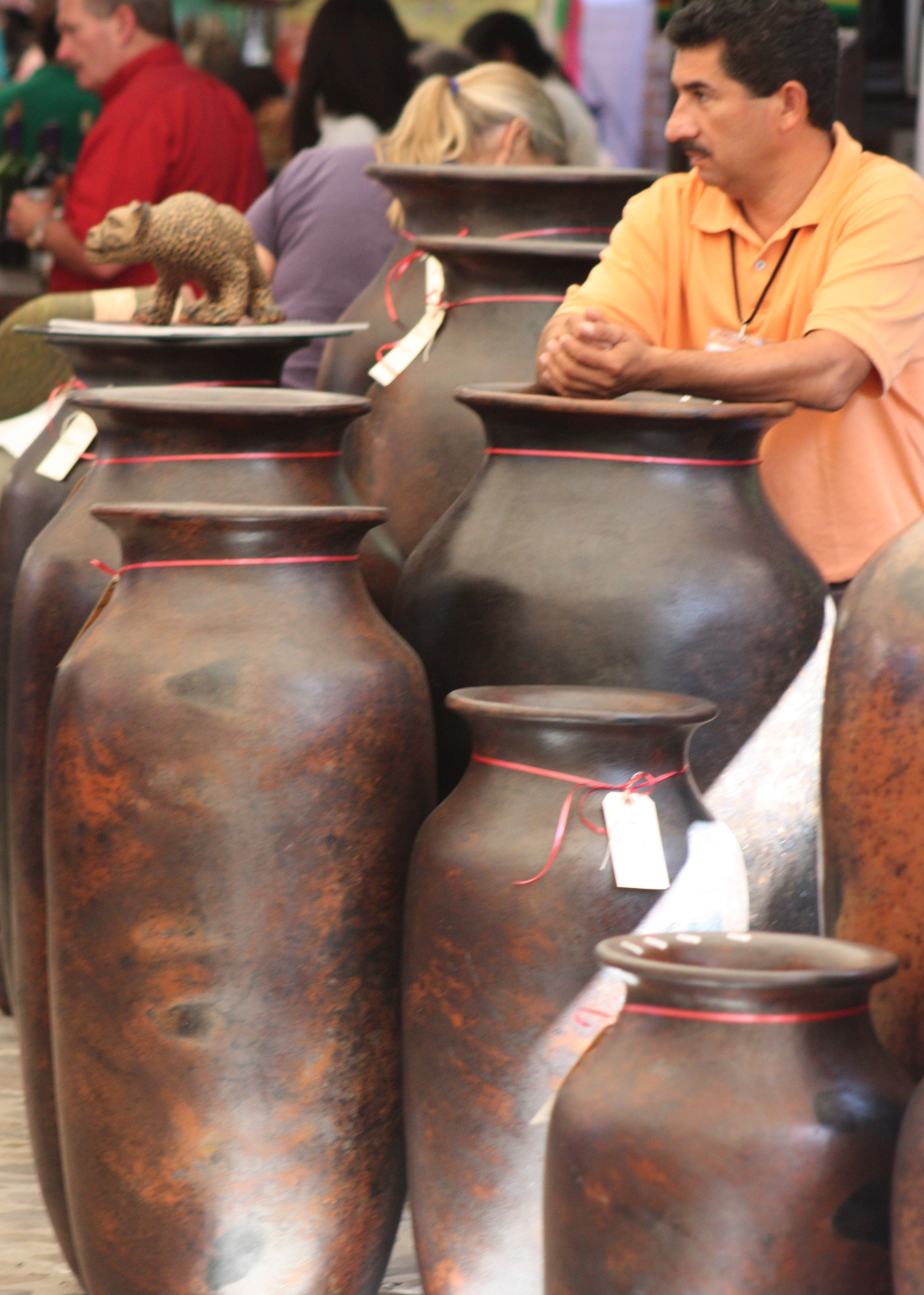
A potter stands chest-high in his work


The Feria is also philanthropic capitalism that showcases this art and these artists to the expat community and to visiting art merchants.

The outcome is an opportunity for these distinctive works to fetch the fair price that promotes their economic sustainability.


Clay iIguana at perpetual rest

Clay iIguana at perpetual rest


The philanthropy, though, goes well beyond simply bringing sellers and buyers together.

The merchants – more than 60 of them – are charged no fees for exhibit space.


The Feria is the brainchild of locally resident gringa Marianne Carlson, who each year travels the length and breadth of Mexico seeking out new talent.

There’s a message in the tiny symbols on this piece

Adding finishing touches to a corn husk blossom

Adding finishing touches to a corn husk blossom


An extensive network of volunteers and significant donations – the Feria is registered as a non-profit in both Mexico and the U.S. – assure that every dime of every sale goes to the merchant artists.


Lady mariachis waiting to go on stage


Many receive transportation assistance or are housed and fed gratis in the homes of locally resident expats.


The Feria is also nothing if not authentic.


All of the exhibited goods are handmade by native artists using materials native to Mexico, and much of this remarkable work has rarely been exhibited outside of the often remote villages in which it is created.


Lady mariachis' wall of sound

Lady mariachis’ wall of sound


Many of the artisans are but the latest in generations of family artists.

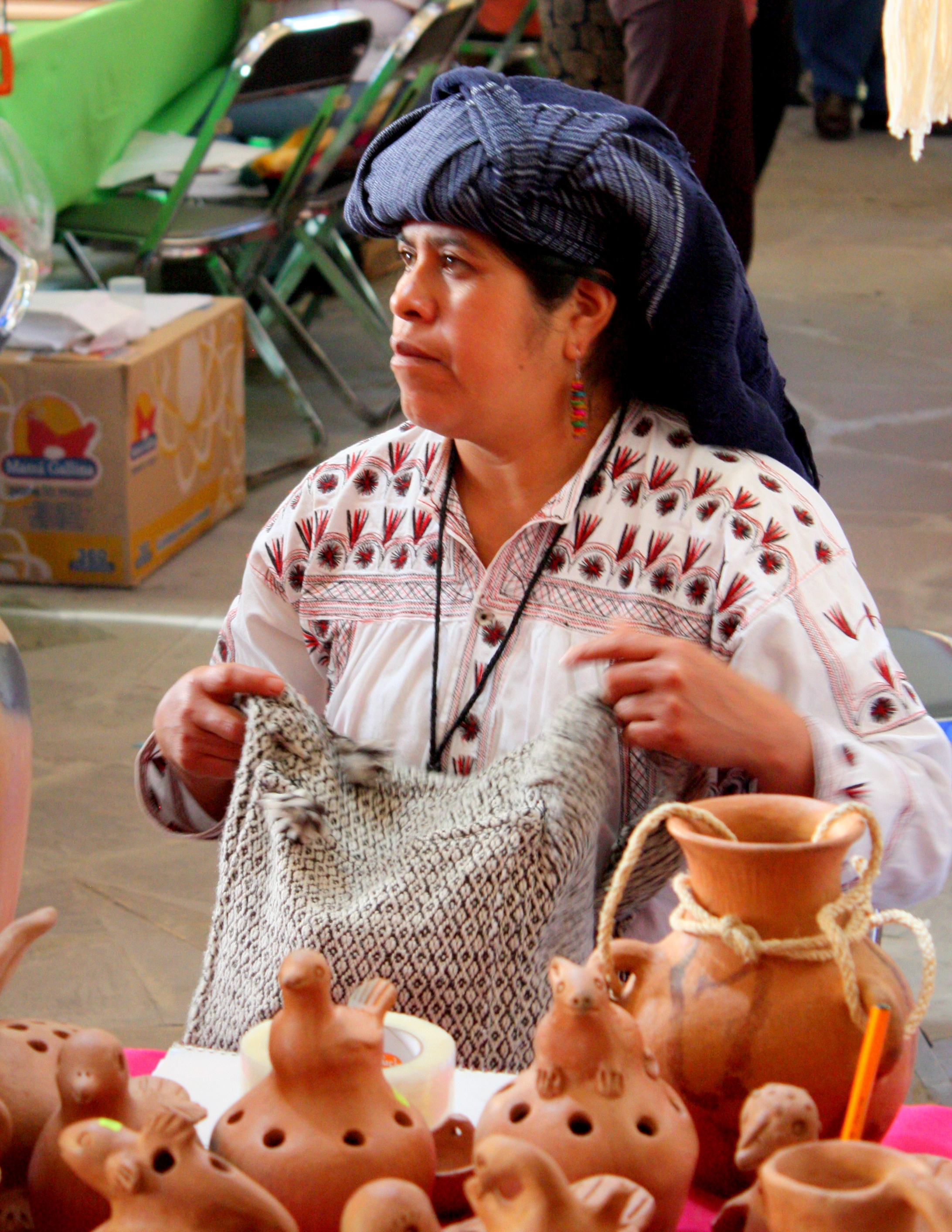
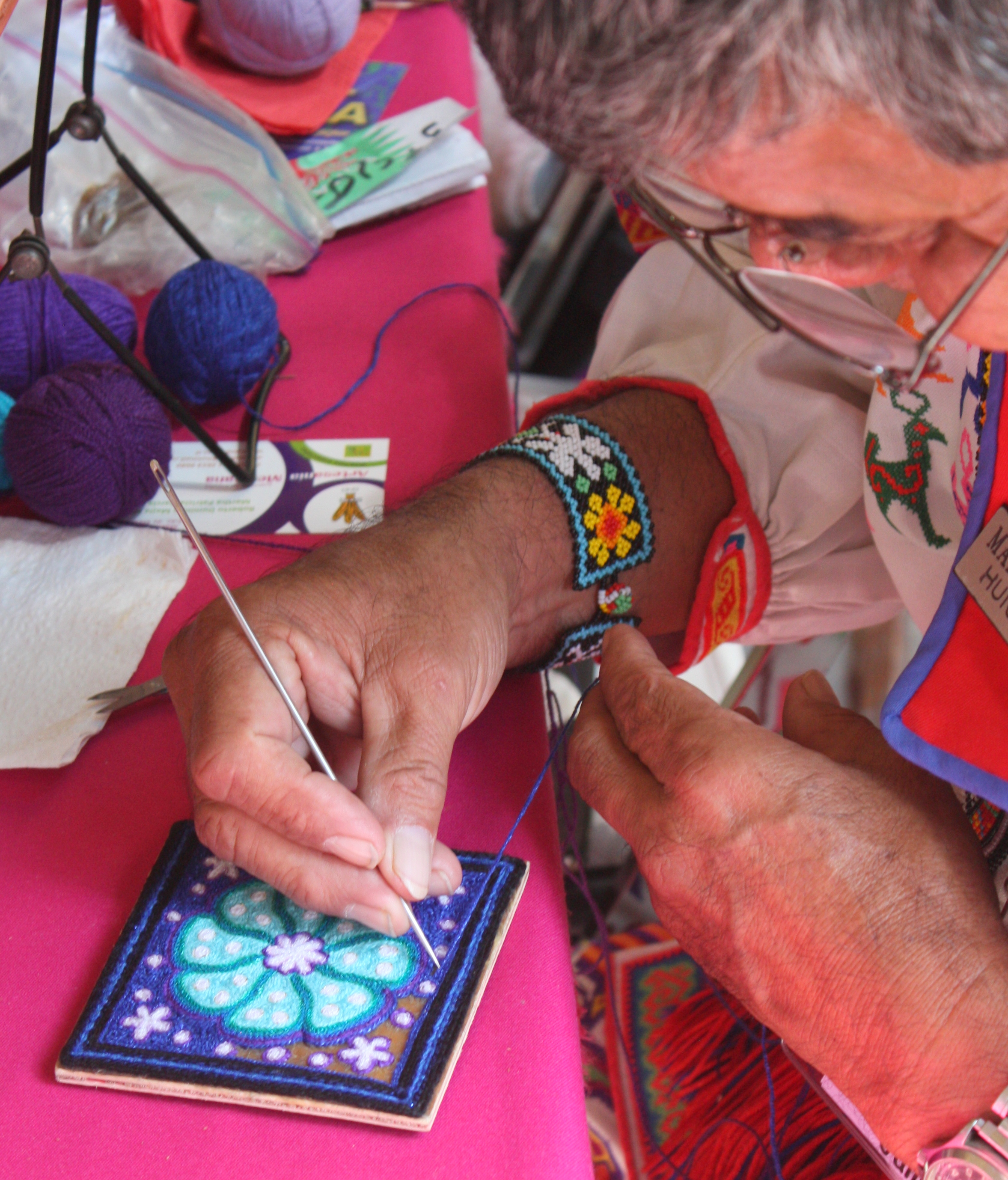
Shoppers can watch many of the artisans continue to create as they tend their market stalls while patiently explaining the symbolism of the images in their work and the process by which it is produced.


This is my first year to experience this event, and I have the good luck to do so from a front-row seat in more ways than one.

Jurassic metal sculptures

Jurassic metal sculptures

It’s located within easy walking distance of my place, which is a real bonus since the patrons’ parked cars have not only lined the curbs of surrounding neighborhood streets, but spilled out along the Carretera for a quarter mile in both directions.

Timeless

Timeless


Location, however, is only the beginning of the good luck because my place is also a room-and-board site for Feria artist Martín Ibarra and his family.

A leap of ceramic leopards

A leap of ceramic leopards


The son of a noted clay artist, Martin has been widely recognized for his painted clay sculptures of the Virgin and his intricately decorated eggs and spheres.


A threatening wooden image in playful colors

A threatening wooden image in playful colors


This year each room-and-board sponsor is taking a turn at a dinner held in their home for the artists and their fellow sponsors, and these gatherings add yet another dimension to the experience.


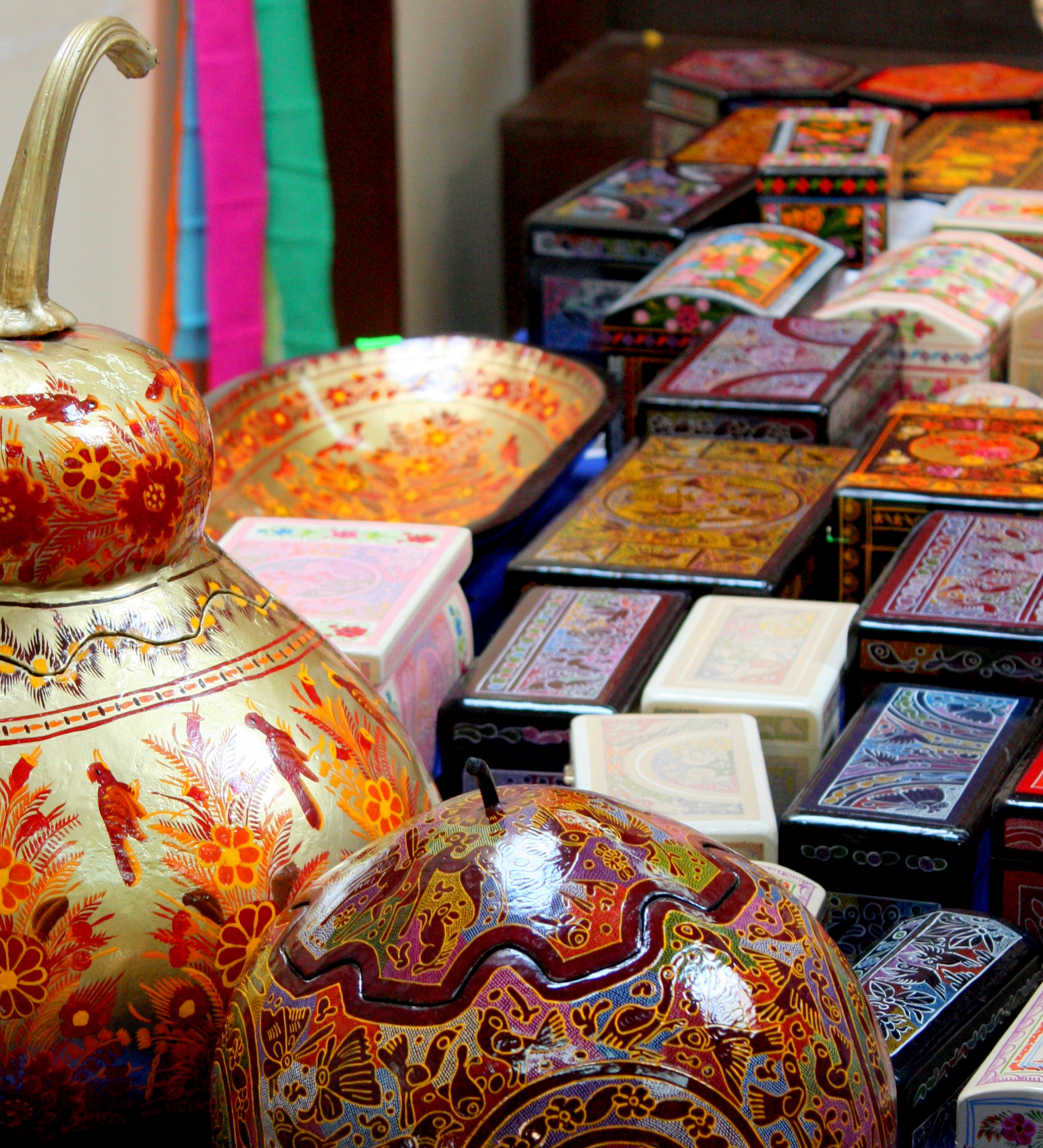
Hand-painted detail on wood and gourd containers

Hand-painted detail on wood and gourd containers

Artisans drawn from across Mexico from Chihuahua in the north to Oaxaca and Chiapas in the south, and when they come together each evening over food and drink the feeling is almost one of reunion.

Talk quickly turns from art to life and there’s lots of laughter here.

It’s a rare opportunity for expats to gain a glimpse into the traditions and lives of these master craftsmen, and for them to see their American and Canadian hosts up close and personally.

It’s also a great demonstration of what happens when people put national identities and politics aside and come together as individuals in a common pursuit.


Even for casual students of world cultures the Feria is not to be missed.


If you’re looking for items not to be found even in the abundance of artist communities in Guadalajara’s nearby Tonala and Tlaquepaque neighborhoods, this is the place to be.

A live face in a wall of masks


Fitting beadwork into a design

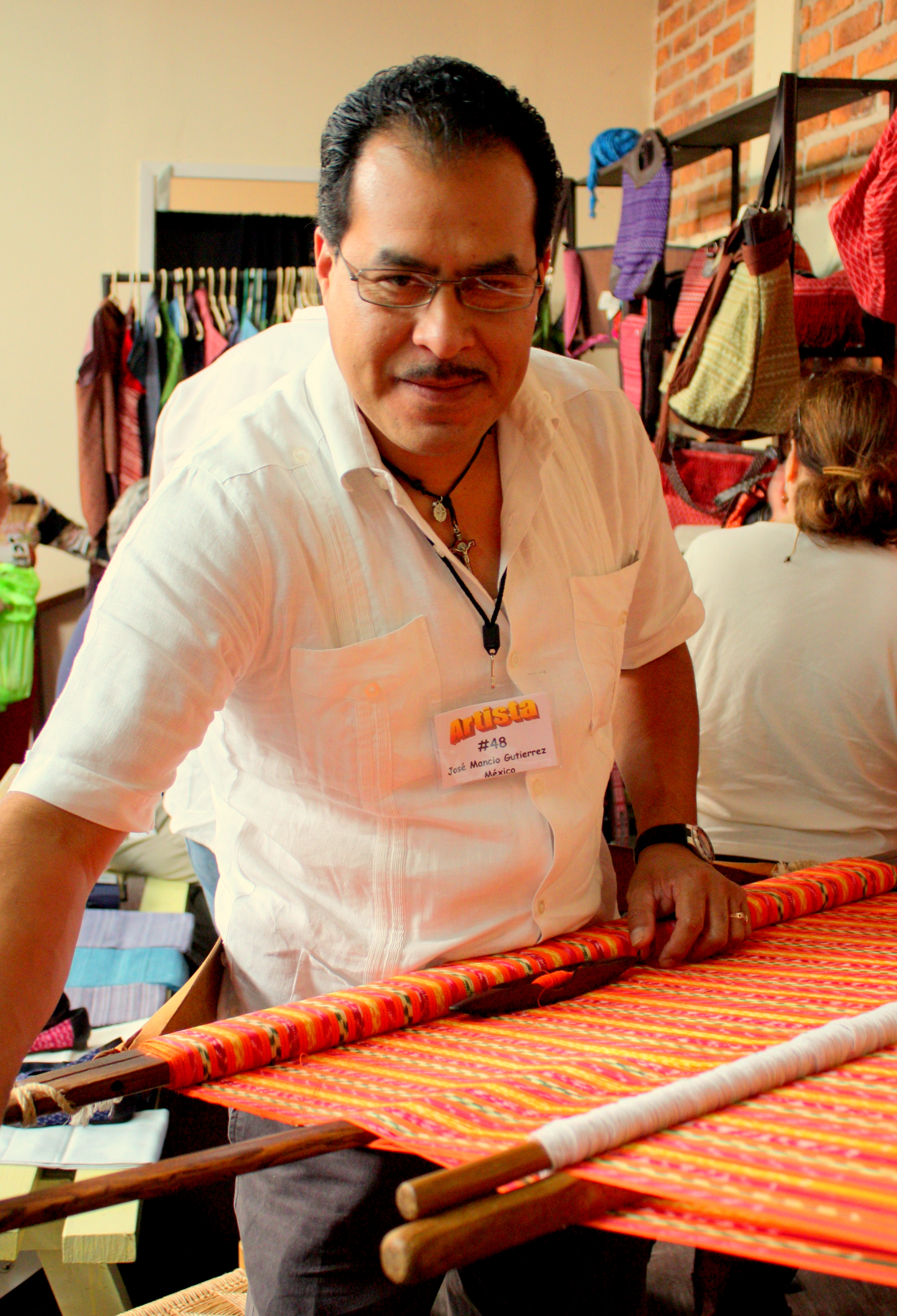
This 5th-generation weaver may need 2 months to produce a single work.


If you’ve ever wondered what happened to the spirit of social activism that marked the youth of many retirees you’ll find it alive and well in the spirit of Ajijic’s Feria.

Make your own contribution by buying something… and spreading the word.

For more information check out the Feria’s web site here.

Dias de los muertos

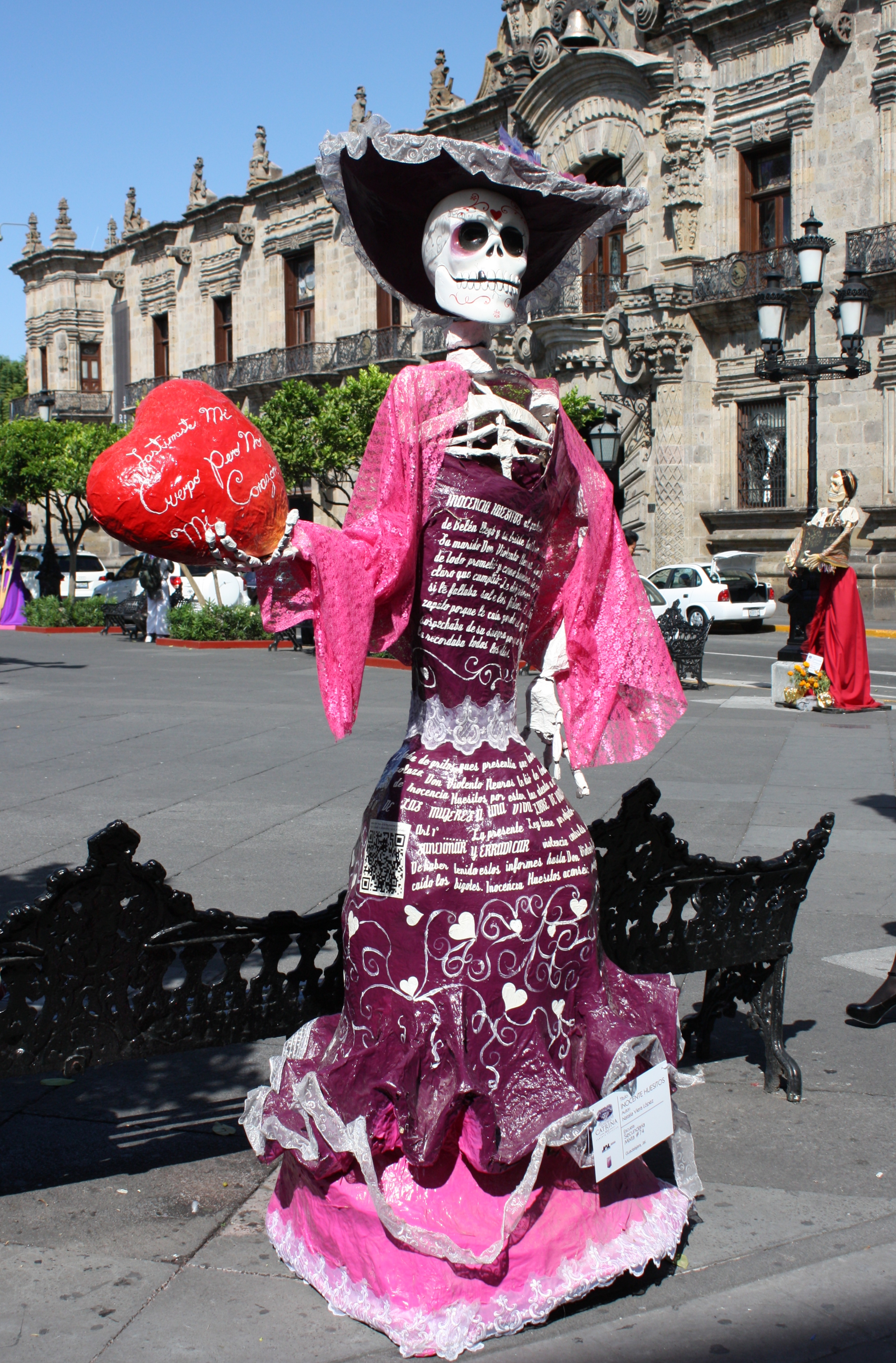
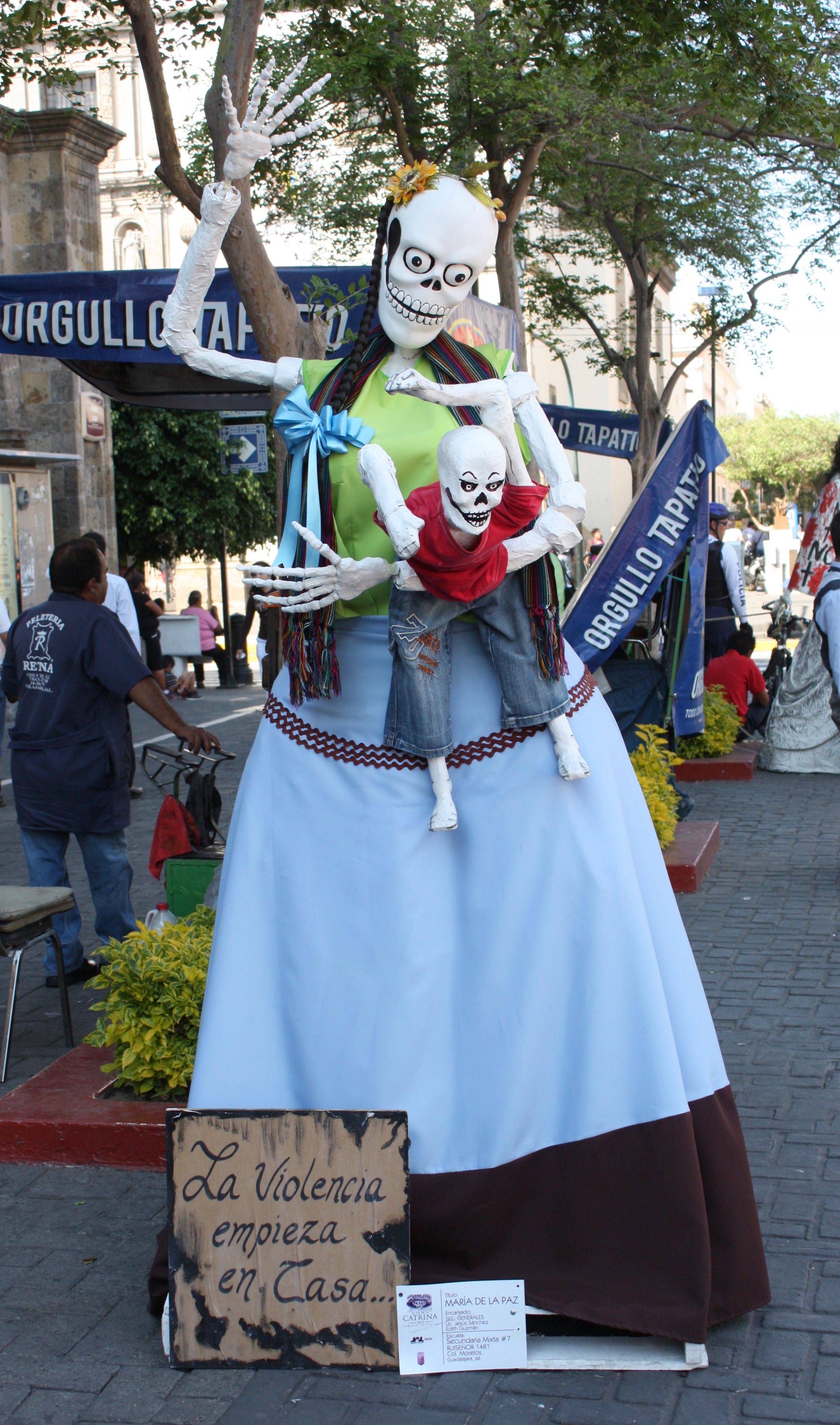
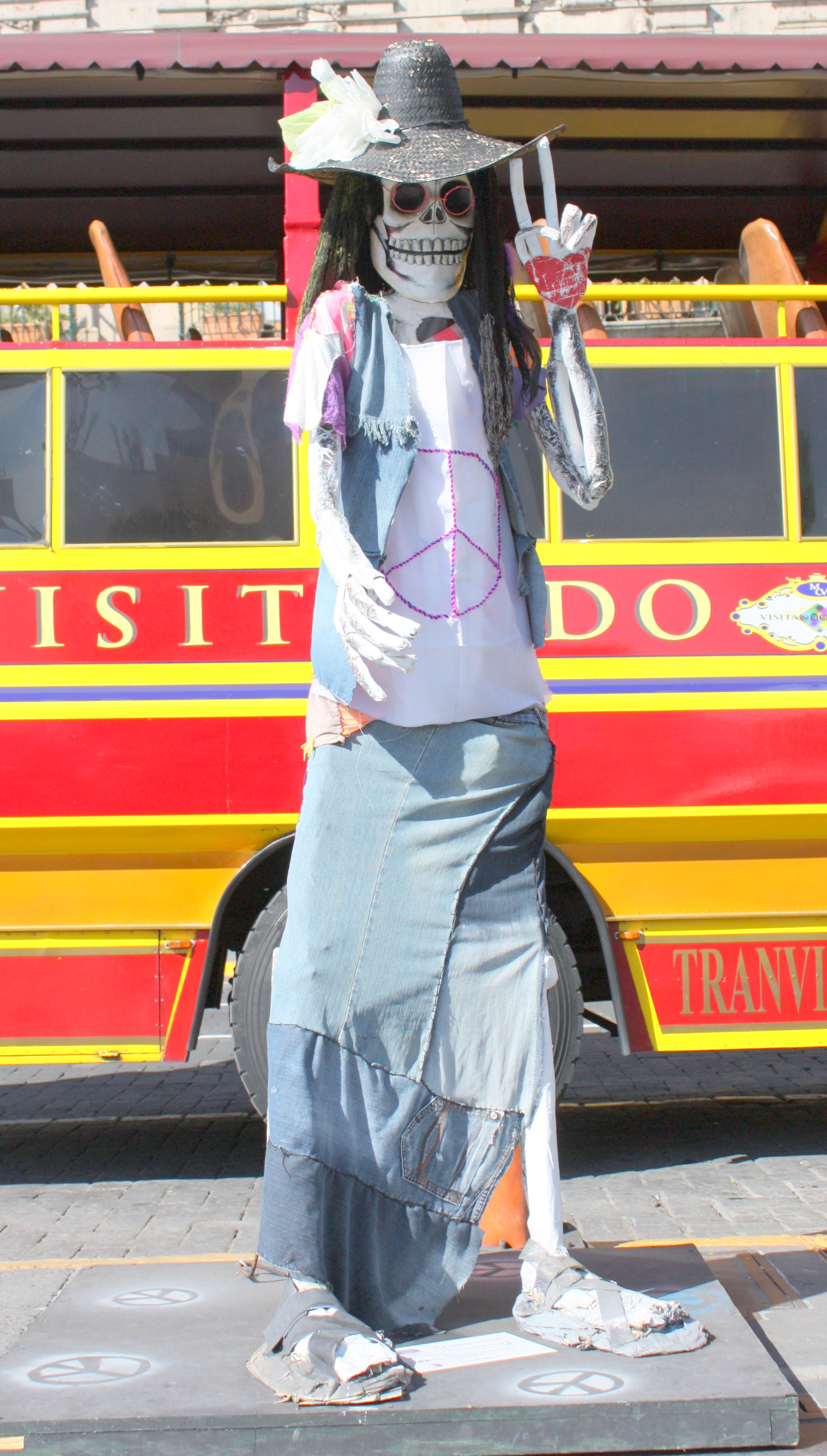
Peace catrina, Guadalajara, Mexico

It’s about this time each year that I lament the creeping encroachment of America’s shallowly commercial Halloween tradition upon Mexico’s deeply spiritual Dia de Los Muertos observance.

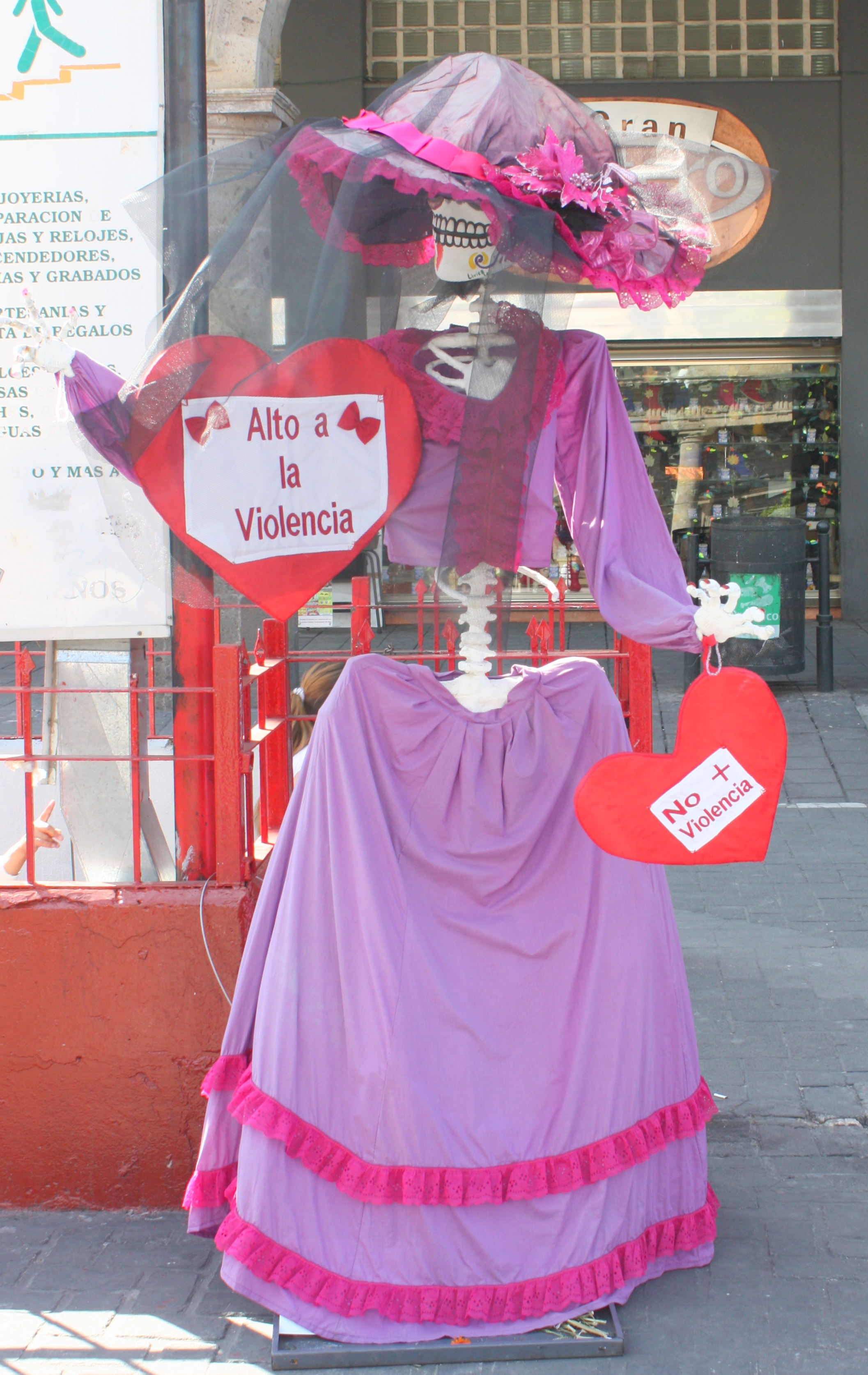
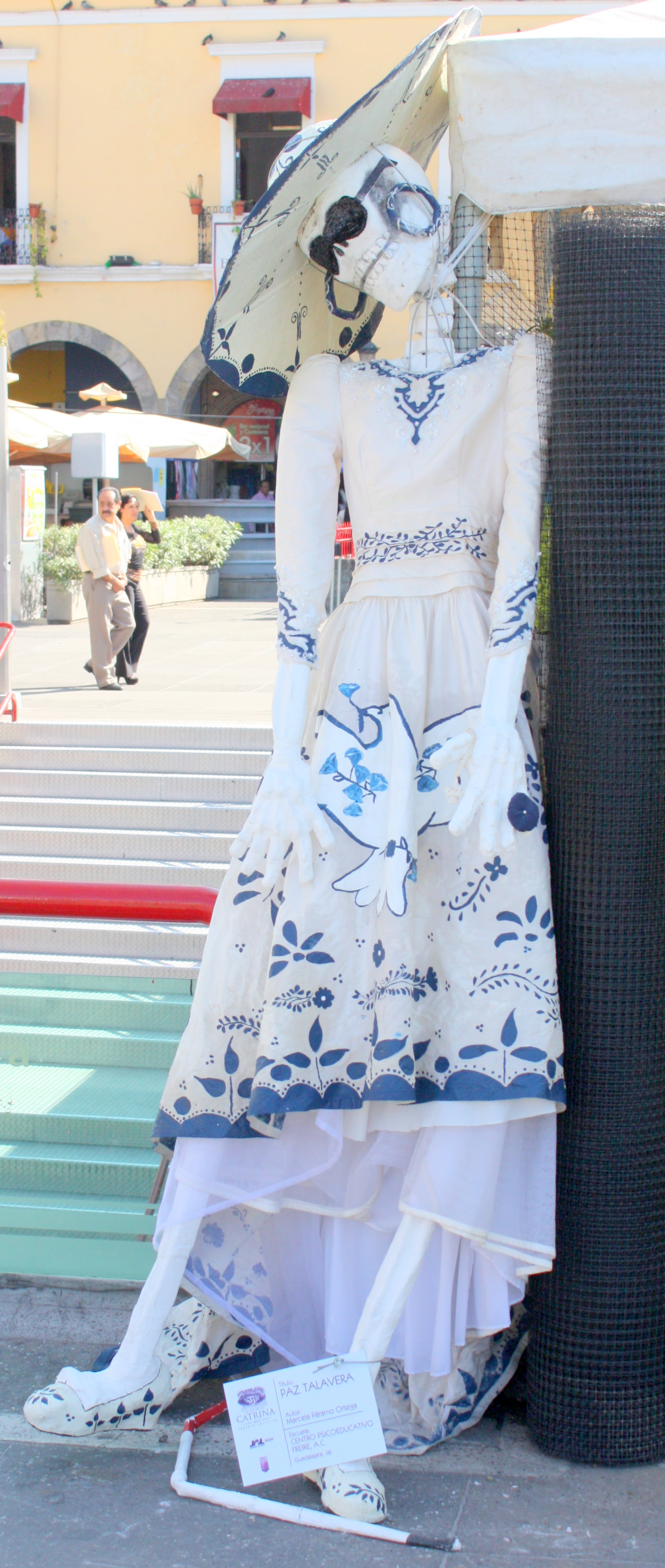
Peace catrina, Guadalajara, Mexico

In the States, trick-or-treat decorations may have been replaced by Christmas decorations and candy now relegated to discount bins, but a month-long event in Guadalajara’s Centro Historico proves that Dia de los Muertos is not only alive and well, but ably adapting to fit itself into the twenty-first century.

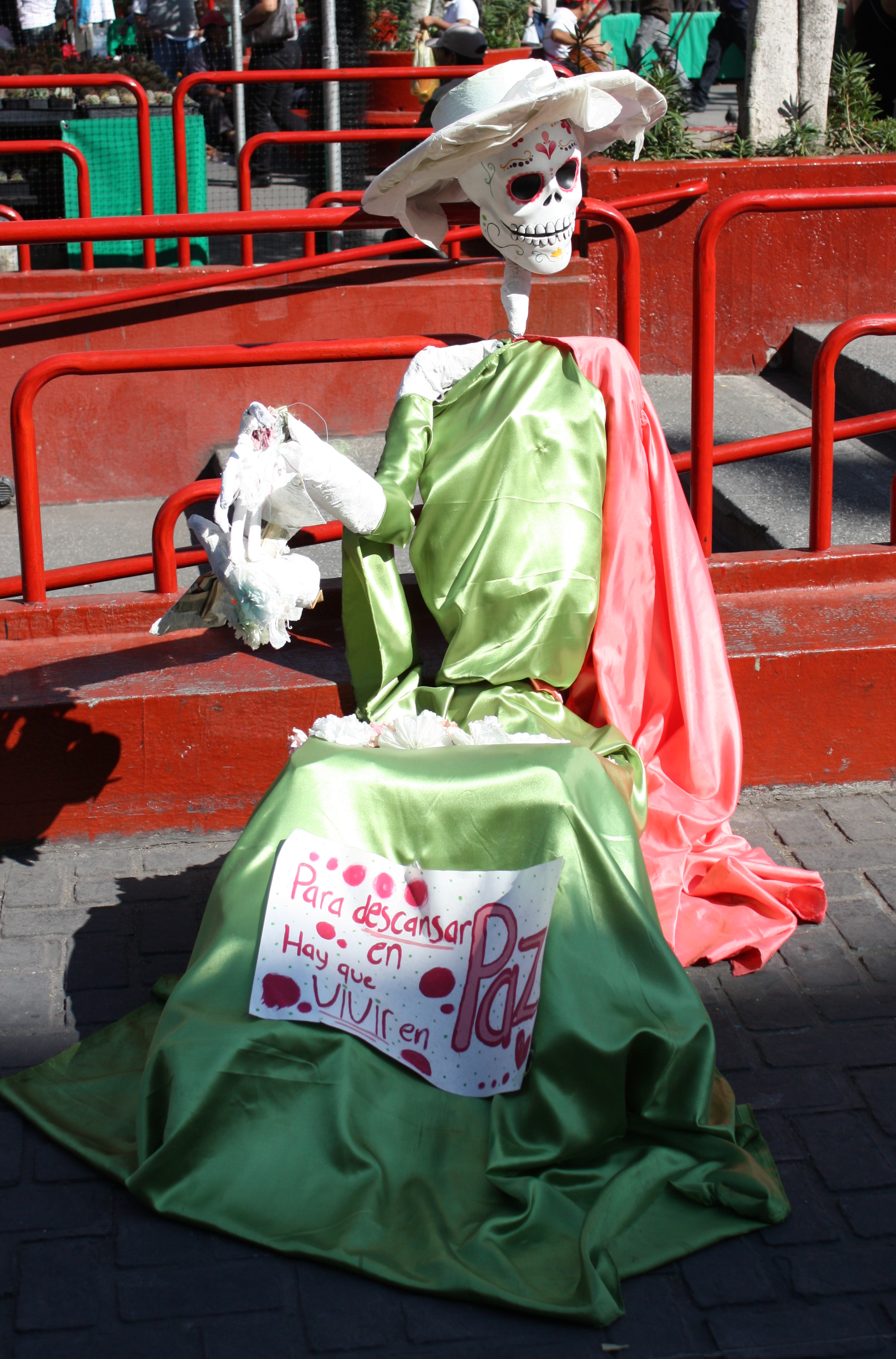
Peace catrinas, Guadalajara, Mexico

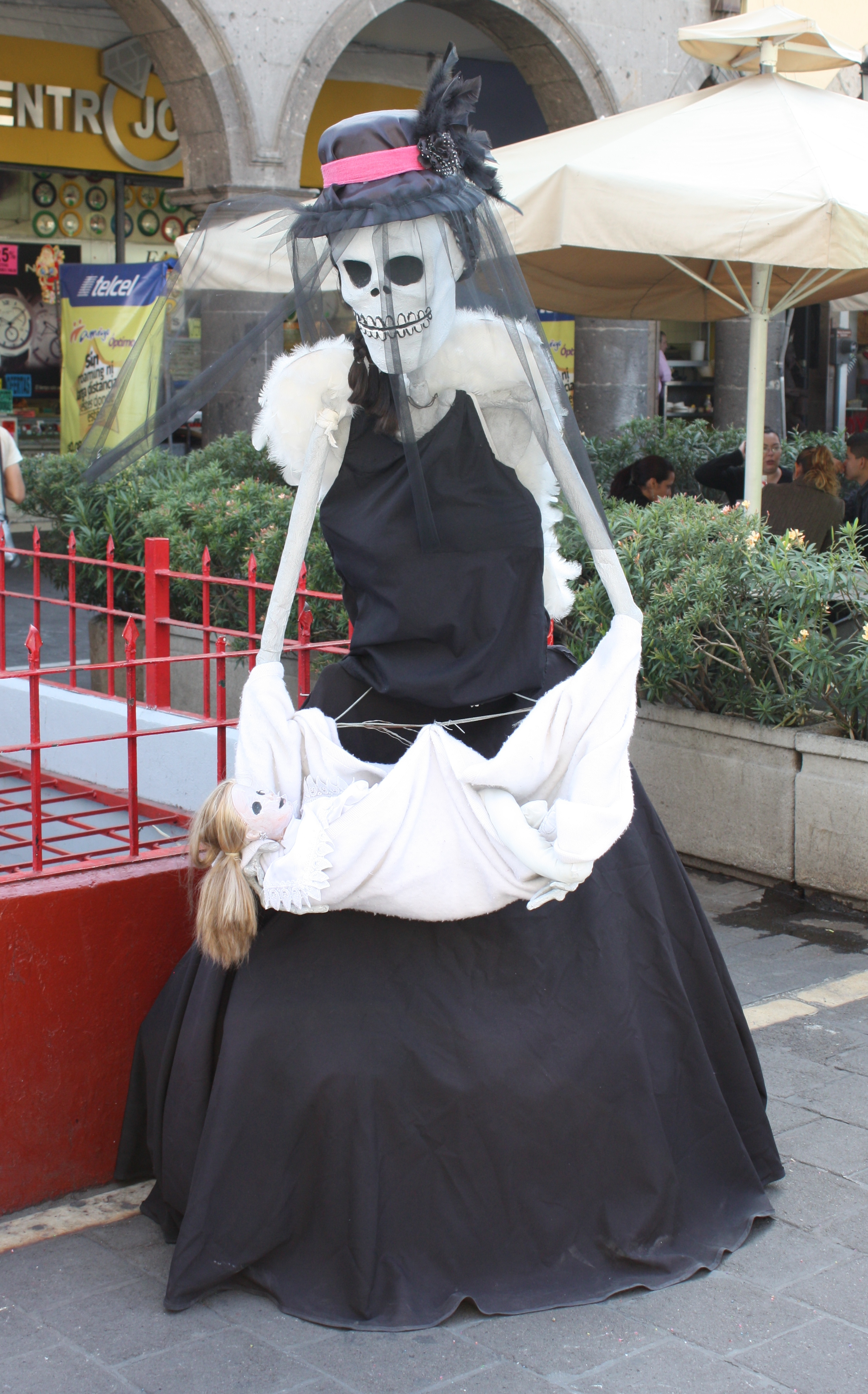
Peace catrina, Guadalajara, Mexico


For the third consecutive year, Guadalajara’s secondary school students have built upon the traditional image of the catrina – the elaborately decorated skeletons that are the holiday’s trademark – to make a timely plea for peace.

Peace catrina, Guadalajara, Mexico

Around 100 of these larger-than-life-sized installations can be seen on the plazas that mark each of the primary compass points around Guadalajara’s signature downtown Catedral.

Peace catrina, Guadalajara, Mexico

The work is remarkable not only because it ably links Mexico’s past with its present and because the artisanship is of such high quality, but because it demonstrates these young artists’ surprisingly mature grasp of how violence begins and spreads through a culture.

Peace catrina, Guadalajara, Mexico

For Mexicans, peace is not an abstract ideal or a wished-for outcome in some far-off country, but a heartfelt hope for change in their everyday existence.

Peace catrina, Guadalajara, Mexico

Peace catrina, Guadalajara, Mexico

In this fifth year of the government’s war on narcotics traffic and narco-terrorism, fatalities have now passed the 50,000 mark. While the violence is largely confined to combatants and limited to a small part of the country, only a few degrees of separation lie between the casualties and an increasing number of civilians.

The theme of peace in the face of such violence necessarily lends a somber note to many of these works, but most of them still manage to deliver their weighty message with the same wry fatalism that has always marked the catrina tradition.

Peace catrina, Guadalajara, Mexico

Photos don’t do these catrinas justice.  Almost all of the standing figures tower over the spectator by a foot or two, and many others lean lifelike against poles and fences or sit on park benches as city pedestrians and traffic stream past.

Peace catrina, Guadalajara, Mexico

There are several Gandhi catrinas and one of the Dalai Lama, but it’s the more traditional images which are often the most compelling.

Peace catrina, Guadalajara, Mexico

While catrinas are an expression of pre-Colombian concepts of the relationship between life and death, the catrina image itself is barely a century old, the invention of a Mexico City newspaper’s political cartoonist.

Peace catrina, Guadalajara, Mexico

The catrina was nearly relegated to history until rescued by the resurgence of pride in Mexican heritage following the Mexican Revolution.

Peace catrina, Guadalajara, Mexico

Like Argentina’s tango, it began as a working-class tradition and grew in less than a generation to become a symbol inextricably woven into the national identity.

It’s possible to walk all 100 or so of Guadalajara’s Catrinas de la Paz in less than an hour, but you may – like me – become caught up in reflection upon one or another that particularly speaks to you and linger longer.

Whether you browse this exhibit quickly or deliberately, don’t pass it up!

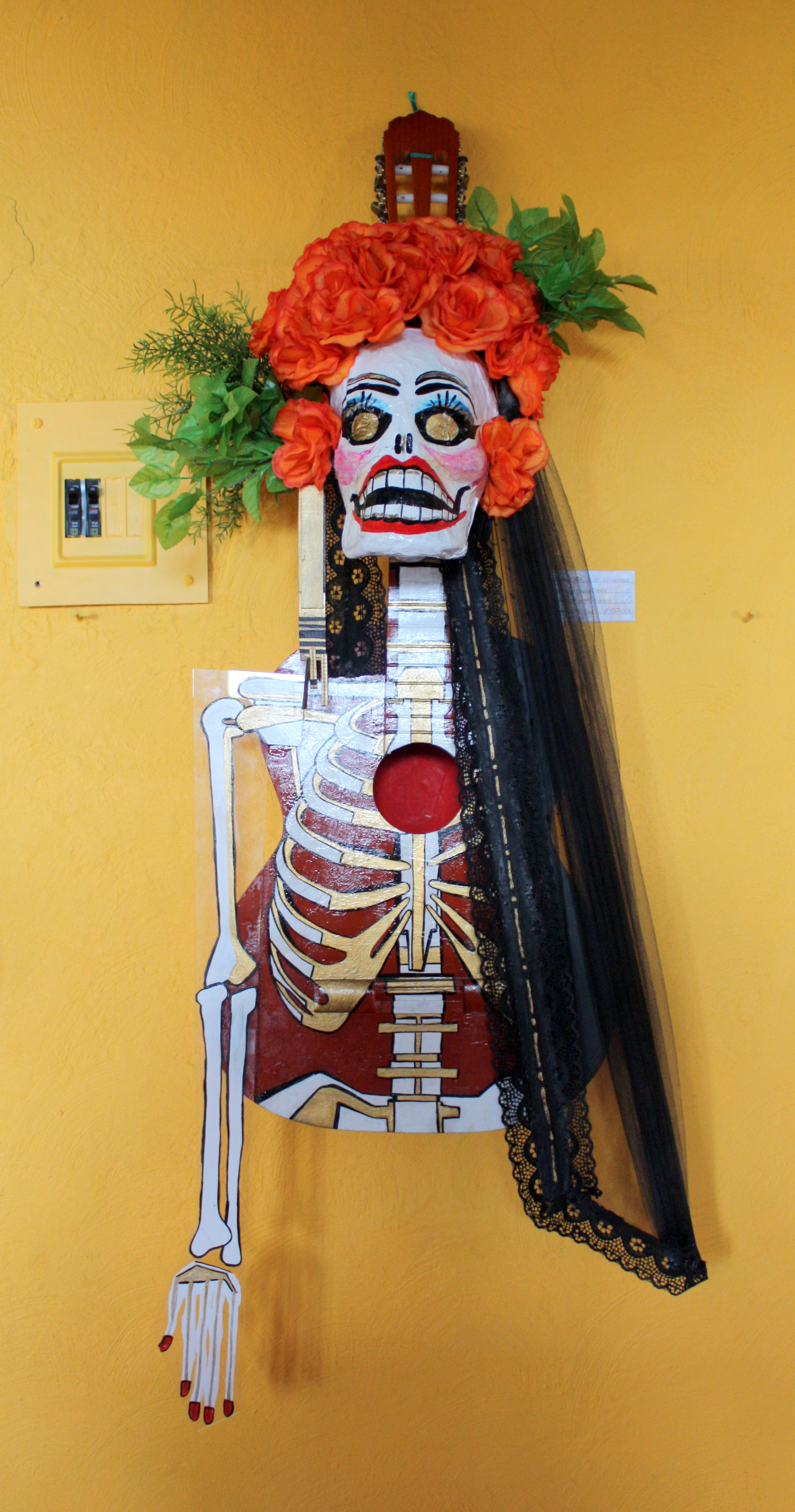
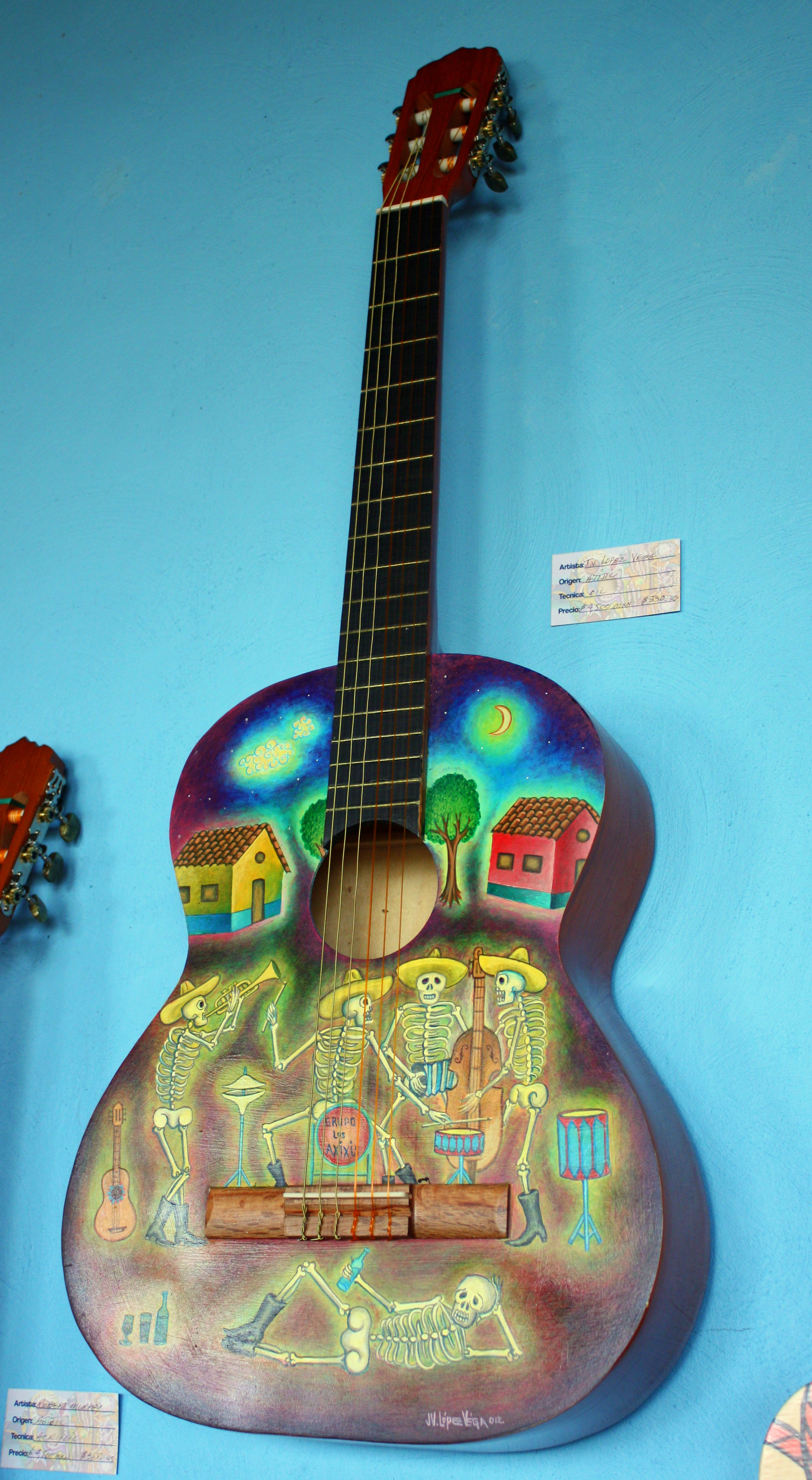
Ajijic’s guitar art

Artist: Teodor Lopez

Perhaps nowhere else in the Spanish-speaking world has the guitar become such an inseparable part of the culture as in Mexico.

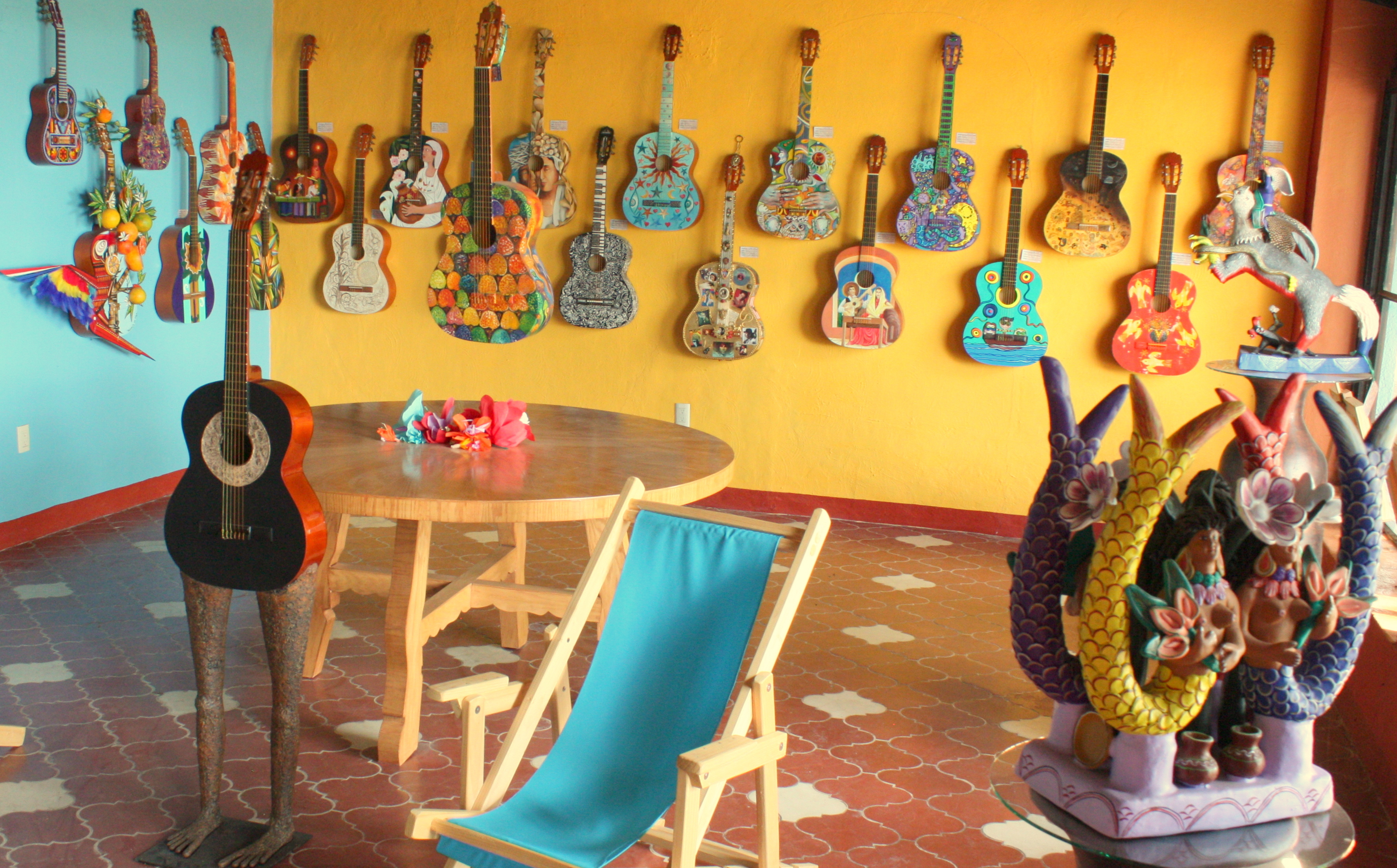
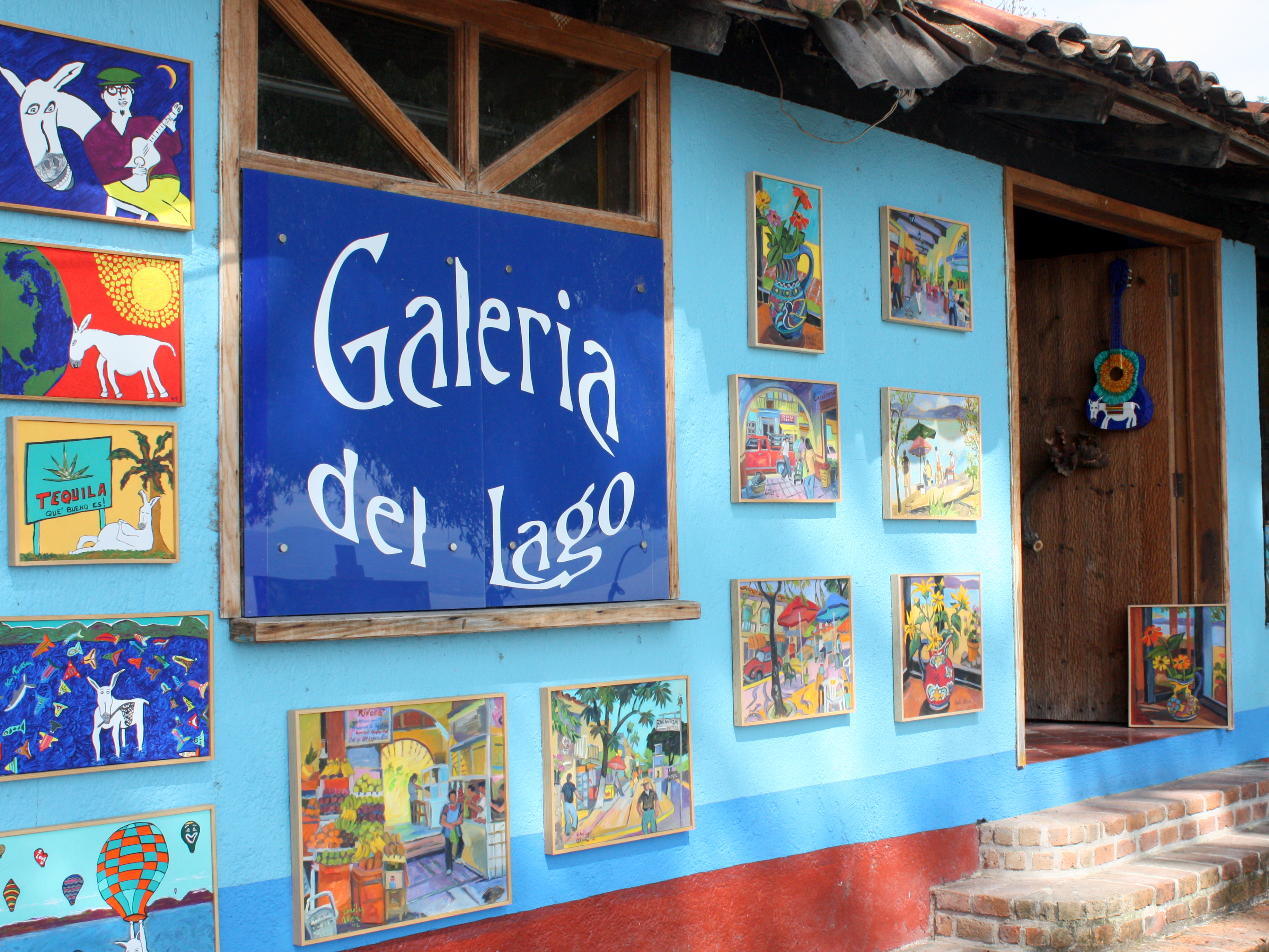
Inside the Galeria del Lago

Here the instrument appears the varying shapes, sizes, and sounds which can be most often seen in the instrumentation of Jalisco’s celebrated mariachi bands.


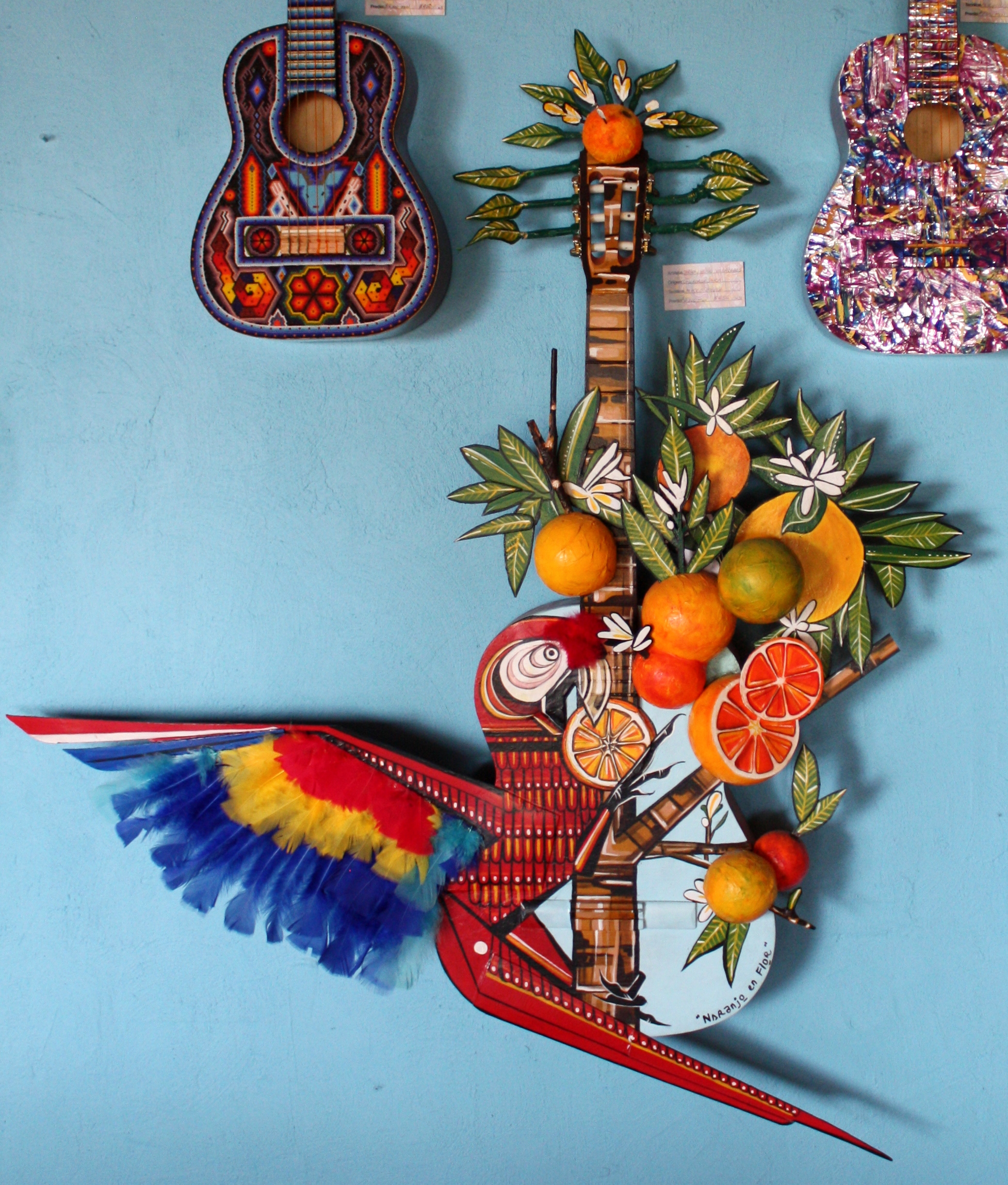
At Ajijic’s Galeria de Lago on the very edge of Lake Chapala the instrument appears in yet a new incarnation:  Guitar Art.

Artist: V. Manuel G. Santillan


It all began when local artist Kim Tolleson made a pilgrimage to the town of Paracho in Michoacan.  The town has long been famous as the center of guitar-making in Mexico, but in the past generation it has produced world class maestro craftsmen and instruments sought by aficionados everywhere.


There are more guitar shops in Paracho than chocolatiers in Switzerland and each August the town hosts a festival that features and honors both musicians and luthiers.


Kim had the idea that these instruments would make an interesting painter’s palette, but soon came to the conclusion that the 30 guitars that he brought back from Paracho was ambition enough for more than a single painter.

Artist: Kathy Seaboyer


He enlisted the aid of local artists and aspirants, and soon much of the space he’d first envisioned as no more than a studio became a guitar art gallery.

Artist: Sergio Xoñu


Kim’s decision to open entries to virtually all comers made the gallery unique not only for its use of guitars as painters’ palettes, but for its diversity of styles.


The artists range from local professionals including Efren Gonzalez to some very talented amateurs.

The inclusiveness is refreshing and the artist community has clearly embraced the concept.

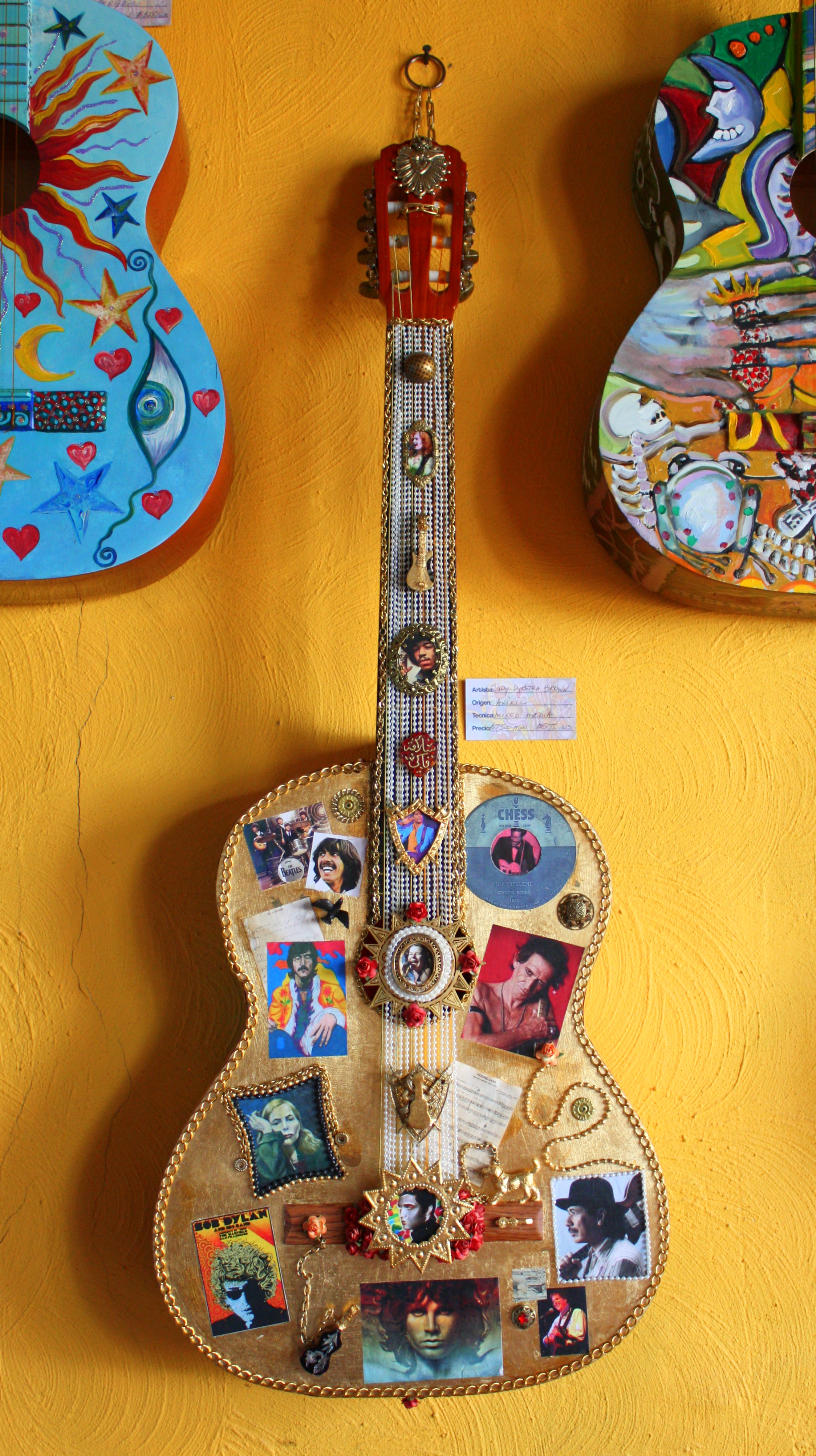
Artist: Judy Dykstra Brown

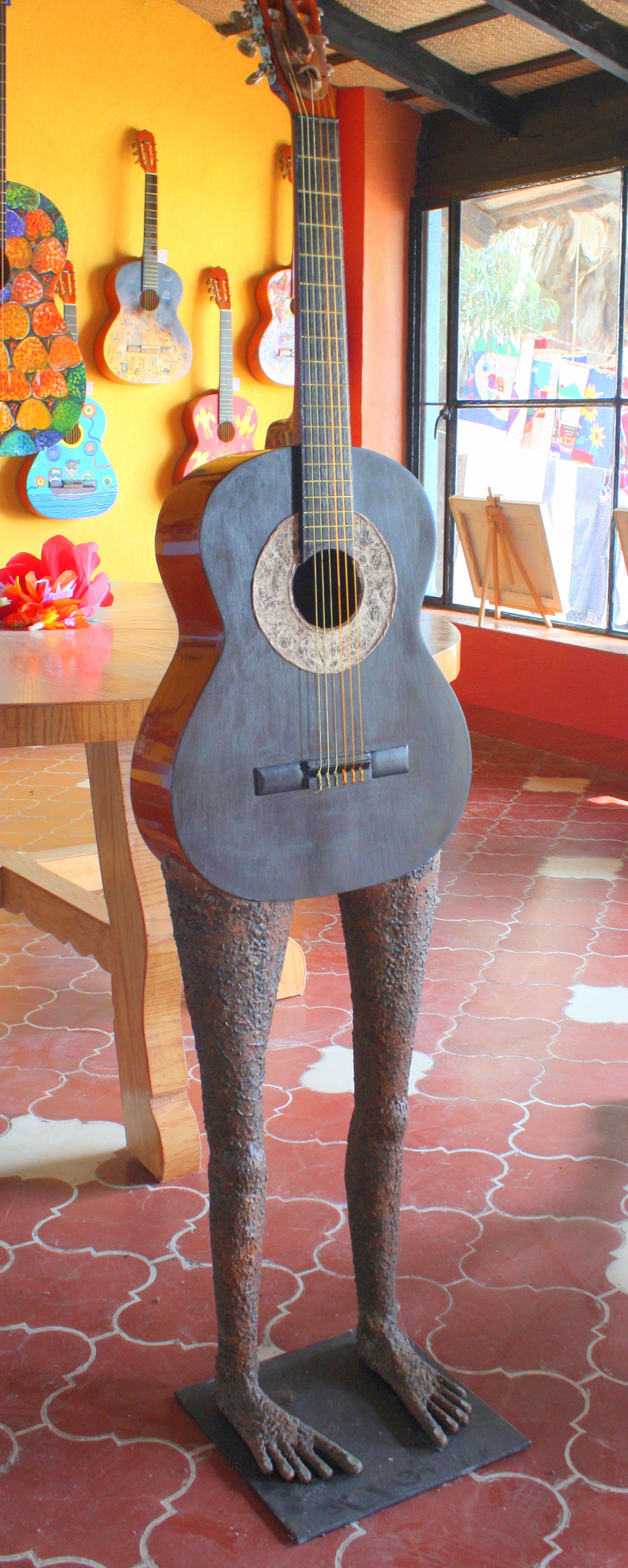
The images range from scenes of colonial Mexico to rock music tributes. Most are painted, but one of the more striking pieces is installed as a sculpture standing on human legs.

Artists: Daniel Palma & Sergio Xoñu

Artists: Hugo & Carlos Villalabos

Part of the Galeria remains a working studio.

On the day I was there Emily Allen had set up her easel there to catch the light flooding in from off the lake, and I stood for a while with my face pressed against the window watching her work.

Artists: Hugo & Carlos Villalabos


Even though the regular gallery hours are Saturday/Sunday, 1-6PM, visitors can browse on many weekdays when the artists are in residence, and the work is readily viewed through big picture windows at any time of the day.

Artist: Jesus Lopez Vega


Galeria del Lago is located right on the lakefront between the Old Posada and Yves Restaurant, within eyesight of the Ajijic Pier.


No surprise, then, that the subject of many currently featured paintings is the white donkey that seems perennially tethered just a few yards away on the beach.


Galeria del Lago

Galeria del Lago


Photos don’t do the work justice, so drop by and see the real deal. It’s guaranteed to bring a smile to your lips!
You can also see photos of work no longer on display when I visited on the gallery’s Facebook page               


Read more about Paracho, Mexico’s guitar capital, here.                              

For more on Ajijic’s unique character see my related posts:

Guadalajara’s Abastos

There’s no better way to get a crash course on any culture than from watching the street theater of buyers and sellers as they shop and haggle in an open market. If Guadalajara’s Mercado Libertad is the Wal-Mart of mercados, then Guadalajara’s Abastos is the Trader Joe’s.

Here you expect great prices as much as you expect best quality merchandise and items that you just can’t buy anywhere else.

Sign outside Abastos

As I enter I see covering the entire side of an adjacent building a faded sign. I can’t help but think about the many stories that must certainly have unfolded beneath it.

The midway

It’s hard to tell where Abastos ends, because its warehouses and shops cover more than 30 city blocks.


The intersection of Lazaro Cardenas and Mariano Otero is a good place to begin.

Within eyesight is a parking garage which offers a view of the area that can give you a much-needed lay of the land before you plunge in.

The Foodie in me can’t help but be impressed by the fact that this is where the pros in the restaurant and grocery businesses come to shop… and that it’s also open to the public!
Pick o’ the crops

The heart of Abastos is its aisles lined with booths selling fresh produce, meats, and seafood, but in adjacent shops it’s possible to outfit an entire restaurant from tables and chairs to china, flatware, uniforms, and kitchen hardware.

Squash blossoms


The produce is, well, almost too beautiful to eat.

Brilliantly colored and symmetrically shaped, it’s too perfect for a still-life.

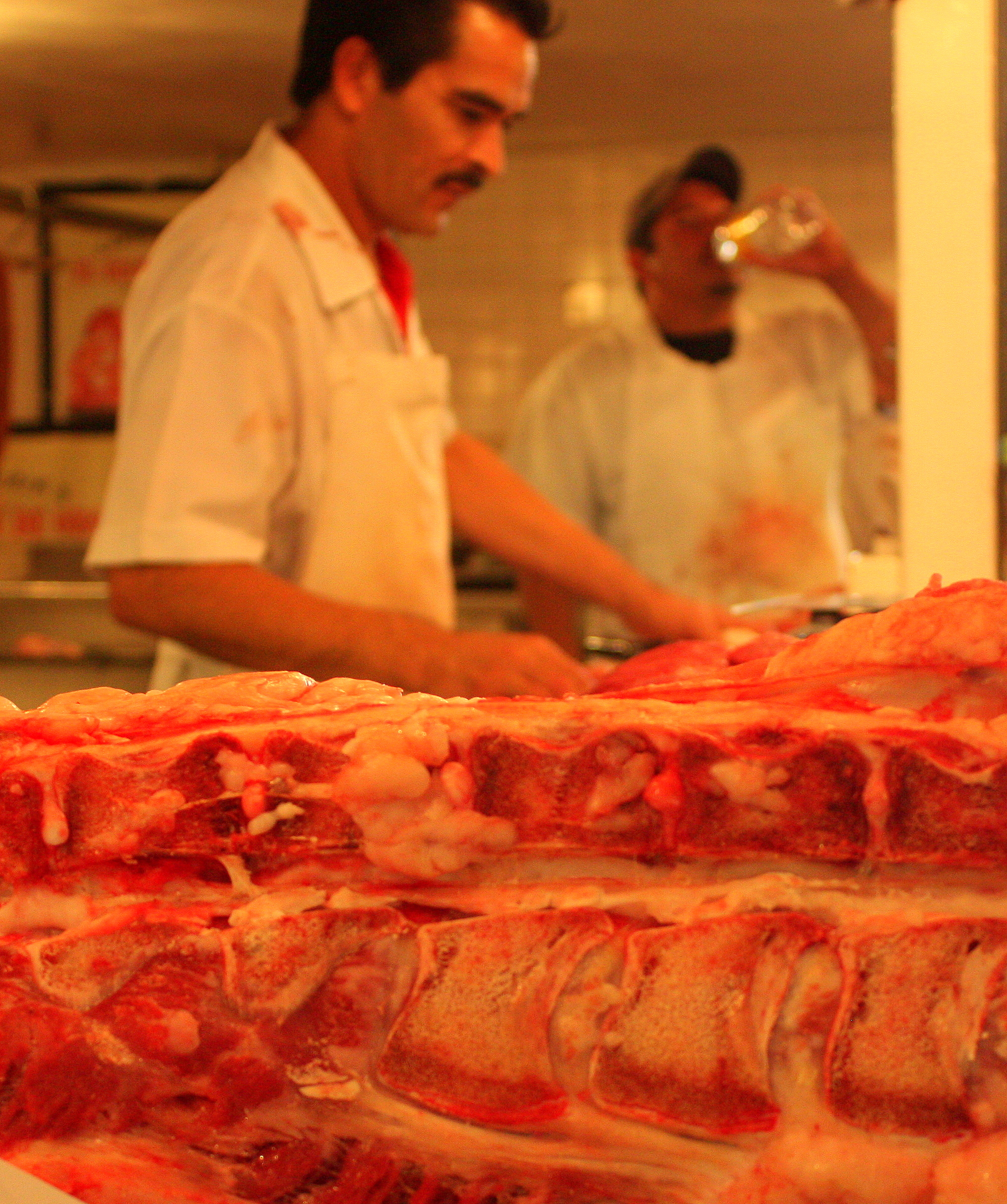
Everything here is offered in the giant commercial size. Meatcutters disassemble entire cows.

Major meatcutting

Ribbons of sausage

There are cheese wheels the size of spare tires and sweets the size of paving bricks.

Monster cheese wheels

Sweets by the case


Never, though, did I see a merchant refuse to sell a smaller quantity.

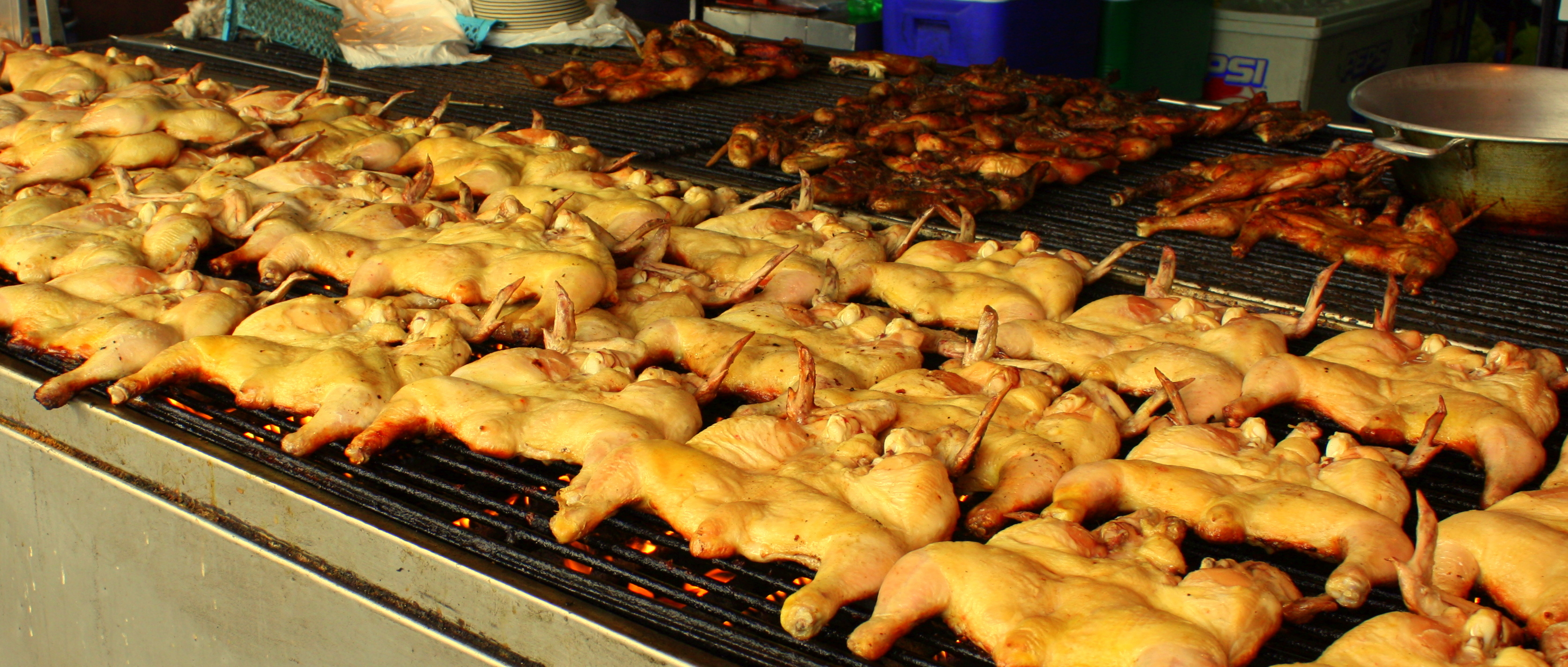
Acres of grilled chicken


This city-within-a-city needs to be fed, and while the eateries are not fancy you can find just about any kind of meal you desire somewhere in one of its pots or on its grills.

Abasto fresh fish


I snap a shot of some great-looking fish on ice and amble slowly down the aisle only to be halted by the sound of someone calling out behind me.

Fish and fishmongers


I turn to find that the fishmongers are following me down the corridor hauling a whale of a fish, inviting me to get a better shot. That’s the kind of place it is.


When you come, drive a big SUV and bring the largest ice chest you can find, because there’s no way you’ll leave here empty-handed!

To get to the Abastos from the Ribera de Chapala:


  • From the Chapala highway exit left on Lazaro Cardenas and drive about 7 kilometers. Abastos is on the left just before the intersection with Mariano Otero.
  • From the Jocotopec highway turn right off Lopez Mateo at Plaza del Sol onto Mariano Otero until you find the Abastos on your right, just before the intersection with Cardenas.

    See also my related posts:Fishy in GuadalajaraGuadalajara’s Mercado Libertad

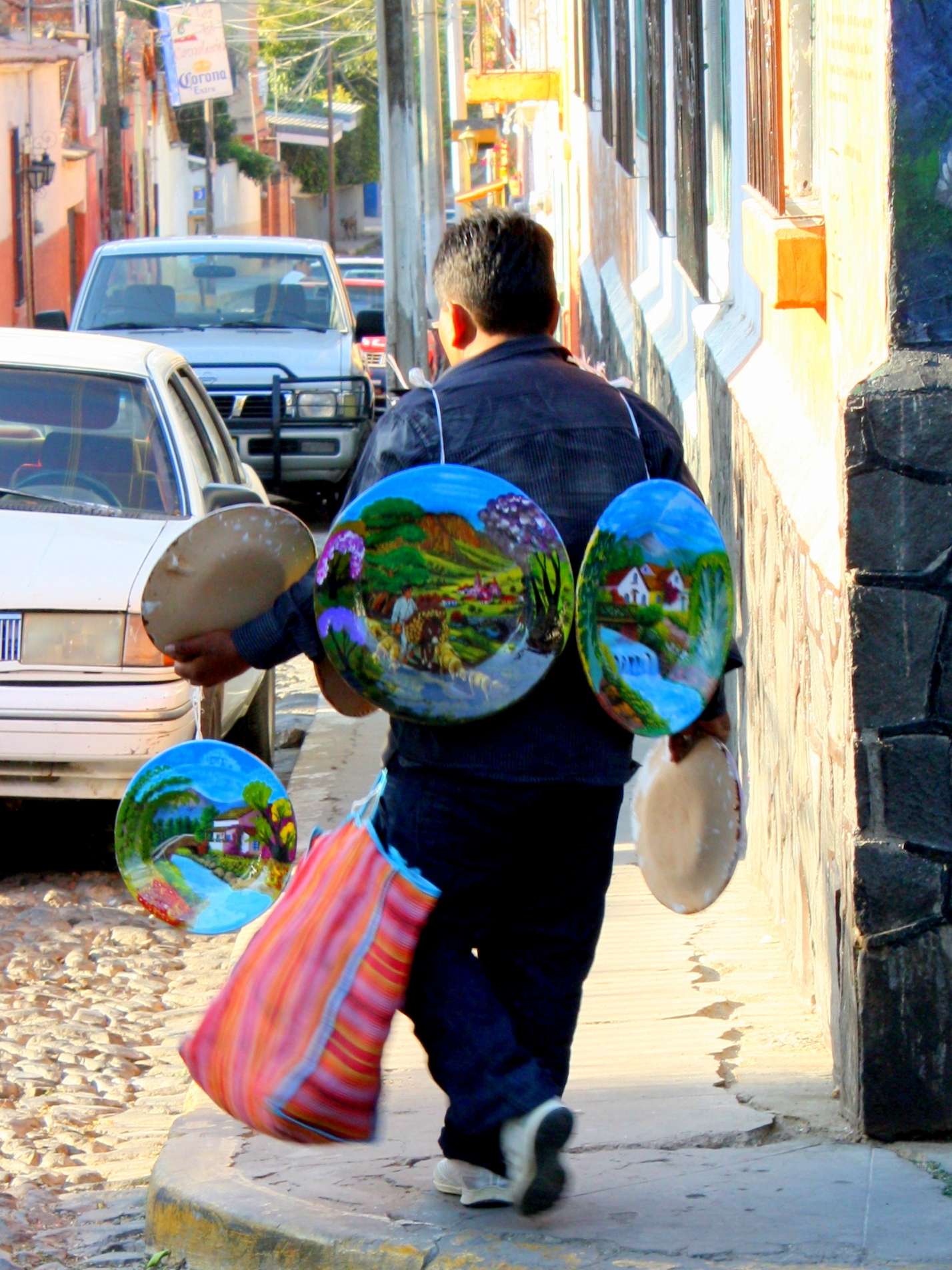
    Street vendor walking on Colon

    It’s nearly a century since pushcarts plied the streets of most American neighborhoods; sidewalk vendors of nearly every stripe went out of style when the nation traded Main Streets for malls.

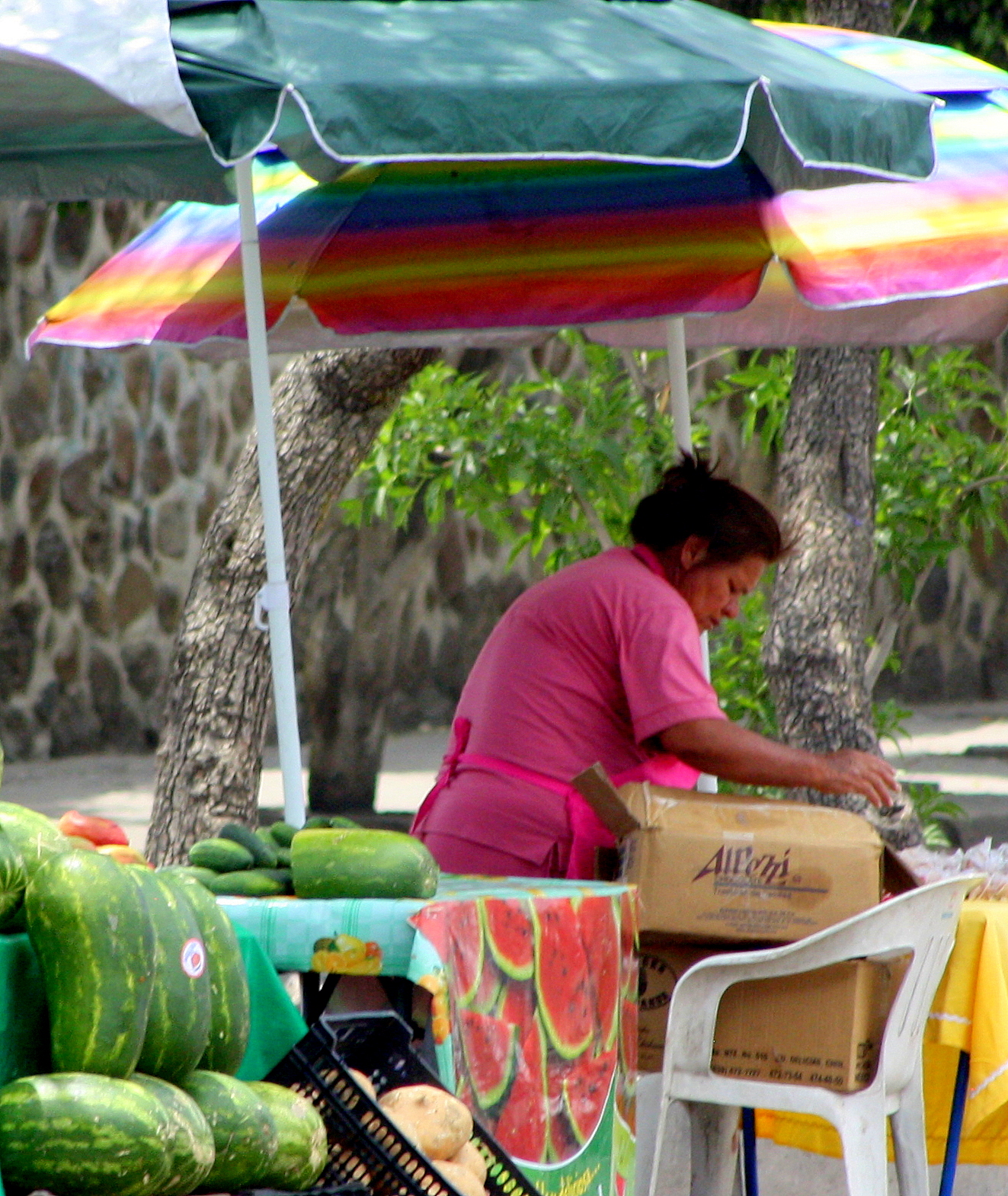
    Fresh watermelons on the Carretera

    In Mexico street merchants are alive and well.  It seems as if wherever in Mexico three or more people are gathered a fourth will show up with something to sell them. Retail here is up close and personal and the store often comes to you.

    Ajijic’s street merchants are not the annoying chachki vendors of the coastal resort beaches, but a retail subculture that’s baked into Ajijic’s endearing DNA.

    Nuts & snacks on the Plaza

    More people gathered attracts more sellers, and in Ajijic the Plaza and the Carretera rarely lack for either.

    Baskets & brooms on the Carretera

    The variety of merchandise and services offered by these “no-store stores” often surprises.

    Freshly-squeezed juices on the Plaza

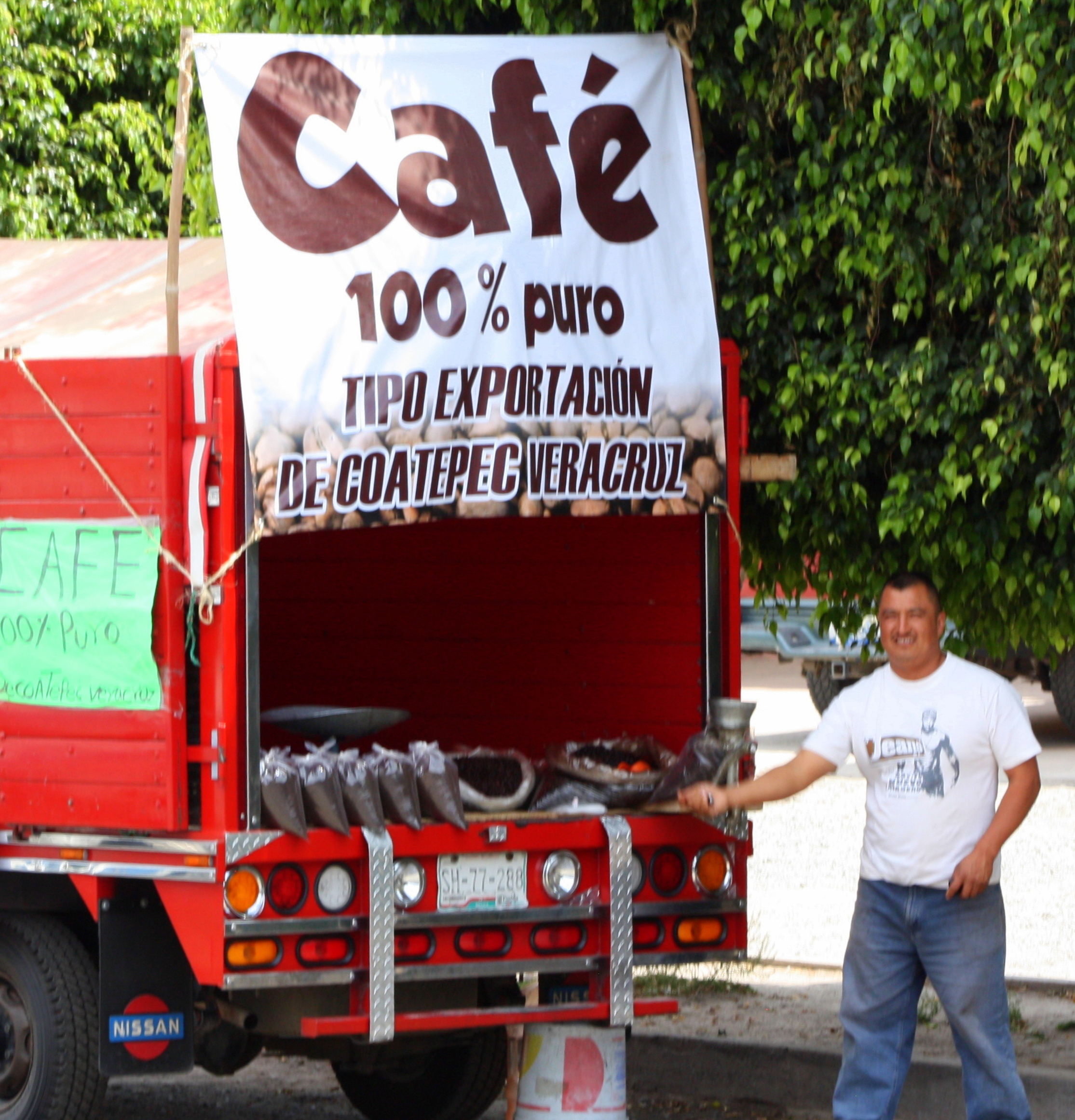
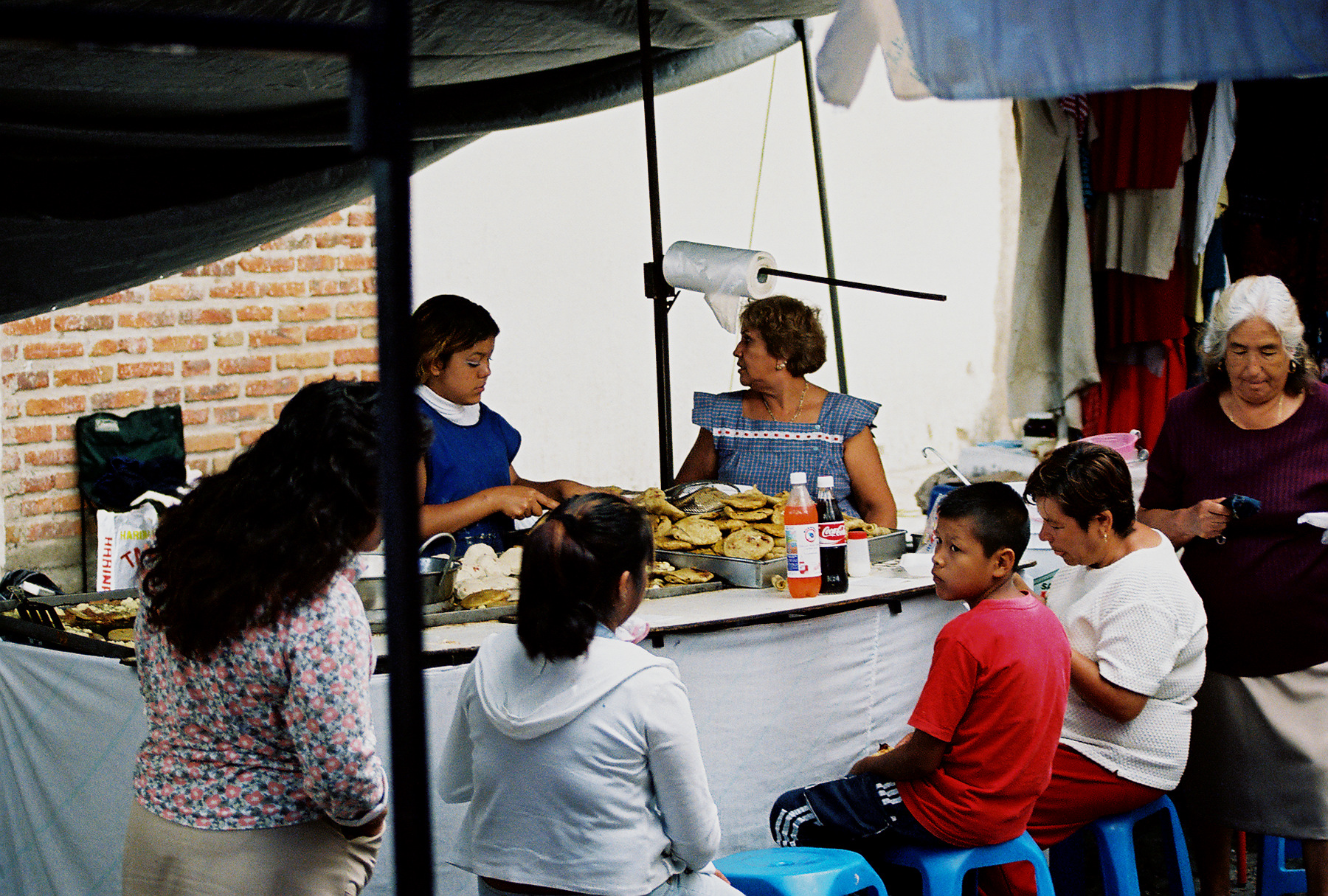
    Food vendors sell everything from frozen treats and freshly-squeezed beverages to prepared foods (taco stands warrant a blog post all their own!), home goods, and flowers.

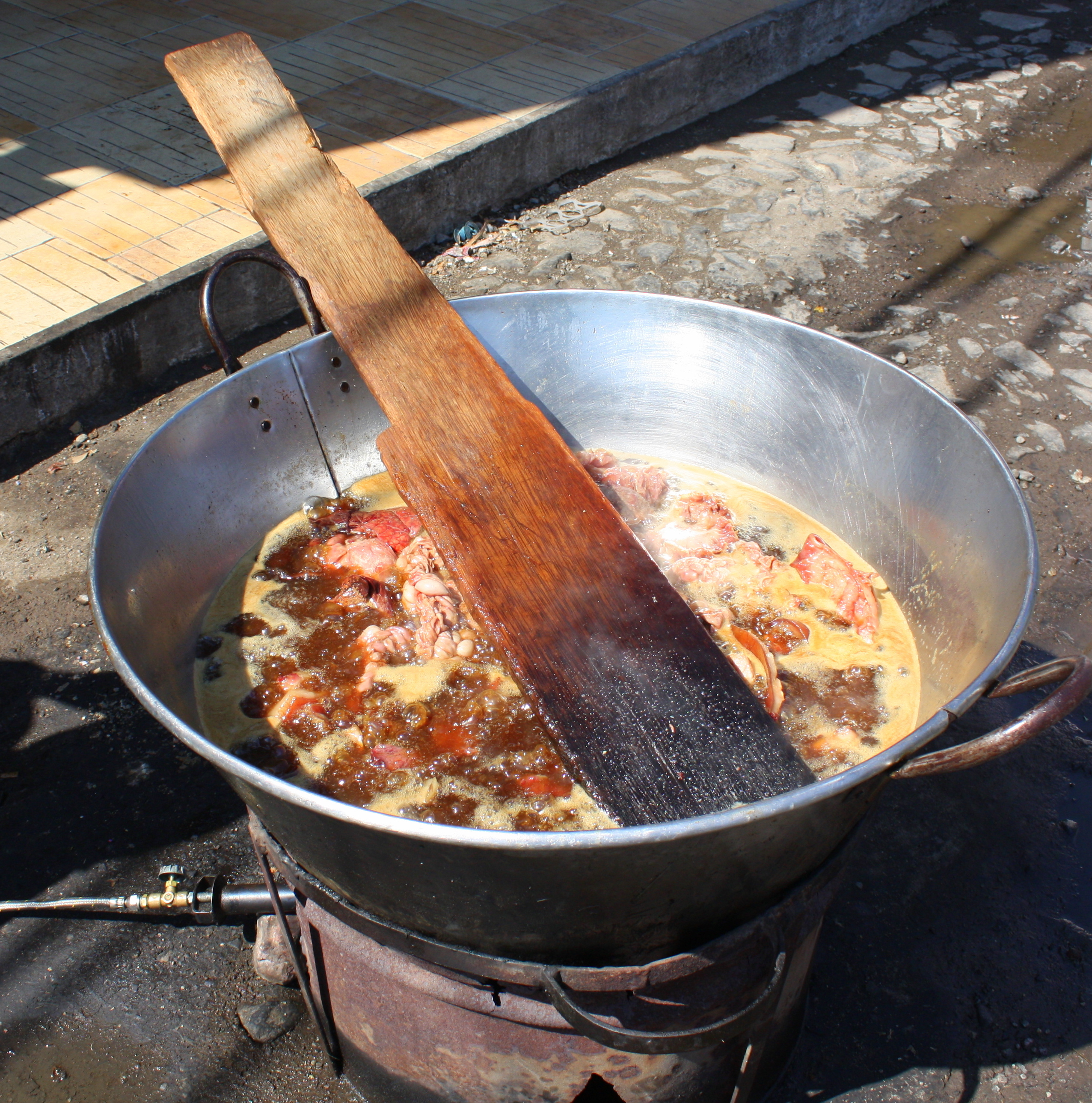
    Chicharrón in the making

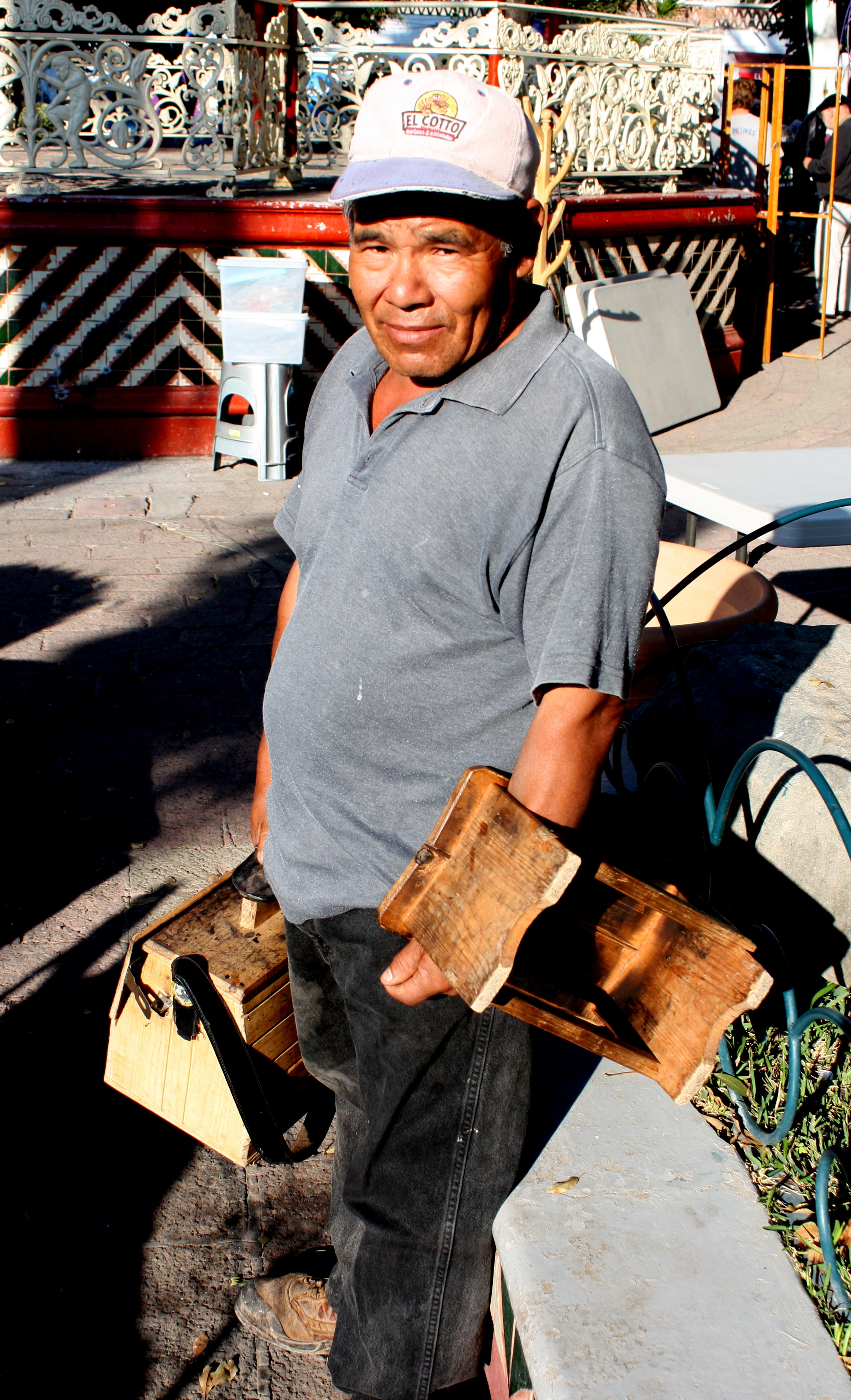
    Shoe shine on the Plaza

    Street merchants will also dupe your keys, shine your shoes, sharpen your knives and wash your car in less time than it takes to find a parking spot at your average Stateside Safeway.

    Basket vendor on the Plaza

    Walkabout vendors are the salt of the street merchants.

    They carry their entire inventory on their backs, often walking miles every day.

    CD & DVD bike cart on the Plaza

    Some merchandise, though, begs to be wheeled through the crowd, and the conveyances are nothing if not inventive.

    Other merchandise better lends itself to hanging from trees and fences each day to be carted off at day’s end and re-hung each morning.

    A very few even sell from roadside kiosks not much larger than a phone booth.

    Most of the street merchants not walking or wheeling about are parked so routinely in the same spots at their appointed times that people sometimes use them as directional landmarks.

    Coffee vendor/grinder on the Carretera

    Among them will appear for a day or a week spontaneous street capitalists who vanish as suddenly as they appeared.

    On the Plaza curb in front of BBVA

    Many of these sidewalk merchants start each day very early by walking, bicycling, or riding the bus to Ajijic from homes in nearby villages.

    Ice cream vendor stocks up

    Others stock push carts or buy fresh products at a wholesale market before the selling day begins.

    There are no bar codes or credit cards here.

    There are no frequent shopper programs, blue light specials, or rebates.

    There’s just cash and carry from a sole proprietor who does one thing only and strives to do it better than anyone else.

    There are also plenty of merchants who are as well known to their customers as the customers are to them, and there’s no small amount of loyalty between many buyers and sellers.

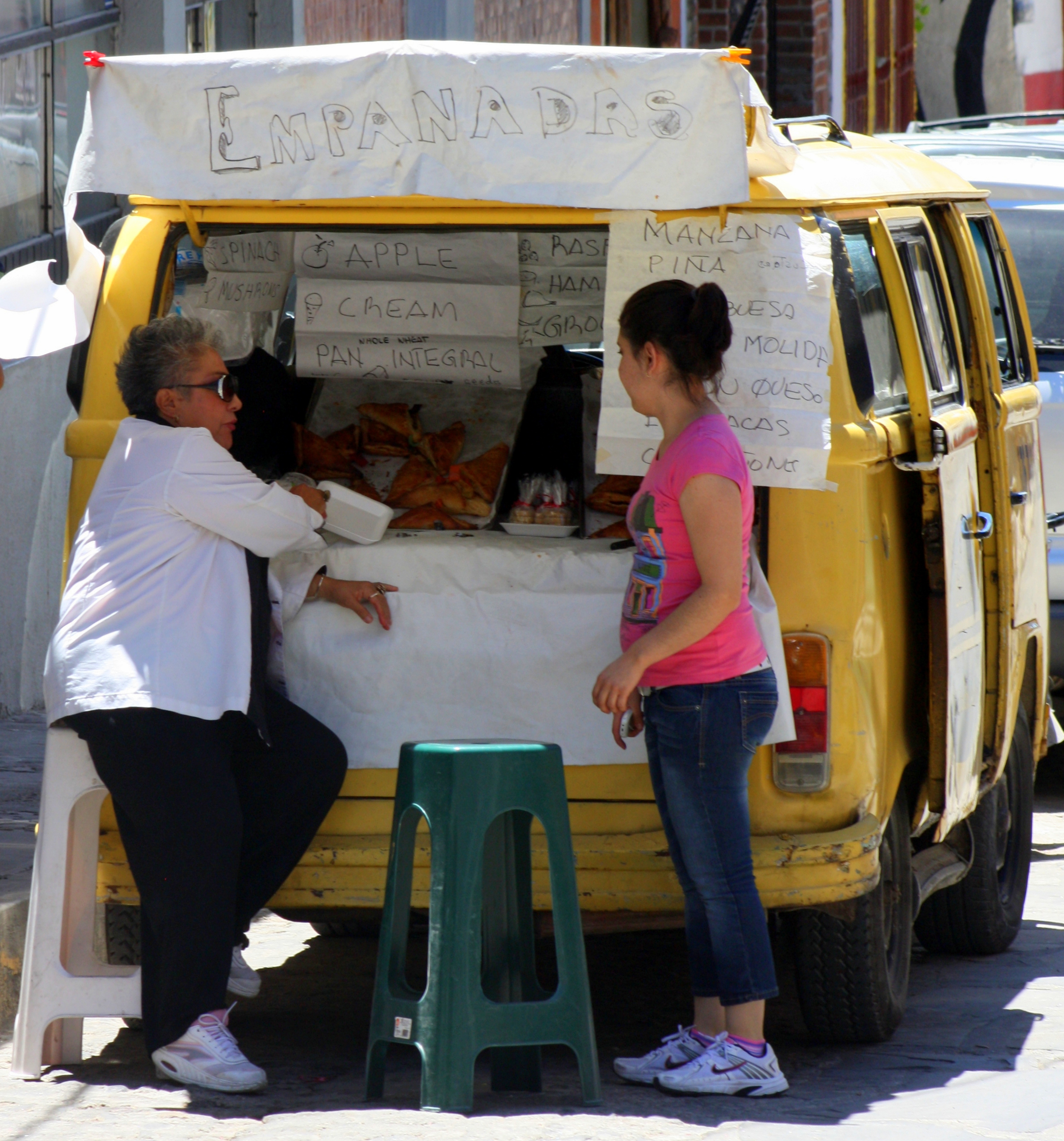
    Curbside empanadas on the Plaza next to BBVA

    It’s a relationship long gone in America’s retail landscape, but for those who can take it in stride it can be a richly rewarding trade-off for America’s impersonal, one-stop, “big box” shopping experience.

    See my related post “American Values

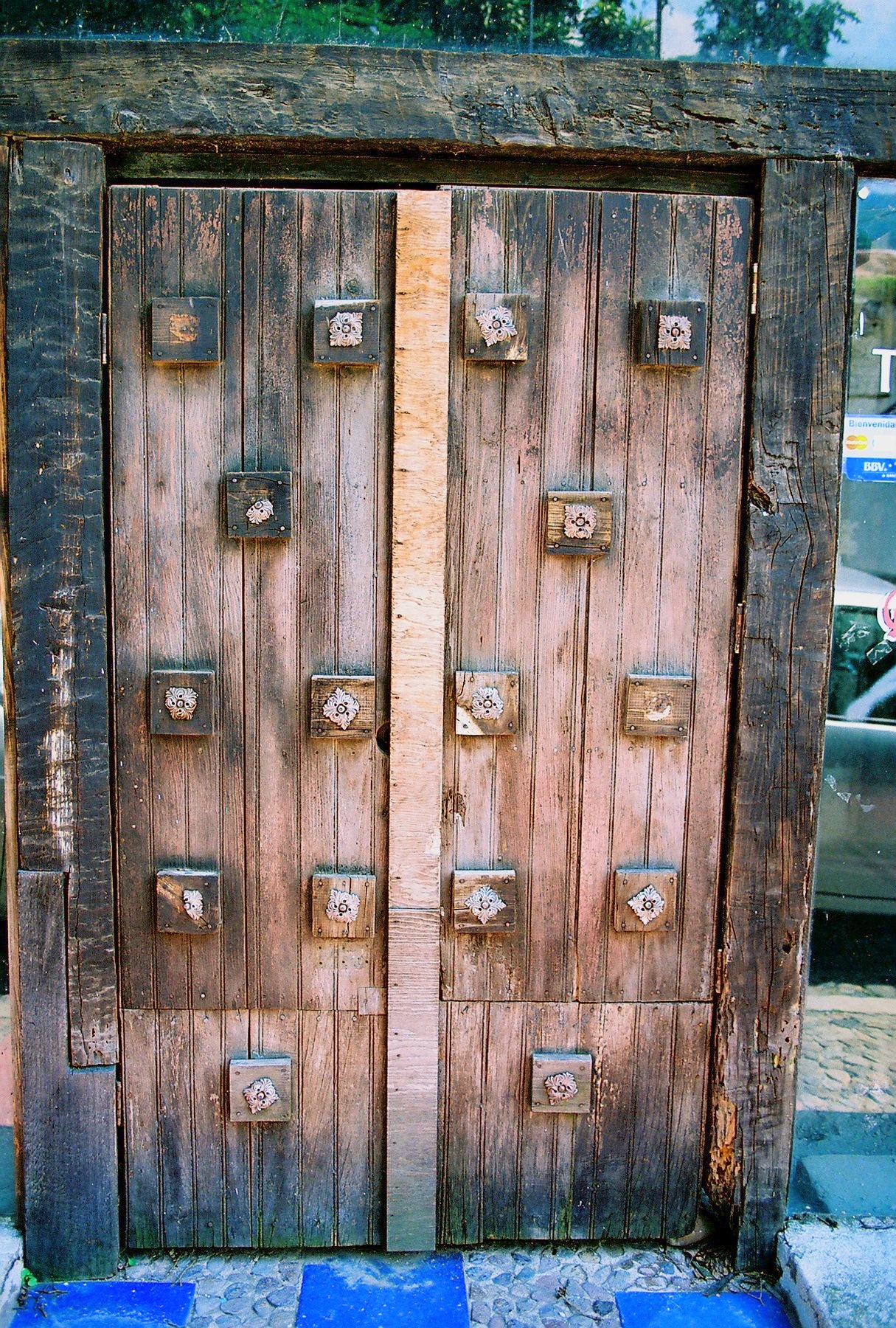
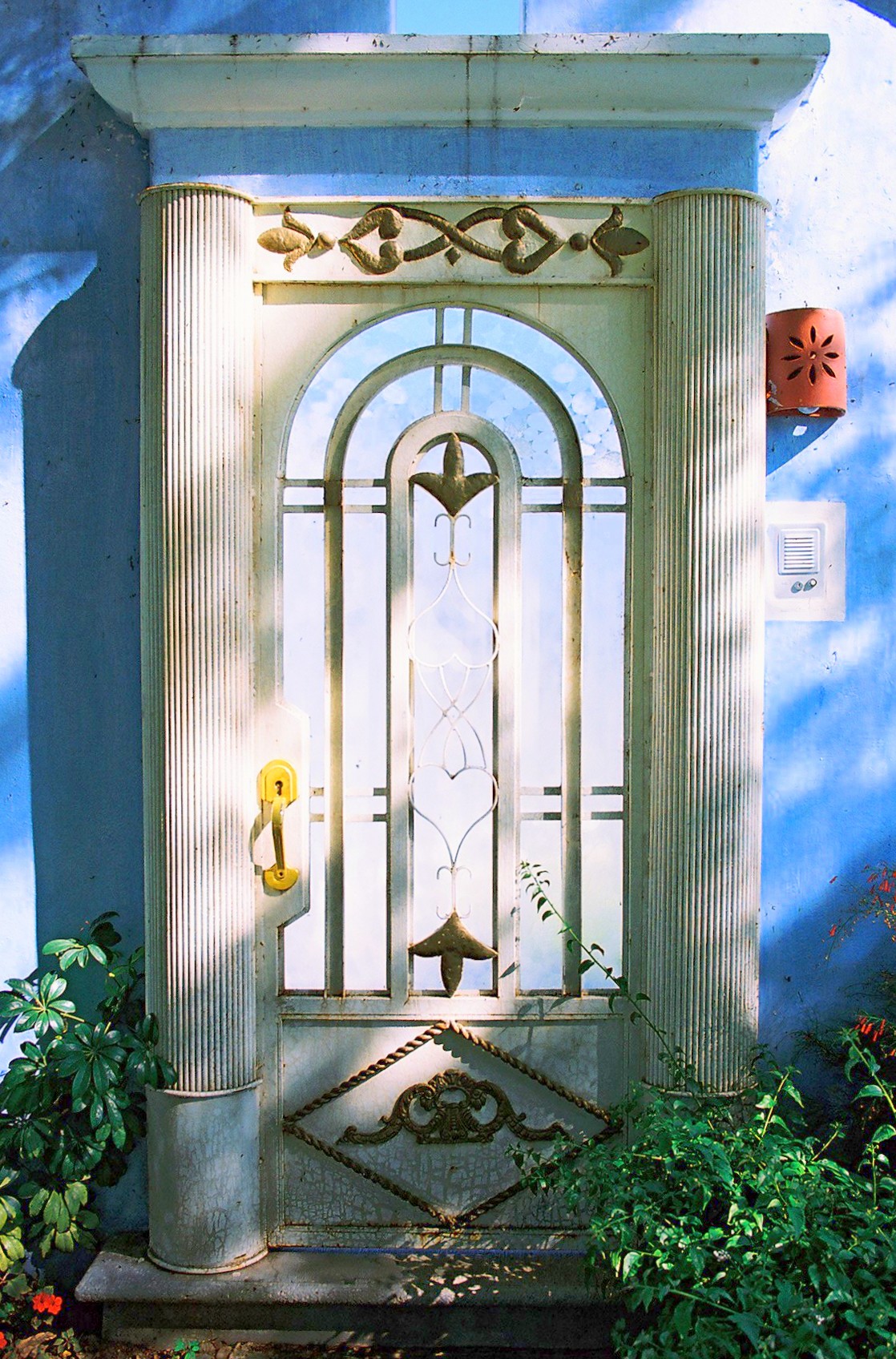
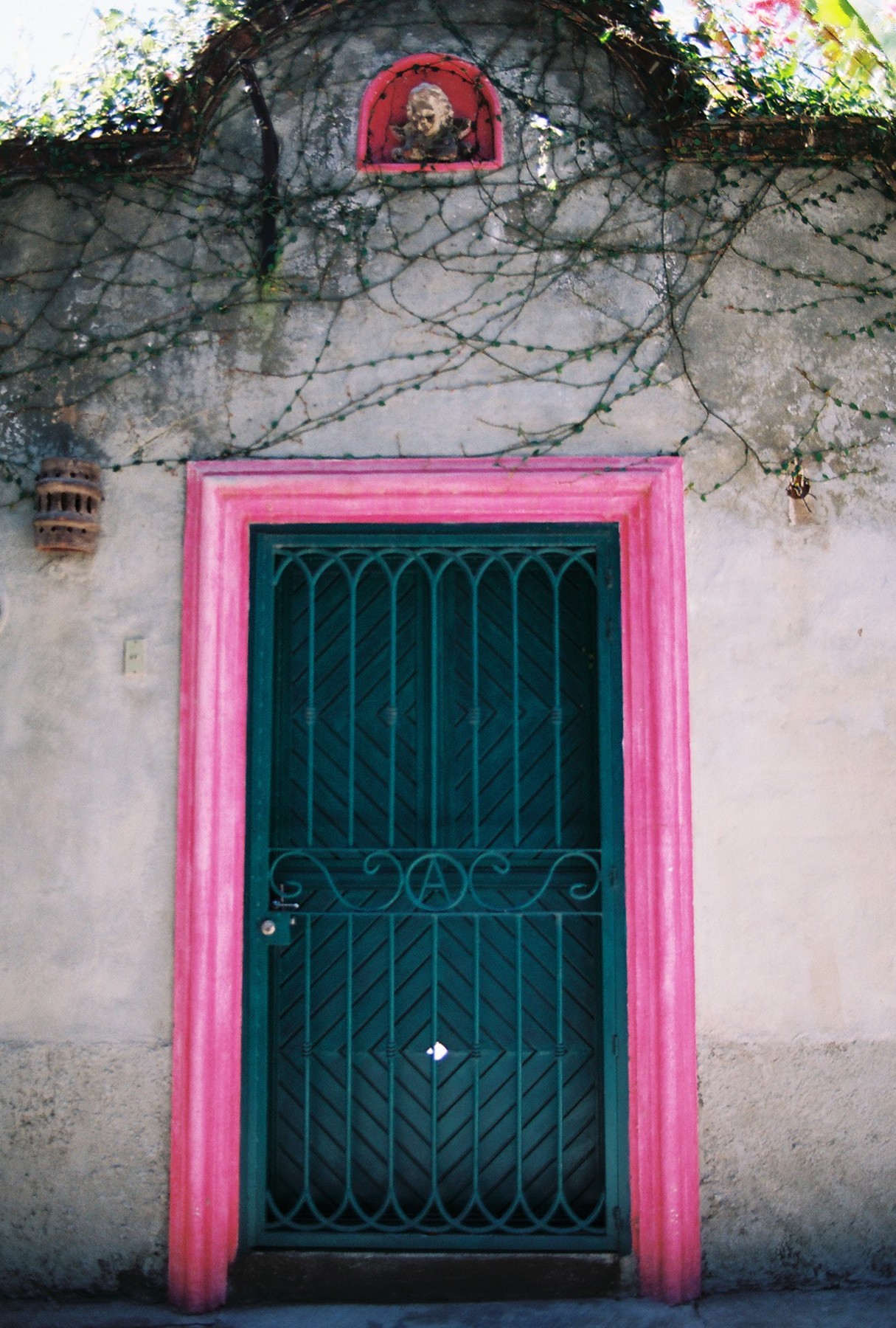
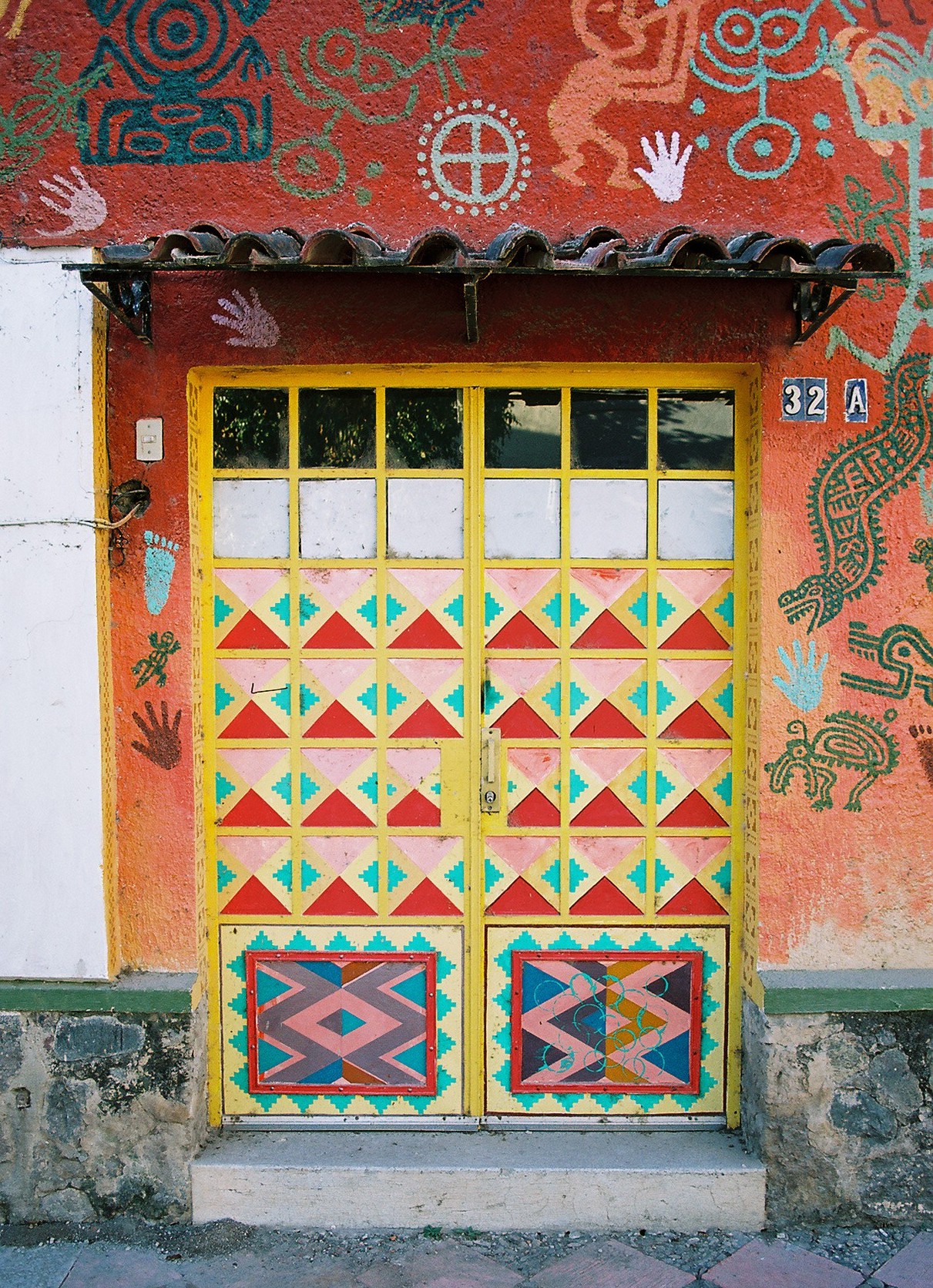
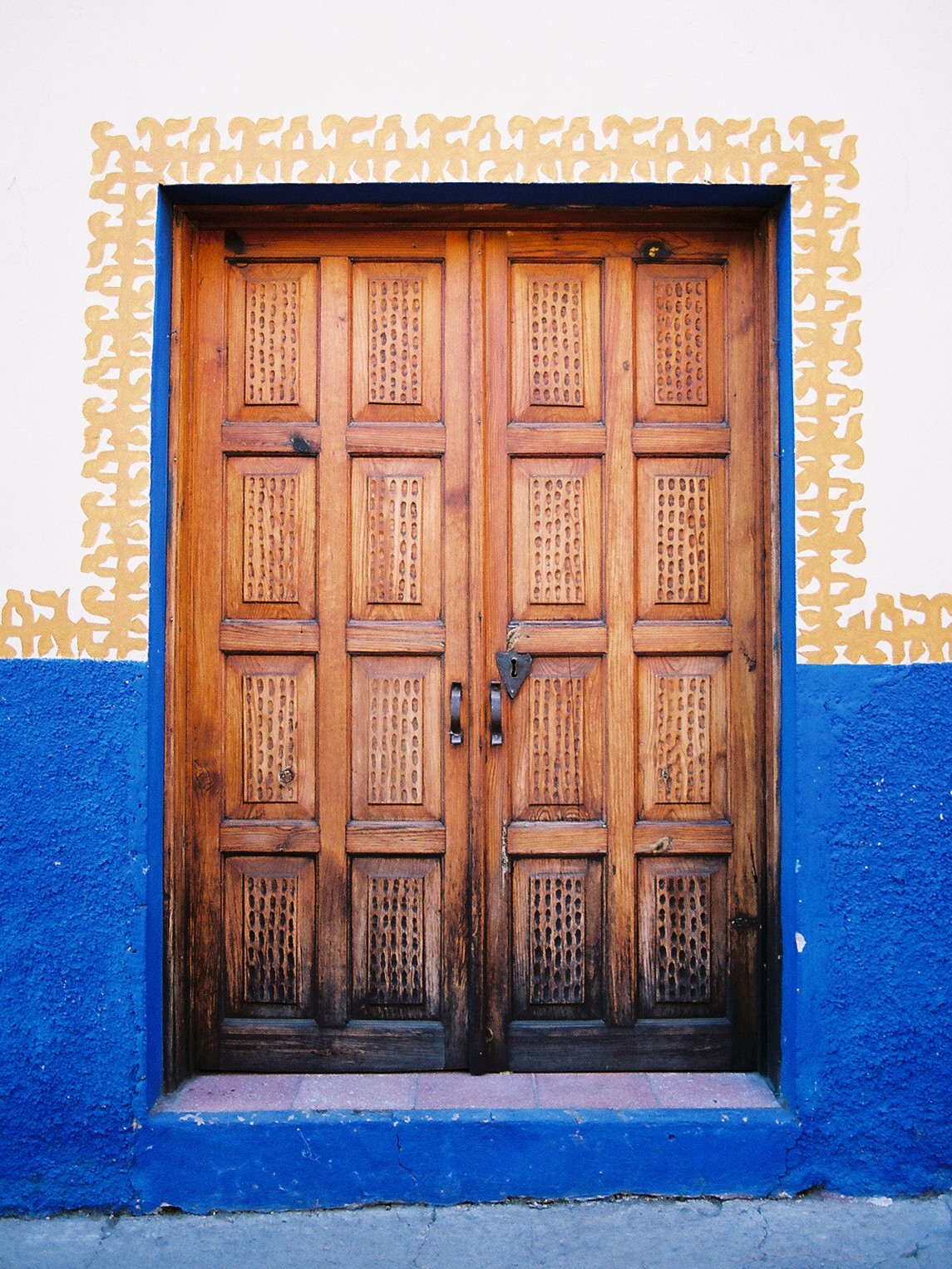
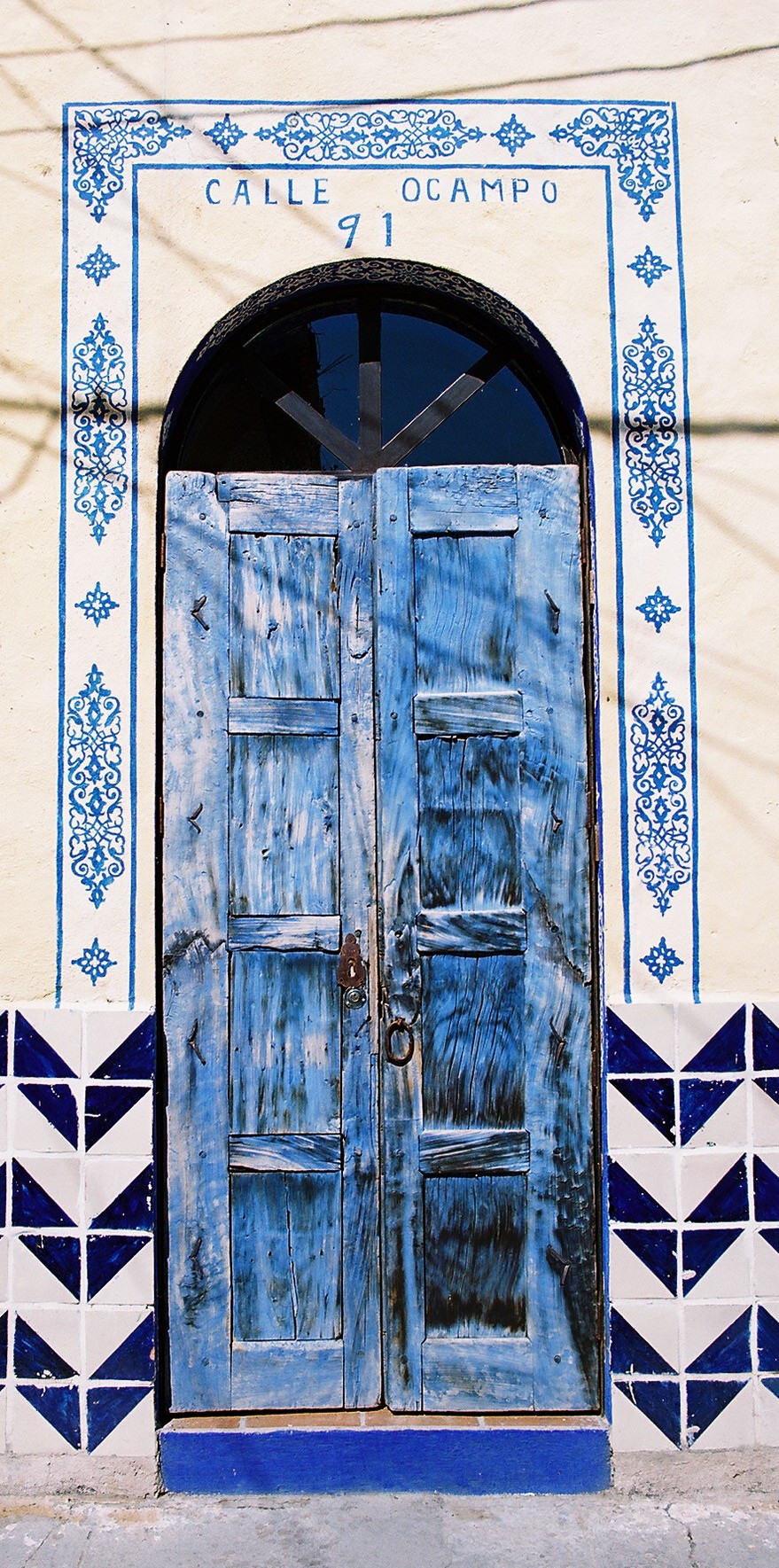
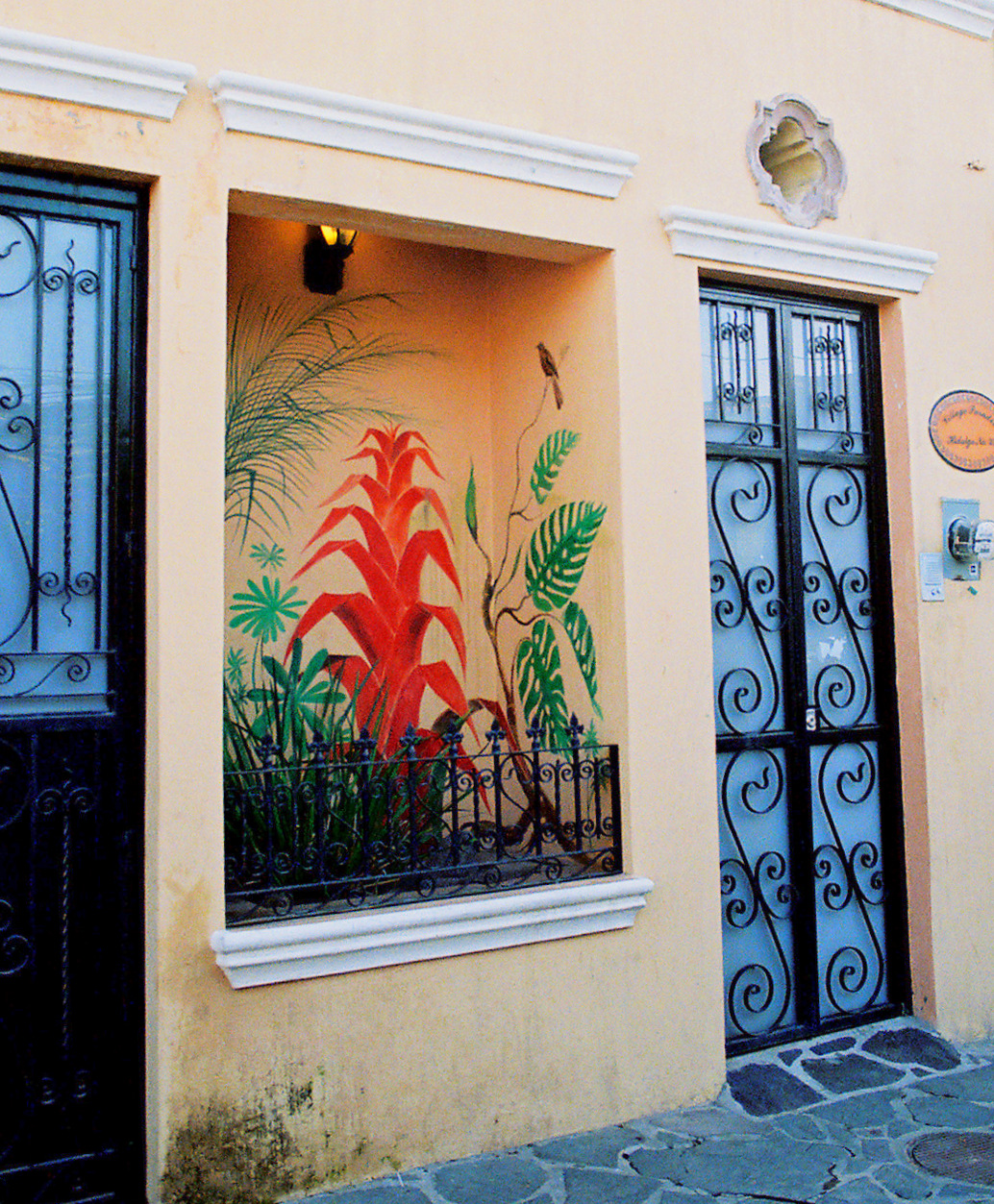
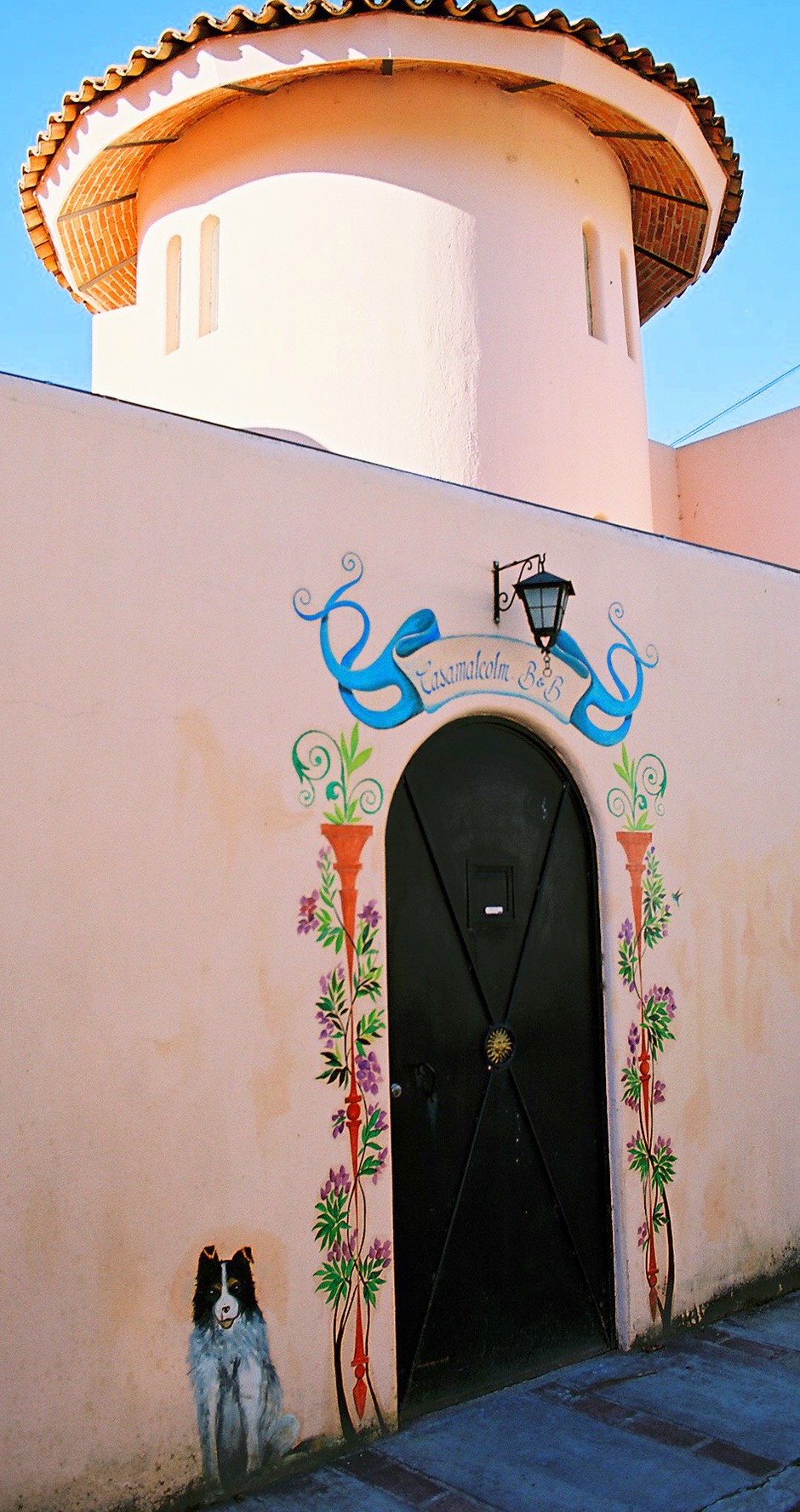
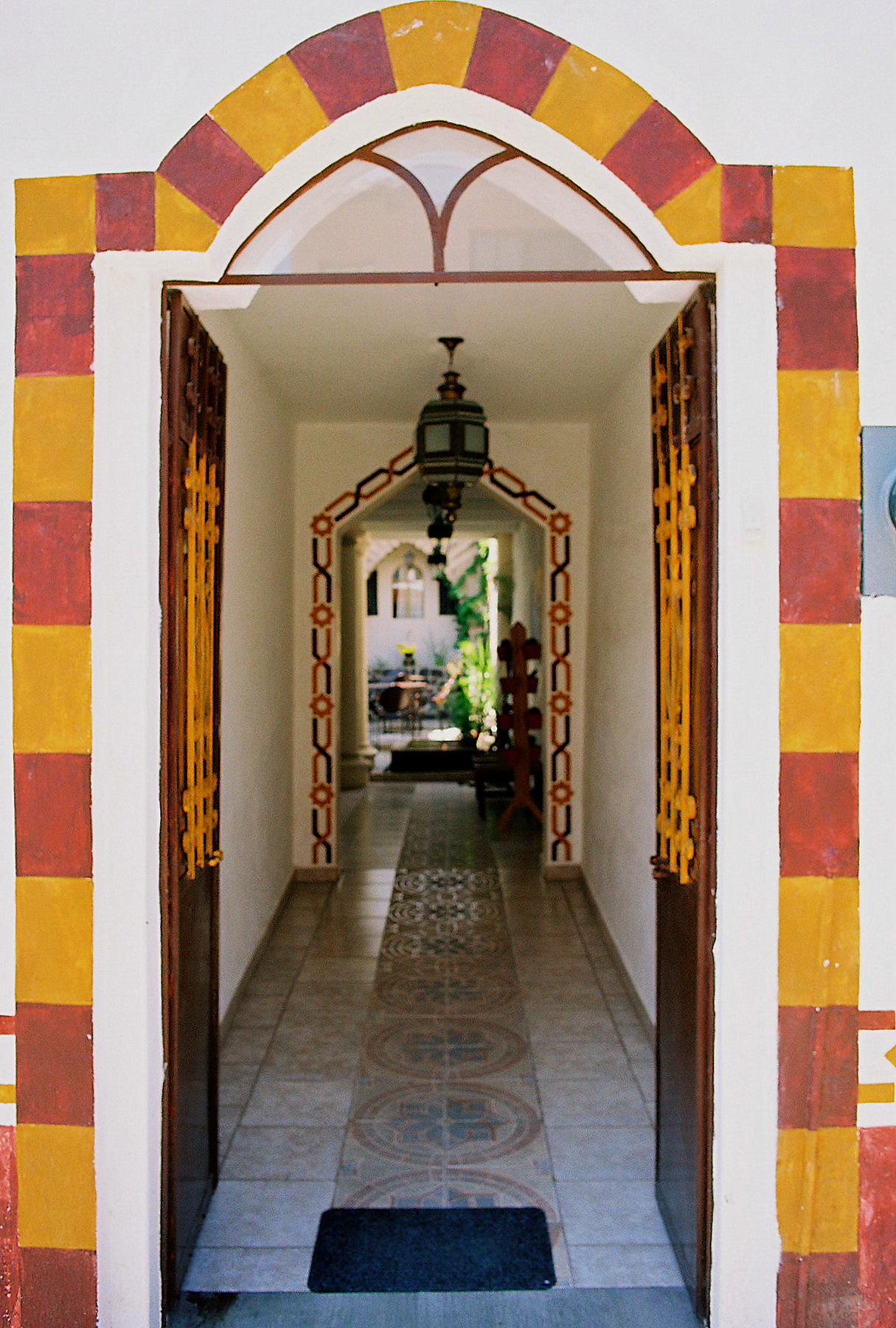
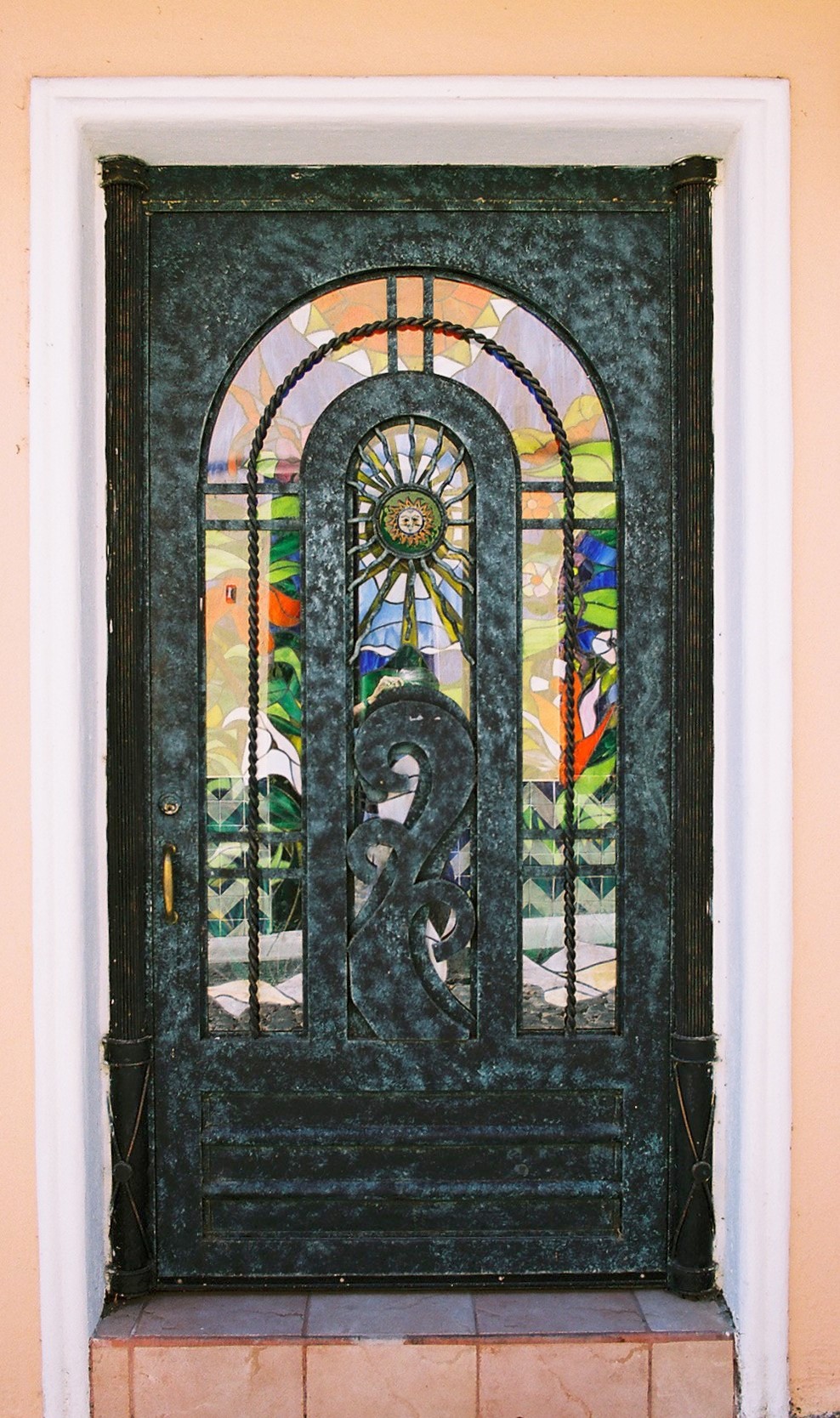
    Doors of Ajijic

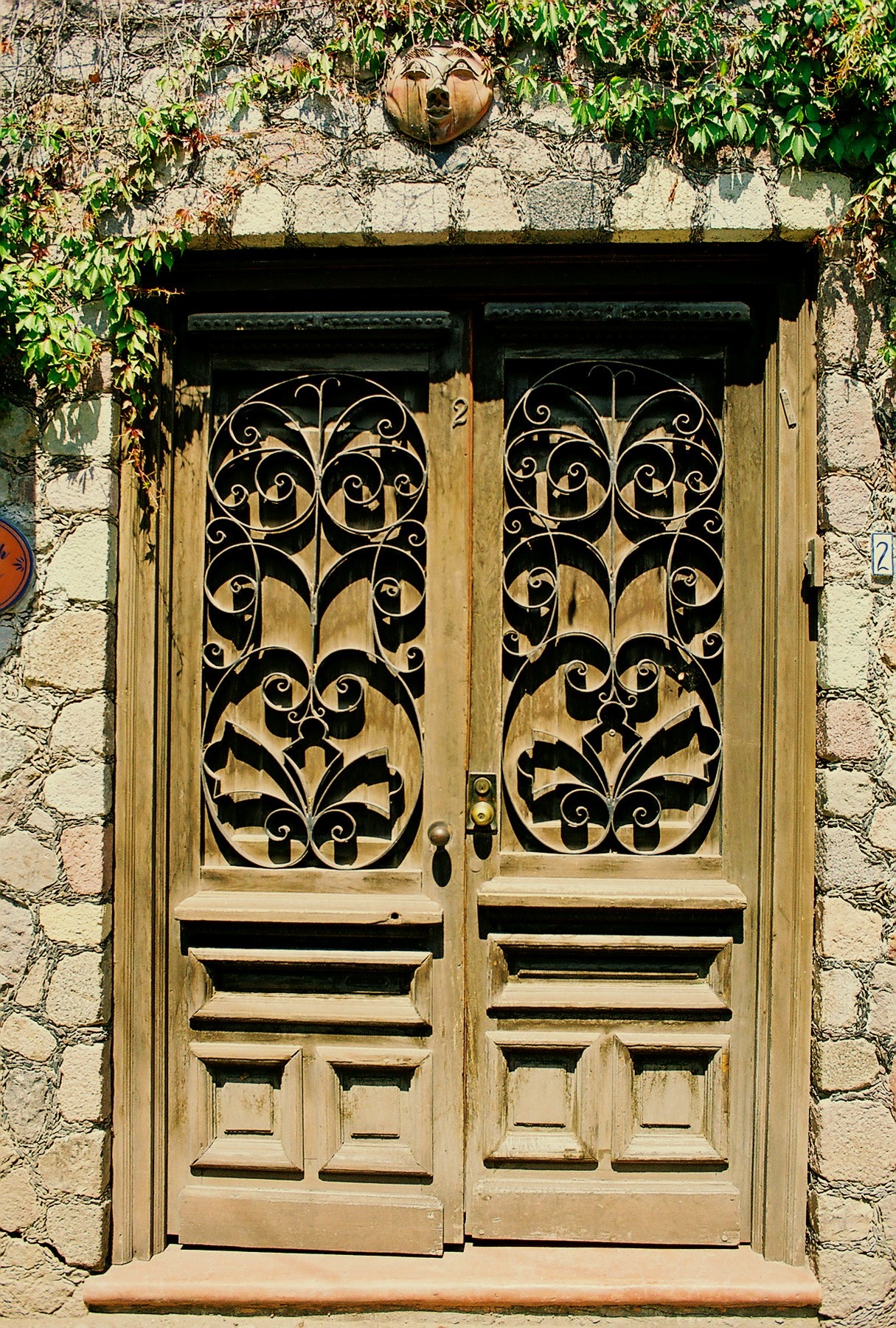
    Ajijic door

    If eyes are windows to the soul, doors must just as surely express the soul of a home.

    Ajijic door


    Doors have special significance in Spanish colonial architecture, which cloisters intimate living spaces in courtyards hidden from the street.

    Ajijic door

    Ajijic door

    Ajijic door

    It’s easy to pass these doors every day without giving them a second thought.

    Ajijic door

    As a collection, though, they paint a unique picture of the village that’s authentic, personal, and spontaneous.

    Ajijic door

    Doors here come in all shapes, sizes and colors, and are crafted in materials ranging from wood to wrought iron.

    Ajijic door

    Some are simple and others ornate.

    Ajijic door

    Some are formal and others whimsical.

    Ajijic door

    Some are reflections of the Old World and others are distinctively Mexican.

    Ajijic door

    Some merely hint at what lies behind, and others provide a teasing glimpse.

    Ajijic door

    Ajijic door

    It can be as entertaining to speculate on what lies behind them as to actually know.

    Ajijic door

    If you haven’t seen these, enjoy them.

    Ajijic door

    If you’ve seen some of them in passing, take a second look because there’s often more here than can be taken in with a single glance.

    Ajijic door

    Ajijic door

    Ajijic door

    Ajijic door

    Tianguis’d

    Florist, Ajijic tianguis

    Whenever I travel to someplace new the local version of tianguis is always high on my itinerary. It’s virtually guaranteed to deliver an instant lay of the land and a hi-def cultural immersion experience.

    What is more common to the Lakeside expat experience than tianguis?

    Huichol woman, Ajijic tianguis

    Nuts & fruits vendor, Ajijic tianguis

    It’s broad appeal is not surprising.  Weekly market bazaars are one of the oldest expressions of human community (the Nahuatl word tianguis is distinctively Mexican), and on the Ribera this truly moveable feast materializes in a different town each weekday beginning on Monday in Chapala.

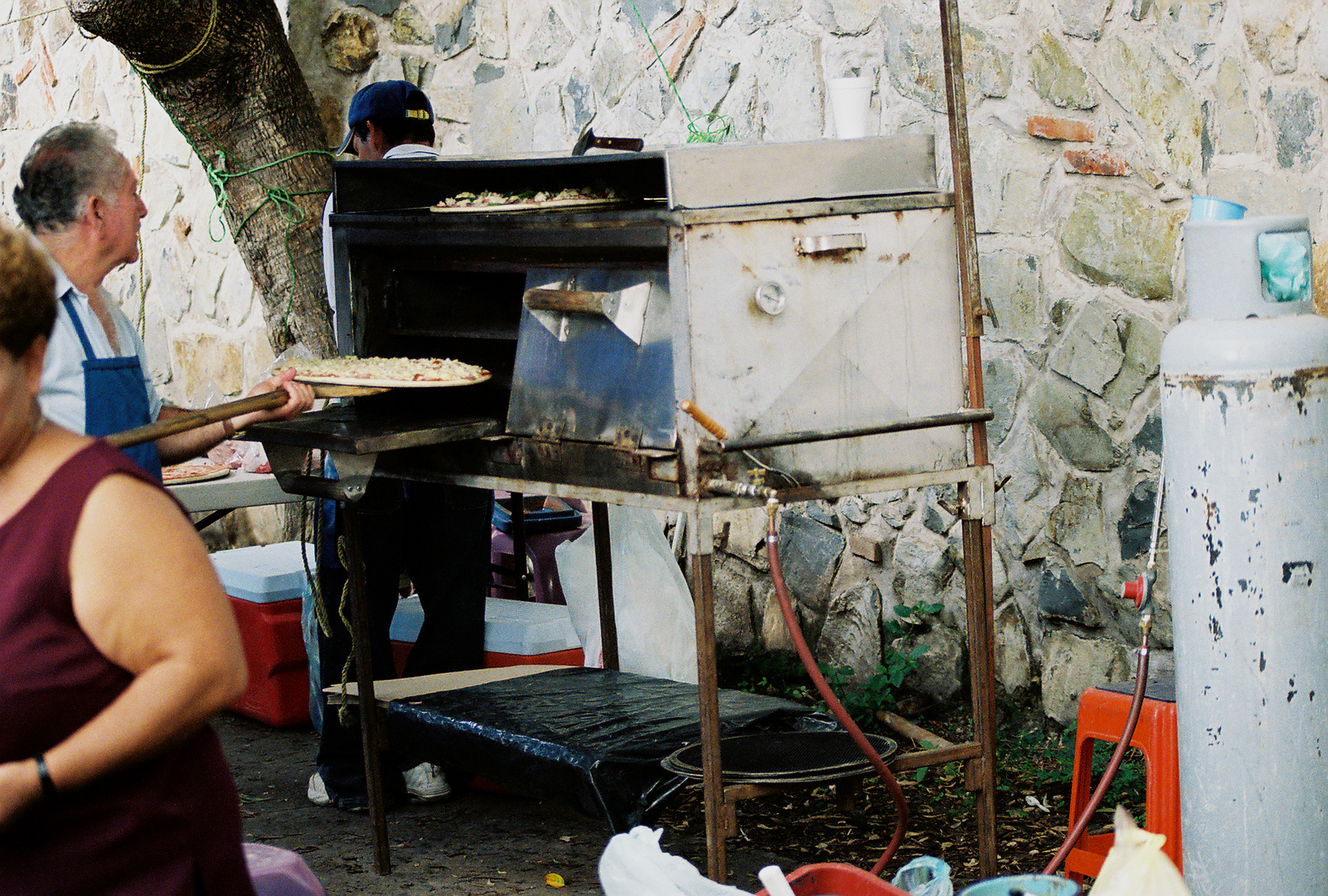
    Gas-fired pizzeria, Ajijic tianguis

    Tianguis brings together an incredibly diverse cross-section of the Lakeside community more often and more consistently than just about any other event.  In this social microcosm Mexicans and expats are represented – if in different mixes – among both buyers and sellers. Tianguis attracts customers ranging from householders to maids and cooks, and there’s something for every budget from purse to pocket change.

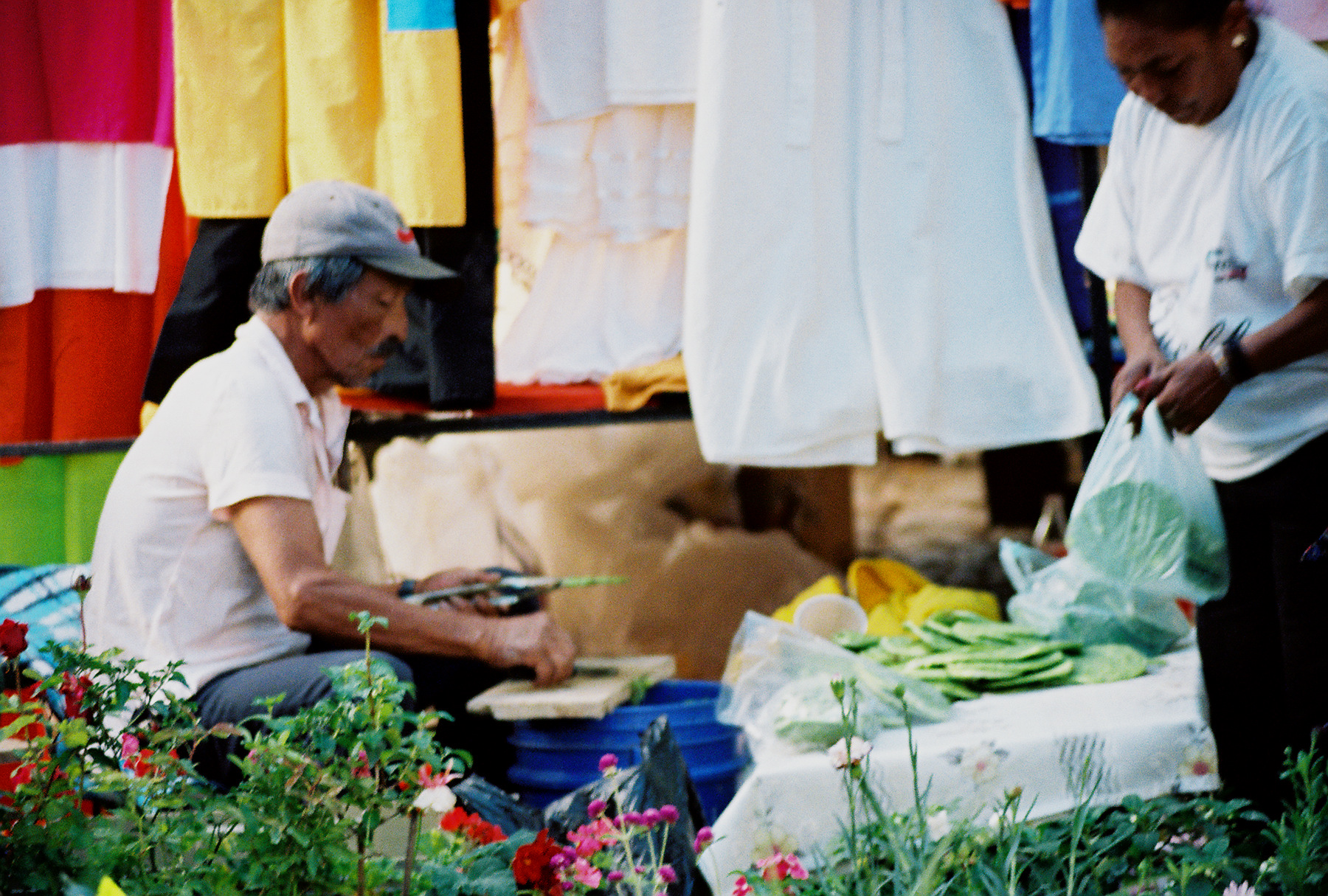
    Nopalito skinner, Ajijic tianguis

    Tianguis – as with so many of Mexico’s open markets – is a personal experience in which it’s not unusual for frequent buyers and sellers to know each other on sight and for vendors to have fiercely loyal customers.

    Snack bar, Ajijic tianguis

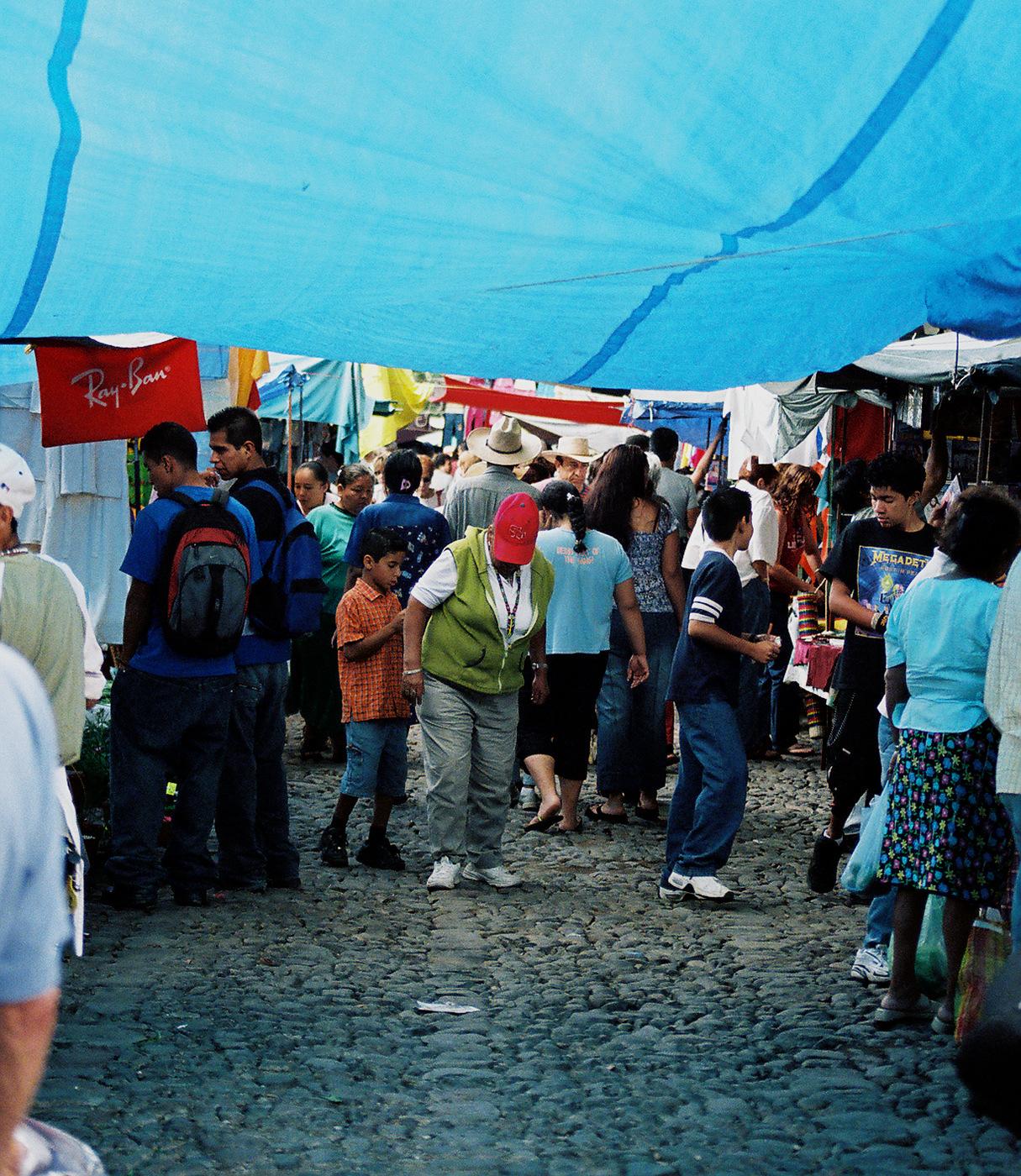
    Any Mexican street market worth its salt features an eye-cluttering array of merchandise ranging from kitchenware to underwear and from jewelry to CD’s and DVD’s, and on this the tianguis in Ajijic is not lacking.

    Taco grill, Ajijic tianguis

    Taco fillings grilling, Ajijic tianguis

    Ditto for freshly prepared hot food of the eat-and-walk variety.

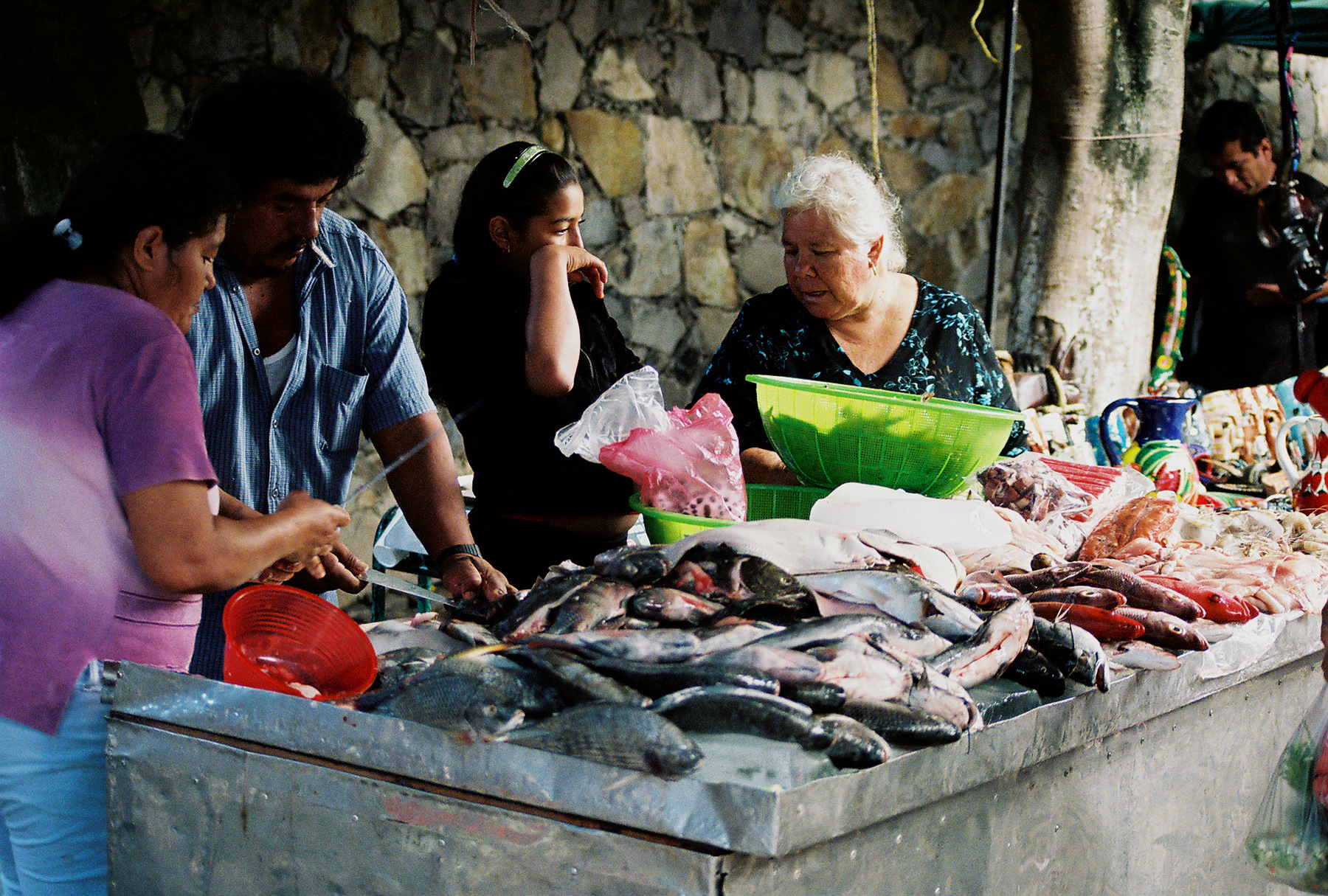
    Fishmonger, Ajijic tianguis

    The heart and soul of tianguis, though, is fresh fish, meat, produce, and flowers.

    High end Stateside grocery chains like Whole Foods Market and HEB Central Market try to evoke the same sense of community, but without the small merchant touch it’s an inauthentic experience.  (Try getting your car washed in its parking spot while you shop at a Stateside Safeway!  Or getting your shoes shined or any extra set of keys made.)

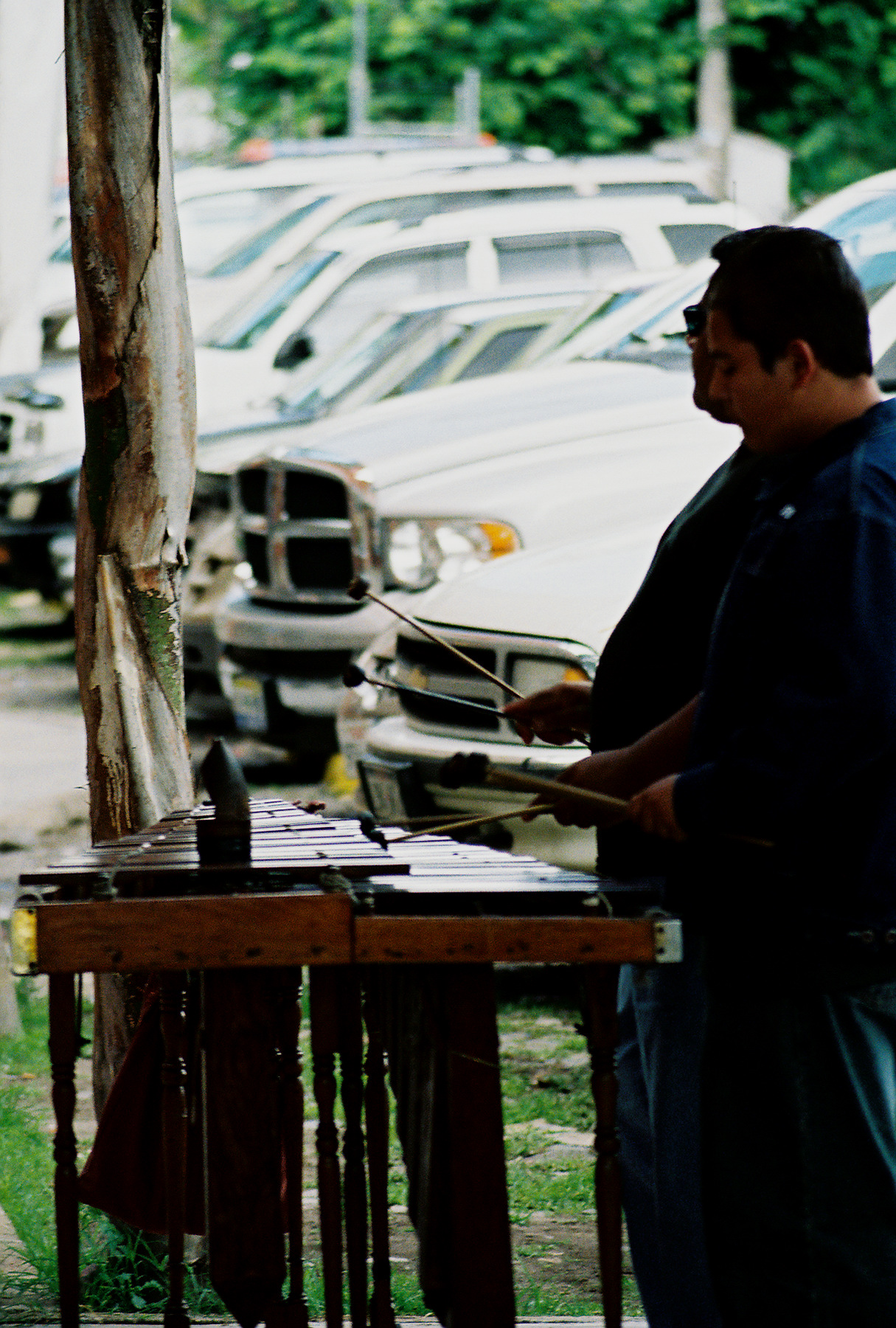
    Marimba player, Ajijic tianguis

    There are at times a carny sort of sidelight to tianguis.  Sort out the truly disabled mendicants from the panhandlers and solicitors for donations to charities of unknown character.

    Plan on encountering at least one musician playing for tips, and if more at least one who needs more practice before playing again in public.

    For some tianguis visitors, though, it has little to do with buying or selling. Tianguis is just a likelihood of running into someone you know and need catching up on.

    It’s the office water cooler for the retired and not-so-retired, and a chance meeting at tianguis can easily morph into an extended lunch if not today than later in the week.

    The Midway, Ajijic tianguis

    Shopping… street theater…  community.  What’s not to like about tianguis?

    Check out my other market-related blog posts:

    Barcelona’s Mercat de la Boqueria

    Guadalajara’s Mercado Libertad

    Mendoza crafts market

    Zapopan fish market

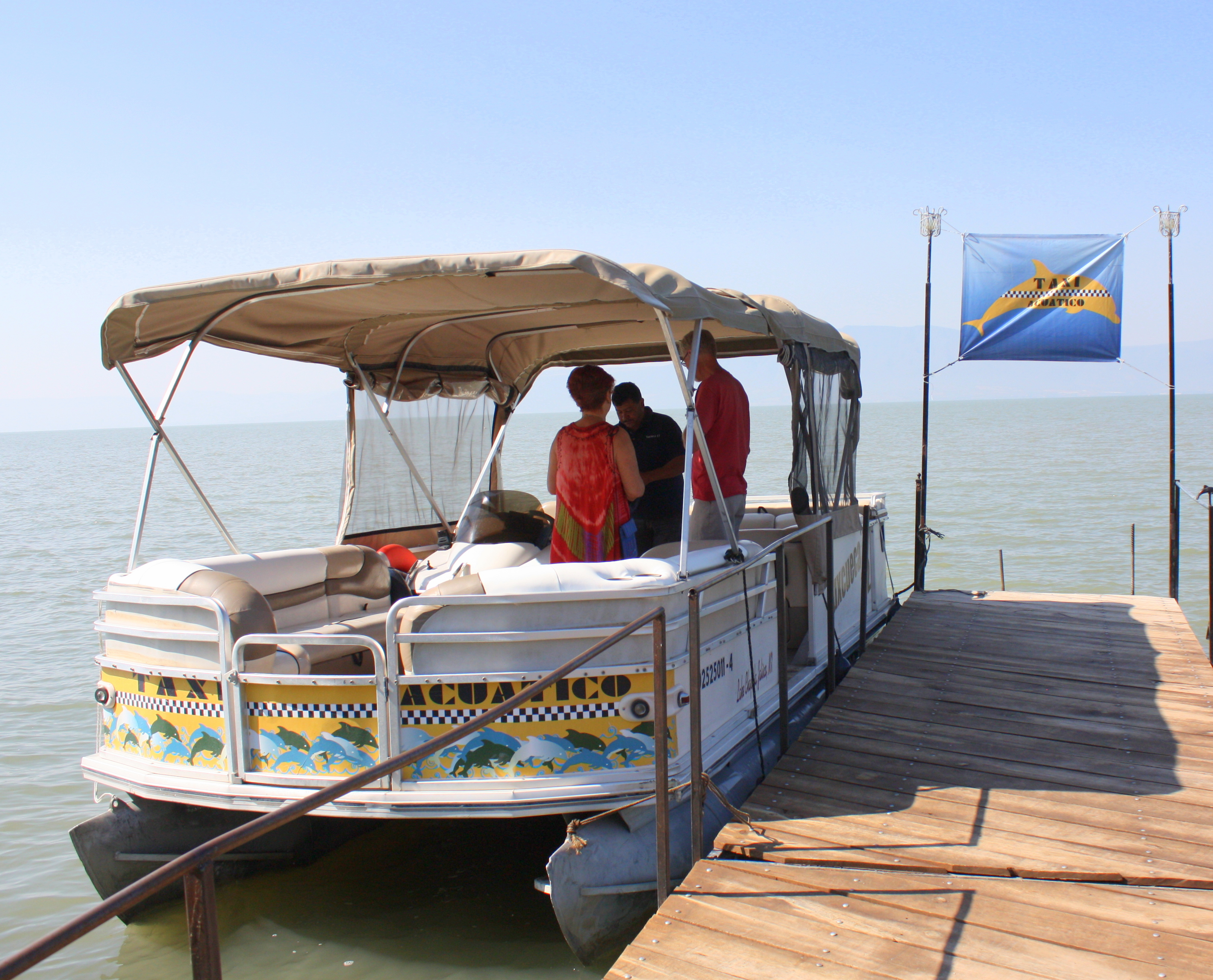
    Ferry departs from the Ajijic pier

    All that I saw of San Luis Soyatlan on my first visit there nearly 8 years ago was the flower-bedecked cemetery that caught my eye just as the day was drawing to a close and I was about to turn back to Ajijic.

    I ran out of daylight before I ran out of town, promising myself to return one day to finish the visit, but the recent start of ferry service from the Ajijic Pier gave me an irresistible new way to keep that promise.

    Ajijic Pier

    A block away from the pier on Colon I grab a latte from La Prensa Francesa, and within half an hour we’re pulling away from the pier.

    The boat is easily spacious and comfortable enough for the trip of under an hour.  I watch the pier recede in our wake.

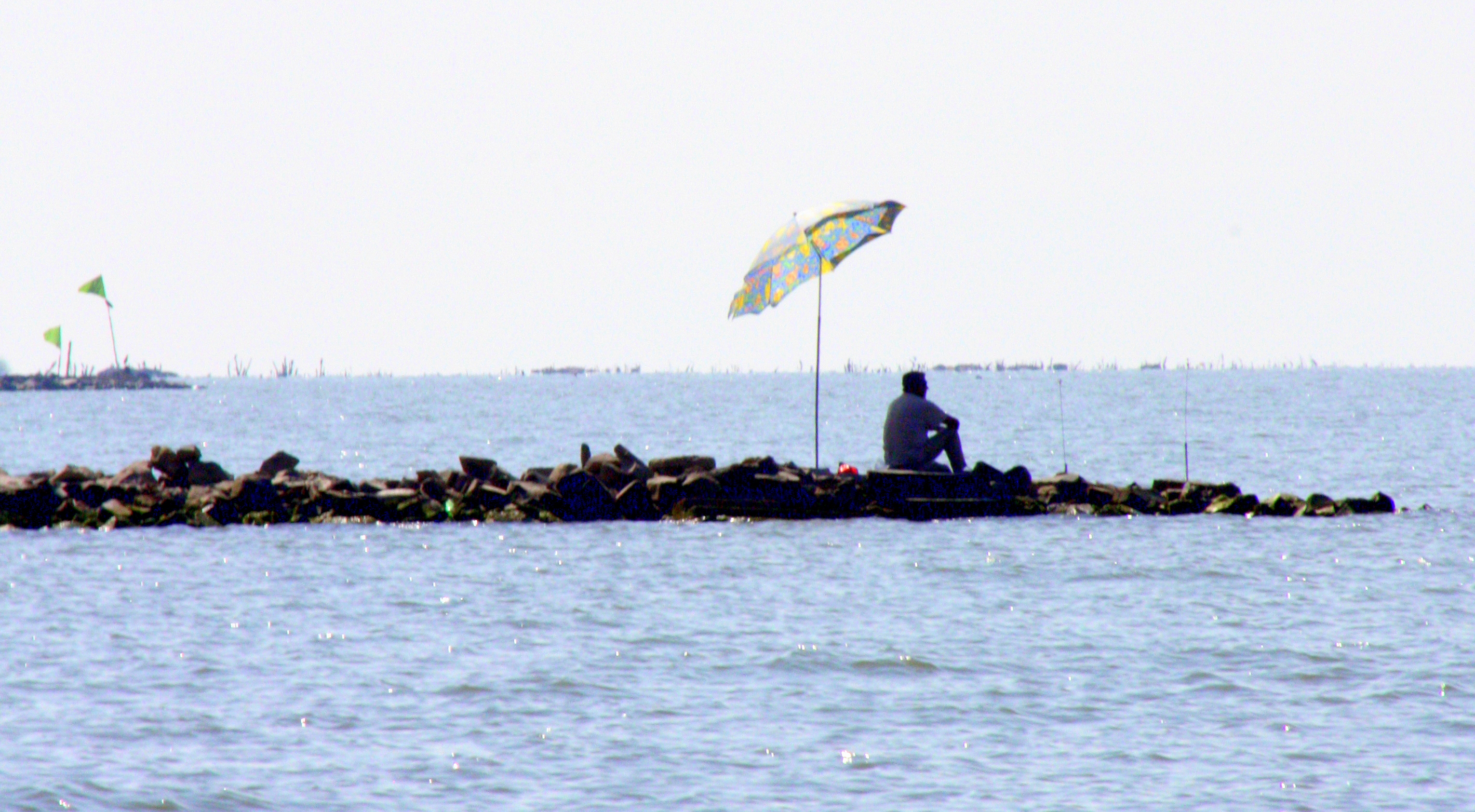
    Out on the water the fishermen are already well into their day.

    Pulling in the net on Lake Chapala

    There’s often a mirage-like quality to things seen from this vantage point.

    Fisherman on Lake Chapala

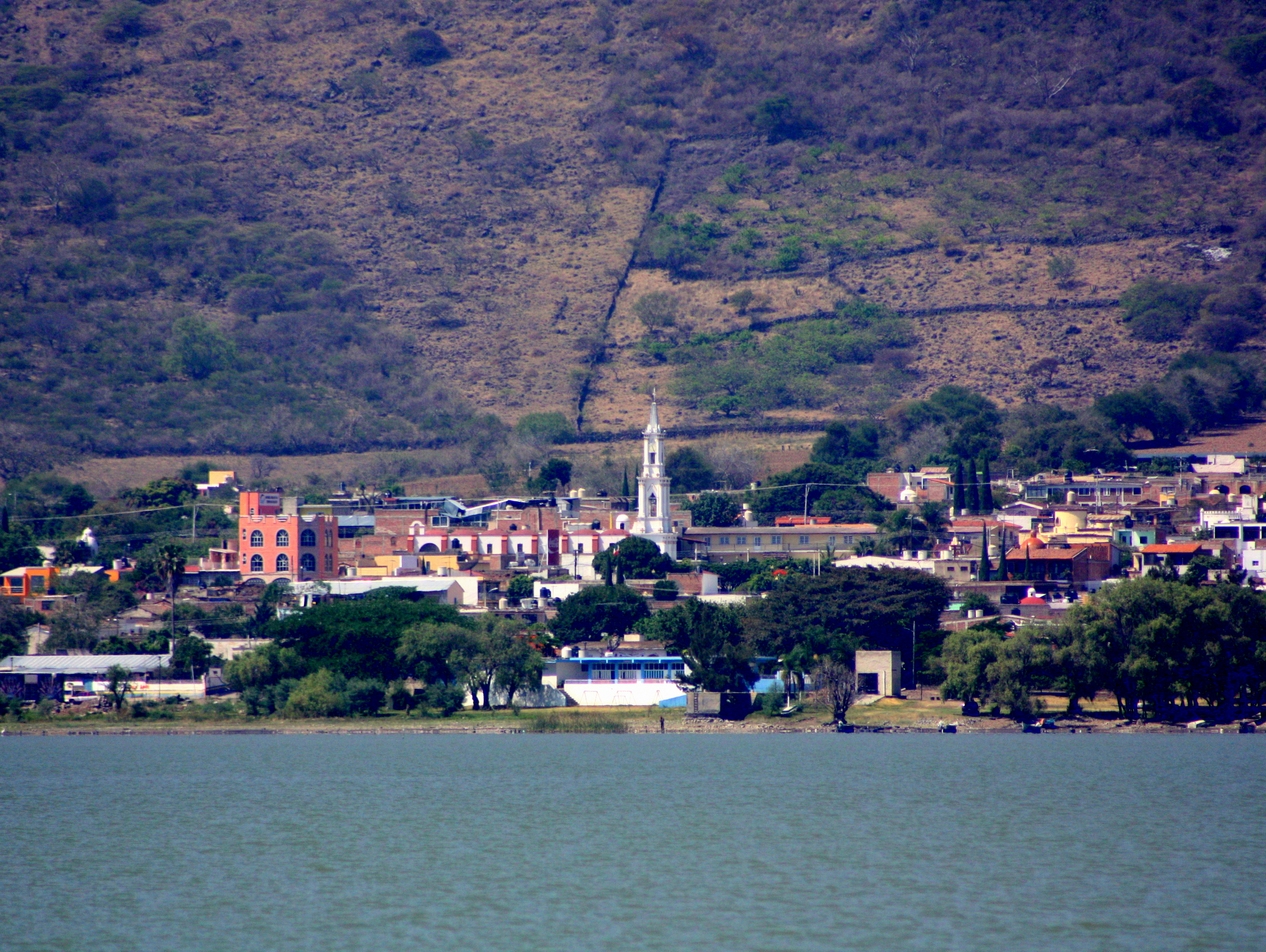
    As the opposite shore draws nearer the towering campanario of the parroquia first takes shape, and then the village gathered around it. Behind it the mountain grows to cover the entire horizon.

    San Luis Soyatlan from Lake Chapala

    Street scene, San Luis Soyatlan

    I set out for myself as soon as we land just west of town, mapless but following two time-tested rules:  (1) Follow the shoreline whenever possible, and (2) always go toward the campanario.

    The shoreline path winds along an expansive lakeside park with lots of picnic tables and groomed trails.

    As the campanario looms larger I turn toward the mountain and within a couple of blocks reach the coast road.

    Frutas y verduras, San Luis Soyatlan

    Clustered along this part of the highway are neighborhood tiendas and tacquerias that give way to homes as I approach the campanario and the plaza which must certainly be below it.

    A family business, San Luis Soyatlan

    Street scene, San Luis Soyatlan


    This place feels to be about the same size as San Juan Cosala on the opposite shore – I’d guess under 2,500 persons – and just like San Juan is stretched along a narrow strip that clutches the coastline.

    This place also feels like Jocotopec… a working agricultural town devoid of Tapatios on holiday or expat retirees.

    The Plaza is classic. It’s bordered on one side by the coast road, framed by buildings of substance, and located directly across from the campanario.

    Plaza, San Luis Soyatlan

    Plaza, San Luis Soyatlan

    Plaza, San Luis Soyatlan

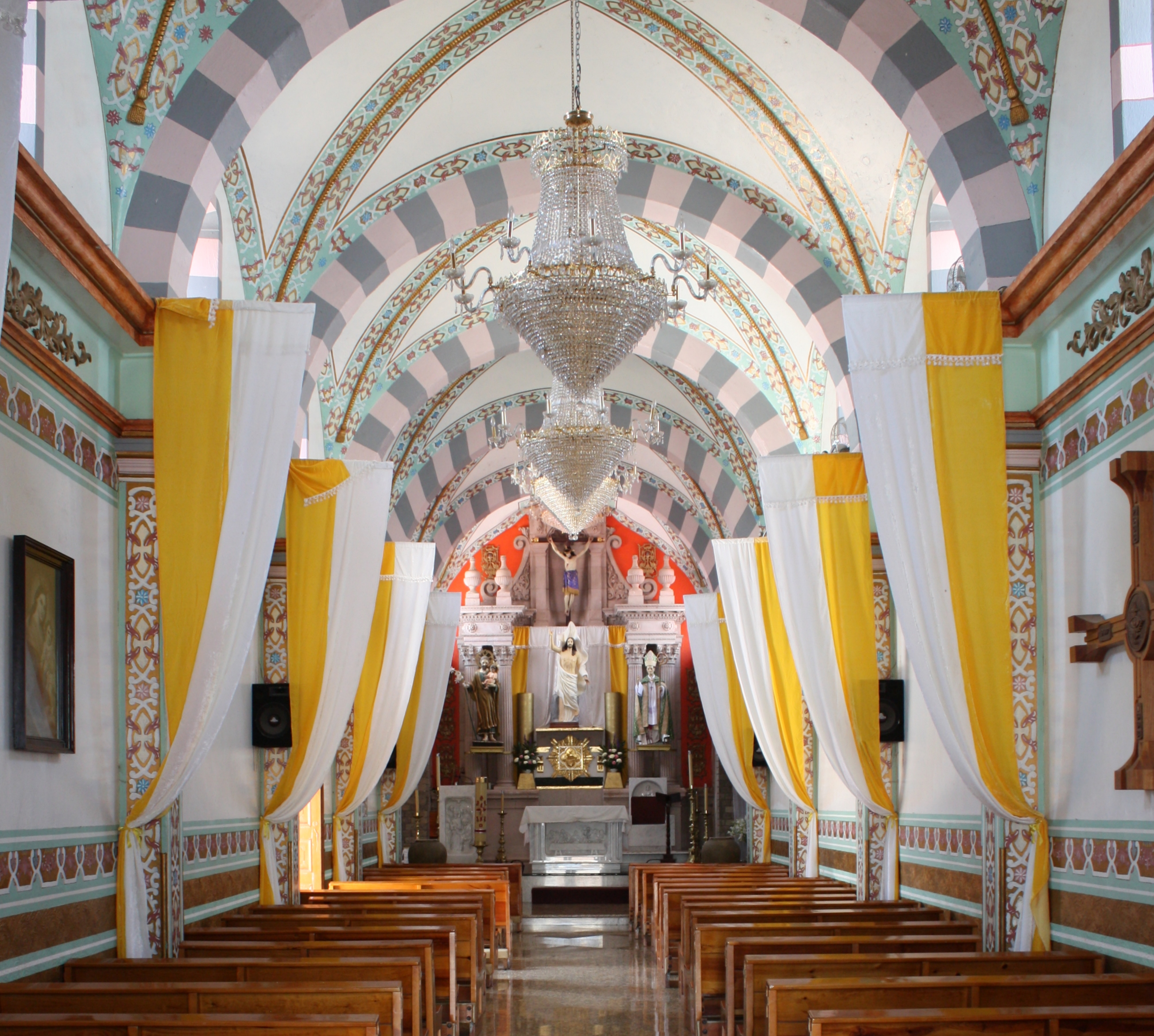
    I’m always struck by the way in which every Mexican neighborhood builds out the age-old Catholic Church footprint in a distinct reflection of its own unique image.

    On that count this one does not disappoint.

    Parroquia, San Luis Soyatlan

    Parroquia, San Luis Soyatlan

    Parroquia, San Luis Soyatlan

    Only a few blocks from the Plaza I stumble upon the Posada Los Crotos, an intimately-sized hotel with an impressive restaurant. I wish I’d found it sooner, because a thorough walk of the town and a leisurely lunch will barely allow enough time to make it back to the ferry before its departure!

    Posada Los Crotos, San Luis Soyatlan

    Posada Los Crotos, San Luis Soyatlan

    I return to the ferry along back streets.

    Street scene, San Luis Soyatlan

    Street scene, San Luis Soyatlan


    As the returning boat approaches Ajijic I study the town from this new perspective. I think to myself: THIS is the definitive postcard from Ajijic…

    Ajijic from Lake Chapala

    Fish market in Zapopan, Guadalajara

    The half day drive to Puerto Vallarta or Manzanillo puts the bounty of the Pacific Ocean within easy reach of Guadalajara, and nowhere is this abundance as evident as at the Mercado del Mar in the Zapopan section.

    Fish market in Zapopan, Guadalajara


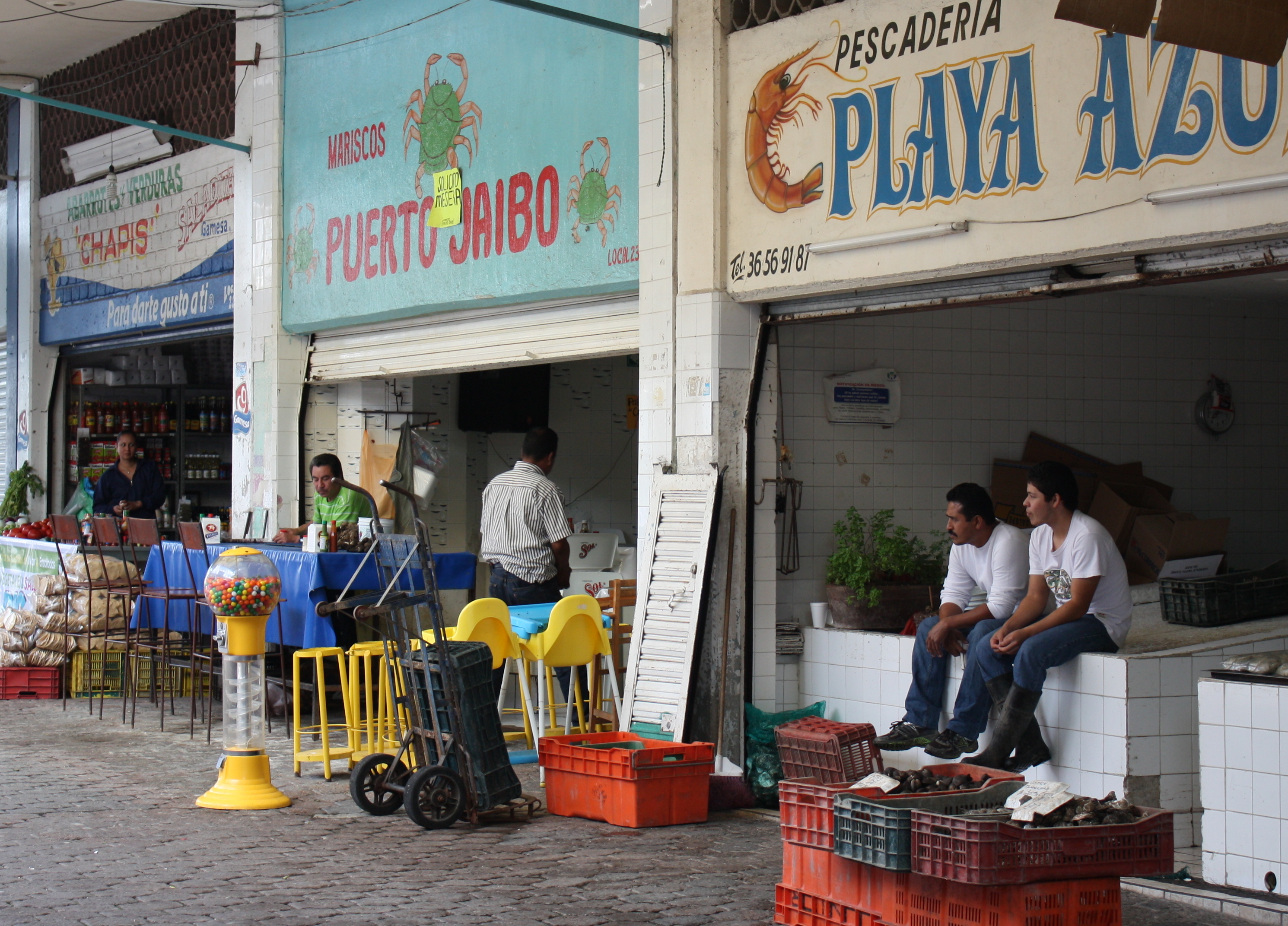
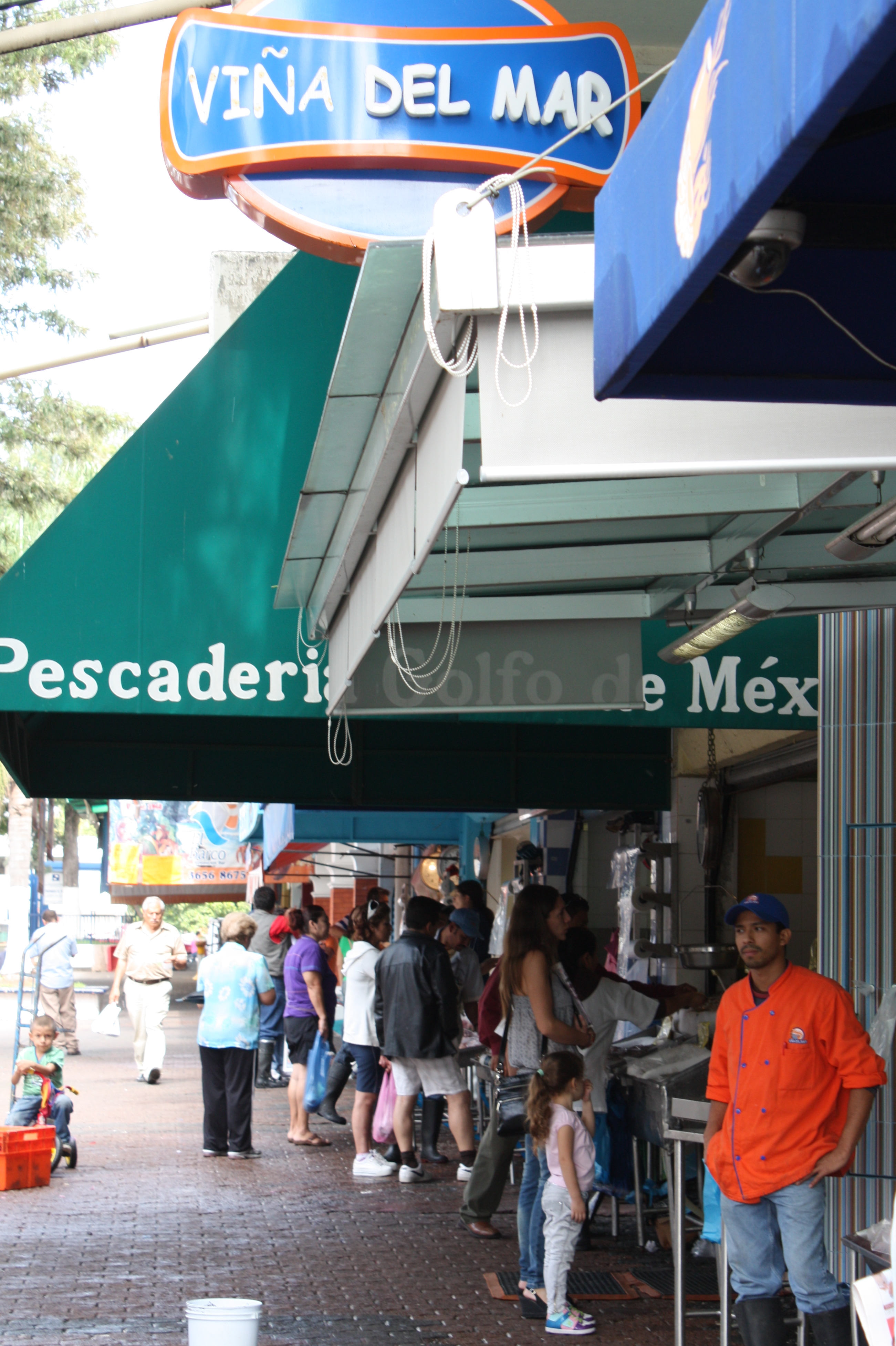
    Here restaurant chefs and housewives browse more than a city block of pescaderias and seafood restaurants that compare well with anything to be found in Boston or San Francisco… except for the price!

    Fish market in Zapopan, Guadalajara


    As at any fresh seafood market, the best picks are available early in the morning, but shops are still well-stocked when I arrive before noon.

    Fish market in Zapopan, Guadalajara


    There are nearly 50 seafood vendors and half a dozen seafood restaurants from which to choose, and sifting through the choices is at least half the fun.


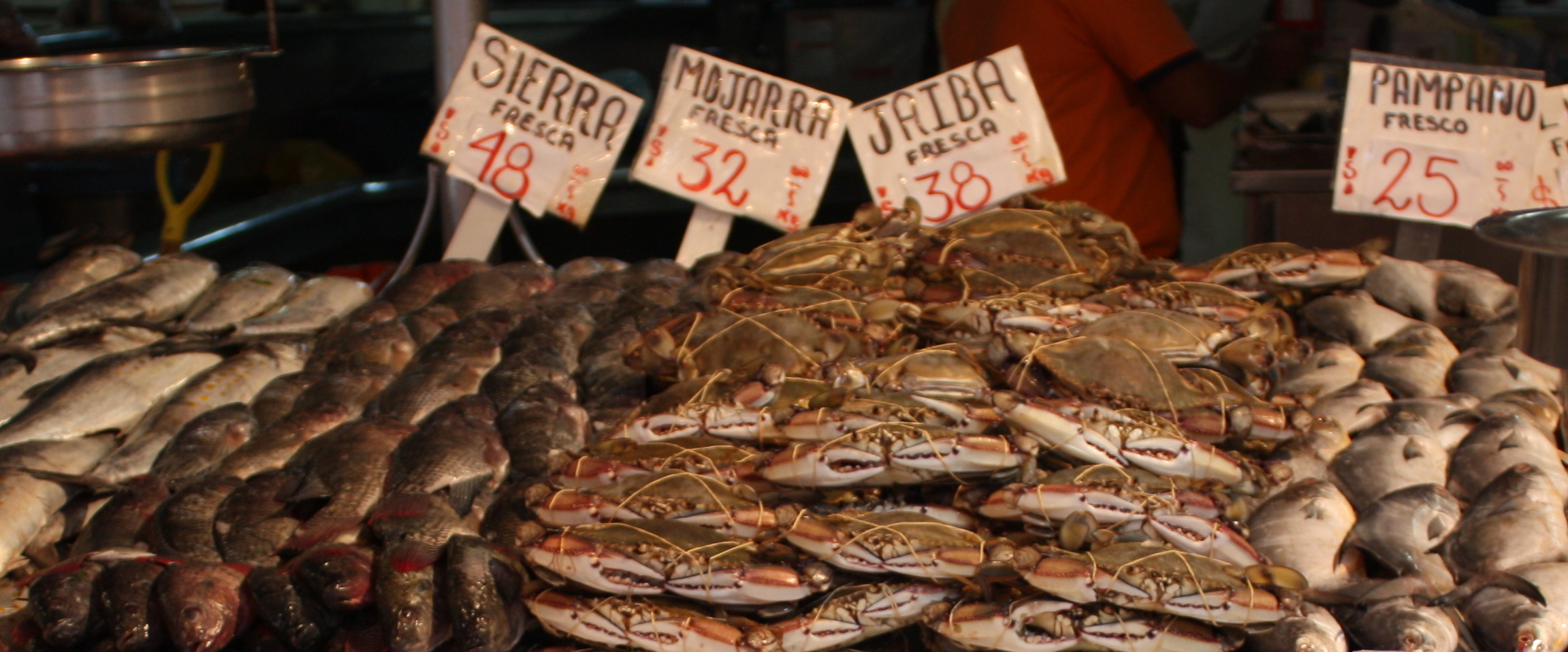
    There are plenty of fish that shoppers from north of the border will recognize even if their Mexican names are unfamiliar, but there are also plenty of local varieties that beg to be tasted.

    Fish market in Zapopan, Guadalajara


    There’s not much English spoken here, but most of the shop owners will gladly explain their products at the slightest prompting.

    Fish market in Zapopan, Guadalajara

    Fish market in Zapopan, Guadalajara


    The breadth of selection is staggering, and there seems to be something in almost every color of the rainbow.


    Fishmongers expertly carve out filets and deftly shuck oysters.


    Fish market in Zapopan, Guadalajara

    Fish market in Zapopan, Guadalajara


    The ceviche is about as good and fresh as any you’ll find anywhere without a beach in sight.


    Get there from the Periferico on the northwest side.  Exit Avenida Los Laureles toward the city and drive less than two miles to its intersection with Avenida Piño Suarez.  The market is two blocks to the left.


    Remember to take an ice chest.  In fact, remember to take two, because some of the best stuff is not even on your shopping list!


    Mercado del Mar has a web site which lists all of the seafood shops and restaurants (go to the Locatarios page), and as you scroll over each name more information – including individual web sites for many merchants – displays in the lower right hand corner. http://www.mercadodelmar.com/

    Fish market in Zapopan, Guadalajara


    If you’re uncomfortable with Guadalajara traffic, one of the Mercado del Mar merchants has opened a location just west of Ajijic on the Carretera  in the Plaza La Huerta.  I’ve found it to be among the best at Lakeside.


    Buen provecho!


    For more about the Guadalajara open market experience, see my related post Guadalajara’s Mercado Libertad