Tag Archive: expat blog Mexico


Guadalajara’s Abastos

There’s no better way to get a crash course on any culture than from watching the street theater of buyers and sellers as they shop and haggle in an open market. If Guadalajara’s Mercado Libertad is the Wal-Mart of mercados, then Guadalajara’s Abastos is the Trader Joe’s.

Here you expect great prices as much as you expect best quality merchandise and items that you just can’t buy anywhere else.

Sign outside Abastos

As I enter I see covering the entire side of an adjacent building a faded sign. I can’t help but think about the many stories that must certainly have unfolded beneath it.

The midway

It’s hard to tell where Abastos ends, because its warehouses and shops cover more than 30 city blocks.


The intersection of Lazaro Cardenas and Mariano Otero is a good place to begin.

Within eyesight is a parking garage which offers a view of the area that can give you a much-needed lay of the land before you plunge in.

The Foodie in me can’t help but be impressed by the fact that this is where the pros in the restaurant and grocery businesses come to shop… and that it’s also open to the public!

Pick o’ the crops

The heart of Abastos is its aisles lined with booths selling fresh produce, meats, and seafood, but in adjacent shops it’s possible to outfit an entire restaurant from tables and chairs to china, flatware, uniforms, and kitchen hardware.

Squash blossoms


The produce is, well, almost too beautiful to eat.

Brilliantly colored and symmetrically shaped, it’s too perfect for a still-life.

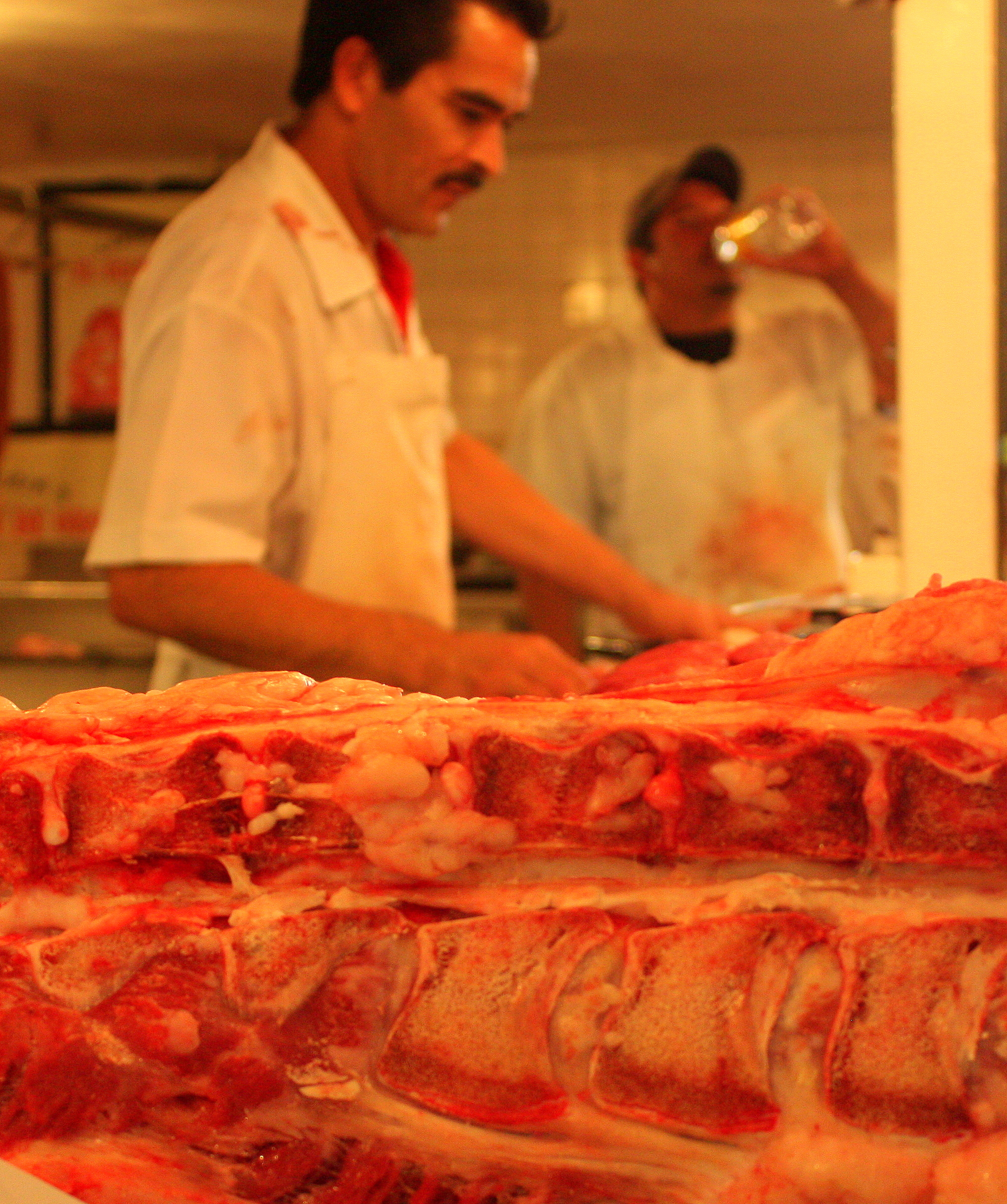
Everything here is offered in the giant commercial size. Meatcutters disassemble entire cows.

Major meatcutting

Ribbons of sausage

There are cheese wheels the size of spare tires and sweets the size of paving bricks.

Monster cheese wheels

Sweets by the case


Never, though, did I see a merchant refuse to sell a smaller quantity.

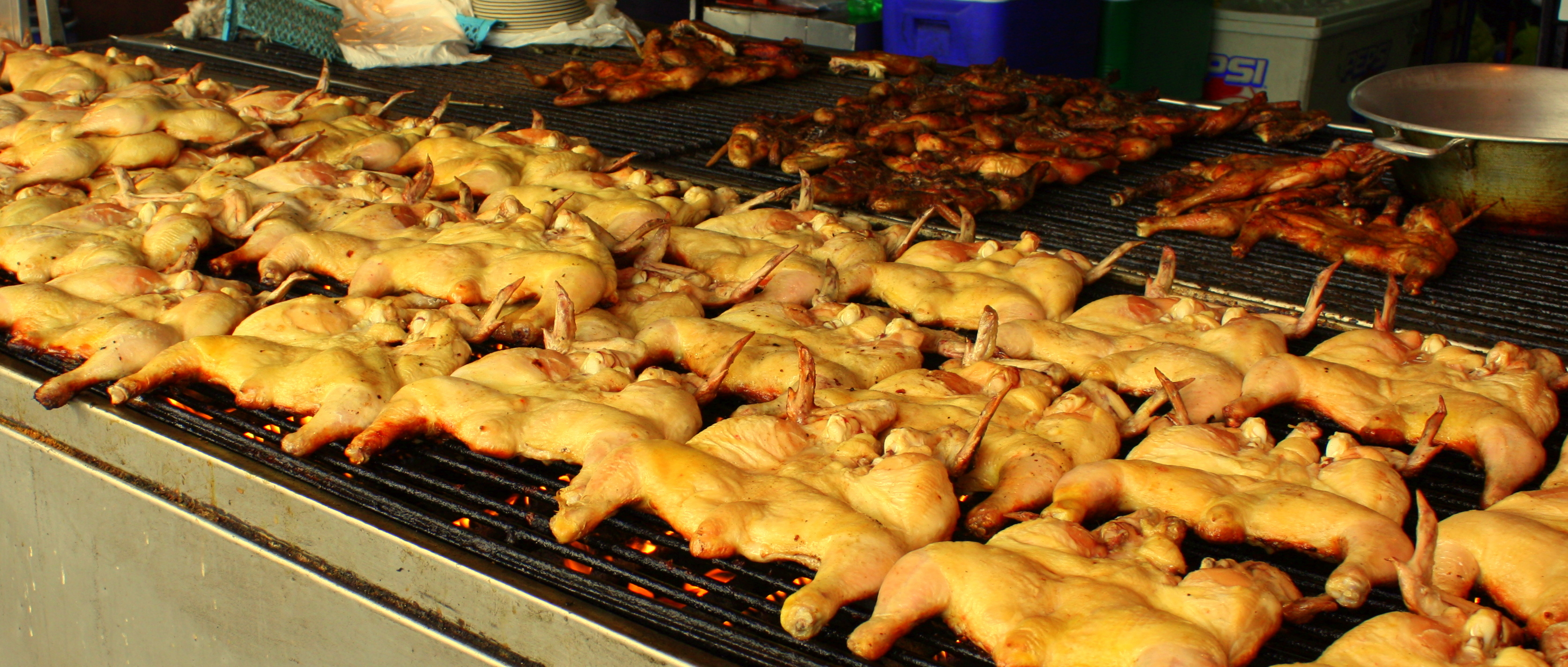
Acres of grilled chicken


This city-within-a-city needs to be fed, and while the eateries are not fancy you can find just about any kind of meal you desire somewhere in one of its pots or on its grills.

Abasto fresh fish


I snap a shot of some great-looking fish on ice and amble slowly down the aisle only to be halted by the sound of someone calling out behind me.

Fish and fishmongers


I turn to find that the fishmongers are following me down the corridor hauling a whale of a fish, inviting me to get a better shot. That’s the kind of place it is.


When you come, drive a big SUV and bring the largest ice chest you can find, because there’s no way you’ll leave here empty-handed!

To get to the Abastos from the Ribera de Chapala:


  • From the Chapala highway exit left on Lazaro Cardenas and drive about 7 kilometers. Abastos is on the left just before the intersection with Mariano Otero.
  • From the Jocotopec highway turn right off Lopez Mateo at Plaza del Sol onto Mariano Otero until you find the Abastos on your right, just before the intersection with Cardenas.

    See also my related posts:Fishy in GuadalajaraGuadalajara’s Mercado Libertad

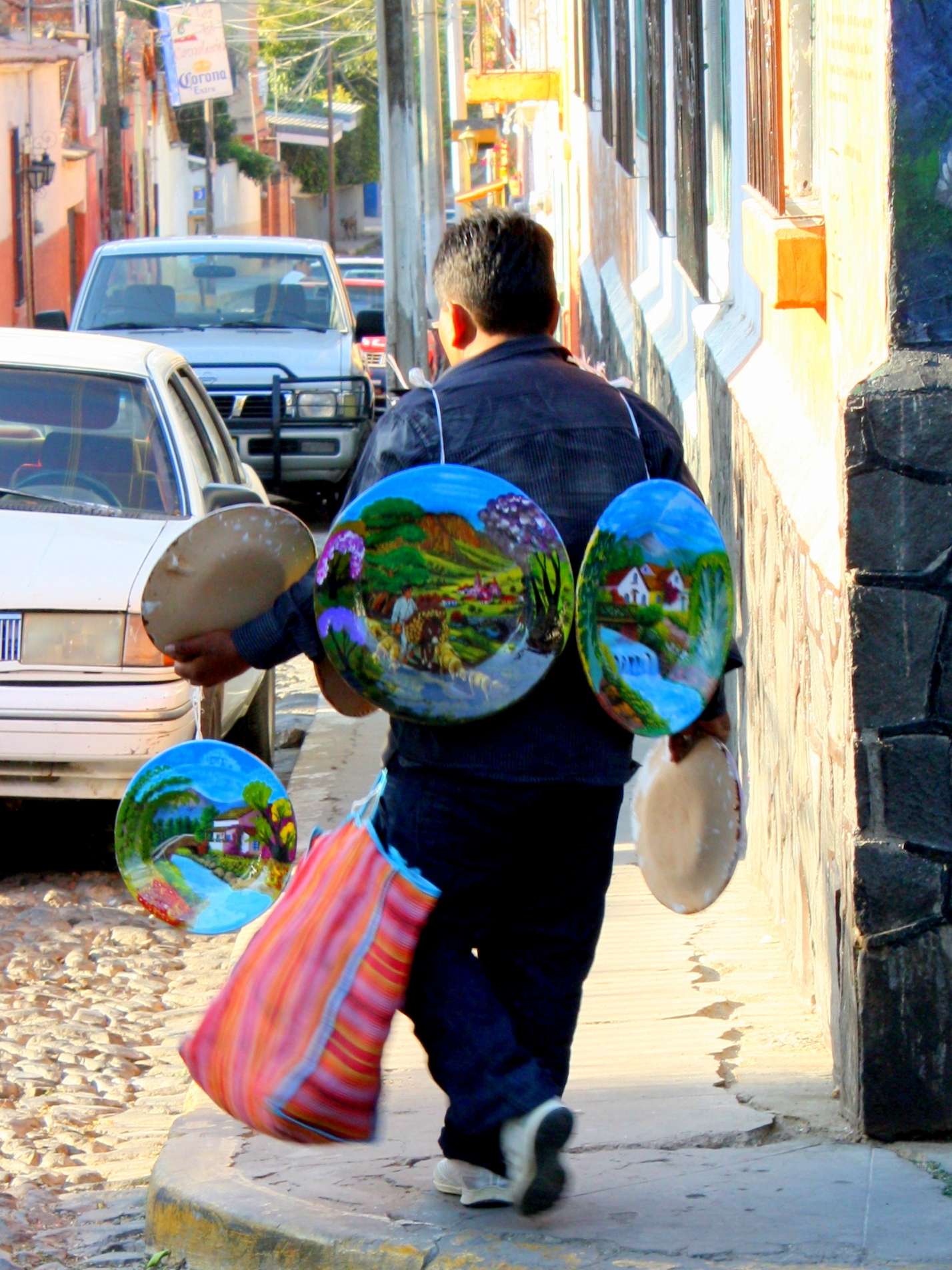
    Street vendor walking on Colon

    It’s nearly a century since pushcarts plied the streets of most American neighborhoods; sidewalk vendors of nearly every stripe went out of style when the nation traded Main Streets for malls.

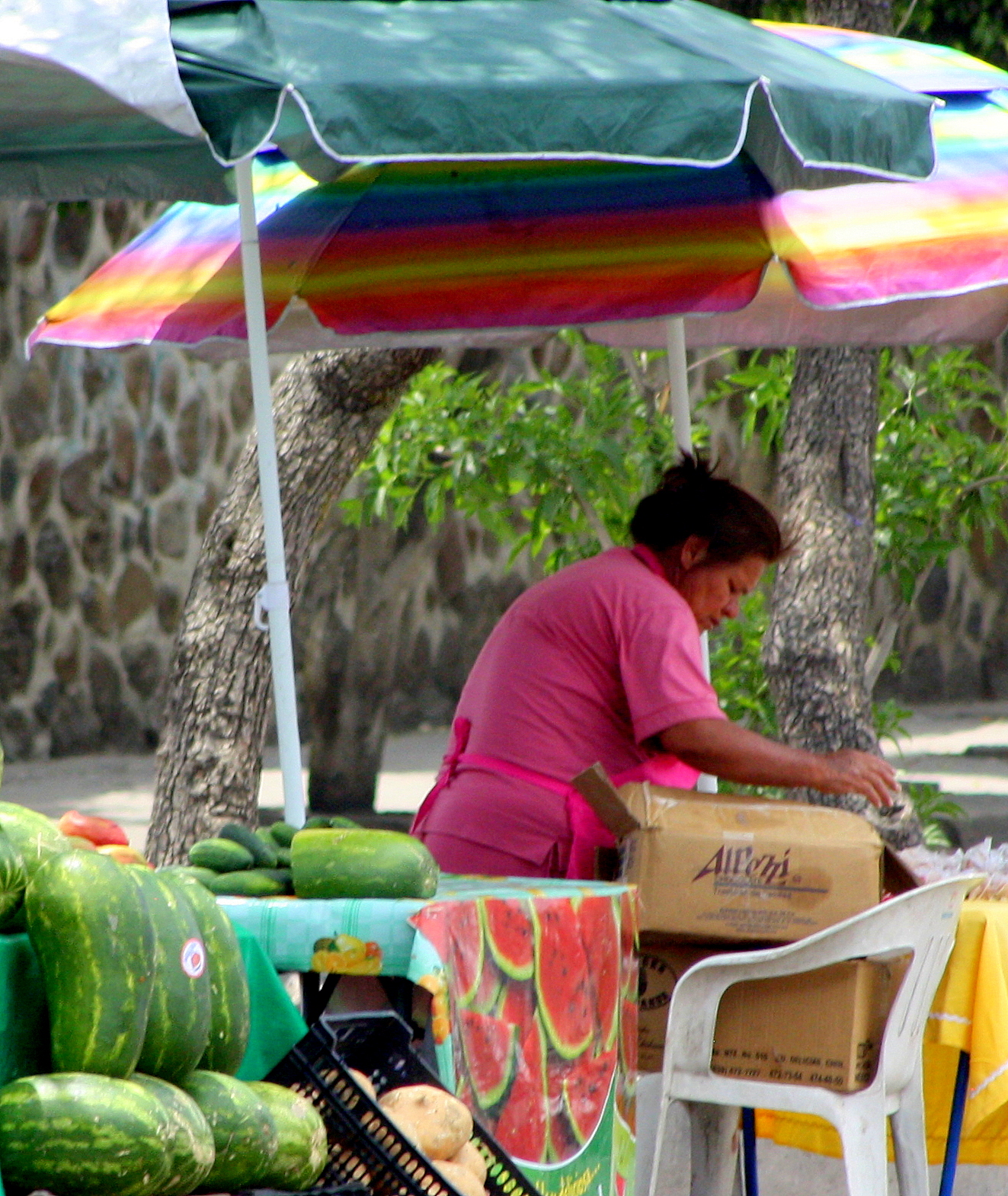
    Fresh watermelons on the Carretera

    In Mexico street merchants are alive and well.  It seems as if wherever in Mexico three or more people are gathered a fourth will show up with something to sell them. Retail here is up close and personal and the store often comes to you.

    Ajijic’s street merchants are not the annoying chachki vendors of the coastal resort beaches, but a retail subculture that’s baked into Ajijic’s endearing DNA.

    Nuts & snacks on the Plaza

    More people gathered attracts more sellers, and in Ajijic the Plaza and the Carretera rarely lack for either.

    Baskets & brooms on the Carretera

    The variety of merchandise and services offered by these “no-store stores” often surprises.

    Freshly-squeezed juices on the Plaza

    Food vendors sell everything from frozen treats and freshly-squeezed beverages to prepared foods (taco stands warrant a blog post all their own!), home goods, and flowers.

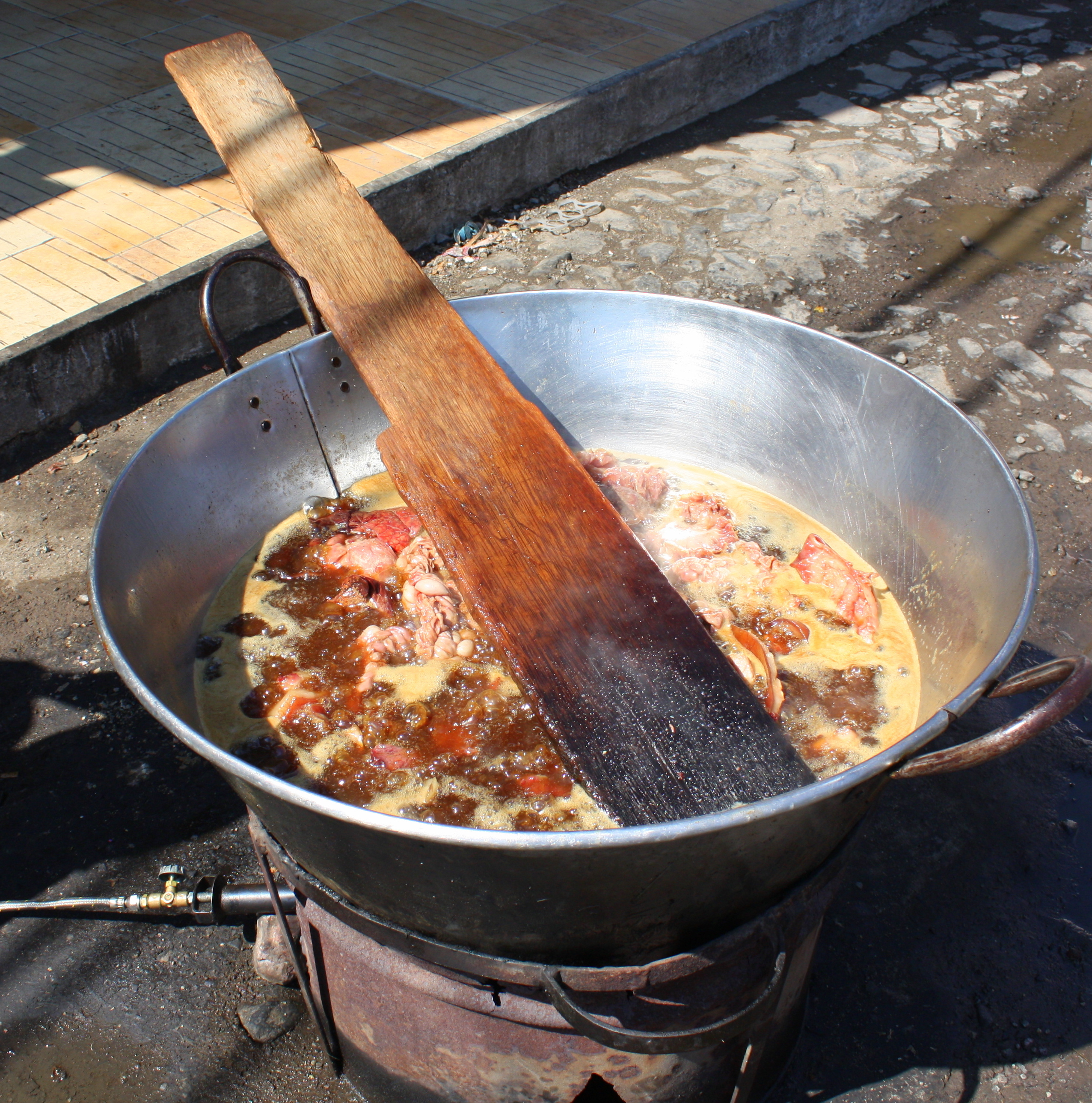
    Chicharrón in the making

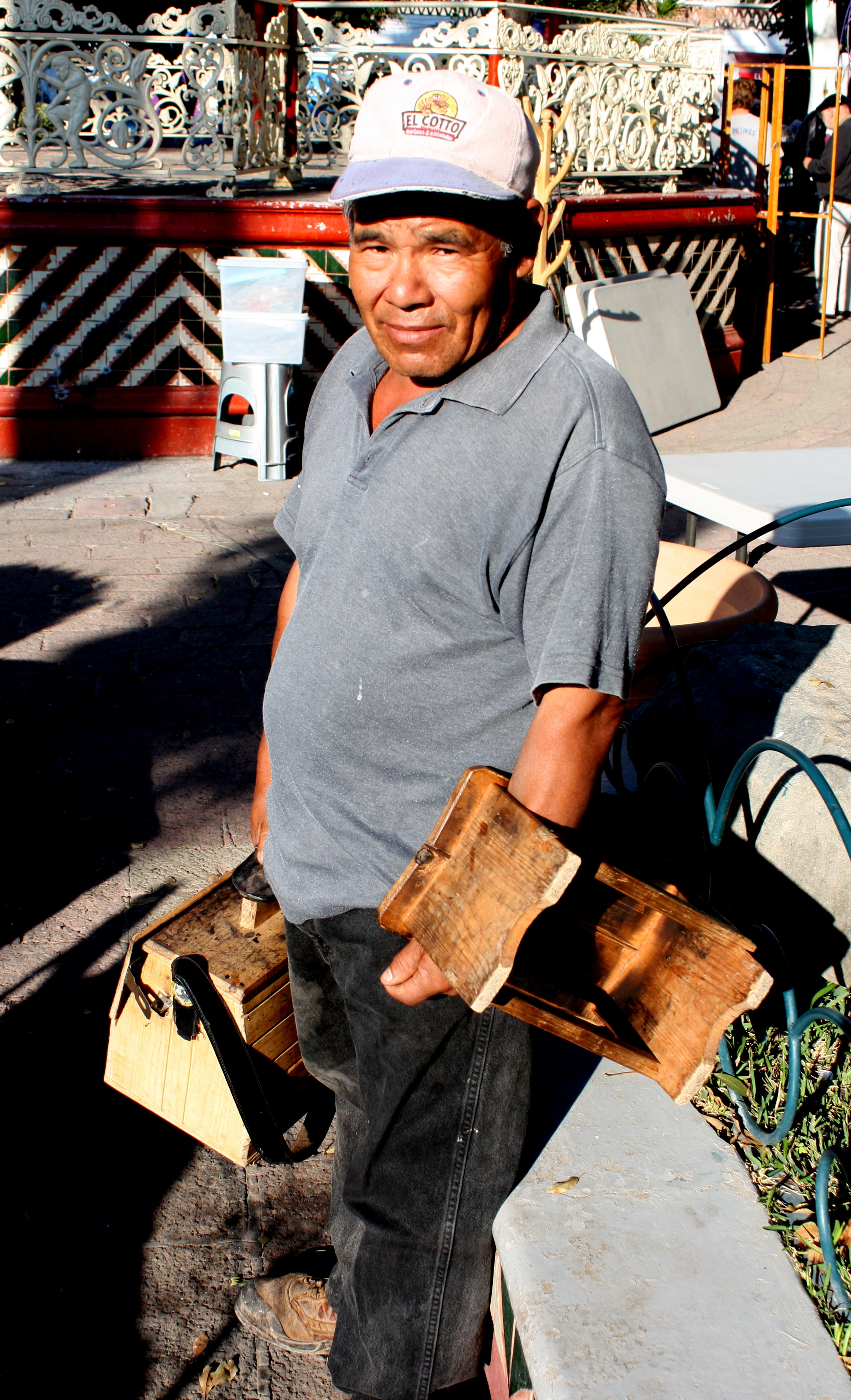
    Shoe shine on the Plaza

    Street merchants will also dupe your keys, shine your shoes, sharpen your knives and wash your car in less time than it takes to find a parking spot at your average Stateside Safeway.

    Basket vendor on the Plaza

    Walkabout vendors are the salt of the street merchants.

    They carry their entire inventory on their backs, often walking miles every day.

    CD & DVD bike cart on the Plaza

    Some merchandise, though, begs to be wheeled through the crowd, and the conveyances are nothing if not inventive.

    Other merchandise better lends itself to hanging from trees and fences each day to be carted off at day’s end and re-hung each morning.

    A very few even sell from roadside kiosks not much larger than a phone booth.

    Most of the street merchants not walking or wheeling about are parked so routinely in the same spots at their appointed times that people sometimes use them as directional landmarks.

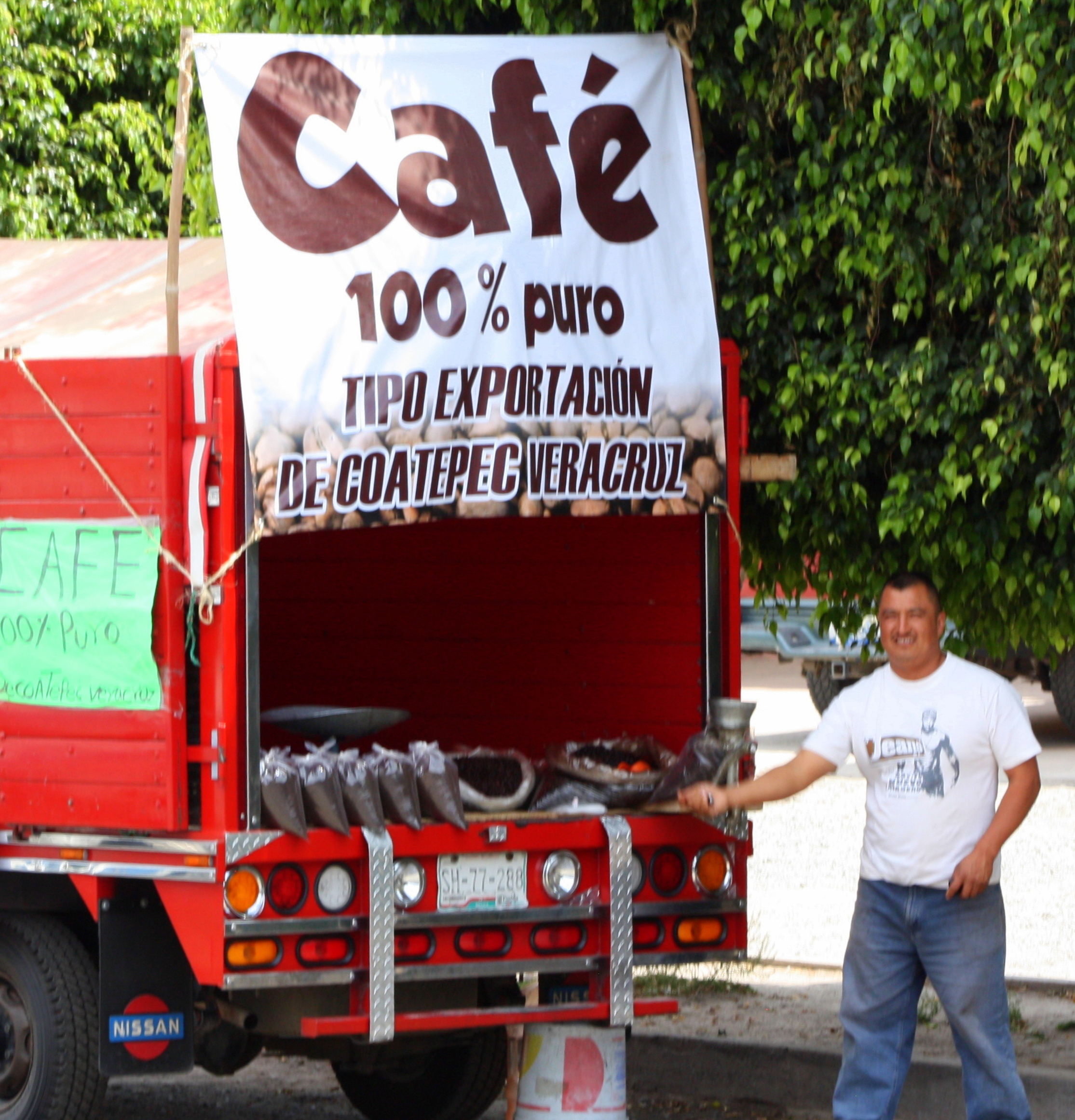
    Coffee vendor/grinder on the Carretera

    Among them will appear for a day or a week spontaneous street capitalists who vanish as suddenly as they appeared.

    On the Plaza curb in front of BBVA

    Many of these sidewalk merchants start each day very early by walking, bicycling, or riding the bus to Ajijic from homes in nearby villages.

    Ice cream vendor stocks up

    Others stock push carts or buy fresh products at a wholesale market before the selling day begins.

    There are no bar codes or credit cards here.

    There are no frequent shopper programs, blue light specials, or rebates.

    There’s just cash and carry from a sole proprietor who does one thing only and strives to do it better than anyone else.

    There are also plenty of merchants who are as well known to their customers as the customers are to them, and there’s no small amount of loyalty between many buyers and sellers.

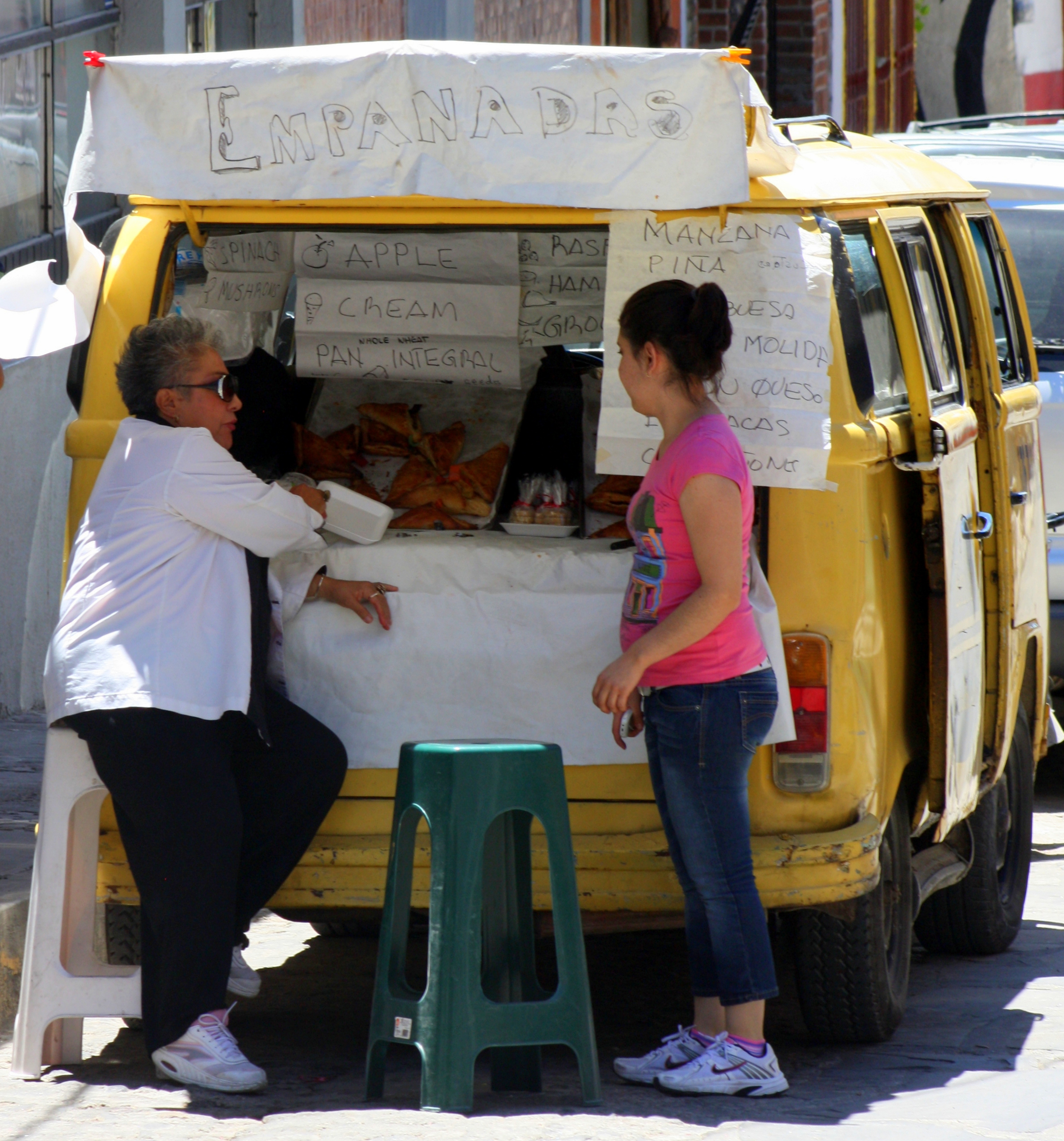
    Curbside empanadas on the Plaza next to BBVA

    It’s a relationship long gone in America’s retail landscape, but for those who can take it in stride it can be a richly rewarding trade-off for America’s impersonal, one-stop, “big box” shopping experience.

    See my related post “American Values

    Avenida Vallarta on Sundays

    The Avenida Vallarta is arguably Guadalajara’s signature boulevard, cutting through the west side to expose a time-stamped cross-section of the city.

    From its starting point at Avenida Juarez and Del Federalismo (there’s a subway station there) to the Minerva Fountain is about four miles, and there’s no better day – or way – to see it than Sundays, when it’s closed to vehicular traffic and given over to bicyclists, joggers, and walkers.

    On the Avenida Vallarta

    In the late 1800’s and early 1900’s Avenida Vallarta was a residential boulevard lined with the

    On the Avenida Vallarta

    elegant townhomes of Guadalajara’s well-to-do, and many of these structures still remain.

    My plan is to travel the avenida east to west, beginning with the smaller, older homes that become progressively newer and larger as I go.

    I start with the public architecture near the intersection of Avenida Enrique Diaz de Leon.


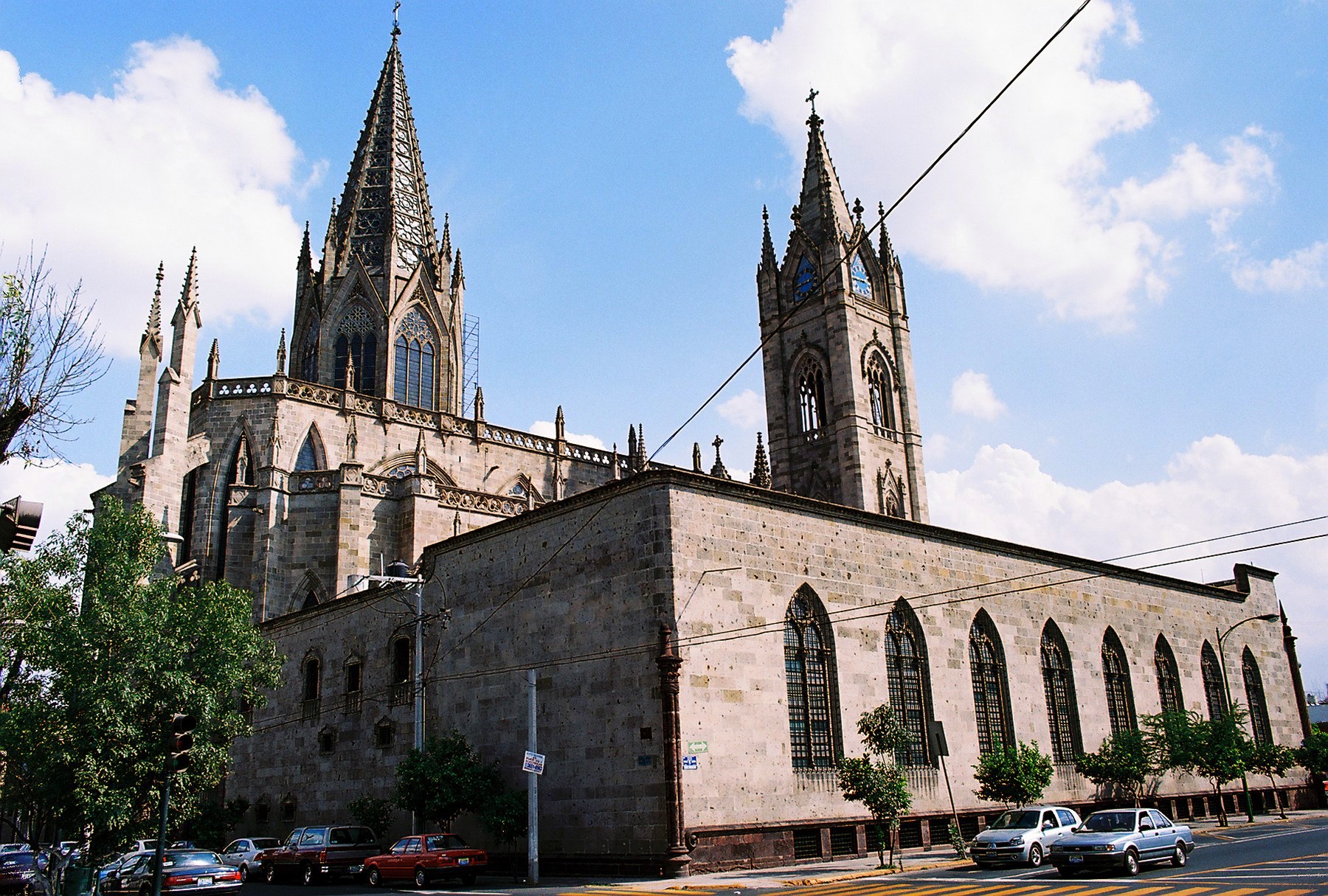
    Templo Expiatorio, Guadalajara


    University of Guadalajara

    A block away on Lopez Cotilla stands the Templo Expiatorio and not much further on Vallarta the old University of Guadalajara.

    On the Avenida Vallarta

    Many of the grand old homes have been converted into restaurants.

    If you’re not inclined to walk, run, or cycle you can pick out one with curbside dining and people-watch the passing promenade.

    On the Avenida Vallarta

    On the Avenida Vallarta

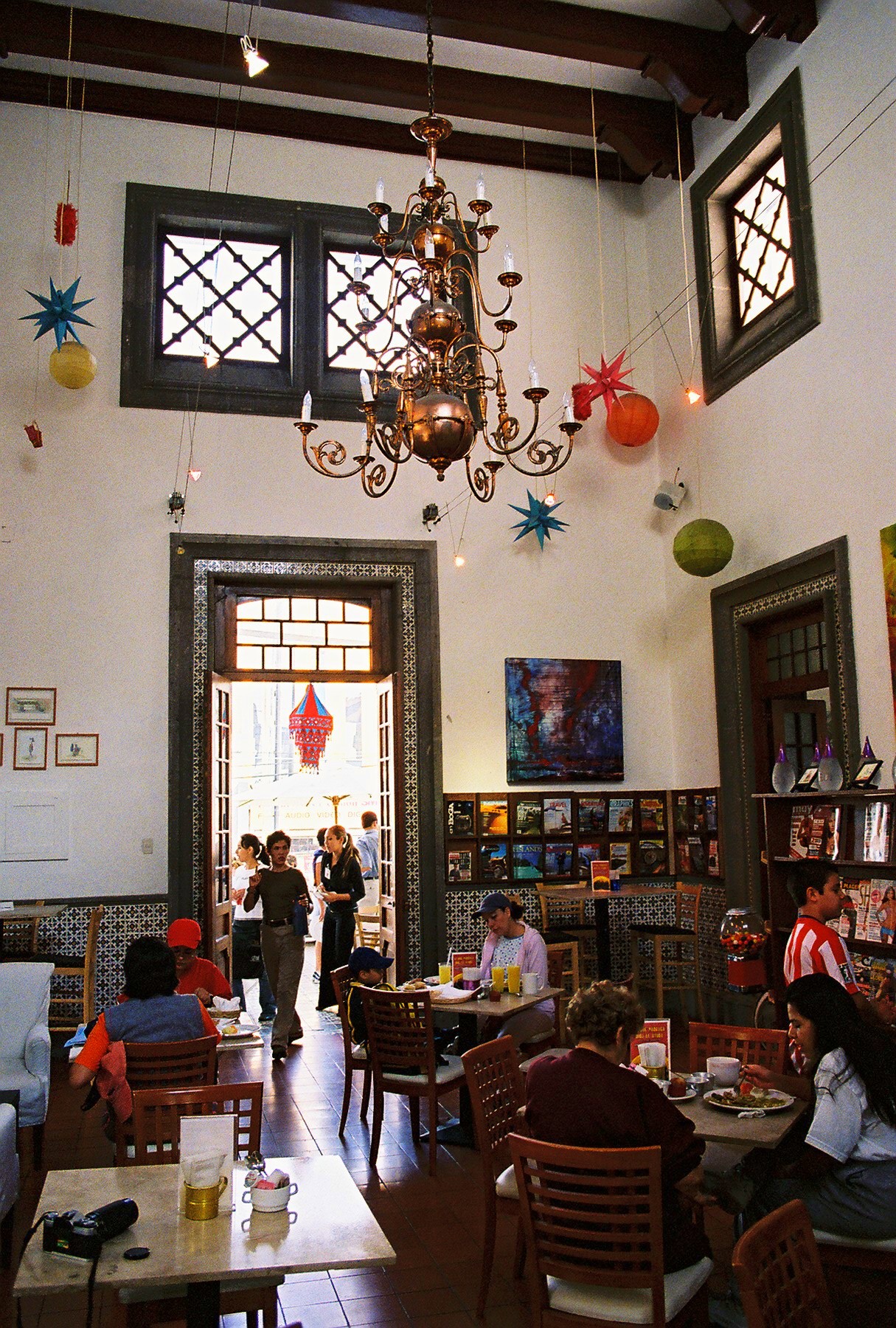
    Chai restaurant, Guadalajara

    Restaurants are plentiful along the route, and most have menus posted.

    Chai restaurant, Guadalajara

    Chai is a favorite of mine for a great latté, but the place also serves a Sunday buffet brunch that always draws a crowd, so it’s a good idea to grab a table early.

    On the Avenida Vallarta

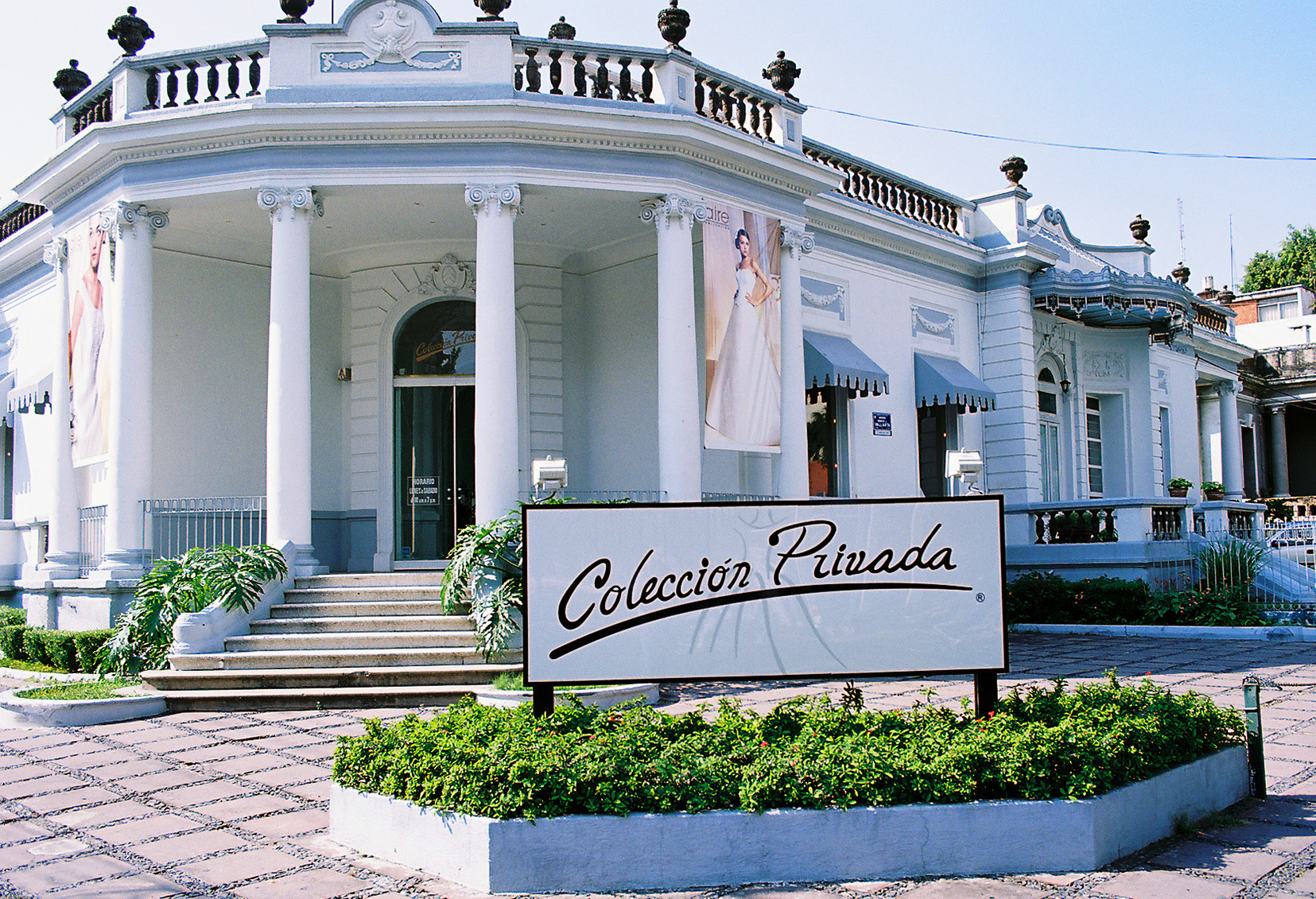
    In one stretch of the avenida the old homes are now occupied by shops featuring bridal and quinceañera gowns.

    Centro Magno shopping mall, Guadalajara

    As the route nears its end it passes the Centro Magno urban mall (there’s a large and inexpensive parking garage there), which is full of specialty shops and restaurants.

    Minerva Fountain, Guadalajara

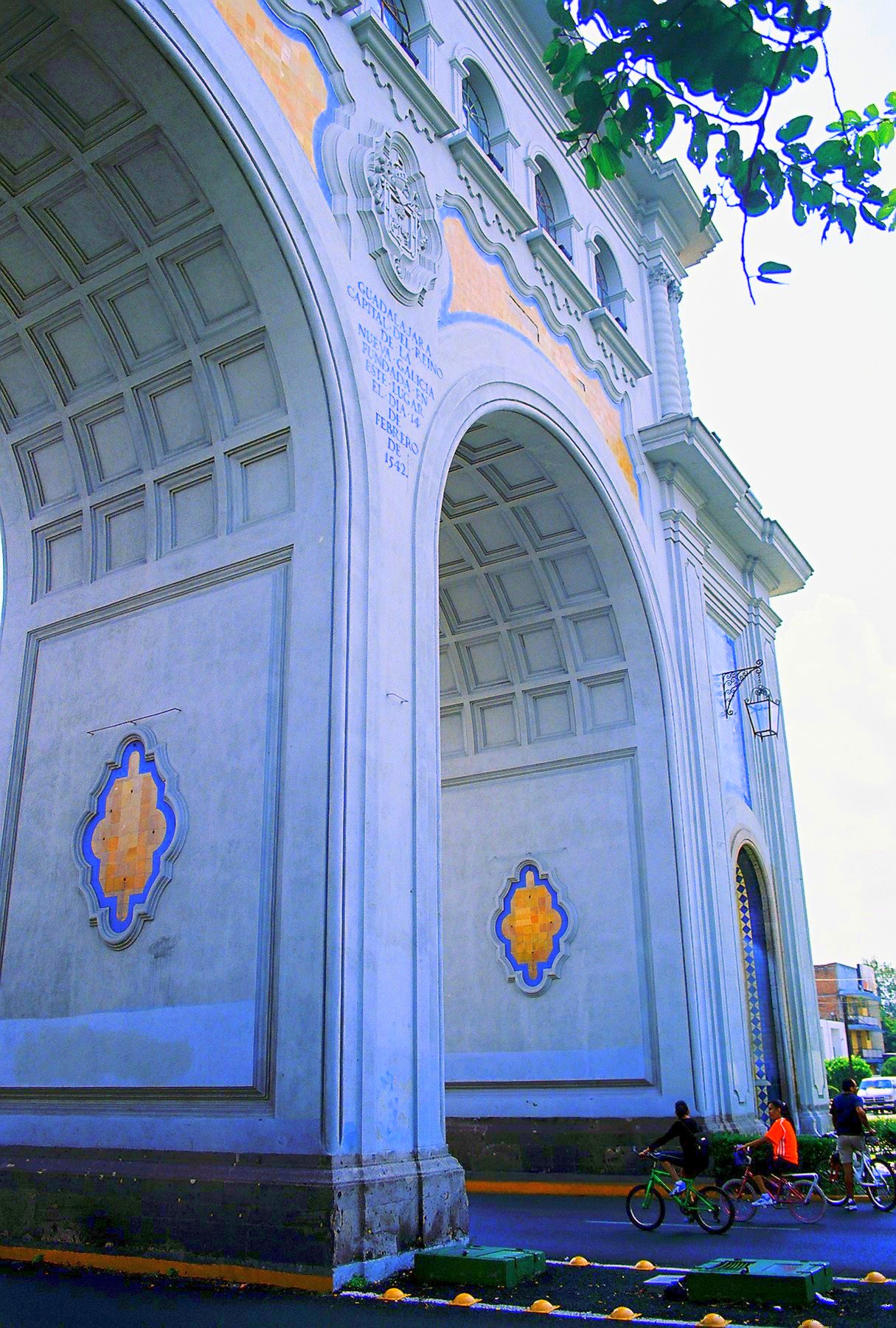
    The Sunday promenade ends at Los Arcos, on the back side of the Minerva Fountain.

    Los Arcos, Guadalajara

    The Los Arcos double arches were built in in 1942 to commemorate the city’s 400th anniversary. The arches clear 14 feet high and stand on the avenida just before the Minerva Fountain glorieta.

    Los Arcos, Guadalajara

    See my related posts on Guadalajara:Guadalajara south centro

    Fishy in Guadalajara

    Guadalajara’s heartbeat

    Guadalajara’s Merado Libertad

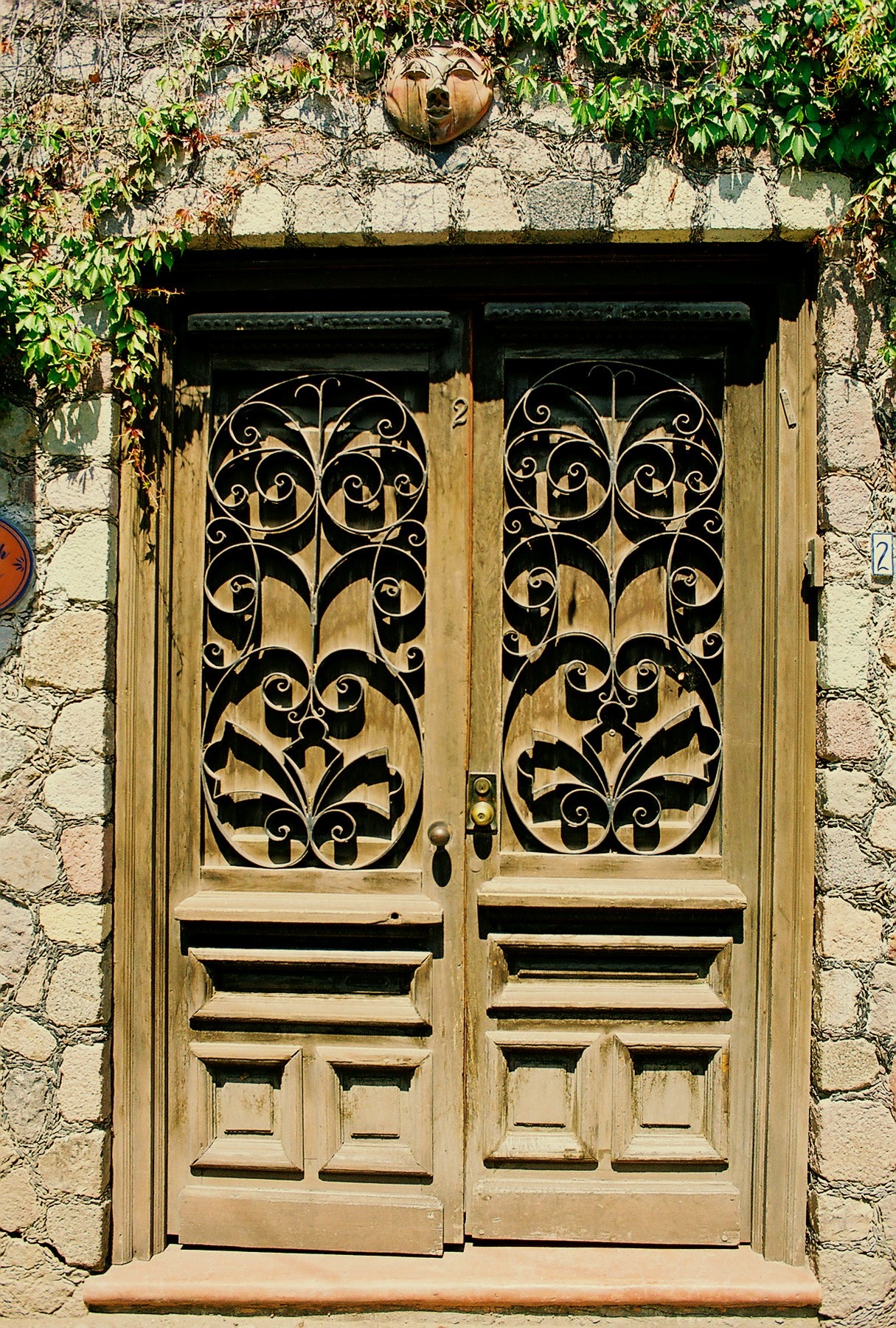
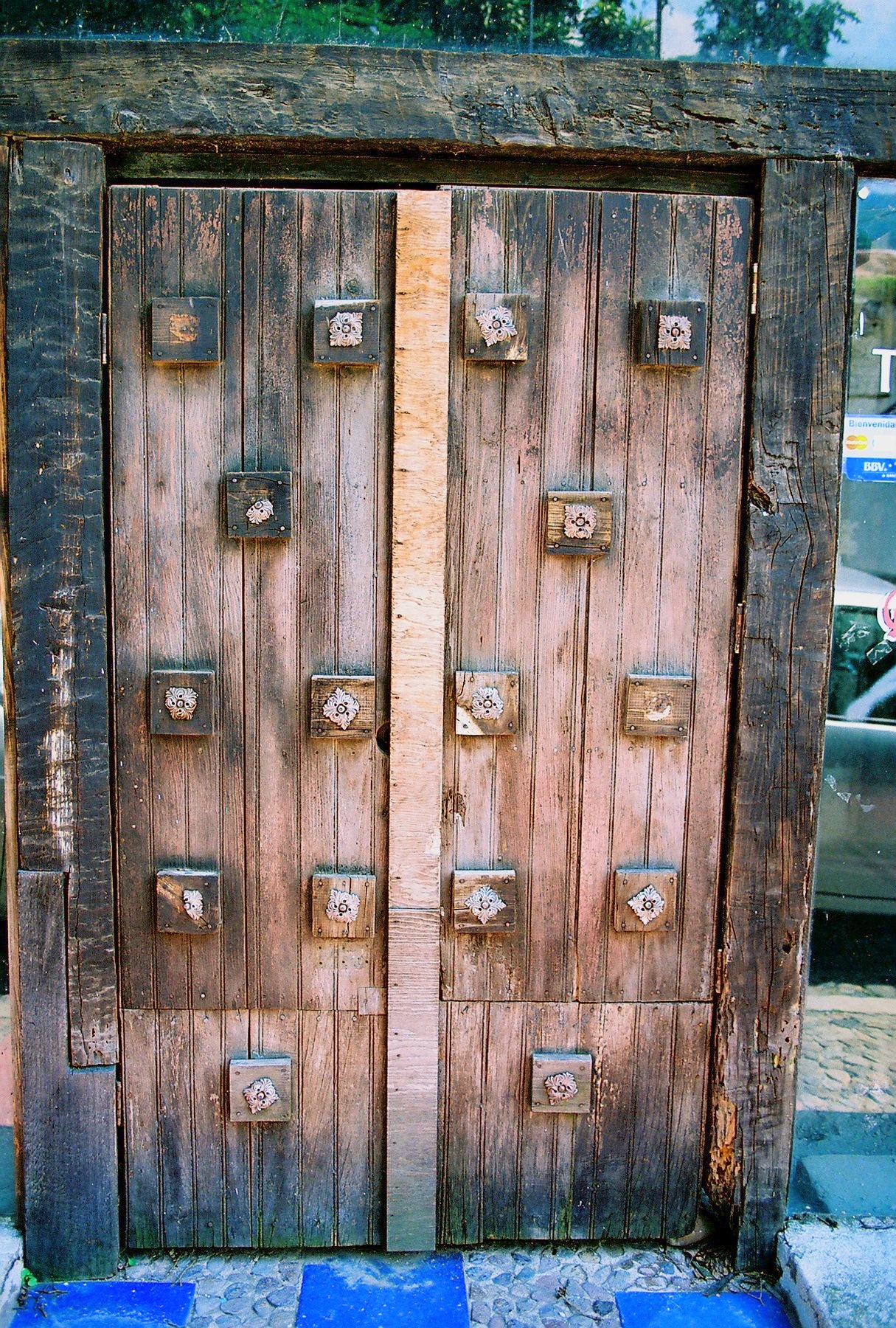
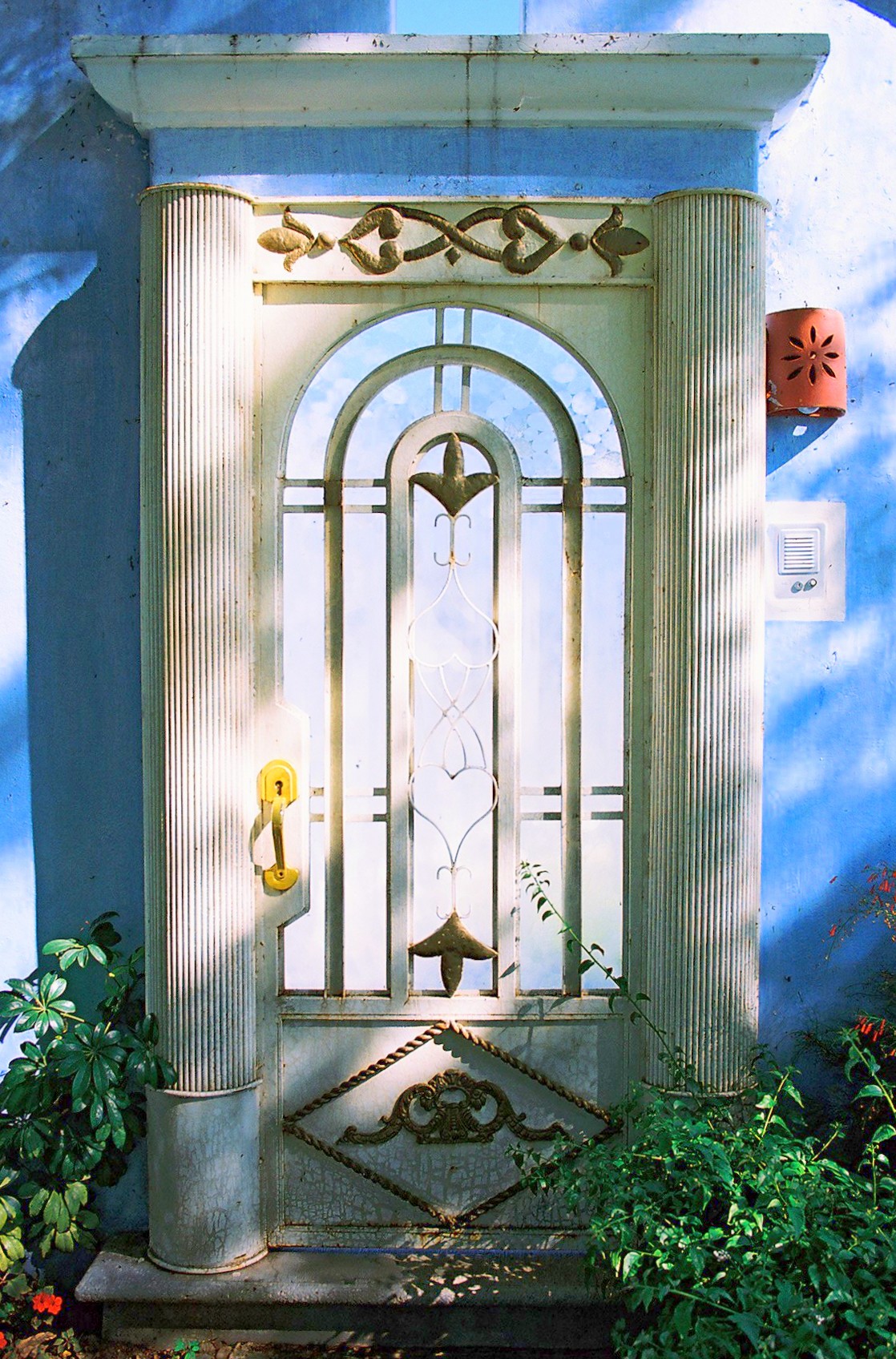
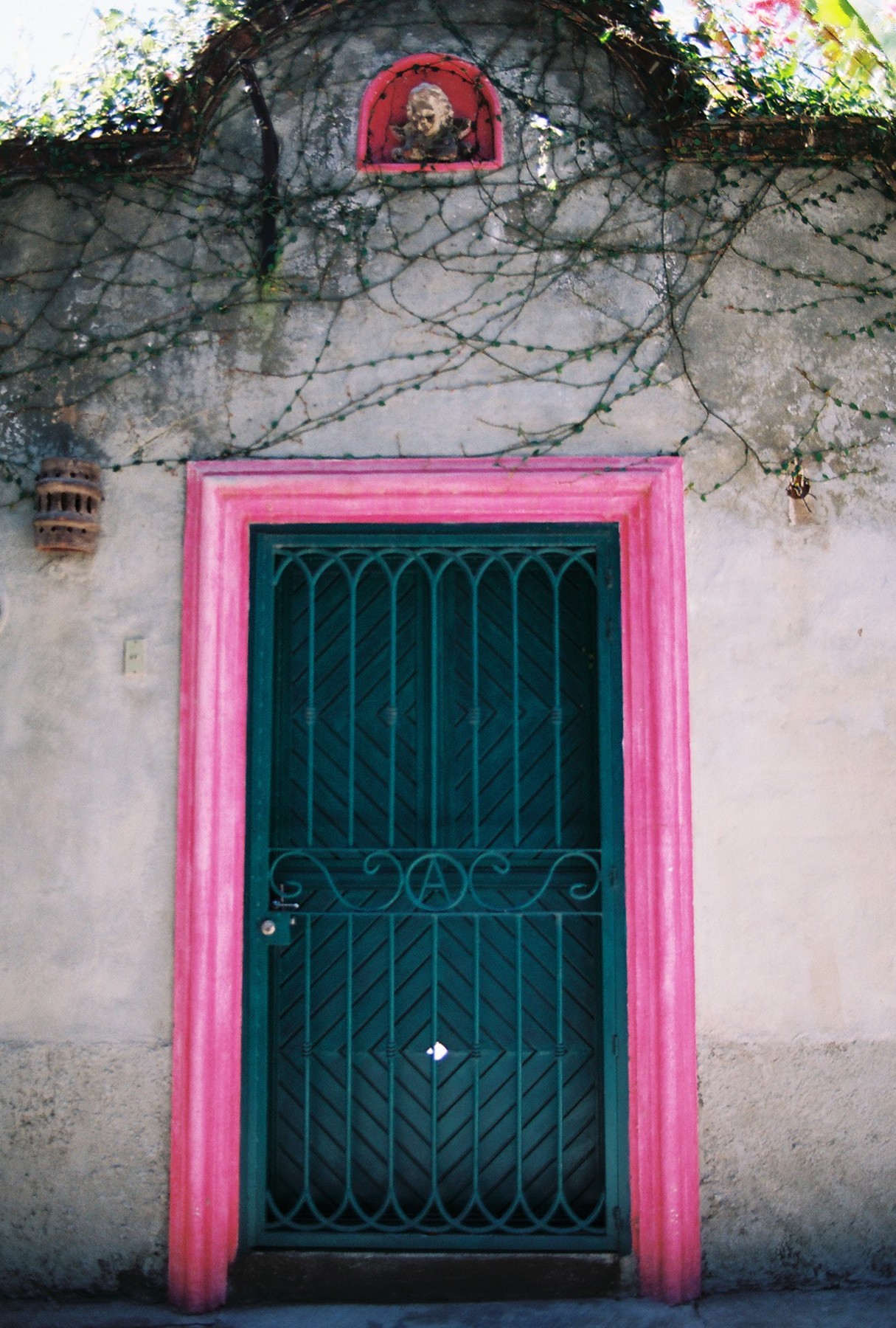
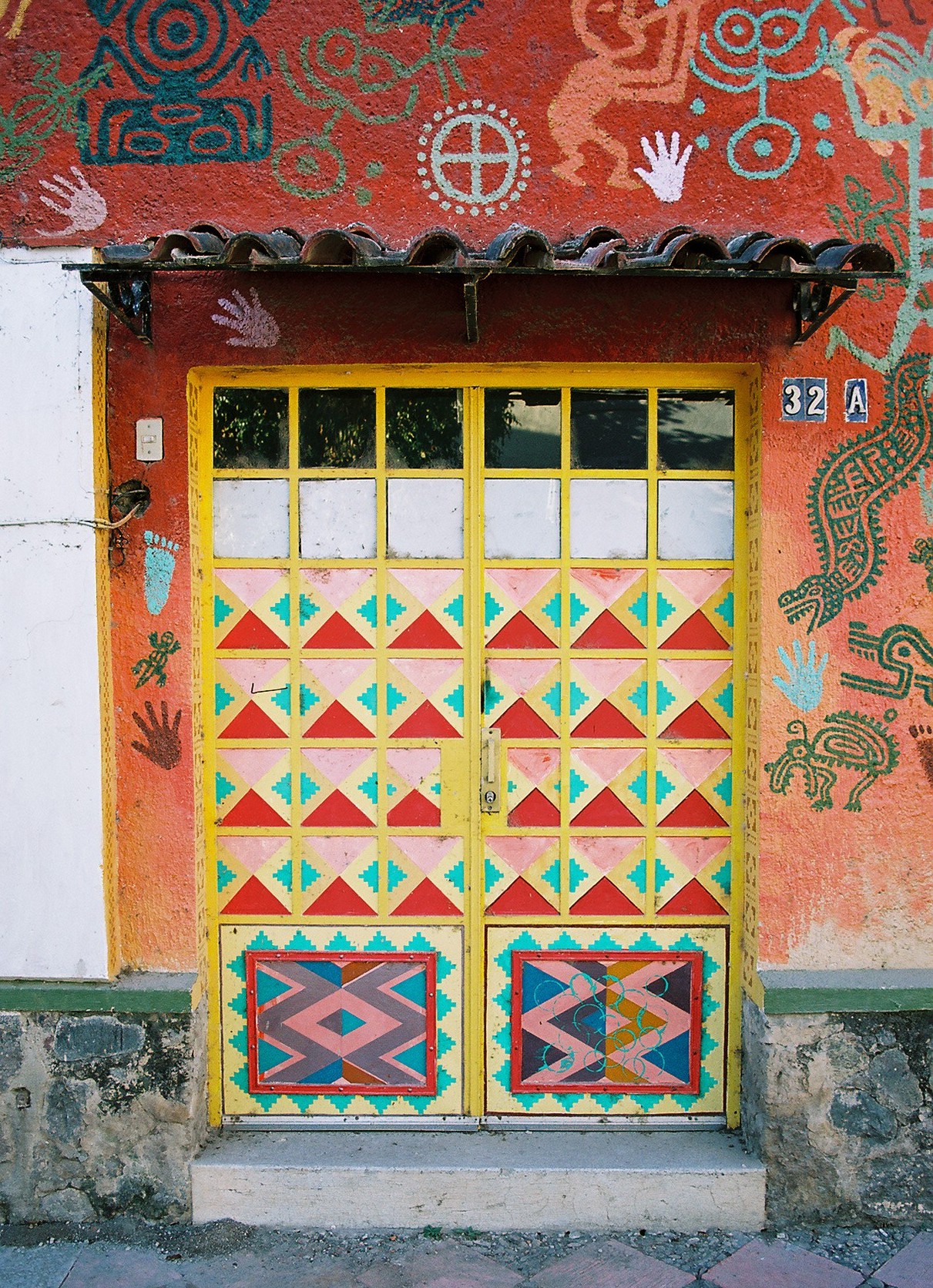
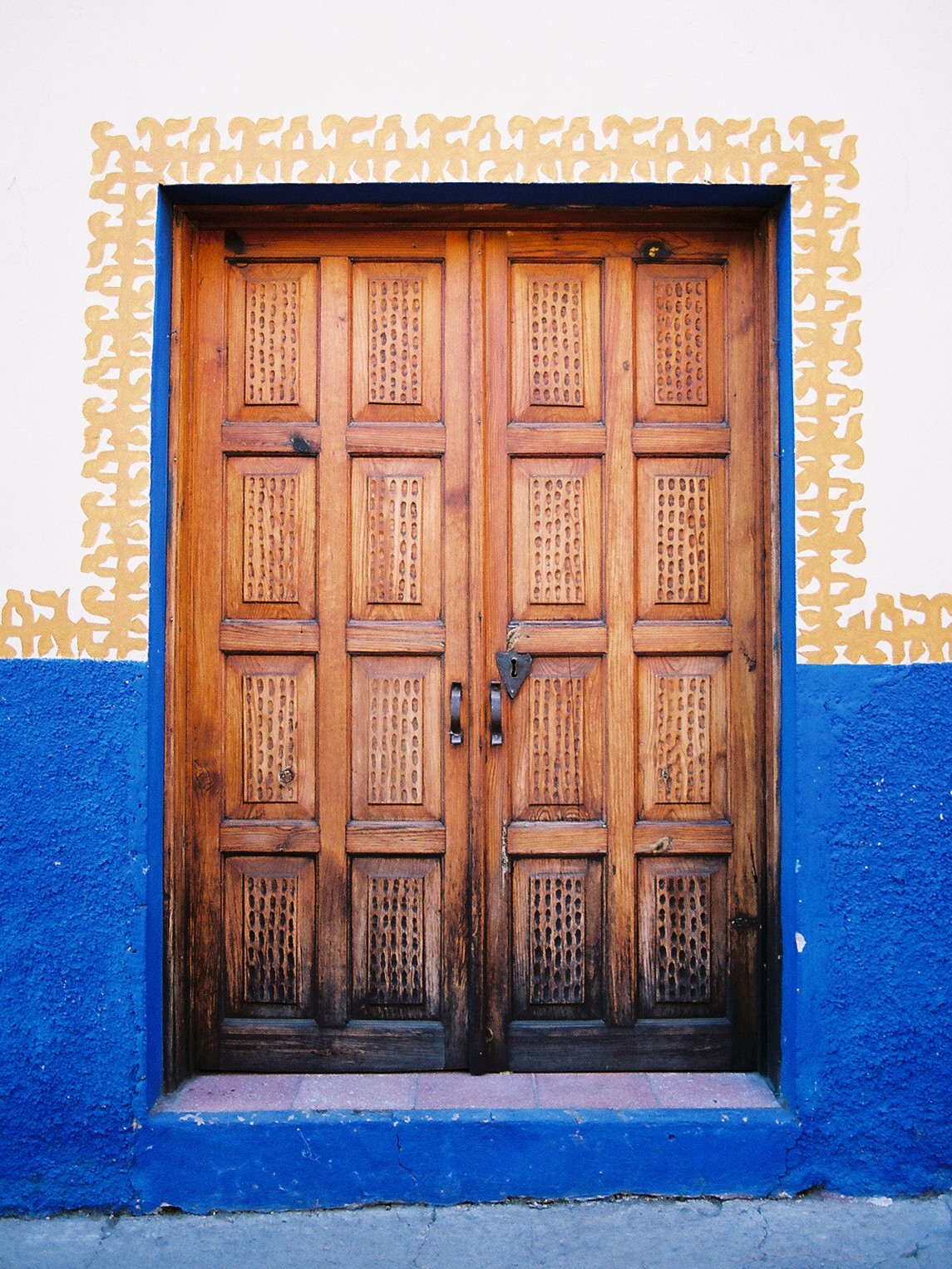
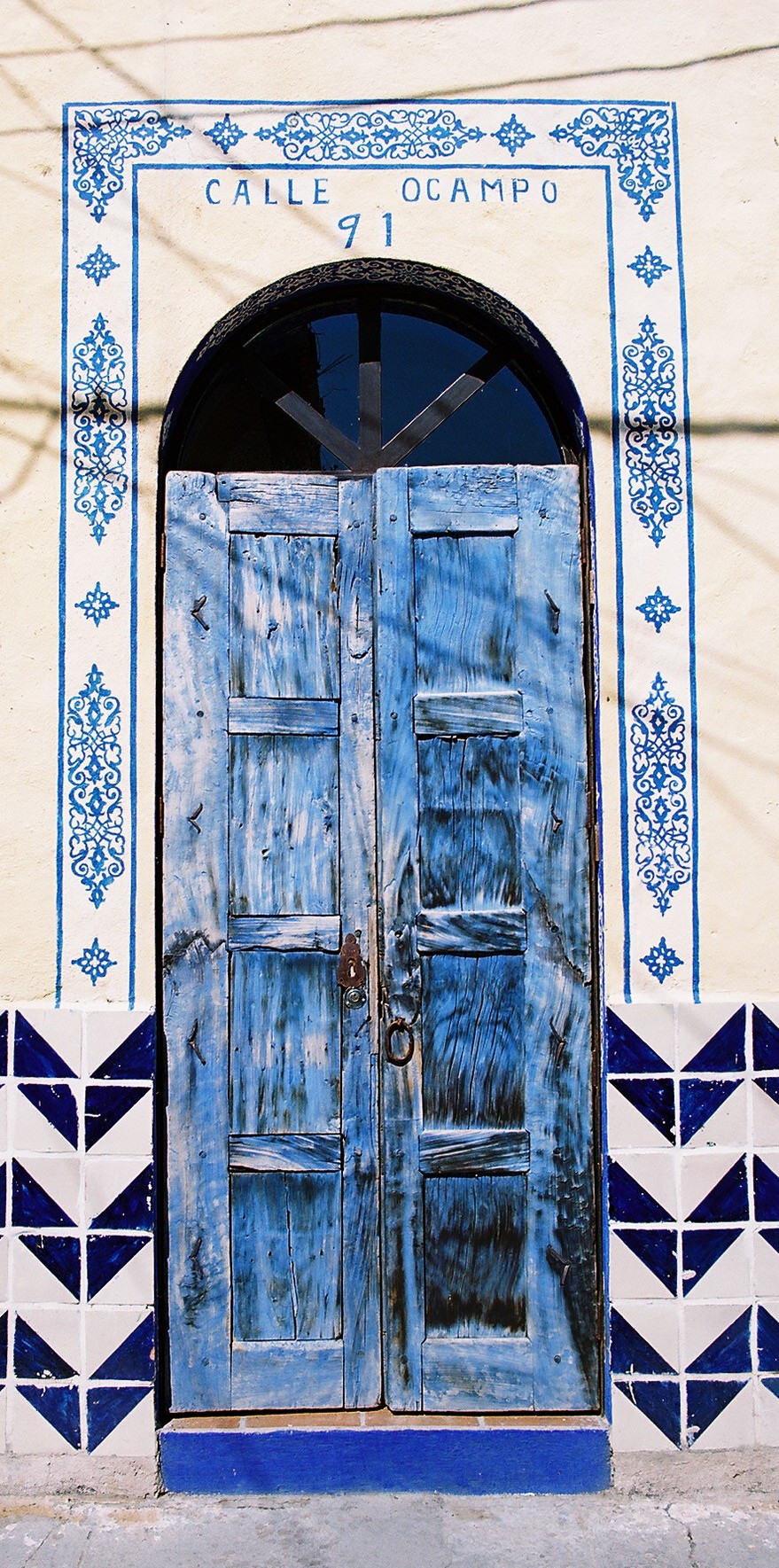
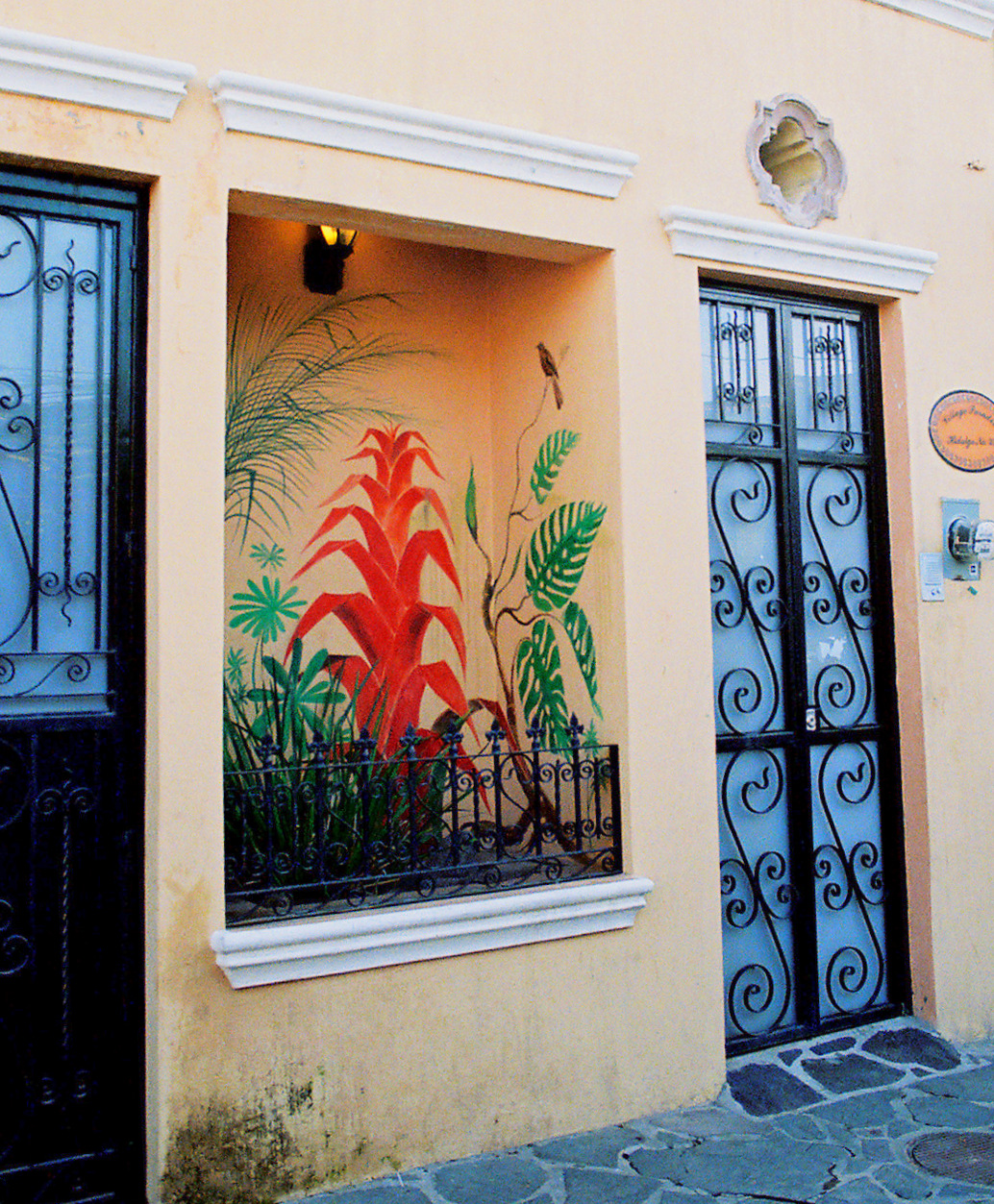
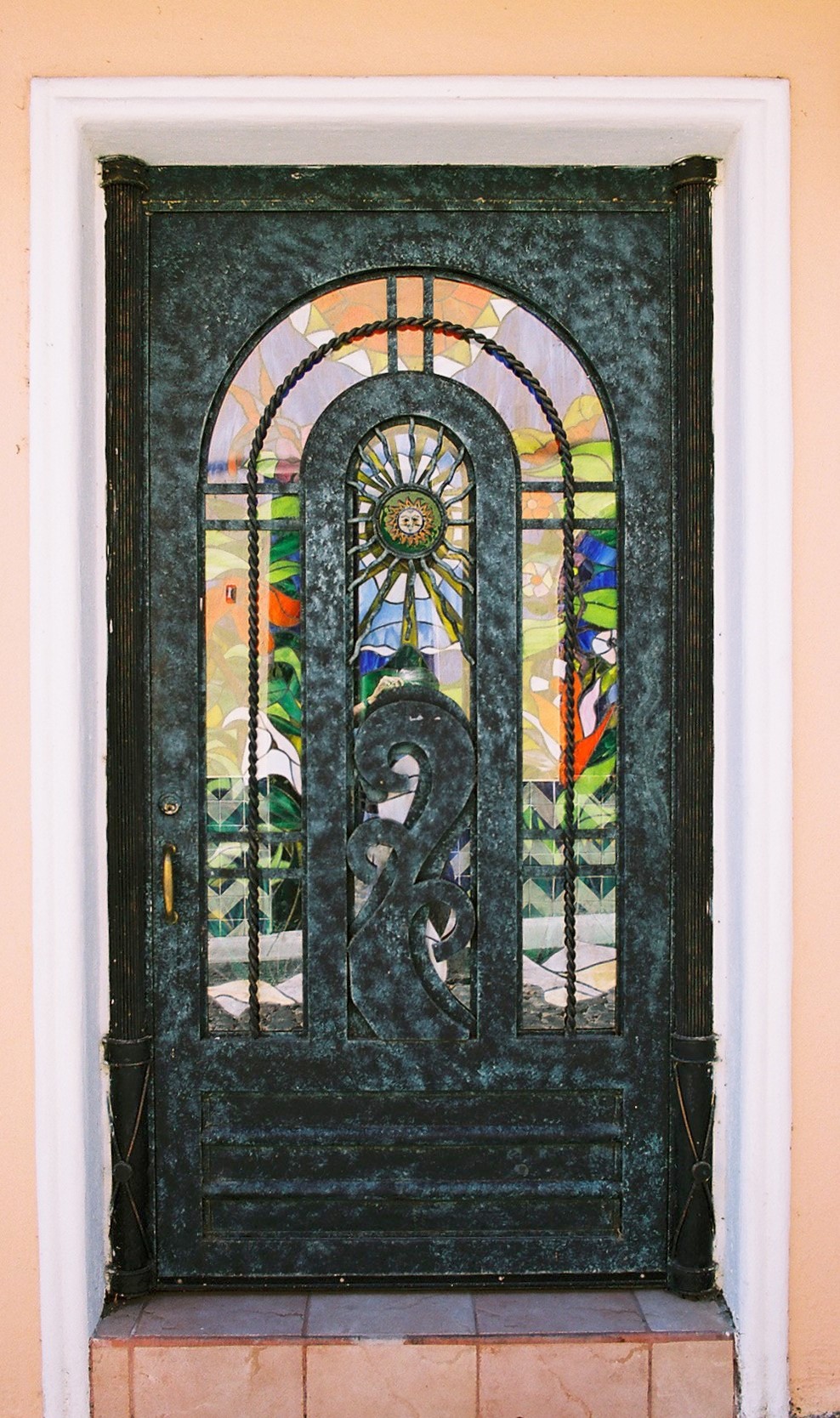
    Doors of Ajijic

    Ajijic door

    If eyes are windows to the soul, doors must just as surely express the soul of a home.

    Ajijic door


    Doors have special significance in Spanish colonial architecture, which cloisters intimate living spaces in courtyards hidden from the street.

    Ajijic door

    Ajijic door

    Ajijic door

    It’s easy to pass these doors every day without giving them a second thought.

    Ajijic door

    As a collection, though, they paint a unique picture of the village that’s authentic, personal, and spontaneous.

    Ajijic door

    Doors here come in all shapes, sizes and colors, and are crafted in materials ranging from wood to wrought iron.

    Ajijic door

    Some are simple and others ornate.

    Ajijic door

    Some are formal and others whimsical.

    Ajijic door

    Some are reflections of the Old World and others are distinctively Mexican.

    Ajijic door

    Some merely hint at what lies behind, and others provide a teasing glimpse.

    Ajijic door

    Ajijic door

    It can be as entertaining to speculate on what lies behind them as to actually know.

    Ajijic door

    If you haven’t seen these, enjoy them.

    Ajijic door

    If you’ve seen some of them in passing, take a second look because there’s often more here than can be taken in with a single glance.

    Ajijic door

    Ajijic door

    Ajijic door

    Ajijic door

    Tianguis’d

    Florist, Ajijic tianguis

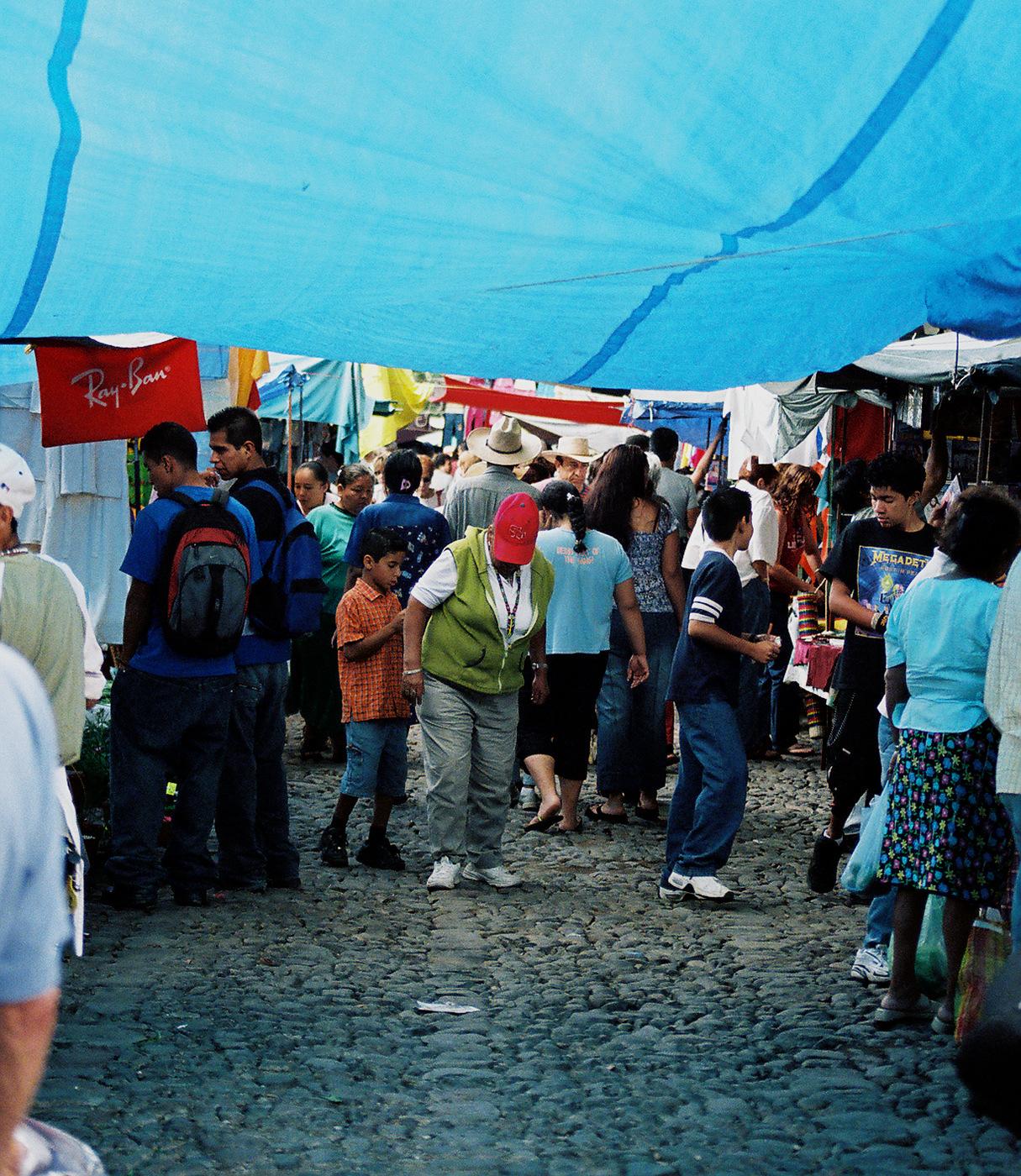
    Whenever I travel to someplace new the local version of tianguis is always high on my itinerary. It’s virtually guaranteed to deliver an instant lay of the land and a hi-def cultural immersion experience.

    What is more common to the Lakeside expat experience than tianguis?

    Huichol woman, Ajijic tianguis

    Nuts & fruits vendor, Ajijic tianguis

    It’s broad appeal is not surprising.  Weekly market bazaars are one of the oldest expressions of human community (the Nahuatl word tianguis is distinctively Mexican), and on the Ribera this truly moveable feast materializes in a different town each weekday beginning on Monday in Chapala.

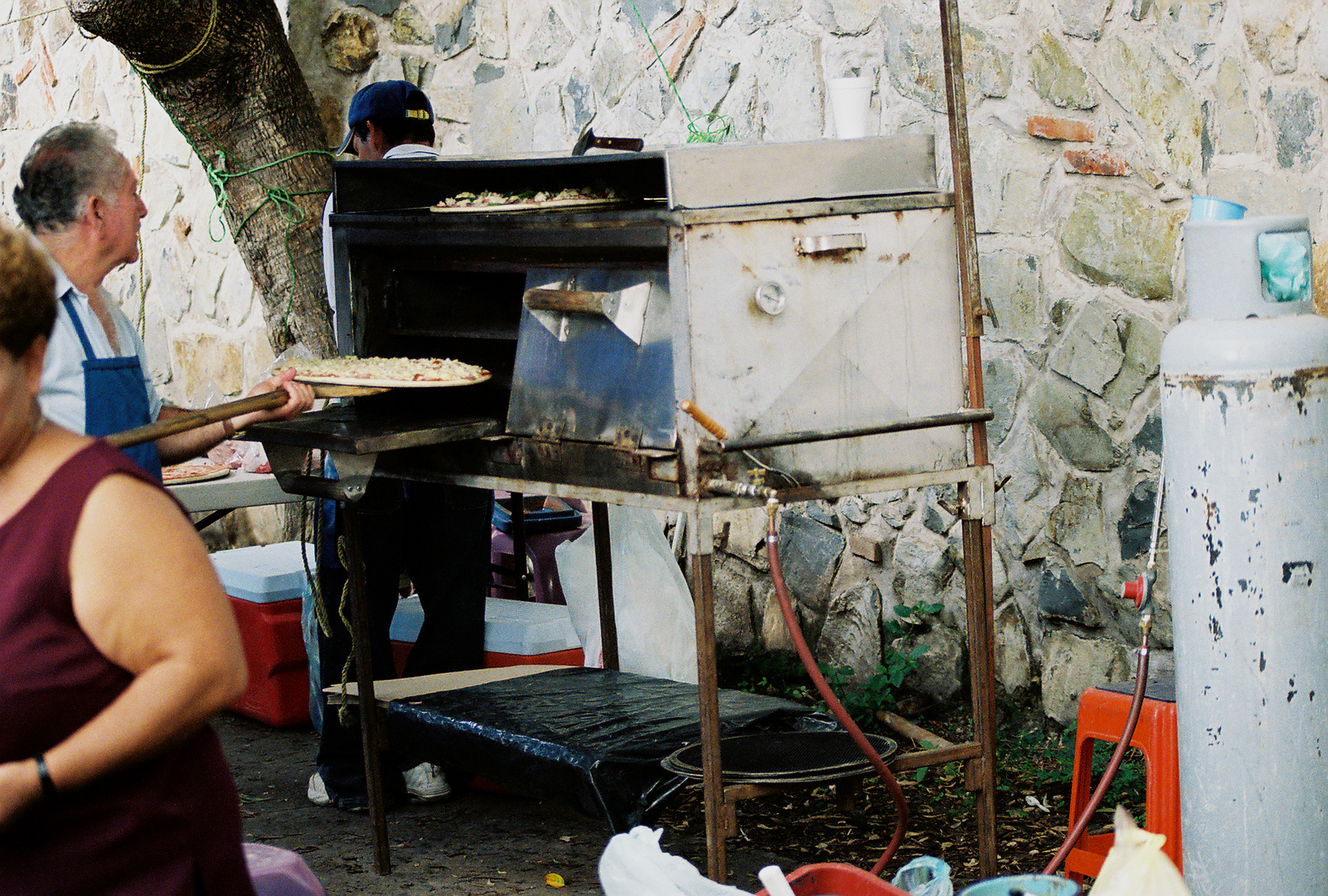
    Gas-fired pizzeria, Ajijic tianguis

    Tianguis brings together an incredibly diverse cross-section of the Lakeside community more often and more consistently than just about any other event.  In this social microcosm Mexicans and expats are represented – if in different mixes – among both buyers and sellers. Tianguis attracts customers ranging from householders to maids and cooks, and there’s something for every budget from purse to pocket change.

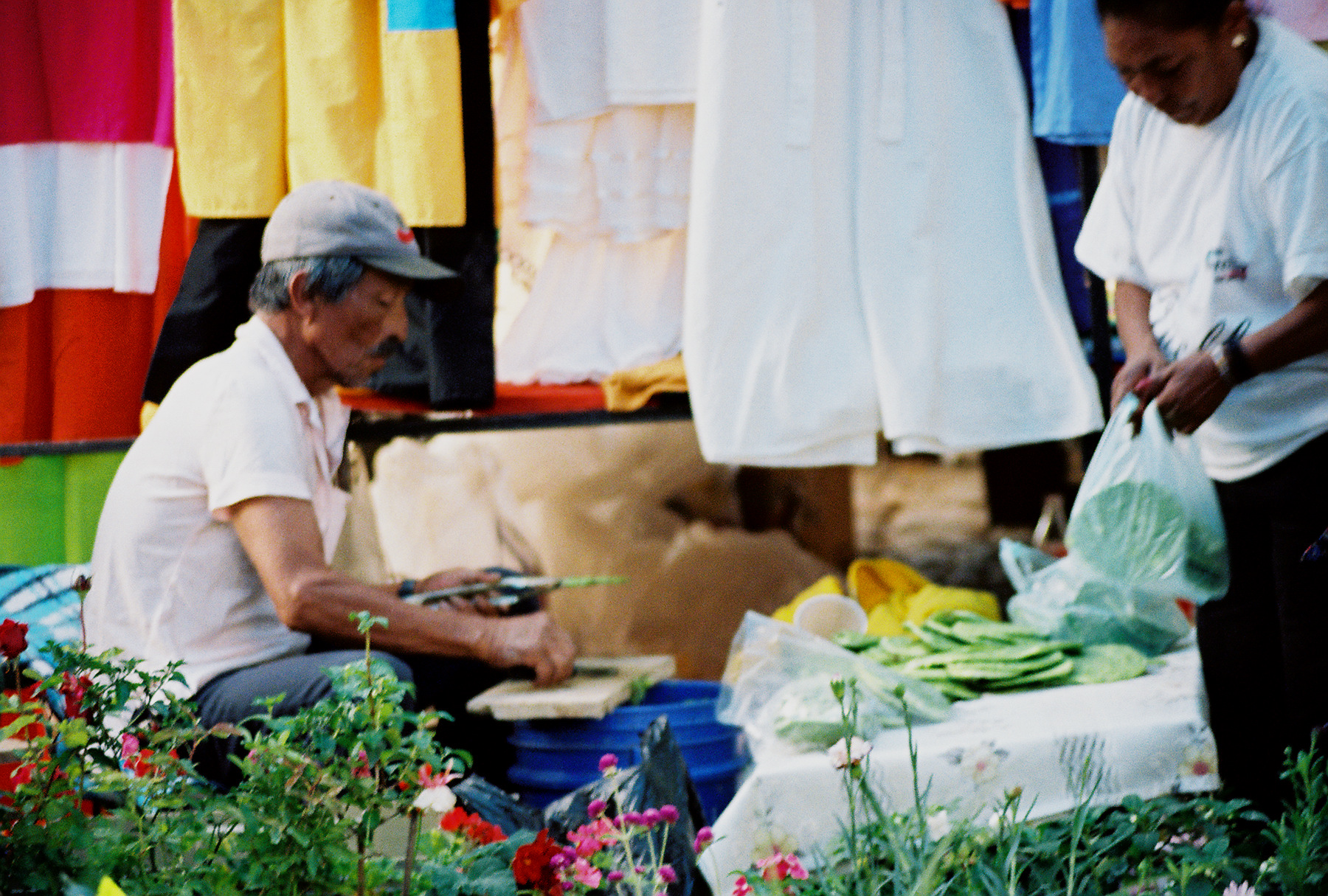
    Nopalito skinner, Ajijic tianguis

    Tianguis – as with so many of Mexico’s open markets – is a personal experience in which it’s not unusual for frequent buyers and sellers to know each other on sight and for vendors to have fiercely loyal customers.

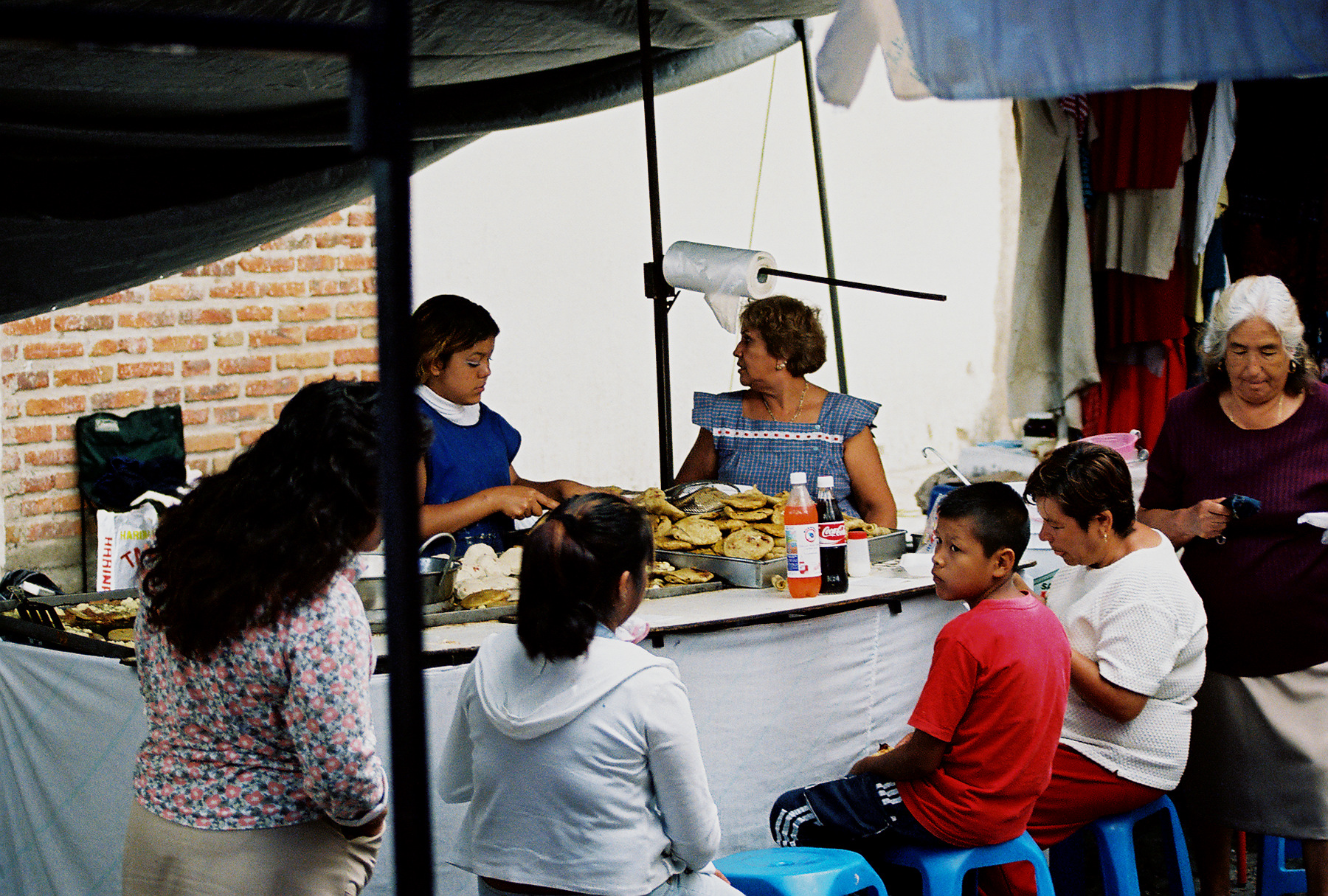
    Snack bar, Ajijic tianguis

    Any Mexican street market worth its salt features an eye-cluttering array of merchandise ranging from kitchenware to underwear and from jewelry to CD’s and DVD’s, and on this the tianguis in Ajijic is not lacking.

    Taco grill, Ajijic tianguis

    Taco fillings grilling, Ajijic tianguis

    Ditto for freshly prepared hot food of the eat-and-walk variety.

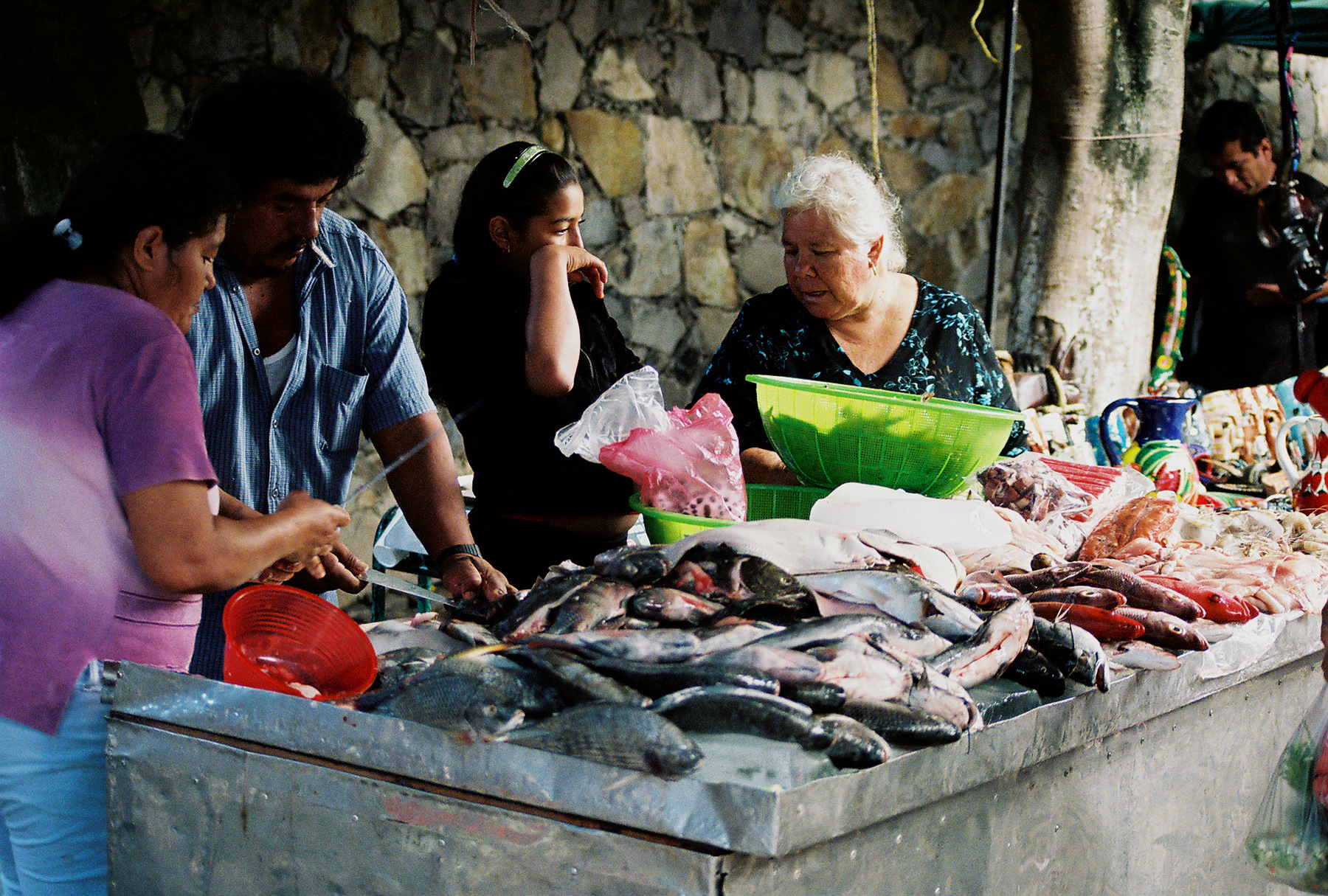
    Fishmonger, Ajijic tianguis

    The heart and soul of tianguis, though, is fresh fish, meat, produce, and flowers.

    High end Stateside grocery chains like Whole Foods Market and HEB Central Market try to evoke the same sense of community, but without the small merchant touch it’s an inauthentic experience.  (Try getting your car washed in its parking spot while you shop at a Stateside Safeway!  Or getting your shoes shined or any extra set of keys made.)

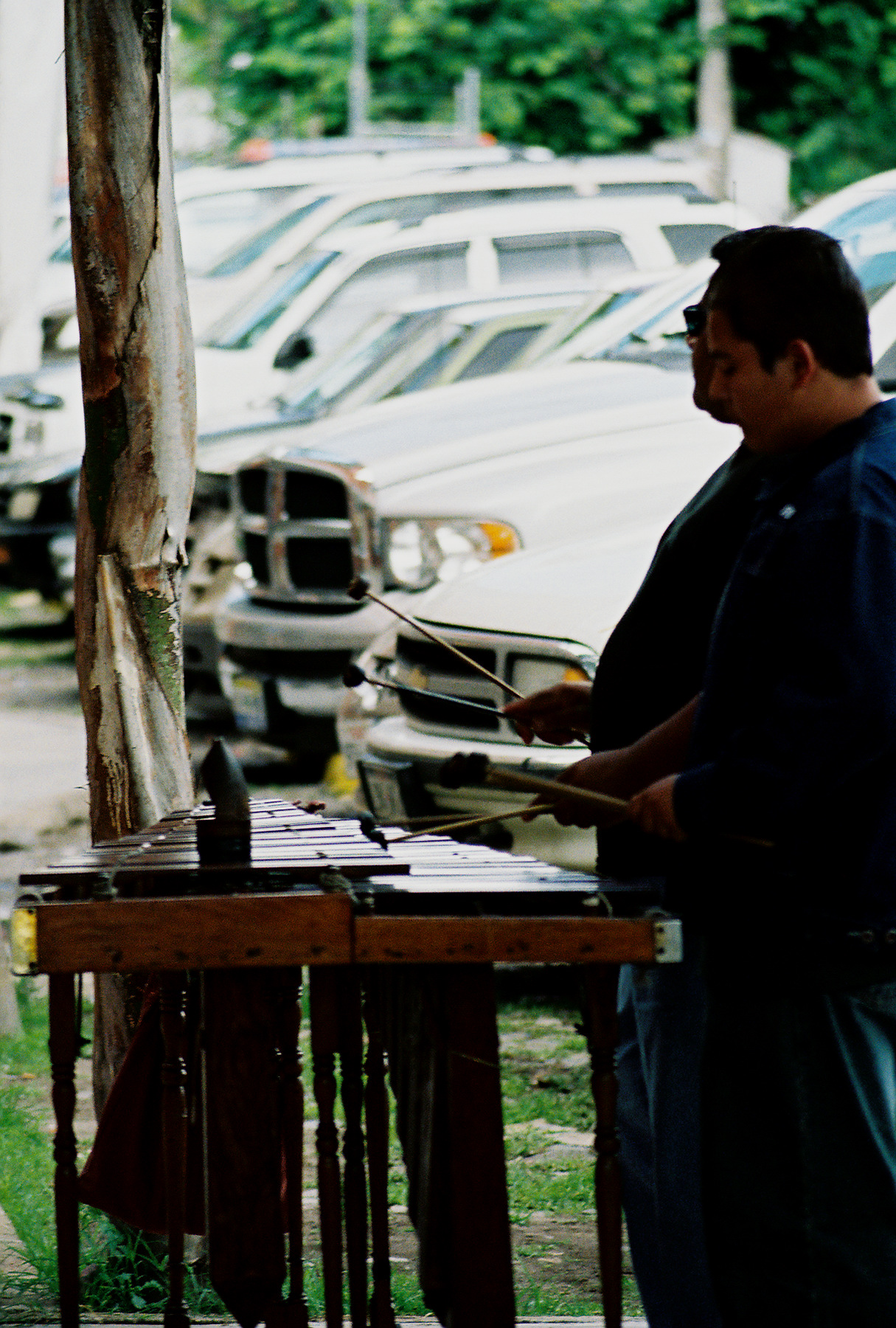
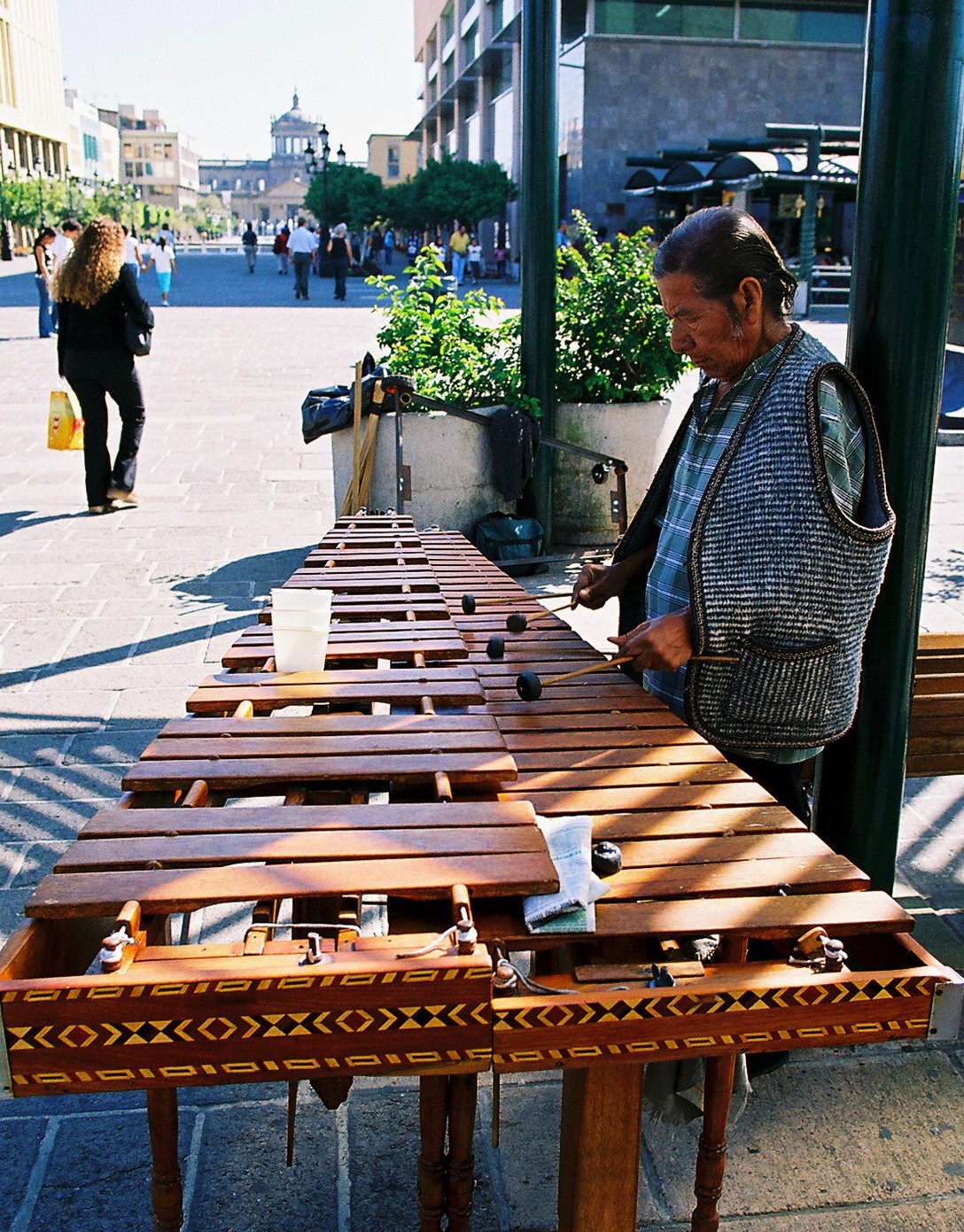
    Marimba player, Ajijic tianguis

    There are at times a carny sort of sidelight to tianguis.  Sort out the truly disabled mendicants from the panhandlers and solicitors for donations to charities of unknown character.

    Plan on encountering at least one musician playing for tips, and if more at least one who needs more practice before playing again in public.

    For some tianguis visitors, though, it has little to do with buying or selling. Tianguis is just a likelihood of running into someone you know and need catching up on.

    It’s the office water cooler for the retired and not-so-retired, and a chance meeting at tianguis can easily morph into an extended lunch if not today than later in the week.

    The Midway, Ajijic tianguis

    Shopping… street theater…  community.  What’s not to like about tianguis?

    Check out my other market-related blog posts:

    Barcelona’s Mercat de la Boqueria

    Guadalajara’s Mercado Libertad

    Mendoza crafts market

    Zapopan fish market

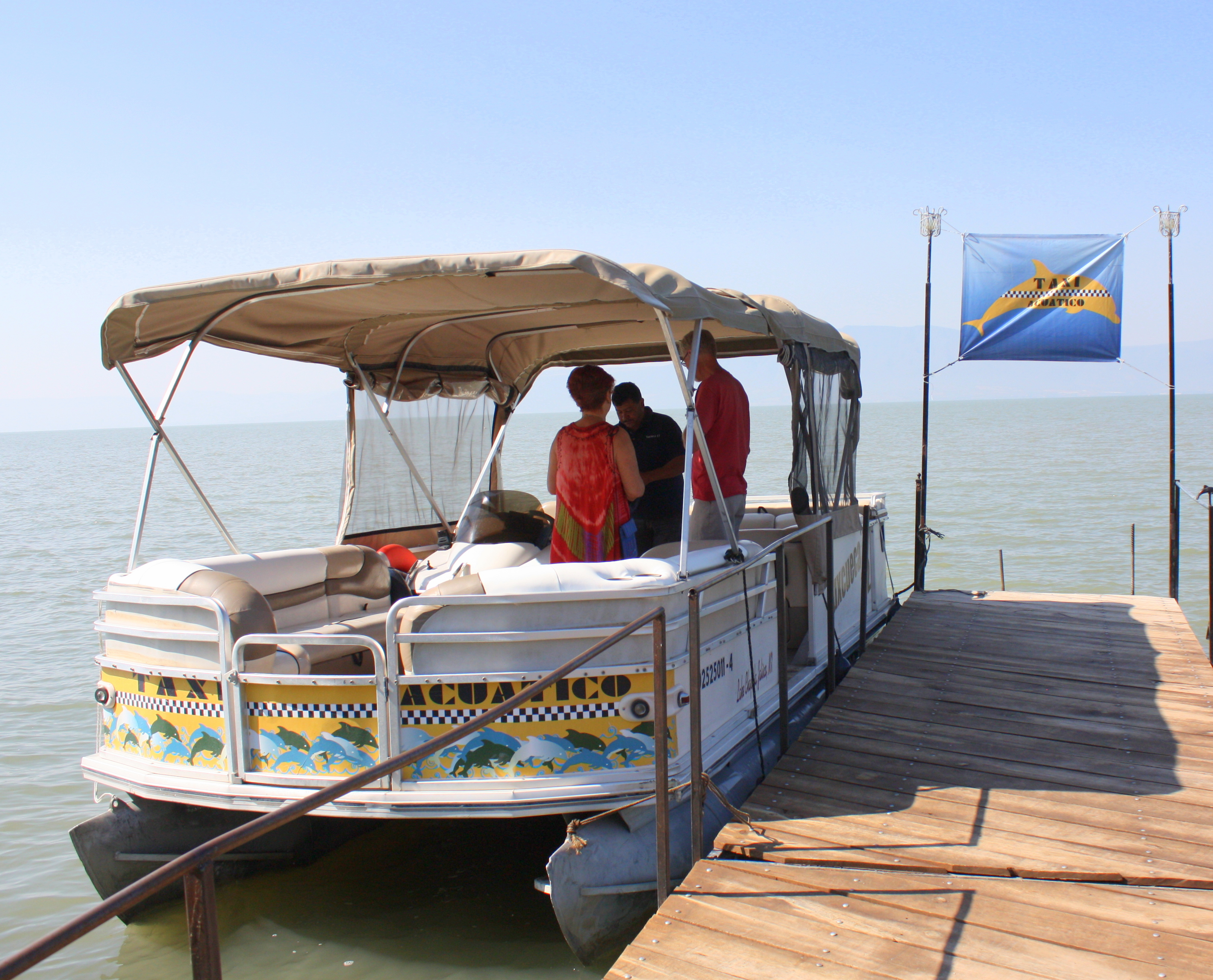
    Ferry departs from the Ajijic pier

    All that I saw of San Luis Soyatlan on my first visit there nearly 8 years ago was the flower-bedecked cemetery that caught my eye just as the day was drawing to a close and I was about to turn back to Ajijic.

    I ran out of daylight before I ran out of town, promising myself to return one day to finish the visit, but the recent start of ferry service from the Ajijic Pier gave me an irresistible new way to keep that promise.

    Ajijic Pier

    A block away from the pier on Colon I grab a latte from La Prensa Francesa, and within half an hour we’re pulling away from the pier.

    The boat is easily spacious and comfortable enough for the trip of under an hour.  I watch the pier recede in our wake.

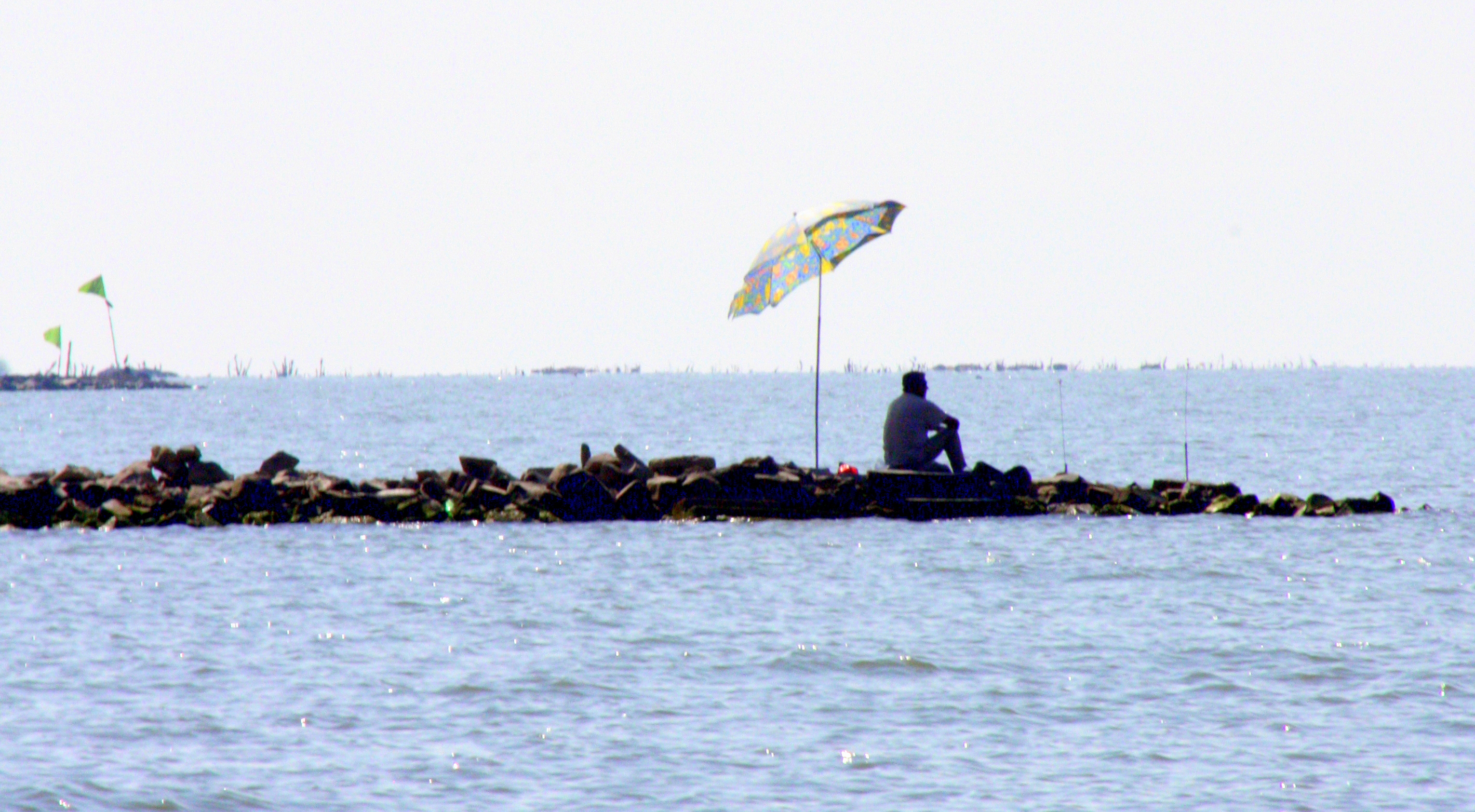
    Out on the water the fishermen are already well into their day.

    Pulling in the net on Lake Chapala

    There’s often a mirage-like quality to things seen from this vantage point.

    Fisherman on Lake Chapala

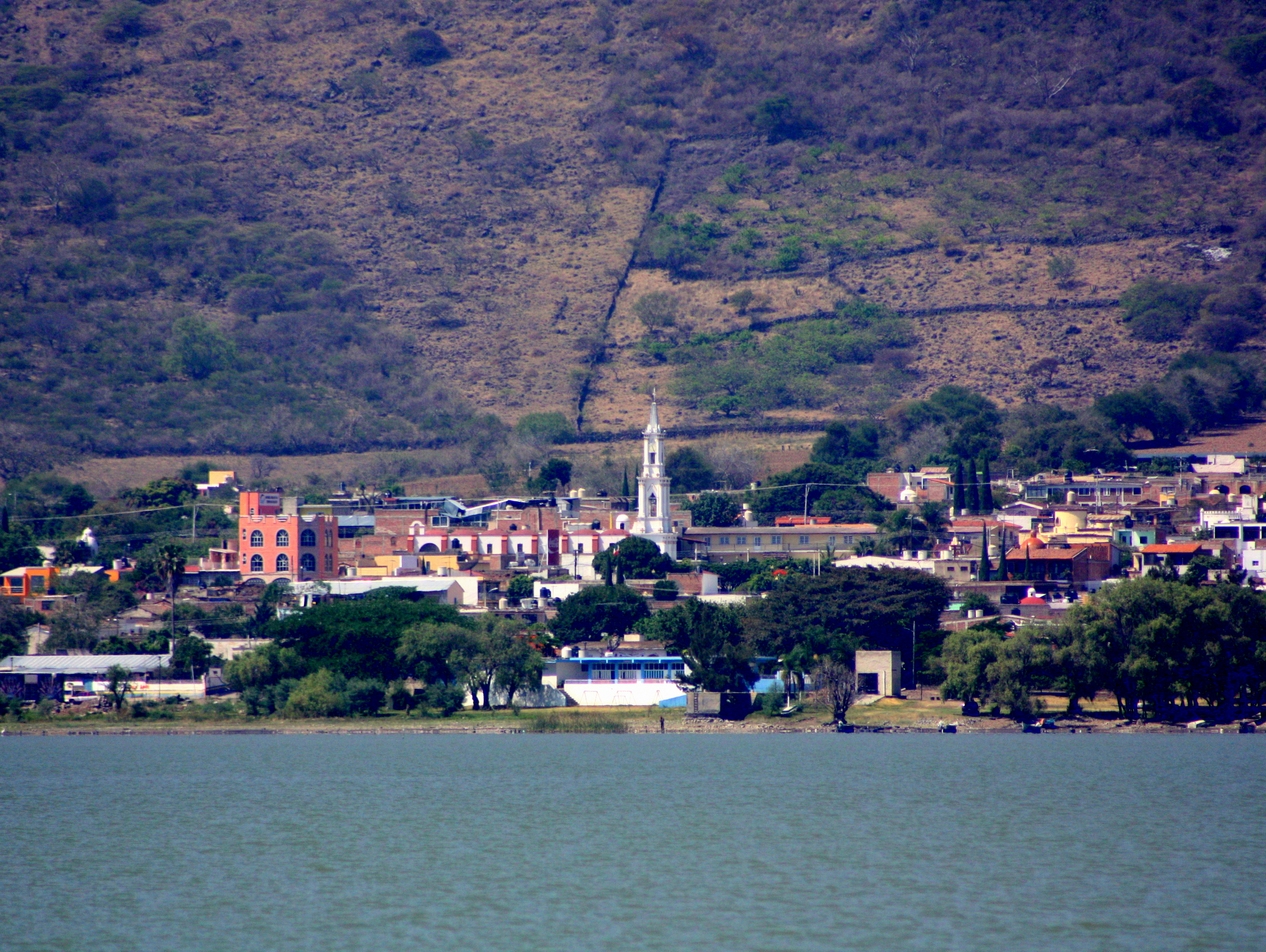
    As the opposite shore draws nearer the towering campanario of the parroquia first takes shape, and then the village gathered around it. Behind it the mountain grows to cover the entire horizon.

    San Luis Soyatlan from Lake Chapala

    Street scene, San Luis Soyatlan

    I set out for myself as soon as we land just west of town, mapless but following two time-tested rules:  (1) Follow the shoreline whenever possible, and (2) always go toward the campanario.

    The shoreline path winds along an expansive lakeside park with lots of picnic tables and groomed trails.

    As the campanario looms larger I turn toward the mountain and within a couple of blocks reach the coast road.

    Frutas y verduras, San Luis Soyatlan

    Clustered along this part of the highway are neighborhood tiendas and tacquerias that give way to homes as I approach the campanario and the plaza which must certainly be below it.

    A family business, San Luis Soyatlan

    Street scene, San Luis Soyatlan


    This place feels to be about the same size as San Juan Cosala on the opposite shore – I’d guess under 2,500 persons – and just like San Juan is stretched along a narrow strip that clutches the coastline.

    This place also feels like Jocotopec… a working agricultural town devoid of Tapatios on holiday or expat retirees.

    The Plaza is classic. It’s bordered on one side by the coast road, framed by buildings of substance, and located directly across from the campanario.

    Plaza, San Luis Soyatlan

    Plaza, San Luis Soyatlan

    Plaza, San Luis Soyatlan

    I’m always struck by the way in which every Mexican neighborhood builds out the age-old Catholic Church footprint in a distinct reflection of its own unique image.

    On that count this one does not disappoint.

    Parroquia, San Luis Soyatlan

    Parroquia, San Luis Soyatlan

    Parroquia, San Luis Soyatlan

    Only a few blocks from the Plaza I stumble upon the Posada Los Crotos, an intimately-sized hotel with an impressive restaurant. I wish I’d found it sooner, because a thorough walk of the town and a leisurely lunch will barely allow enough time to make it back to the ferry before its departure!

    Posada Los Crotos, San Luis Soyatlan

    Posada Los Crotos, San Luis Soyatlan

    I return to the ferry along back streets.

    Street scene, San Luis Soyatlan

    Street scene, San Luis Soyatlan


    As the returning boat approaches Ajijic I study the town from this new perspective. I think to myself: THIS is the definitive postcard from Ajijic…

    Ajijic from Lake Chapala

    Fish market in Zapopan, Guadalajara

    The half day drive to Puerto Vallarta or Manzanillo puts the bounty of the Pacific Ocean within easy reach of Guadalajara, and nowhere is this abundance as evident as at the Mercado del Mar in the Zapopan section.

    Fish market in Zapopan, Guadalajara


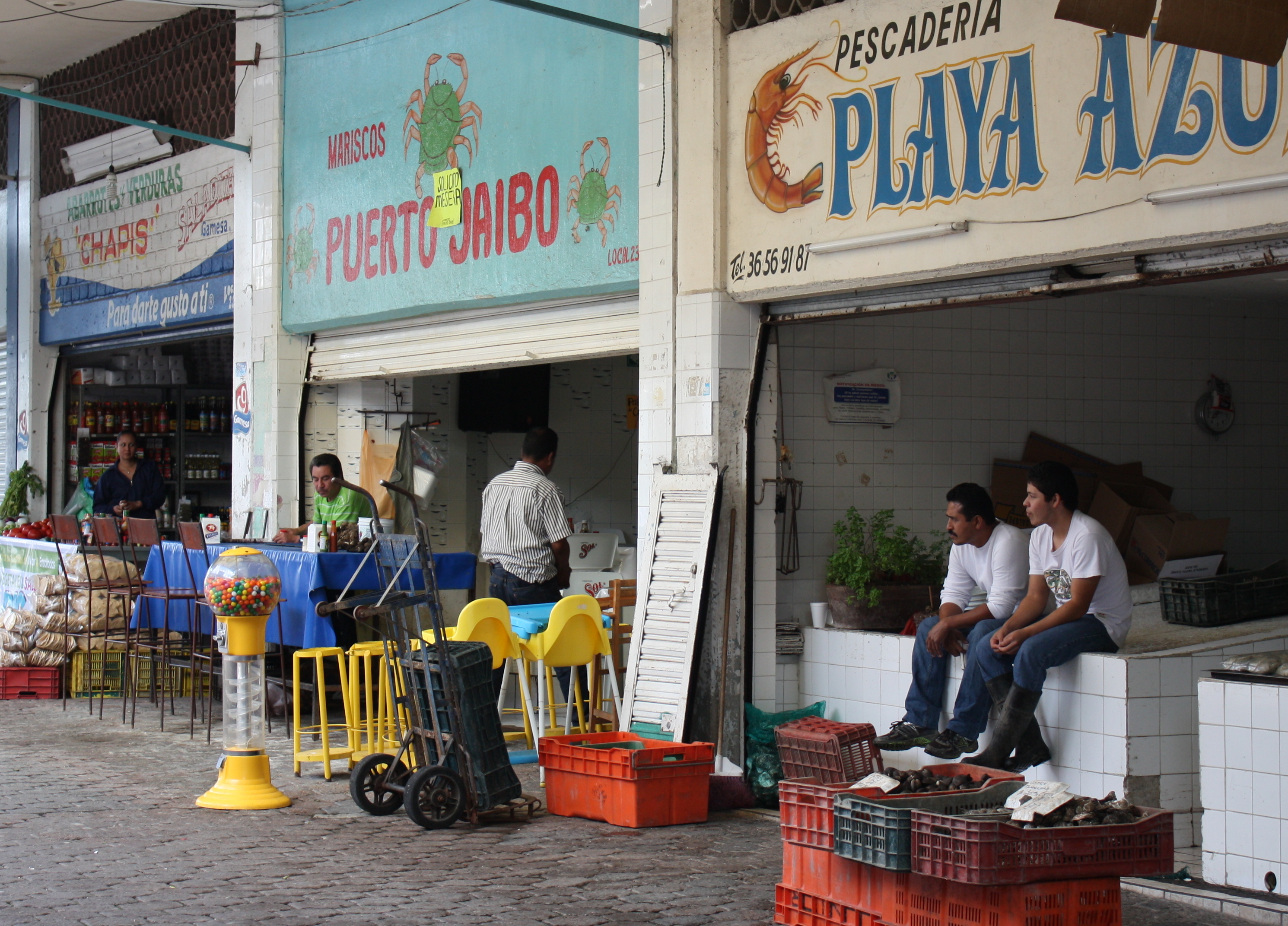
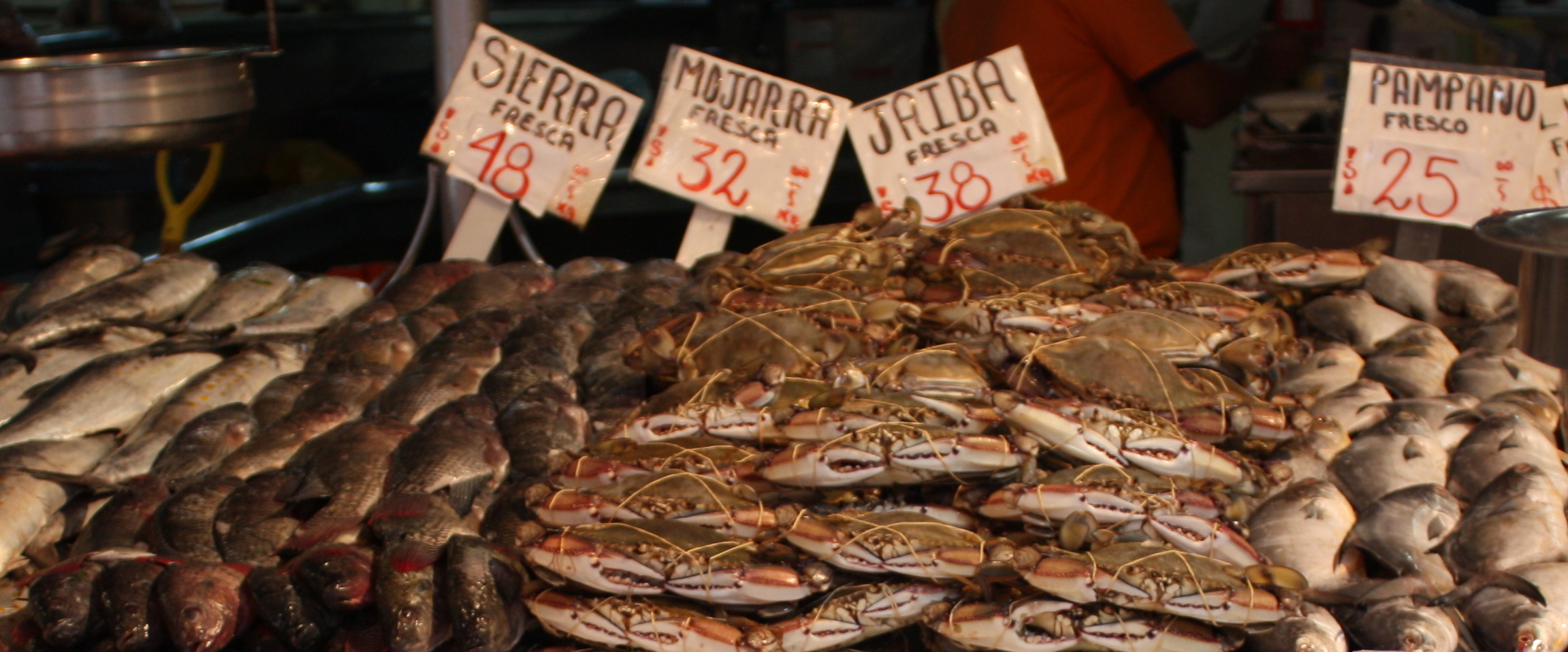
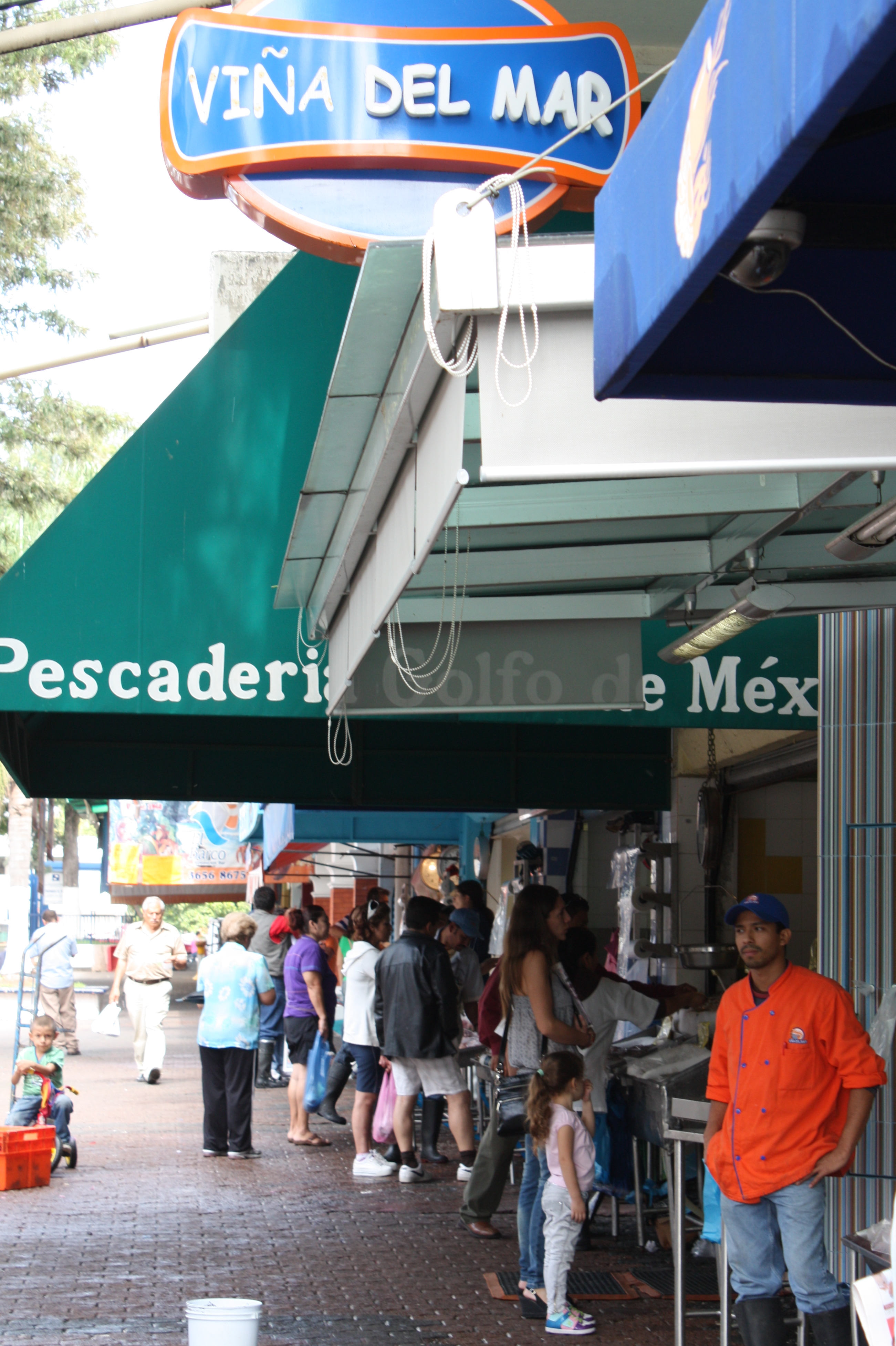
    Here restaurant chefs and housewives browse more than a city block of pescaderias and seafood restaurants that compare well with anything to be found in Boston or San Francisco… except for the price!

    Fish market in Zapopan, Guadalajara


    As at any fresh seafood market, the best picks are available early in the morning, but shops are still well-stocked when I arrive before noon.

    Fish market in Zapopan, Guadalajara


    There are nearly 50 seafood vendors and half a dozen seafood restaurants from which to choose, and sifting through the choices is at least half the fun.


    There are plenty of fish that shoppers from north of the border will recognize even if their Mexican names are unfamiliar, but there are also plenty of local varieties that beg to be tasted.

    Fish market in Zapopan, Guadalajara


    There’s not much English spoken here, but most of the shop owners will gladly explain their products at the slightest prompting.

    Fish market in Zapopan, Guadalajara

    Fish market in Zapopan, Guadalajara


    The breadth of selection is staggering, and there seems to be something in almost every color of the rainbow.


    Fishmongers expertly carve out filets and deftly shuck oysters.


    Fish market in Zapopan, Guadalajara

    Fish market in Zapopan, Guadalajara


    The ceviche is about as good and fresh as any you’ll find anywhere without a beach in sight.


    Get there from the Periferico on the northwest side.  Exit Avenida Los Laureles toward the city and drive less than two miles to its intersection with Avenida Piño Suarez.  The market is two blocks to the left.


    Remember to take an ice chest.  In fact, remember to take two, because some of the best stuff is not even on your shopping list!


    Mercado del Mar has a web site which lists all of the seafood shops and restaurants (go to the Locatarios page), and as you scroll over each name more information – including individual web sites for many merchants – displays in the lower right hand corner. http://www.mercadodelmar.com/

    Fish market in Zapopan, Guadalajara


    If you’re uncomfortable with Guadalajara traffic, one of the Mercado del Mar merchants has opened a location just west of Ajijic on the Carretera  in the Plaza La Huerta.  I’ve found it to be among the best at Lakeside.


    Buen provecho!


    For more about the Guadalajara open market experience, see my related post Guadalajara’s Mercado Libertad

    I’ve just completed my tenth round trip between Dallas and Guadalajara by bus.  At the end of each trip, tactful friends on both sides of the border question me about the experience with a combination of curiosity and skepticism.

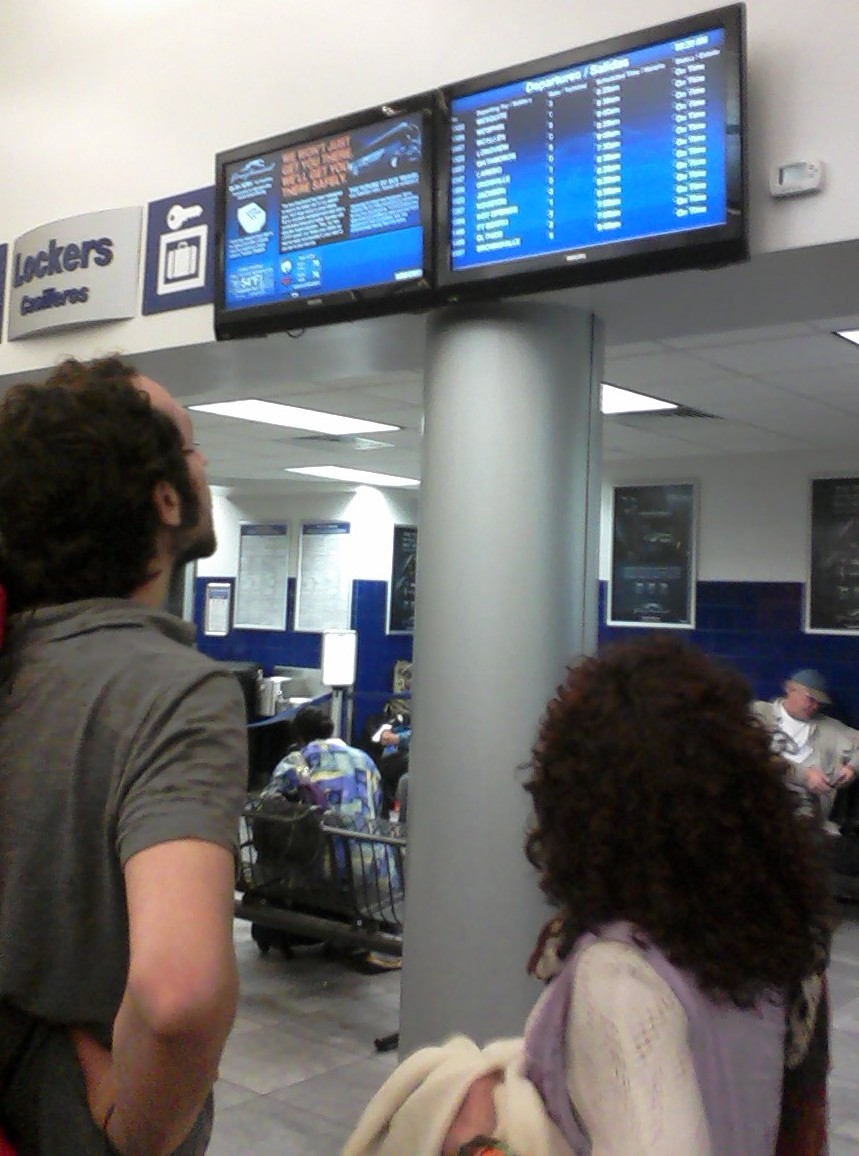
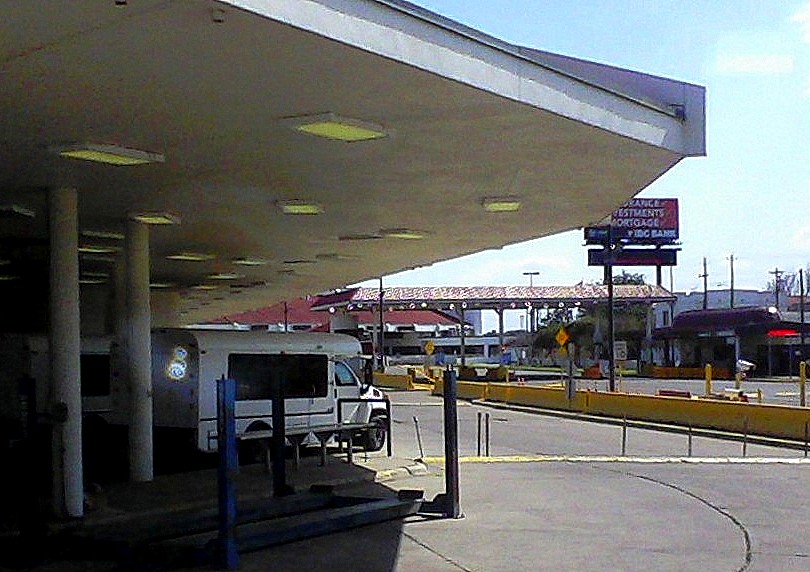
    Greyhound bus terminal, Dallas, TX

    Tactless friends question my sanity.  After all, the driving distance – which varies depending upon the route taken – runs around 1,100 miles (about the same distance as driving from Dallas to Phoenix, Detroit, or Jacksonville).  By private auto the trip takes a bit over 20 hours.  By bus with occasional station stops it takes a little over 26 hours.

    Greyhound bus terminal, Dallas, TX

    There are otherwise some really good reasons to travel to Mexico by bus…

    Mexico “gets” bus service.  There’s almost no passenger rail service in Mexico and outside of major population centers economics don’t lend themselves to air service a la Southwest Airlines.  The result is that Mexico – as in many other countries I’ve travelled – has refined bus travel to an art.  (See my related post on bus travel in Argentina.)

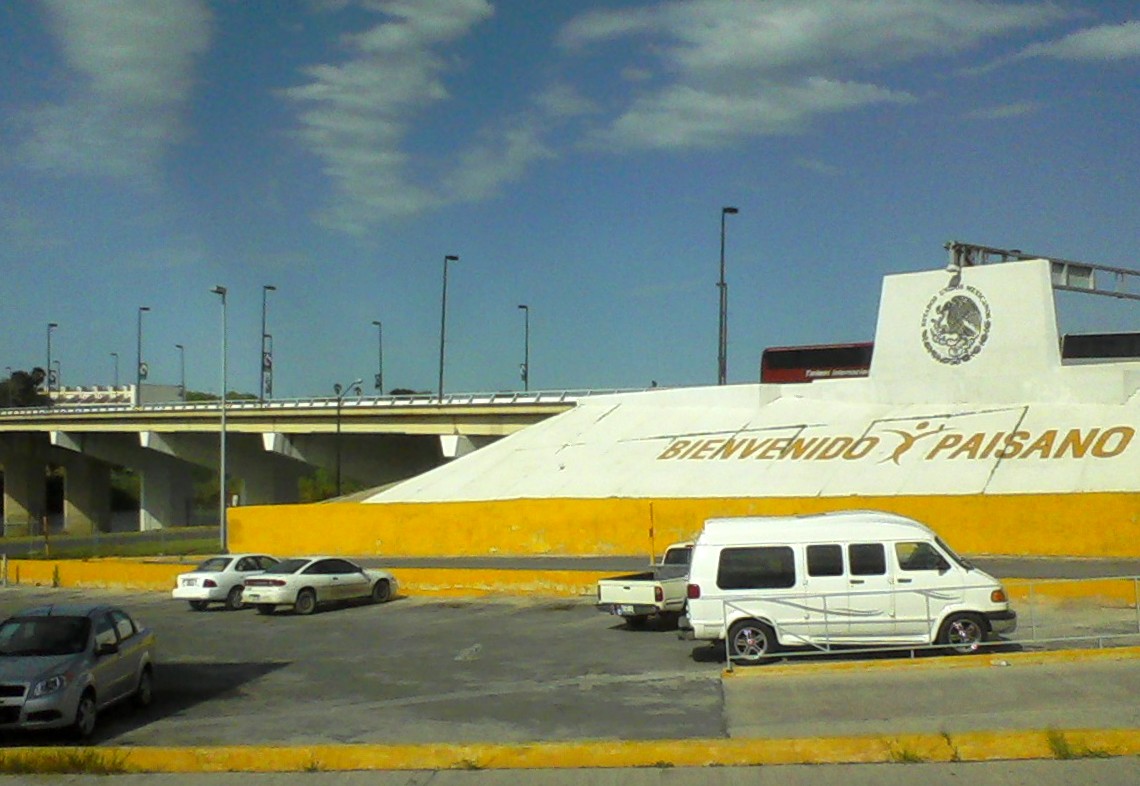
    Border crossing, Laredo, TX (U.S. side)

    It’s a rich experience.  Bus travel affords an opportunity to see the Mexico – and meet the Mexican people – inaccessible for air travelers.  Even after ten trips I still see something missed on an earlier trip, and I always make new acquaintances.  The route takes me through cities including Monterey, Saltillo, Zacatecas, and Aguascalientes, and since I’m not driving I have every chance to enjoy the views.

    It’s comfortable.  In Mexico – as in much of the world outside of the U.S. – bus travel is the transportation of choice, and first class bus seating and service is on par with transatlantic airline business class.  Busses have their own dedicated lines for Customs and Immigration on both sides of the border, and often clear inspection more quickly than the long lines of passenger cars… particularly during rush hours.  There’s a restroom on the bus, and a rest stop with limited foodservice and more restrooms on an average of every 2-3 hours.

    Rio Grande from the Lincoln-Juarez bridge, Laredo, TX

    It’s convenient.  I book my trip with Greyhound and its Mexican affiliate Americanos, buy my ticket online with a credit card, and receive it by mail.  I’m even enrolled in Greyhound’s Road Rewards frequent traveler program… which earns me further travel discounts.

    From Mexican Immigration & Customs, Nuevo Laredo

    While air travel requires an hour of travel and car parking and another hour for security screening, I’m routinely on the bus in Dallas within an hour of leaving my home.  If you become bored with the passengers or the scenery, crack open that new novel you’ve been meaning to read or listen to your MP3 player.  I get lots of writing done on the bus.

    Two bus drivers kibbitz while their busses await their turn for inspection.

    Bus travel to and from Mexico is incredibly economical.  My round trip bus fare costs about one-third of the cheapest Dallas-to-Guadalajara airline ticket… and actually less than the cost of auto tolls alone for the same trip on Mexico’s excellent system of toll roads (the cuotas)… not to mention the cost of gasoline.

    Outside the bus terminal, Nuevo Laredo, Mexico

    Since there’s no overnight stay on the bus route – the bus changes drivers, but rolls right on through the night – there’s also no hotel expense.  While there’s a modest charge for extra luggage checked on trips originating in the States, there seems to be no such restriction for trips originating in Mexico.  Greyhound charges for ticket changes in the States, but a bus ticket in Mexico can be used at any time within 6 months of issue with no charge for schedule changes between the original ticket destinations.

    Inside the bus on the Mexican side

    It’s safer.  I view the risk of violence to Americans traveling in Mexico as grossly overstated by both the U.S. media and the State Department.  Particularly between dusk and dawn the risk of hitting stray livestock or pedestrians increases, and if you’re involved in a accident that causes injury or fatality you will go directly to jail until blame is sorted out… and much of what you’ve heard about Mexican jails is probably true.


    There are two drawbacks to Greyhound/Americanos.  One is that while busses on the Mexican legs of the trip have spacious seats, plenty of leg room, and video, the Stateside busses are about as (un) comfortably cramped as traveling in airline economy class.  The other is that the trip on Greyhound/Americanos requires anywhere from 2 to 4 bus changes, and while I’ve never arrived late or missed a connection within the Mexican legs of the trip the same cannot be said for the Stateside legs.

    Central Nueva bus terminal, Guadalajara, Mexico

    For a bit more than the cost of Greyhound/Americanos, travelers can instead book with one of several Mexican bus lines that require no bus changes from U.S. destinations and depart from locations as far-flung as Florida, Tennessee, the Carolinas, and Illinois.  These carriers cater to Mexicans and Mexican-Americans, cost a bit more than the Greyhound option, and typically locate their U.S. terminals in heavily Hispanic neighborhoods.  Just a few are Omnibuses de Mexico, Turimex, El Tornado, and El Conejo.

    Central Nueva bus terminal, Guadalajara, Mexico

    Bottom line:  Bus travel to/from Mexico is not for everyone, but if you have a spirit of adventure that craves more than a sanitized Epcot Center experience, it’s something you should do… at least once!

    Lakeshore promenade, Ajijic

    Something about the sight of a distant horizon anchored by an expanse of blue water makes a walk along the shoreline like no other walk.


    For most folks such a view is the stuff of which vacation memories are made.


    For anyone living along Lake Chapala’s northwest shore it’s an everyday sight from the ever-expanding public vantage point of walkways along its piers and seawalls… its malecons.

    Lakeshore promenade, Chapala


    The malecon is a fixture of coastal cities in the Spanish-speaking world and in towns that grew up around them  malecons are invariably community focal points.


    Those which I’ve found memorable include Barcelona,  San Juan P.R., and Puerto Vallarta. (Havana’s on my bucket list!)


    In these towns the malecons  often feel as if the perimeter of a plaza square has been unraveled to form a thread along the water’s edge, and the waterfront is an organic part of the city.

    Lakeshore promenade, Jocotopec


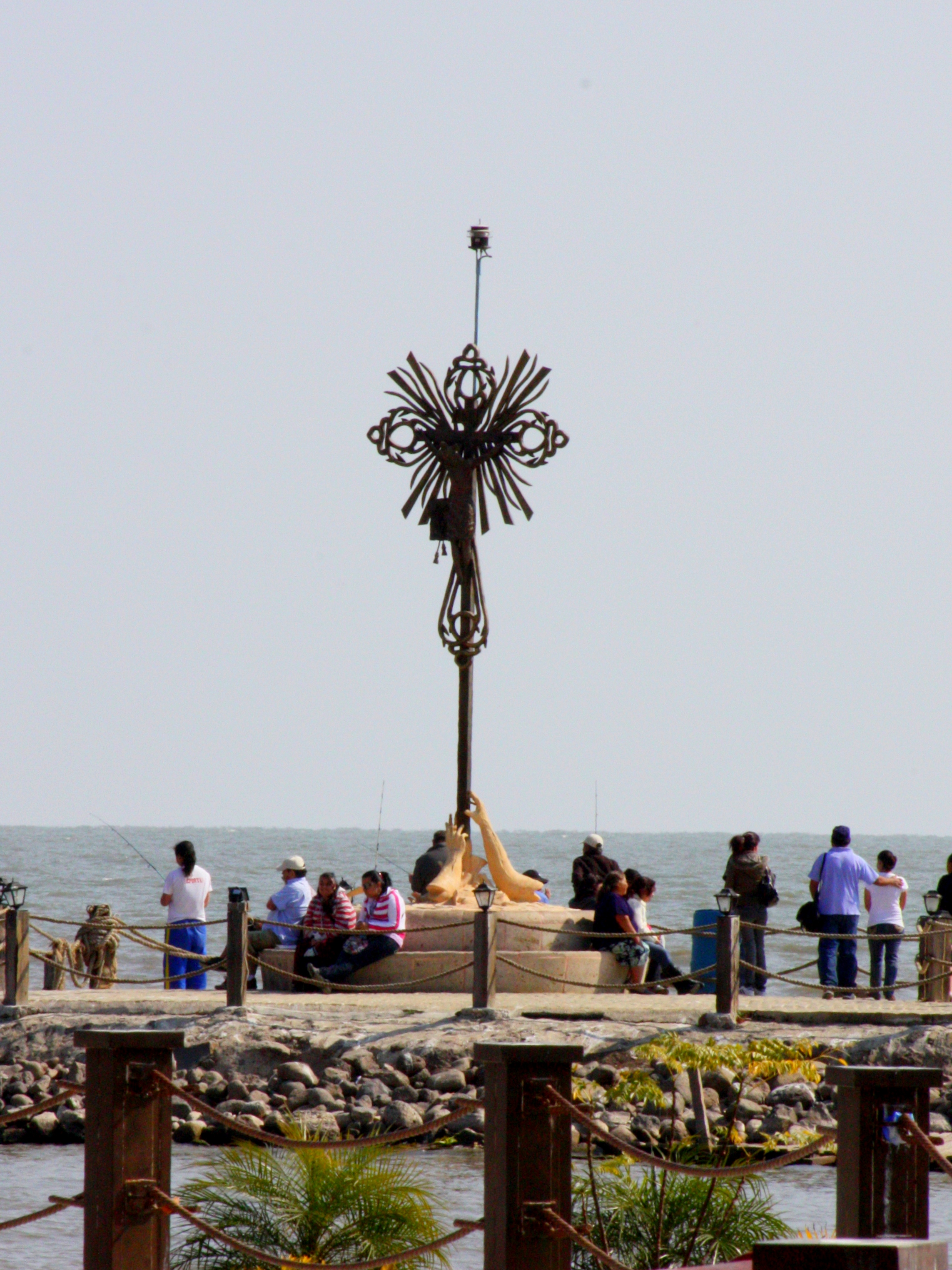
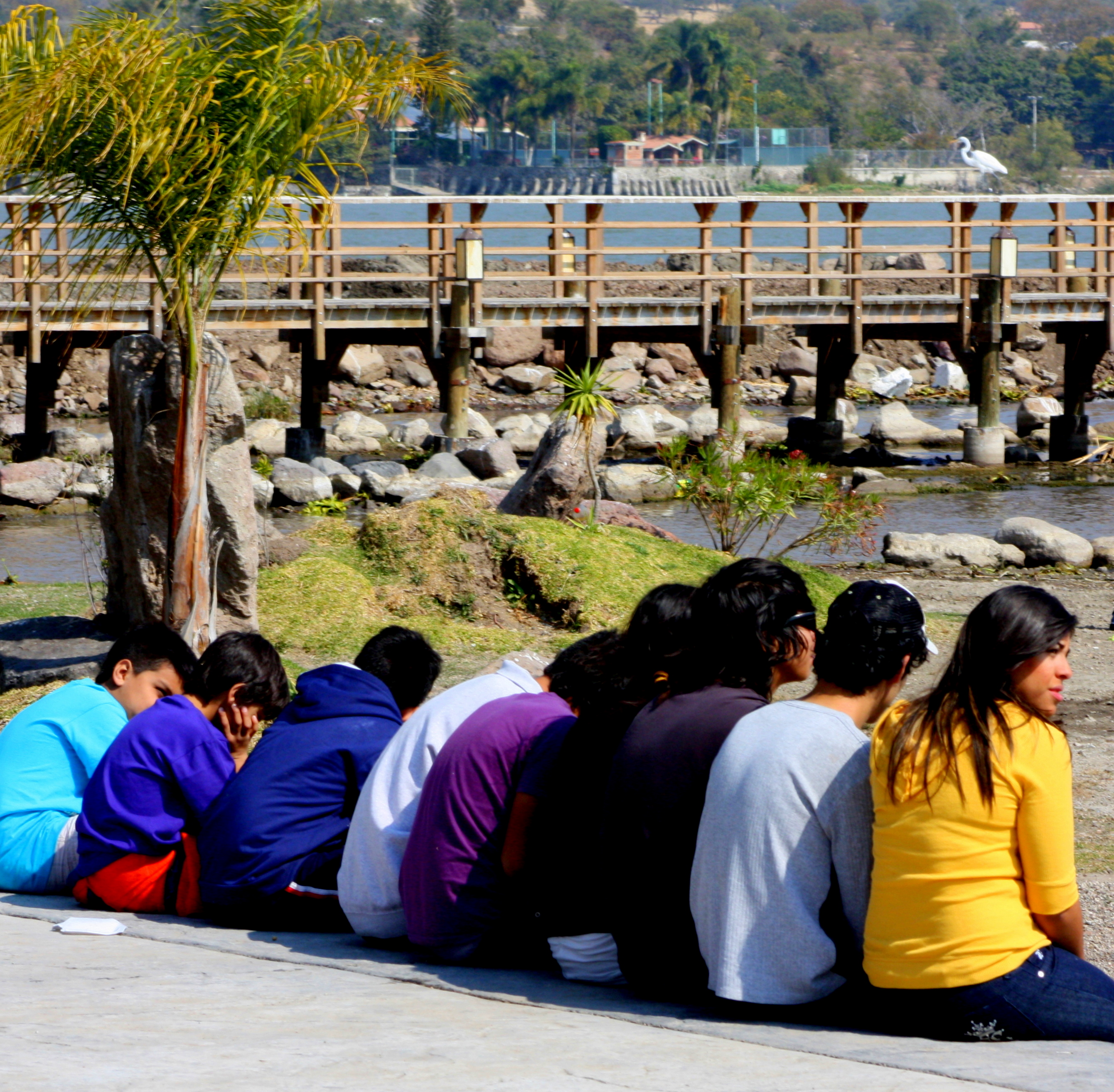
    The construction in recent years of malecons along Lake Chapala in San Antonio Tlayacapan, Ajijic, San Juan Cosala, and  Jocotopec (and the renovation of the one in Chapala)  has created miles of lakeshore promenades that reinforce the historic connection between the lake and these one-time fishing villages.


    There’s more at work here, though, than history reaffirmed.


    These malecons liberate walkers from traffic lights and street intersections; there’s just blue water on one side and a city sunning itself on the other.

    Lakeshore promenade, Ajijic


    It’s a perspective that makes malecon-walkers in the city, but not  of  the city.


    On each malecon the cast of characters may vary little from one day to the next, but the foot traffic has its own seasons and ever-changing images of  lake, city, sky, and mountains creates a kaleidoscope of  endlessly unique tableaus.

    Lakeshore promenade, Jocotopec


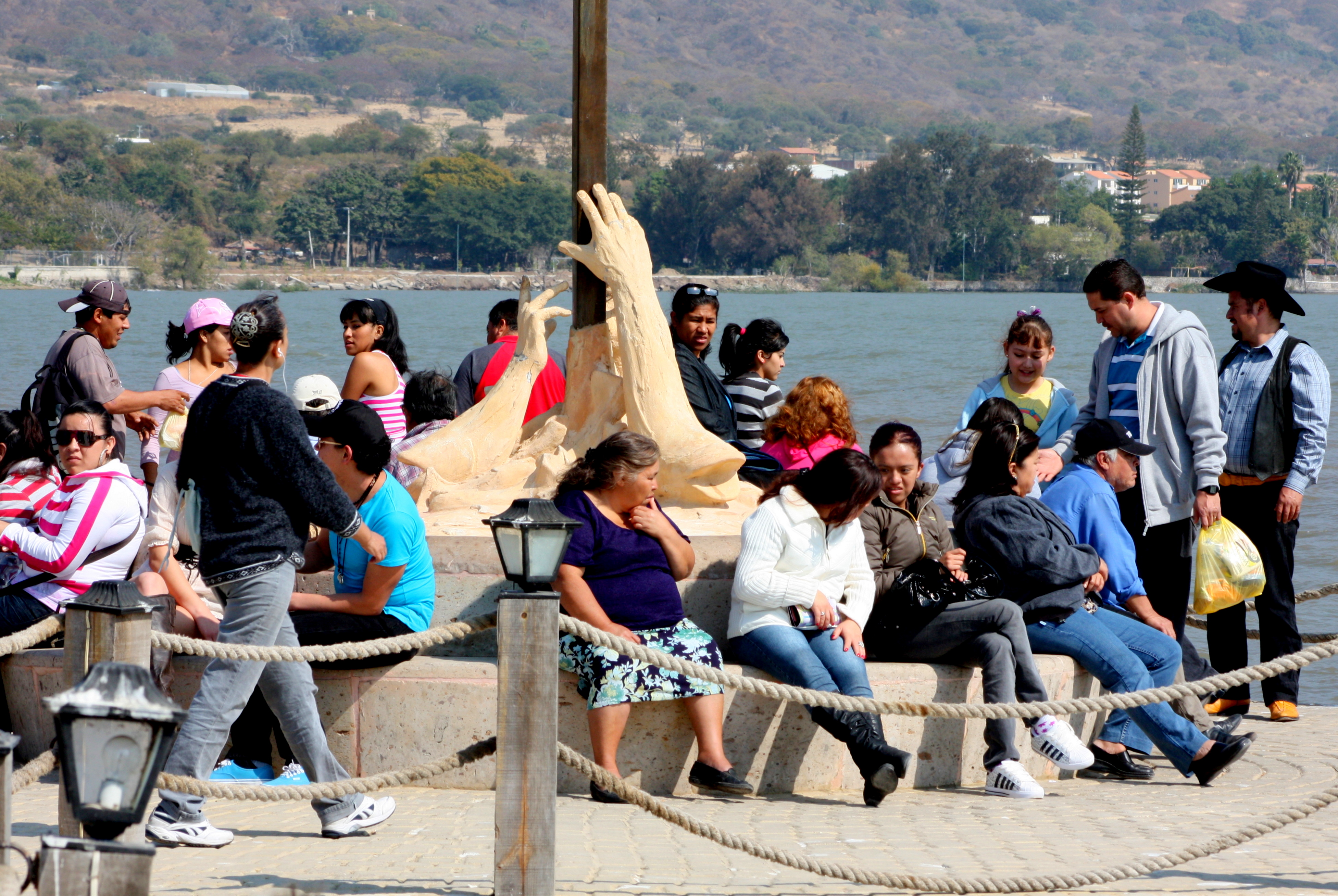
    Malecons deliver a great slice of local life. Depending upon time of day and day of week those along Lake Chapala are inhabited by a  mix of everyone from local working men and women to frugal pensioners,  well-off  expats, and Tapatios.


    The dog walkers, speed walkers, joggers, runners, bench-sitters and kibitzers are weekday morning fixtures.  So are workday commuters on bicycle and on foot and children on their way to or from school; the malecon is also a sort of pedestrian libramiento.

    Lakeshore promenade, Ajijic

    Lakeshore promenade, Jocotopec

    The malecon takes on a new identity when the mix of local families and Tapatios dials itself up on weekends and holidays.


    Mexico is a place where the generations still mingle, and the malecon is a prime venue at which to see and be seen. If you want to see a town unfurled for easy viewing, join the Sunday evening promenade on its malecon.

    Lakeshore promenade, Jocotopec


    The view of the water is not just about postcard-perfect sunrises and sunsets or about the people-watching.

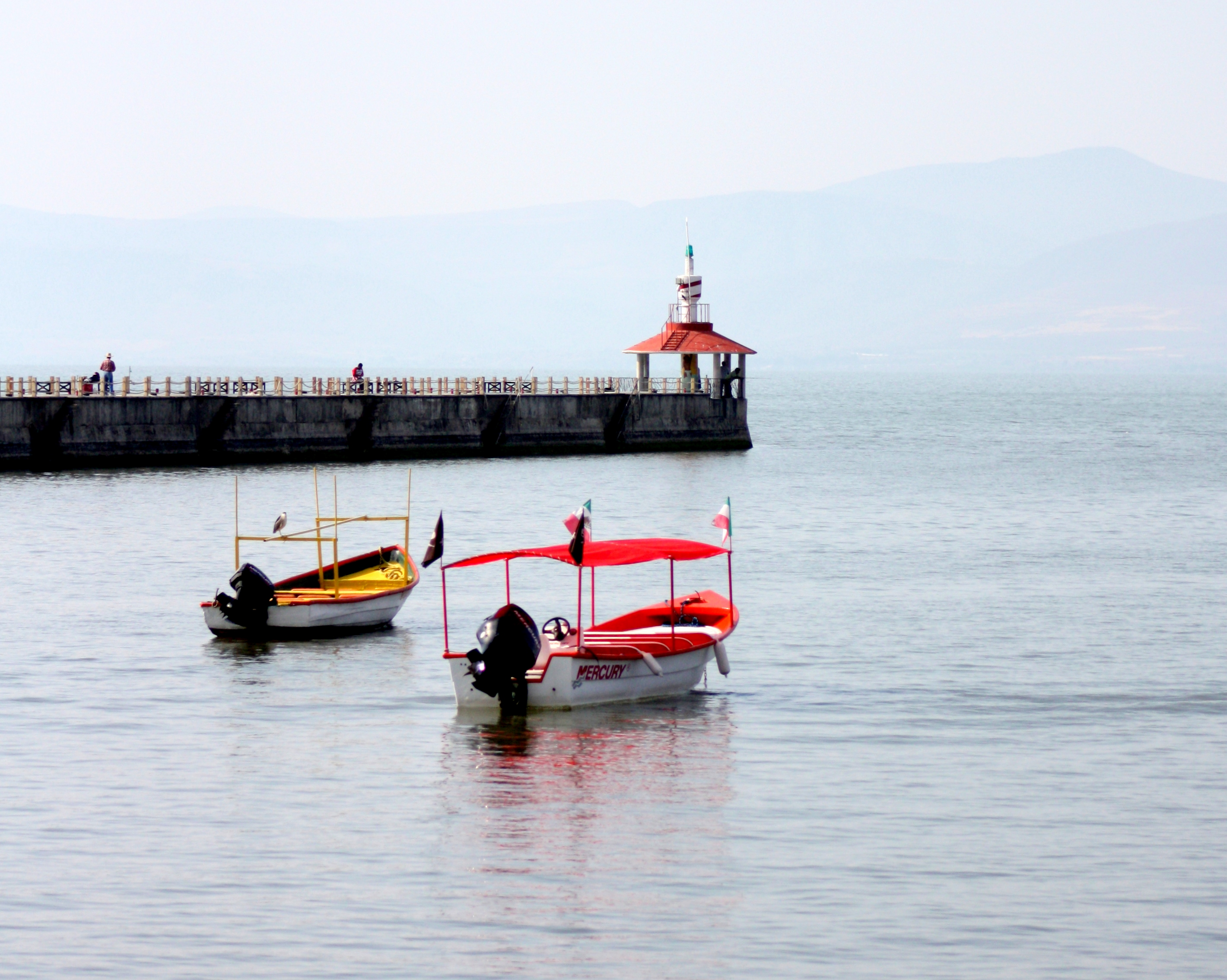
    Fishing boats, Chapala pier


    It’s about fishing boats leaving or returning and alabaster egrets at rest or in flight.

    Egret, Ajijic lakeshore


    It’s about lake currents streaking the water like swirling coffee cream, and the play of the sunlight through the clouds to make shadow puppets against the mountains on the far side.


    Perhaps most importantly, the malecon makes its walkers more alike for the duration of their shared experience than they are different in so many other ways.

    Lakeshore promenade, Ajijic

    Lakeshore promenade, Ajijic

    With a population of over 4 million Guadalajara may only be Mexico’s second largest city, but much of what the world knows of Mexico – including tequila and mariachi music – originates here and in the surrounding state of Jalisco.   Spanish colonial Guadalajara was already 250 years old by the time the U.S. won its independence in 1783, a point made amply clear by the buildings in the city’s historic centro.

    Streetfront, Hotel Mendoza, Guadalajara

    Less than an hour’s drive from Lake Chapala, an el centro tour is eminently walkable, thanks in part to the proximity of many sites to each other and in part to their connection by miles of pedestrian malls and plazas.

    There are a number of good and reasonably priced hotels in the immediate area, but I’ve returned again and again to the Hotel Mendoza, a boutique hotel that’s within 4 or 5 blocks of every site visit planned for this day.

    Lobby, Hotel Mendoza, Guadalajara

    The Mendoza is on a quiet side street with underground parking, and while the typical rooms here are simply done, the public areas exude lots of elegant, Old World charm.

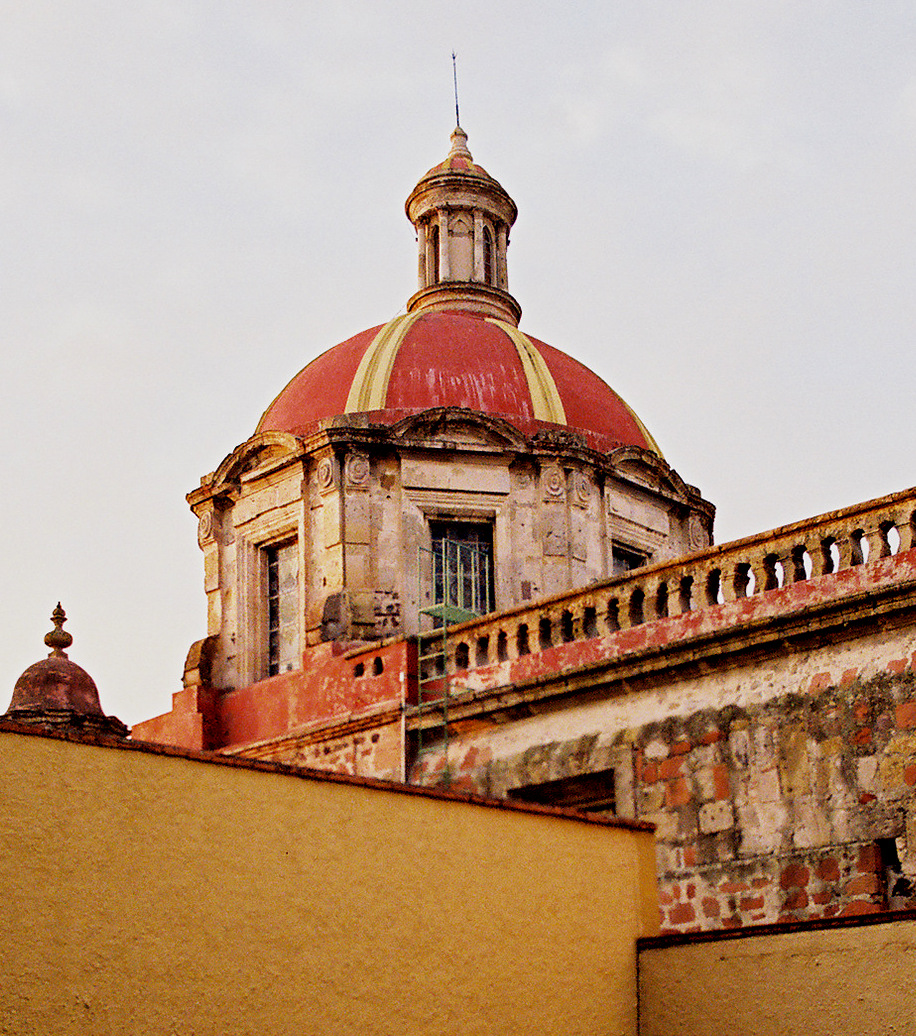
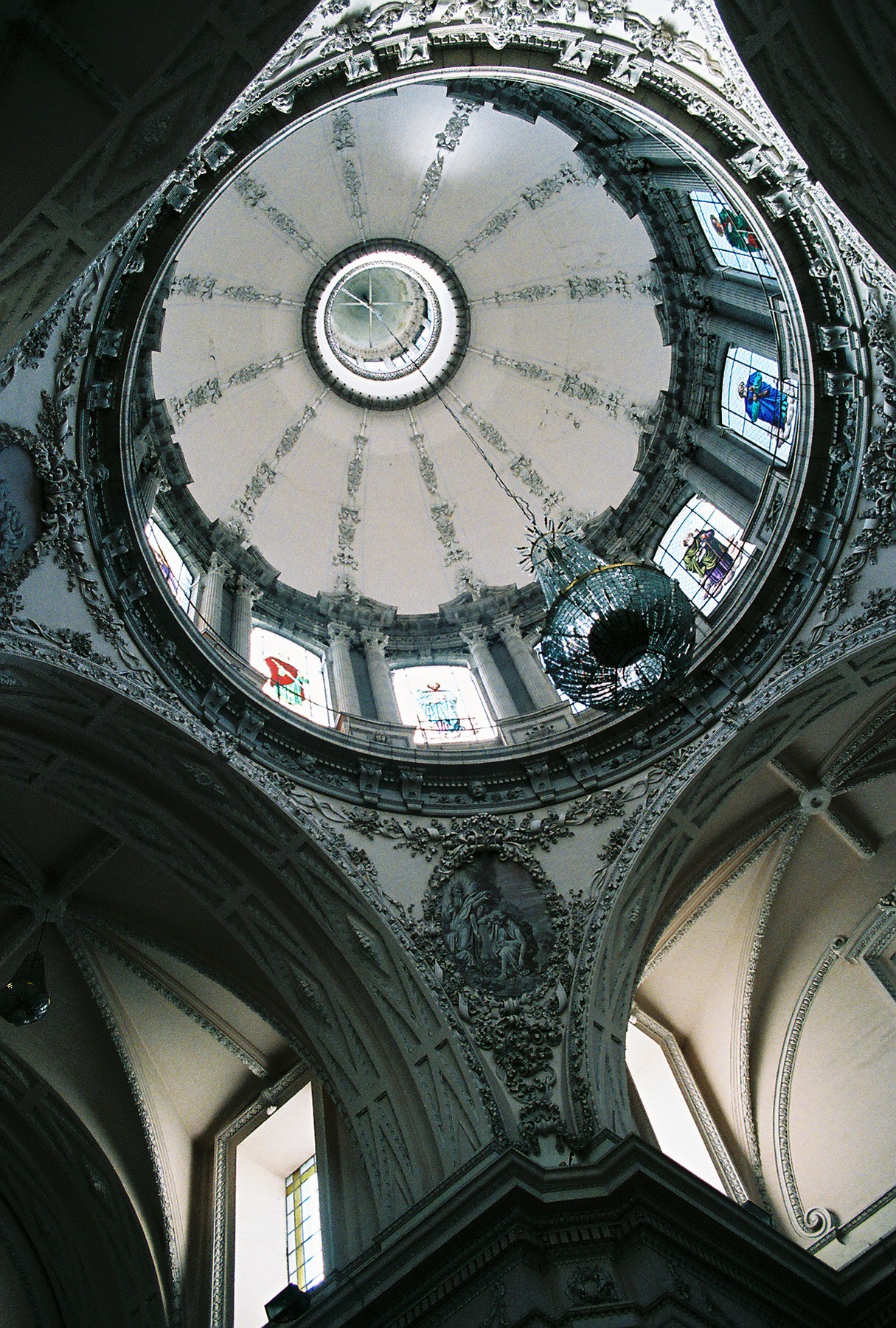
    Dome of Templo Santa Maria de Gracia, Guadalajara


    A small swimming pool sits at the bottom of the Mendoza’s open air atrium, and through my room window facing it I can see just next door the dome of the Templo Santa Maria de Gracia, the day’s first site.


    Templo Santa Maria de Gracia, Guadalajara


    The simple style and modest scale of the Templo stands in sharp contrast to its younger successor, Guadalajara’s mammoth Catedral, which sits only a couple of blocks away.

    Templo Santa Maria de Gracia, Guadalajara


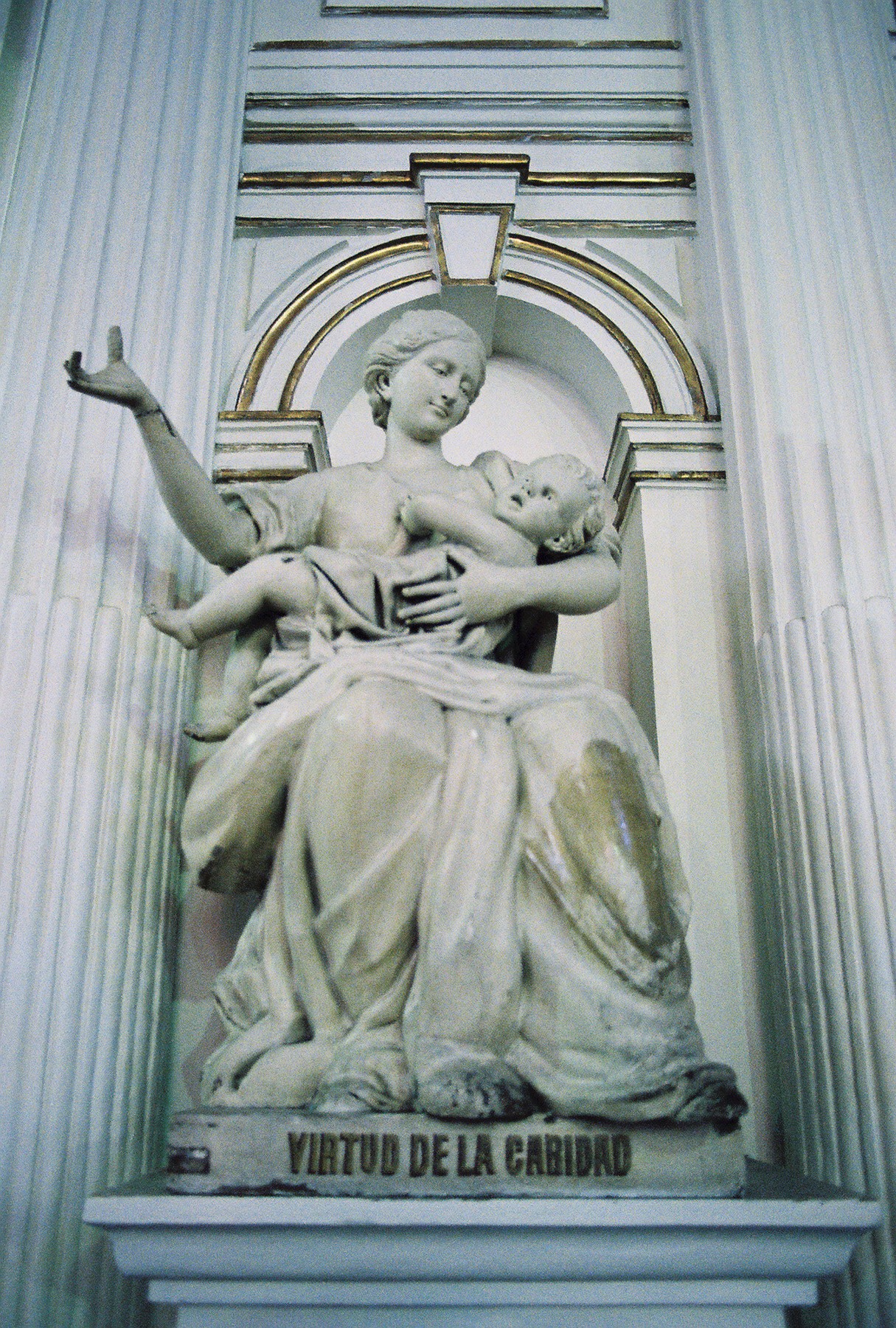
    The combination creates an intimate setting that makes Santa Maria a favorite site for local weddings, and many of its icons project an almost whimsical style.
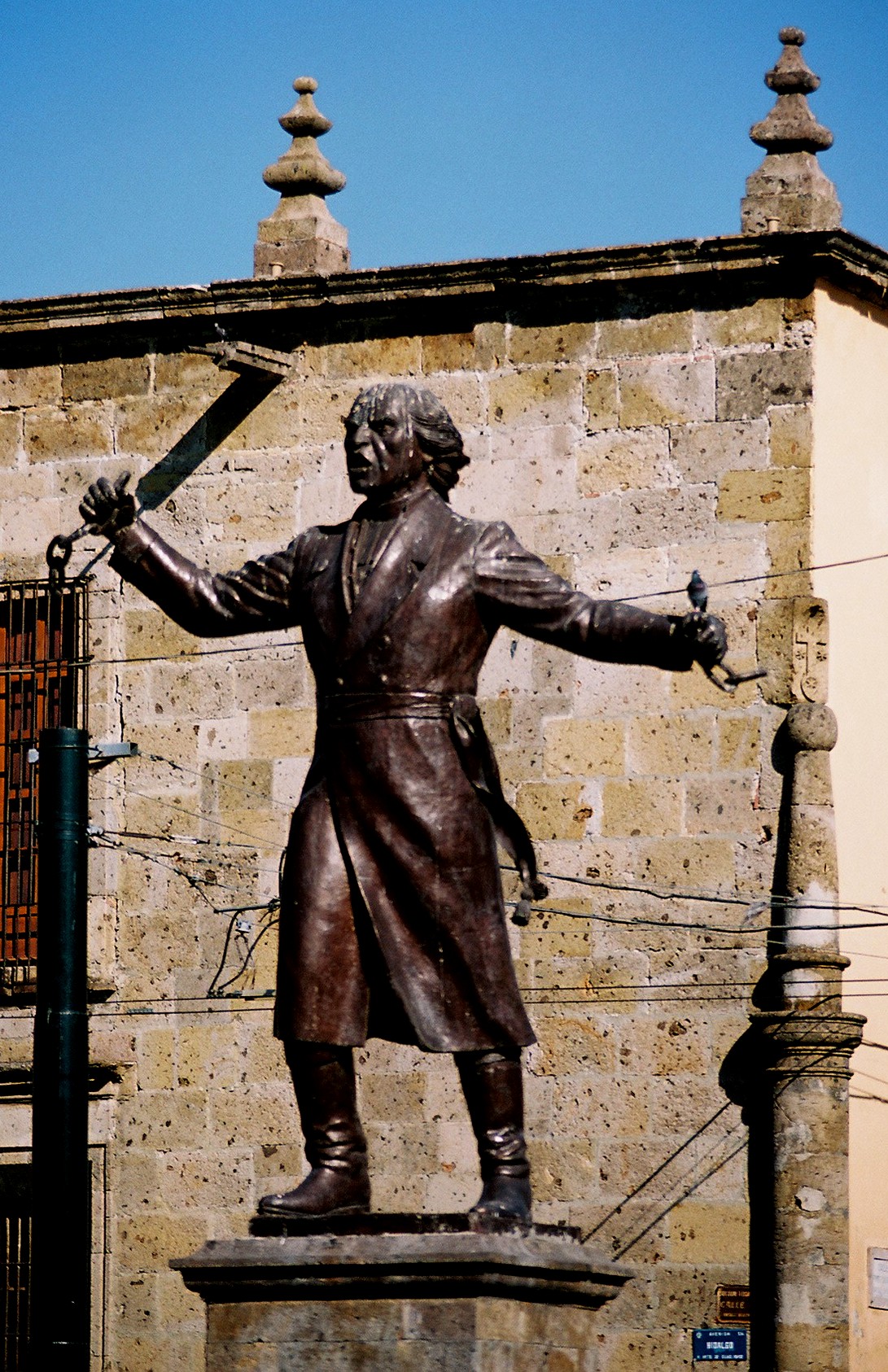
    Father Hidalgo, Plaza de la Liberacion, Guadalajara


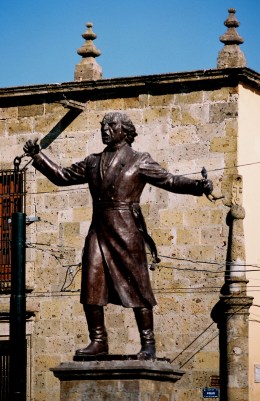
    Santa Maria de Gracia is adjacent to the expansive Plaza de la Liberacion, where the requisite statue of Father Miguel Hidalgo stands eternally forming the words to the Grito, the call that sparked Mexico’s fight for independence.

    It’s a cry which is ceremonially repeated by every Mexican president on Mexico’s Independence Day.

    (If you’re here on a day trip, there’s a pay parking garage underneath the Plaza.)
    Catedral, Guadalajara


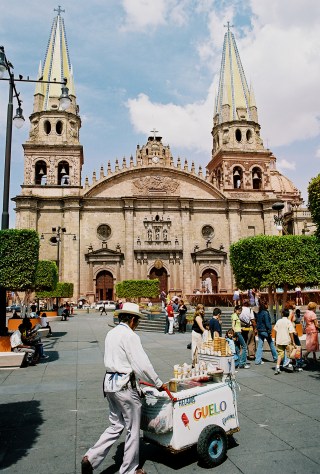
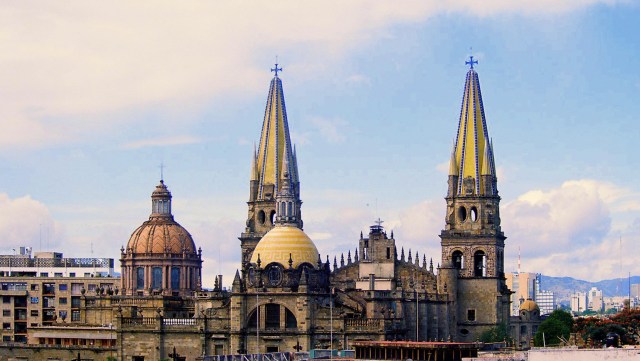
    Guadalajara’s signature Catedral sits at the far end of the plaza.

    As with many other Mexican cathedrals, the blocks at all four compass points around it are occupied by public spaces, a legacy of the expropriation of church lands that at their height accounted for up to one-fifth of all Mexican landholdings.


    The Catedral is so massive that only a view from the rooftop deck of the Mendoza can take it all in.   The front view which showcases the two towers is an icon reproduced endlessly throughout the city.
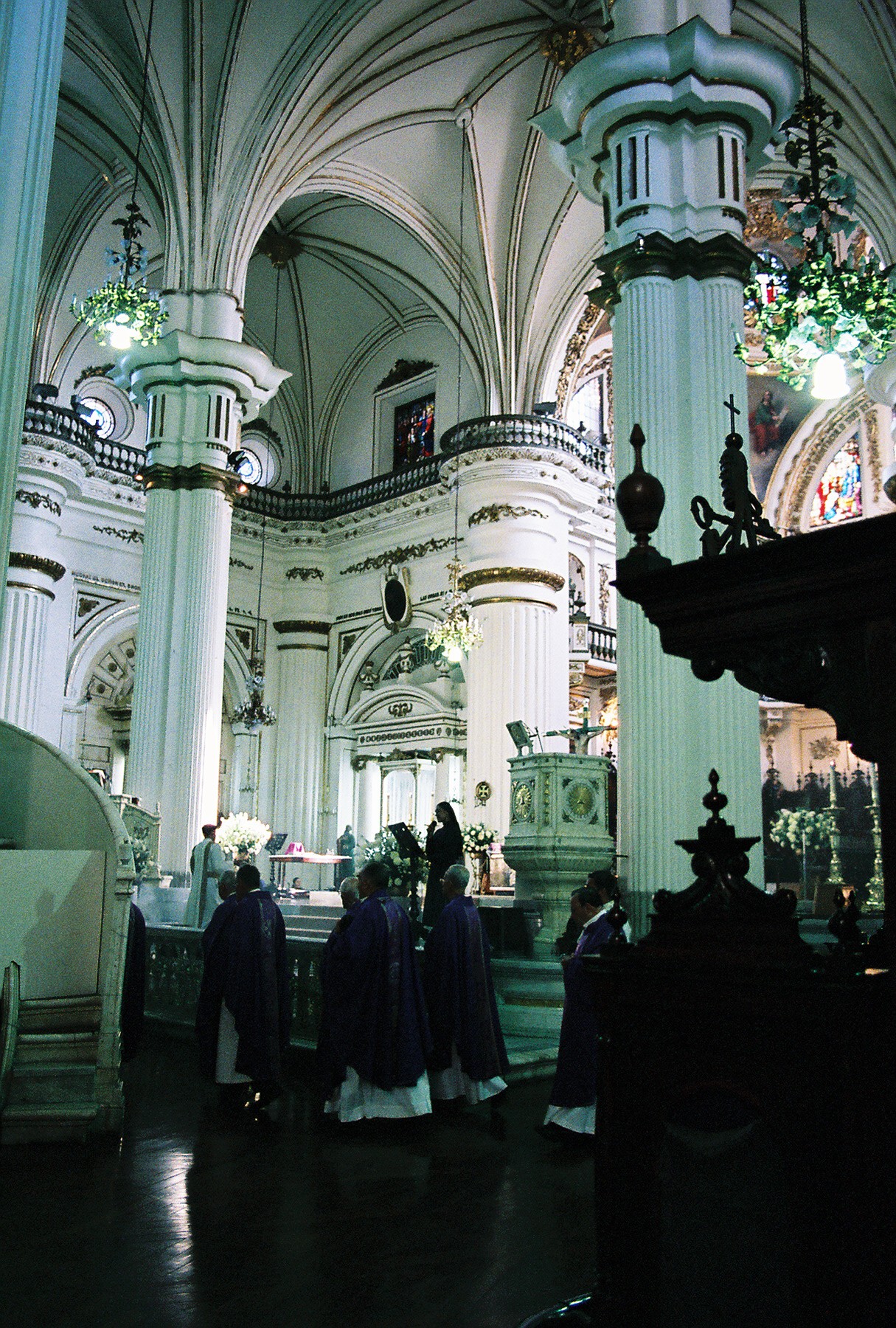
    Catedral, Guadalajara

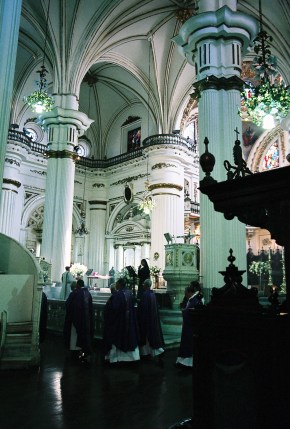
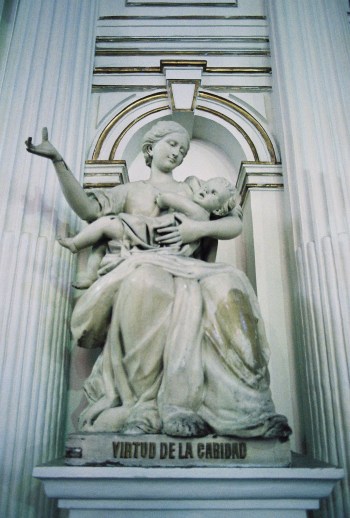
    The design and workmanship of this place evokes that of its European contemporaries so thoroughly that it could just as easily be located in Italy or Spain.
    Catedral, Guadalajara

    Catedral, Guadalajara

    It’s worth it not only to walk its entire length and breadth, but to sit for a while in one of the pews and soak up the atmosphere.
    Catedral, Guadalajara

    Catedral, Guadalajara

    A block from the Catedral to the northeast lies the Rotonda de Ilustres Hombres monument, a tribute to Jalisco’s favorite sons. Their statues guard the circle of columns. The subsequent addition of female honorees has led to a gender-neutral renaming of the monument as the Rotonda de los Jaliscienses Ilustres.

    Rotonda de los Hobres Ilustres
    Teatro Degollado (on right), Catedral (in distance), Guadalajara

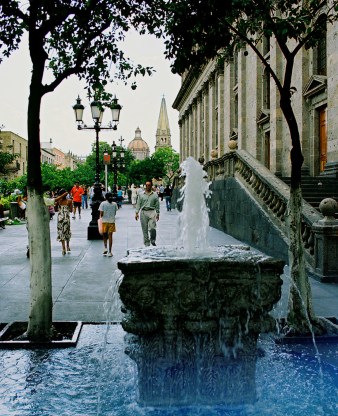
    The Rotonda pocket park is a tranquil setting, and a good place to give your feet a rest before returning one block to the Plaza de la Liberacion. where the Teatro Degollado sits directly opposite the Catedral.


    The Degollado is a gem of an opera house that was dedicated in 1866 and has been renovated several times since.

    Teatro Degollado, Guadalajara

    The neoclassical façade is striking, but a beautiful stained glass dome makes a daytime visit to the interior a must.

    Teatro Degollado, Guadalajara

    The pedestrian mall continues eastward behind the Degollado (check out the great tableau sculpture which runs at street level for the entire length of its back side), leading toward the ever-present profile of the Hospicio Cabanas, and lined with shops, street vendors, and street performers.
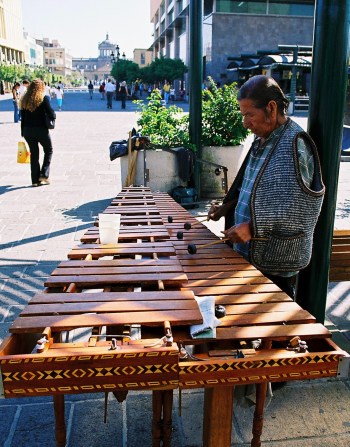
    Pedestrian Mall to Plaza Tapatio, Guadalajara

    On the way I stop for lunch at Restaurante La Rinconada.  The food is good, but the setting is even better. It’s full of Old World panache, and the bar is a classic with a view out onto the street.
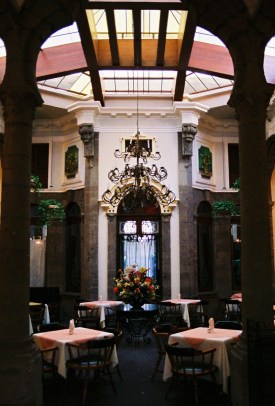
    Restaurante La Rinconada, Guadalajara

    The Hospicio Cabanas is now a museum which houses the giant-sized works of Mexico’s famed muralist, Jalisco-born José Clemente Orozco, but has served a number of functions over its nearly 200 year history, including that of hospital and orphanage. Orozco and his work deserve their own dedicated blog post, but the work speaks for itself and the admission charge is modest.
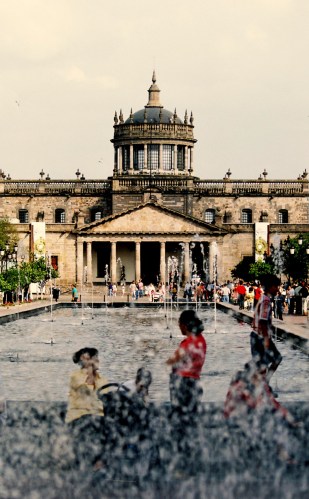
    Hospicio Cabanas, Guadalajara

    The Hospicio Cabanas sits on the edge of the Plaza Tapatio, a huge plaza under which passes the busy Calzado Independencia thoroughfare.

    Plaza Tapatio, Guadalajara


    Plaza Tapatio, Guadalajara

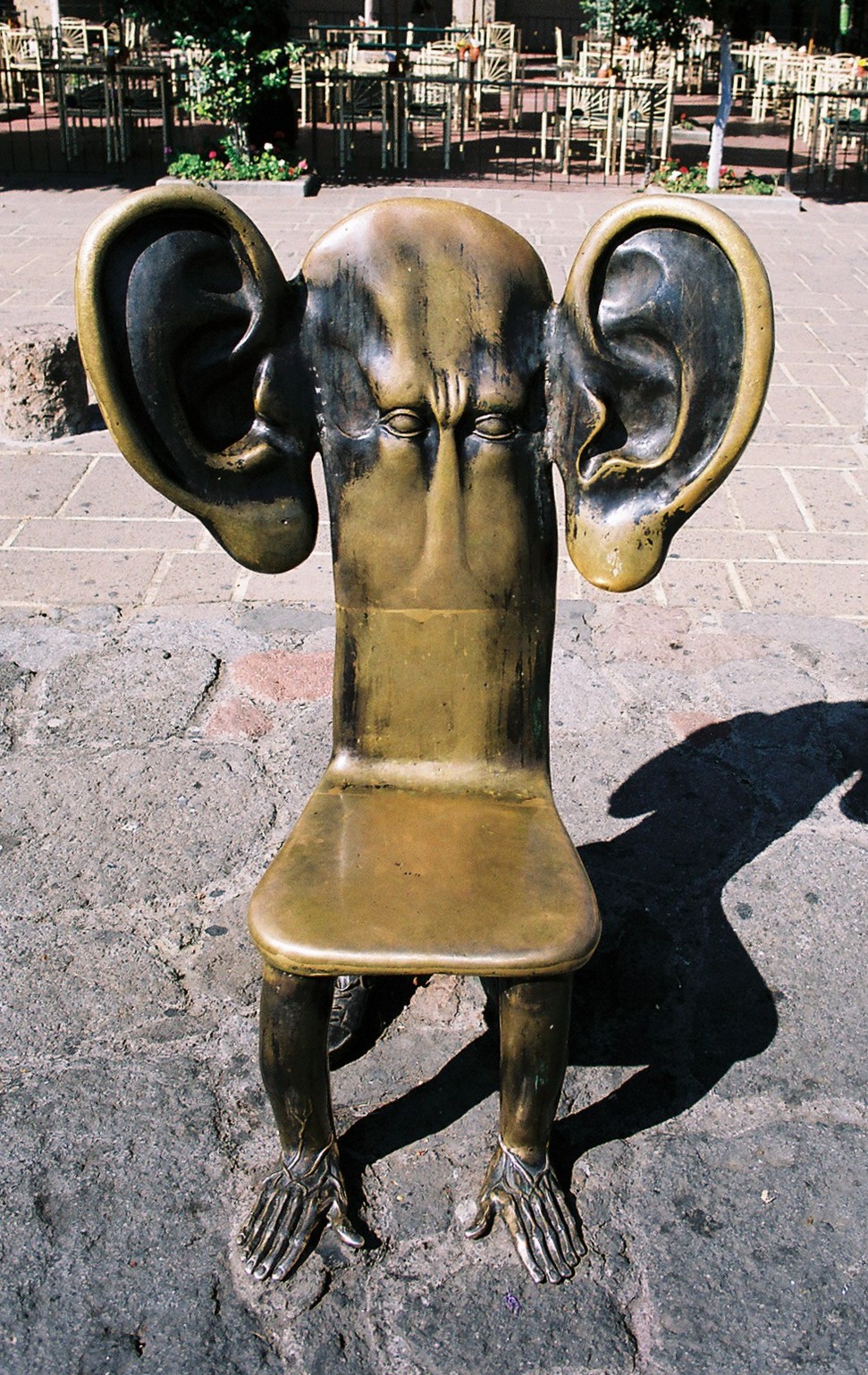
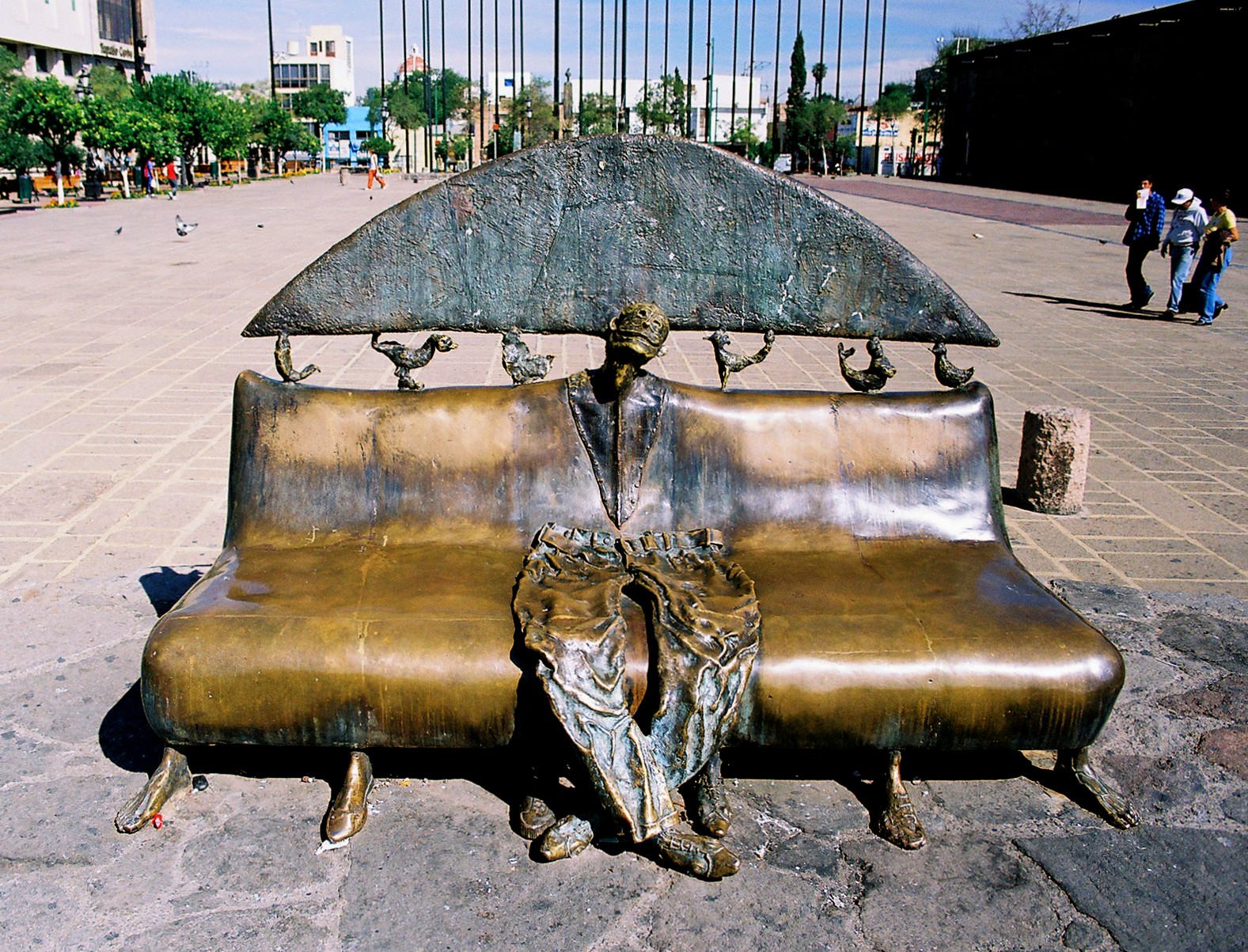
    Contemporary sculptures in bronze cast eerie shadows over the landscape.

    Plaza Tapatio, Guadalajara


    If you wish to walk further, the Plaza Tapatio is within a block of the San Juan de Dios jewelry mart and the sprawling Mercado Libertad (See my separate post.)

    La Fonda de San Miguel, Guadalajara

    For dinner I’ve chosen La Fonda de San Miguel, which turns out to be a bit hard to find because the courtyard restaurant has almost no street-facing presence, and is reached by a short corridor.

    At one time a convent, its rooms have been converted into a B&B.  It’s an intimate setting, and a nice break from the sounds of the street.
    On the way back to the hotel I pass sites seen earlier in the day and find them much to my surprise surrounded by animated crowds enjoying the cool evening and magnificently lighted structures.

    The Catedral, the Rotonda, and the Teatro all glow magically in the night air.

    Catedral, Guadalajara
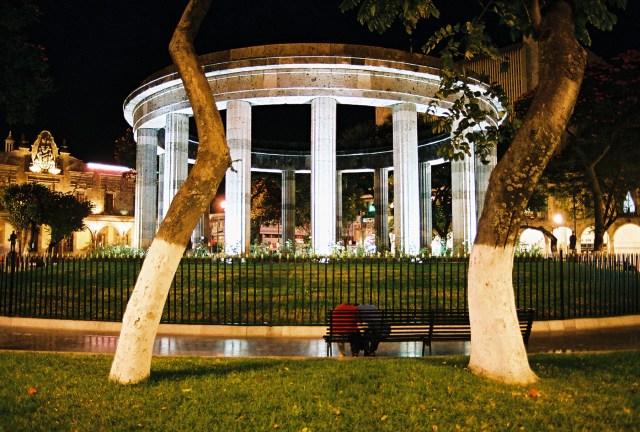
    Rotonda des los Hombres Ilustres, Guadalajara


    Teatro Degollado, Guadalajara

    Teatro Degollado, Guadalajara

    I pass through the hotel lobby I carry with me a memory of an outstanding day, and the knowledge that today’s sites are only the tip of the Guadalajara iceberg.