Latest Entries »

Barbados’ great houses

Plantation great house, Barbados

The historical plantation great houses of Barbados are peepholes into the lifestyles of wealthy sugar cane planters who dominated the island’s commerce, culture, and politics for nearly 300 years.

Plantation great house, Barbados

Country lanes may cut through fields of sugar cane rather than English hedgerows, but formal gardens and Georgian architecture indelibly mark the tropical countryside as indisputably British.


Great house formal garden, Barbados
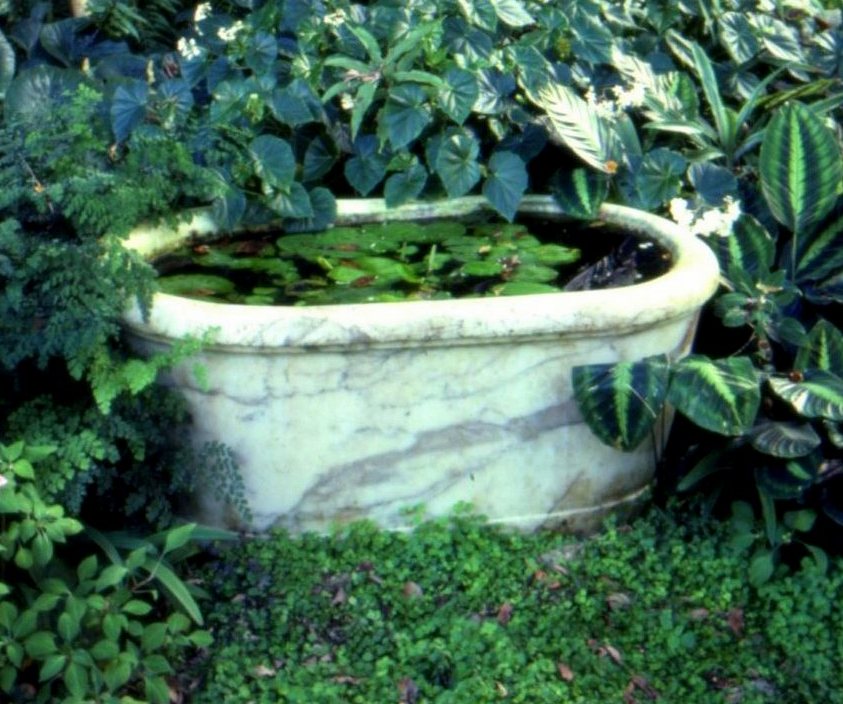
Marble tub in a great house formal garden

The British settled Barbados not long after the Pilgrims landed at Plymouth Rock and the introduction of sugar cultivation soon after transformed Barbados into the British Empire’s primary sugar exporter and the jewel in its colonial crown.   Cane juice extracted by grinding mills was shipped to Britain for refining and British capitalists arrived to assemble large sugar plantations from landholdings of smaller farmers, many of whom were relocated to the fledgling American colonies.

The prosperity fueled by this “white gold” continued into the early part of the twentieth century until the widespread adoption of less expensive beet sugar finally upended the plantation economy.
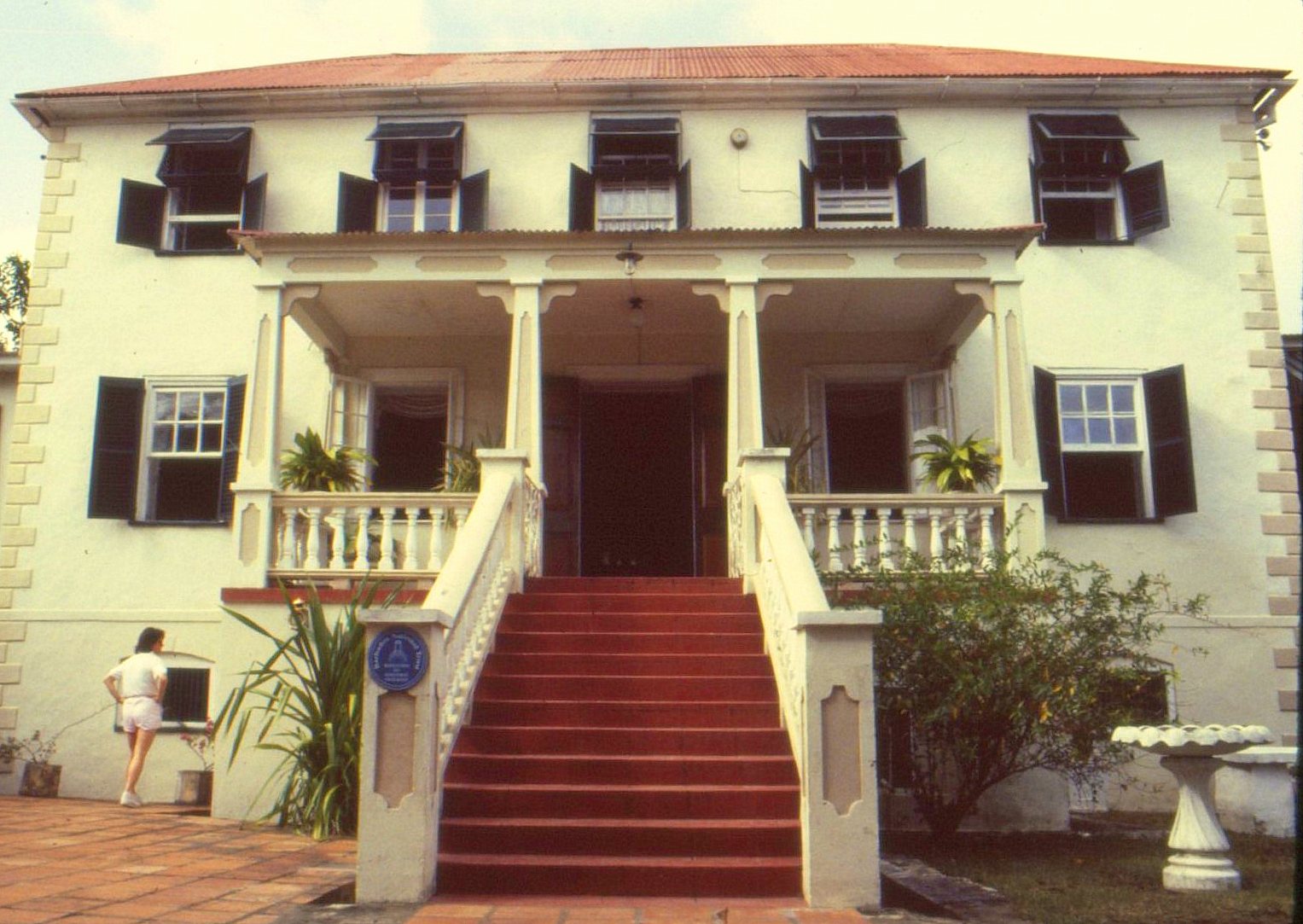
Sunbury plantation great house, Barbados

Among the most notable of the plantation great houses is Sunbury, which was built in St. Philip’s Parish around 1660 by one of the island’s first settlers.
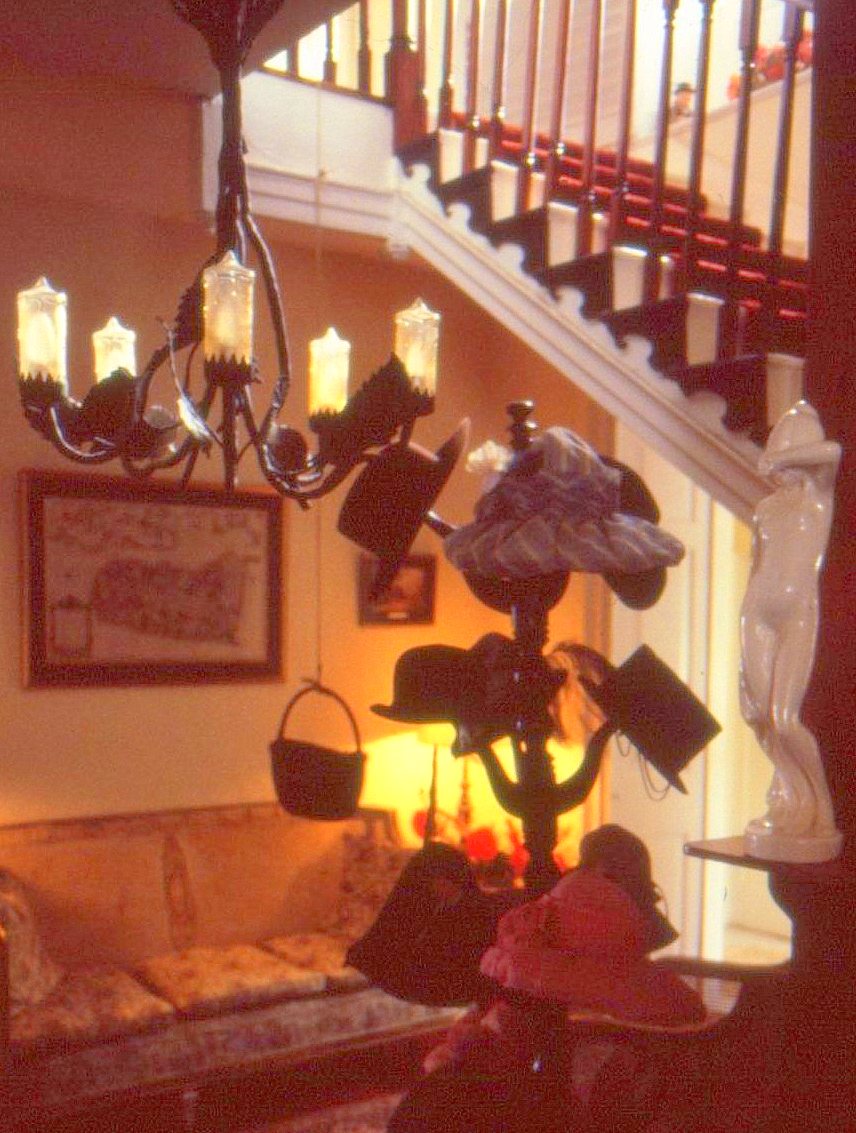
Sunbury plantation great house, Barbados

Its ownership has passed through seven families, and the house has survived not only a hurricane in 1780 that likely removed much of its roof, but also damage sustained during the slave rebellion of 1816 and a fire in 1995.
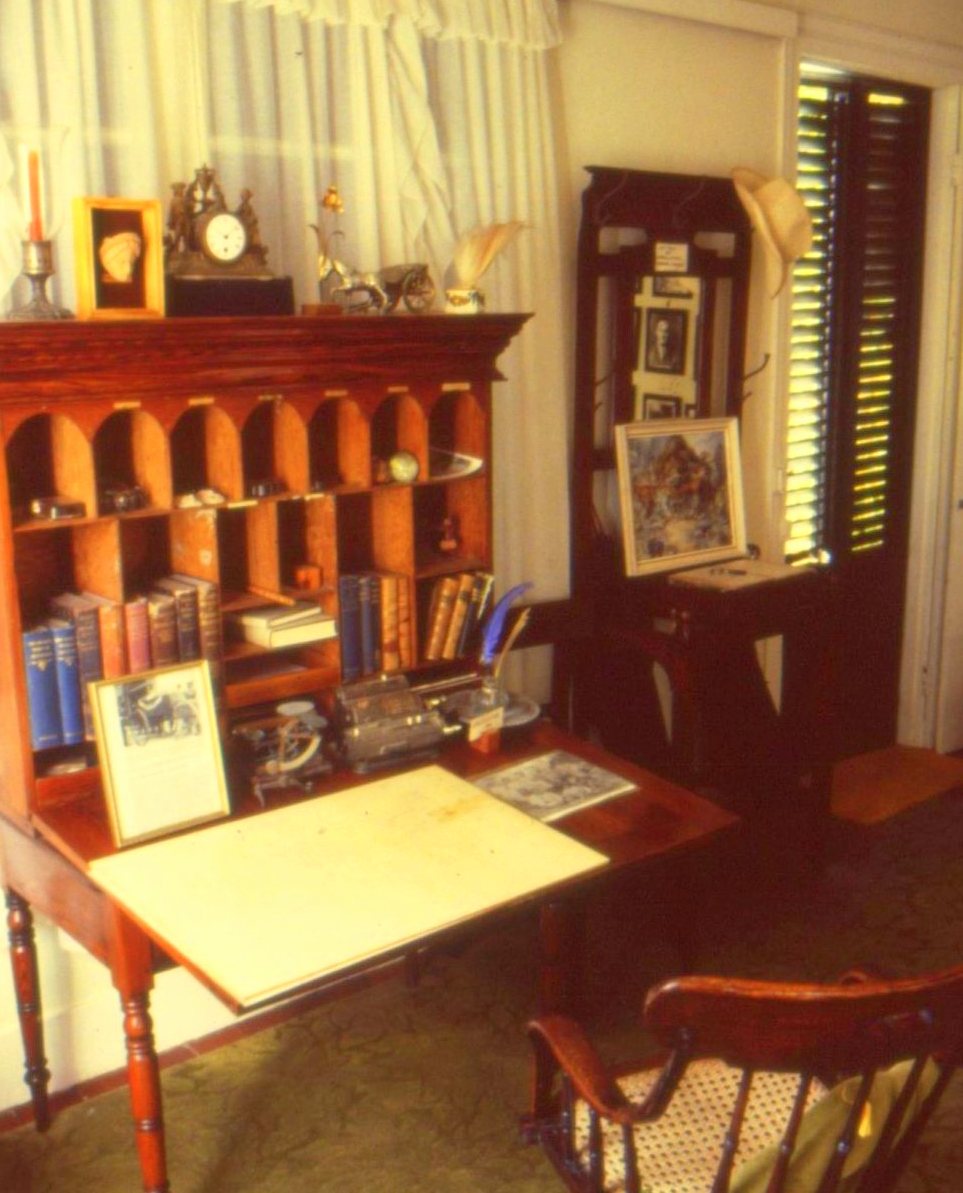
 

Sunbury plantation great house, Barbados

Furniture destroyed by the fire was replaced from other collections and items made available for purchase by numerous Barbadian families, and Sunbury House now houses one of the country’s best collections of antiques.

Sunbury plantation great house, Barbados

The casual elegance within its rooms exudes the tastefulness of old money that ably evokes the feeling of a homeland half a world and centuries distant. The house is spacious and rambling.

Sunbury plantation great house, Barbados

Bright tropical sun floods through windows open to trade winds that keep it remarkably comfortable.  Furnishings in many of the rooms seem to freeze them in the moment that the plantation finally ceased operations.

Sunbury plantation great house, Barbados

In other rooms the furnishings reach back into the days before running water.


Sunbury plantation great house, Barbados

The antiques here include not only furnishings, but items used in daily domestic life and machinery used in the last century to cultivate the land.

Sunbury plantation great house, Barbados

Such authenticity leaves a sense that the owners have stepped out for a short while, to return at any moment.

Sunbury plantation great house

I found it hard to wander through these rooms without an acute awareness that the wealth they reflect was built on the backs of slaves who early on replaced English indentured servants in performing the labor-intensive process of sugar cultivation and harvesting.

By the time Parliament abolished slavery in 1833, more than 200 slaves worked the Sunbury plantation.

Unlike in the U.S., their full emancipation was preceded by 6 years of apprenticeship and their owners were compensated by the government.  As in the U.S., many of these freedmen and their descendants continued to work the land until mechanization displaced most of them.

Sunbury plantation great house, Barbados

At its peak, the sugar industry cultivated 80% of Barbados’ arable land and accounted for 90% of its export revenue.  Today tourism accounts for nearly half of the nation’s foreign exchange, and my trip so far still leaves lots yet to see.

Watch next for an account of my visit to the Mount Gay Barbados rum distillery!

Until then, check out my related post, Basking In Barbados, for a look at more of this engaging island.
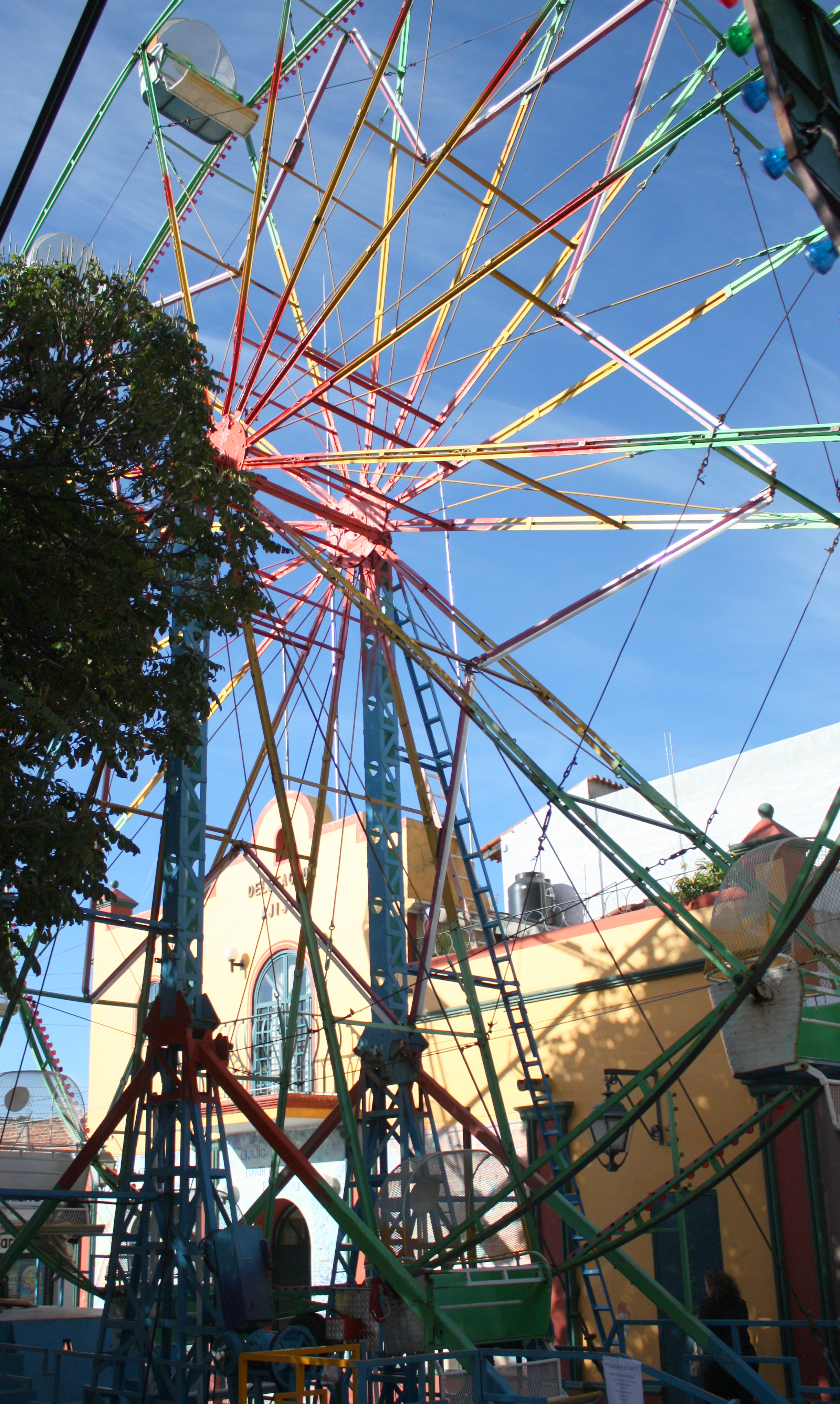

Ferris wheel looms over the municipal Delegación building

The Tuesday sun is not long risen and there’s a slight chill in the air as I walk into the village over cobblestone streets.

On other weekdays I would be passing workers headed to their jobs and schoolchildren on their way to class, but this day is different.

Carnival ride awaits the start of Fiesta

Here in Ajijic it’s the day before the beginning of the fiesta patronale – the patron saint Fiesta de San Andres, and as I turn toward the plaza the street is already blocked by waiting carnival rides.

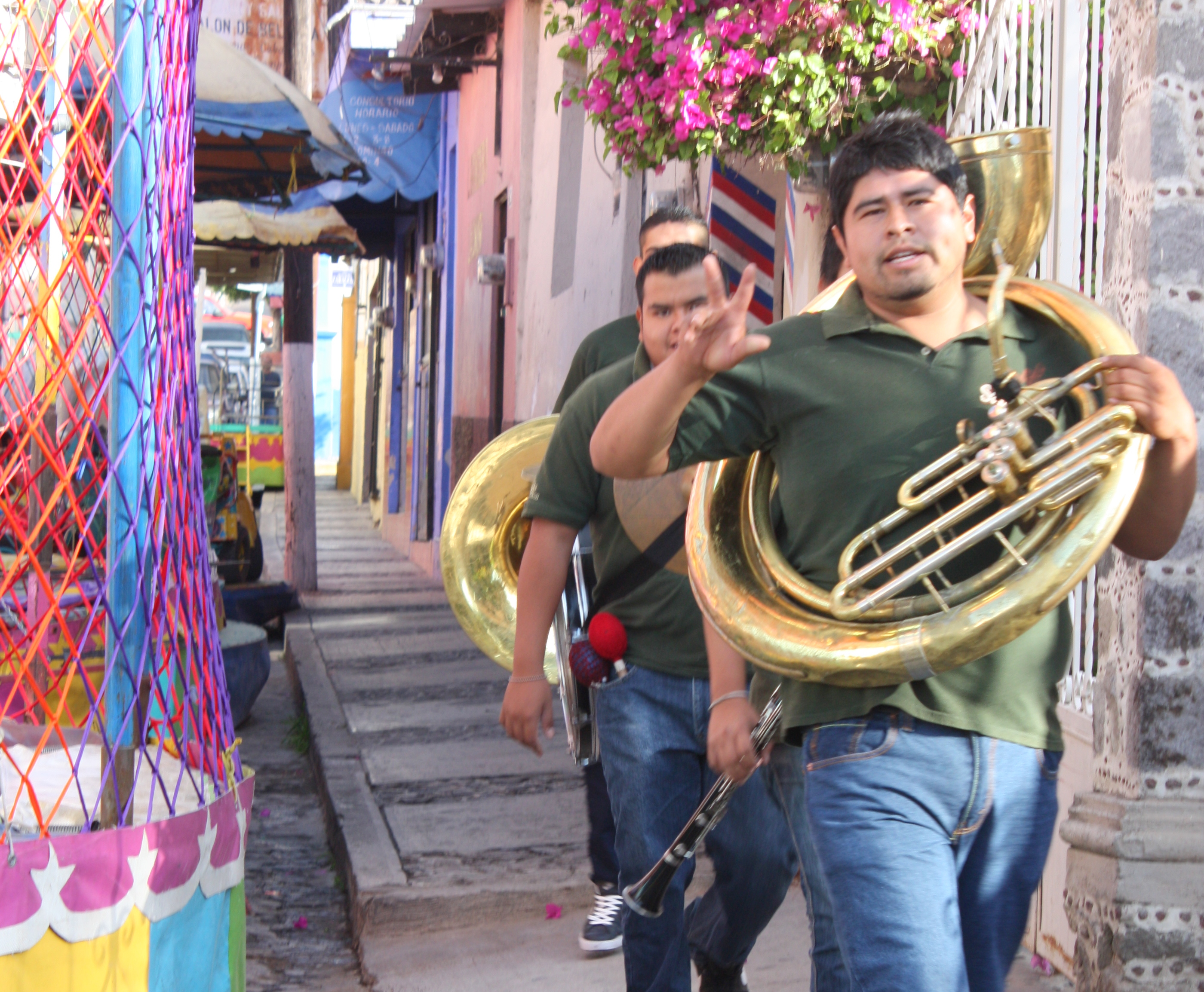
Band member rush to meet the parade

It’s also the 112th anniversary of the start of the Mexican Revolution… the Dia de la Revolución.

A trio of bass band musicians passes me hastily, rushing toward the Revolution Day parade assembly point, which stretches for several blocks at the eastern end of the village.

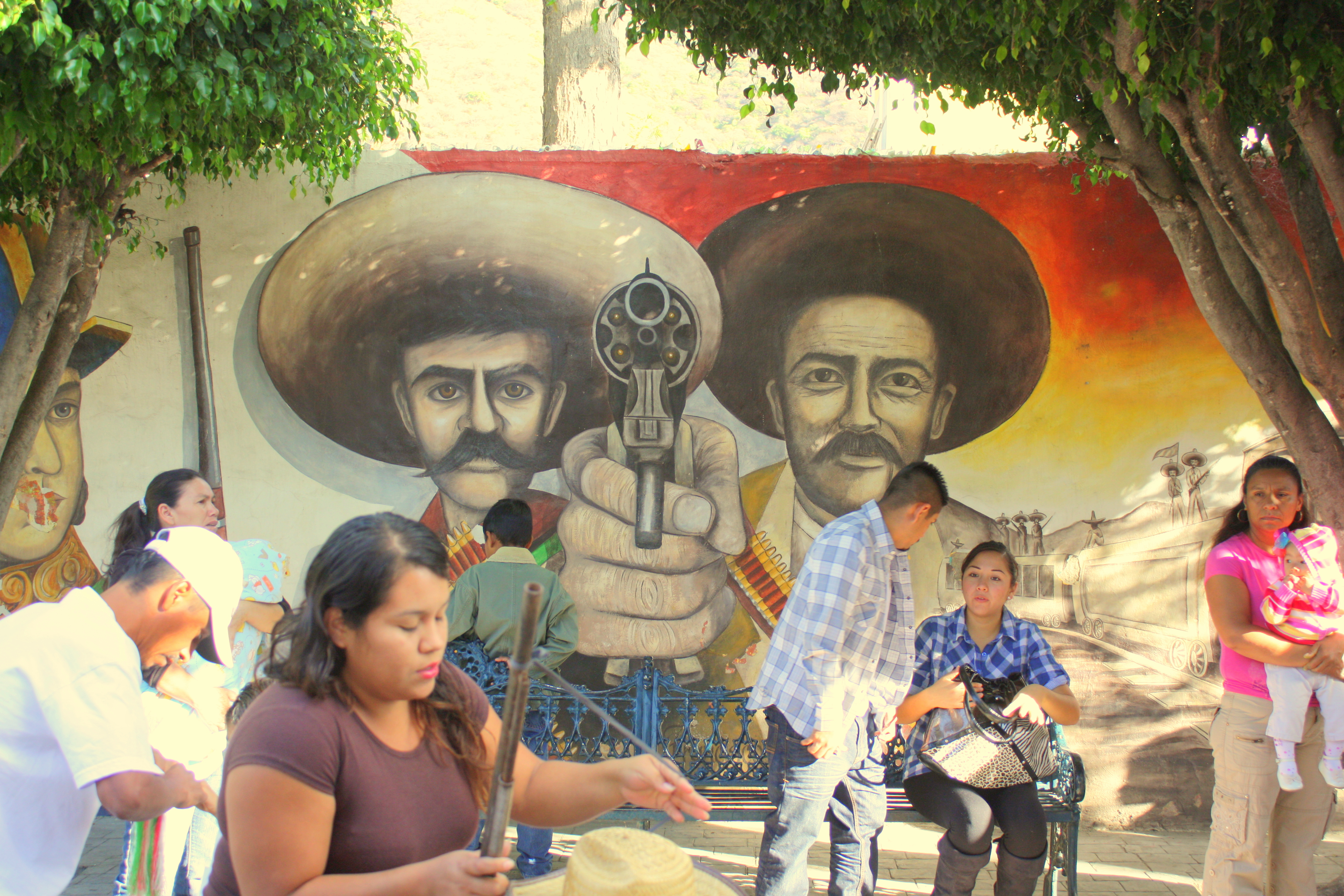
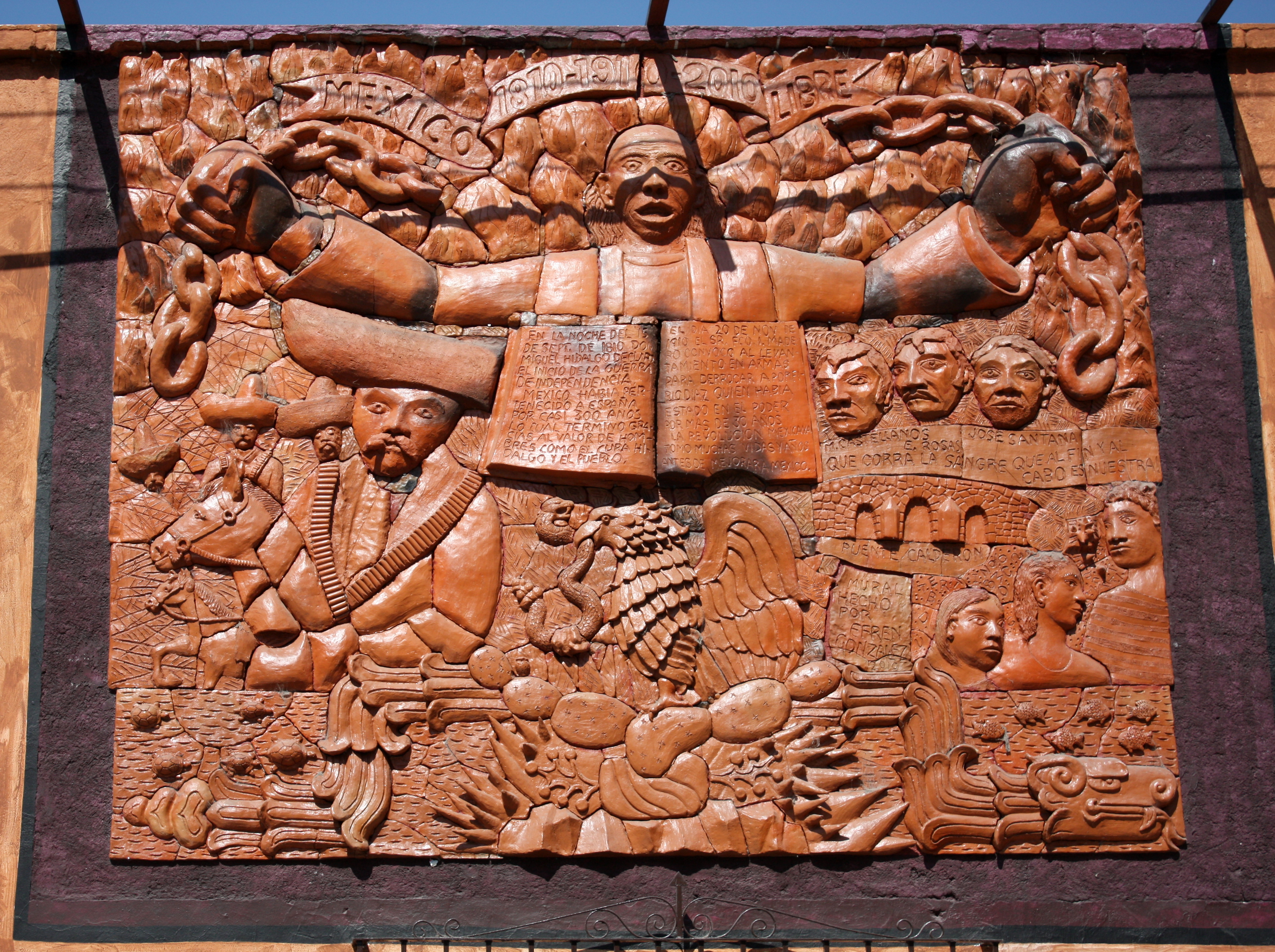
I follow them through the plaza past a mural that celebrates the Revolution.

Wall mural of Revolutionary heroes just off the Plaza

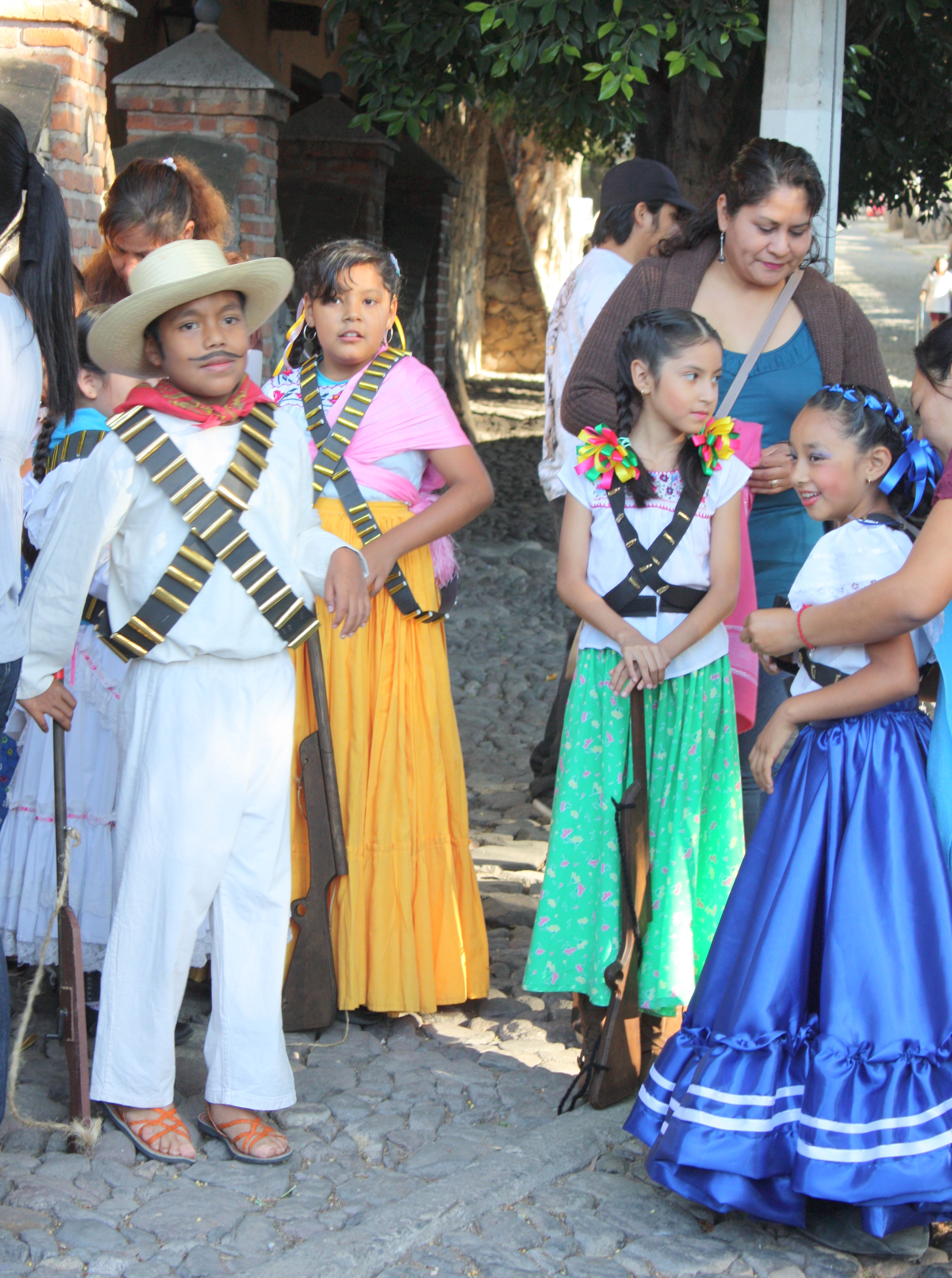
Costumed children awaiting the start of the parade

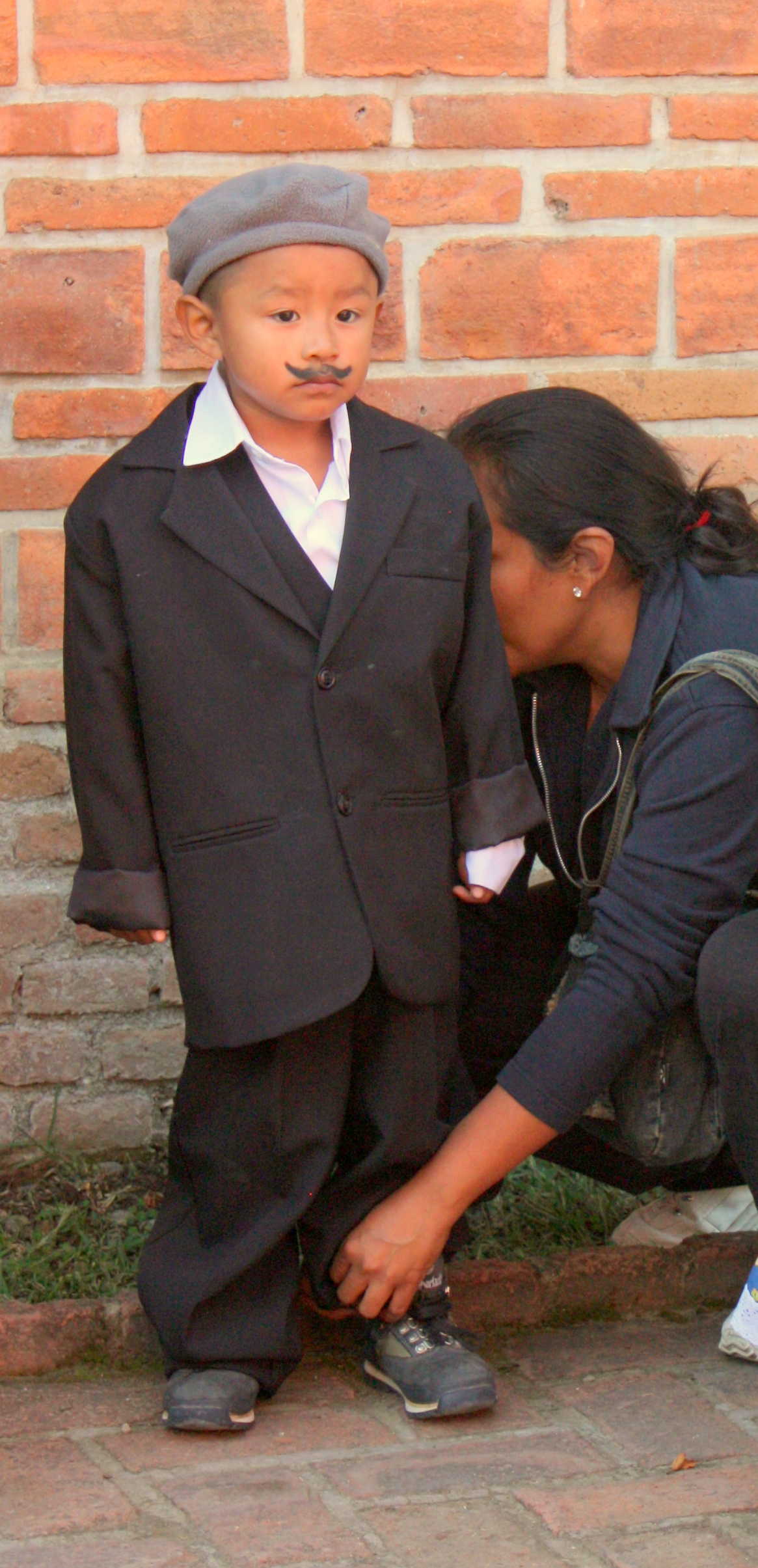
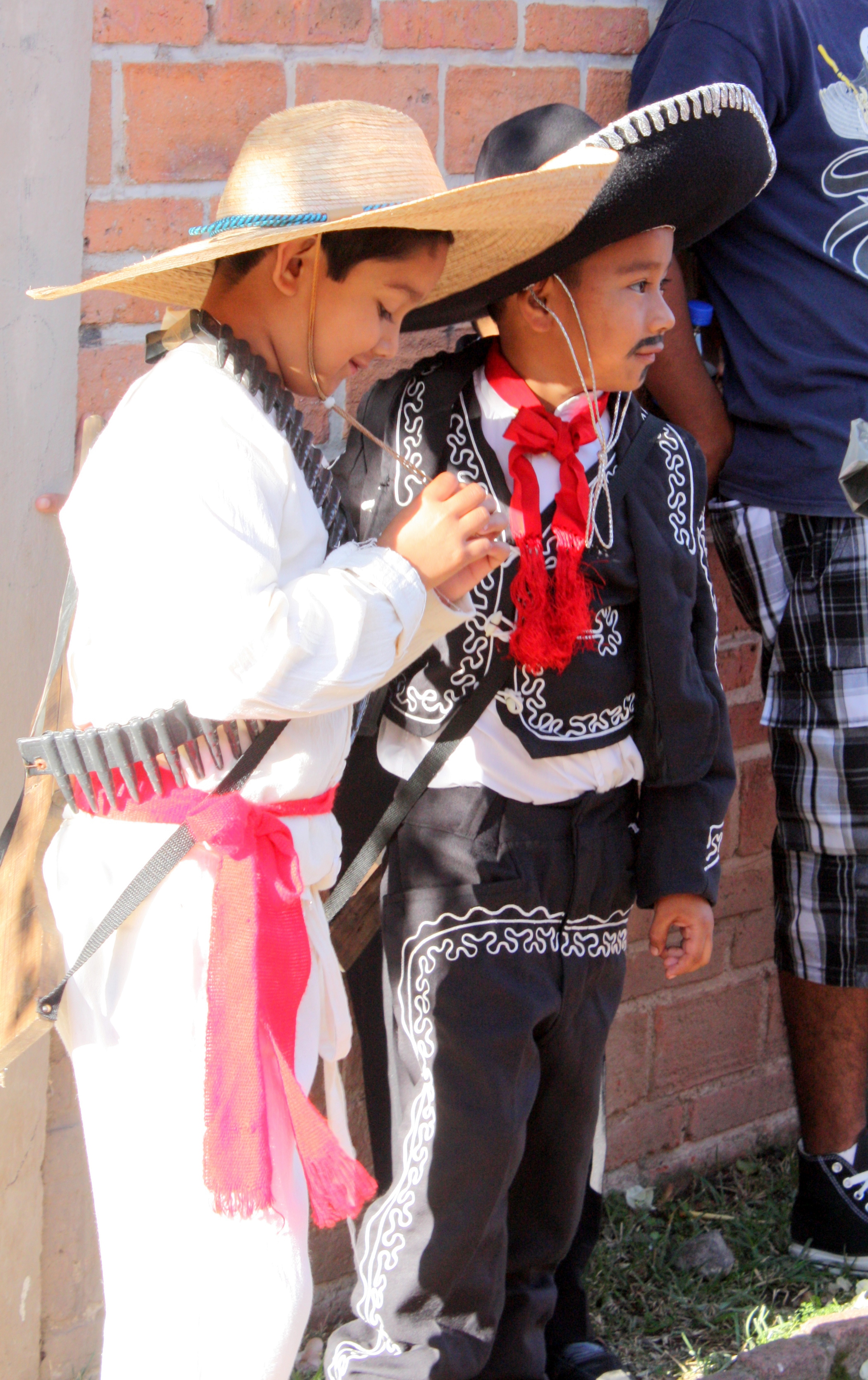
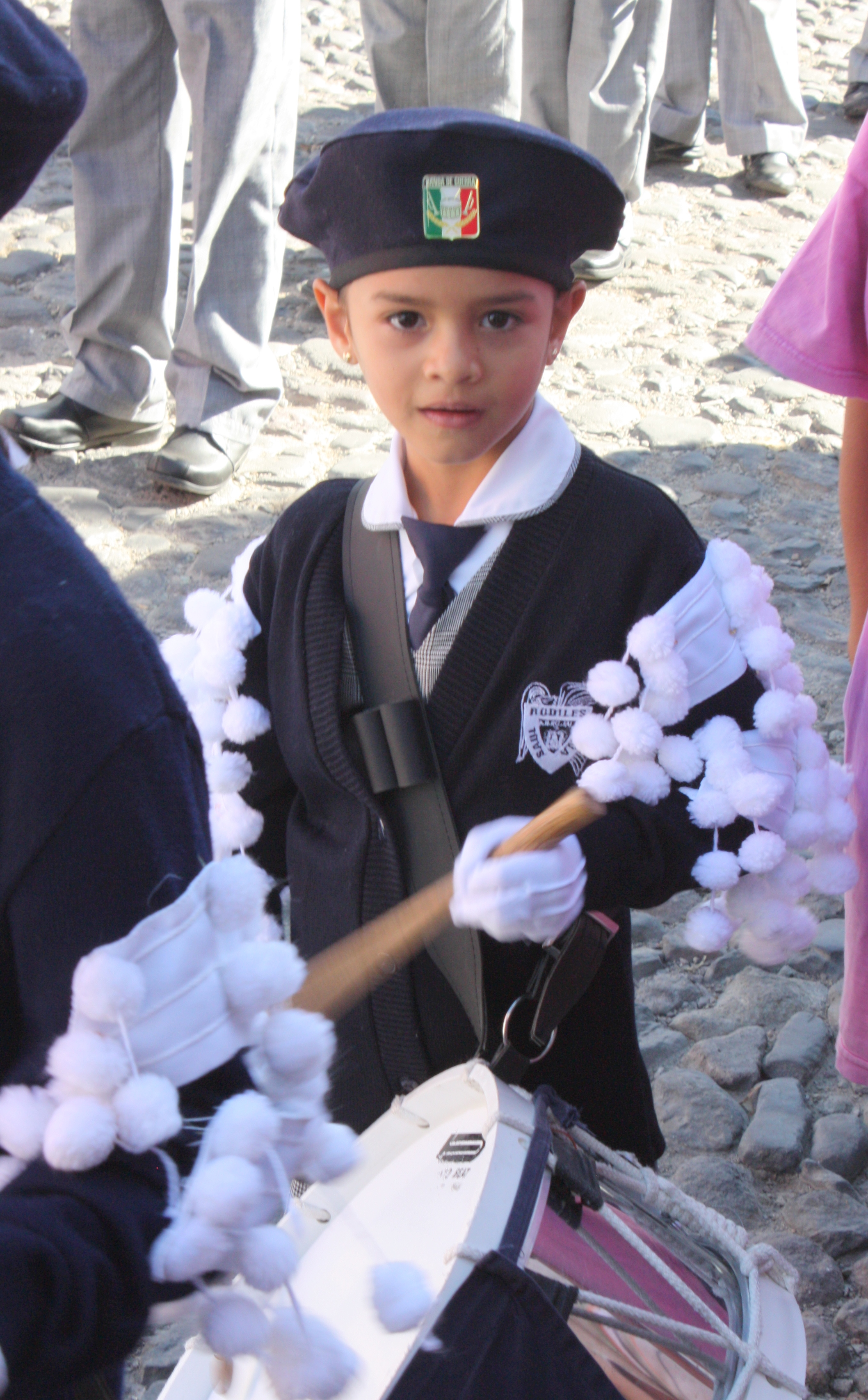
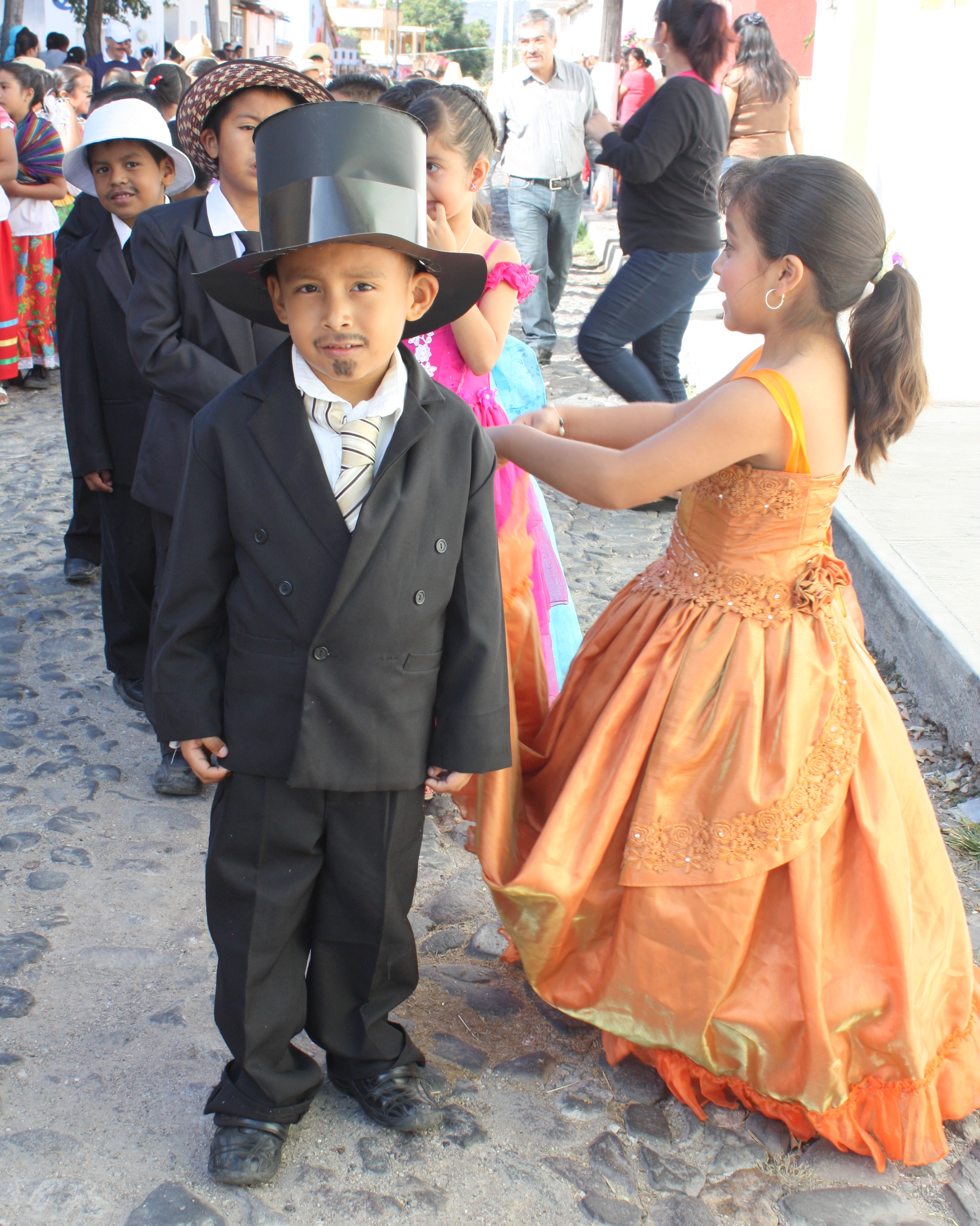
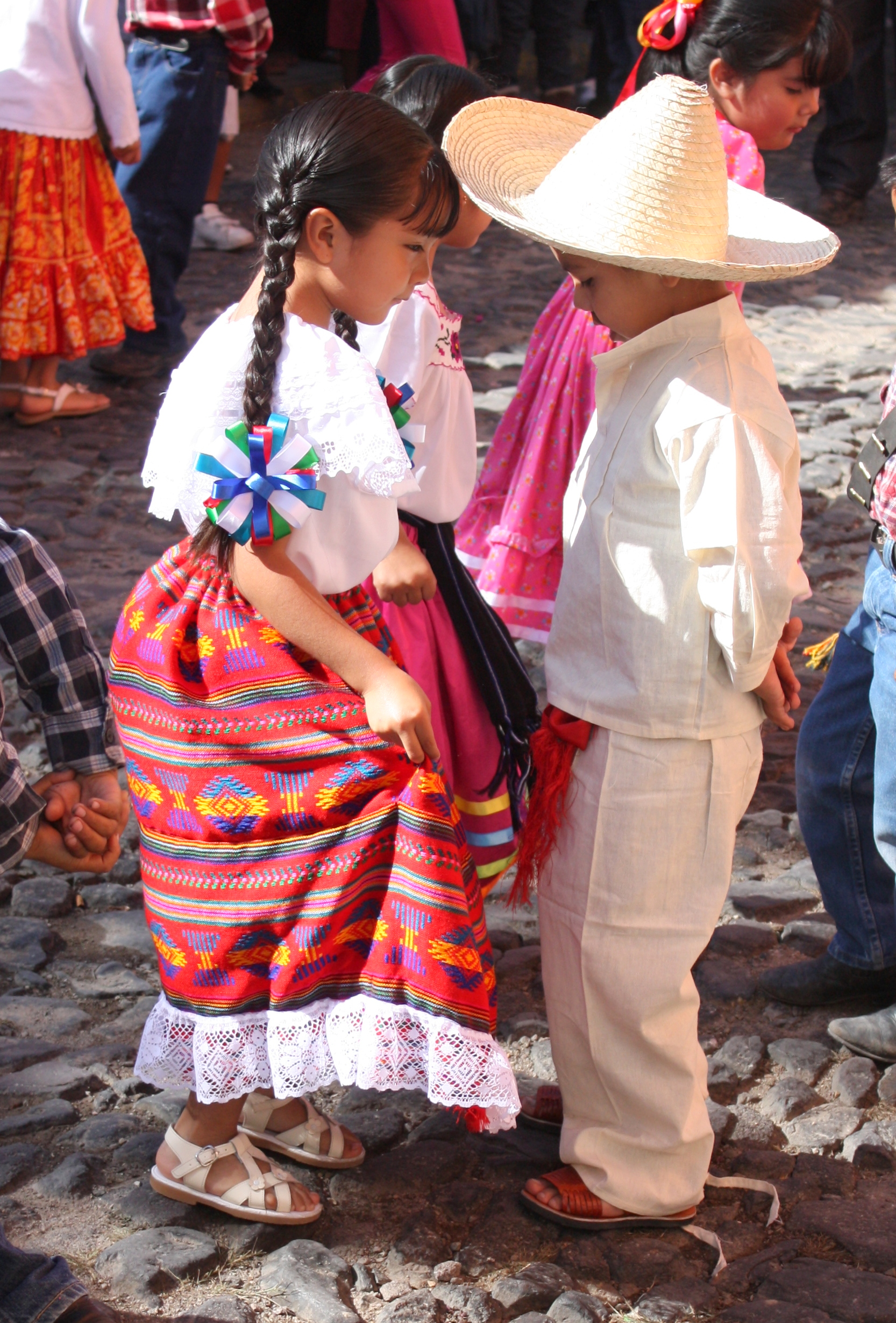
Milling about the parade’s starting point are hundreds of children in costumes ranging from drum-and-bugle corps to heroes of the Revolution, and parents everywhere are making last minute adjustments to fidgeting ninos.

A mother makes last minute costume adjustments

The scene gives me pause for reflection.  American independence, the American Revolution, and the framing of the U.S. constitution unfolded as a virtually unified event spanning only 13 years.  In Mexico these events occurred separately over more than a century, the outcome of each many times cast into doubt.

Two costumed boys pass time before the parade

There’s a case to be made that the Mexican Revolution is still a work in progress.  Its memory is still fresh; the parents of the children in today’s parade grew up at the feet of grandparents who survived it.

Sweeping the street on the parade route

Sweeping the street on the parade route


Today education and information technology are giving their children the tools to better practice democracy and hold their government more accountable for the promises made by the Revolution.


The parade participants have begun to queue up in marching order. Along the route women are sweeping the cobblestones.

Waiting for the parade to pass

Families are collecting in windows and doorways in anticipation.


The last census pegged Ajijic’s population at around 10,000 persons.  At least 1,500 are children participating in today’s procession and easily twice that number line the streets to watch them.

Little drummer girl

'Franciso Madero' pauses along the parade route

‘Franciso Madero’ pauses along the parade route


Bands and drum corps keep the procession moving as teams of gymnasts pause at every block to build human pyramids.

Other teams wave bandannas, hoops, or batons in synchronized drills.

It has the look of small town patriotic parades all across North America except for the setting… and children in traditional Mexican costume dressed as miniatures of the heroes of the Revolution.

Youngsters perform a traditional folk dance

Madero.  Zapata.  Villa.  The youngest ride in the ever-present pickup truck float, arranged in tableaus that recall historical events.


Costumed children create an historical tableau

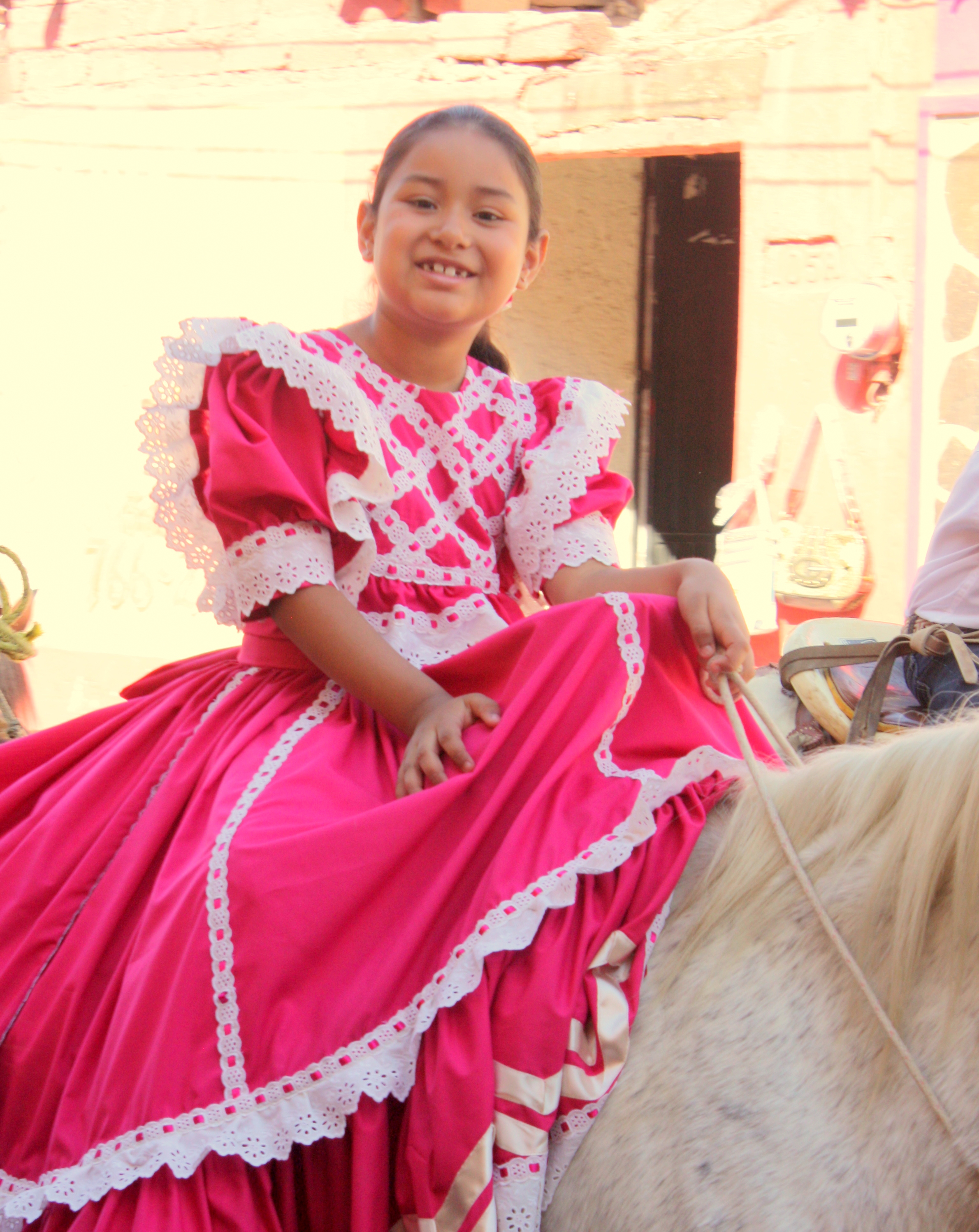
A charro-in-training astride her mount

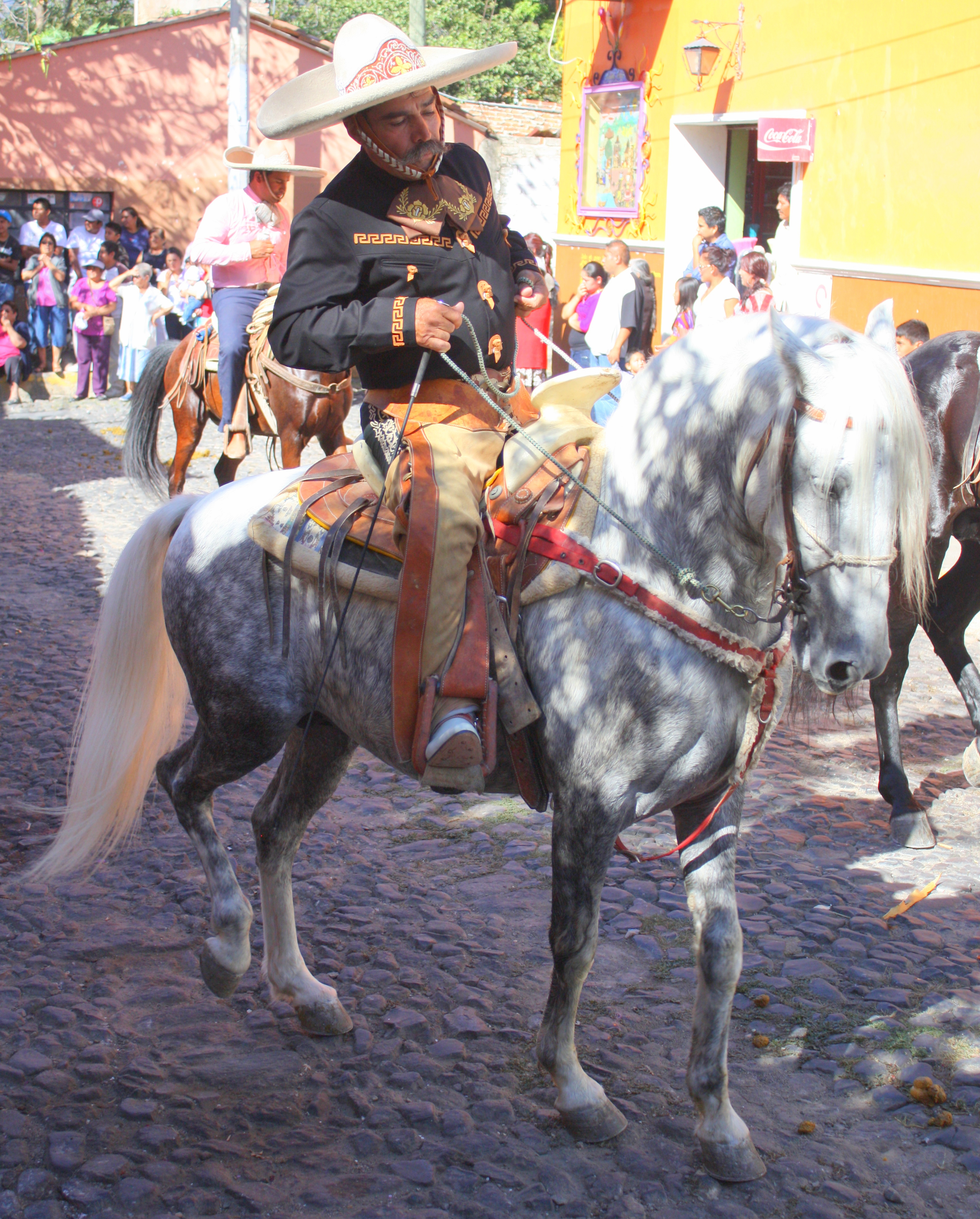
And because Ajijic is undeniably Jalisciense, the parade would not be complete without the charros, whose horses amazingly dance across the cobblestones to the sound of traditional Mexican tunes.

A charro puts his dancing horse through its routines

In the morning 10 days of fiesta begins, and there will be no need for an alarm clock, because the boom of fireworks, clanging church bells, and blaring brass bands will do the job before sunup!

The artisan as art

Mexico’s folk art is at risk of becoming an endangered species! Industrialization and urbanization – not to mention cheap Chinese knock-offs – are driving local artists to leave their villages and forsake their craft for work in the cities.

All natural fabric dyes are made from plants and insects

The good news is that there is a strong antidote in Ajijic’s Feria Maestros Del Arte, which this weekend celebrates its eleventh year.


A ceramic octopus in fanciful colors

Painstakingly painted detail

The Feria is a standout among area venues for artists and artisans not only for the quality, breadth, and originality of its work, but for its single inspired purpose of protecting and preserving Mexico’s community of indigent artists and their artistic traditions.


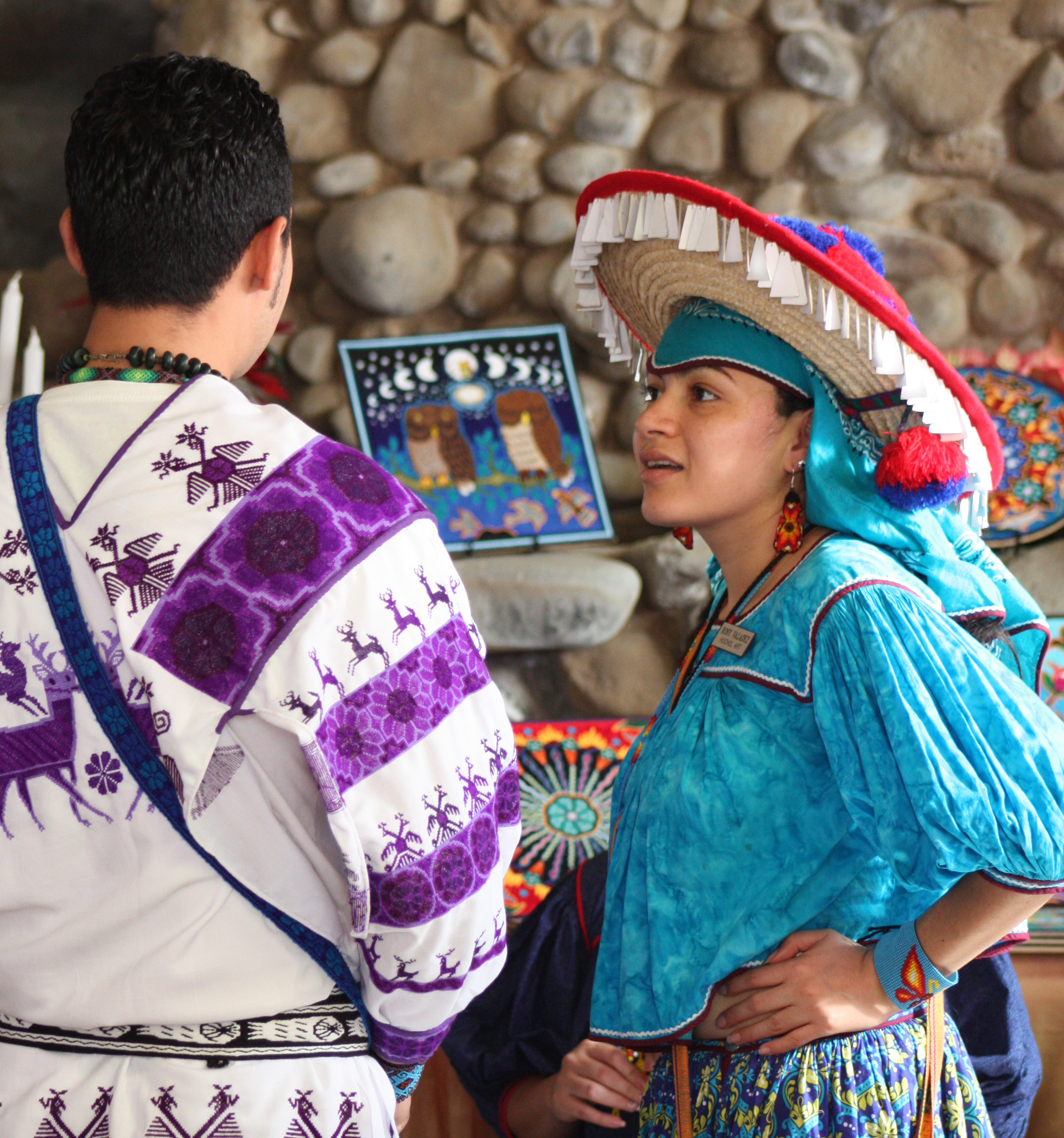
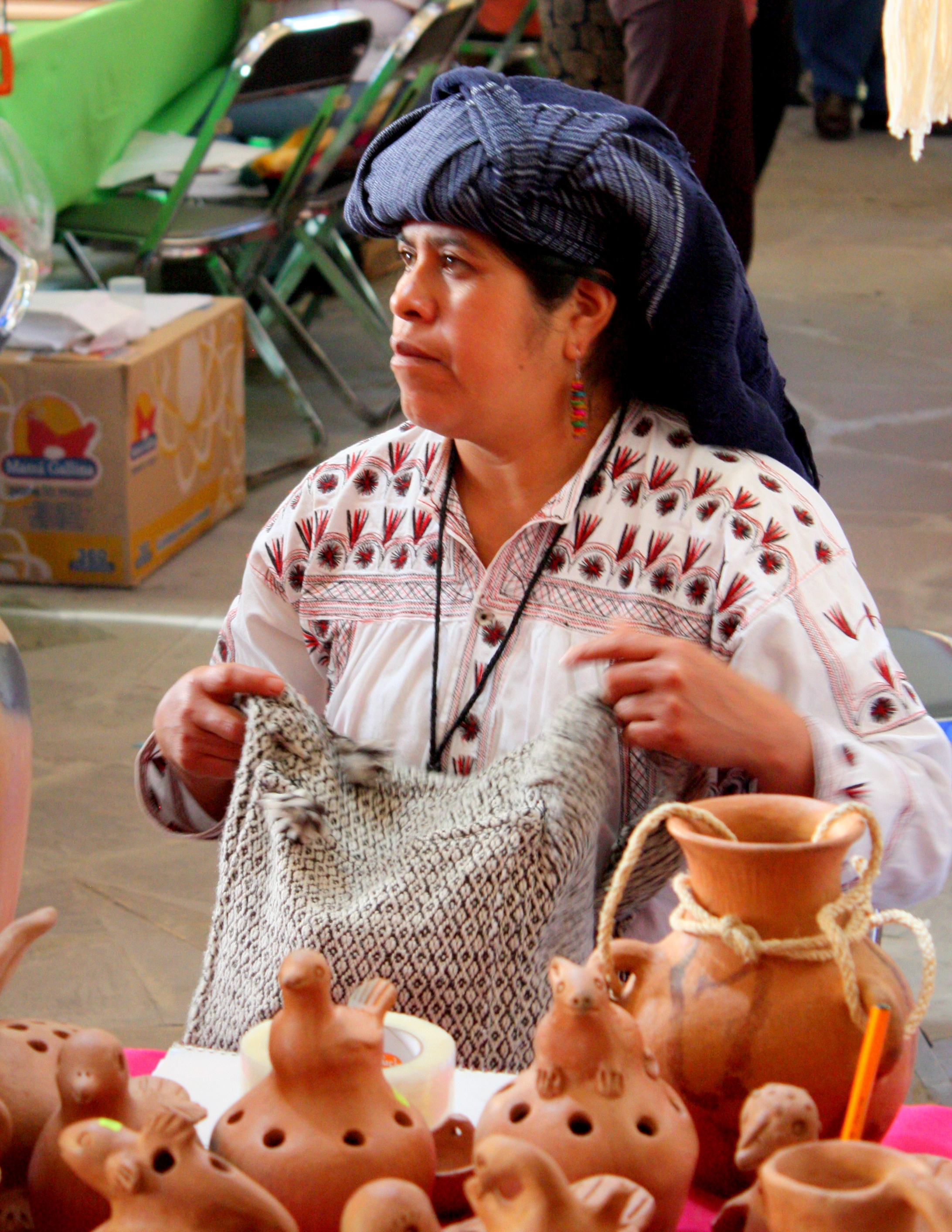
Artisans in bright traditional garb

Artisans in bright traditional garb

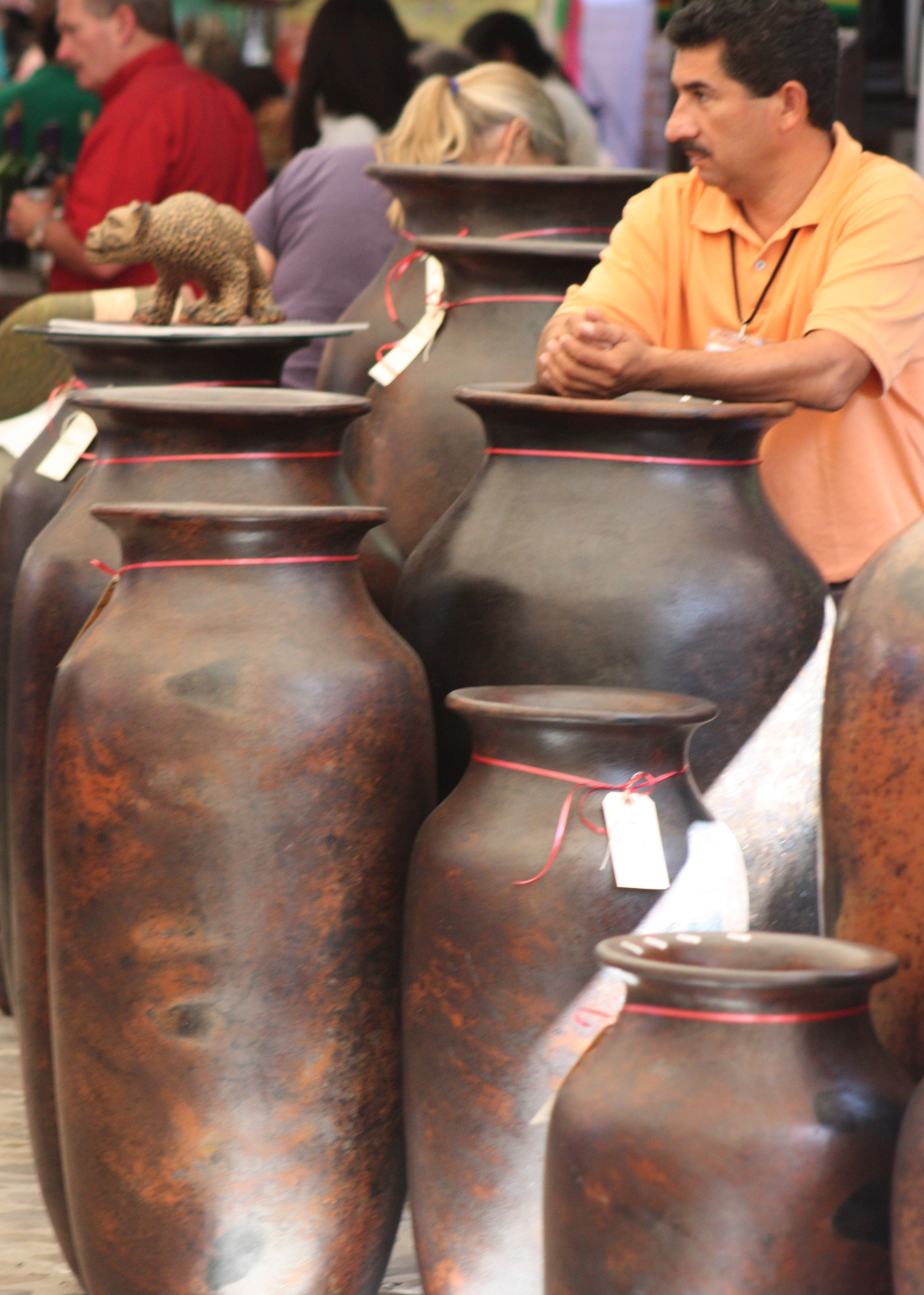
A potter stands chest-high in his work


The Feria is also philanthropic capitalism that showcases this art and these artists to the expat community and to visiting art merchants.

The outcome is an opportunity for these distinctive works to fetch the fair price that promotes their economic sustainability.


Clay iIguana at perpetual rest

Clay iIguana at perpetual rest


The philanthropy, though, goes well beyond simply bringing sellers and buyers together.

The merchants – more than 60 of them – are charged no fees for exhibit space.


The Feria is the brainchild of locally resident gringa Marianne Carlson, who each year travels the length and breadth of Mexico seeking out new talent.

There’s a message in the tiny symbols on this piece

Adding finishing touches to a corn husk blossom

Adding finishing touches to a corn husk blossom


An extensive network of volunteers and significant donations – the Feria is registered as a non-profit in both Mexico and the U.S. – assure that every dime of every sale goes to the merchant artists.


Lady mariachis waiting to go on stage


Many receive transportation assistance or are housed and fed gratis in the homes of locally resident expats.


The Feria is also nothing if not authentic.


All of the exhibited goods are handmade by native artists using materials native to Mexico, and much of this remarkable work has rarely been exhibited outside of the often remote villages in which it is created.


Lady mariachis' wall of sound

Lady mariachis’ wall of sound


Many of the artisans are but the latest in generations of family artists.
Shoppers can watch many of the artisans continue to create as they tend their market stalls while patiently explaining the symbolism of the images in their work and the process by which it is produced.


This is my first year to experience this event, and I have the good luck to do so from a front-row seat in more ways than one.
Jurassic metal sculptures

Jurassic metal sculptures

It’s located within easy walking distance of my place, which is a real bonus since the patrons’ parked cars have not only lined the curbs of surrounding neighborhood streets, but spilled out along the Carretera for a quarter mile in both directions.

Timeless

Timeless


Location, however, is only the beginning of the good luck because my place is also a room-and-board site for Feria artist Martín Ibarra and his family.

A leap of ceramic leopards

A leap of ceramic leopards


The son of a noted clay artist, Martin has been widely recognized for his painted clay sculptures of the Virgin and his intricately decorated eggs and spheres.


A threatening wooden image in playful colors

A threatening wooden image in playful colors


This year each room-and-board sponsor is taking a turn at a dinner held in their home for the artists and their fellow sponsors, and these gatherings add yet another dimension to the experience.


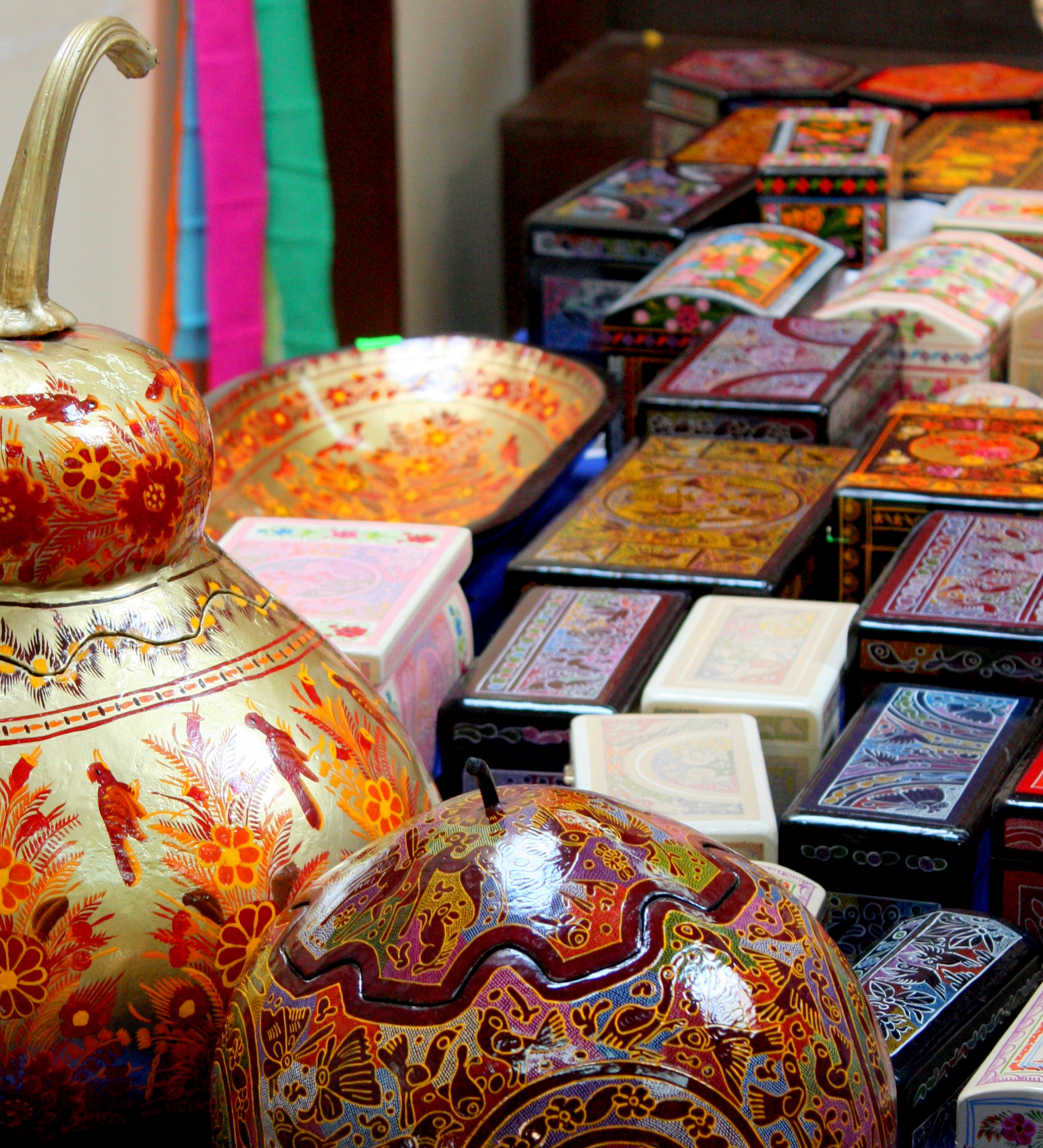
Hand-painted detail on wood and gourd containers

Hand-painted detail on wood and gourd containers

Artisans drawn from across Mexico from Chihuahua in the north to Oaxaca and Chiapas in the south, and when they come together each evening over food and drink the feeling is almost one of reunion.

Talk quickly turns from art to life and there’s lots of laughter here.

It’s a rare opportunity for expats to gain a glimpse into the traditions and lives of these master craftsmen, and for them to see their American and Canadian hosts up close and personally.

It’s also a great demonstration of what happens when people put national identities and politics aside and come together as individuals in a common pursuit.


Even for casual students of world cultures the Feria is not to be missed.


If you’re looking for items not to be found even in the abundance of artist communities in Guadalajara’s nearby Tonala and Tlaquepaque neighborhoods, this is the place to be.

A live face in a wall of masks


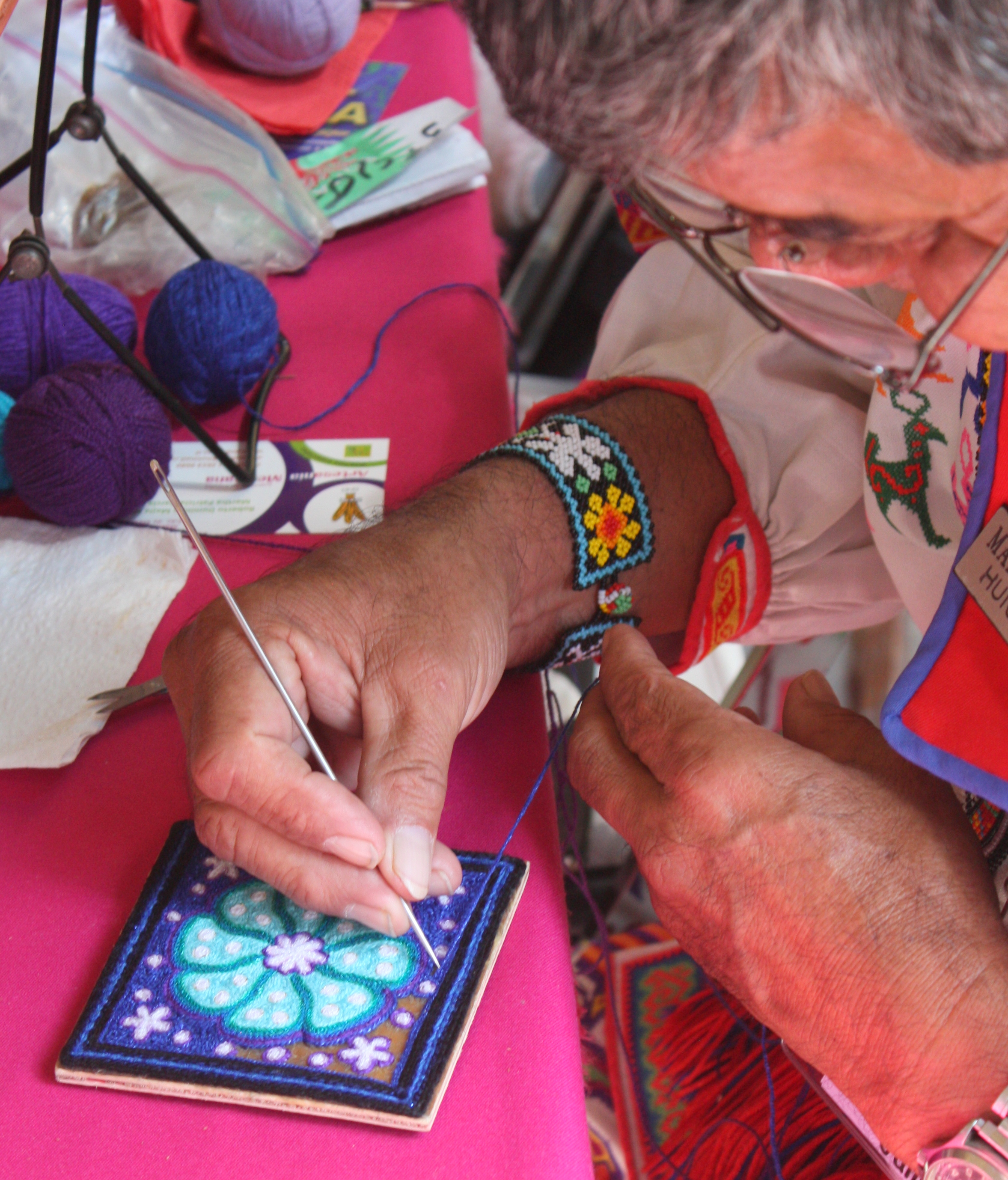
Fitting beadwork into a design

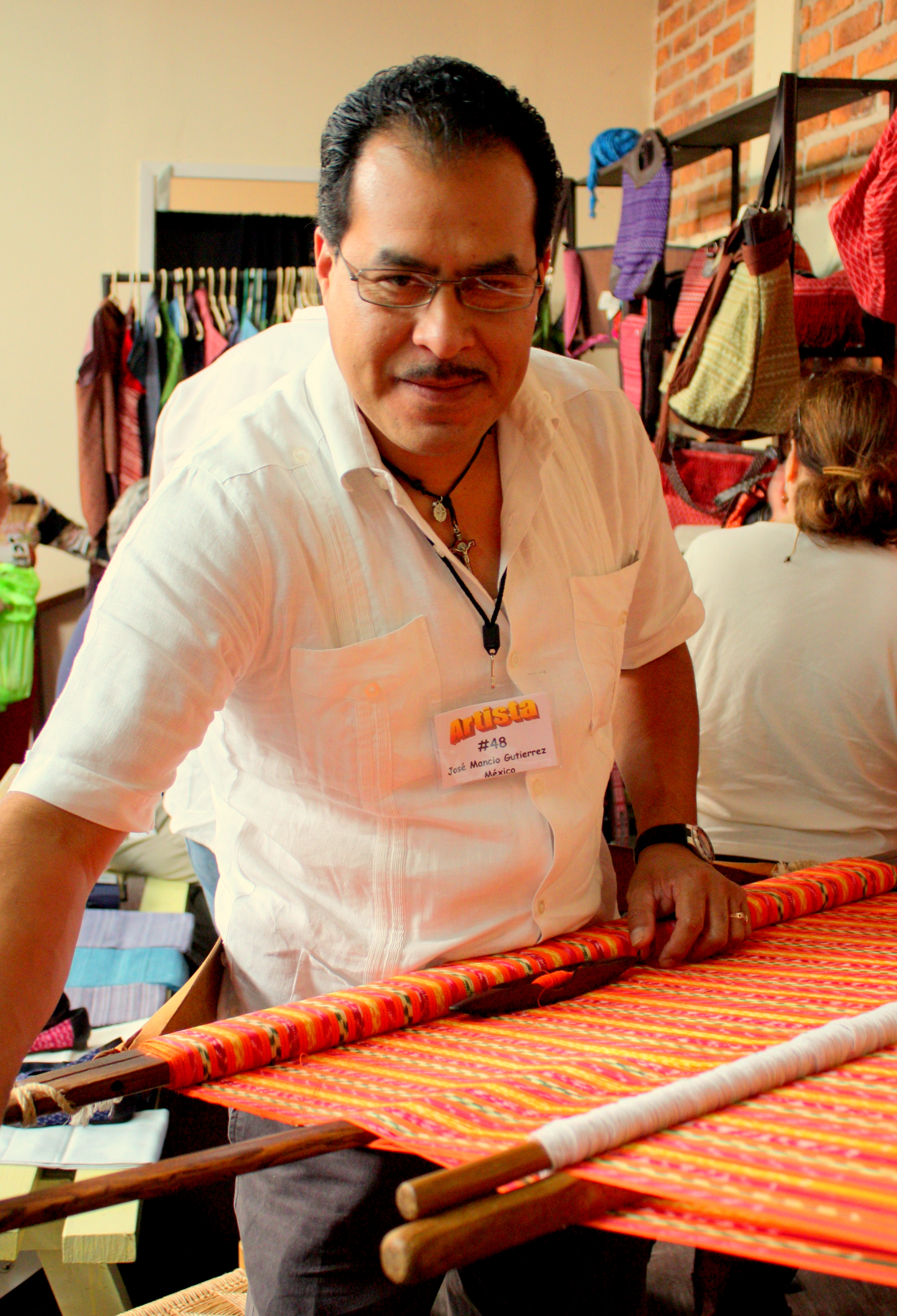
This 5th-generation weaver may need 2 months to produce a single work.


If you’ve ever wondered what happened to the spirit of social activism that marked the youth of many retirees you’ll find it alive and well in the spirit of Ajijic’s Feria.

Make your own contribution by buying something… and spreading the word.

For more information check out the Feria’s web site here.

Dias de los muertos

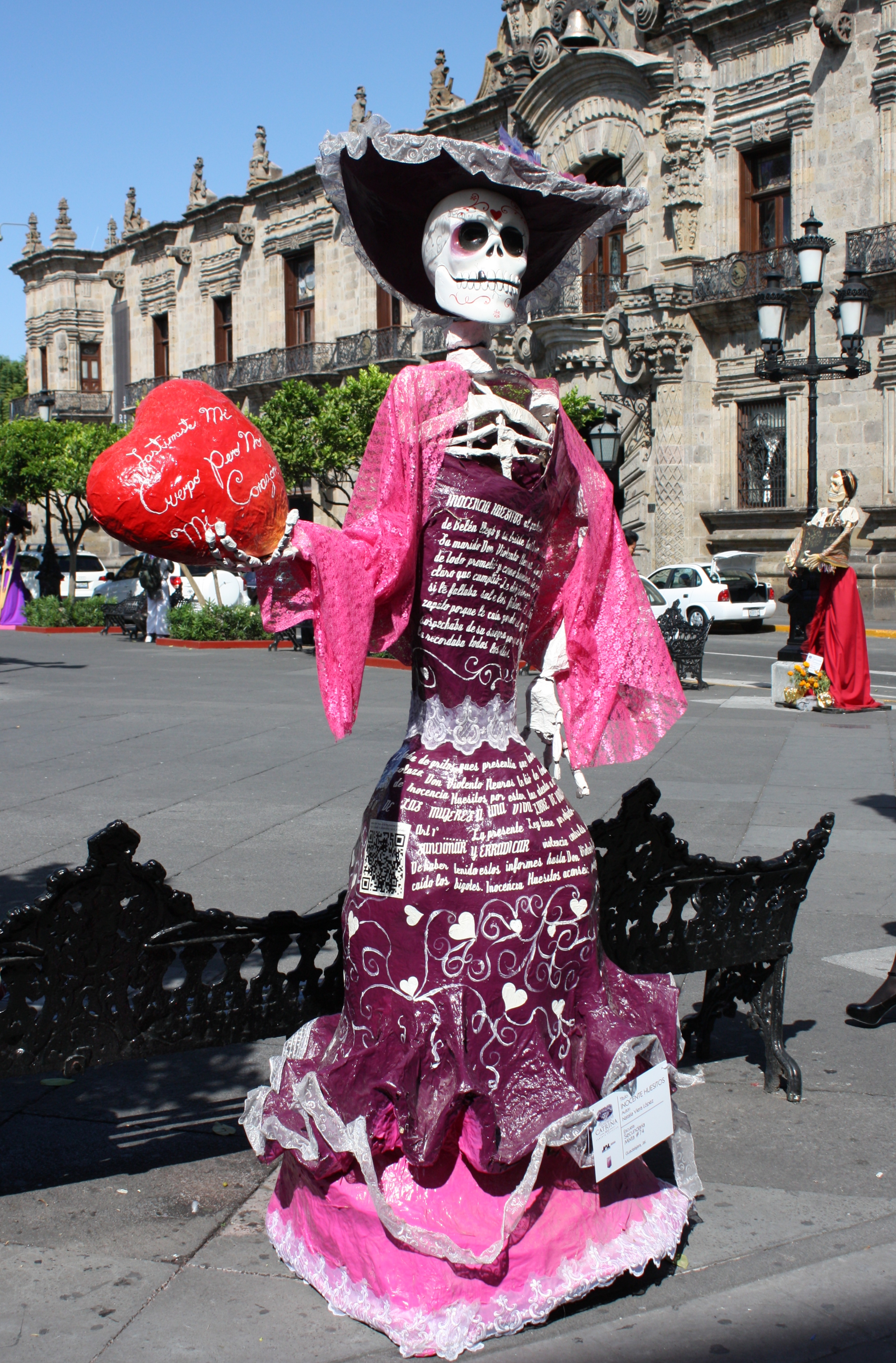
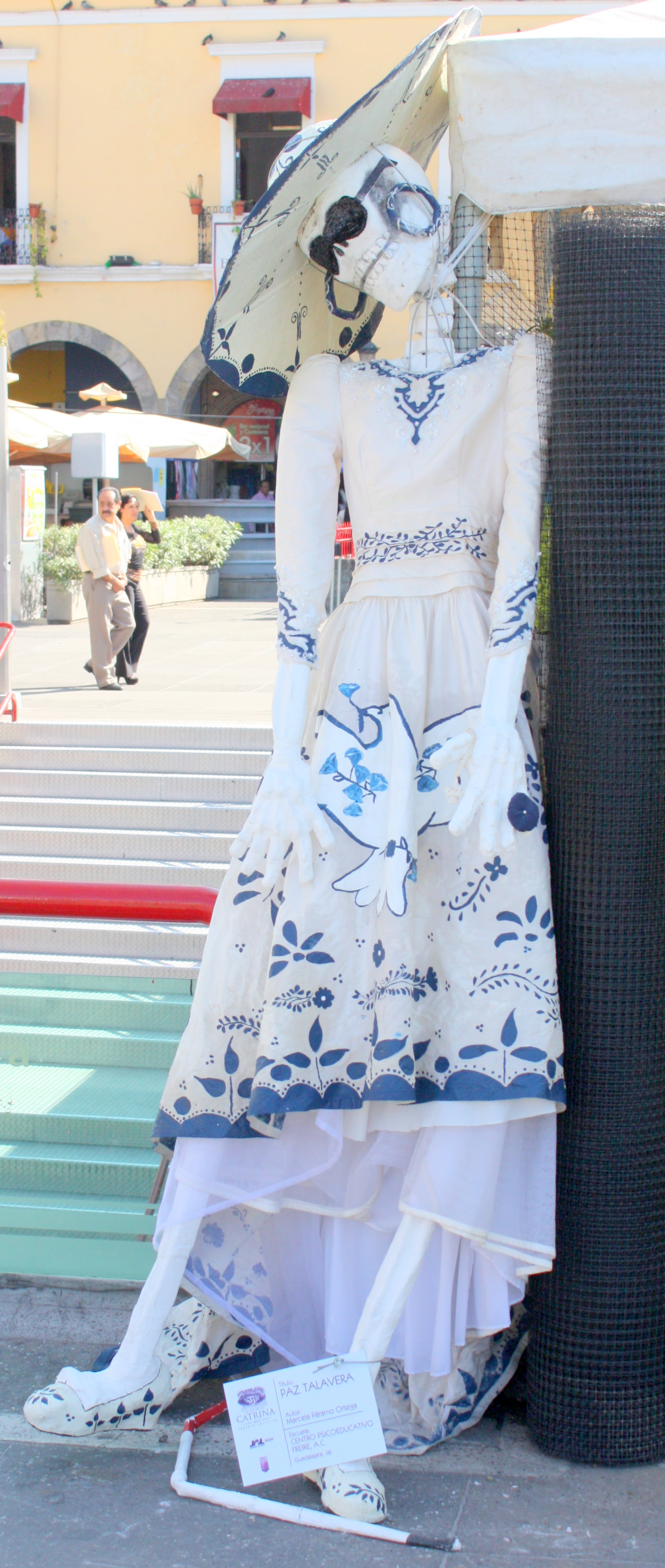
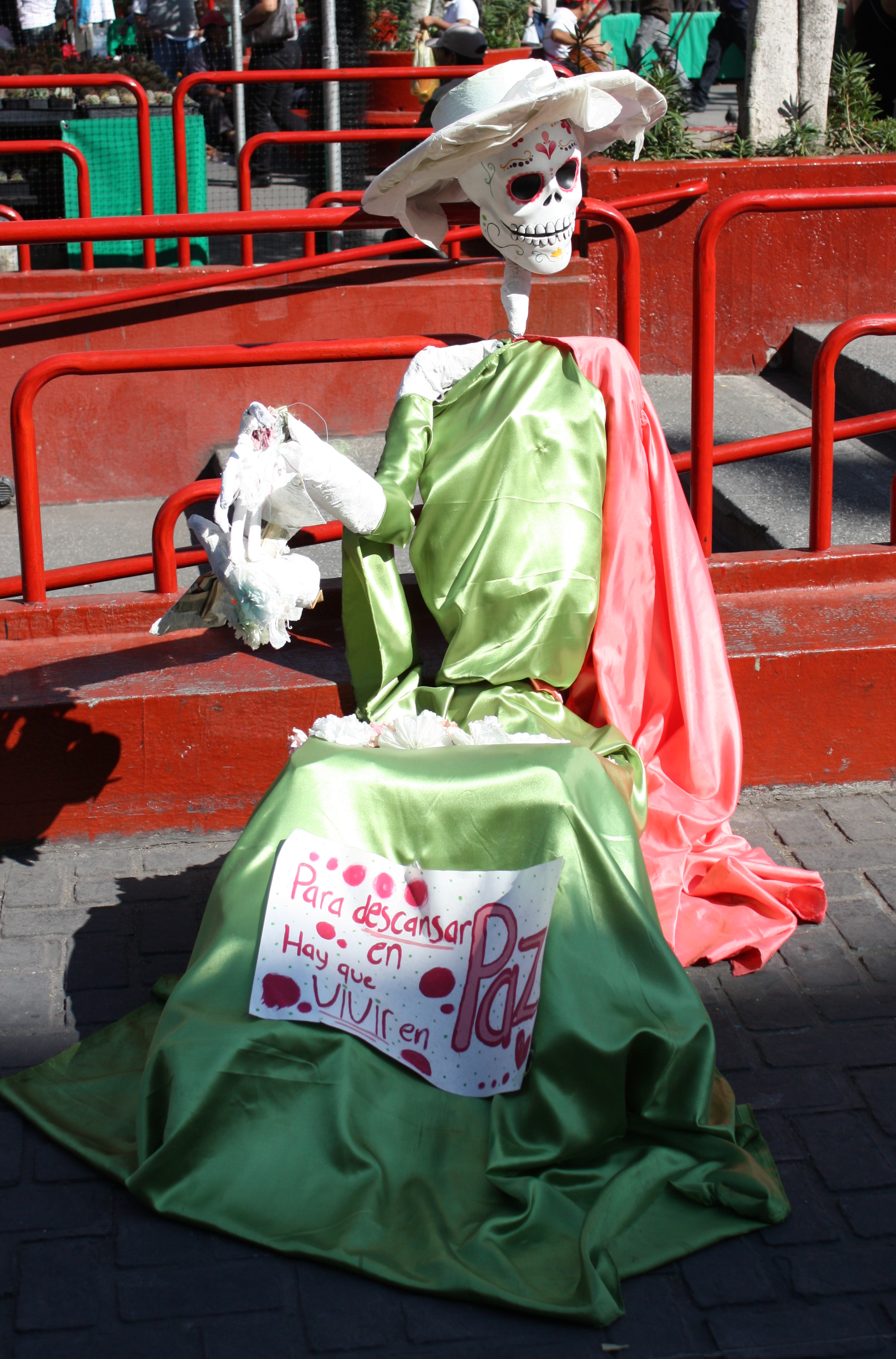
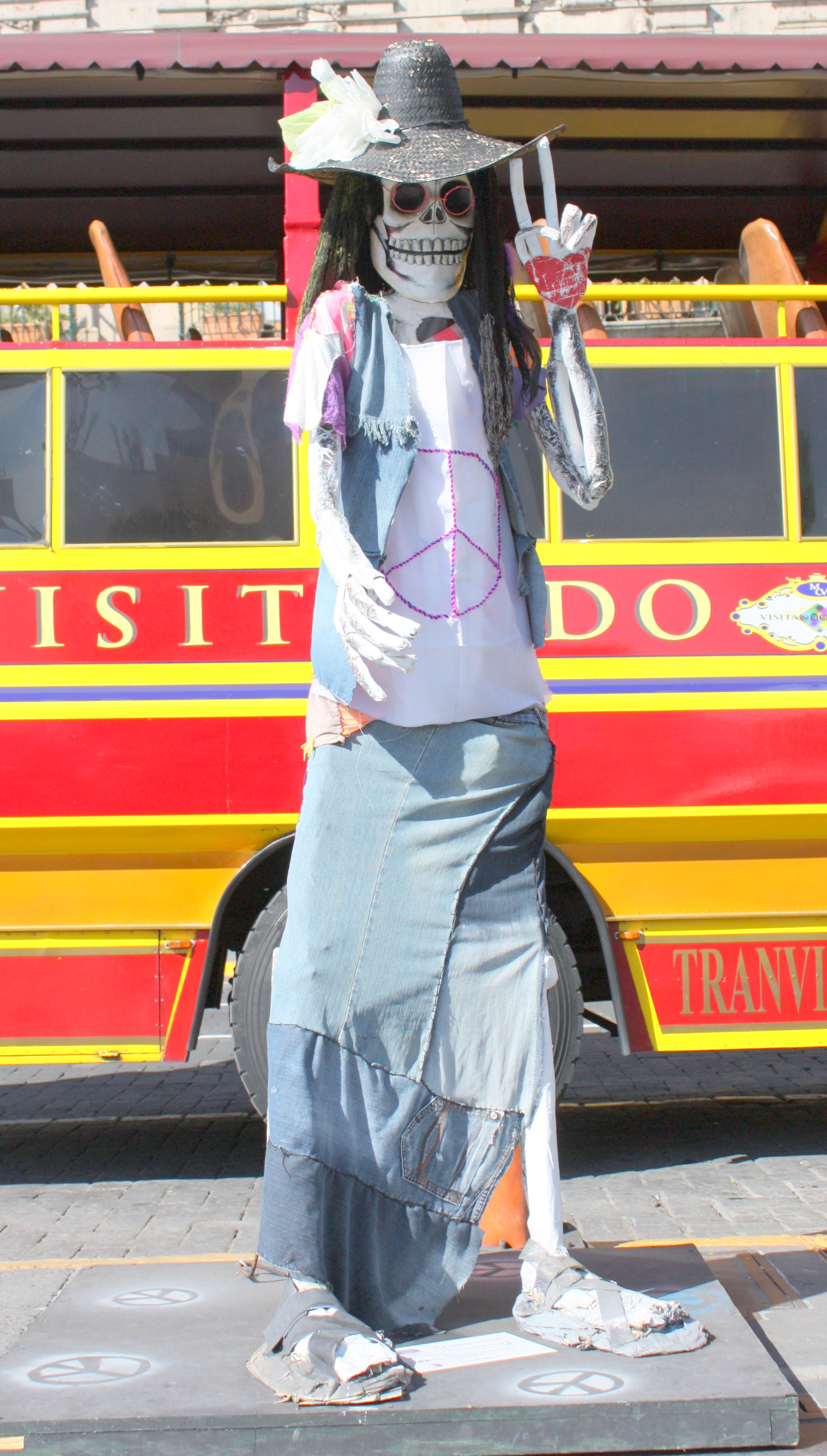
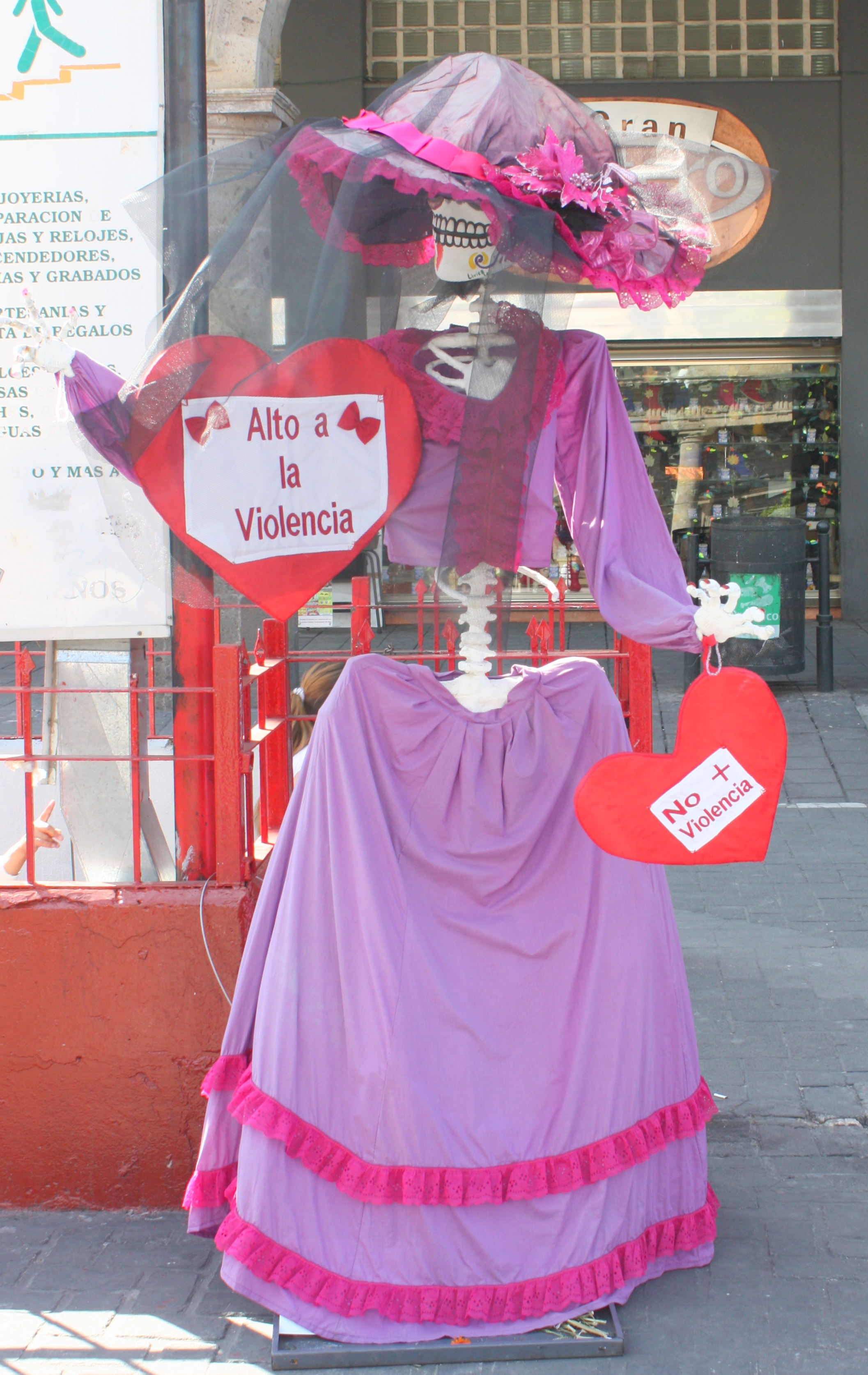
Peace catrina, Guadalajara, Mexico

It’s about this time each year that I lament the creeping encroachment of America’s shallowly commercial Halloween tradition upon Mexico’s deeply spiritual Dia de Los Muertos observance.

Peace catrina, Guadalajara, Mexico

In the States, trick-or-treat decorations may have been replaced by Christmas decorations and candy now relegated to discount bins, but a month-long event in Guadalajara’s Centro Historico proves that Dia de los Muertos is not only alive and well, but ably adapting to fit itself into the twenty-first century.

Peace catrinas, Guadalajara, Mexico

Peace catrina, Guadalajara, Mexico


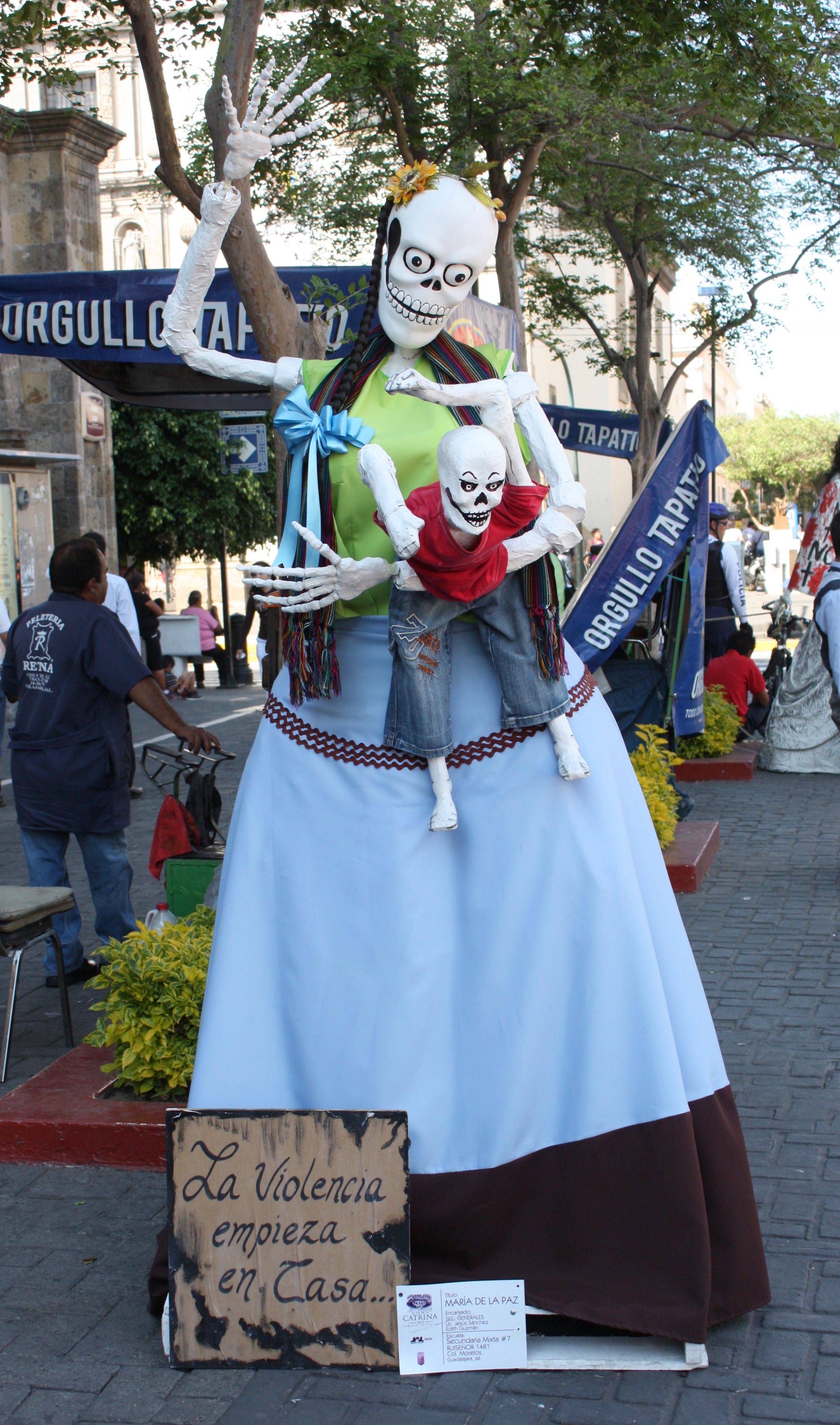
For the third consecutive year, Guadalajara’s secondary school students have built upon the traditional image of the catrina – the elaborately decorated skeletons that are the holiday’s trademark – to make a timely plea for peace.

Peace catrina, Guadalajara, Mexico

Around 100 of these larger-than-life-sized installations can be seen on the plazas that mark each of the primary compass points around Guadalajara’s signature downtown Catedral.

Peace catrina, Guadalajara, Mexico

The work is remarkable not only because it ably links Mexico’s past with its present and because the artisanship is of such high quality, but because it demonstrates these young artists’ surprisingly mature grasp of how violence begins and spreads through a culture.

Peace catrina, Guadalajara, Mexico

For Mexicans, peace is not an abstract ideal or a wished-for outcome in some far-off country, but a heartfelt hope for change in their everyday existence.

Peace catrina, Guadalajara, Mexico

Peace catrina, Guadalajara, Mexico

In this fifth year of the government’s war on narcotics traffic and narco-terrorism, fatalities have now passed the 50,000 mark. While the violence is largely confined to combatants and limited to a small part of the country, only a few degrees of separation lie between the casualties and an increasing number of civilians.

The theme of peace in the face of such violence necessarily lends a somber note to many of these works, but most of them still manage to deliver their weighty message with the same wry fatalism that has always marked the catrina tradition.

Peace catrina, Guadalajara, Mexico

Photos don’t do these catrinas justice.  Almost all of the standing figures tower over the spectator by a foot or two, and many others lean lifelike against poles and fences or sit on park benches as city pedestrians and traffic stream past.

Peace catrina, Guadalajara, Mexico

There are several Gandhi catrinas and one of the Dalai Lama, but it’s the more traditional images which are often the most compelling.

Peace catrina, Guadalajara, Mexico

While catrinas are an expression of pre-Colombian concepts of the relationship between life and death, the catrina image itself is barely a century old, the invention of a Mexico City newspaper’s political cartoonist.

Peace catrina, Guadalajara, Mexico

The catrina was nearly relegated to history until rescued by the resurgence of pride in Mexican heritage following the Mexican Revolution.

Peace catrina, Guadalajara, Mexico

Like Argentina’s tango, it began as a working-class tradition and grew in less than a generation to become a symbol inextricably woven into the national identity.

It’s possible to walk all 100 or so of Guadalajara’s Catrinas de la Paz in less than an hour, but you may – like me – become caught up in reflection upon one or another that particularly speaks to you and linger longer.

Whether you browse this exhibit quickly or deliberately, don’t pass it up!

Up in smoke

It had been a year since I’d last seen him, but I had – or so I thought – more important things to do on his birthday this year and now he’s gone, one more superstar snatched from us before his time leaving me with guilty regret.

There was some dispute about his true age.  His official birth certificate listed him as 60 years old, but it’s now widely accepted that he was actually born two years earlier in a small town 70 miles from Dallas and given up for adoption by the two men whose names appear on his original birth certificate.   Darker rumors maintain that he was not legally adopted, but sold to the State Fair for a paltry $750 in a slam-dunk case of baby trafficking.

Big Tex, larger than life

Even his most fervent admirers will admit that he had a Howdy Doody sort of caricature look, but that fixed grin belied his shrewd management of a meteoric rise to stardom and six uninterrupted decades of celebrity.

Ringed around the Cotton Bowl

Big Tex was the last of the great carnival barkers, towering above crowds and tents and spinning rides against the backdrop of the Cotton Bowl to welcome visitors to the State Fair of Texas.

Big Tex burns; Photo by Alison Griffin

He was Texan through and through, his skeleton a metal frame made from oilfield drill casing, and he seemed so indestructible that all were stunned when a garden variety circuitry malfunction laid him low. To put it inelegantly, he had a short in his shorts.

The end was mercifully quick.  Flames consumed his paper maché frame in a matter of minutes, but billowing smoke rendered him almost immediately voiceless.

Onlookers could do nothing but watch as his Size 110 blue jeans turned to ash and his parched skin flaked  away to leave only a steel frame and his fallen, giant hands.  Oh, the humanity!

Fried food reigns at the Fair

“B.T.” looked incredibly fit for his age.  Some attributed his slim figure to the fact that he didn’t drink.  Others attributed it to his refusal to indulge in the Fair’s annually featured deep-fried foods like the Fried PBJ & Banana Sandwich, Fried Coke, Fried Cookie Dough, Fried Banana Split, Chicken-Fried Bacon, Fried Beer™, Fried Frito Pie, or Fried Buffalo Chicken-in-a-Flapjack.  (This year Deep Fried Jambalaya won ‘Best Taste’ and Fried Bacon Cinnamon Roll won ‘Most Creative’.)

Tall and lean even in the face of such temptation, B.T. was from time to time the target of accusations that he was a closet anorexic, but adoring fans would hear nothing of such slander and he returned as big as ever in each succeeding year.

Plenty of aerial views

They say they’ll rebuild Big Tex, that he will be taller, and that the reconstruction will incorporate “new engineering and technology techniques.”

I confess to skepticism.

Dallas is, after all, notorious for paving over its history in the name of progress and has not infrequently confused bigger with better (any naysayers should be instantly silenced by the concert acoustics in the nosebleed section of Jerry Jones’ stadium monument!)

The line of booths is endless

Had Dallas managed the Statue of Liberty’s bicentennial renovation, it’s likely that her torch would now be spewing laser-beam fireworks, her gown would be sequined with ever-changing red, white and blue lights like a Las Vegas billboard ( or – uh – Dallas’s new convention center hotel), and she’d be performing the moonwalk on the hour.

There’s been some loose talk that B.T. might return as a fire department spokesman to preach the dangers of faulty wiring. (Say it ain’t so!)

Who needs video games?


There’s something about Big Tex that speaks to a moment in time when Baby Boomers were still kids, and Texas was as it appeared in the classic movie “Giant.”  A Texas before video games and PDA’s and downloadable media, when little boys played cowboy with stick horses and the good guys were not yet all bad boyz.

Entrance to the Midway

The Fair ran for two more days after Big Tex’s untimely passing.  The rides and booths and food were all just the same as before.

Art deco sculpture

The Fairground buildings – the Southwest’s largest surviving collection of Art Deco structures – were unchanged, but without Tex’s long, tall shadow creeping across the sun-splashed midway the Fair’s mojo was – at least for the moment – gone.

Rocking horses & rocking chairs

We can only hope that a Big Tex reborn will still have the same campy, carny feel that he exuded for more than 60 years… and not reincarnated like a classic Wurlitzer jukebox slickly and vacantly restored with mp3 guts… reduced to a 21st century drug store cowboy.

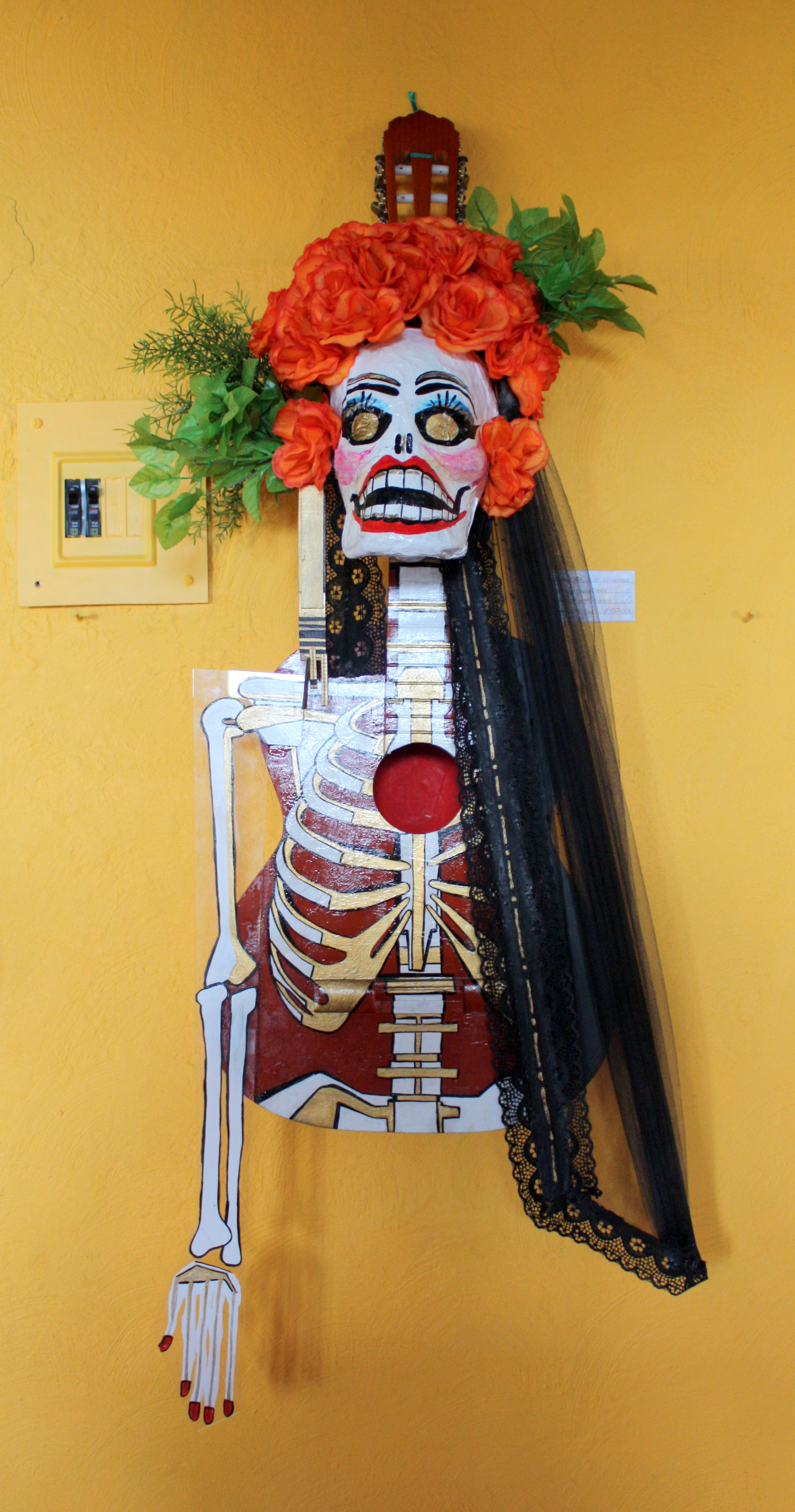
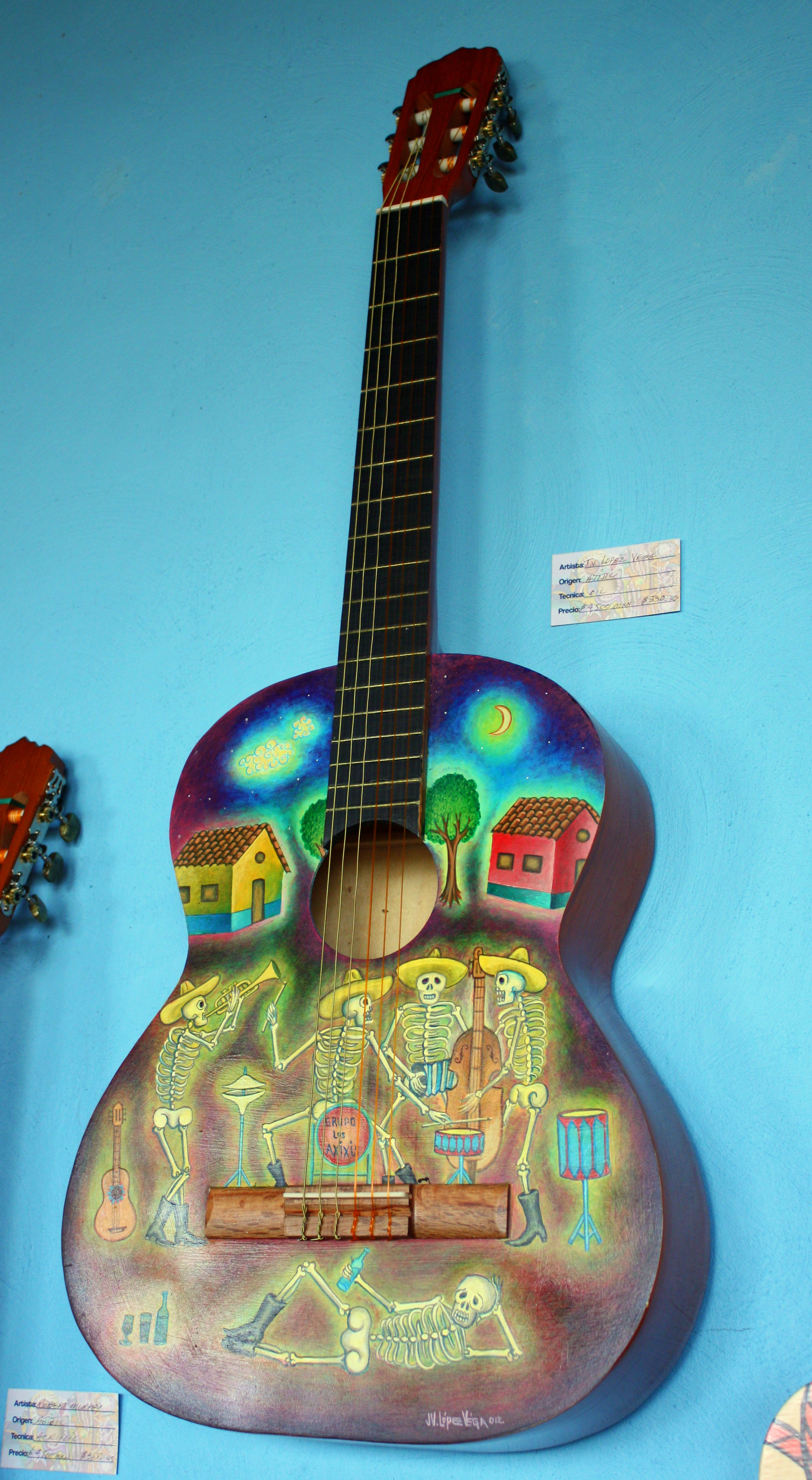
Ajijic’s guitar art

Artist: Teodor Lopez

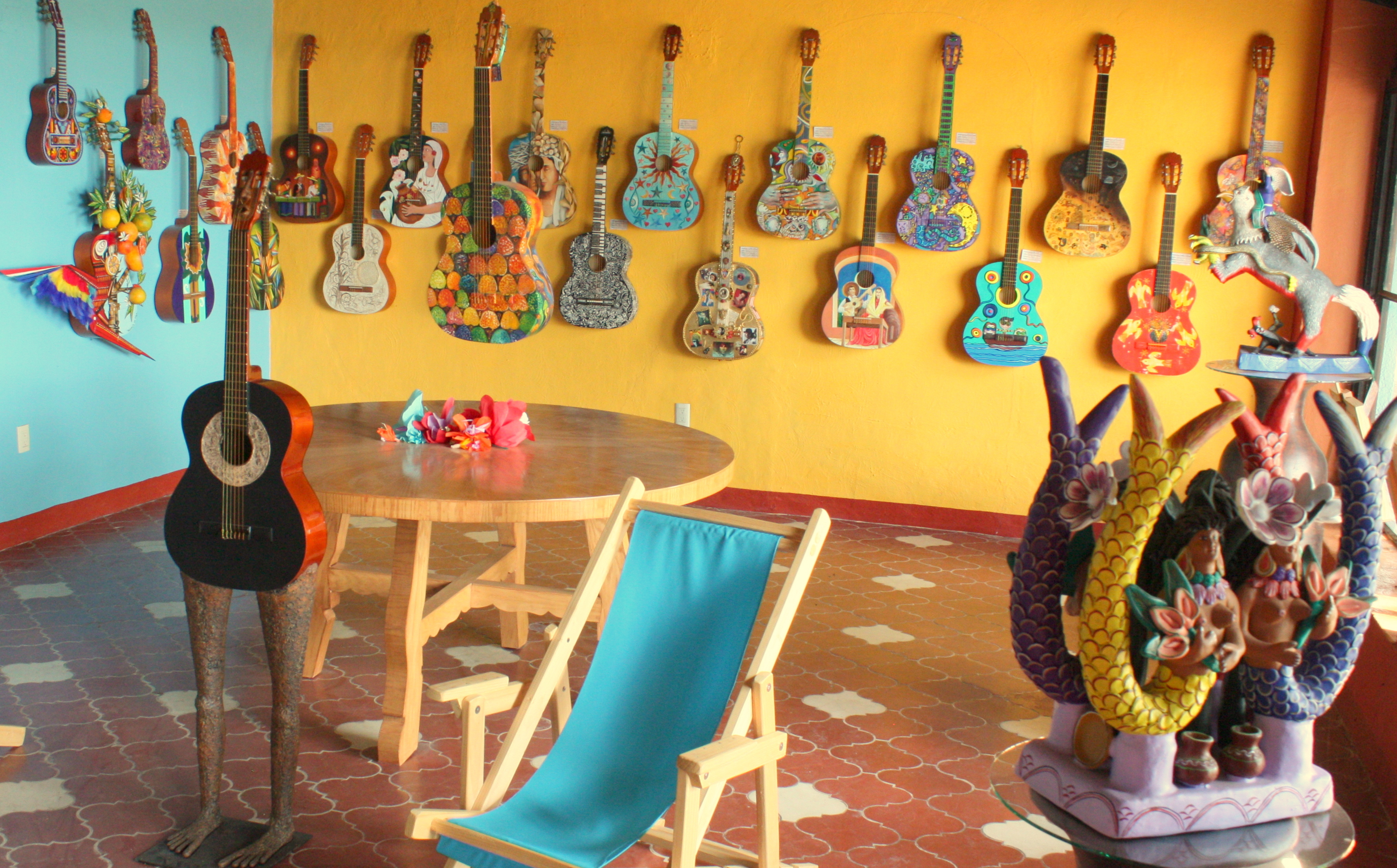
Perhaps nowhere else in the Spanish-speaking world has the guitar become such an inseparable part of the culture as in Mexico.

Inside the Galeria del Lago

Here the instrument appears the varying shapes, sizes, and sounds which can be most often seen in the instrumentation of Jalisco’s celebrated mariachi bands.


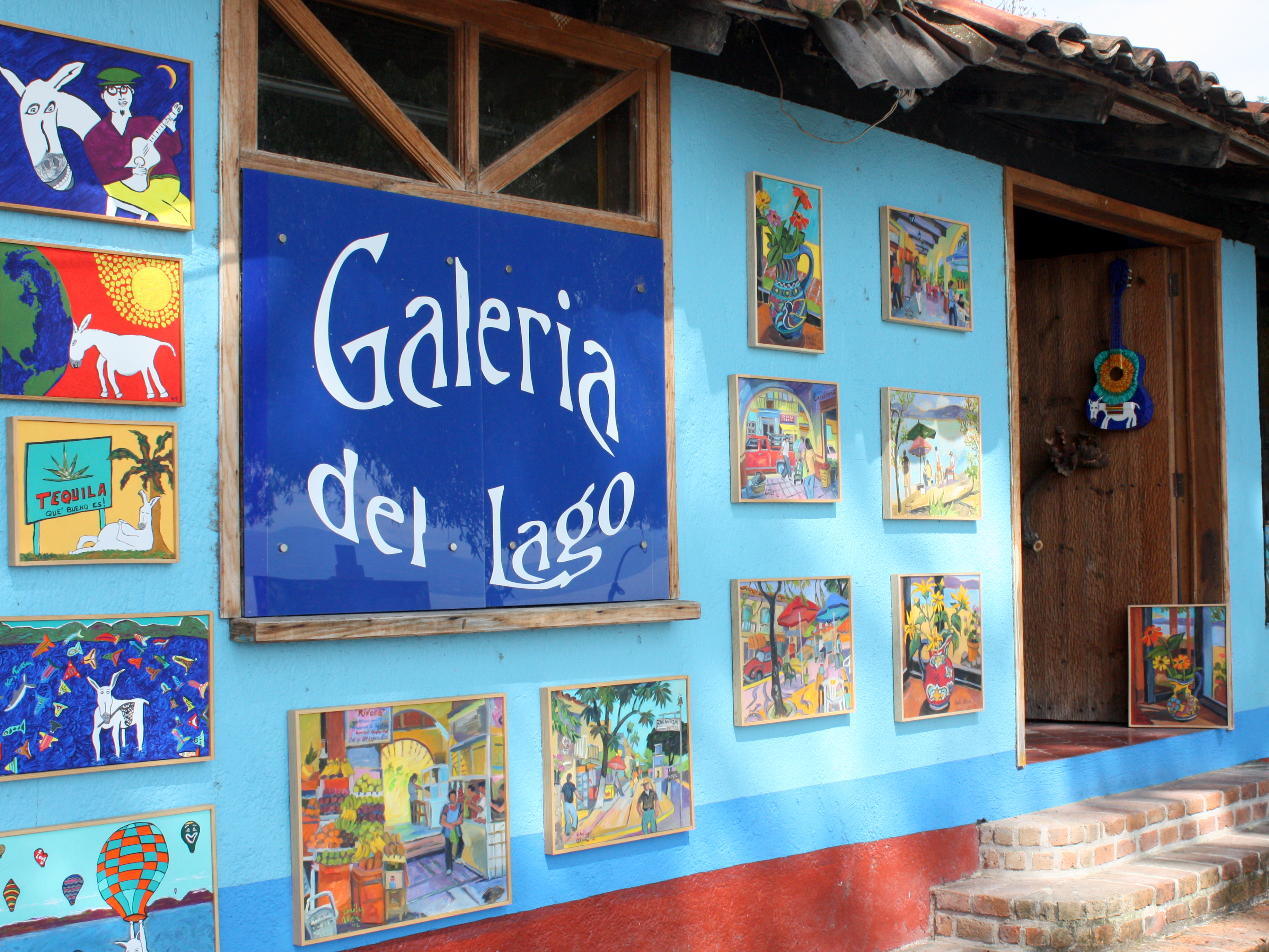
At Ajijic’s Galeria de Lago on the very edge of Lake Chapala the instrument appears in yet a new incarnation:  Guitar Art.

Artist: V. Manuel G. Santillan


It all began when local artist Kim Tolleson made a pilgrimage to the town of Paracho in Michoacan.  The town has long been famous as the center of guitar-making in Mexico, but in the past generation it has produced world class maestro craftsmen and instruments sought by aficionados everywhere.


There are more guitar shops in Paracho than chocolatiers in Switzerland and each August the town hosts a festival that features and honors both musicians and luthiers.


Kim had the idea that these instruments would make an interesting painter’s palette, but soon came to the conclusion that the 30 guitars that he brought back from Paracho was ambition enough for more than a single painter.

Artist: Kathy Seaboyer


He enlisted the aid of local artists and aspirants, and soon much of the space he’d first envisioned as no more than a studio became a guitar art gallery.

Artist: Sergio Xoñu


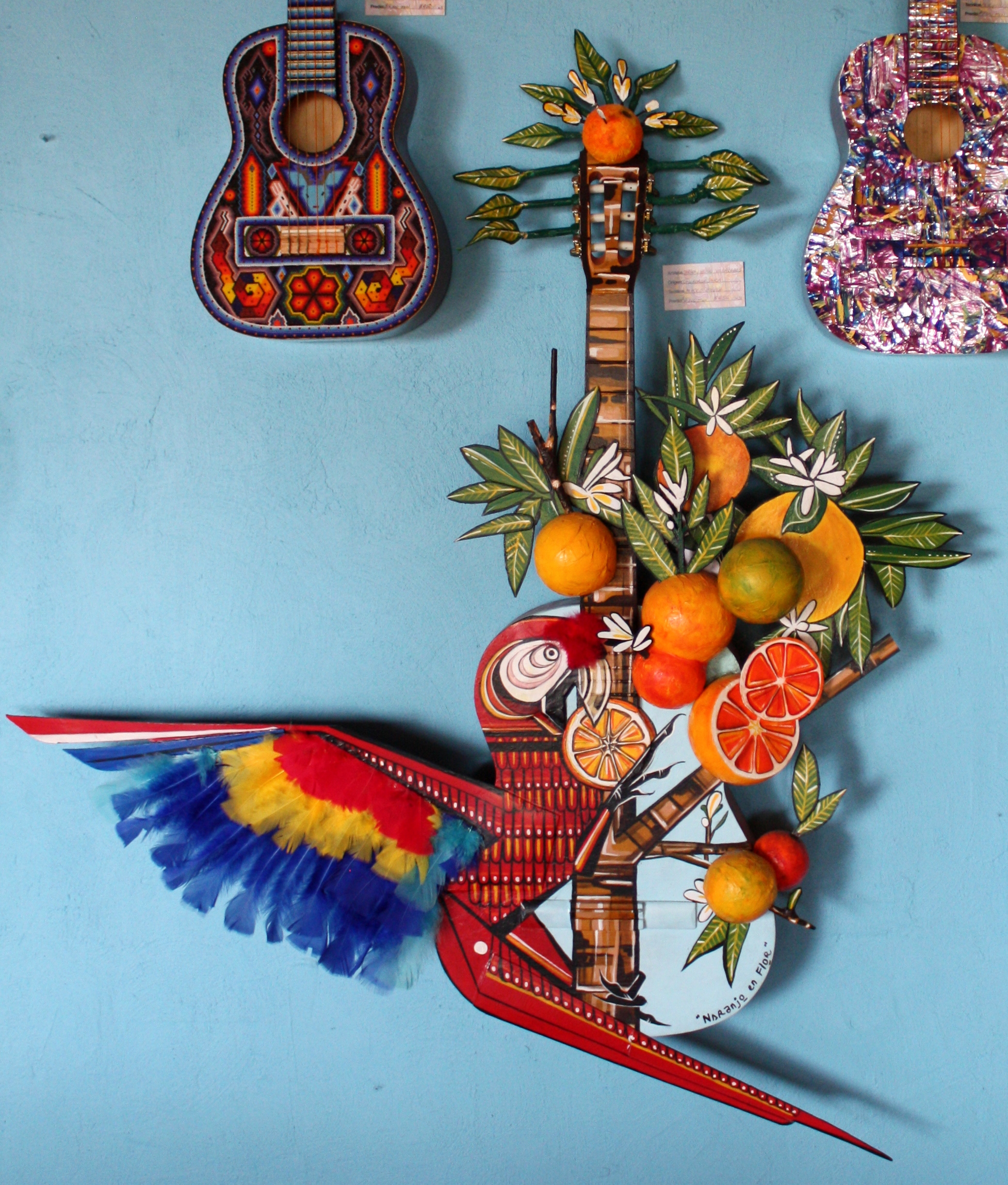
Kim’s decision to open entries to virtually all comers made the gallery unique not only for its use of guitars as painters’ palettes, but for its diversity of styles.


The artists range from local professionals including Efren Gonzalez to some very talented amateurs.

The inclusiveness is refreshing and the artist community has clearly embraced the concept.

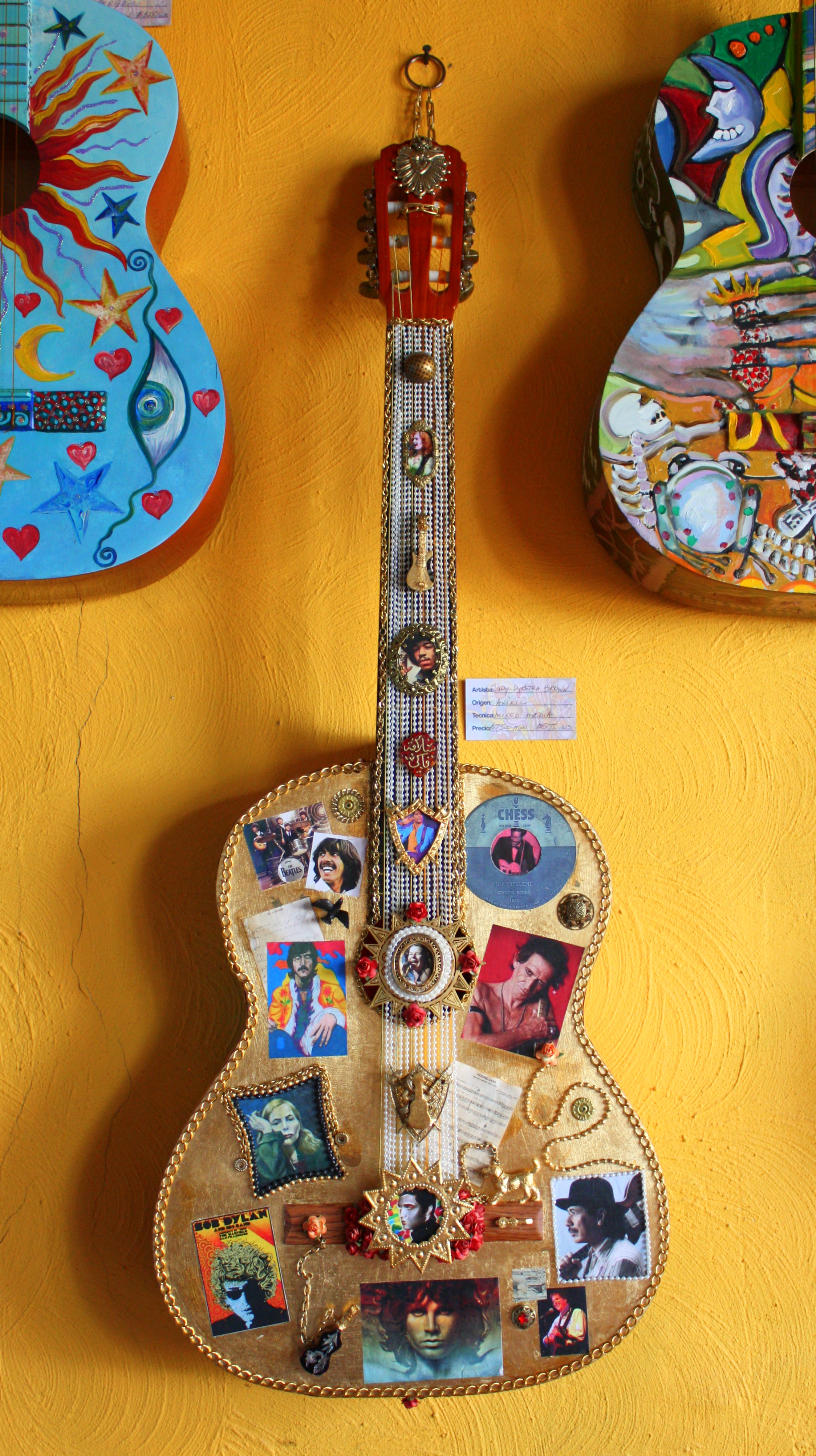
Artist: Judy Dykstra Brown

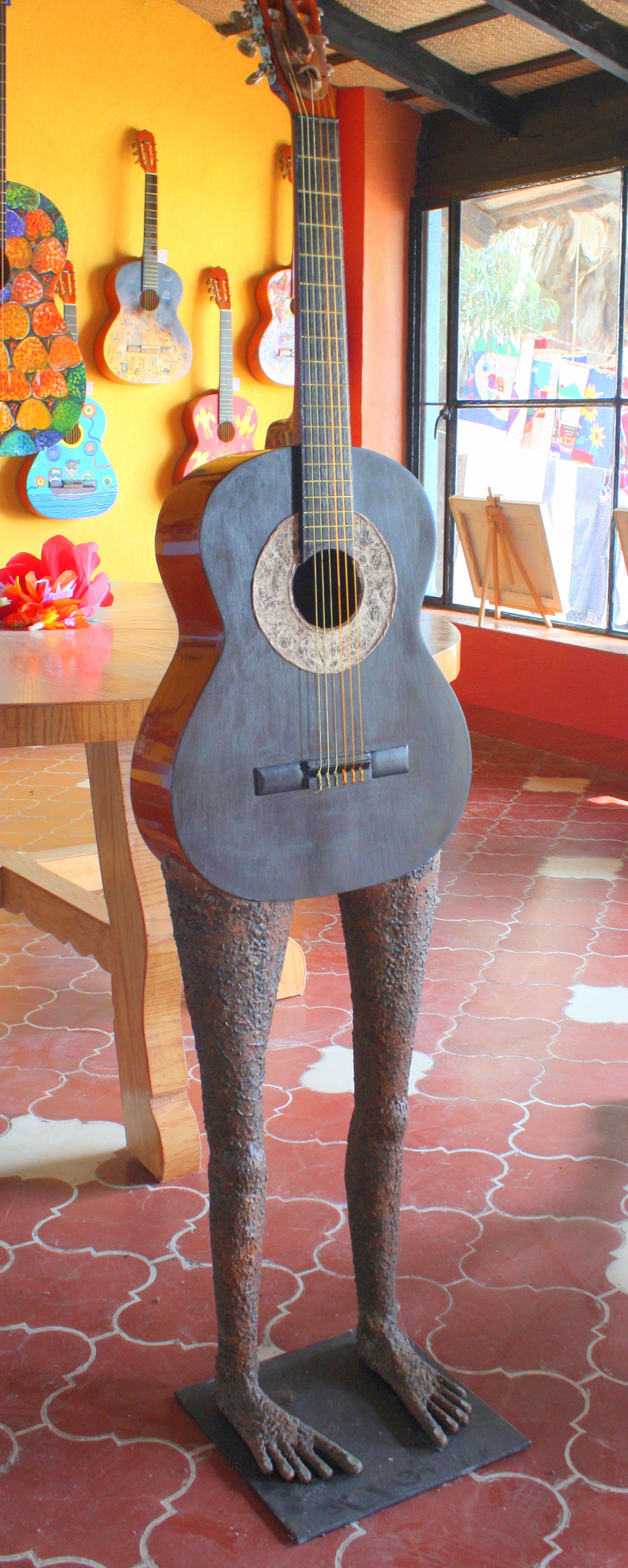
The images range from scenes of colonial Mexico to rock music tributes. Most are painted, but one of the more striking pieces is installed as a sculpture standing on human legs.

Artists: Daniel Palma & Sergio Xoñu

Artists: Hugo & Carlos Villalabos

Part of the Galeria remains a working studio.

On the day I was there Emily Allen had set up her easel there to catch the light flooding in from off the lake, and I stood for a while with my face pressed against the window watching her work.

Artists: Hugo & Carlos Villalabos


Even though the regular gallery hours are Saturday/Sunday, 1-6PM, visitors can browse on many weekdays when the artists are in residence, and the work is readily viewed through big picture windows at any time of the day.

Artist: Jesus Lopez Vega


Galeria del Lago is located right on the lakefront between the Old Posada and Yves Restaurant, within eyesight of the Ajijic Pier.


No surprise, then, that the subject of many currently featured paintings is the white donkey that seems perennially tethered just a few yards away on the beach.


Galeria del Lago

Galeria del Lago


Photos don’t do the work justice, so drop by and see the real deal. It’s guaranteed to bring a smile to your lips!

You can also see photos of work no longer on display when I visited on the gallery’s Facebook page               


Read more about Paracho, Mexico’s guitar capital, here.                              

For more on Ajijic’s unique character see my related posts:

The Riviera rediscovered

Harbor at Monte Carlo, Monaco

An overnight sail after a day spent in Montpelier and Sète, France (read about it here) the ship anchors at Monte Carlo, Monaco.


The harbor sits like the stage of an amphitheater upon which the rest of Monaco looks down from the surrounding heights.

Yachts, harbor at Monte Carlo, Monaco


Riding at anchor here are dozens of luxury yachts so large as to almost defy belief that so many private citizens can afford them.

Hotel L’Hermitage, Monte Carlo, Monaco


Most of the hotels, condos, restaurants, and shops are of modern design.


Fortunately, a few surviving structures like L’Hermitage, a hotel dating from the Belle Époque, evoke the feel of this place when rail service first connected it to Paris and the casino at Monte Carlo was brand new.

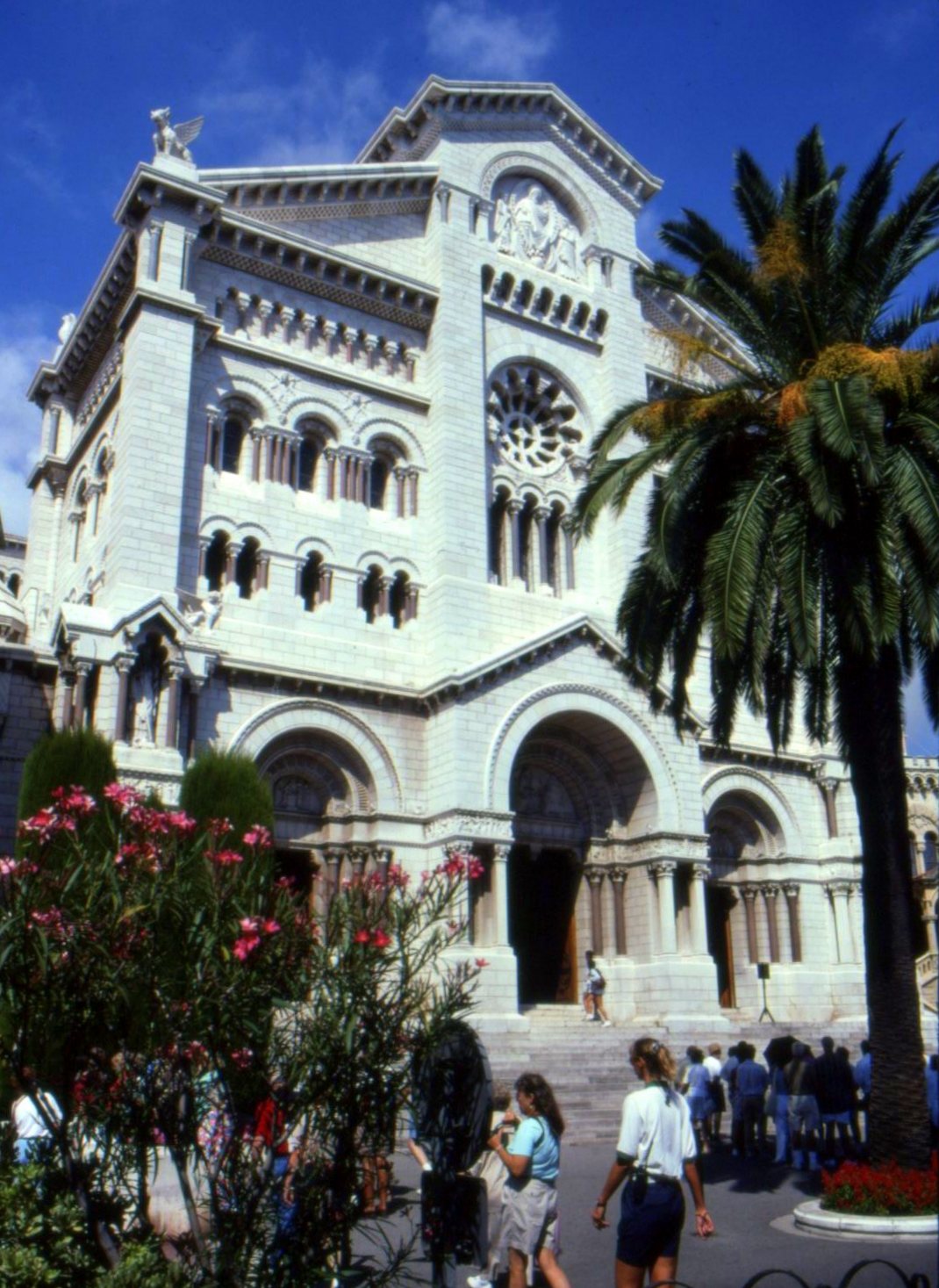
St. Nicholas Cathedral, Monte Carlo, Monaco


The St. Nicholas Cathedral is only 150 years old, but sits on the site of the original cathedral of the same name built in 1252.


It’s the home of the well-known Cathedral Choir School, and it Little Singers of Monaco perform at its masses during the school year.

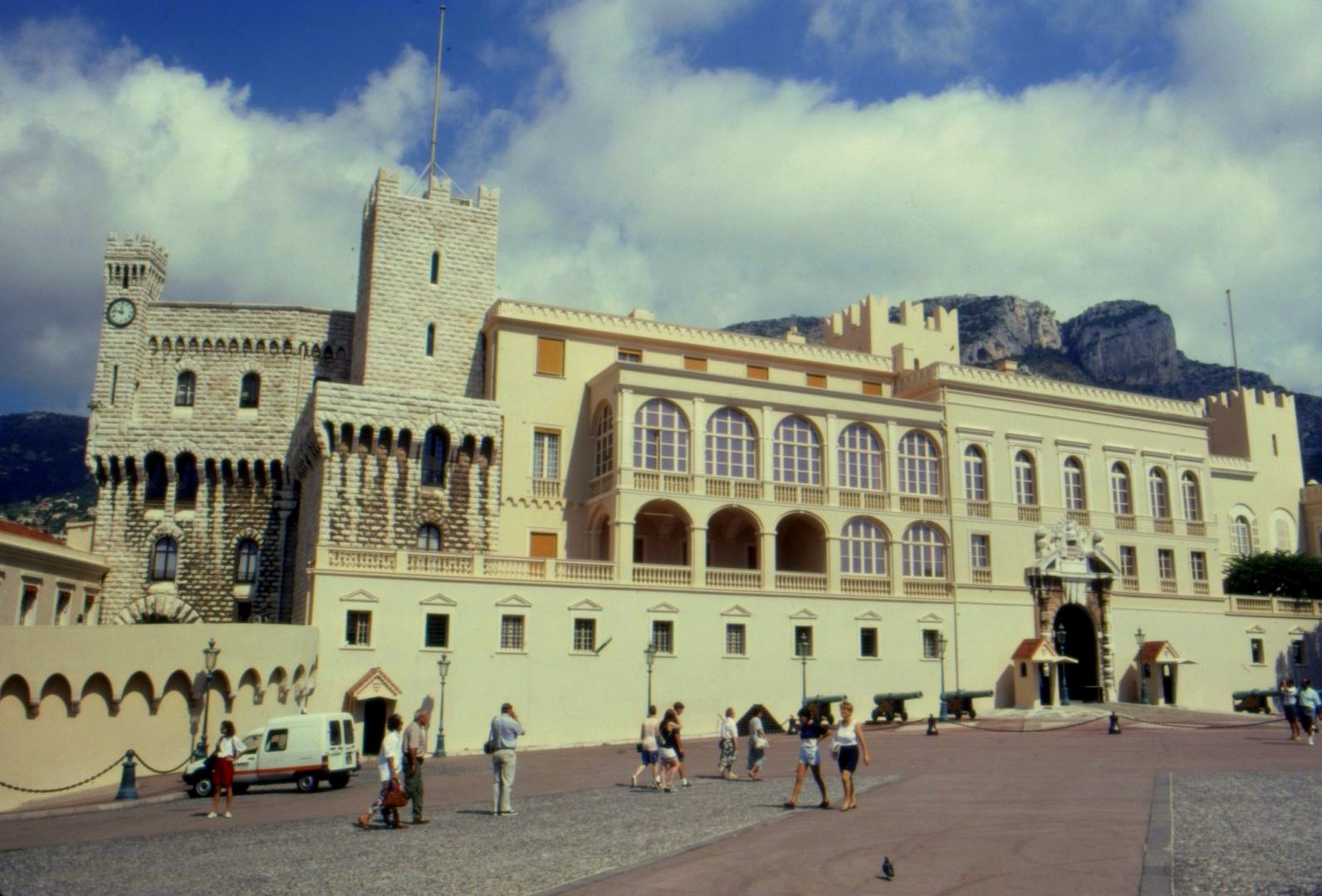
Grimaldi palace, Monte Carlo, Monaco


Other historical architecture worth seeing is the Grimaldi Palace.


It’s been the home of Monaco’s ruling family for more than 800 years and is the one time home of Princess Grace Kelly.

Grimaldi palace, Monte Carlo, Monaco

Shopping district, Monte Carlo, Monaco

Shopping district, Monte Carlo, Monaco

Because Monaco’s land area is too limited to afford its royalty the luxury of multiple residences, this palace has been remodeled and expanded throughout its 700-year history and so it’s a slice through the layer cake of history.


Terrain and language aside, Monte Carlo has very much the feel of Palm Beach.  Immense wealth is now sheltered in – and managed from – Monaco, and many of its owners have at least a pied-à-terre in the Principality.  Chic shops and restaurants prosper here in abundance.

Our Lady of the Assumption church, Eze, France


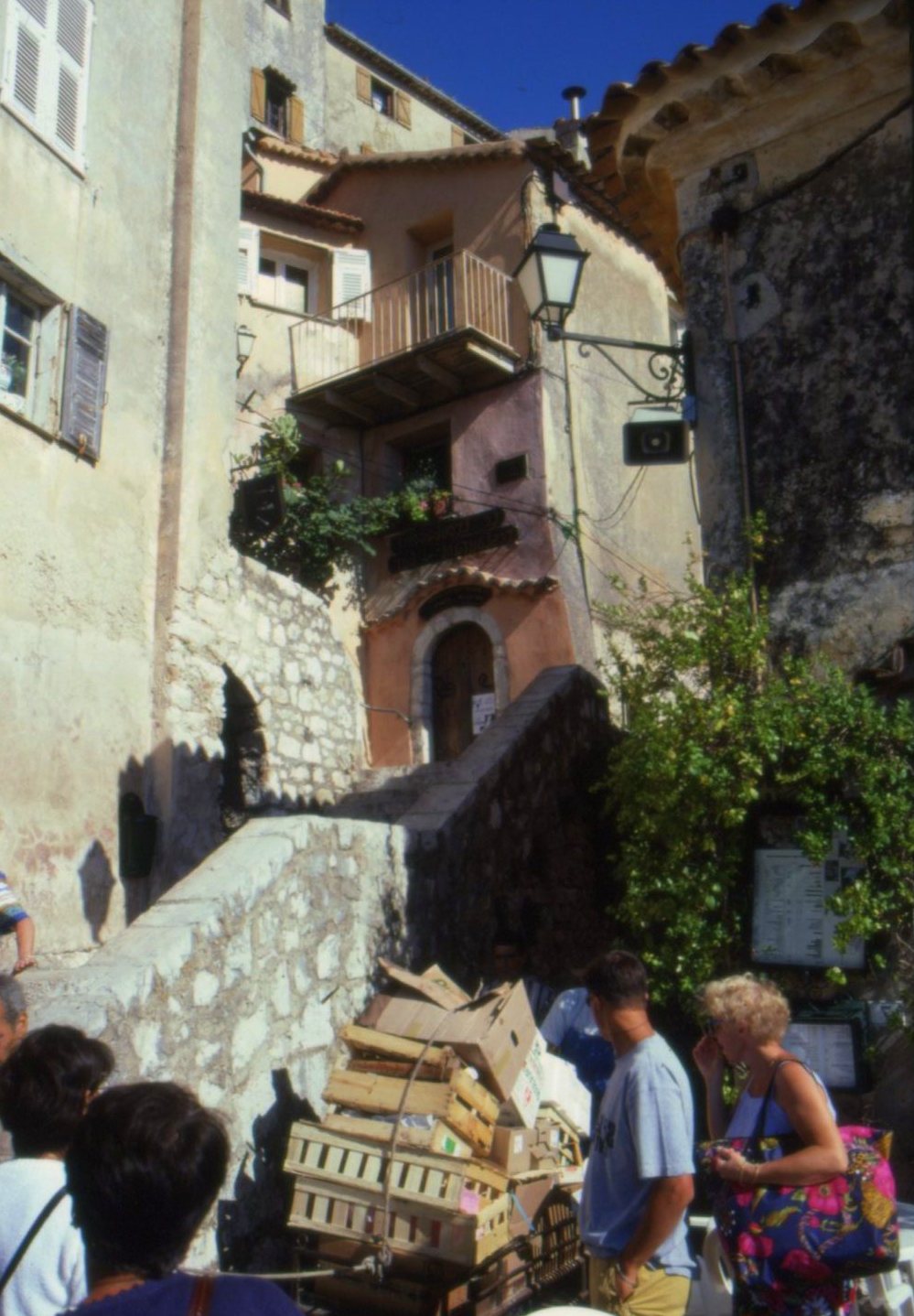
Duty-free shopping for designer goods holds little appeal for me, and I instead take a 5 mile drive into France where the historic village of Eze overlooks the Mediterranean Sea from a 1,500 foot promontory, accessible by roads so narrow that motor vehicles cannot pass into the old town.

Eze, France


The terrain here seems better suited to mountain goats than to people, and the modest uphill climb from the parking spot is the first of several.   Here goods are trundled through narrow cobblestone streets on hand-trucks and wrestled around switchbacks and up endless stairwells.

Eze, France


An easily defended coastal lookout, this site has been highly prized for nearly 4,000 years and has been occupied by the Phoenicians, Romans, Italians, and Moors.

Eze, France


There are several high-end hotels in the area, but the most interesting hotel was one cobbled together from adjoining homes on a pedestrian-only lane which left every doorknob on the lane sporting either a “MAID SERVICE REQUESTED” or “DO NOT DISTURB” sign!

Eze, France


Eze is also the site of a botanical garden created after World War II and known worldwide for an impressive collection of cactus and other succulents from around the Mediterranean and the Americas.


The cruise ship is scheduled to hoist anchor late in the evening. Passengers straggle aboard laden with bags of purchases from the shops of Monte Carlo.


As the boat leaves the harbor the lights and sounds of parties in progress on the big yachts at anchor carries across the water.


My takeaway is instead the memory of looking down at Monte Carlo from the vantage point of the Corniche, and out over the Mediterranean through the charming picture frame of medieval Eze. Tomorrow we’re scheduled to drop anchor in Portofino, Italy.


See earlier posts from this cruise trip:

Barcelona Beckons

Magical Montserrat

France’s Languedoc

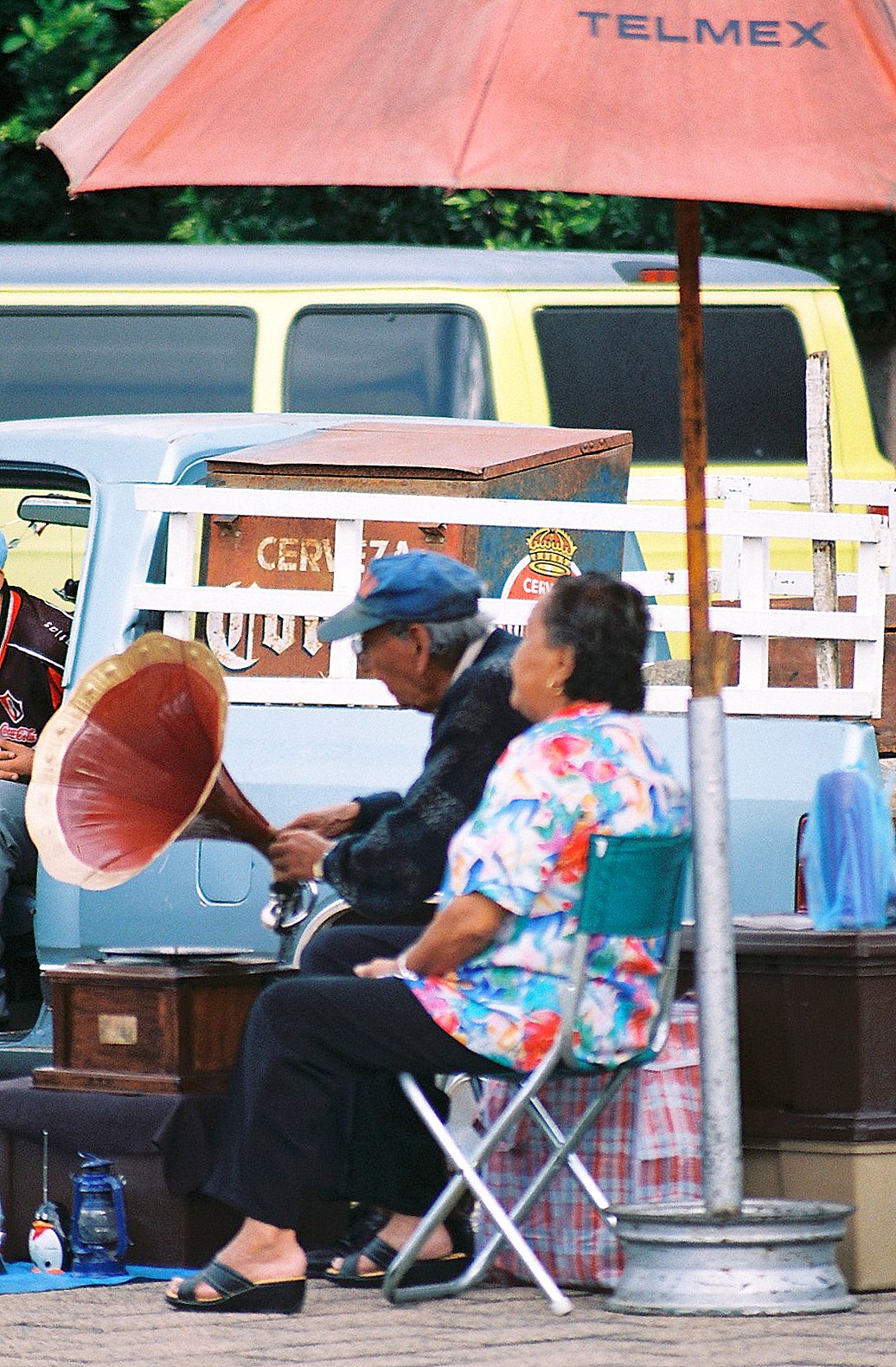
Guadalajara’s antique market

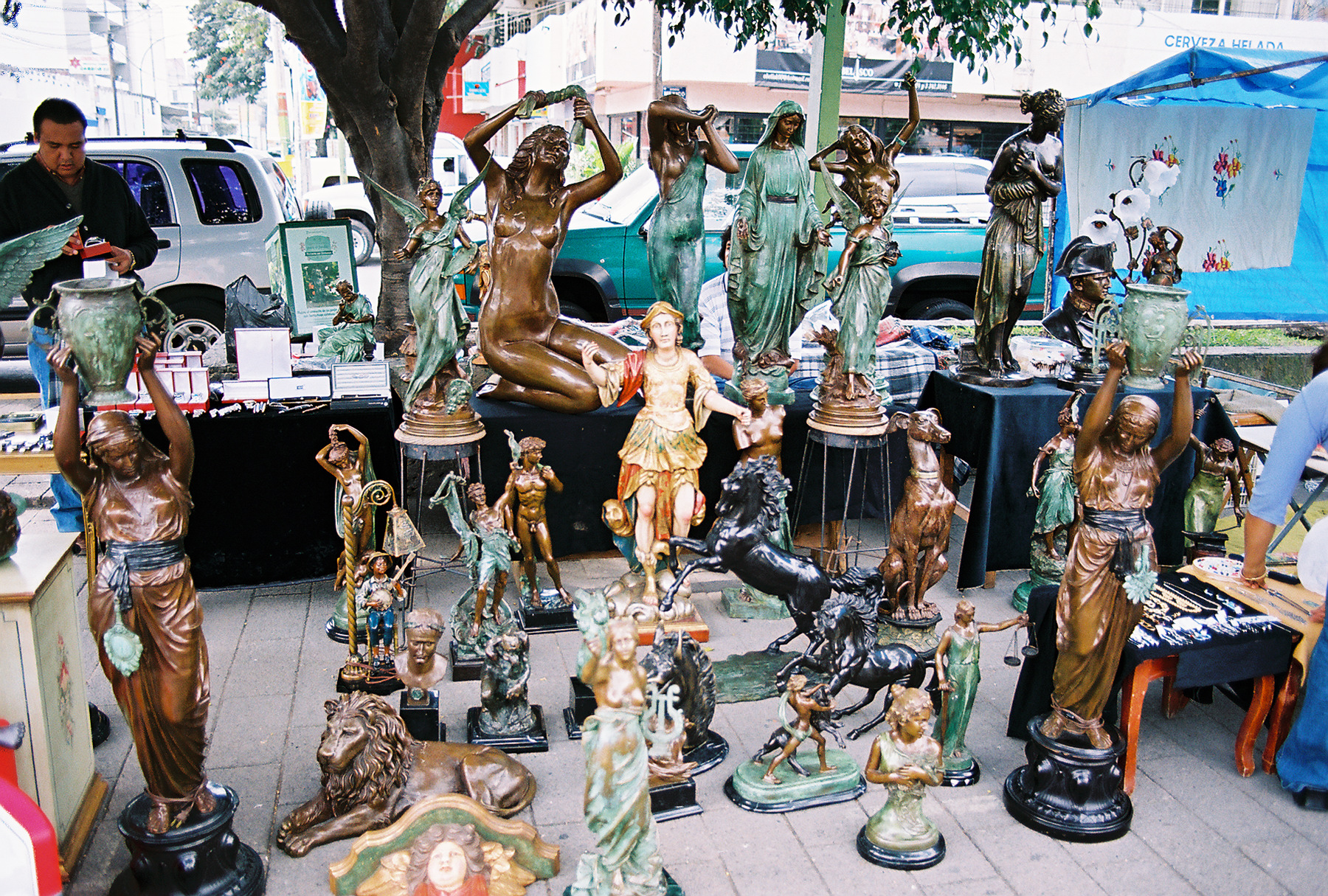
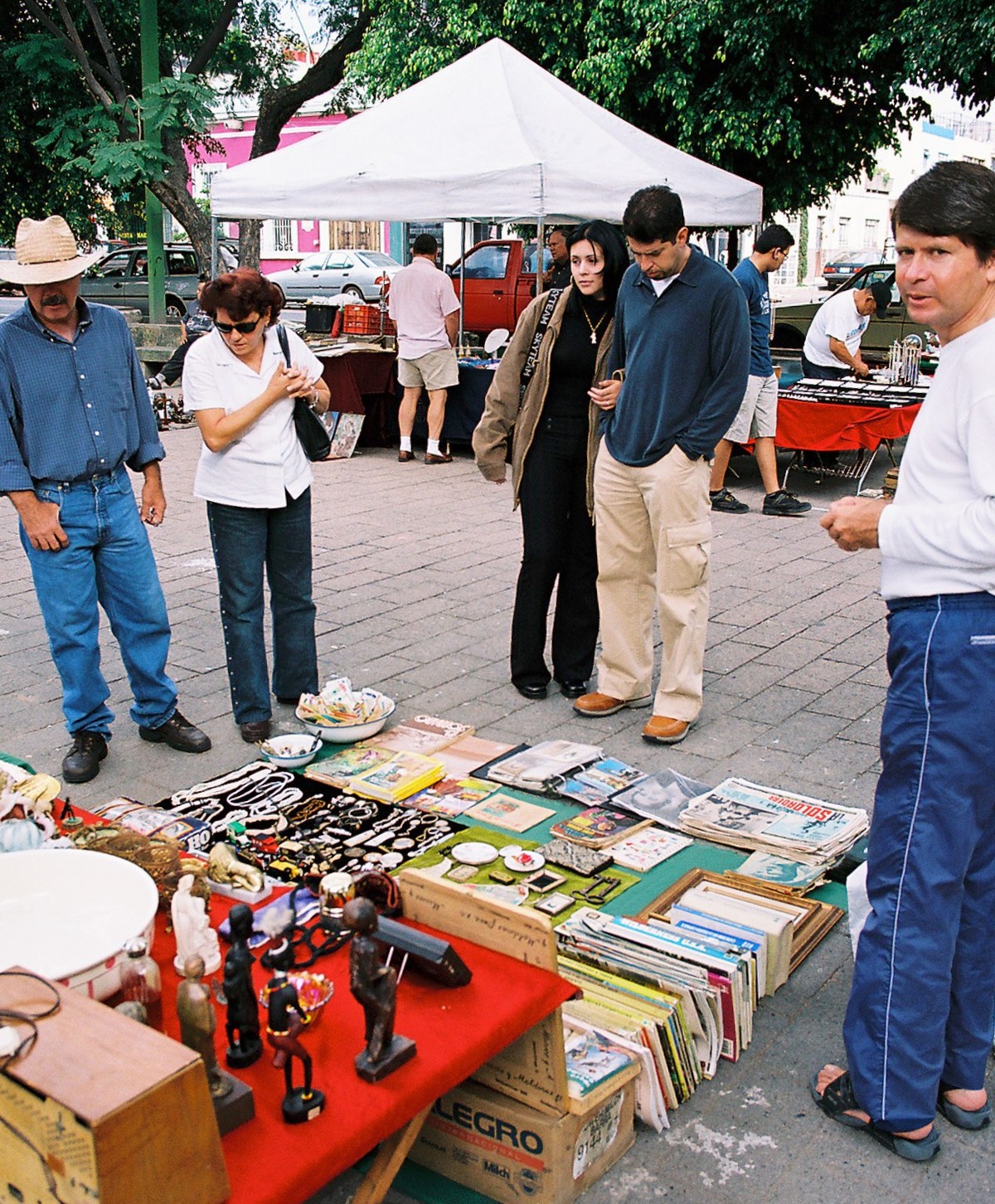
Antique markets afford a window into the lives of each treasure’s original owner, and Guadalajara’s antique flea market is loaded with artifacts that look like they once graced the drawing rooms of the gentrified west side neighborhoods built around the turn of the 20th century.

Guadalajara’s antique market


Held on Sundays from 9AM-5PM at the intersection of the Avenida Mexico and Chapultepec Norte in front of the Bodega Aurrera, this outdoor market unwinds over several blocks and the scope of the collection is mind-boggling.

Guadalajara’s antique market


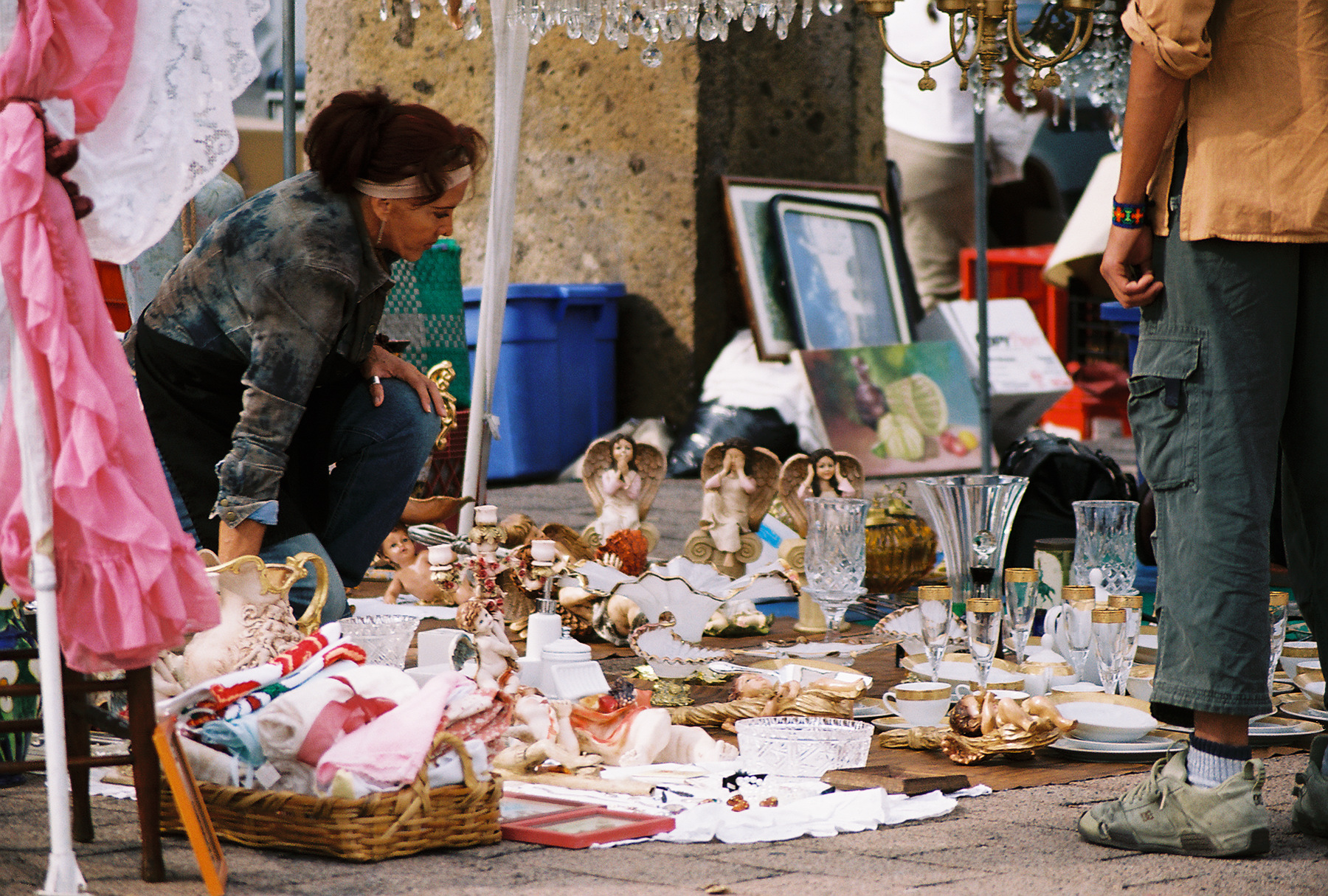
The stalls are chock full of collectibles from statuary to silver and crystal, furniture, and books and records.

Guadalajara’s antique market

There are also plenty of personal items and memorabilia that often leave the shopper with the sense that the aura of their original owners is somehow still present among them.

If you’re expecting a flea market that requires you to sort through a ton of junk to find a few gems, you’ll be pleasantly surprised by this place.

Guadalajara’s antique market

Much of the merchandise appears to be in museum piece condition, and it’s clear that the vendors know their artifacts intimately and take great pride in their displays.

Guadalajara’s antique market

Here you’re stopped by an item caught out of the corner of an eye and find yourself still browsing the same stall half an hour later, unraveling threads into the past.

Guadalajara’s antique market

This market, though, is not just a window into Guadalajara’s past, but also a snapshot of its present.

Guadalajara’s antique market

The vendors are of all ages, and it’s clear that these folks have come to know each other well over years of Sundays spent here together.

Guadalajara’s antique market


The shoppers are also diverse, but the crowd includes a healthy mix of young urban professionals that the visitor is unlikely to encounter at the city’s more classic tourist sites.

Guadalajara’s antique market

You don’t have to be a collector to appreciate this place, and you don’t have to buy a thing to have an enjoyable day here.

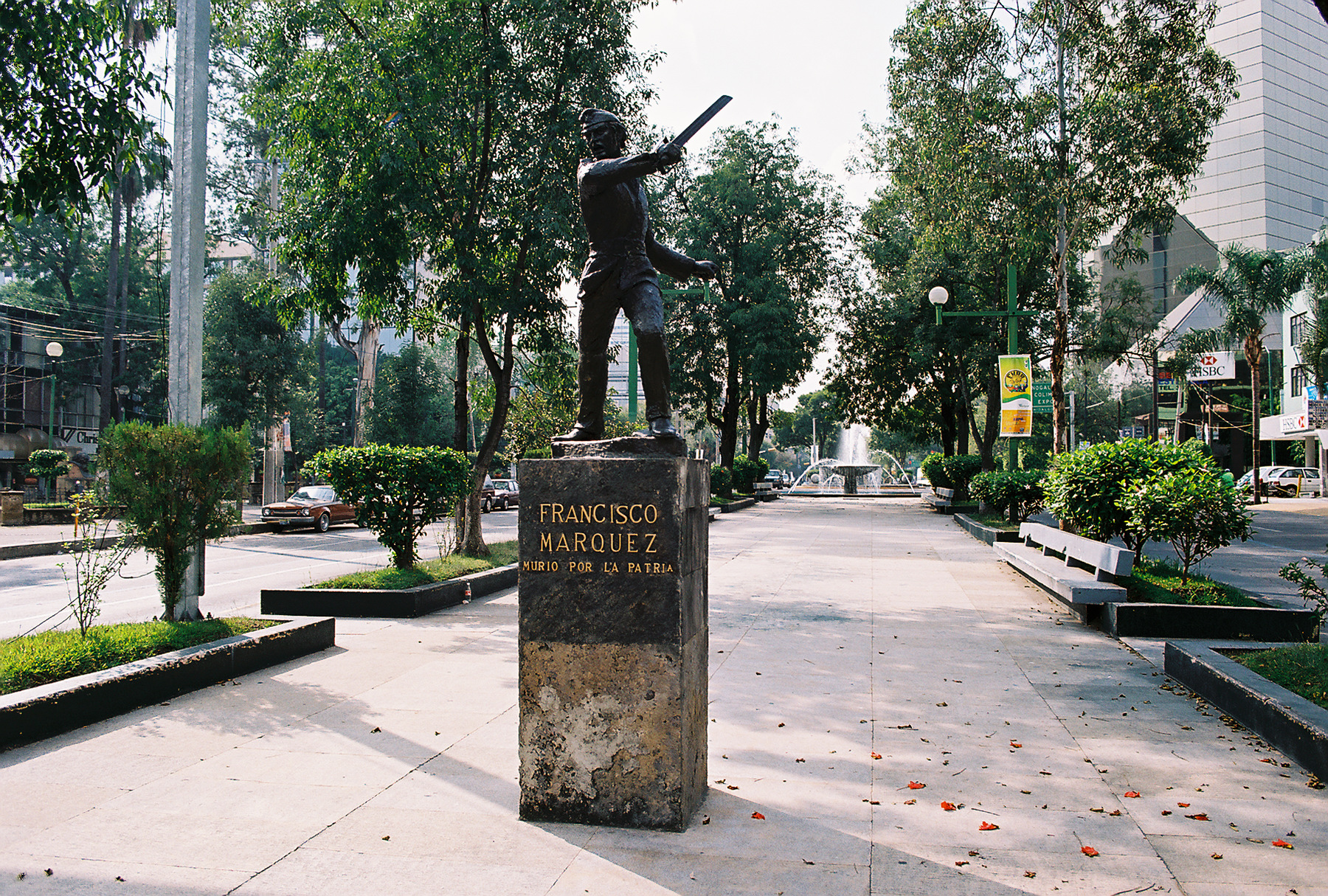
Avenida Chaputepec

Afterwards take a walk down Chapultepec and join the Sunday promenade always in progress on a traffic-free Avenida Vallarta.

See my related posts:

Basking in Barbados

Palm trees in the Trade Winds

Cruises are not only a great way to enjoy a smorgasbord of travel experiences in a short time, but also a great travel sampler that points the way to return visits.


My first taste of Barbados as a cruise ship port of call made it quickly clear that a return visit was needed to experience the best of what the island had to offer.

Bridgetown’s impressive city center


Bridgetown has the look of a seat of government, much of it dating from the days when the possession was administered by the British colonial service.


Tail end of a military parade

Boats of all types are anchored here


For many, bicycles are the transit of choice


Today it’s the island nation’s capital, and the city has a free and easy tropical gait.


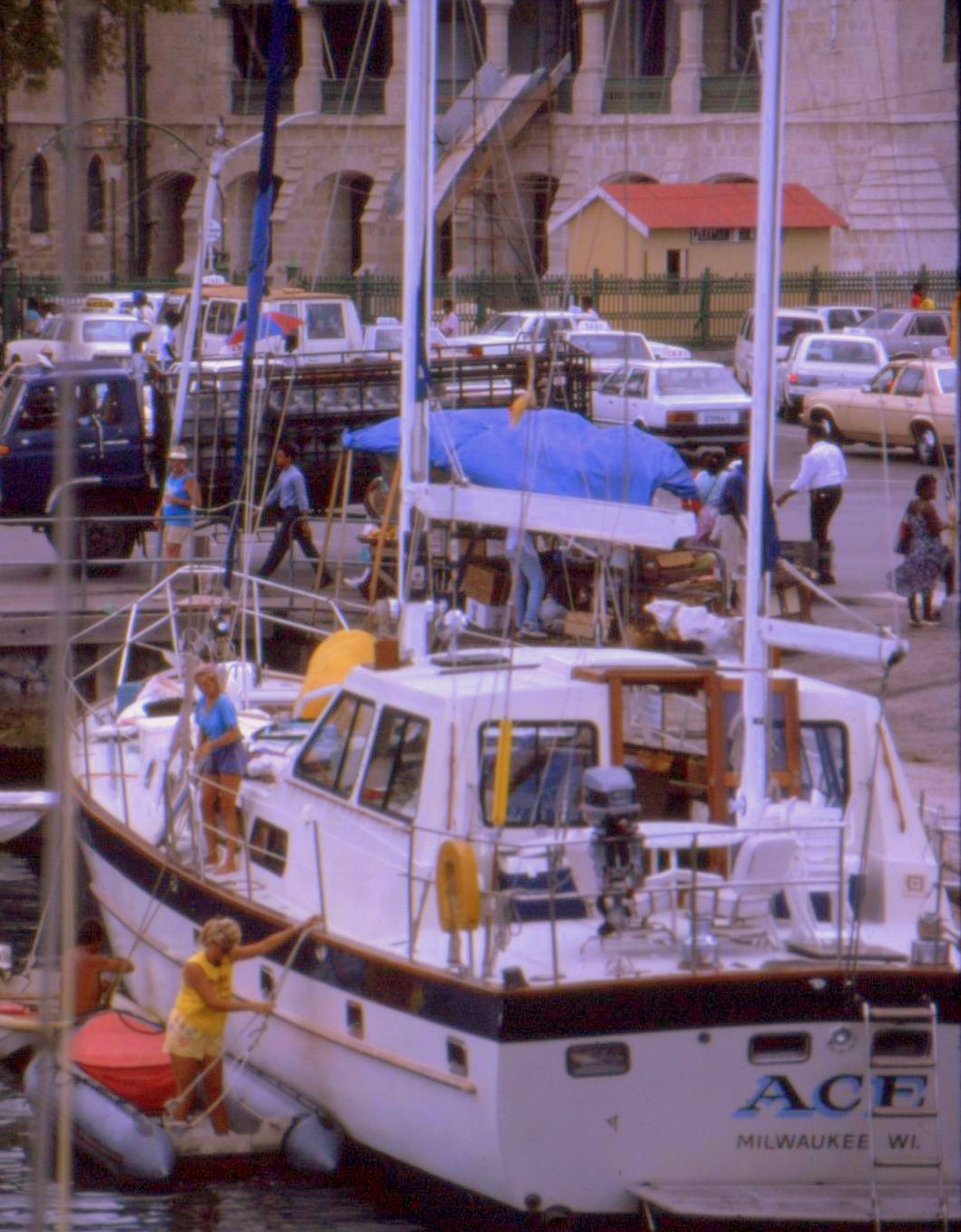
Boats of every type constantly move in and out of its harbor.


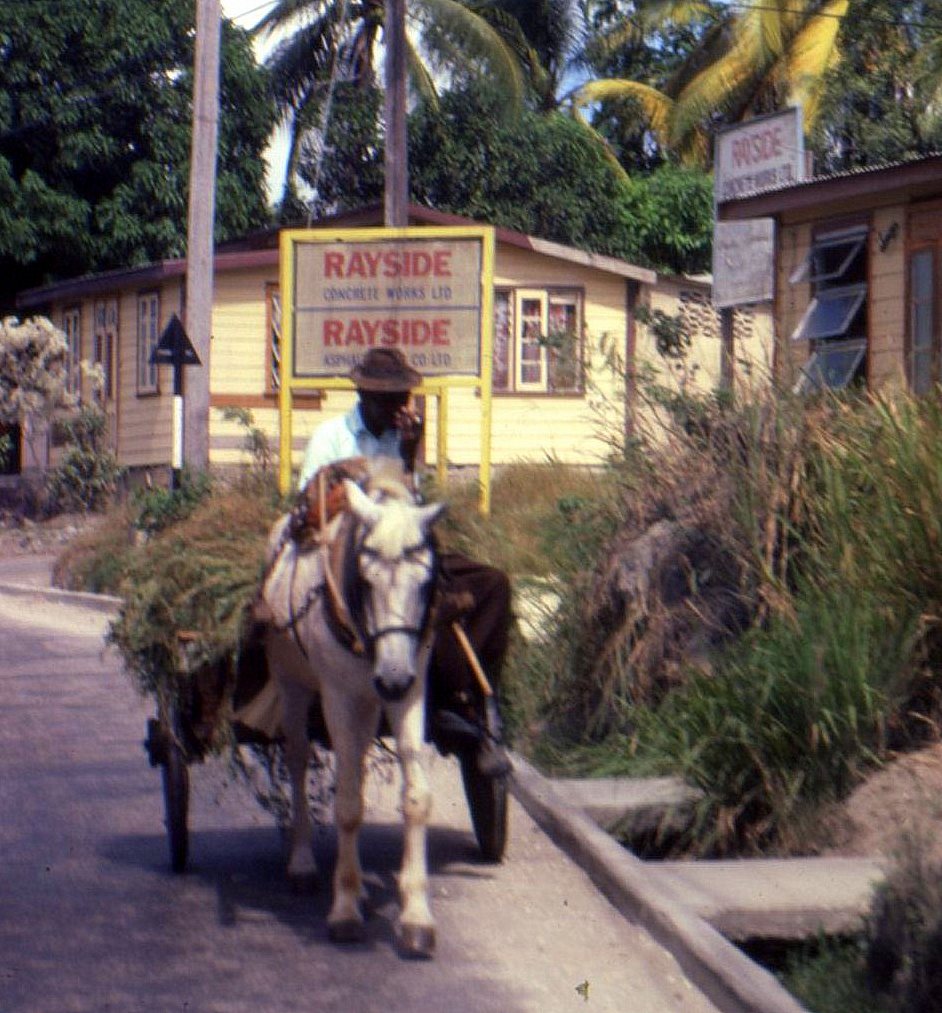
Bicycles and donkey carts share the streets with cars.


Cars share the roads with horse-drawn carts


The British ruled and planted sugar cane here for more than 350 years, and as in in so many former British possessions, Barbados marries English culture and African heritage to produce delightful contrasts.

Cottage near Bridgetown

Island cottage near Bridgetown

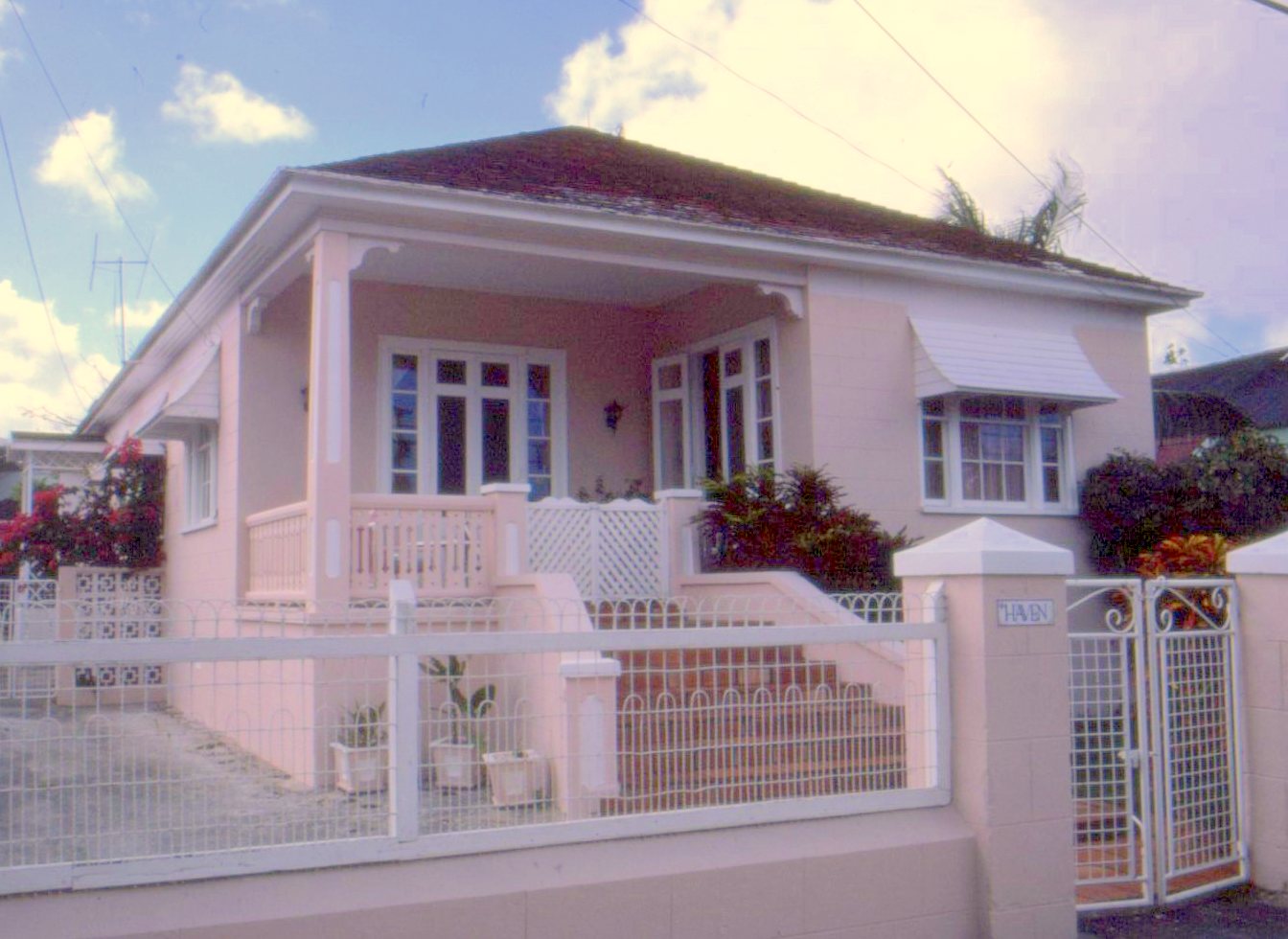
There are cottages and hedgerows and floral gardens and red postal letterboxes.

There are also Rastafarians, dreadlocks tucked up under rastacaps.

Waiting for the bus

Fruit-vending Rastafarians

Coastal hamlet


About 2 in 5 of the island’s quarter million inhabitants live in and around Bridgetown.


The rest are scattered among small villages and hamlets across barely more than 150 square miles and along 60 miles of coastline.


Village transport


If you can avoid going in circles it’s hard to get lost here for very long!


Situated around 100 miles beyond the Grenadines into the Atlantic, Barbados is the easternmost of Caribbean islands and on occasion a hurricane bellwether.

Atlantic coast

The rugged coastline of the Eastern shore faces into the Atlantic wind and waves.

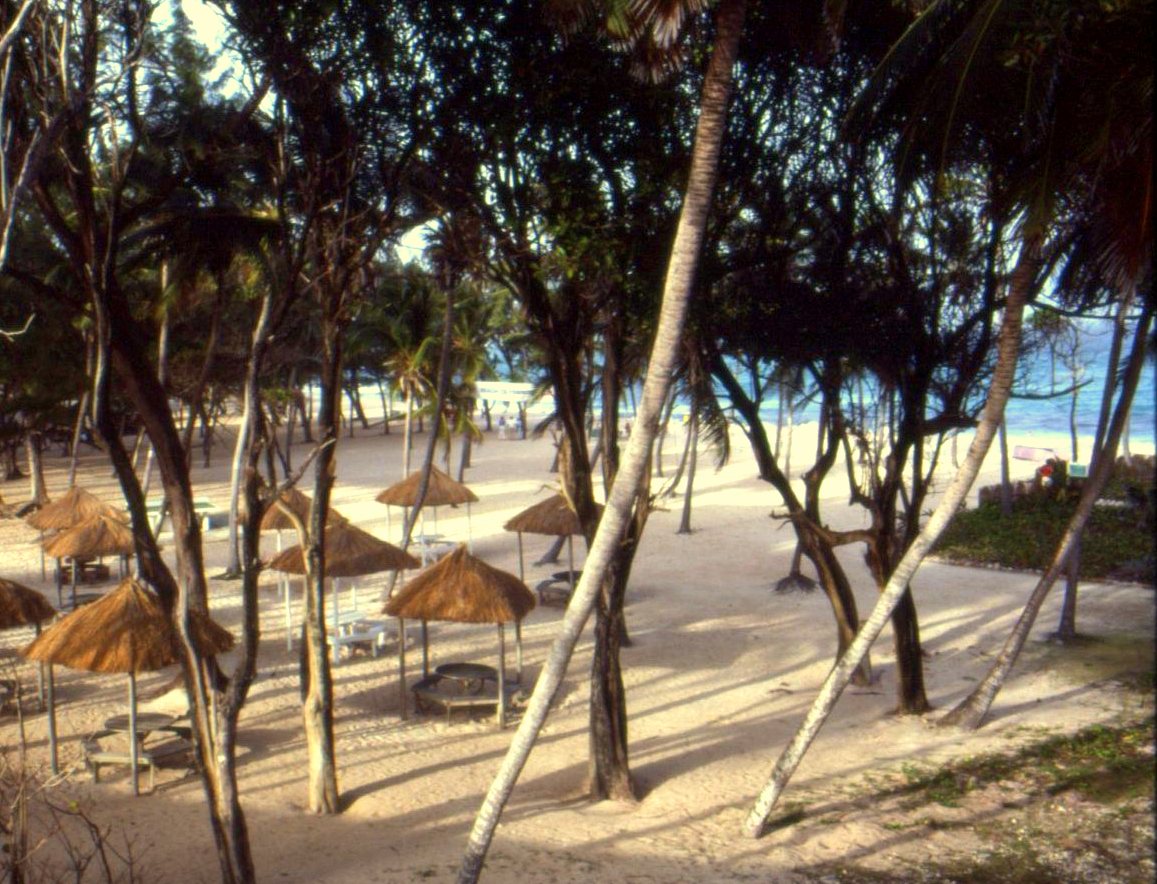
Beach facing the Caribbean

The western and southern shores are marked by fine, white sandy beaches and aquamarine water.

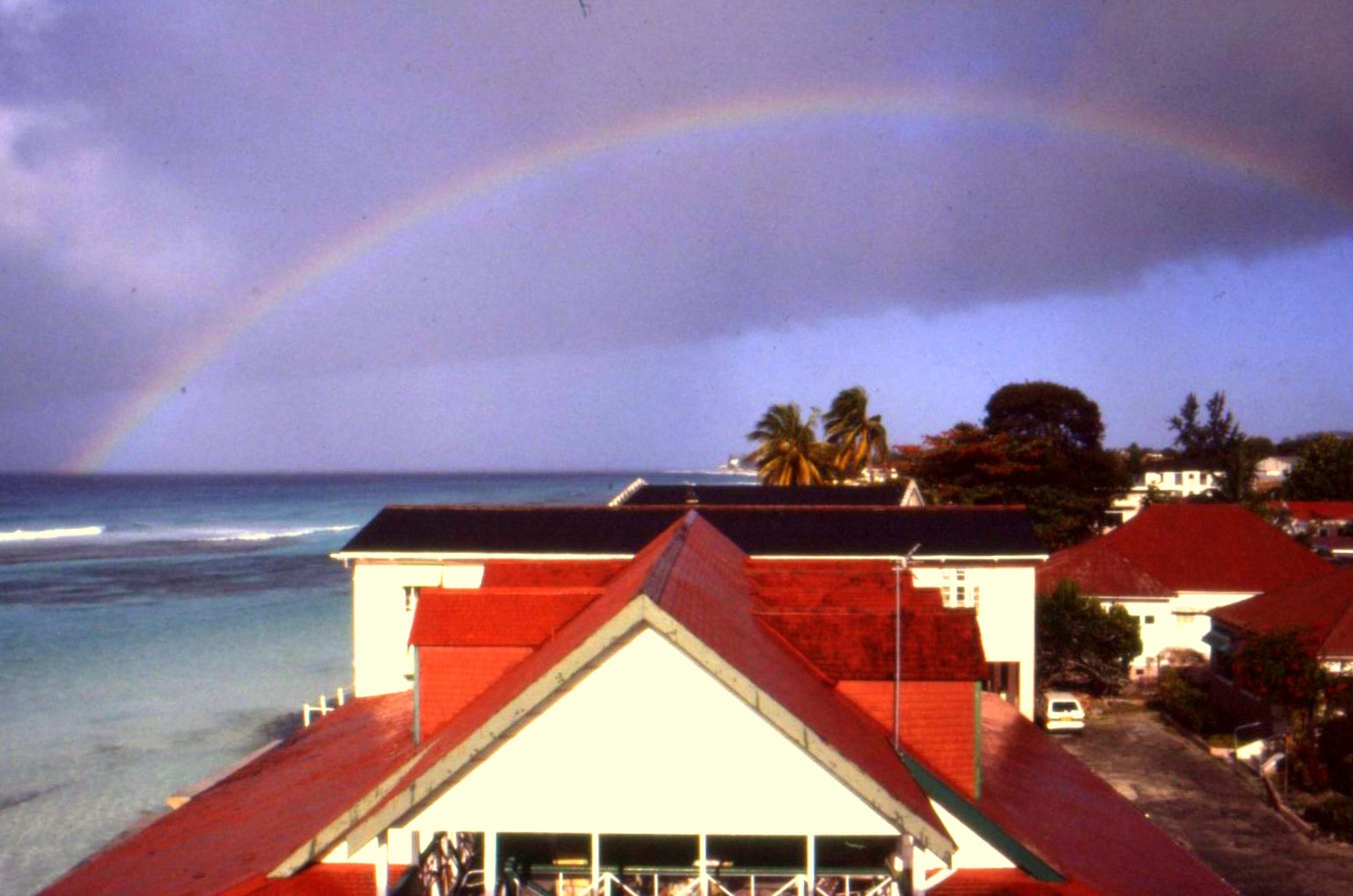
Rainbow at day’s end

There’s lots yet left to see in the days ahead:  Plantation great houses and tropical gardens and a rum distillery.

It seems a good omen that the day closes with a beautiful evening rainbow enjoyed over a rum punch!

Ajijic’s mural art

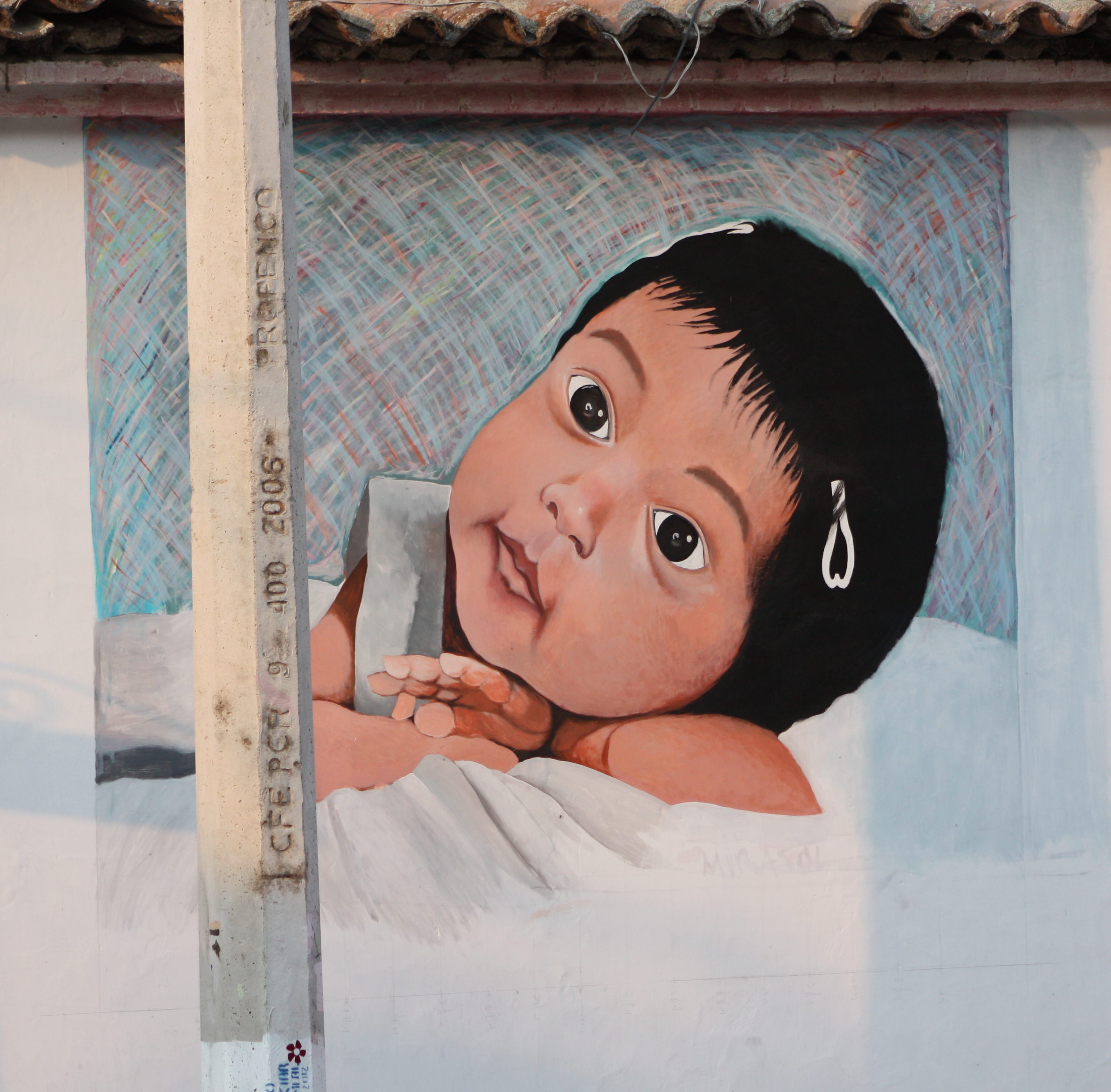
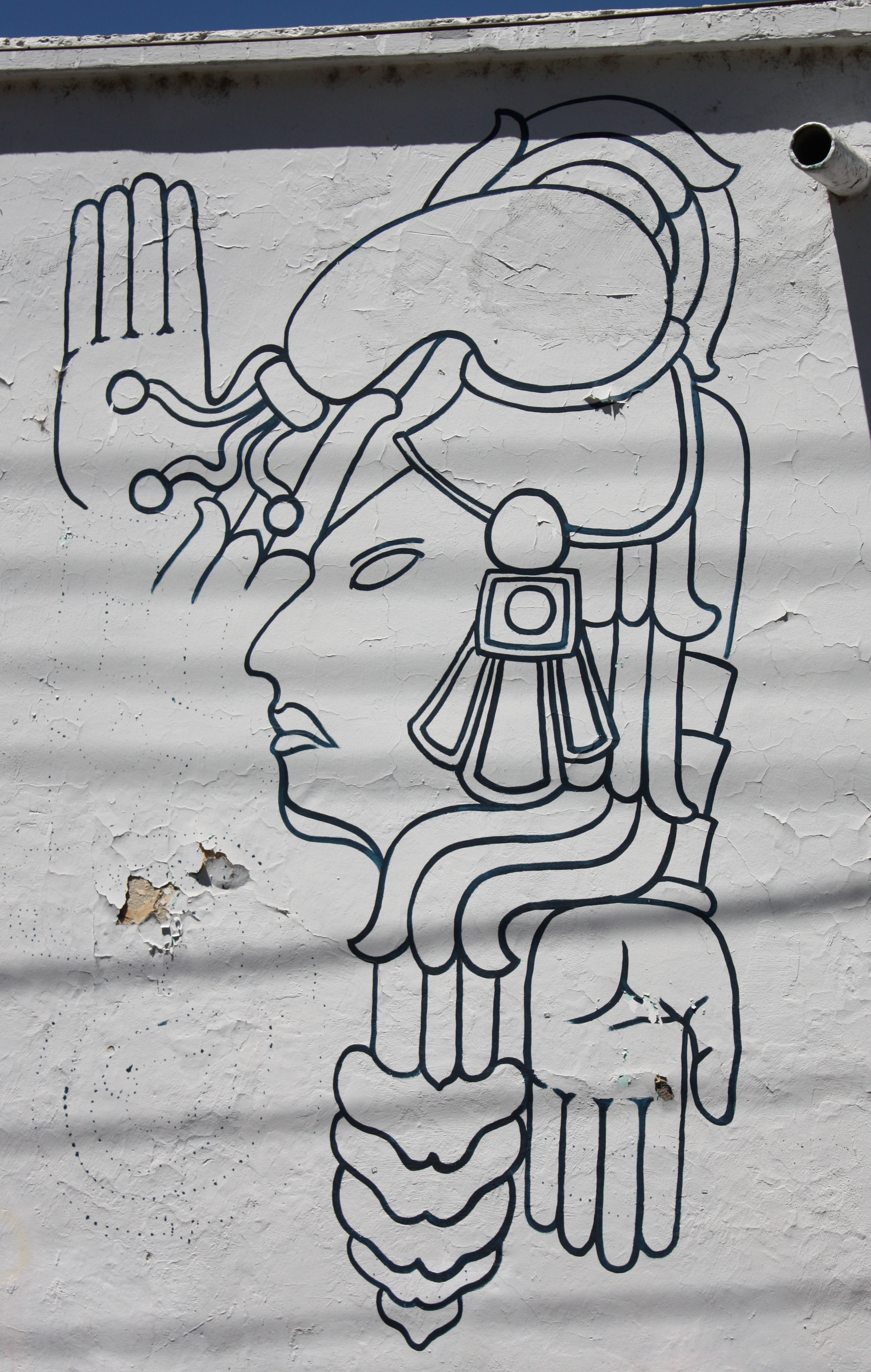
Mexican art is blessed by the rich muralist tradition of Rivera, Orozco, and Siqueiros, and even today murals remain a prominent feature of Mexican public art.


Murals are so commonplace in Ajijic as to be taken for granted, but they’re as much a signature part of the village’s character as spring blossoms or street vendors or views from the malecon.


It’s hard for anyone on the Ribera not to pass at least one daily, and each image indelibly anchors the memory of everything that happens beneath it to a single spot.


Murals made perfect sense as a way to present ideas and to perpetuate sense of history throughout Mexico’s illiterate past, but the art form is as fresh today as ever.


As similar as some murals may seem at first glance, their form is far from formulaic.


The topics may be patriotic or otherwise political, and they’re often historical.


Sometimes, though, the primary object seems to be only to create pleasant diversion for the eyes and to adorn an otherwise unmemorable spot.


Their forms are remarkably diverse, ranging from dayglo-bright ribbons to simple black-and-white images.

Ajijic mural art 05

Ajijic mural art 06


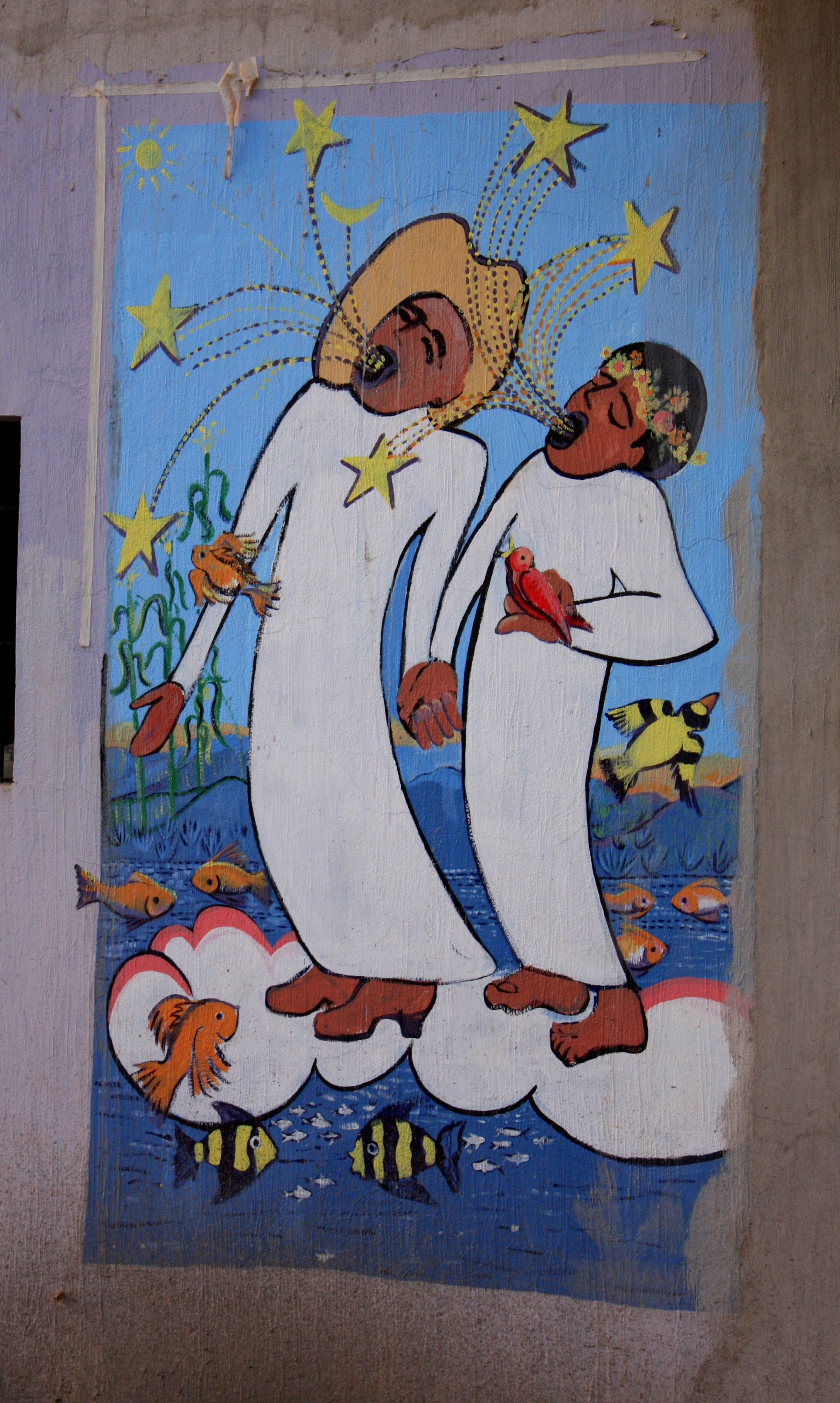
Some borrow their style from Europe and others are purely indigenous.


Some are painted and some in relief.


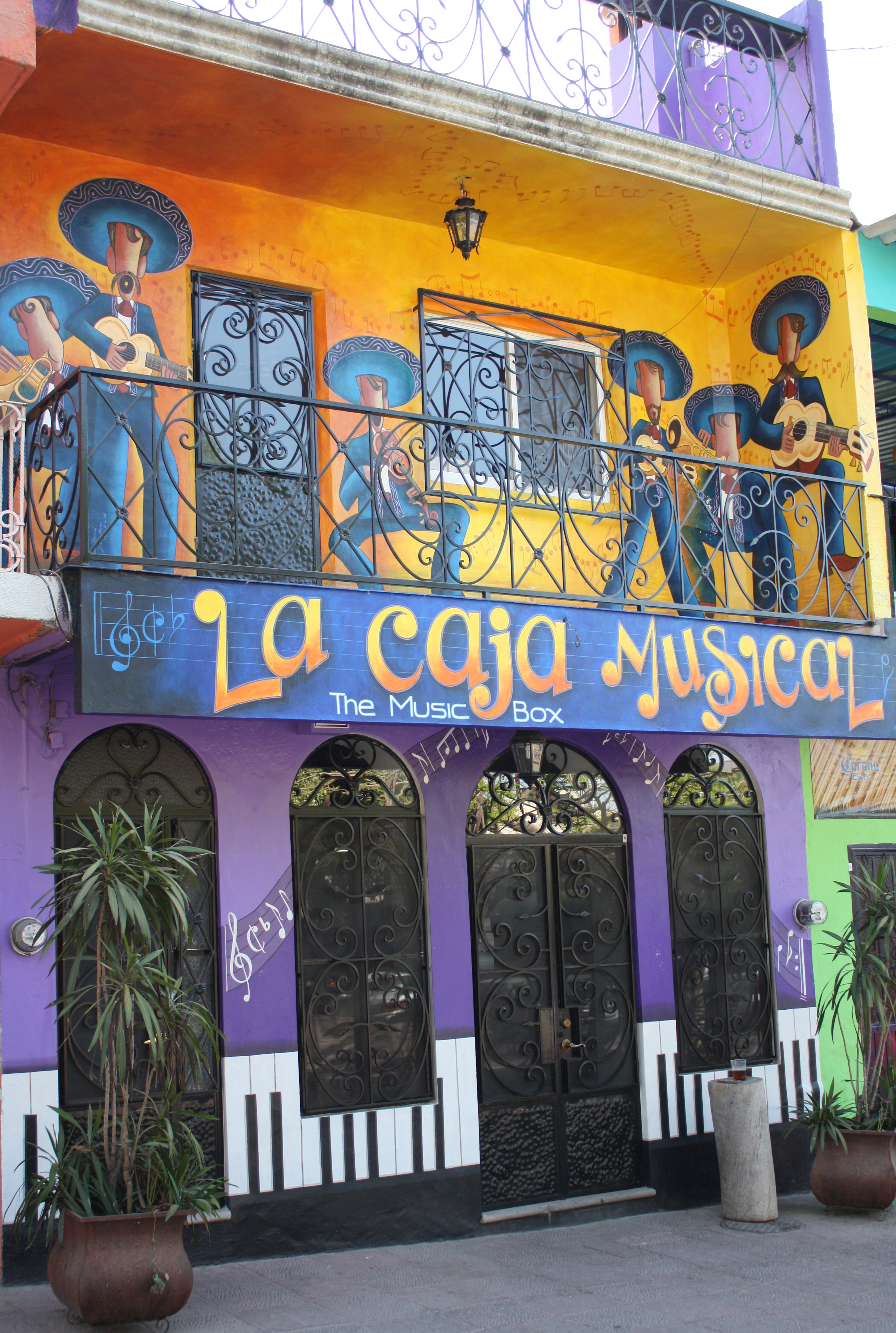
Some have a commercial agenda.


Many – but not all – are outdoors. The one below adorns the interior stairwell of the Cultural Center.


They all, however, have a couple of things in common.


One is that each is an original work of art.  Some are permanent – or at least as permanent as paint on stucco can be in the Mexican sun – and others only long-lived enough to commemorate a passing event.


Another is that they all tell stories.  Some are short and simple.  Others are like scrolls unrolled, so panoramic that each new look uncovers some detail earlier unseen, like the three panels of the mural below reading left to right.


There was a time when billboard painting was an art north of the border. These days billboards are created in Photoshop, digitally printed by the dozens onto vinyl, and stretched over the frames of boards that were once signpainters’ canvasses.


One thing’s for sure.  It’s impossible to visualize Ajijic without picturing its public murals! For more about Ajijic’s unique character see my related posts: