Latest Entries »

Magical Montserrat

Monastery at Montserrat, Spain

What to do with one day yet in Barcelona before the cruise weighs anchor? There’s plenty of ground yet unturned in the city, but there’s also an intriguing day-trip site of a completely other flavor that begs to be on a Barcelona short list.

The Monastery of Montserrat – also called the Abbey of Montserrat or Santa Maria de Montserrat – sits at the edge of the Pyrenees about 30 miles from Barcelona. Founded by the Benedictines in the 11th century, it’s tucked into a mountain of the same name that rises to more than 4,000 feet.

Since tour bus service from Barcelona is non-stop and everything at the other end is very walkable, it makes sense to sidestep car-rental-and-parking-spot-search and grab an uninterrupted chance to enjoy the great scenery.
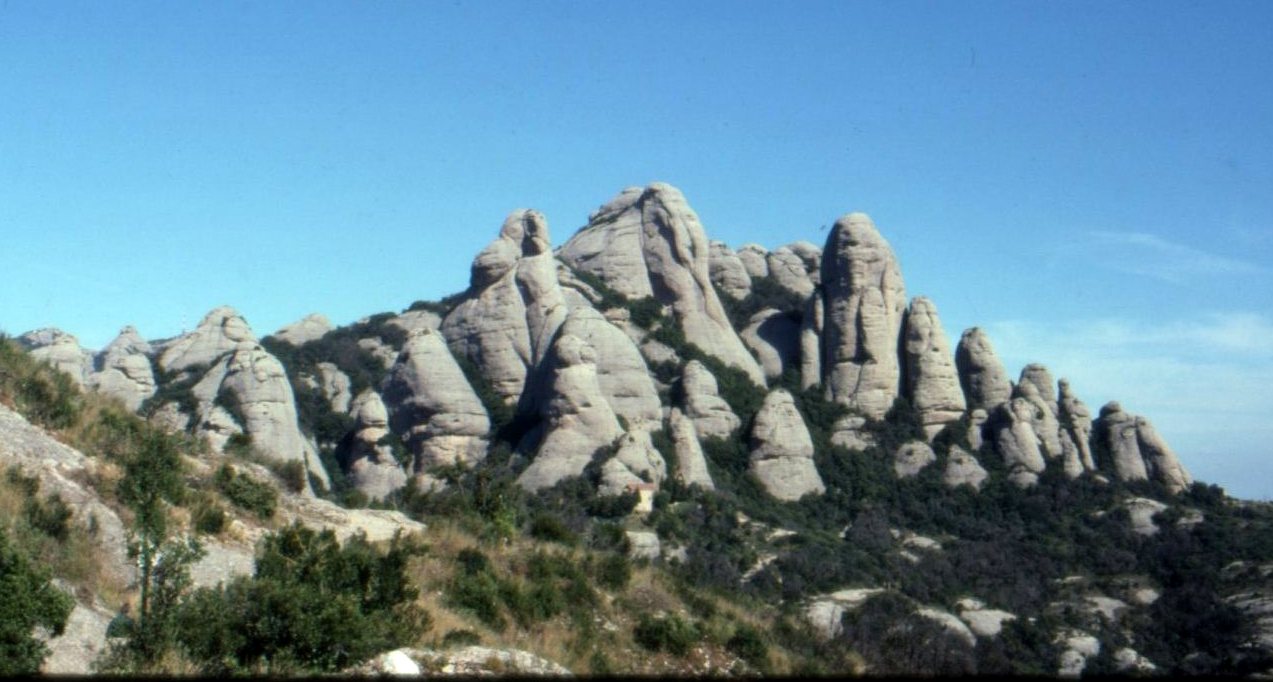
Pyrenees foothills near Montserrat, Spain

The ascent starts gently, but it’s not long before rock formations begin to sprout. These are not the sharp-toothed mountains of Colorado or the Alps, but weathered monoliths on which the angles are all now worn to curves.
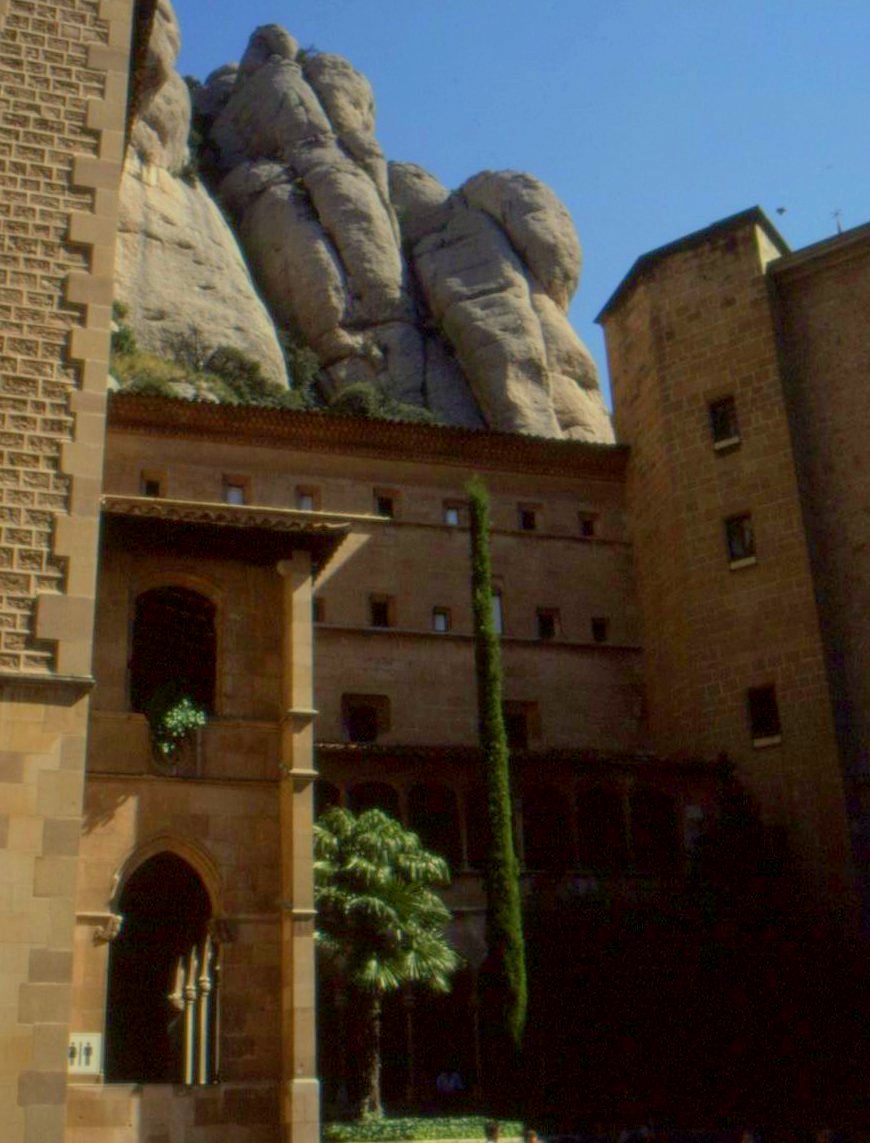
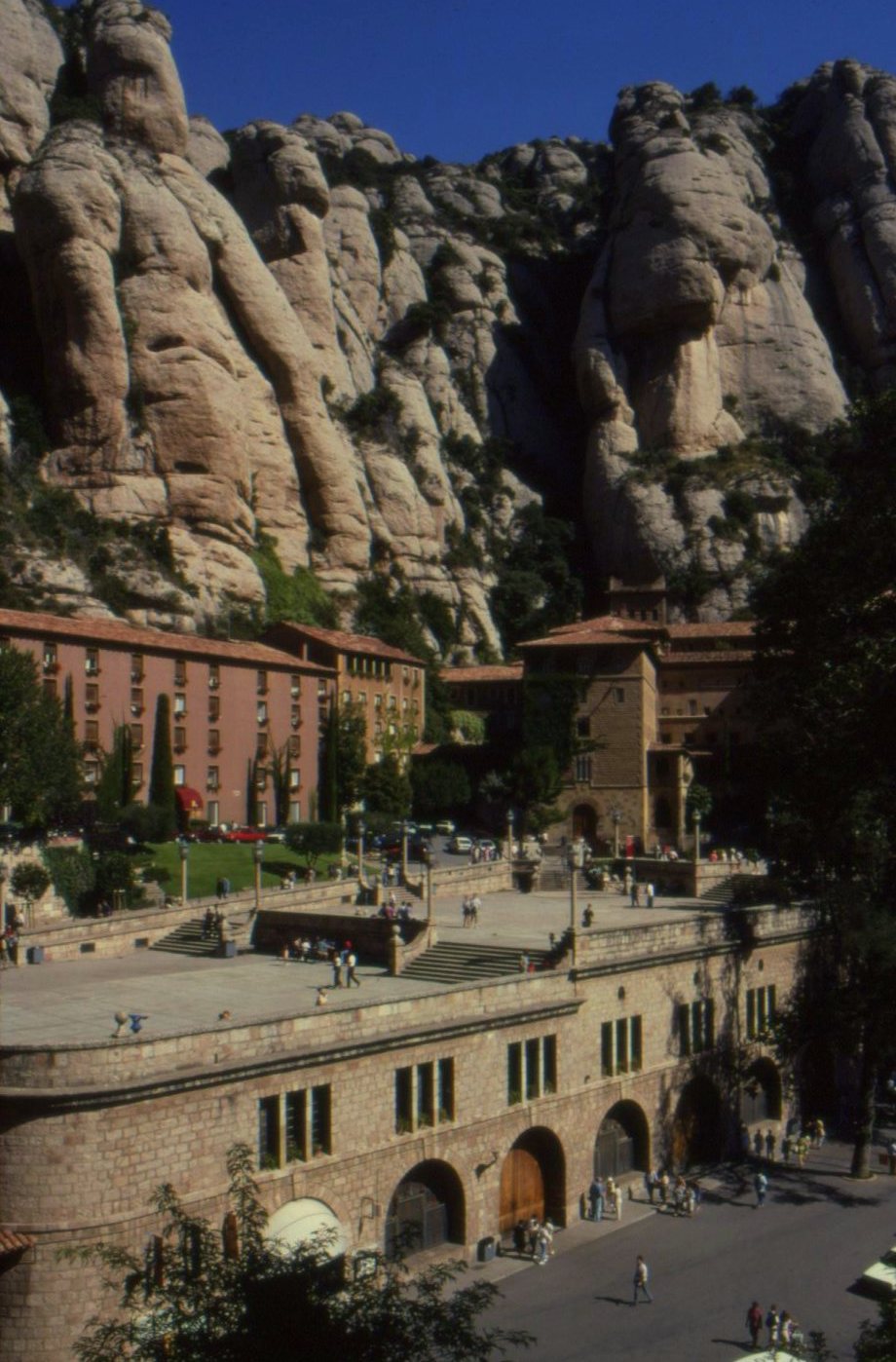
Monastery at Montserrat, Spain

As the bus approaches, the monastery grows picture postcard perfect out of the mountain not as much perched upon it as embraced by it. The architecture here is Romanesque, and buildings including a basilica and belltower are arrayed around a classic courtyard.

Monastery at Montserrat, Spain

The “Santa Maria” part of the abbey’s name comes from a Madonna-and-child statue carved in dark wood that’s the centerpiece of the basilica. She is one of only about 500 Black Madonna artworks to survive the Catholic Church’s remake of Christian art in a European image, and she is known affectionately among Catalonians as La Moreneta… the little dark-skinned one.
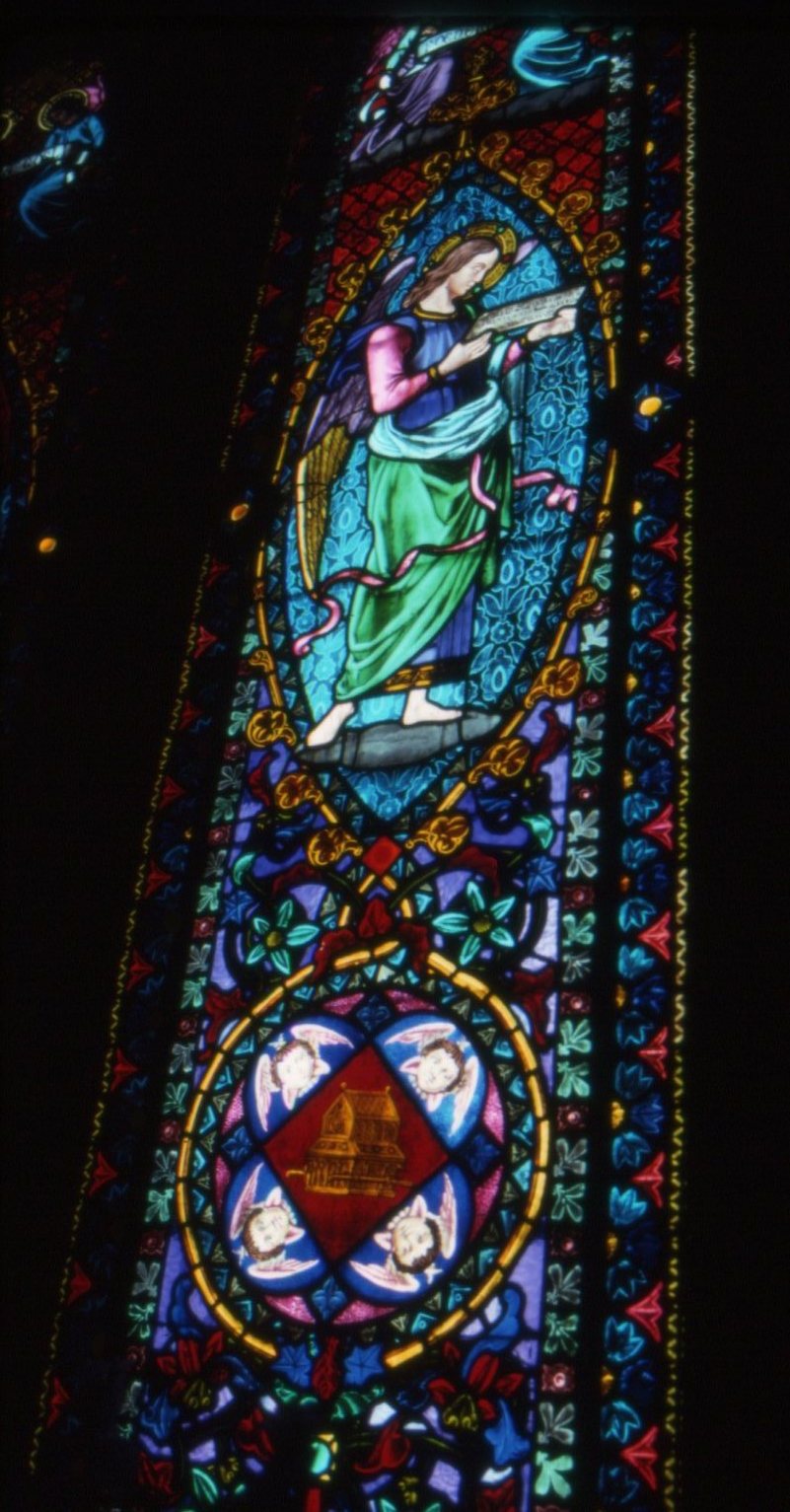
Monastery at Montserrat, Spain

Paradoxically, Ignatius Loyola laid down his arms at the icon’s feet before founding the Jesuits and in 1881 Pope Leo XIII declared her the patroness saint of Catalonia!

There’s more to Montserrat than worship, though. This monastery was a productive community that provided for itself and was very engaged in the world around it.

Monastery at Montserrat, Spain

The Benedictines have been printing books here since 1499, and the monastery houses one of the oldest continuously operating printing presses in Europe.


The celebrated Montserrat Boys Choir – the Escolania de Montserrat – sings at least once daily in the basilica and on select dates gives more extended performances.

Monastery at Montserrat, Spain

The basilica museum houses sculptures and paintings by artists including works by El Greco, Dalí, and Picasso.

Did I mention that wine’s been made here for centuries?!
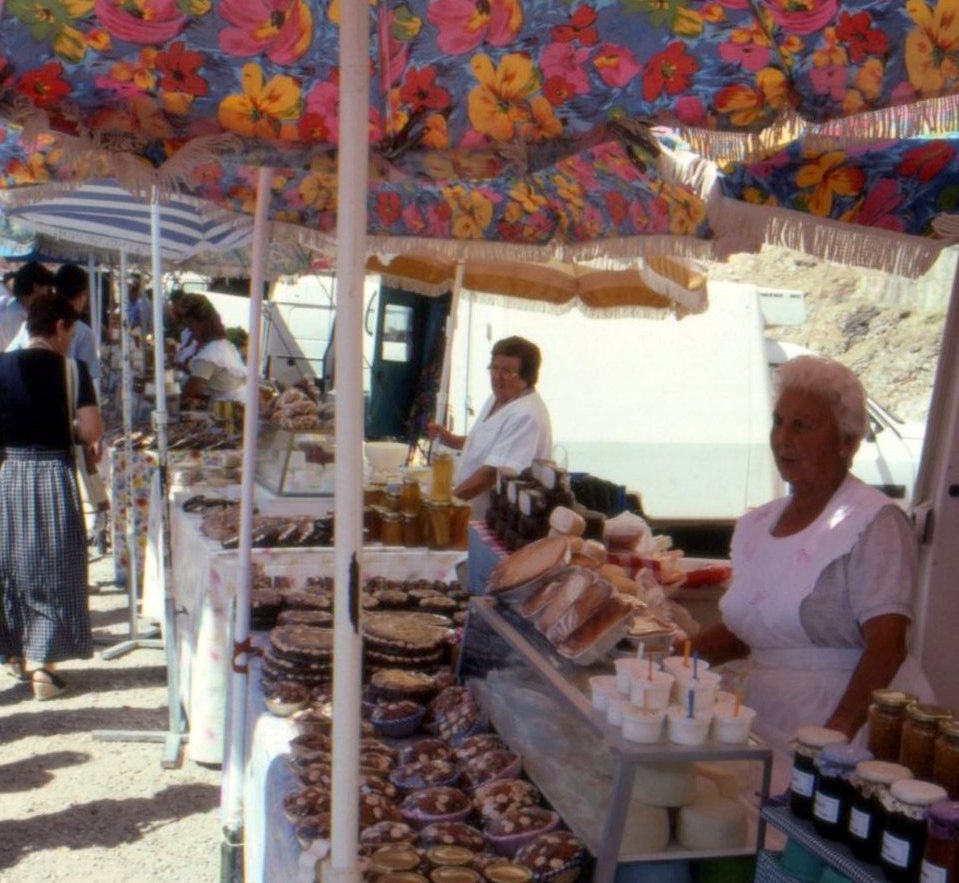
Courtyard market, Monastery at Montserrat

Wherever there’s traffic there’s a market, and Montserrat is no exception. Here the merchants here all looked like mothers and grandmothers. Everything for sale looked to be both was homemade and edible; there was not a Montserrat T-shirt or baseball cap in sight!
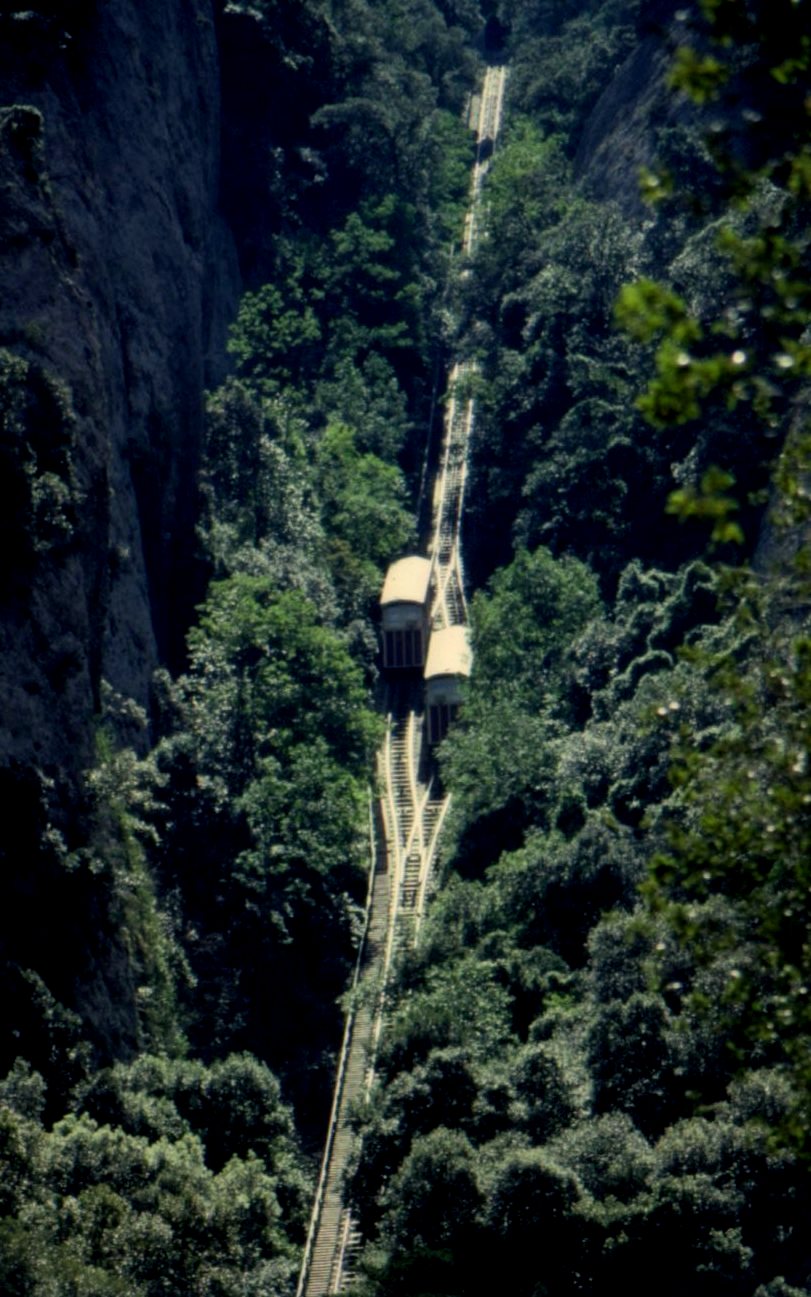
Tram at Montserrat, Spain

The funicular’s upward and downward trams share the same mountainside track, and those with an inclination can hike further up to a lookout point from which it is claimed that the island of Majorca is visible on a clear day.

Monastery at Montserrat, Spain

As the tram descends and the monastery grows ever larger, it really sinks in that in medieval Europe there were a lot worse jobs than being a monk!

Monastery at Montserrat, Spain

See my related post on Barcelona here, and join me on the cruise when the ship departs Barcelona for the south of France on my next Europa post.

Just south of – and within a comfortable walk of – the central Plaza de la Liberation is an understated working class neighborhood dotted with very worthwhile sites… with inexpensive and very authentic local restaurants… and with great slice-of-life photo opps.

La Chata Restaurant, Guadalajara, Mexico


Restaurante La Chata, located on Ramón Corona between Avenidas Juárez and López Cotilla, serves throughout the day, but it’s is a great place for breakfast at the start  of a centro sur walk.


La Chata has been in business since 1942 and it’s now a city institution.

La Chata Restaurant, Guadalajara, Mexico


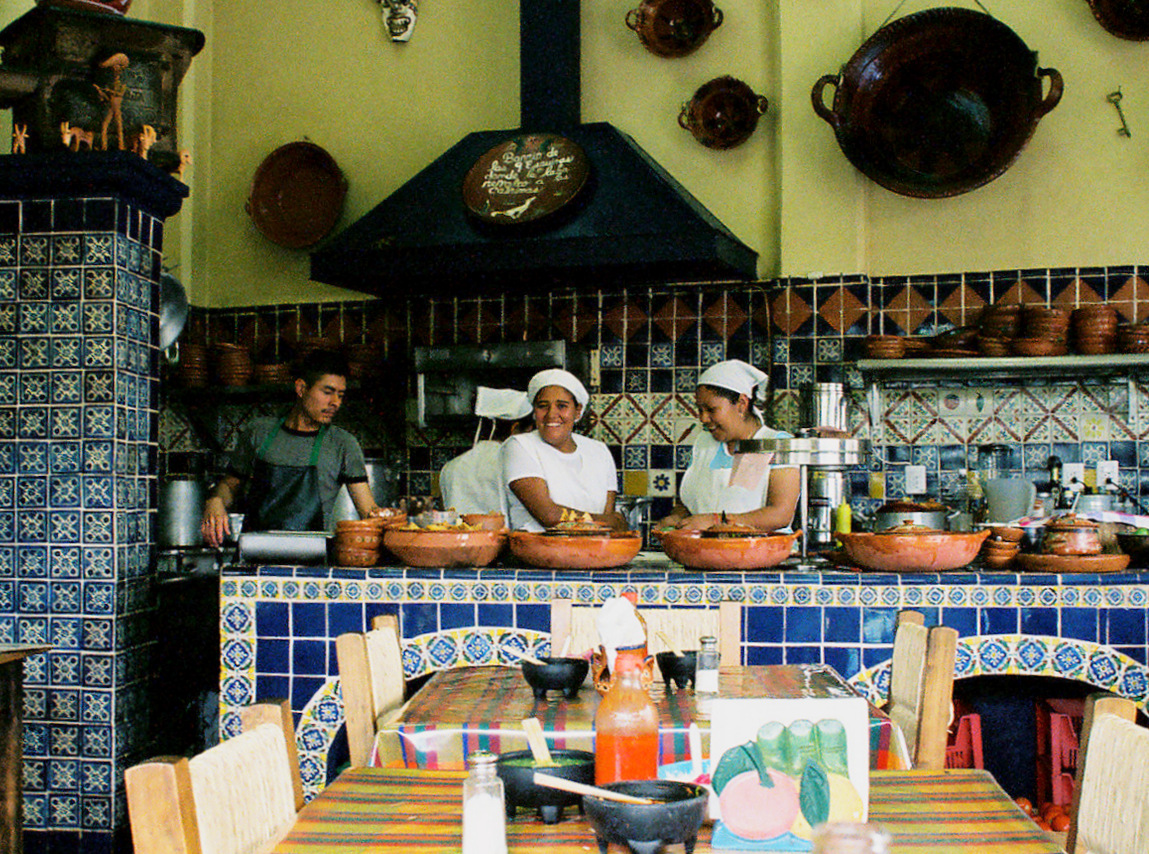
The kitchen fronts on the street, visible through a large picture window, and at lunchtime the waiting line stretches down the sidewalk.


It’s one of those places that leaves you with a sense that the waiters have worked there for their entire lives; the service is hospitable and efficient.

La Chata Restaurant, Guadalajara, Mexico


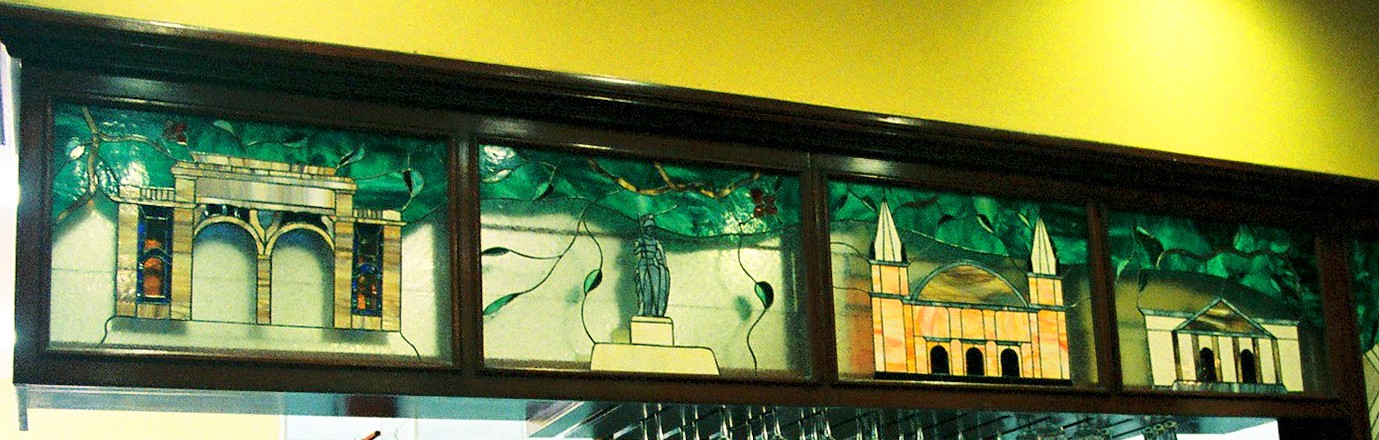
A stained glass tableau features images of Guadalajara’s iconic monuments:  Los Arcos, Minerva Fountain, the Catedral, and the Teatro Degollado…

Templo de Nuestra Senora de Aranzazu, Guadalajara


Only three blocks further south on Colon you’ll come to the Templo de Nuestra Senora de Aranzazu, built by the Franciscans and a marked contrast from the ostentatiously ornate central Catedral.


It’s surrounded by an urban pocket park where the benches are a great place to watch neighborhood comings and goings.

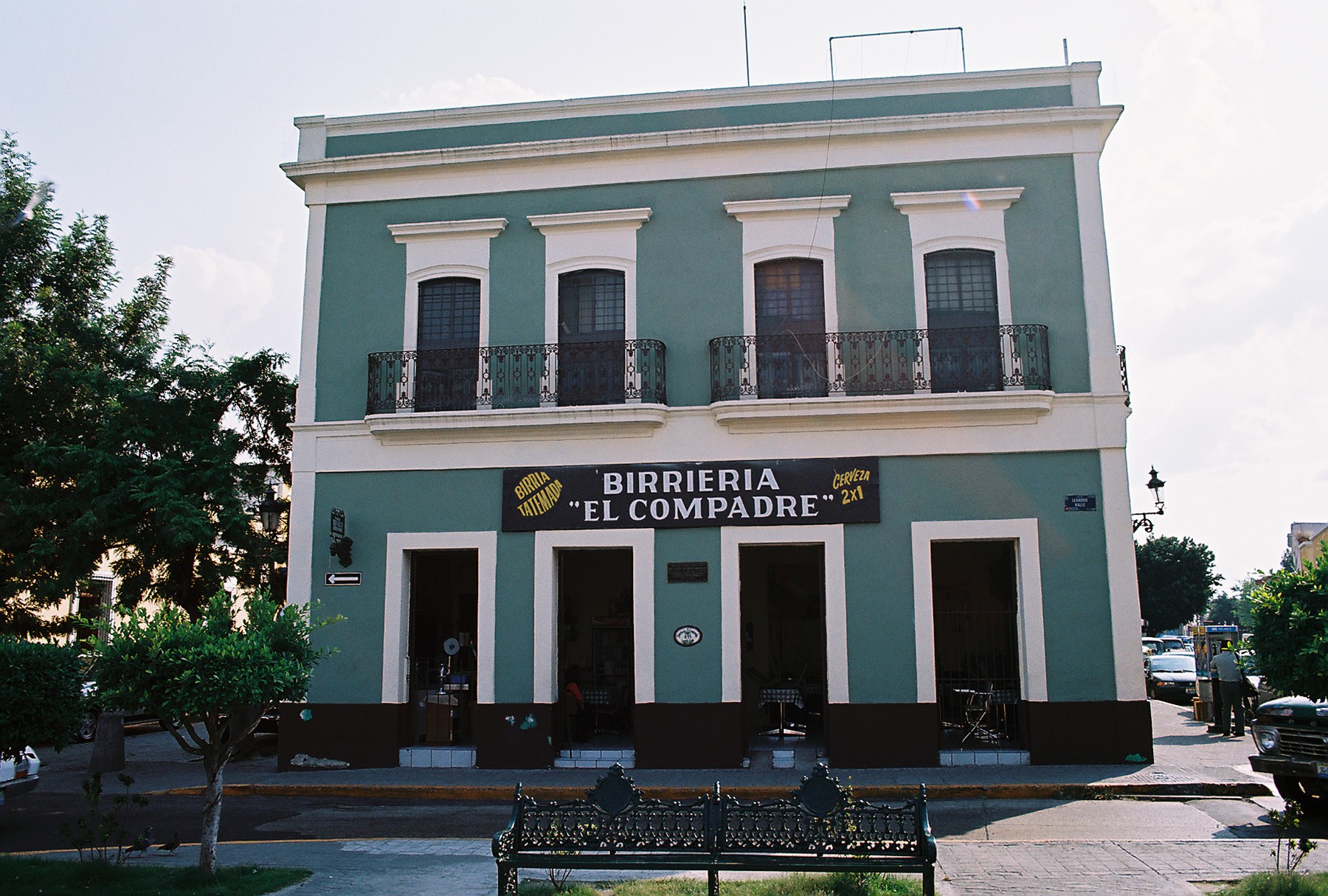
Birriera Los Compadres, Nueve Esquinas, Guadalajara, Mexico


Two more blocks south on Colon you’ll arrive at Las Nueve Esquinas – the Nine Corners – where you can enjoy great birria, Jalisco’s signature stew made with goat (del chivo) or lamb (del borrego).

Birriera Las Nueve Esquinas, Guadalajara, Mexico


The dish is served with corn tortillas, and seasoned by each diner to personal taste from a condiment plate of onion, cilantro, and lime.

Birriera Las Nueve Esquinas, Guadalajara, Mexico


There’s an abundant choice of birrierias here, but my favorite is the Birrieria de Las Nueve Esquinas.

Birriera Las Nueve Esquinas, Guadalajara, Mexico


As with La Chata, there can be a long wait here for lunch unless you avoid the rush which typically occurs early in the afternoon. (Note the goat’s head in the stained glass window!)

Birriera Las Nueve Esquinas, Guadalajara, Mexico


A kitchen open to the dining room makes for great entertainment.


One of the waitresses caught up with me a block after I’d departed to give me a small carving of a goat inscribed with the restaurant’s name.

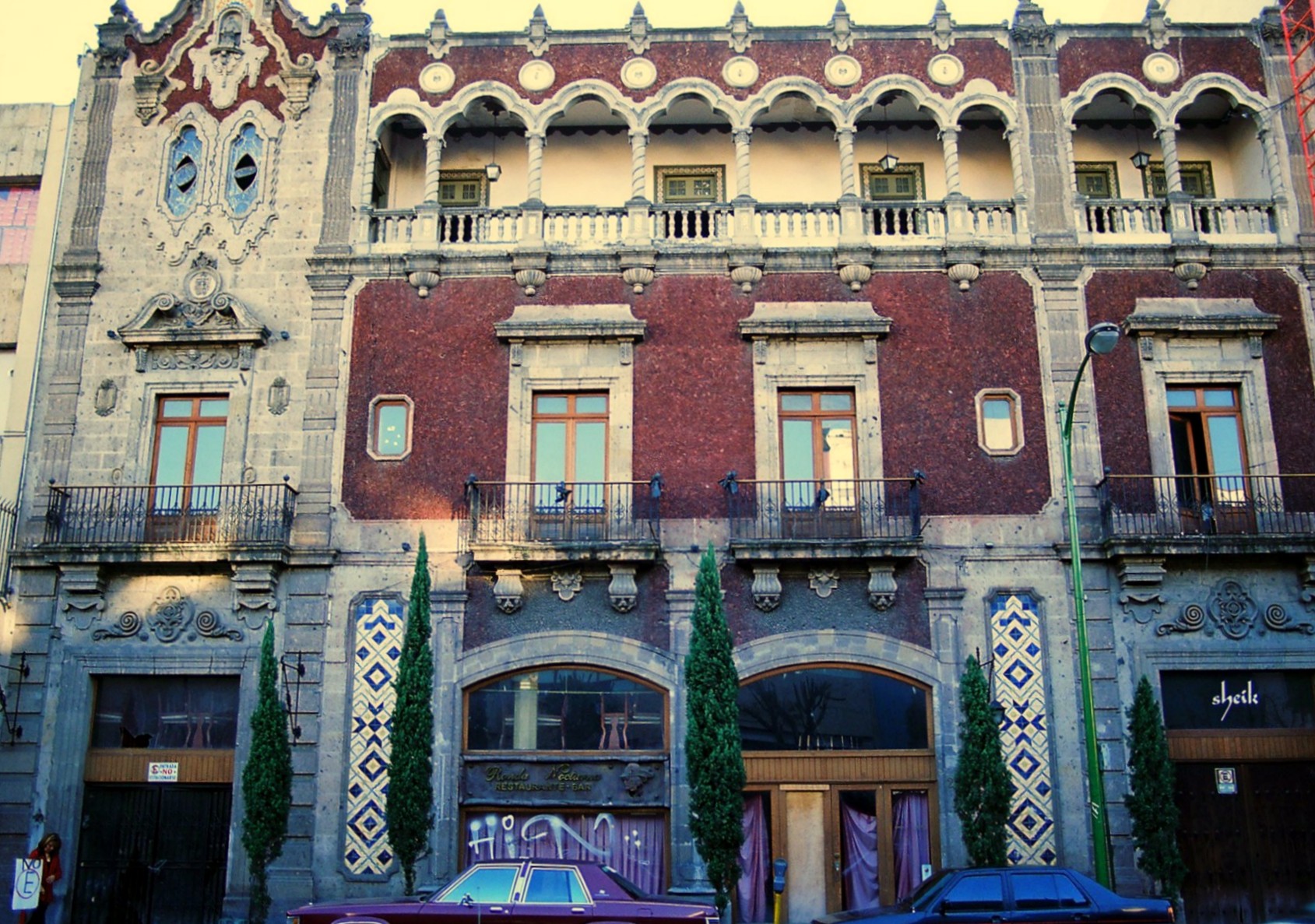
Building facade, Guadalajara, Mexico


Continue from the Nine Corners on Colon through a neighborhood dotted with vintage architecture and modest homes fronted by sidewalk workshops.

Building facade, Guadalajara, Mexico

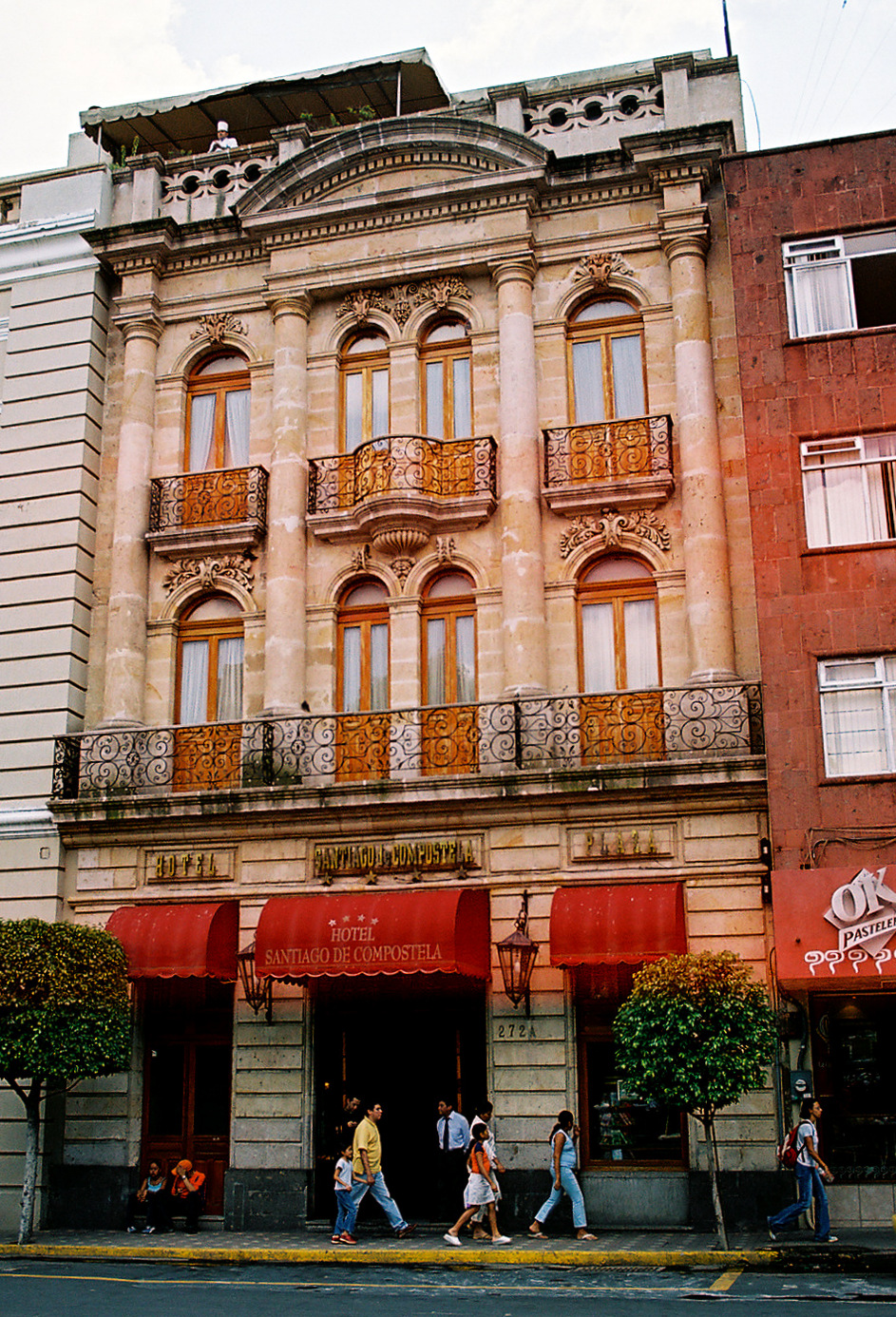
Hotel Santiago, Guadalajara, Mexico

Butterfly House, Parque Agua Azul, Guadalajara, Mexico


In less than ten blocks you’ll take a left on Niños Héroes and a block later a  right on Calzado Independencia Sur.


The Parque Agua Azul is one block further.

Parque Agua Azul, Guadalajara, Mexico


This is one of those great urban parks in which the the year-round floral display frames distinctive architecture and statues.


As I pass a yoga class, a nearby acrobat performs an airborne somersault.

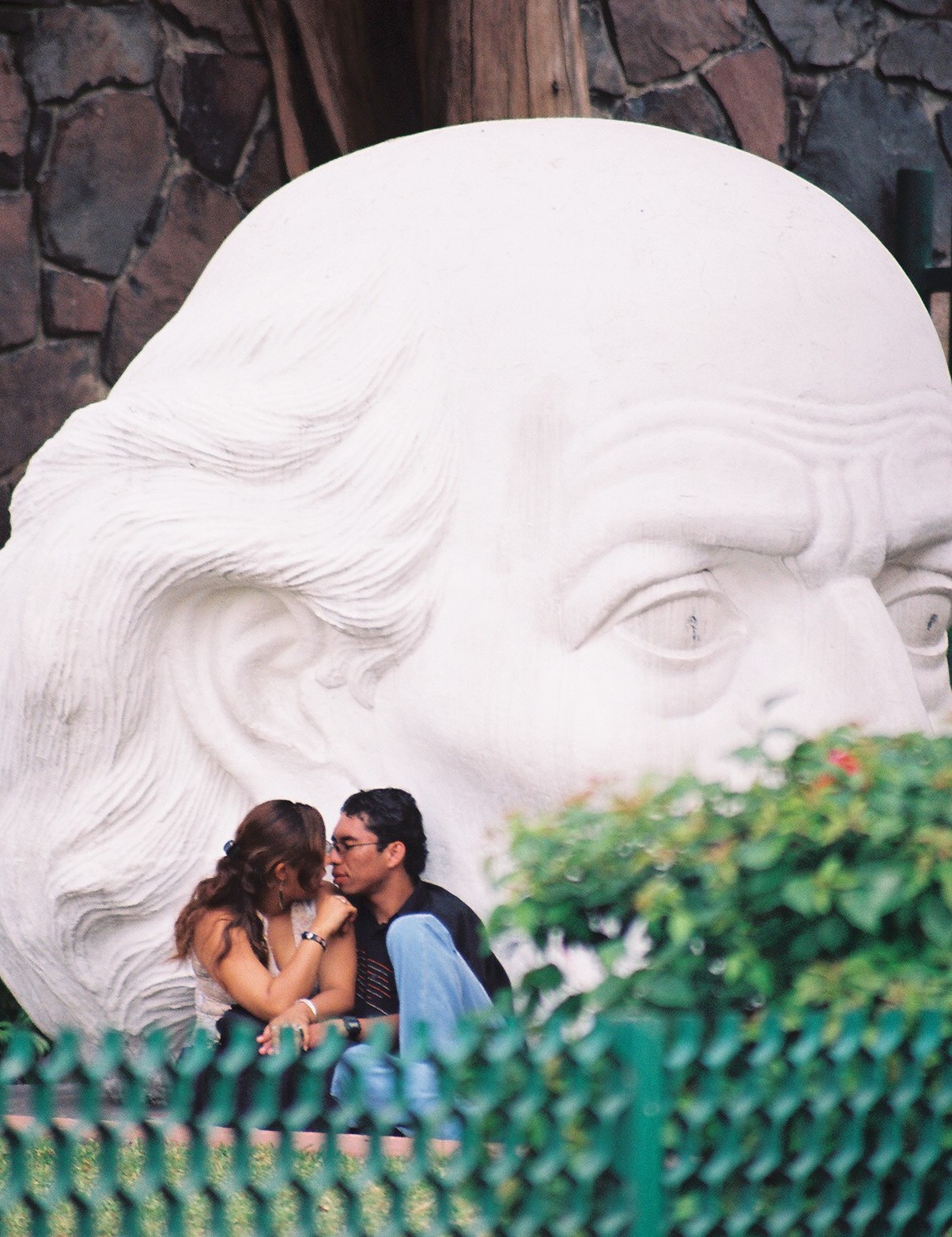
Orozco bust, Parque Agua Azul, Guadalajara, Mexico

Parque Agua Azul, Guadalajara, Mexico


It’s a short walk from the park to Guadalajara’s Centrale Viejo bus station, where busses and arrive from and depart to Lake Chapala.

Parque Agua Azul, Guadalajara, Mexico


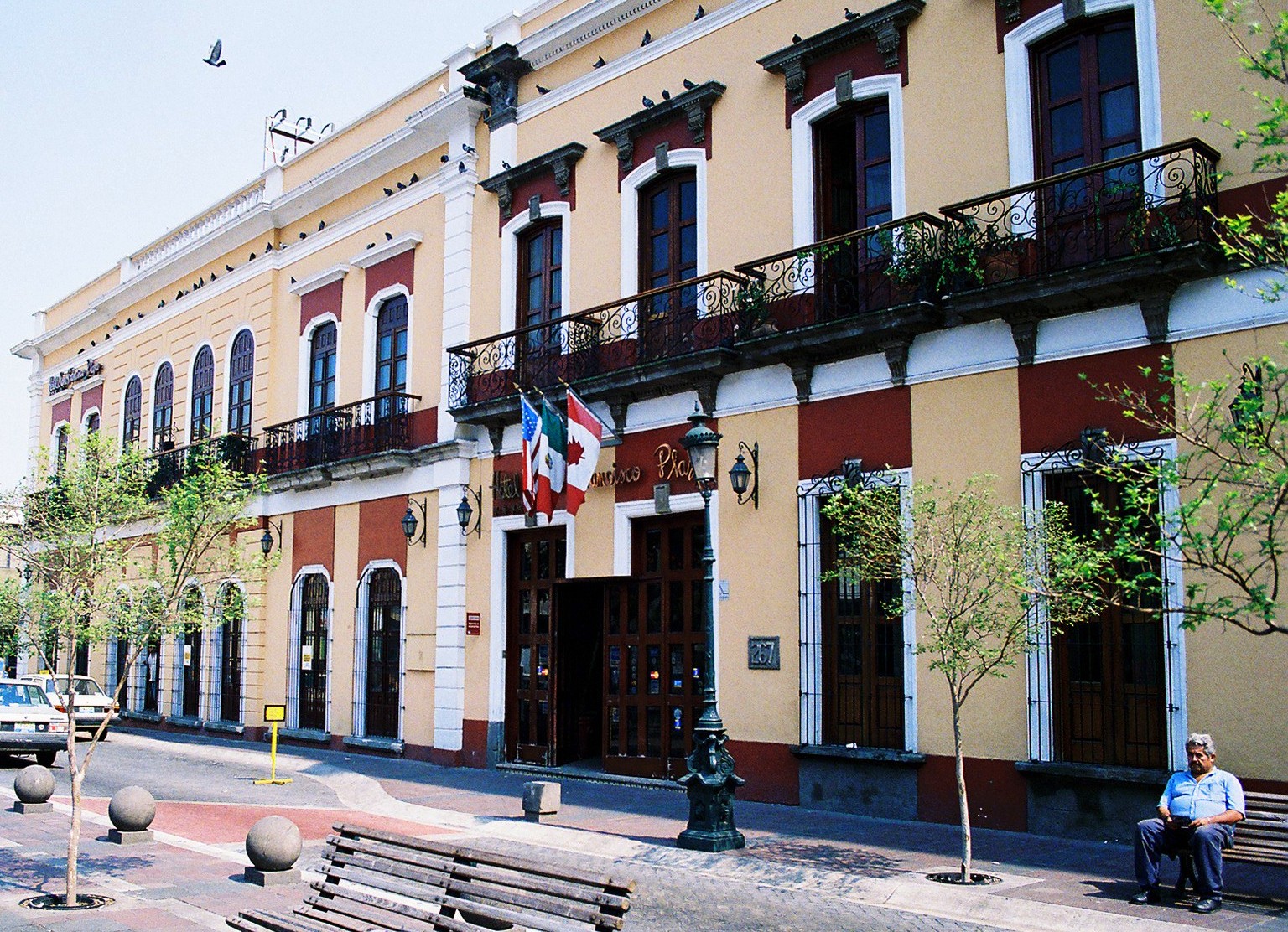
Hotel Plaza San Francisco, Guadalajara, Mexico

Hotel Plaza San Francisco, Guadalajara, Mexico


On the way back to el centro, drop by the restaurant in the Hotel Plaza San Francisco for drinks or snacks. It’s only a couple of blocks from the Aranzazu church on Degollado just south of Prisciliano Sánchez.


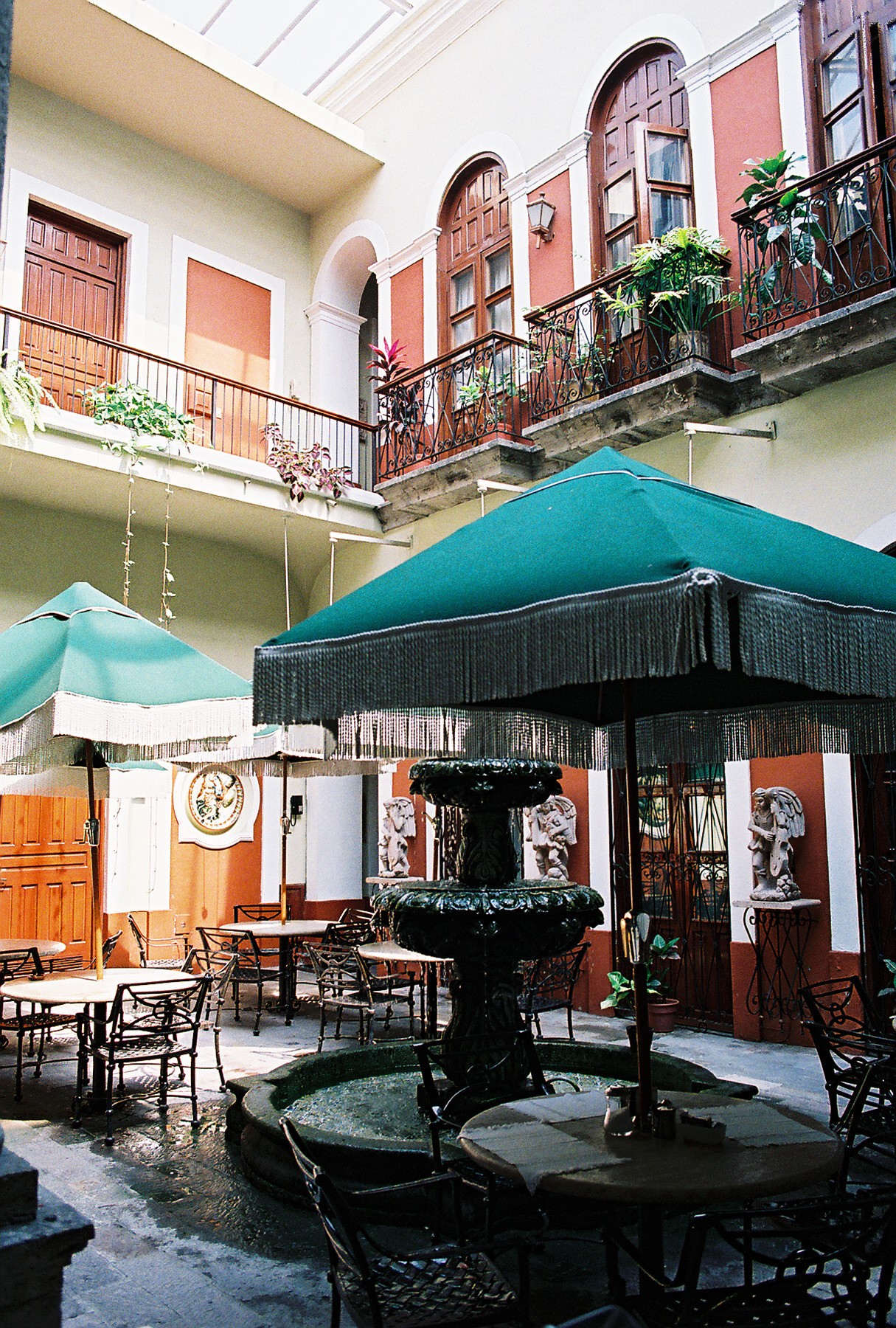
It occupies what looks to have once been three separate residences, and guest rooms front on each of its three courtyards. The place has a great Spanish colonial ambiance.


Take this walkabout and you’ll discover what I quickly learned on my first Guadalajara visit:  There’s more to see within easy walking distance of the city center than you can possibly cover in less than three or four days, so plan your Guadalajara visit accordingly… and watch for more posts on this great city, because there’s still more to see!


Check out my other Guadalajara destination posts:

Guadalajara’s Heartbeat

Guadalajara’s Mercado Libertad

Fishy in Guadalajara

To Mexico By Bus

Big-spirited Little Italy

The Little Italy neighborhoods in Manhattan, The Bronx, Boston, Chicago, St. Louis, and San Francisco may be better known, but few offer a more intimate experience than the one on Cleveland’s Murray Hill.

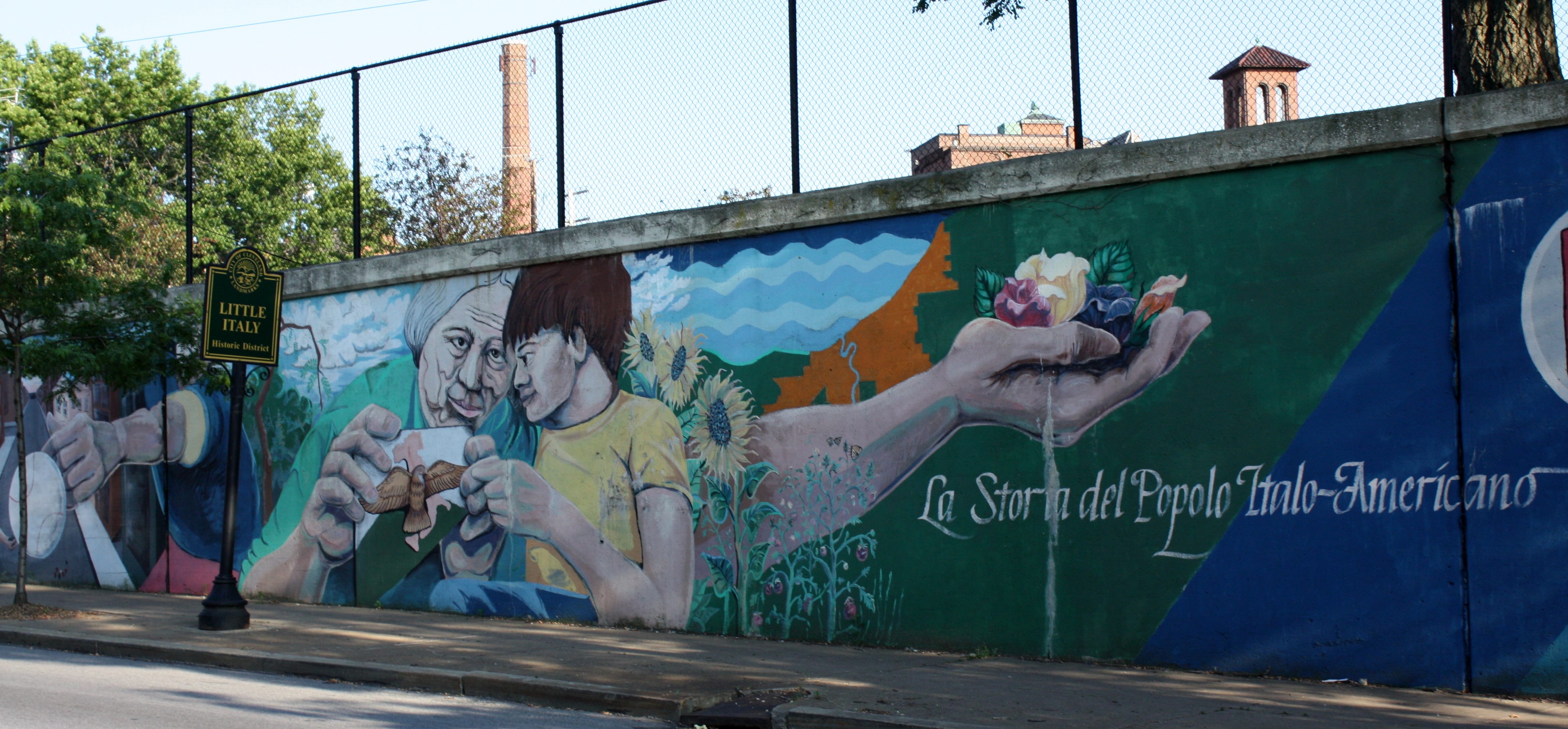
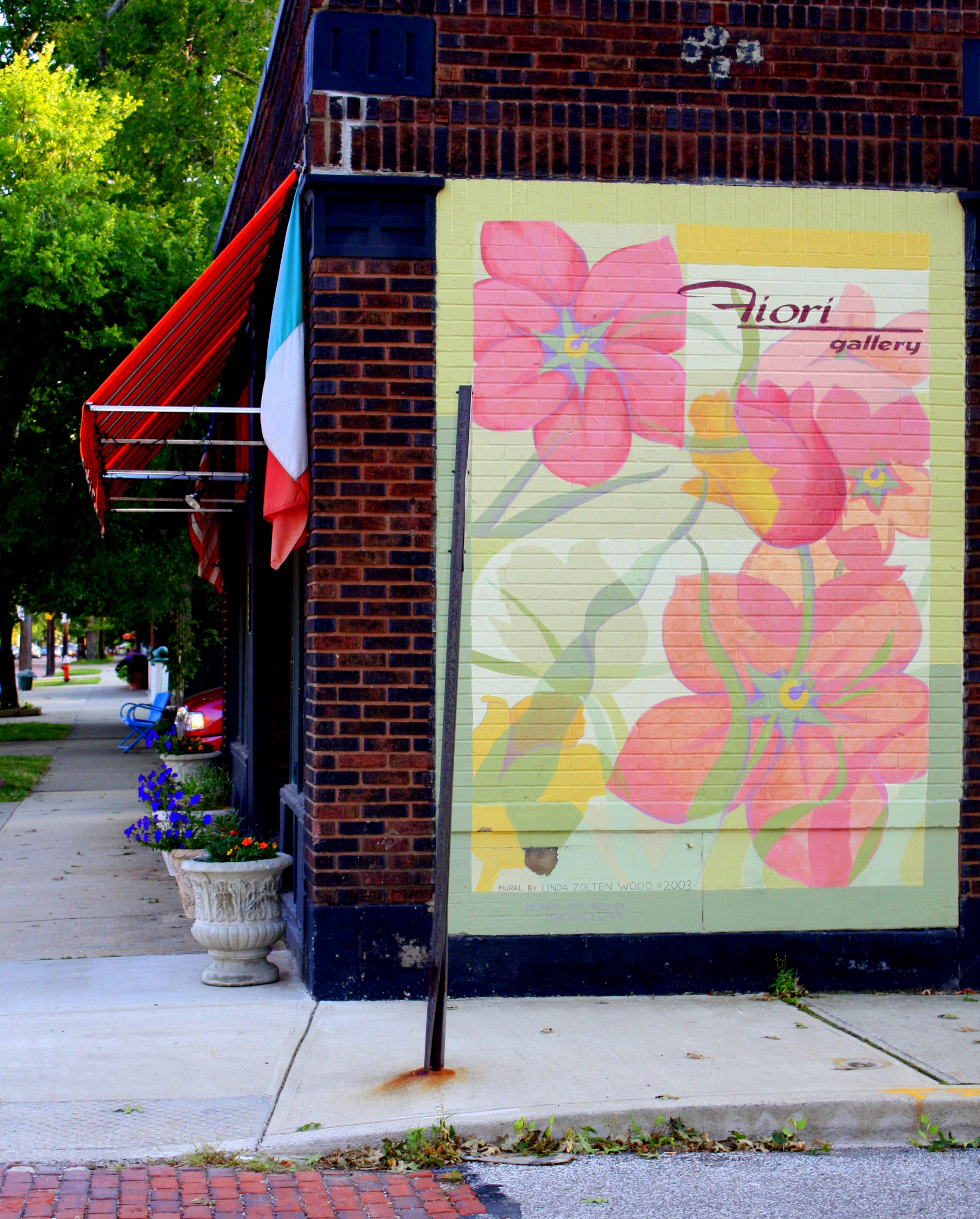
Wall mural, Murray Hill, Little Italy, Cleveland

Wall mural, Murray Hill, Little Italy, Cleveland

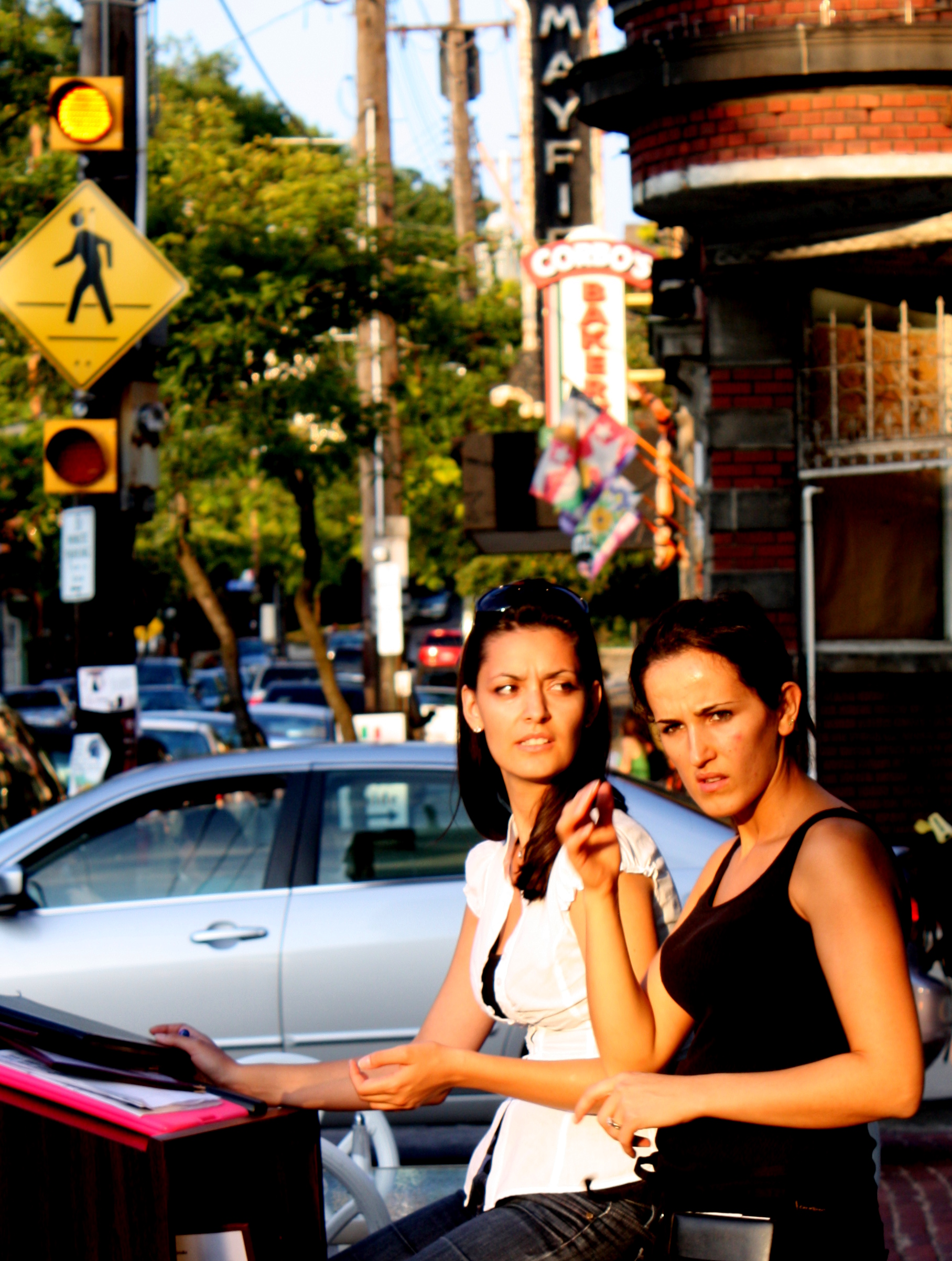
Street scene, Murray Hill, Little Italy, Cleveland

Cleveland’s Little Italy was largely insulated from Rust Belt urban blight by its unique location.

Tucked between the University Hospitals complex, the sprawling Lakeview Cemetery, and the hill which crests above it, it’s a virtual urban island.

Holy Rosary Church, Murray Hill, Little Italy, Cleveland

It’s not surprising that many of the monuments in the adjacent cemetery were fashioned by Italian stonecutters over a century ago.

Mayfield Road, Murray Hill, Little Italy, Cleveland

This is a truly organic neighborhood built on a pedestrian scale.

In its heyday early in the last century it boasted a parish church, school, shops and restaurants all within blocks of each other and many of which still operate today.  Even the bocce ball court is still in use.

Many restaurants are located around the intersection of Mayfield Road and Murray Hill, but plenty are scattered among the residences to create the feel of a truly organic neighborhood.  Today it makes for a picturesque walkabout..

Nido Italia restaurant, Murray Hill, Little Italy, Cleveland

Many restaurants are located around the intersection of Mayfield Road and Murray Hill, but plenty are scattered among the residences to create the feel of a truly organic neighborhood. Today it makes for a picturesque walkabout.

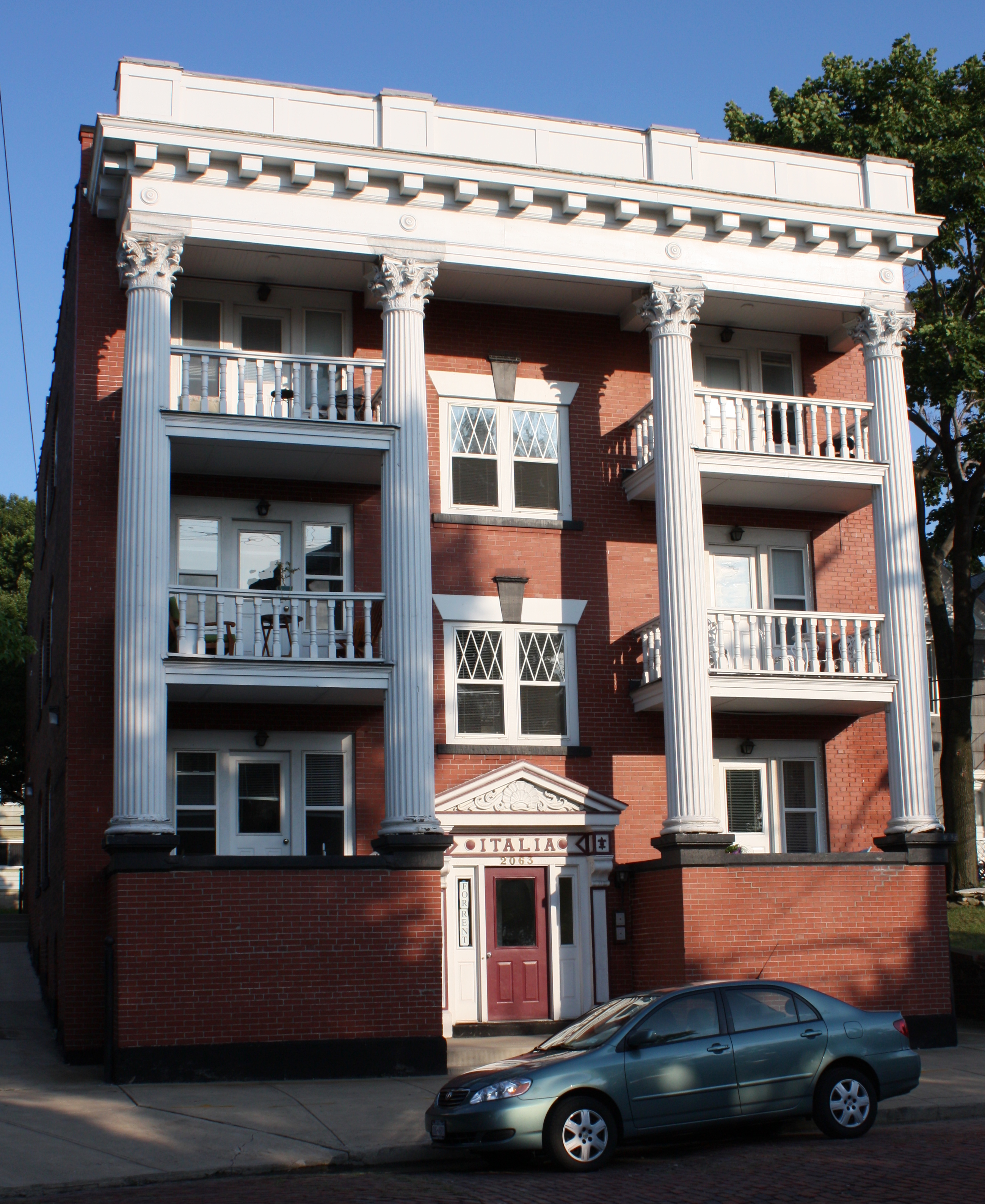
Italia Apartments, Murray Hill, Little Italy, Cleveland

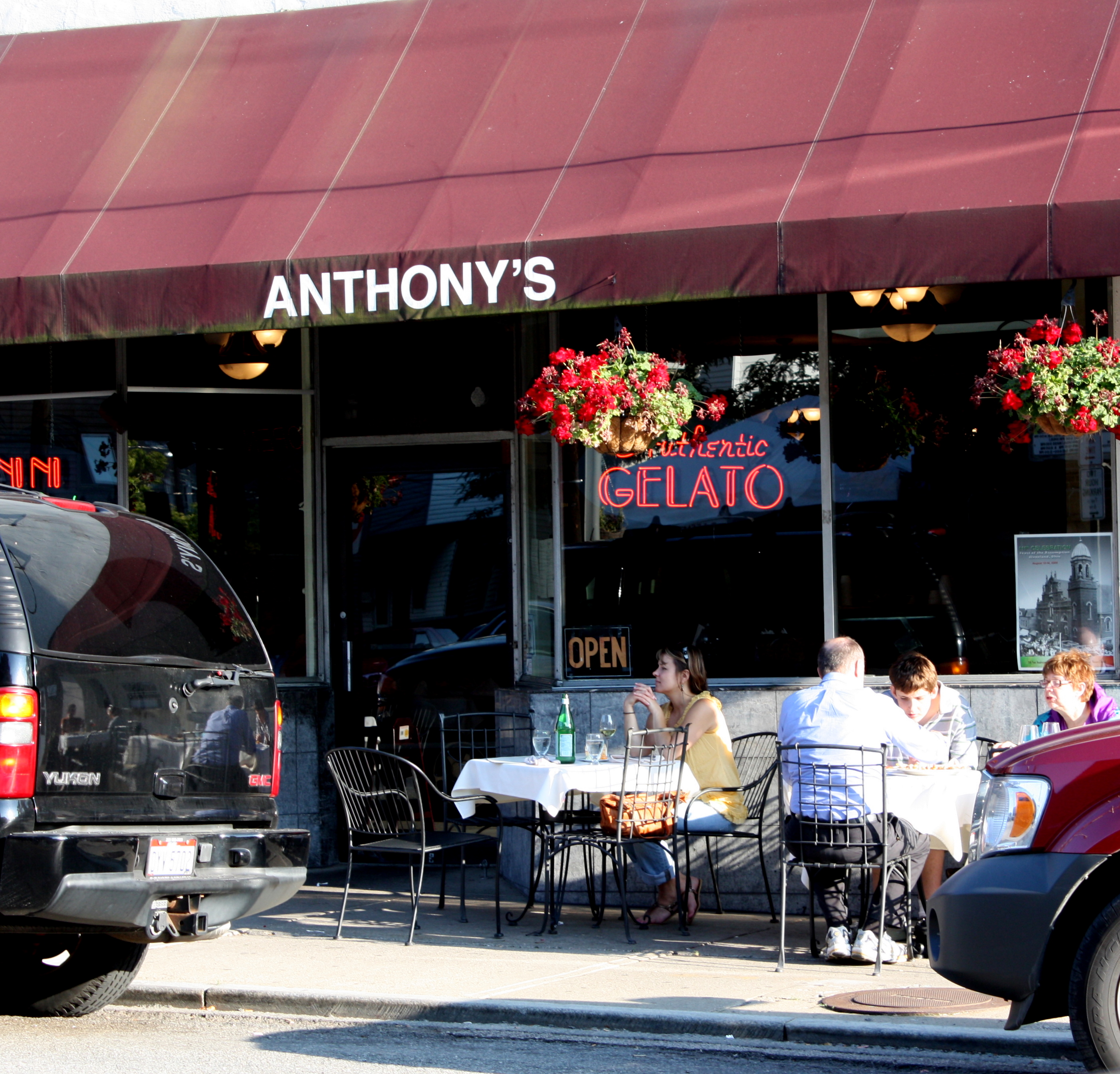
Anthony’s Restaurant, Murray Hill, Little Italy, Cleveland

Street scene, Murray Hill, Little Italy, Cleveland


Beginning in May and continuing through September nearly every restaurant features sidewalk dining, with the added bonus of a people-watching spectacle.

Local residents, visitors in from the suburbs, and a growing influx of professionals from the nearby hospitals all walking the sidewalks make for an entertaining meal.


La Dolce Vita Restaurant, Murray Hill, Little Italy, Cleveland

At La Dolce Vita, a personal favorite, Fellini’s movie of the same name seems to run perpetually, projected high on a dining room wall. On weekends, the crowd often spills out onto the patio in back.

Behind La Dolce Vita Restaurant, Murray Hill, Little Italy, Cleveland

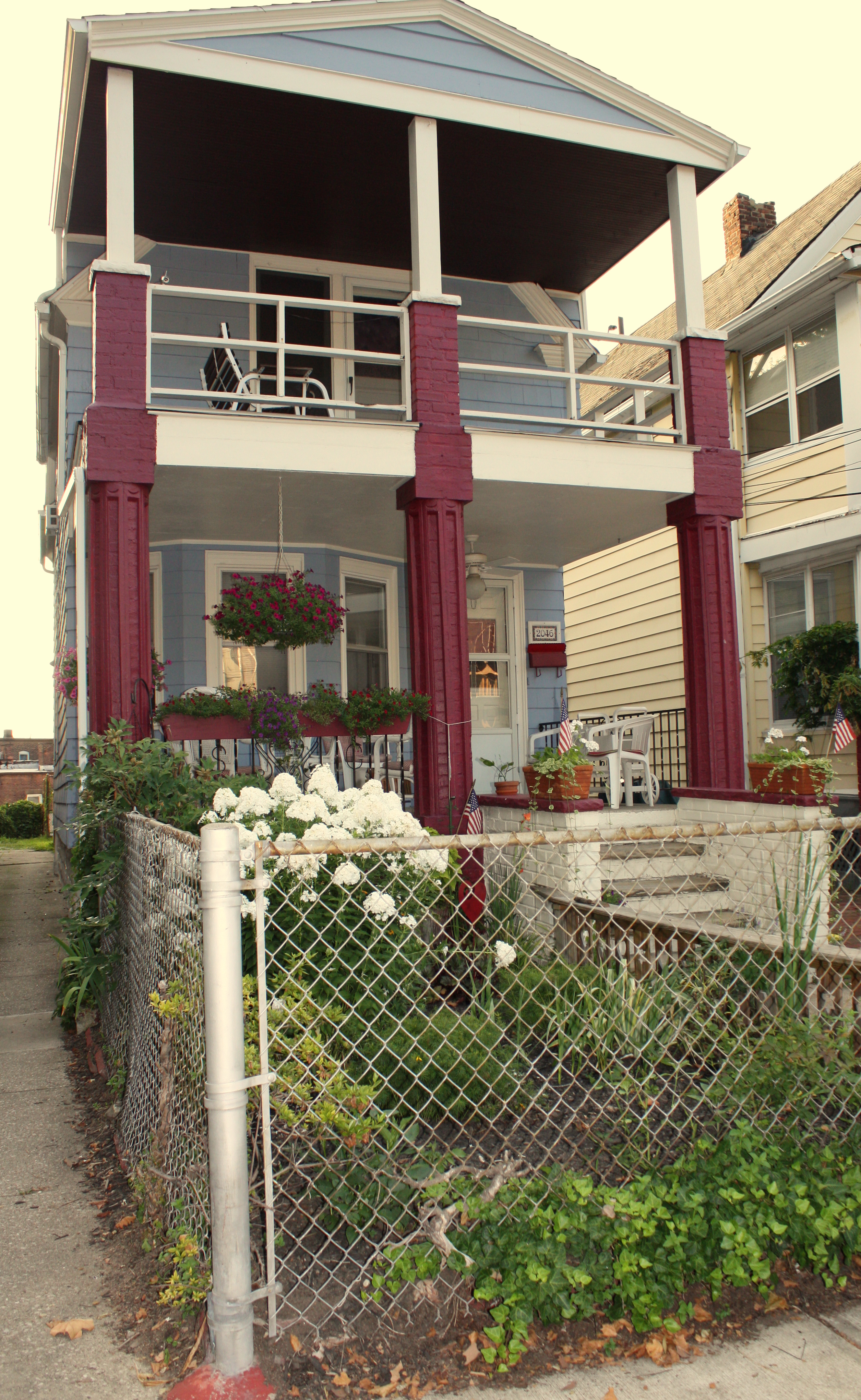
Vintage home, Murray Hill, Little Italy, Cleveland

Murray Hill attracts visitors from all over the city, and with Cleveland’s other Italian immigrant neighborhoods now long gone has become a cultural touchstone for local Italian-Americans now five and six generations removed from the old country.

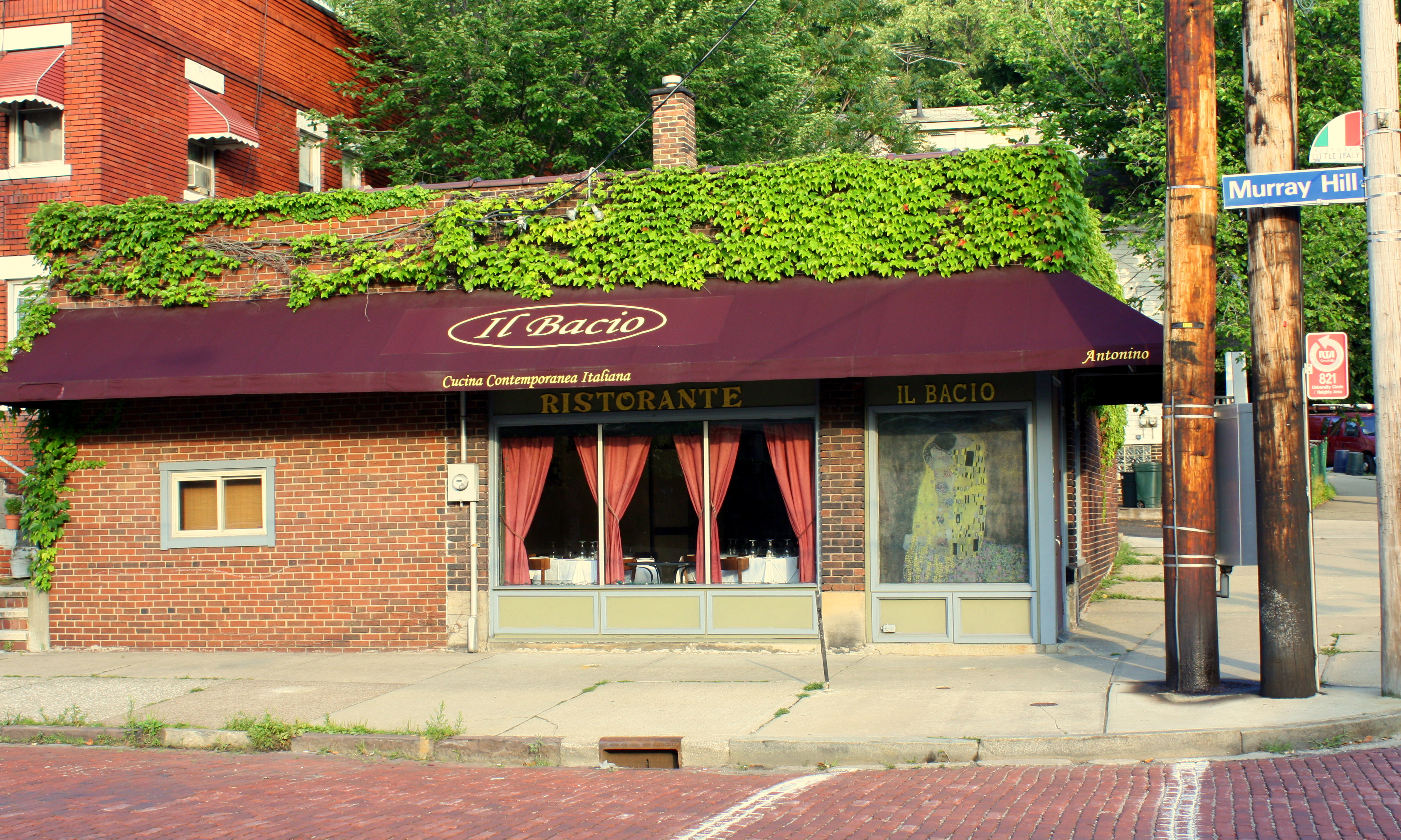
Il Bacio Restaurant, Murray Hill, Little Italy, Cleveland

It’s hard to eat a meal here that doesn’t have the flavor of authentic recipes handed down from generation to generation.

Fiori Gallery, Murray Hill, Little Italy, Cleveland

Walk off a hearty meal at least far enough down the block to have a gelato dessert or grab an evening smoke at the cigar shop.

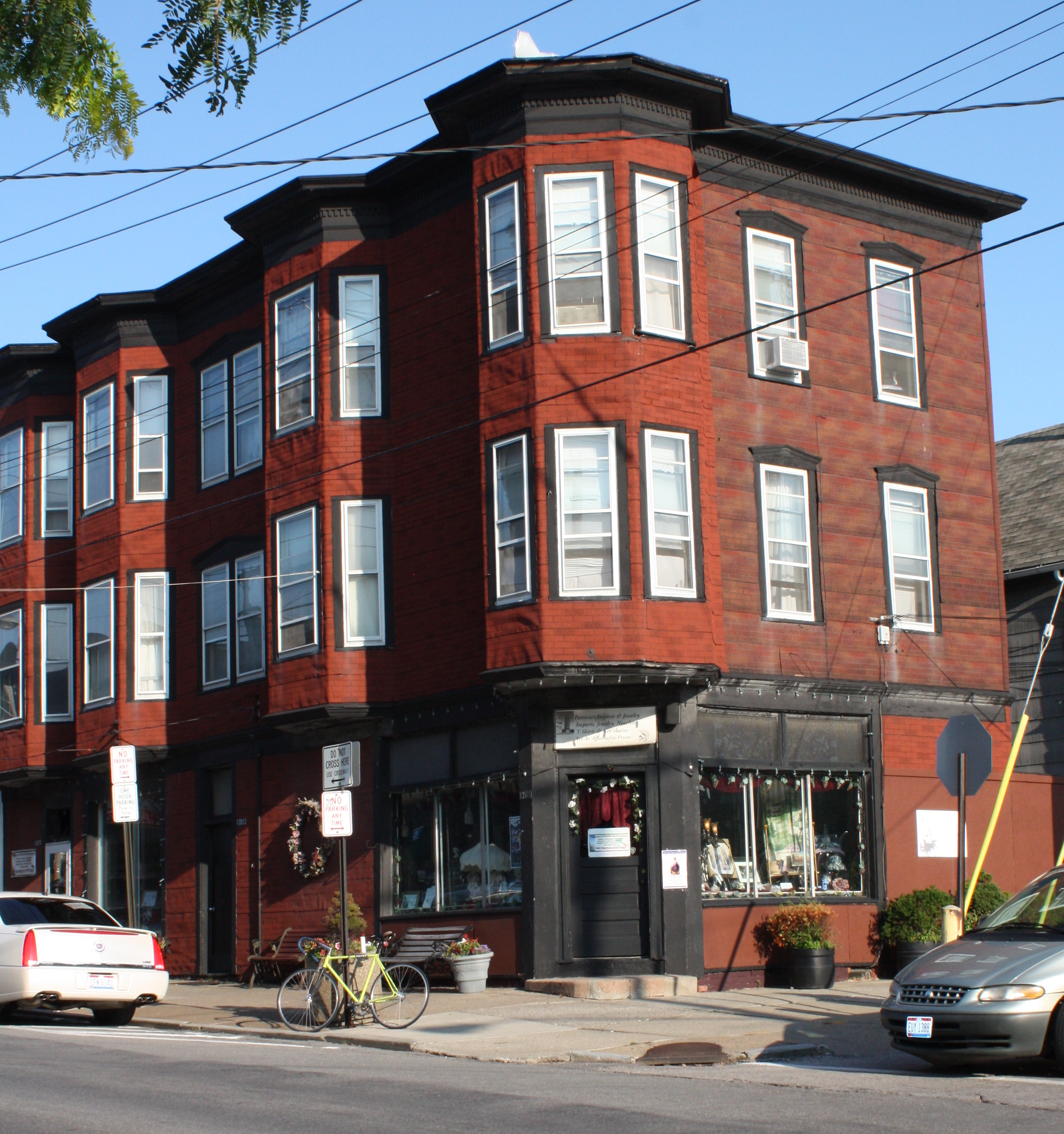
Apartments, Murray Hill, Little Italy, Cleveland

Apartments, Murray Hill, Little Italy, Cleveland

This entire experience goes on steroids every August at the Feast of the Assumption, a Mardi-Gras style celebration of music, food, and culture. At other times of year there’s opera in the Italian Cultural Garden, and Italian film festival, and the obligatory Columbus Day parade.

In the evening the lighted restaurants, streetlamps, and strolling visitors give the place the feel of an Italian piazza on a Saturday night.

Street parking on weekends and during big events can be a challenge here, but a turn off Euclid onto Mayfield goes right past a large parking lot on the left by the railroad bridge.

More here on Cleveland’s Little Italy

Also check out my related posts:

Dallas’s Italian Grocery

The Italian-Argentine connection

Tianguis’d

Florist, Ajijic tianguis

Whenever I travel to someplace new the local version of tianguis is always high on my itinerary. It’s virtually guaranteed to deliver an instant lay of the land and a hi-def cultural immersion experience.

What is more common to the Lakeside expat experience than tianguis?

Huichol woman, Ajijic tianguis

Nuts & fruits vendor, Ajijic tianguis

It’s broad appeal is not surprising.  Weekly market bazaars are one of the oldest expressions of human community (the Nahuatl word tianguis is distinctively Mexican), and on the Ribera this truly moveable feast materializes in a different town each weekday beginning on Monday in Chapala.

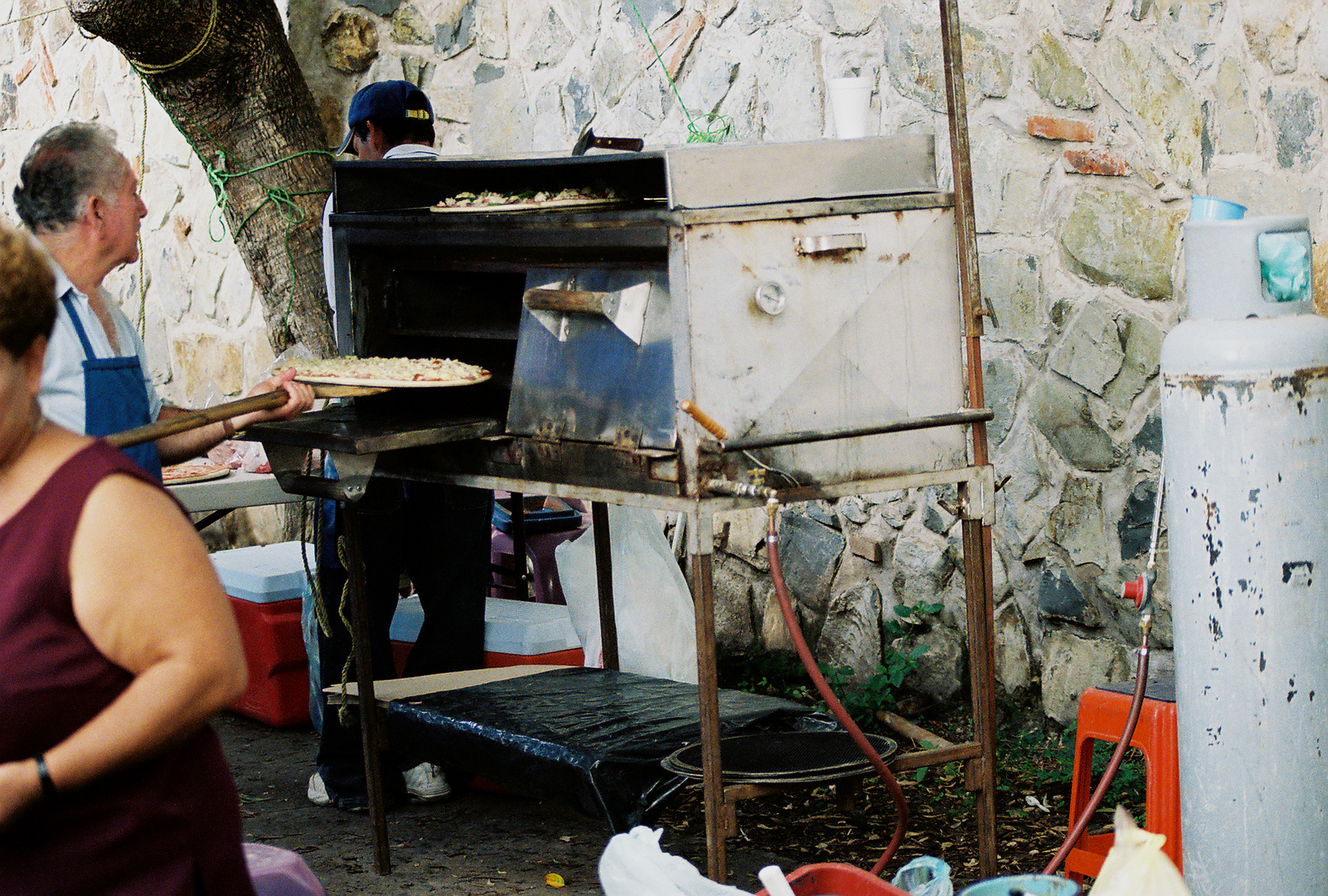
Gas-fired pizzeria, Ajijic tianguis

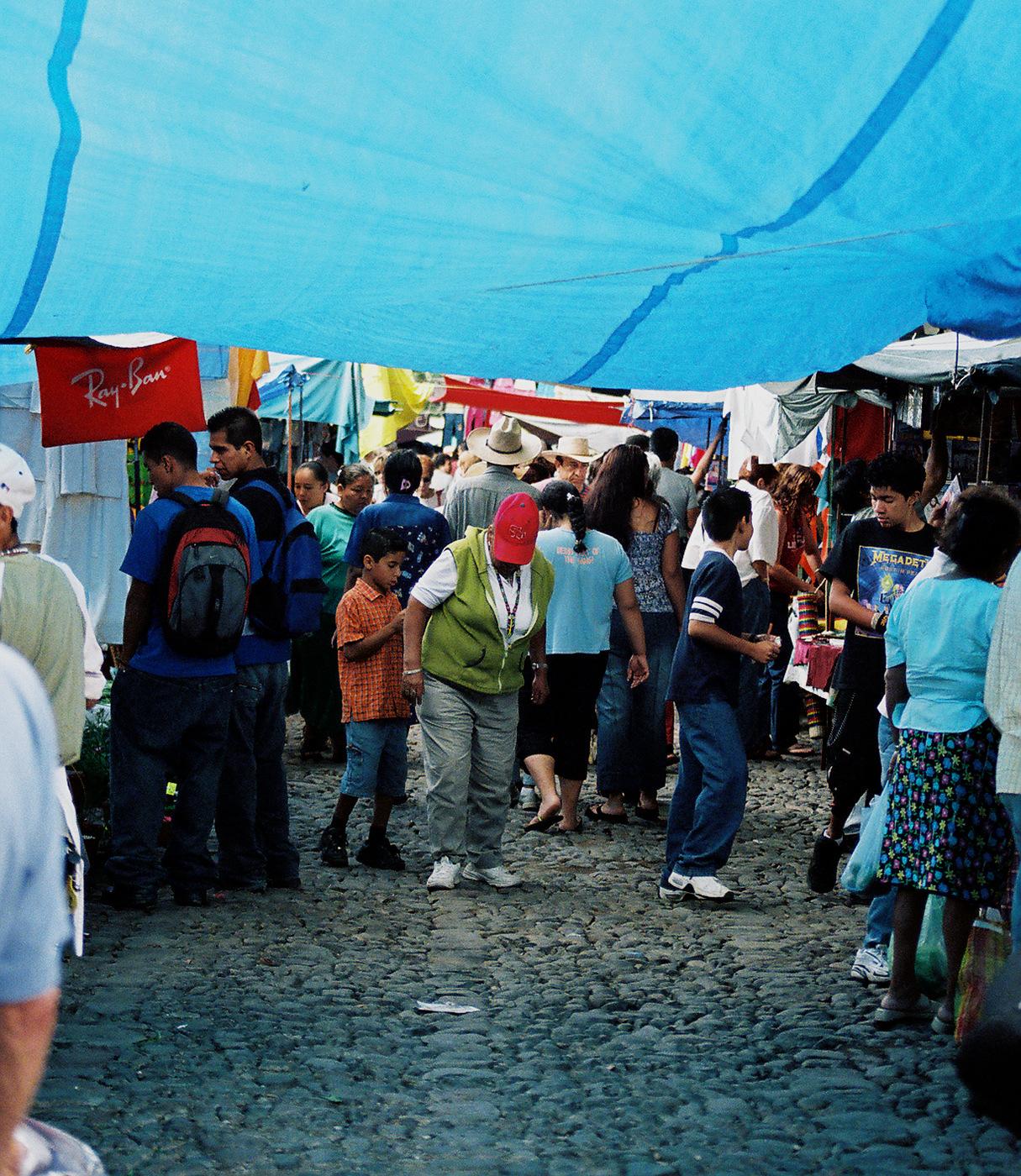
Tianguis brings together an incredibly diverse cross-section of the Lakeside community more often and more consistently than just about any other event.  In this social microcosm Mexicans and expats are represented – if in different mixes – among both buyers and sellers. Tianguis attracts customers ranging from householders to maids and cooks, and there’s something for every budget from purse to pocket change.

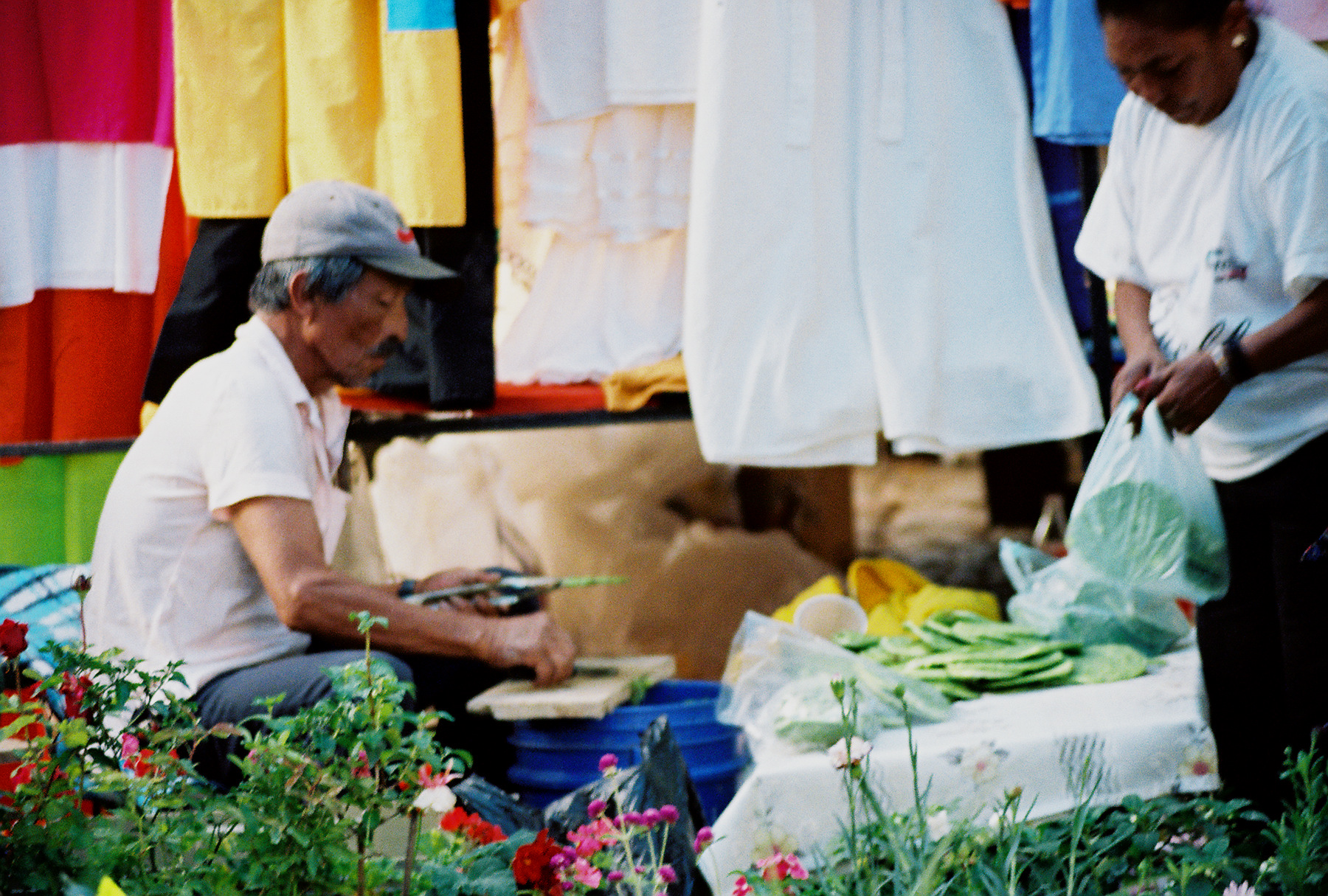
Nopalito skinner, Ajijic tianguis

Tianguis – as with so many of Mexico’s open markets – is a personal experience in which it’s not unusual for frequent buyers and sellers to know each other on sight and for vendors to have fiercely loyal customers.

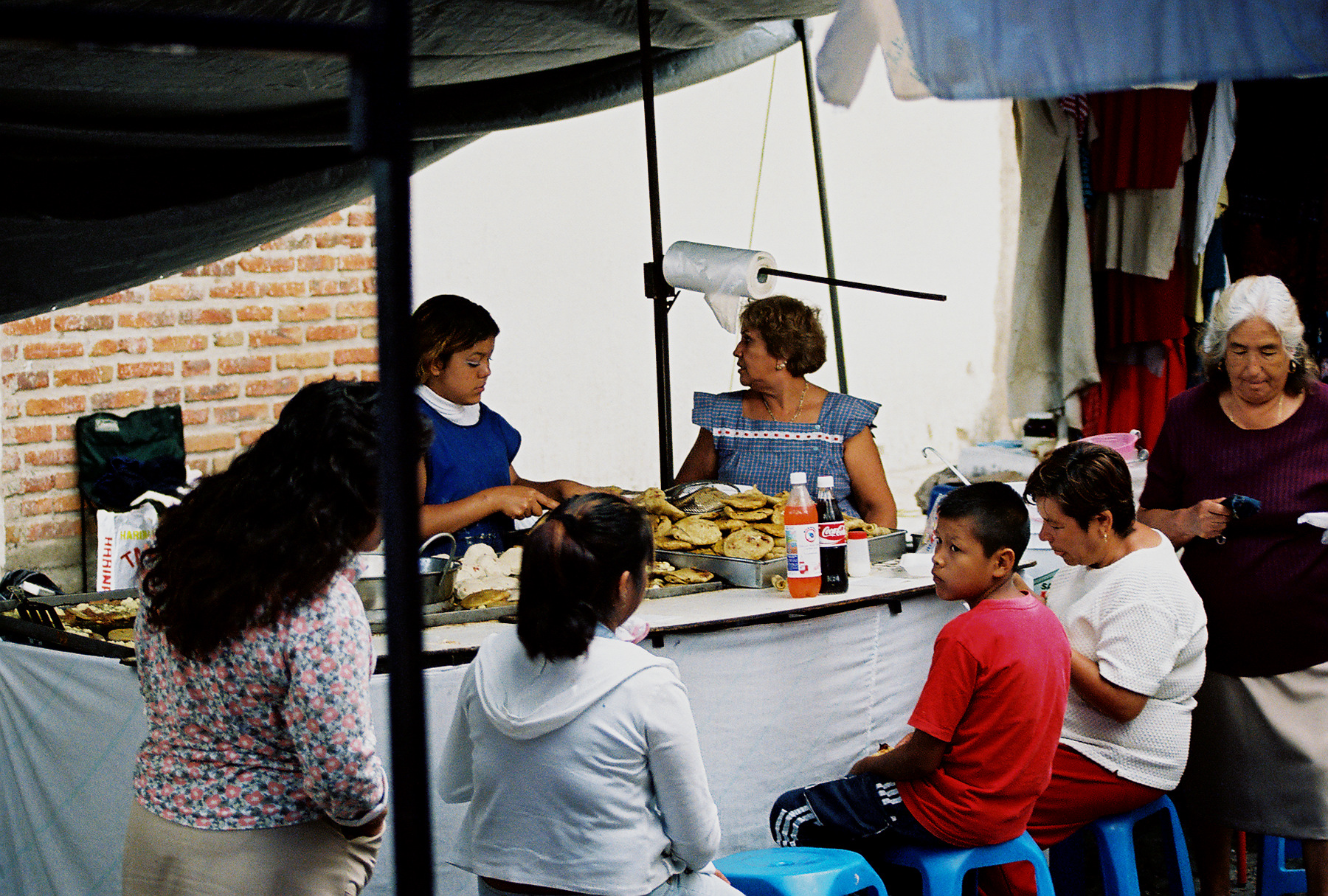
Snack bar, Ajijic tianguis

Any Mexican street market worth its salt features an eye-cluttering array of merchandise ranging from kitchenware to underwear and from jewelry to CD’s and DVD’s, and on this the tianguis in Ajijic is not lacking.

Taco grill, Ajijic tianguis

Taco fillings grilling, Ajijic tianguis

Ditto for freshly prepared hot food of the eat-and-walk variety.

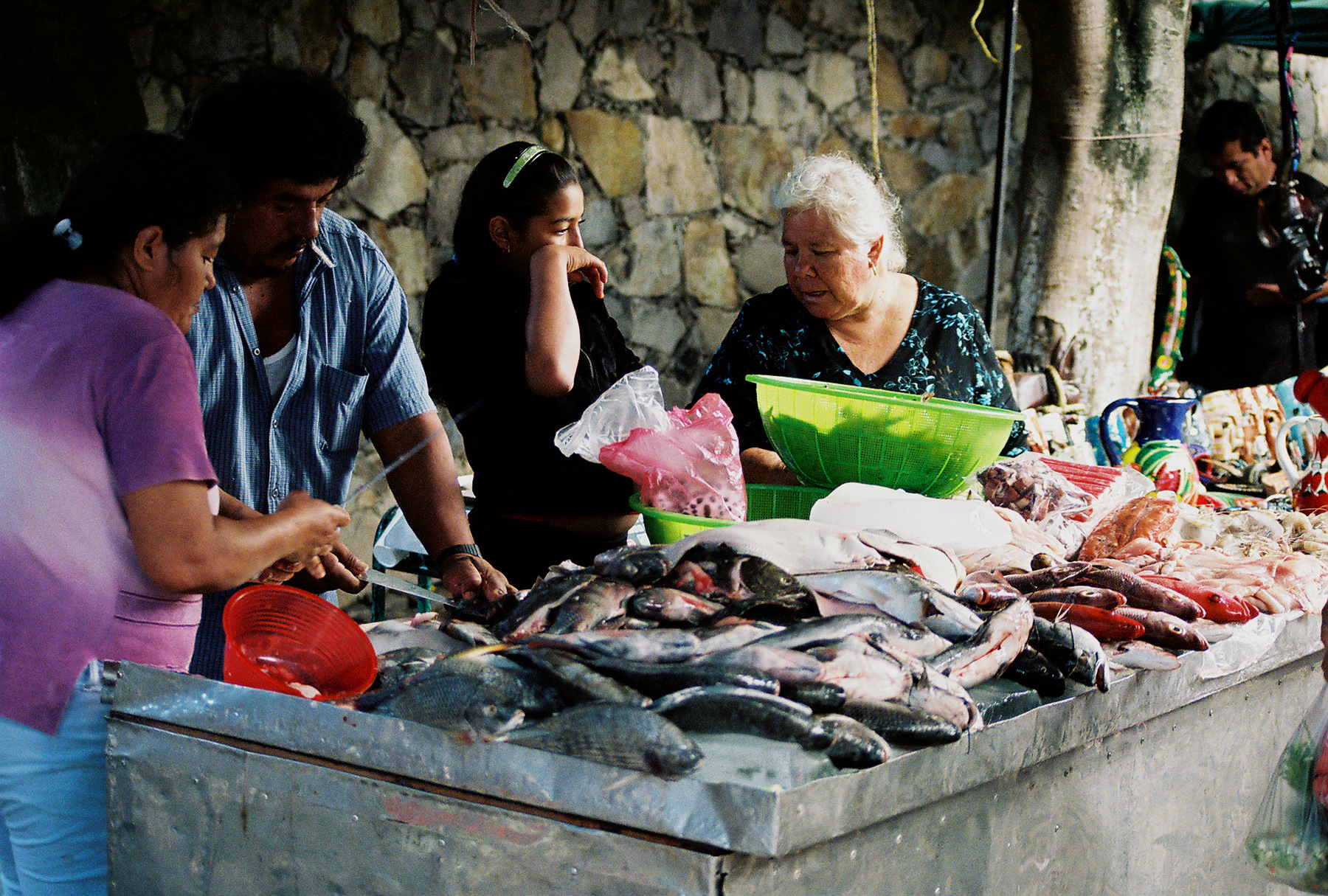
Fishmonger, Ajijic tianguis

The heart and soul of tianguis, though, is fresh fish, meat, produce, and flowers.

High end Stateside grocery chains like Whole Foods Market and HEB Central Market try to evoke the same sense of community, but without the small merchant touch it’s an inauthentic experience.  (Try getting your car washed in its parking spot while you shop at a Stateside Safeway!  Or getting your shoes shined or any extra set of keys made.)

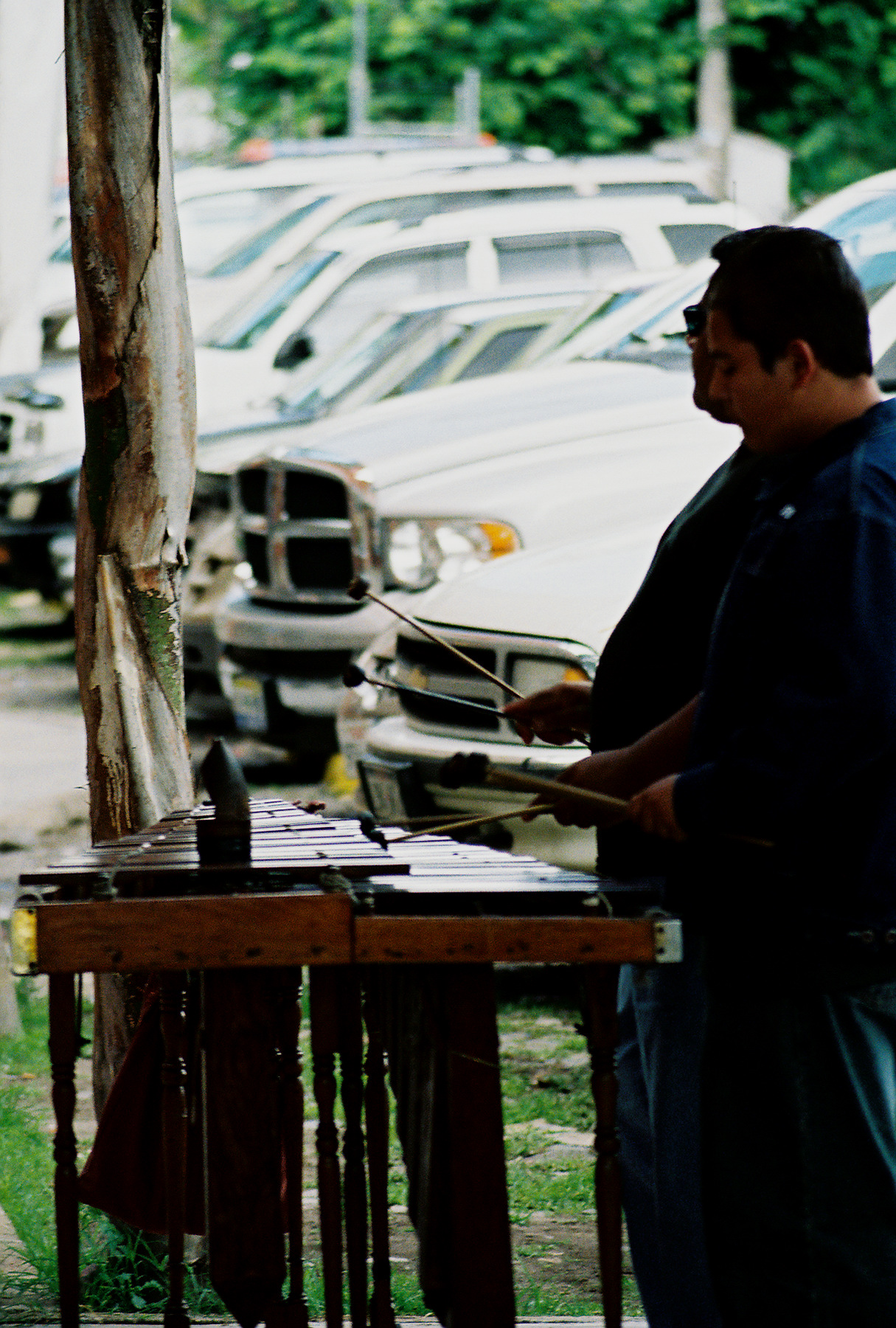
Marimba player, Ajijic tianguis

There are at times a carny sort of sidelight to tianguis.  Sort out the truly disabled mendicants from the panhandlers and solicitors for donations to charities of unknown character.

Plan on encountering at least one musician playing for tips, and if more at least one who needs more practice before playing again in public.

For some tianguis visitors, though, it has little to do with buying or selling. Tianguis is just a likelihood of running into someone you know and need catching up on.

It’s the office water cooler for the retired and not-so-retired, and a chance meeting at tianguis can easily morph into an extended lunch if not today than later in the week.

The Midway, Ajijic tianguis

Shopping… street theater…  community.  What’s not to like about tianguis?

Check out my other market-related blog posts:

Barcelona’s Mercat de la Boqueria

Guadalajara’s Mercado Libertad

Mendoza crafts market

Zapopan fish market

Barcelona beckons

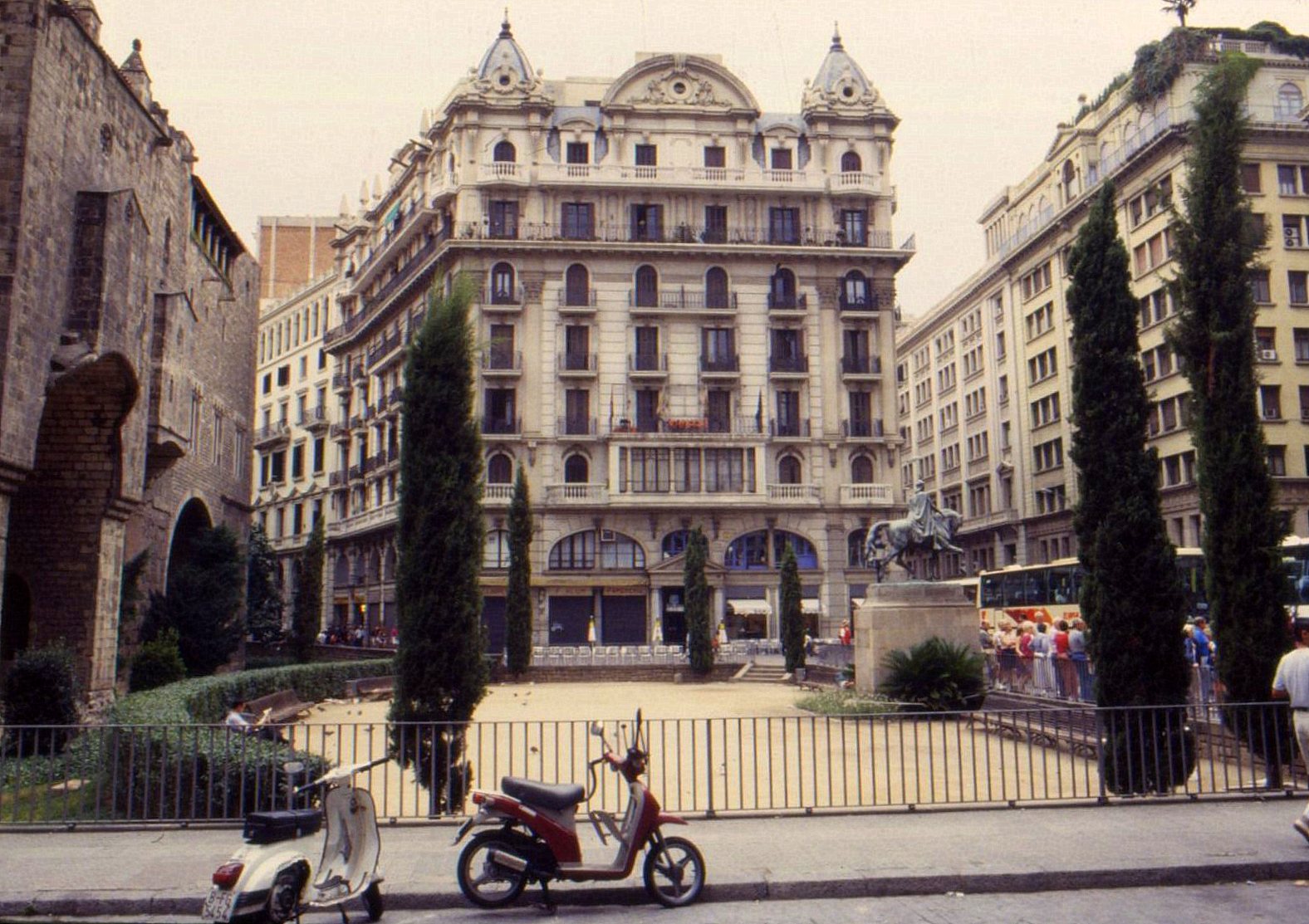
Street scene, Barcelona, Spain

I might never have seen Barcelona had a cruise to Rome not begun there, and that would have been a travel tragedy.  Barcelona is not only a different flavor of Spain and a distinctive take on Europe, but a feast of sights, sounds, and tastes that will provoke your thoughts and lift your spirits.

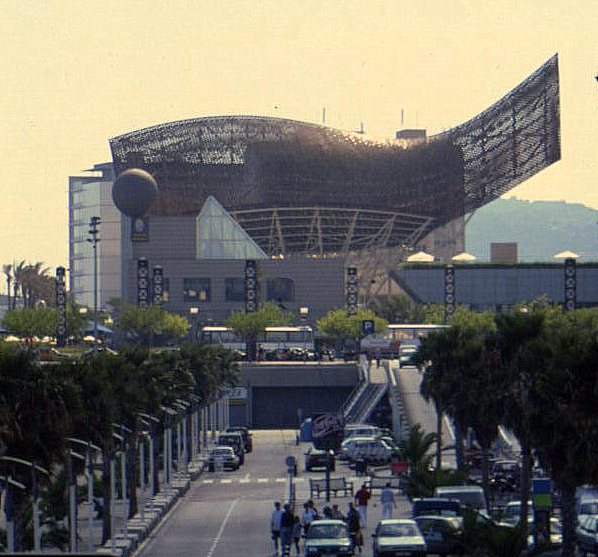
Abraham Centre, Barcelona,Spain

Barcelona is full of contrasts that will surprise and delight, beginning with a skyline dotted by grand scale sculptural architecture in cutting-edge Euro style.

Microwave tower, Barcelona, Spain

This is, after all, the birthplace of painter/sculptor Joan Miró (there’s a museum) as well as Picasso’s childhood home (you can visit it).

Beach near Port Olympic, Barcelona, Spain

The window of my high rise hotel right on the coast in the Olympic Village affords a great view of the city.

Street scene, Barcelona, Spain

Street scene, Barcelona, Spain

It is the door to a walking time machine that will take me back 1,000 years within 45 minutes.


Barcelona is a different flavor of Spain because its history as an independent Cataluña far pre-dates its Spanish nationality.


Beginning with the fall of Franco, the Catalan culture has experienced a renaissance to the extent that the Catalan language appears on maps and street signs.


The walk from the Olympic Village (’92 Summer Olympics) toward the city along the shoreline begins with a mammoth marina that’s liberally sown with seafood restaurants and bars.  (Dinner begins late here, and it’s not unusual to see a family with children sitting down to order at 10PM.)

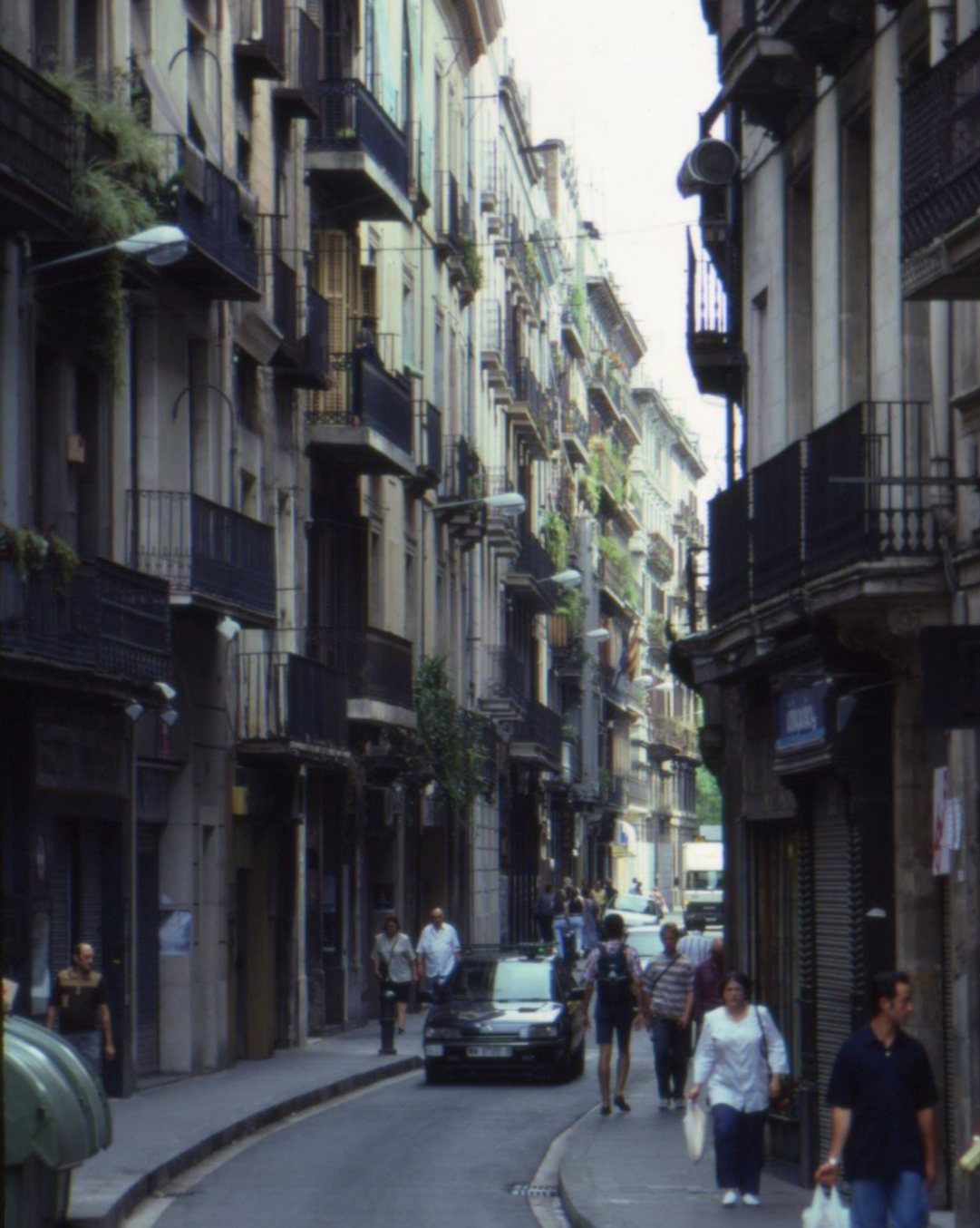
Barri Gotic, Barcelona, Spain


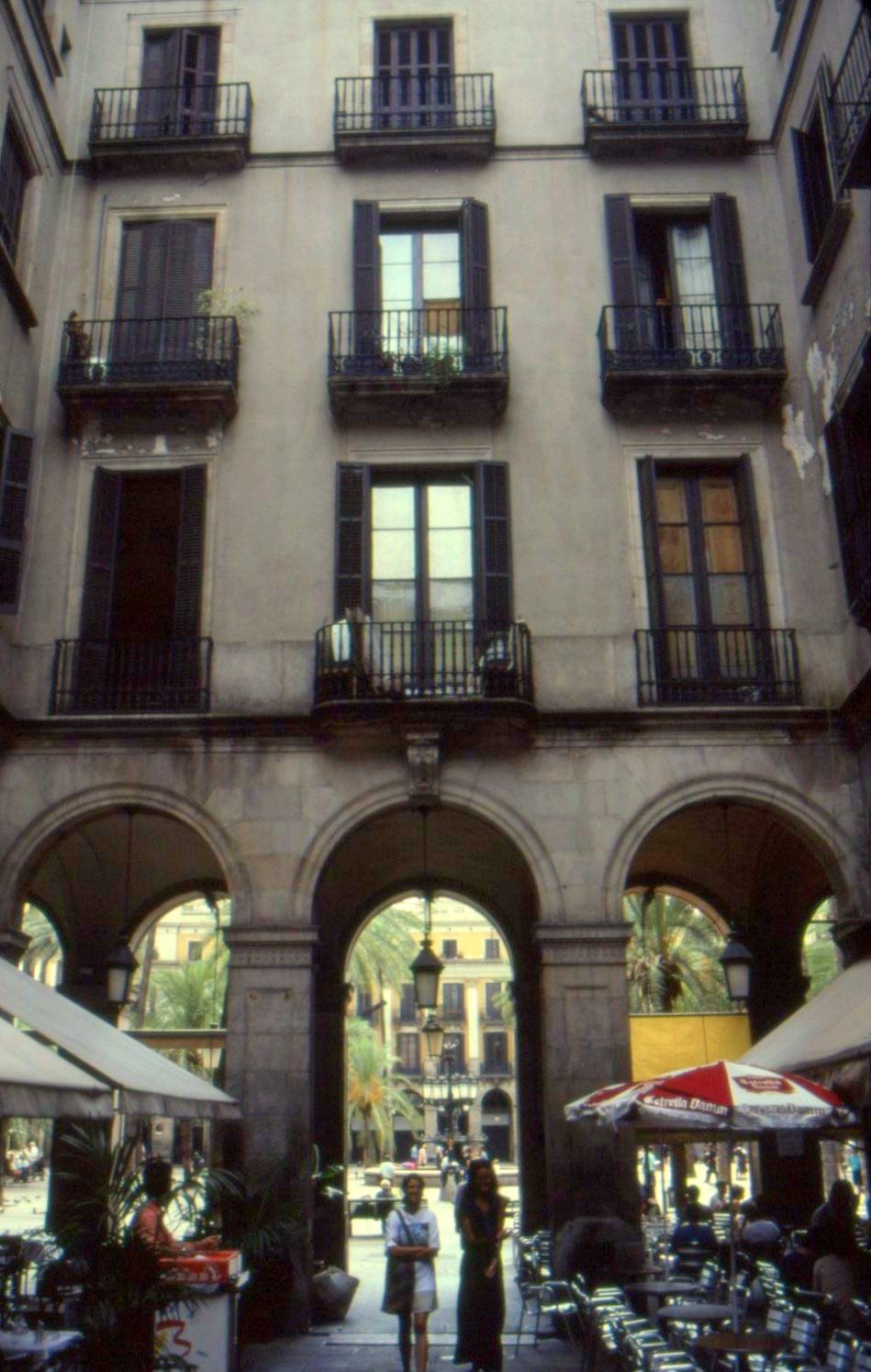
In the Barri Gòtic, the oldest part of Barcelona, narrow streets are scaled to pedestrians or one-horse carts and buildings for walk-up.


It’s easy to get turned around in its Byzantine street plan, but you’re never more than a few blocks from the twenty-first century.

Roman ruins, Barcelona, Spain


Barcelona is the product of cultural overlays beginning with the Greeks, Carthaginians, and Romans.

Roman ruins, Barcelona, Spain


Subsequent overlays have erased most architectural evidence of them, and the few that remain are treated like antiques under glass.

Montjuic cable car tower, Barcelona, Spain


Montjuic is a low mountain that is not only a Barcelona skyline signature, but an important milestone in the city’s past and an integral part of its present.


This large, wooded park takes its name from its centuries-old Jewish cemetery, and is home to a collection of sites well worth a visit.


Most notable are structures built for the 1929 International Exposition including the Palau Palace and the Spanish Village, a hamlet of streets each representing a different region of Spain.  It can be reached from the city center by cable cars that pass over an Eiffel-vintage tower on their way up and back.

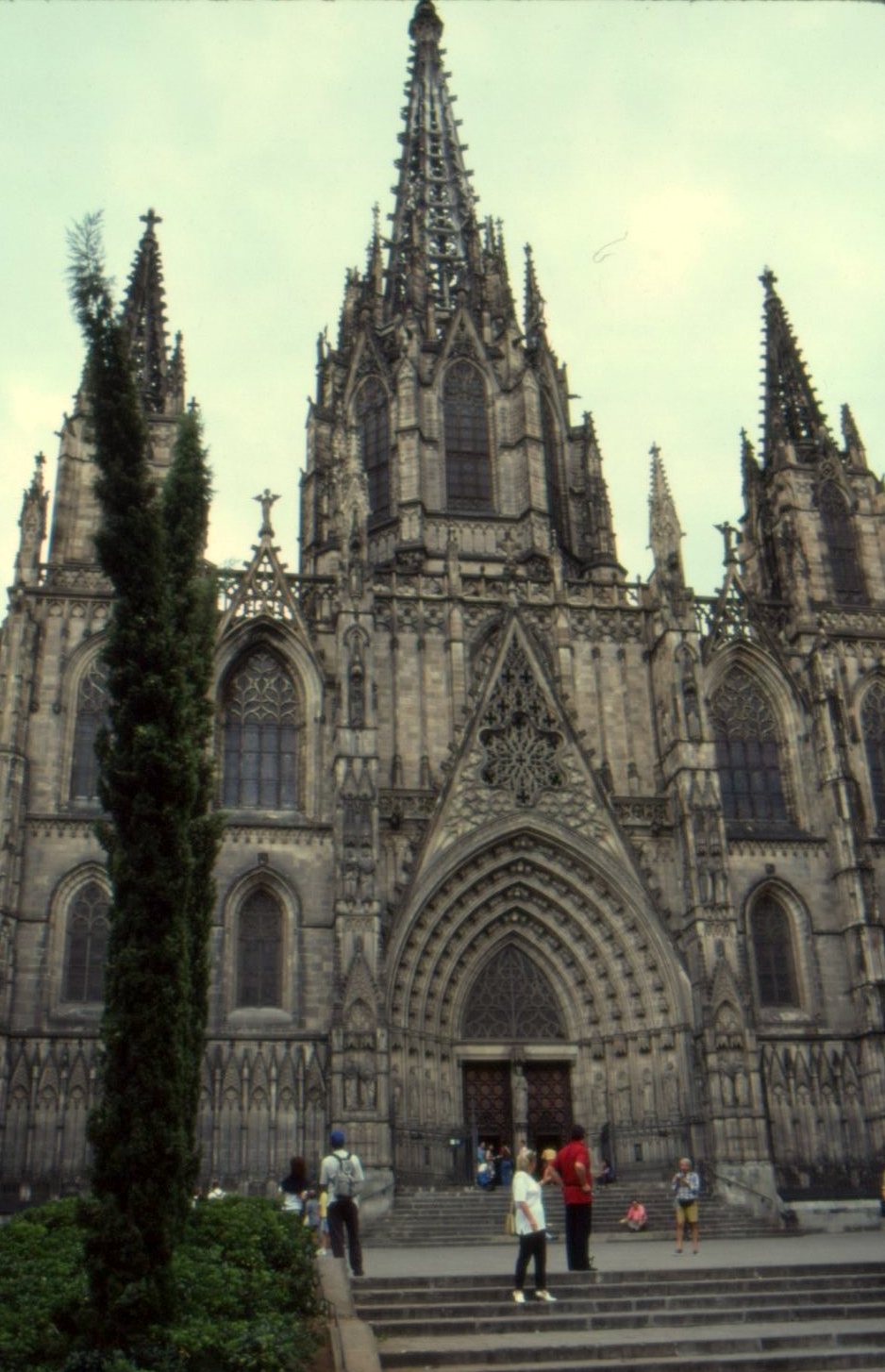
Catedral, Barcelona, Spain

Barcelona’s Catedral is a medieval masterpiece and startling contrast with the Catedral Sagrada Familia.

Catedral Sagrada Famillia, Barcelona, Spain


Catedral Sagrada Famillia, Barcelona, Spain


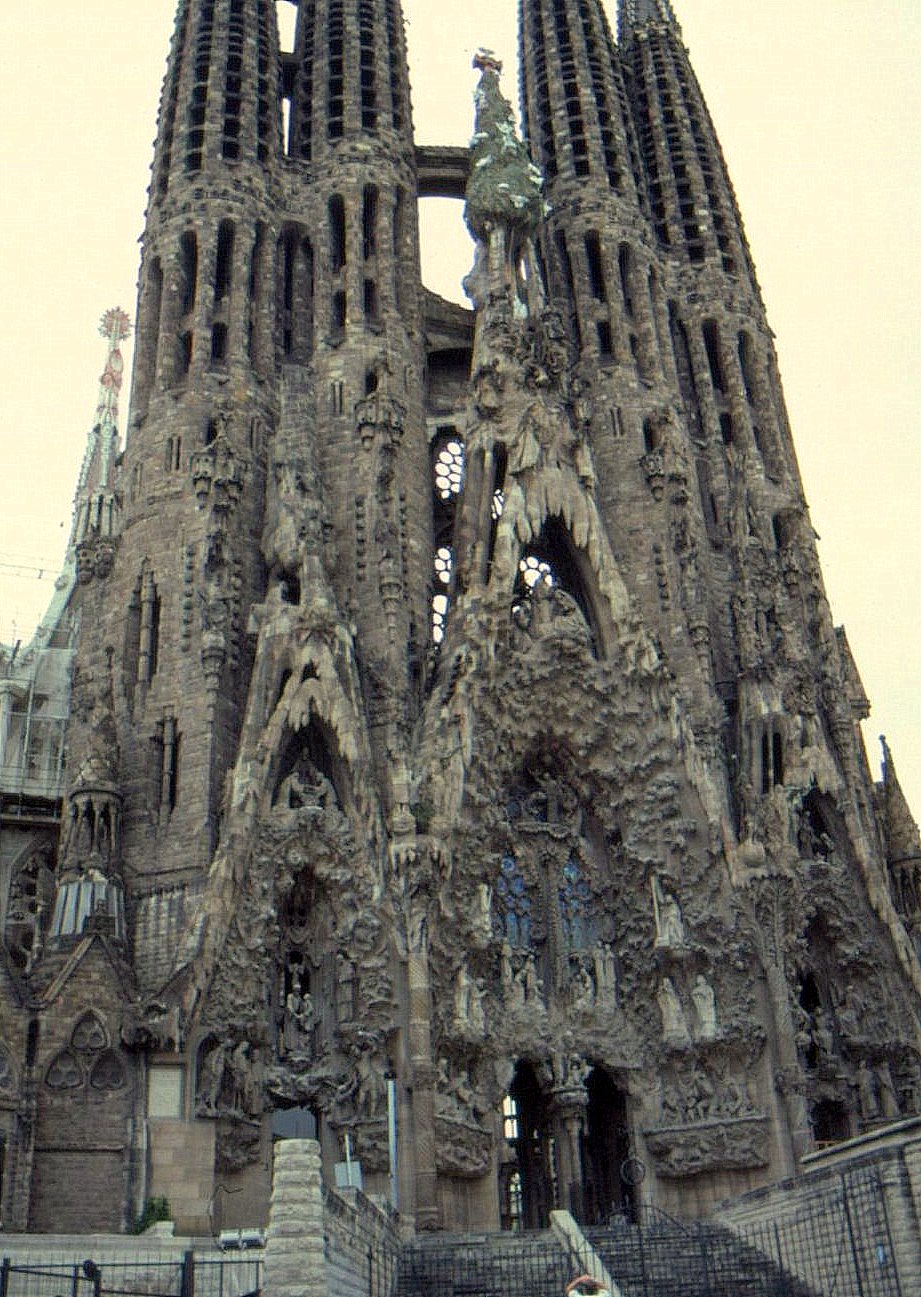
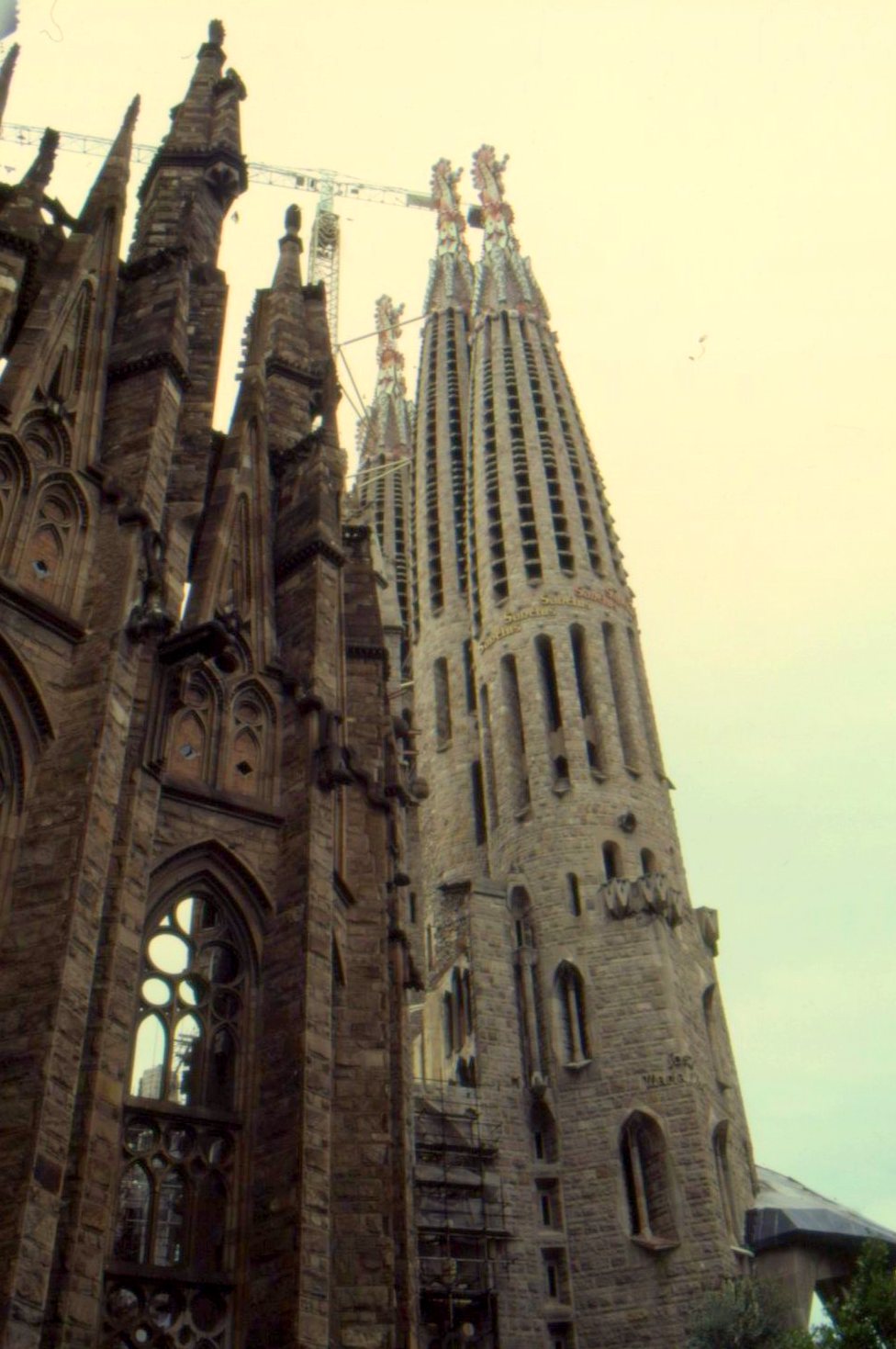
Sagrada Familia is the unfinished masterpiece of native Antoni Gaudi, whose strikingly original architecture reshaped the face of Barcelona at the turn of the last century, and it’s easily the city’s biggest single attraction.

Gaudi devotees are continuously raising money to complete it and work continues to this day.


The place is thick with tourists from Japan, where Gaudi has acquired cult status.

Gaudi’s Casa Mila, Barcelona, Spain


Gaudi’s residential architecture may be smaller in scale, but equally original and instantly identifiable.


Gaudi's Casa Batllo, Barcelona, Spain

Gaudi’s Casa Batllo, Barcelona, Spain


For anyone whose appetite for Gaudi remains unsated, his work at the Parc Güell garden complex will completely fulfill.

La Rambla, Barcelona, Spain


If Sagrada Familia is Barcelona’s heart, then La Rambla is Barcelona’s soul.


The origins of La Rambla pre-date the Roman occupation.

La Rambla, Barcelona, Spain


It’s the Champs-Elysees without auto traffic, an urban promenade that lets you crisscross the boulevard at your own pace.


Here among the throngs you’ll see mimes, street musicians, and a great slice of Barcelona life.

Mercat de la Boqueria, Barcelona, Spain


Don’t miss the Mercat de la Boqueria, a great open market in the finest European tradition where you can find everything from fish to flowers. The Mercat fronts on La Rambla.

Mercat de la Boqueria, Barcelona, Spain

Mercat de la Boqueria, Barcelona, Spain


You haven’t experienced Spain unless you’ve had jamon Serrano.


Great historical and cultural sites, and engaging coastal setting, and delectable dishes make Barcelona a lot of bang for a single port-of-call, and it will lead you to agree that Barcelona IS the most European of Spanish cities.

Tomorrow I travel into the Pyrynees to the magical monastery of Montserrat.  Click here to come along!


Ferry departs from the Ajijic pier

All that I saw of San Luis Soyatlan on my first visit there nearly 8 years ago was the flower-bedecked cemetery that caught my eye just as the day was drawing to a close and I was about to turn back to Ajijic.

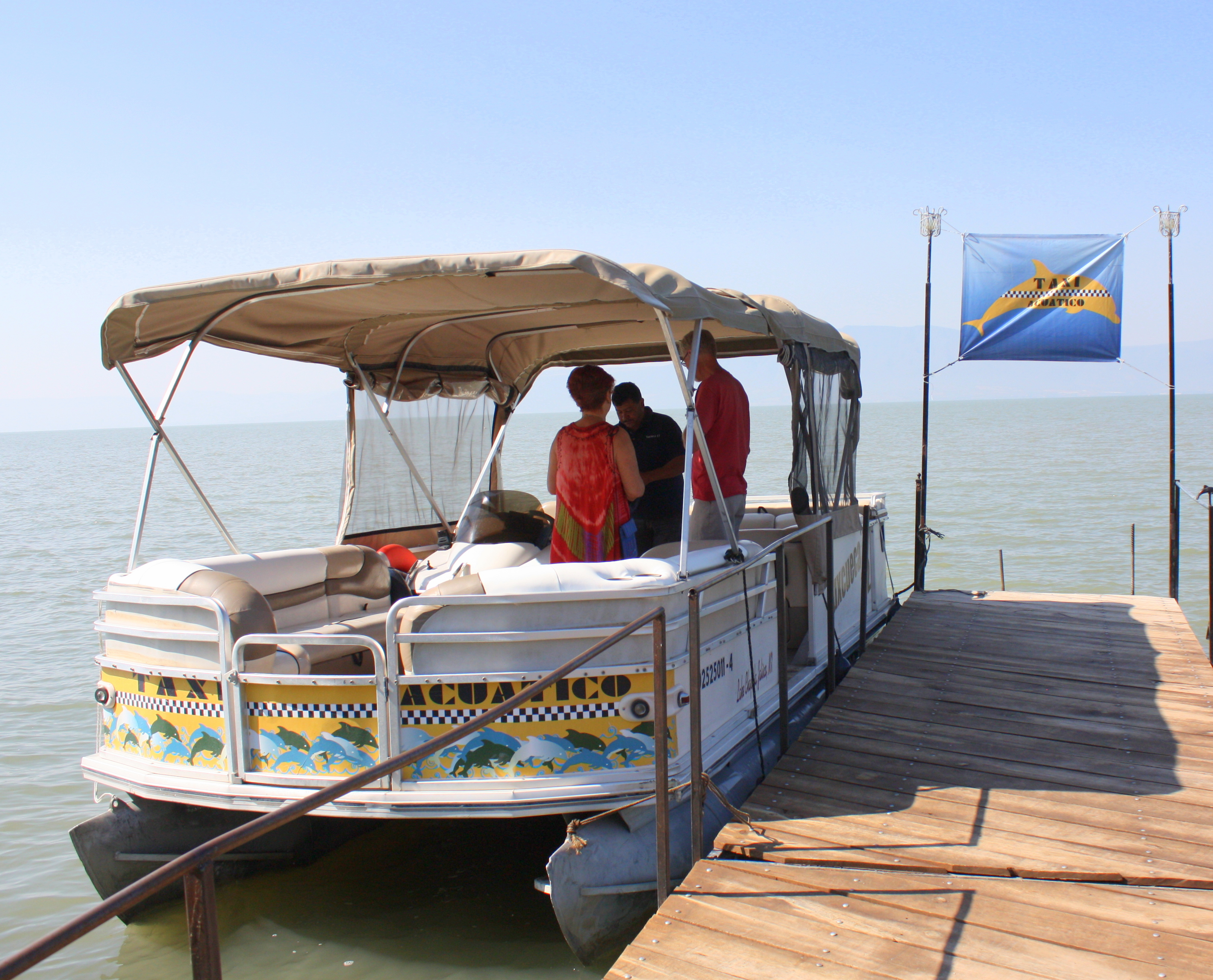
I ran out of daylight before I ran out of town, promising myself to return one day to finish the visit, but the recent start of ferry service from the Ajijic Pier gave me an irresistible new way to keep that promise.

Ajijic Pier

A block away from the pier on Colon I grab a latte from La Prensa Francesa, and within half an hour we’re pulling away from the pier.

The boat is easily spacious and comfortable enough for the trip of under an hour.  I watch the pier recede in our wake.

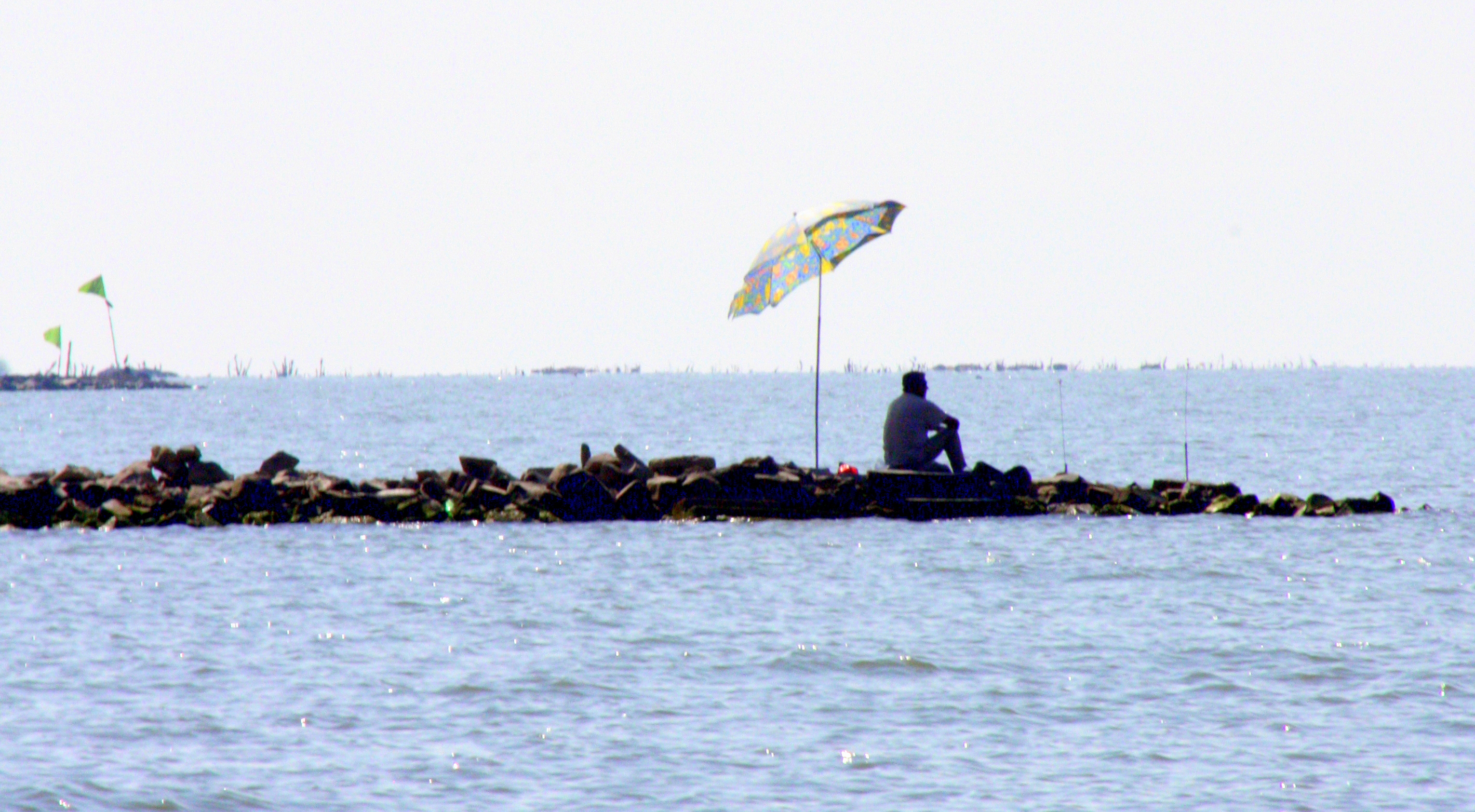
Out on the water the fishermen are already well into their day.

Pulling in the net on Lake Chapala

There’s often a mirage-like quality to things seen from this vantage point.

Fisherman on Lake Chapala

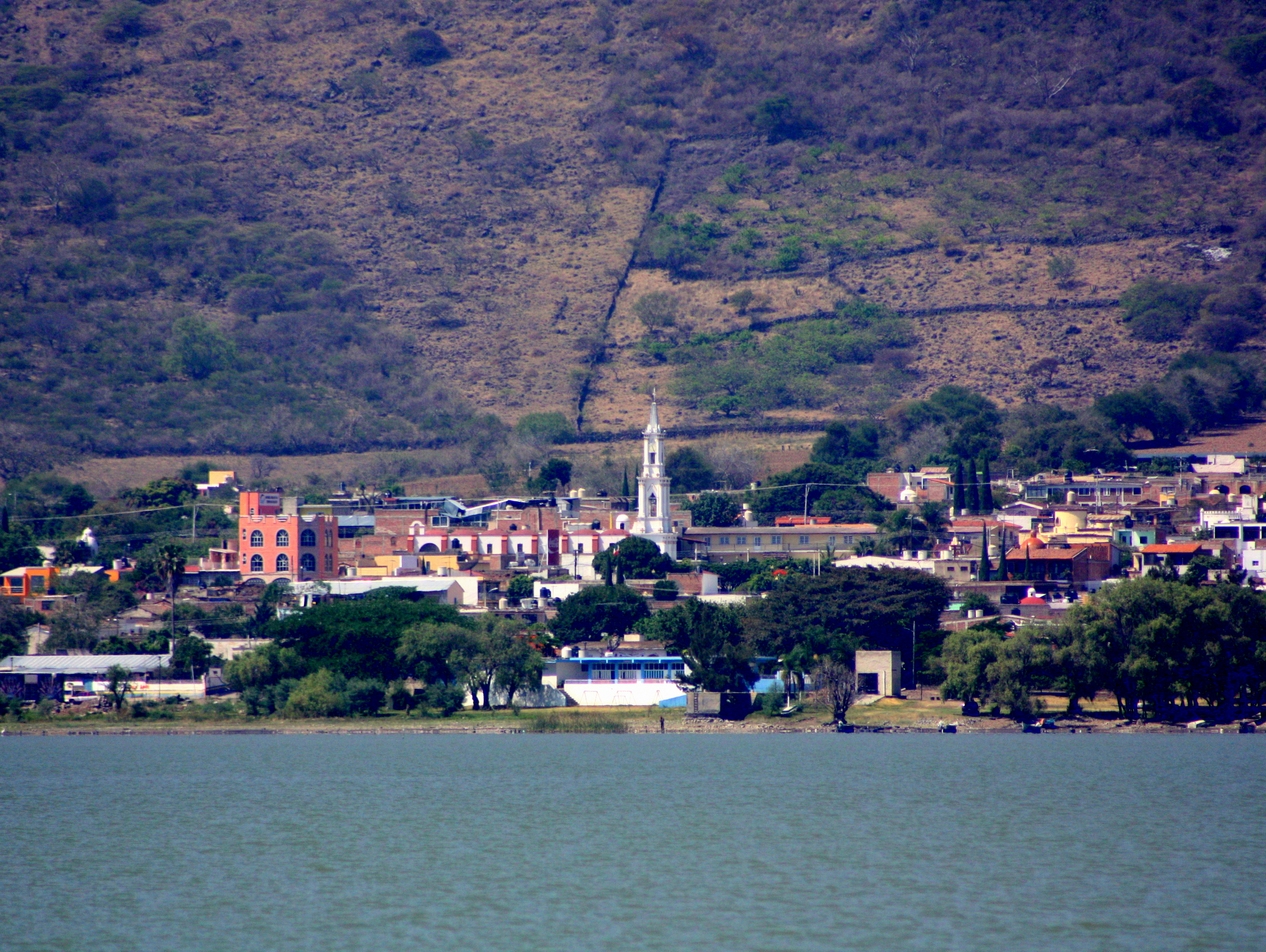
As the opposite shore draws nearer the towering campanario of the parroquia first takes shape, and then the village gathered around it. Behind it the mountain grows to cover the entire horizon.

San Luis Soyatlan from Lake Chapala

Street scene, San Luis Soyatlan

I set out for myself as soon as we land just west of town, mapless but following two time-tested rules:  (1) Follow the shoreline whenever possible, and (2) always go toward the campanario.

The shoreline path winds along an expansive lakeside park with lots of picnic tables and groomed trails.

As the campanario looms larger I turn toward the mountain and within a couple of blocks reach the coast road.

Frutas y verduras, San Luis Soyatlan

Clustered along this part of the highway are neighborhood tiendas and tacquerias that give way to homes as I approach the campanario and the plaza which must certainly be below it.

A family business, San Luis Soyatlan

Street scene, San Luis Soyatlan


This place feels to be about the same size as San Juan Cosala on the opposite shore – I’d guess under 2,500 persons – and just like San Juan is stretched along a narrow strip that clutches the coastline.

This place also feels like Jocotopec… a working agricultural town devoid of Tapatios on holiday or expat retirees.

The Plaza is classic. It’s bordered on one side by the coast road, framed by buildings of substance, and located directly across from the campanario.

Plaza, San Luis Soyatlan

Plaza, San Luis Soyatlan

Plaza, San Luis Soyatlan

I’m always struck by the way in which every Mexican neighborhood builds out the age-old Catholic Church footprint in a distinct reflection of its own unique image.

On that count this one does not disappoint.

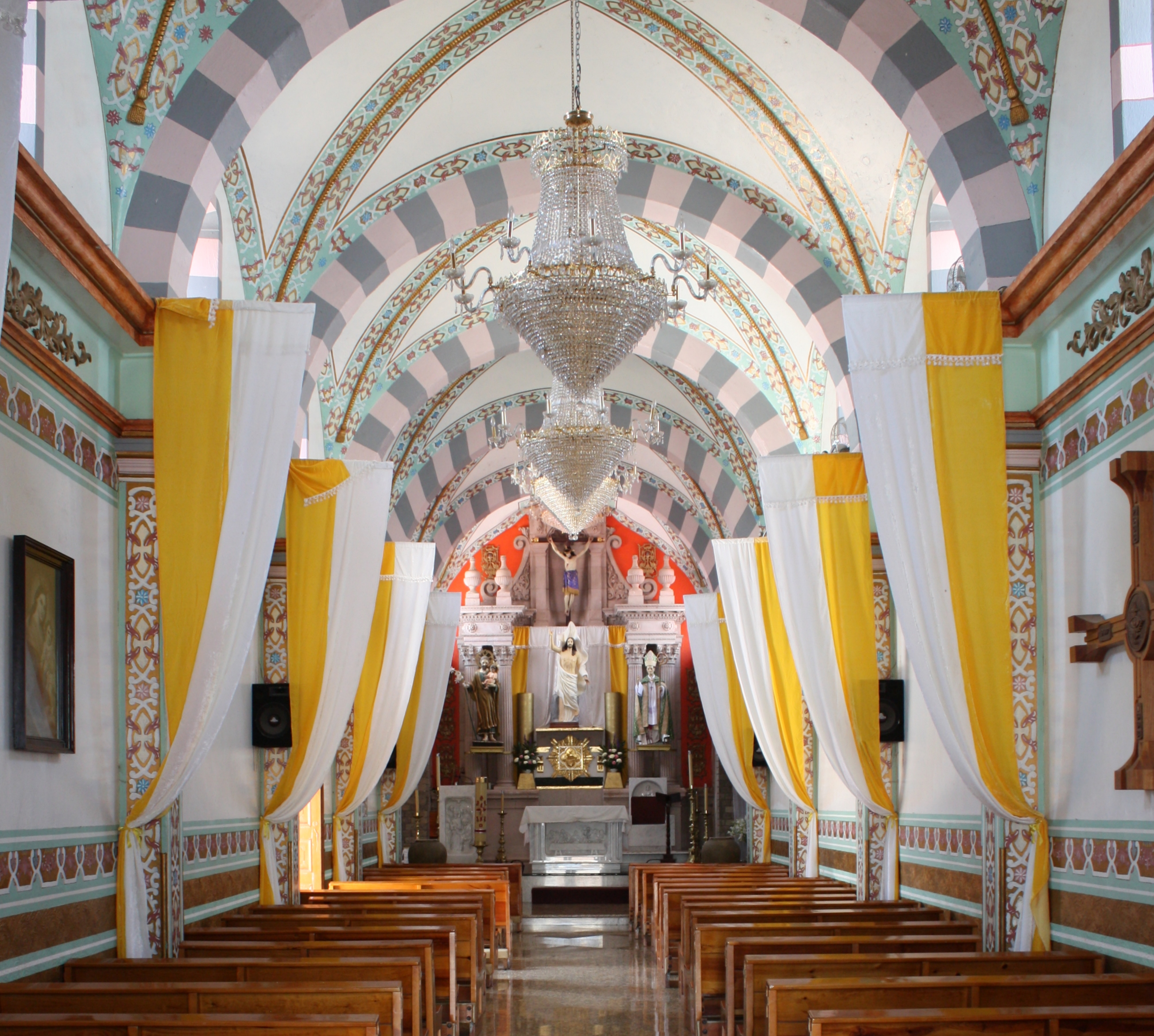
Parroquia, San Luis Soyatlan

Parroquia, San Luis Soyatlan

Parroquia, San Luis Soyatlan

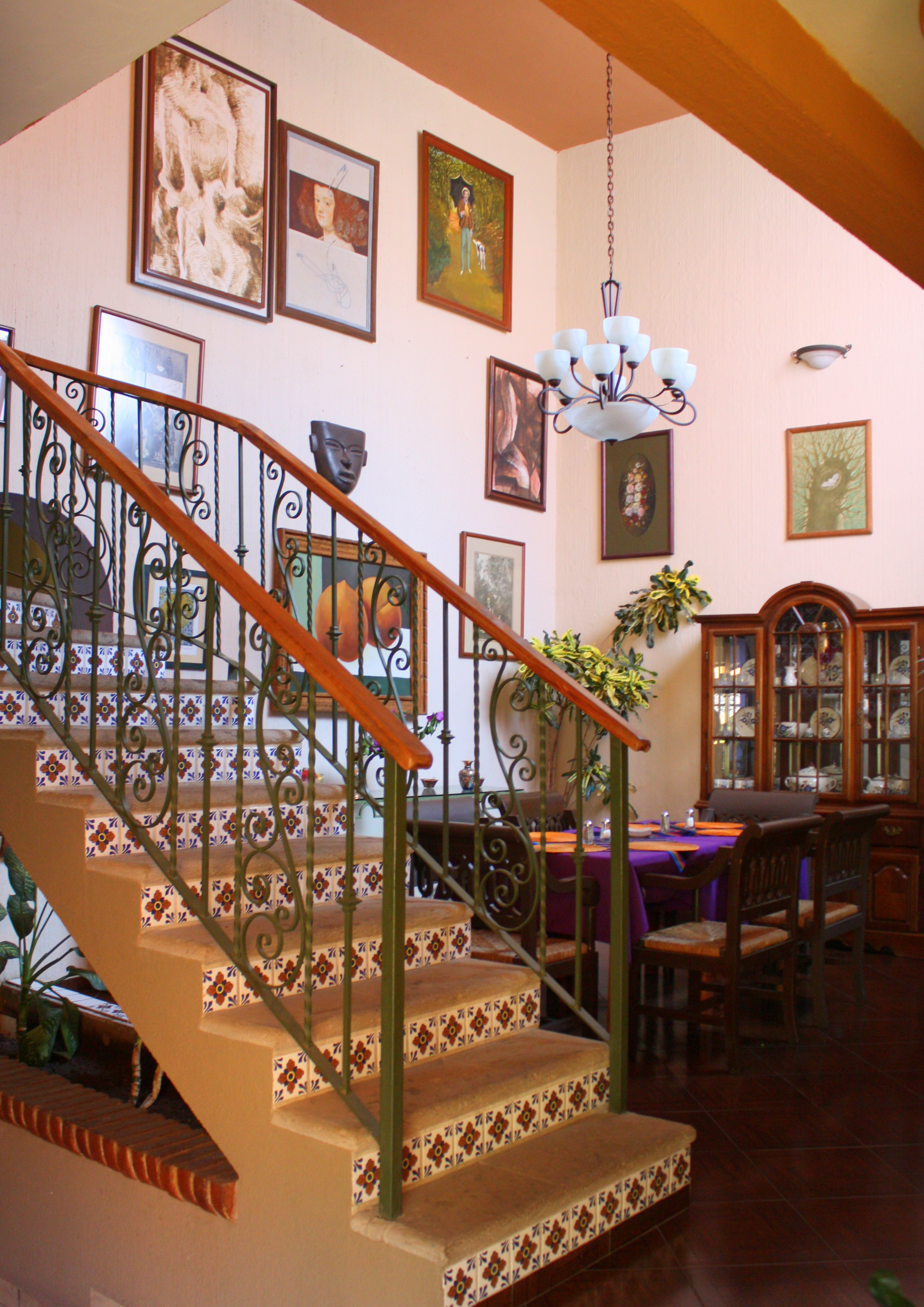
Only a few blocks from the Plaza I stumble upon the Posada Los Crotos, an intimately-sized hotel with an impressive restaurant. I wish I’d found it sooner, because a thorough walk of the town and a leisurely lunch will barely allow enough time to make it back to the ferry before its departure!

Posada Los Crotos, San Luis Soyatlan

Posada Los Crotos, San Luis Soyatlan

I return to the ferry along back streets.

Street scene, San Luis Soyatlan

Street scene, San Luis Soyatlan


As the returning boat approaches Ajijic I study the town from this new perspective. I think to myself: THIS is the definitive postcard from Ajijic…

Ajijic from Lake Chapala

Surf Texas!

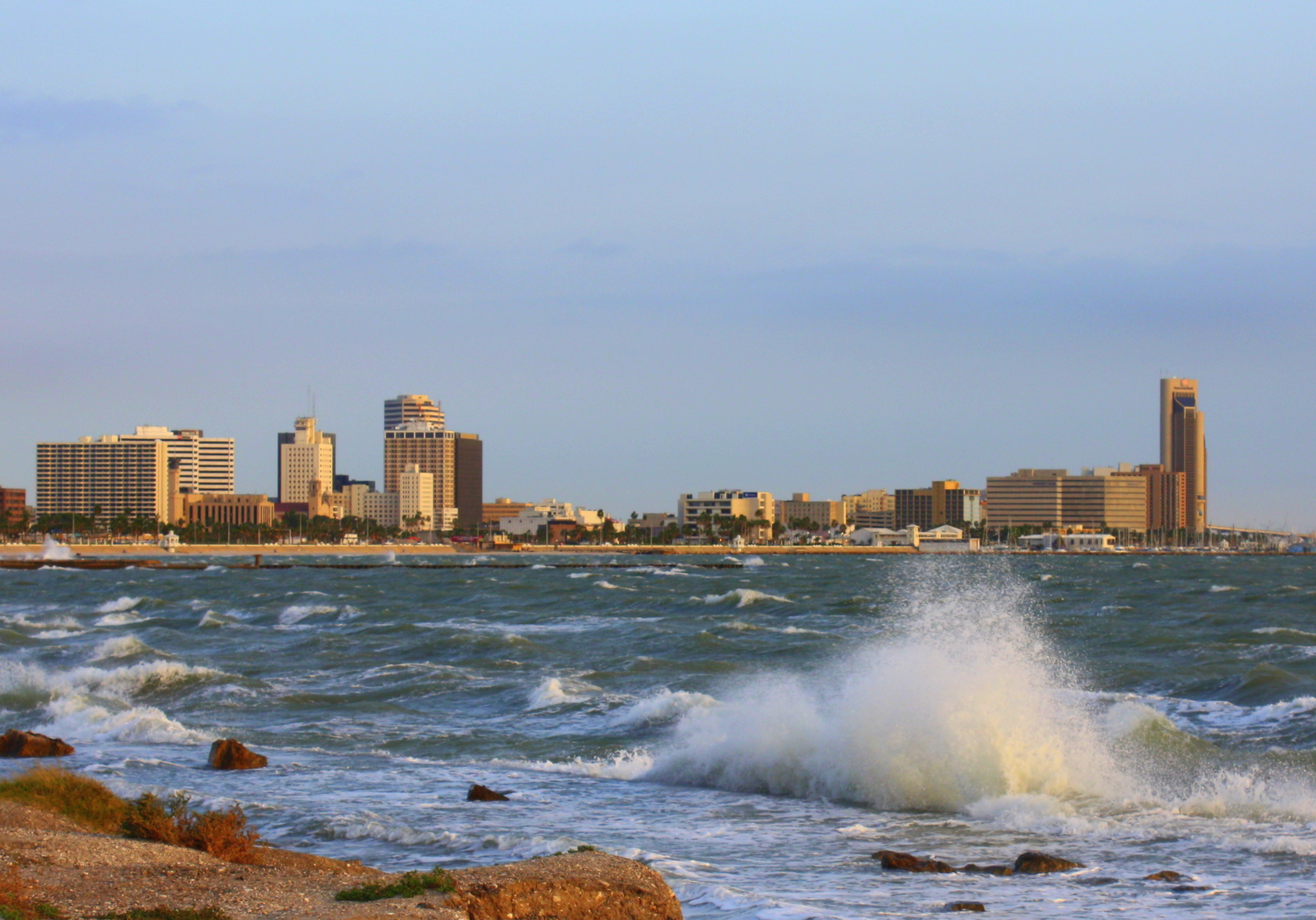
Corpus Christ bayfront

The biggest of many surprises when I first came to Texas was Corpus Christi.  It is, after all, not often that the words “beach” and “Texas” are spoken in the same sentence outside the state.

No matter how many outside stereotypes it may up-end, though, Corpus Christi is quintessentially Texan.

Corpus Christi marina

Corpus was once on my regular travel circuit, but it had been years since my last visit when I arrived on this trip.

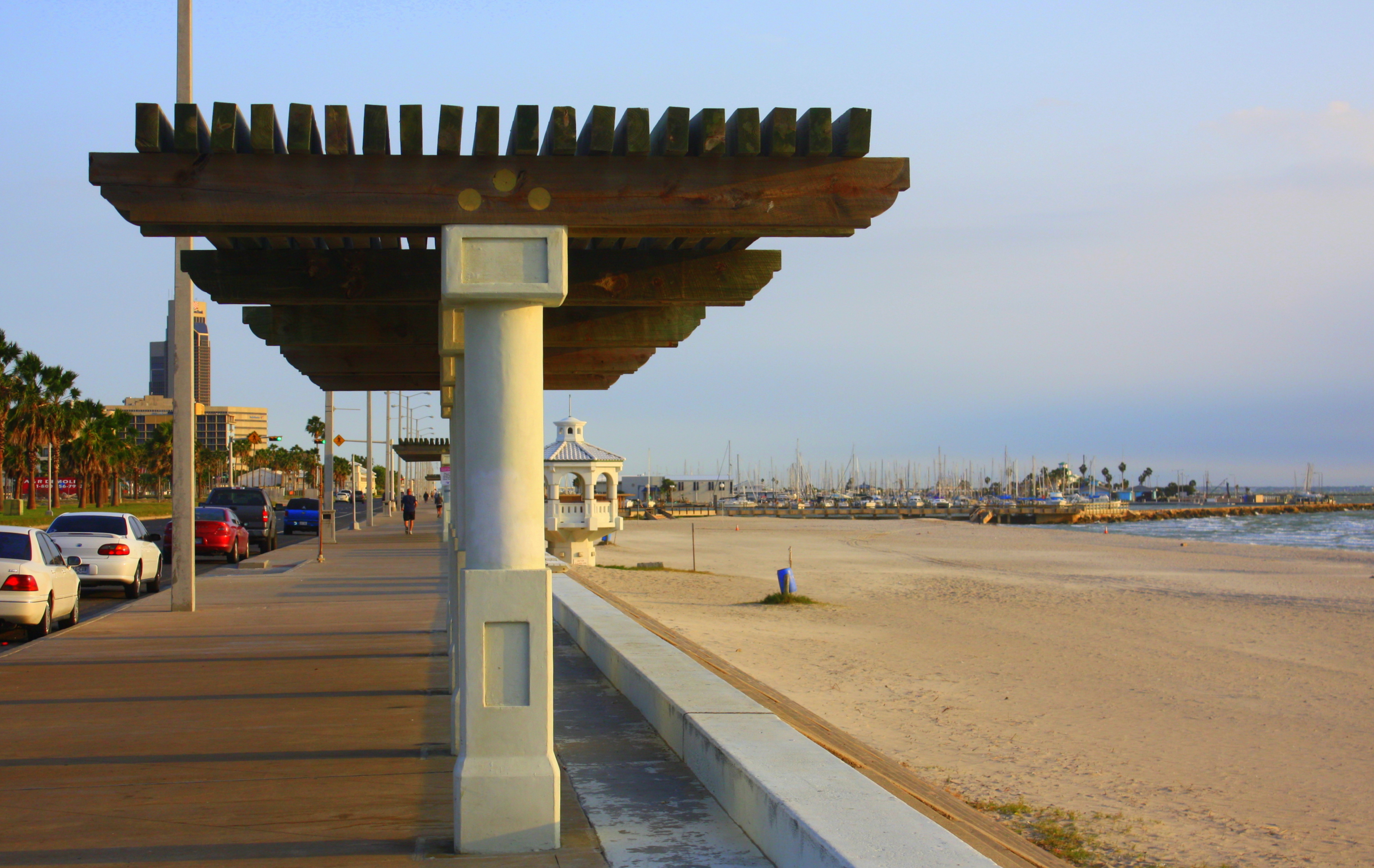
Corpus Christi seawaal

The first thing I notice is that the city has since not only acquired a skyline, but has razed blocks of old and unsightly buildings that once faced the bay.

Statue on Corpus Christi seawall

I could cut here to photos of magnificent sunrises over seashell-strewn beaches and there’s no lack of them within a 20 minute drive.

To reduce Corpus Christi to a stretch of sand and sea horizon, though, ignores some of the best part of the experience.

The city is wrapped around Corpus Christi Bay, sheltered from the Gulf by the northern end of Padre Island.

Corpus Christ bayfront parasailor

Here the Gulf has a distinctly Tex-Mex flavor, and the town exudes the same warmth and hospitality which seems to characterize all of South Texas (see my related post on San Antonio’s King William District).


A publicly accessible bayfront stretches more than 6 miles from the Convention Center to Swanter Park, passing through several other parks along the way.


It’s a magnet for walkers, joggers, and cyclists and a great way to begin any day.


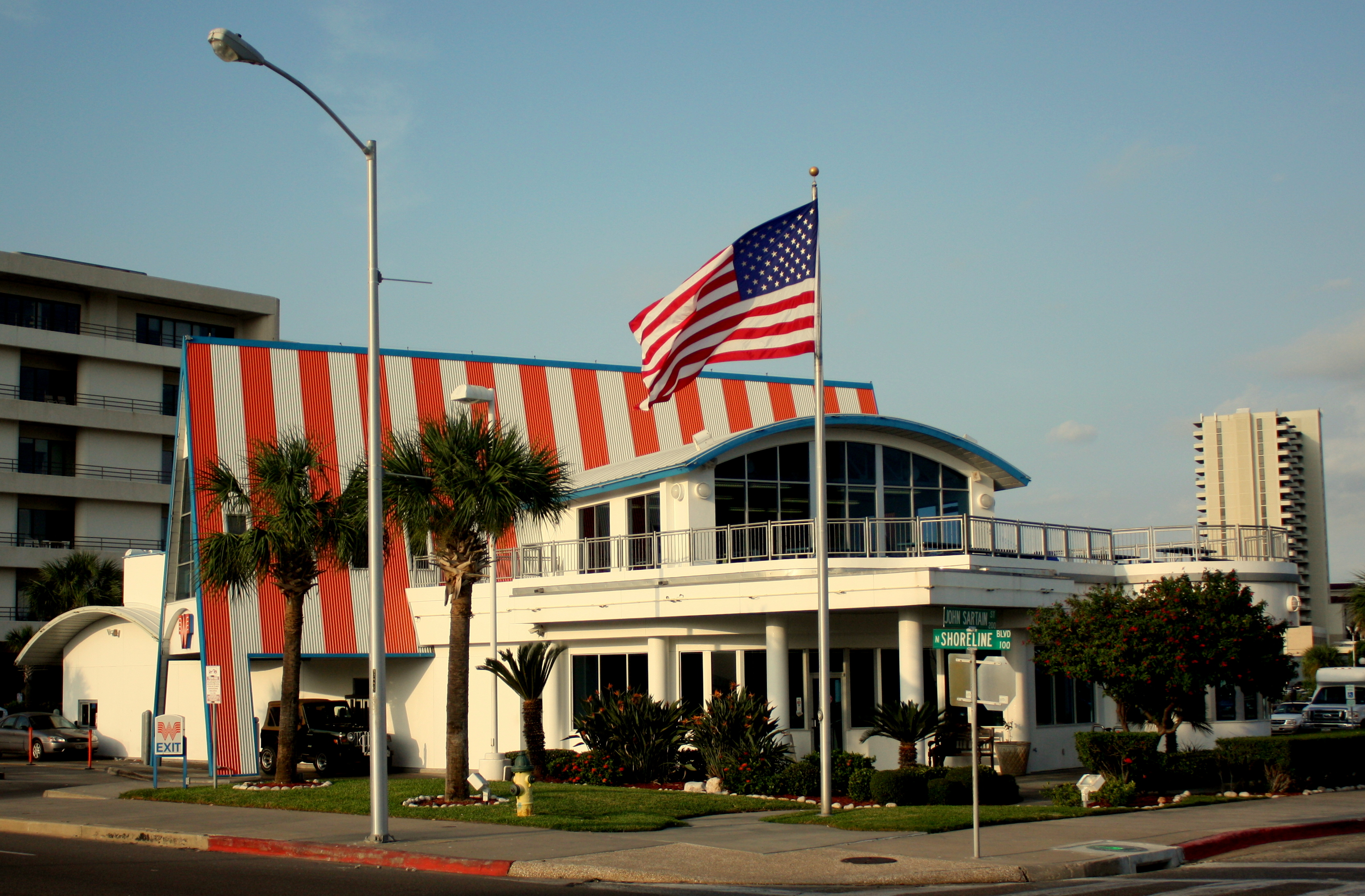
World’s largest Whataburger, in the city where the chain was born


South Texas Music Hall of Fame, Corpus Christi

I turn away from the bay on Water Street and stumble upon an eclectic collection of sights that in combination could be located absolutely nowhere else.


The statue of Tejana music star Selena on the seawall is only one of many places where residents and fans pay homage.
Her star is among those on the South Texas Music Walk of Fame, which highlights other musical notables who were either born or lived in South Texas.


Selena memorial, Corpus Christi seawall

Selena memorial, Corpus Christi seawall

Some of the better known include Freddie Fender, Guy Clark, Selena, Christopher Cross, Kris Kristofferson, Rusty Weir, Doug Sahm, and Bill Haley.

More about it here.


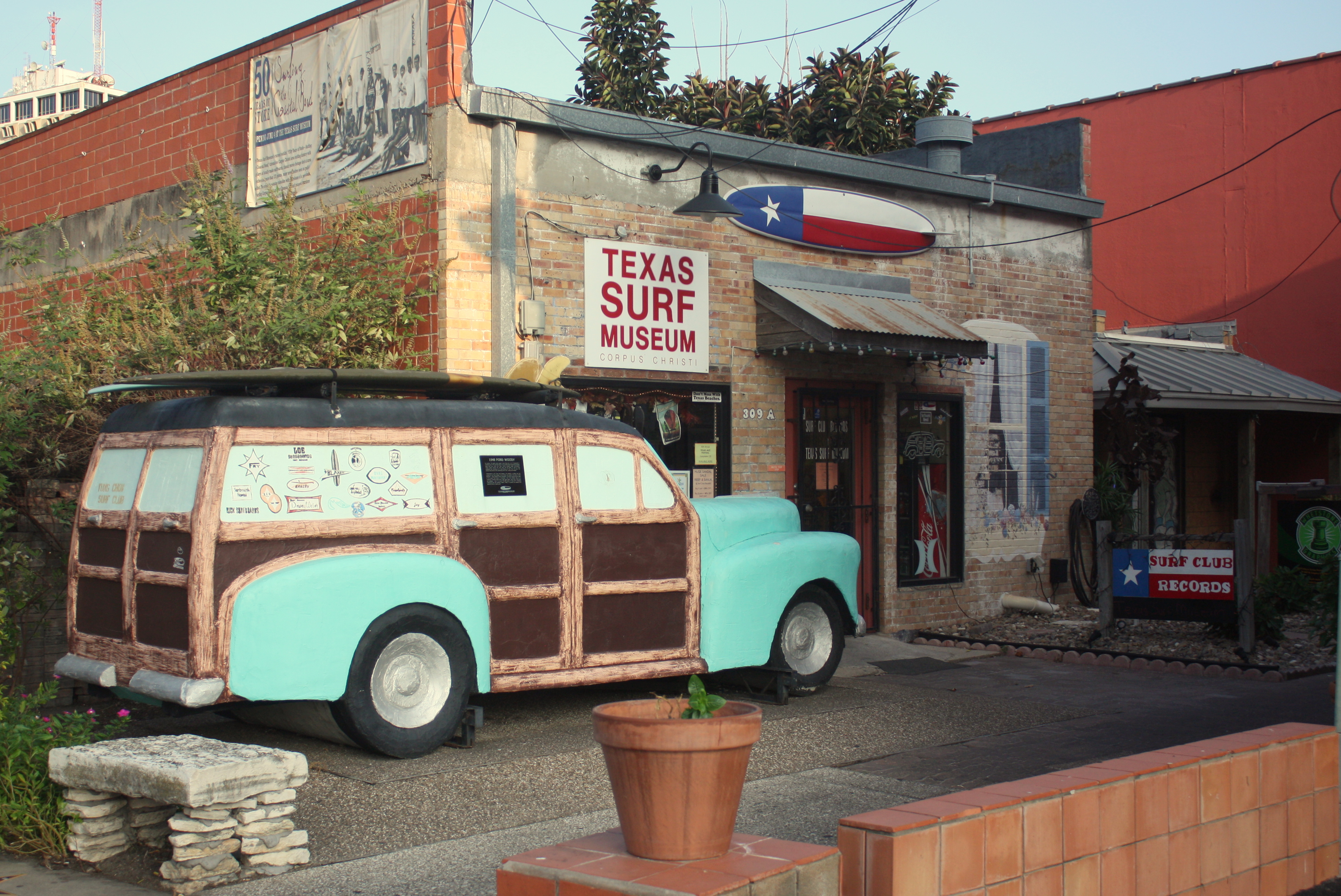
Texas Surf Museum, Corpus Christi

Whether you’re a surfer or not, The Texas Surf Museum is great fun in a kitschsy sort of way. It’ll leave you humming ’60’s California surf tunes for the rest of the day!

More about it here.


Next door I find a great latte at Coffee Waves. I add it to my collection of “anywhere but Starbucks” coffeehouses!
Just over the Nueces River bridge sits the aircraft carrier USS Lexington, now a floating museum.

USS Lexington, Corpus Christi

Mess hall kitchen, USS Lexington, Corpus Christi

There’s enough hardware on this vessel – planes, engines, compressors, pumps, gauges, switches and dials – to keep any war buff or engineer mesmerized for weeks, but I found the living quarters far more engaging.

Crew’s quarters, USS Lexington, Corpus Christi

As I roamed this part of the ship I had a very palpable sense of the many who had lived aboard the Lex during its 48 years of service.
More about it here.


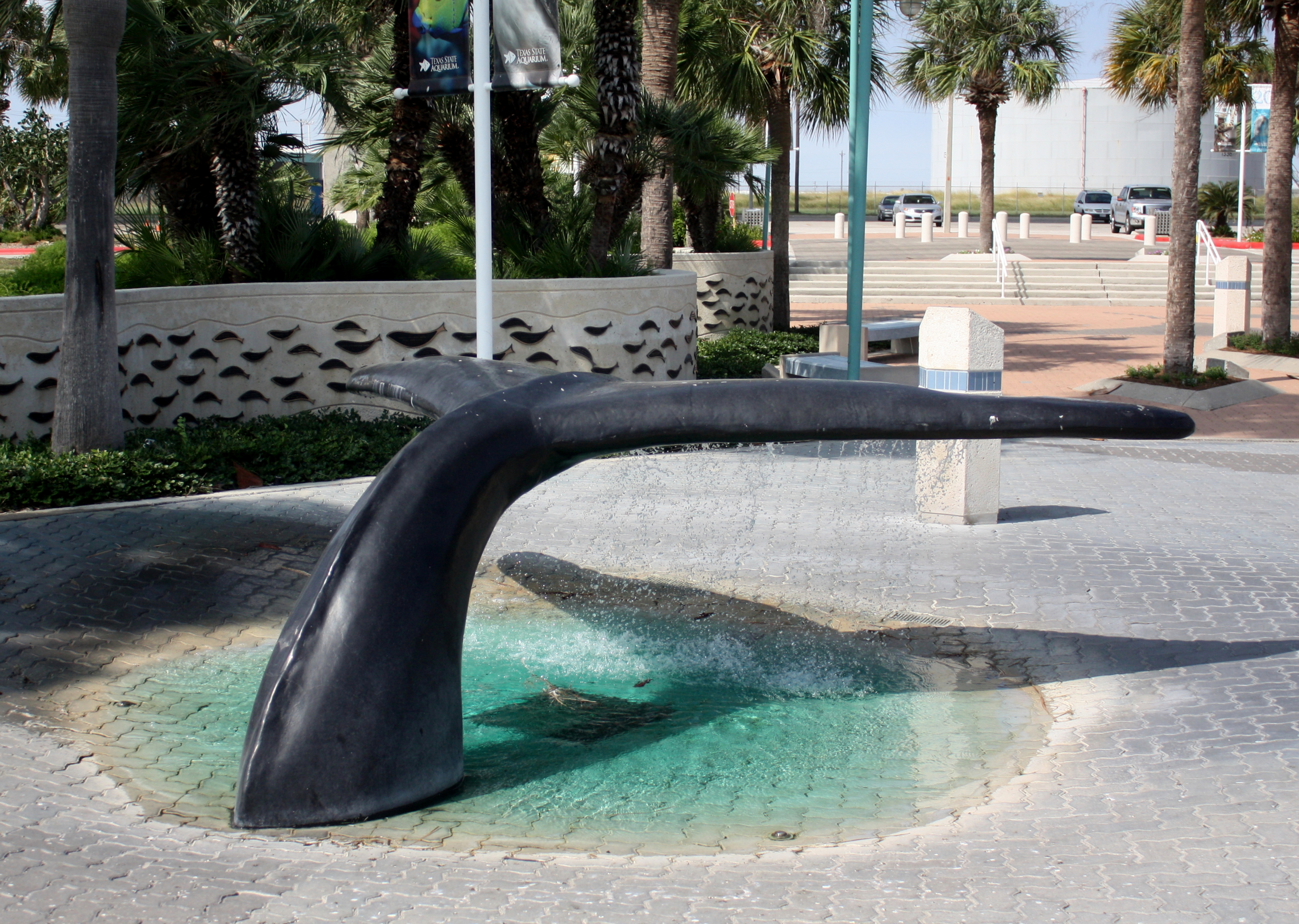
Just a stone’s throw from the Lex is the Texas State Aquarium. It may not be the world’s largest or most ostentatious, but it contains sea and shore life painstakingly selected only from species native to Texas.

Texas State Aquarium, Corpus Christi

Texas State Aquarium, Corpus Christi


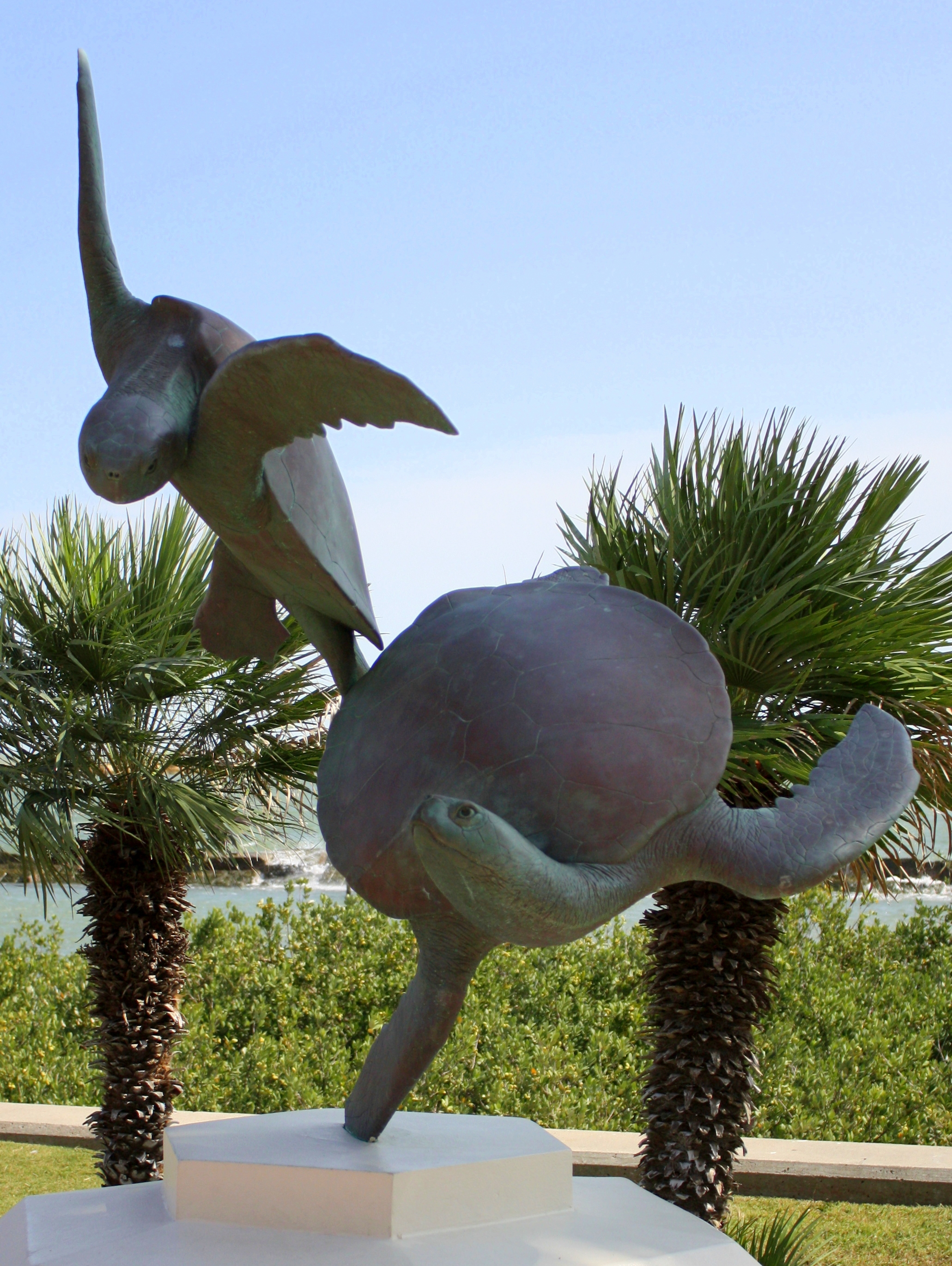
Some great sculptures mark the entrance, and anyone with kids in tow will be glad to know that even here they’ll find the obligatory porpoise show.

More about it here.

I find myself on more than one evening – including my final night – having dinner just a couple of blocks from the seawall at the City Diner & Oyster Bar.  The atmosphere is classic 40’s diner, the service is friendly, the prices reasonable, and the food outstanding.  Like many popular local eateries, City Diner has no web site, but more information, including reviews, can be found here on Yelp.

I cross the river bridge for the last time.  Below me an oil tanker passes through the channel and oil rigs dot the sea horizon.  As I head northward I’m startled by a sight I never expected to see:  A wind farm stretches for miles, hundreds of vanes stirring in the breezes.  Texas is nothing if not a place of contradictions!

Wind farm just outside of Corpus Christi

Fish market in Zapopan, Guadalajara

The half day drive to Puerto Vallarta or Manzanillo puts the bounty of the Pacific Ocean within easy reach of Guadalajara, and nowhere is this abundance as evident as at the Mercado del Mar in the Zapopan section.

Fish market in Zapopan, Guadalajara


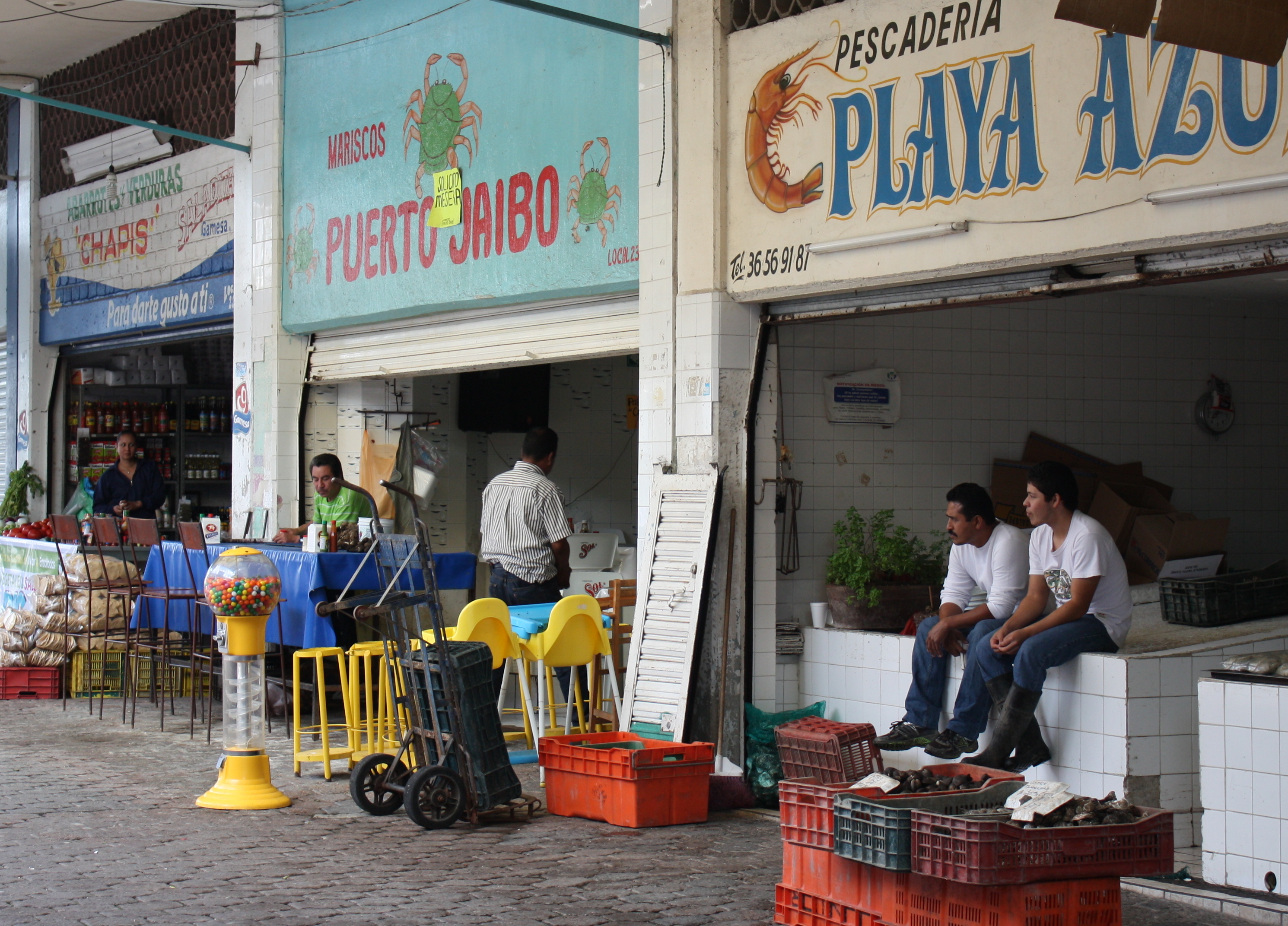
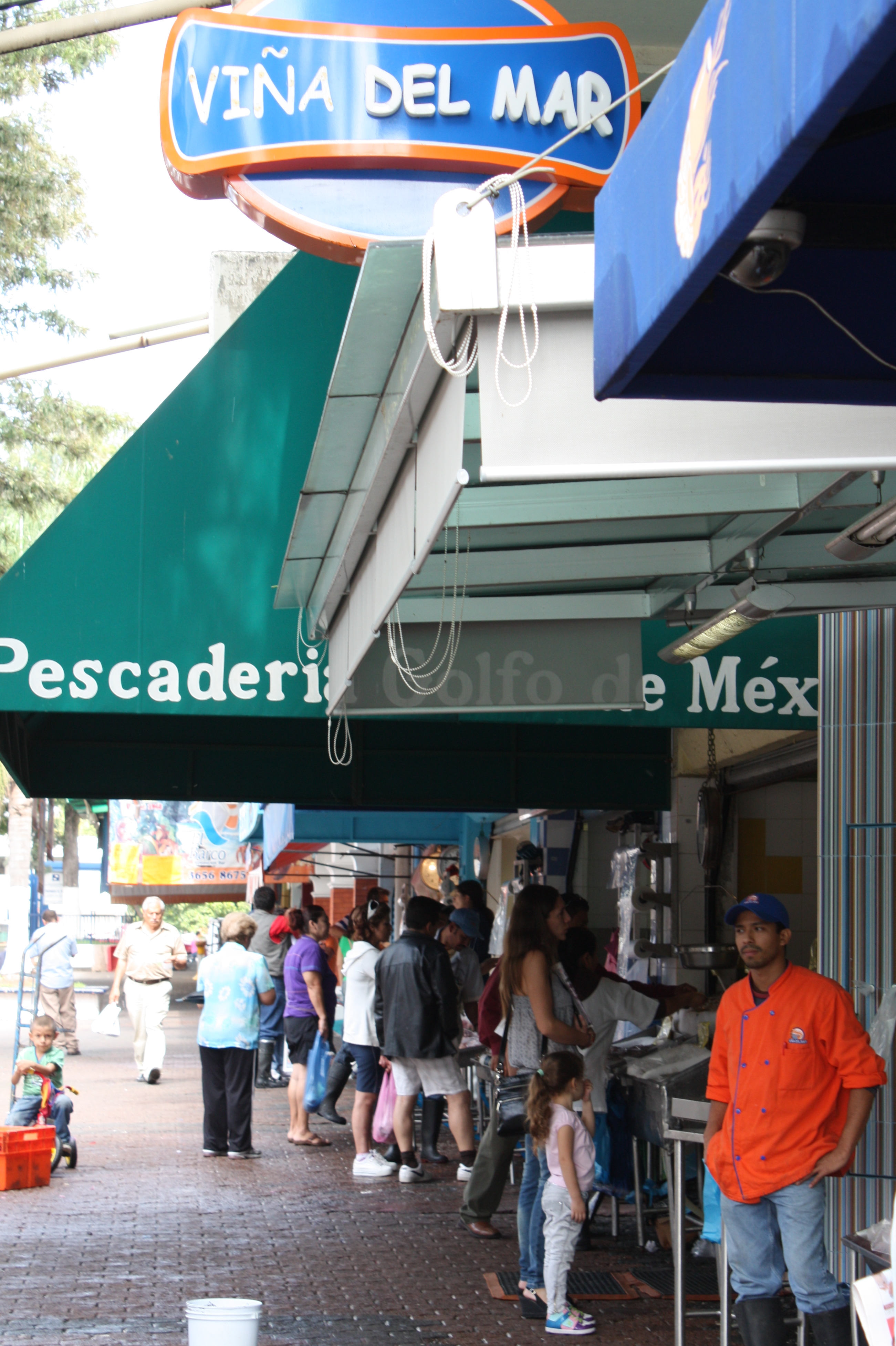
Here restaurant chefs and housewives browse more than a city block of pescaderias and seafood restaurants that compare well with anything to be found in Boston or San Francisco… except for the price!

Fish market in Zapopan, Guadalajara


As at any fresh seafood market, the best picks are available early in the morning, but shops are still well-stocked when I arrive before noon.

Fish market in Zapopan, Guadalajara


There are nearly 50 seafood vendors and half a dozen seafood restaurants from which to choose, and sifting through the choices is at least half the fun.


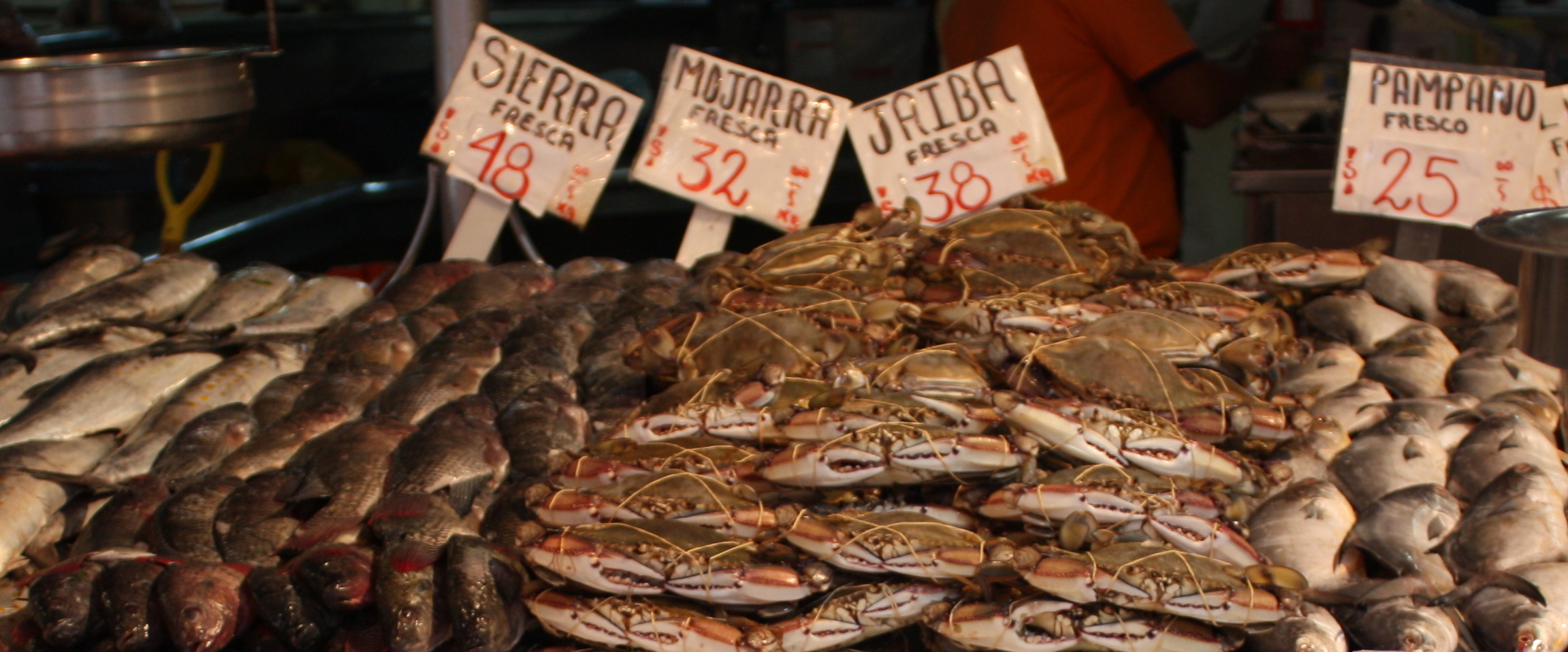
There are plenty of fish that shoppers from north of the border will recognize even if their Mexican names are unfamiliar, but there are also plenty of local varieties that beg to be tasted.

Fish market in Zapopan, Guadalajara


There’s not much English spoken here, but most of the shop owners will gladly explain their products at the slightest prompting.

Fish market in Zapopan, Guadalajara

Fish market in Zapopan, Guadalajara


The breadth of selection is staggering, and there seems to be something in almost every color of the rainbow.


Fishmongers expertly carve out filets and deftly shuck oysters.


Fish market in Zapopan, Guadalajara

Fish market in Zapopan, Guadalajara


The ceviche is about as good and fresh as any you’ll find anywhere without a beach in sight.


Get there from the Periferico on the northwest side.  Exit Avenida Los Laureles toward the city and drive less than two miles to its intersection with Avenida Piño Suarez.  The market is two blocks to the left.


Remember to take an ice chest.  In fact, remember to take two, because some of the best stuff is not even on your shopping list!
 

Mercado del Mar has a web site which lists all of the seafood shops and restaurants (go to the Locatarios page), and as you scroll over each name more information – including individual web sites for many merchants – displays in the lower right hand corner. http://www.mercadodelmar.com/

Fish market in Zapopan, Guadalajara


If you’re uncomfortable with Guadalajara traffic, one of the Mercado del Mar merchants has opened a location just west of Ajijic on the Carretera  in the Plaza La Huerta.  I’ve found it to be among the best at Lakeside.


Buen provecho!


For more about the Guadalajara open market experience, see my related post Guadalajara’s Mercado Libertad

B.Y.O. chic

If you can do without condescending sommeliers, thrice-marked-up wines, and valet parking… you’ll be pleasantly surprised at the great dining experiences – not to mention great values – to be had at Dallas’s B.Y.O restaurants.

I’m talking about genuine B.Y.O.’s that will uncork your bottle or lend you a corkscrew without charging a corking fee.  In these establishments there’s no worry about whether the wine list will have something which appeals to you at a price less than your car payment.   Here if you’re not drinking a bottle of your very favorite with the meal or if you’ve overpaid for it you’ve no one to blame but yourself!
These three East Dallas B.Y.O.’s prove the point that the food has to be damned good in a restaurant that serves no alcohol!

Bangkok Inn, Dallas

BANGKOK INN.  Located at 6033 Oram just off Skillman (at the edge of the Skillman/Live Oak Shopping Center), this is not one of those Thai restaurants that look like the movie set of The King & I.
Bangkok Inn, Dallas

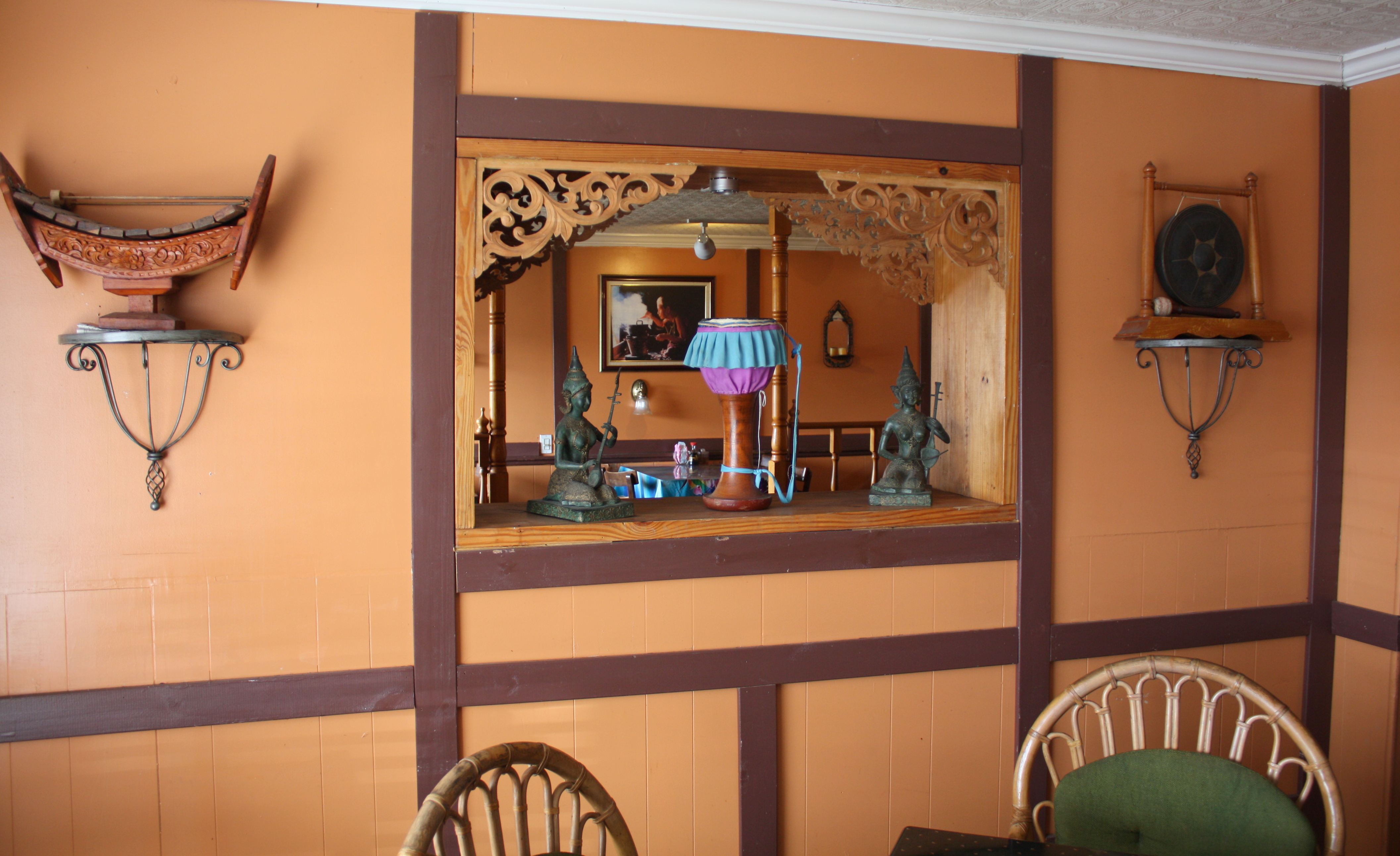
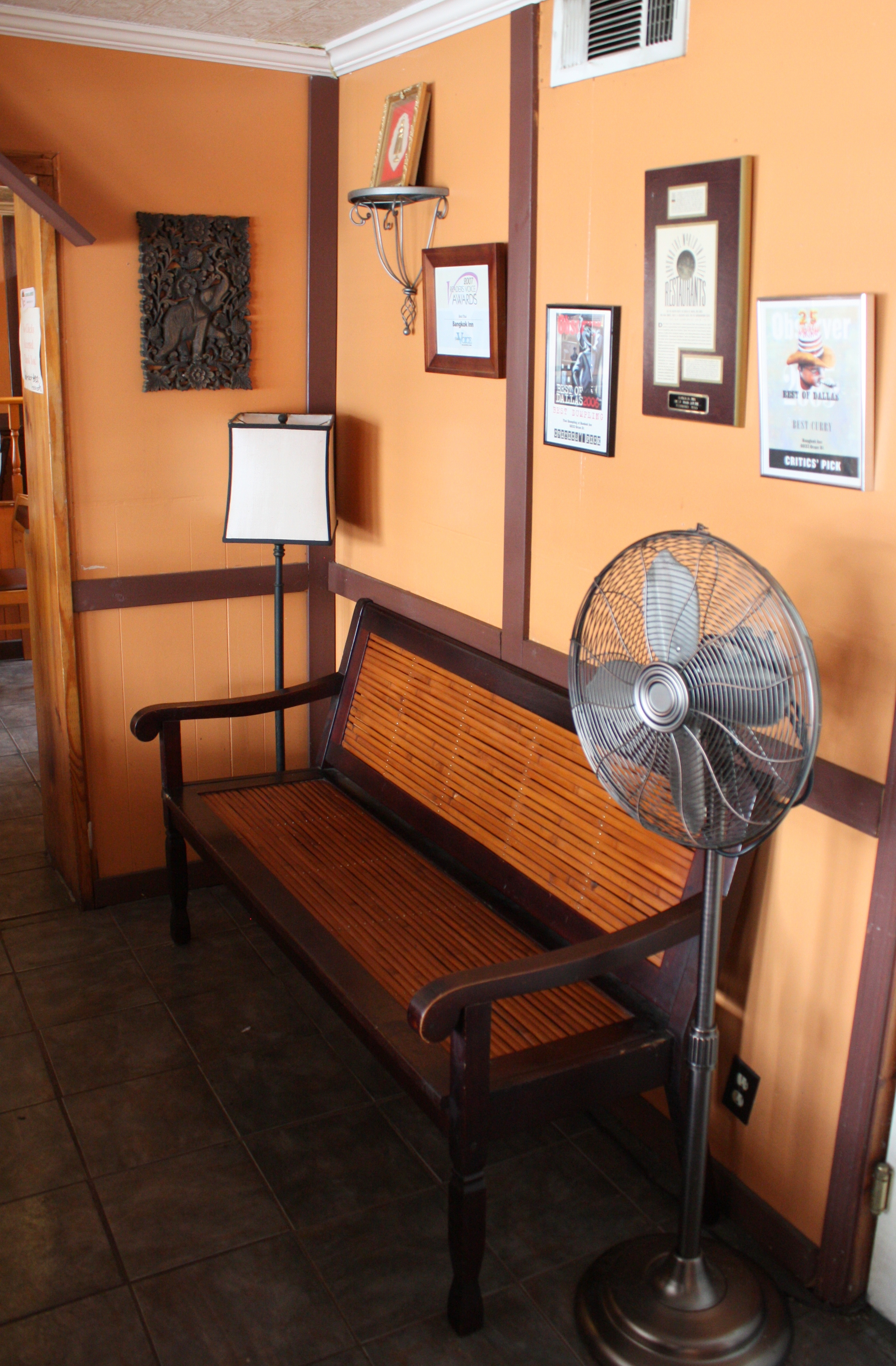
It evokes instead the feel of a country village restaurant.  It’s bright and warm with plenty of Thai artifacts on the walls. Twenty or so tables are spread across two adjacent dining rooms to create very intimate spaces.

Bangkok Inn, Dallas

Bangkok Inn is owned and operated by the Schuskul family, who came to Dallas from Thailand via Maryland and later Houston.

Expect much of the traditional on this menu.  There are good Tom Yam Kai and Kai Tom Kha soups and egg rolls and spring rolls appetizers.   Also be delighted by a great Thai Dumpling or a satay in pork, shrimp, or chicken.

For me the entrée always comes down to the hard choice between equally tasty green, red and yellow chicken or beef curries.  For dessert check out the fried banana with honey over ice cream or the banana in coconut milk.

There’s a good selection of vegetarian entrees here and no entrée is priced above $10.95


SEVAN G&G CAFE.  Located at 2221 Greenville between Richmond and Belmont, this restaurant’s name reflects the purchase in 2004 of the Sevan restaurant by current owners Grace and George.

Sevan G&G Cafe, Dallas

Walk through covered patio dining to enter the dining room, where wood paneling and a cozy layout create the warm and comfortable atmosphere of a true neighborhood bistro.

The owners are originally from Lebanon, and art and implements from the Mediterranean decorate the walls.  Like an increasing number of restaurants in the area, Sevan G&G draws an eclectic crowd ranging from Lakewood and M Street homeowners to young apartment dwellers.

Sevan G&G Cafe, Dallas

The expected Mediterranean fare – hummus, baba ganoush, dolmas, and gyro are all without exception well done.

Then there are unique offerings like the Pistachio Chicken, an amply-sized chicken breast encrusted with ground pistachios and stuffed with feta cheese.

Sevan G&G Cafe, Dallas

At just under $23, the rack of lamb is the most expensive item on the menu by a far shot; most entrees range between $10-$15.  The owners are always to be seen in both the front and back of the house, and they make you feel like you’ve been invited to dine in their home.


JADE GARDEN.  If there’s an inverse relationship between the flashiness of the restaurant and the quality of the food, then Jade Garden is absolute proof positive.

Jade Garden Restaurant, Dallas

Jade Garden Restaurant, Dallas

Located in a building that looks like it was a Dairy Queen in a past life, the interior can be charitably described as ‘60’s kitsch.

Located at 4800 Bryan and Fitzhugh, Jade Garden sits within eyesight of Jimmy’s Food Store (see my separate post “Dallas’s Italian Grocery“) in a neighborhood best described as transitional.

There’s lots more here, though, than first meets the eye.

A first tip-off is that menu items are listed in English, Chinese, and Vietnamese and there are usually at least as many Asian diners as not.

Jade Garden Restaurant, Dallas

The menu’s so robust as to almost intimidate, but I always order from the whiteboard specials, usually after the owner walks me through my options.  A favorite of mine is the Salt & Pepper Soft Shell Crab.  Trust me… the unassuming name doesn’t even begin to do it justice.

Jade Garden Restaurant, Dallas

(For those who can’t appreciate the kitch there’s always take-out!)

These unique eateries all have in common their focus on great food served in unpretentious surroundings by immigrant owners who take a very personal role in the delivery of customer satisfaction.  They’ve all been around long enough to prove their timeless appeal and you’ll see fanatically-loyal customers regularly at their tables.

Buon appetito!

I’ve just completed my tenth round trip between Dallas and Guadalajara by bus.  At the end of each trip, tactful friends on both sides of the border question me about the experience with a combination of curiosity and skepticism.

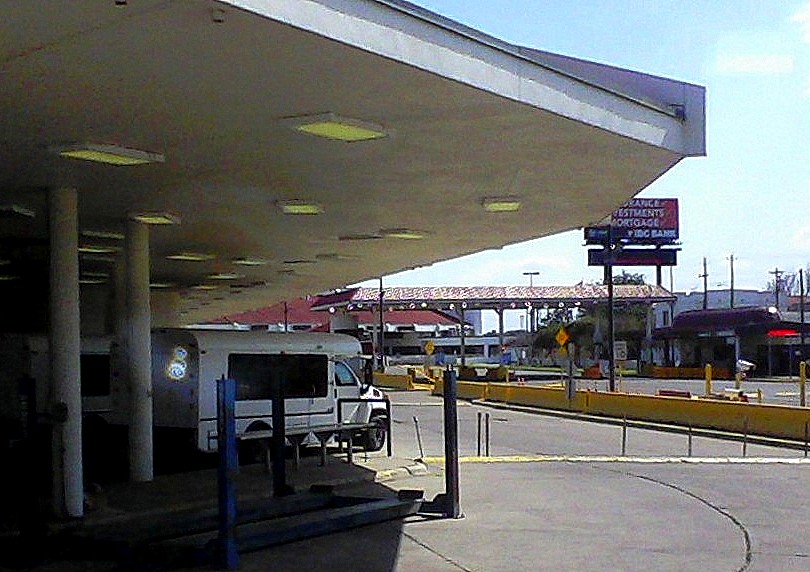
Greyhound bus terminal, Dallas, TX

Tactless friends question my sanity.  After all, the driving distance – which varies depending upon the route taken – runs around 1,100 miles (about the same distance as driving from Dallas to Phoenix, Detroit, or Jacksonville).  By private auto the trip takes a bit over 20 hours.  By bus with occasional station stops it takes a little over 26 hours.

Greyhound bus terminal, Dallas, TX

There are otherwise some really good reasons to travel to Mexico by bus…

Mexico “gets” bus service.  There’s almost no passenger rail service in Mexico and outside of major population centers economics don’t lend themselves to air service a la Southwest Airlines.  The result is that Mexico – as in many other countries I’ve travelled – has refined bus travel to an art.  (See my related post on bus travel in Argentina.)

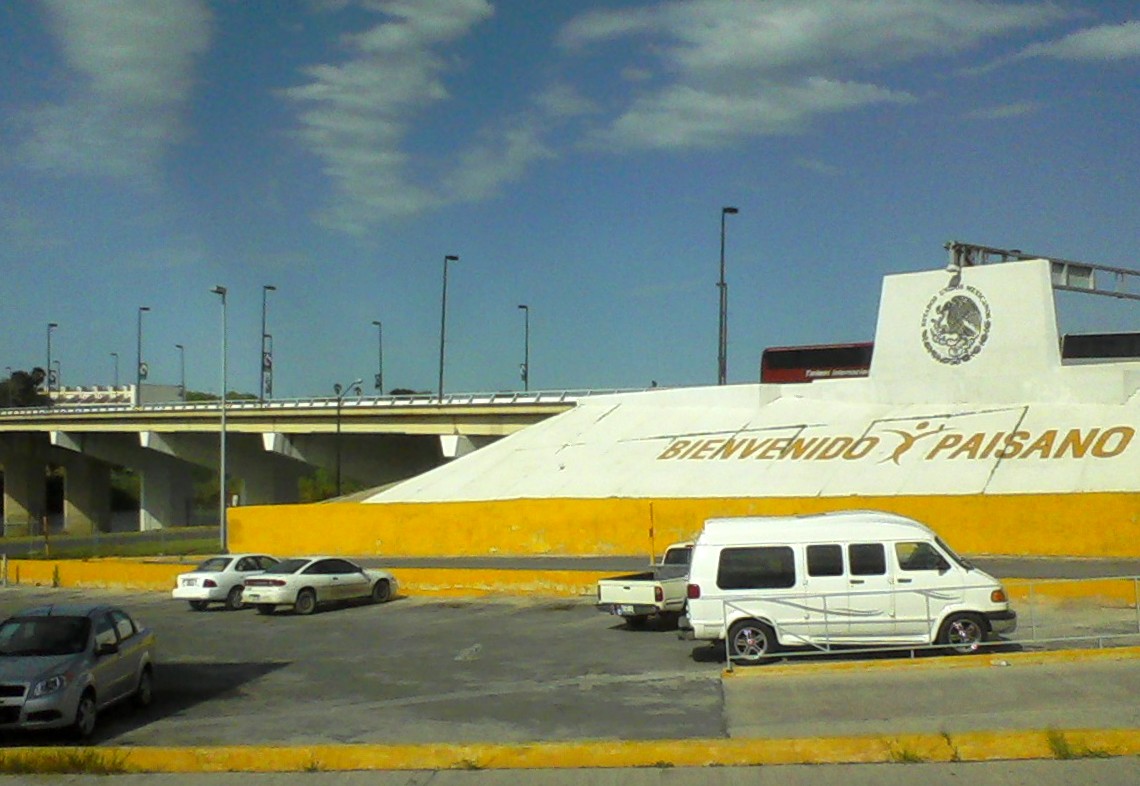
Border crossing, Laredo, TX (U.S. side)

It’s a rich experience.  Bus travel affords an opportunity to see the Mexico – and meet the Mexican people – inaccessible for air travelers.  Even after ten trips I still see something missed on an earlier trip, and I always make new acquaintances.  The route takes me through cities including Monterey, Saltillo, Zacatecas, and Aguascalientes, and since I’m not driving I have every chance to enjoy the views.

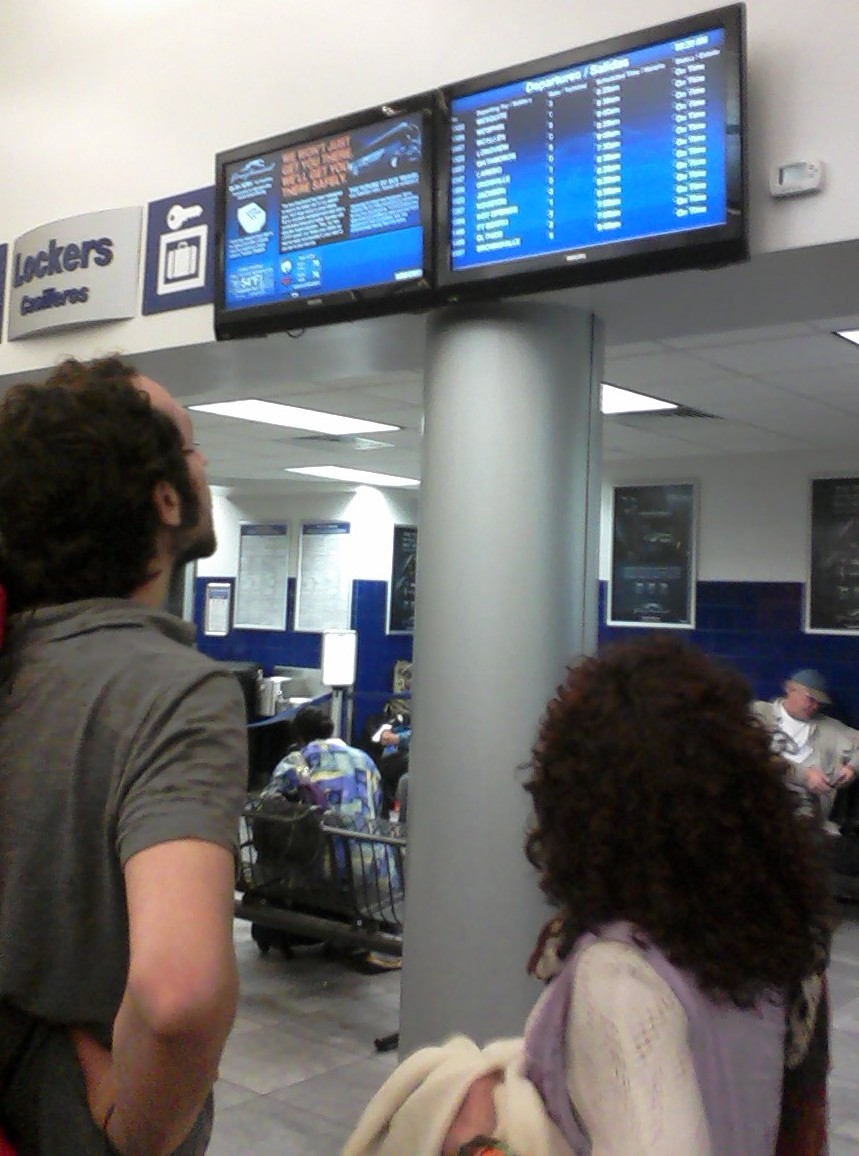
It’s comfortable.  In Mexico – as in much of the world outside of the U.S. – bus travel is the transportation of choice, and first class bus seating and service is on par with transatlantic airline business class.  Busses have their own dedicated lines for Customs and Immigration on both sides of the border, and often clear inspection more quickly than the long lines of passenger cars… particularly during rush hours.  There’s a restroom on the bus, and a rest stop with limited foodservice and more restrooms on an average of every 2-3 hours.

Rio Grande from the Lincoln-Juarez bridge, Laredo, TX

It’s convenient.  I book my trip with Greyhound and its Mexican affiliate Americanos, buy my ticket online with a credit card, and receive it by mail.  I’m even enrolled in Greyhound’s Road Rewards frequent traveler program… which earns me further travel discounts.

From Mexican Immigration & Customs, Nuevo Laredo

While air travel requires an hour of travel and car parking and another hour for security screening, I’m routinely on the bus in Dallas within an hour of leaving my home.  If you become bored with the passengers or the scenery, crack open that new novel you’ve been meaning to read or listen to your MP3 player.  I get lots of writing done on the bus.

Two bus drivers kibbitz while their busses await their turn for inspection.

Bus travel to and from Mexico is incredibly economical.  My round trip bus fare costs about one-third of the cheapest Dallas-to-Guadalajara airline ticket… and actually less than the cost of auto tolls alone for the same trip on Mexico’s excellent system of toll roads (the cuotas)… not to mention the cost of gasoline.

Outside the bus terminal, Nuevo Laredo, Mexico

Since there’s no overnight stay on the bus route – the bus changes drivers, but rolls right on through the night – there’s also no hotel expense.  While there’s a modest charge for extra luggage checked on trips originating in the States, there seems to be no such restriction for trips originating in Mexico.  Greyhound charges for ticket changes in the States, but a bus ticket in Mexico can be used at any time within 6 months of issue with no charge for schedule changes between the original ticket destinations.

Inside the bus on the Mexican side

It’s safer.  I view the risk of violence to Americans traveling in Mexico as grossly overstated by both the U.S. media and the State Department.  Particularly between dusk and dawn the risk of hitting stray livestock or pedestrians increases, and if you’re involved in a accident that causes injury or fatality you will go directly to jail until blame is sorted out… and much of what you’ve heard about Mexican jails is probably true.


There are two drawbacks to Greyhound/Americanos.  One is that while busses on the Mexican legs of the trip have spacious seats, plenty of leg room, and video, the Stateside busses are about as (un) comfortably cramped as traveling in airline economy class.  The other is that the trip on Greyhound/Americanos requires anywhere from 2 to 4 bus changes, and while I’ve never arrived late or missed a connection within the Mexican legs of the trip the same cannot be said for the Stateside legs.

Central Nueva bus terminal, Guadalajara, Mexico

For a bit more than the cost of Greyhound/Americanos, travelers can instead book with one of several Mexican bus lines that require no bus changes from U.S. destinations and depart from locations as far-flung as Florida, Tennessee, the Carolinas, and Illinois.  These carriers cater to Mexicans and Mexican-Americans, cost a bit more than the Greyhound option, and typically locate their U.S. terminals in heavily Hispanic neighborhoods.  Just a few are Omnibuses de Mexico, Turimex, El Tornado, and El Conejo.

Central Nueva bus terminal, Guadalajara, Mexico

Bottom line:  Bus travel to/from Mexico is not for everyone, but if you have a spirit of adventure that craves more than a sanitized Epcot Center experience, it’s something you should do… at least once!