Category: U.S.


East of East

The shortest distance from the Pacific Rim to Dallas is to travel east, and if European immigration defined the character of American cities that came of age in the 20th century, Asian immigration is defining the character of those coming of age in the 21st century.  Perhaps nowhere in the Metroplex is this more strikingly evident than in old downtown Richardson.

For months I’ve been passing through the intersection of Greenville Avenue and Main Street/Beltline slowly enough to be intrigued, but too quickly to take a closer look and this week I decided to do a walkabout.  The intersection is about three-quarters of a mile from DART Rail’s Spring Valley Station and about a mile from its Arapaho Station. Asia may be the world’s biggest continent, but it seems that nearly every part of it is represented in Richardson.

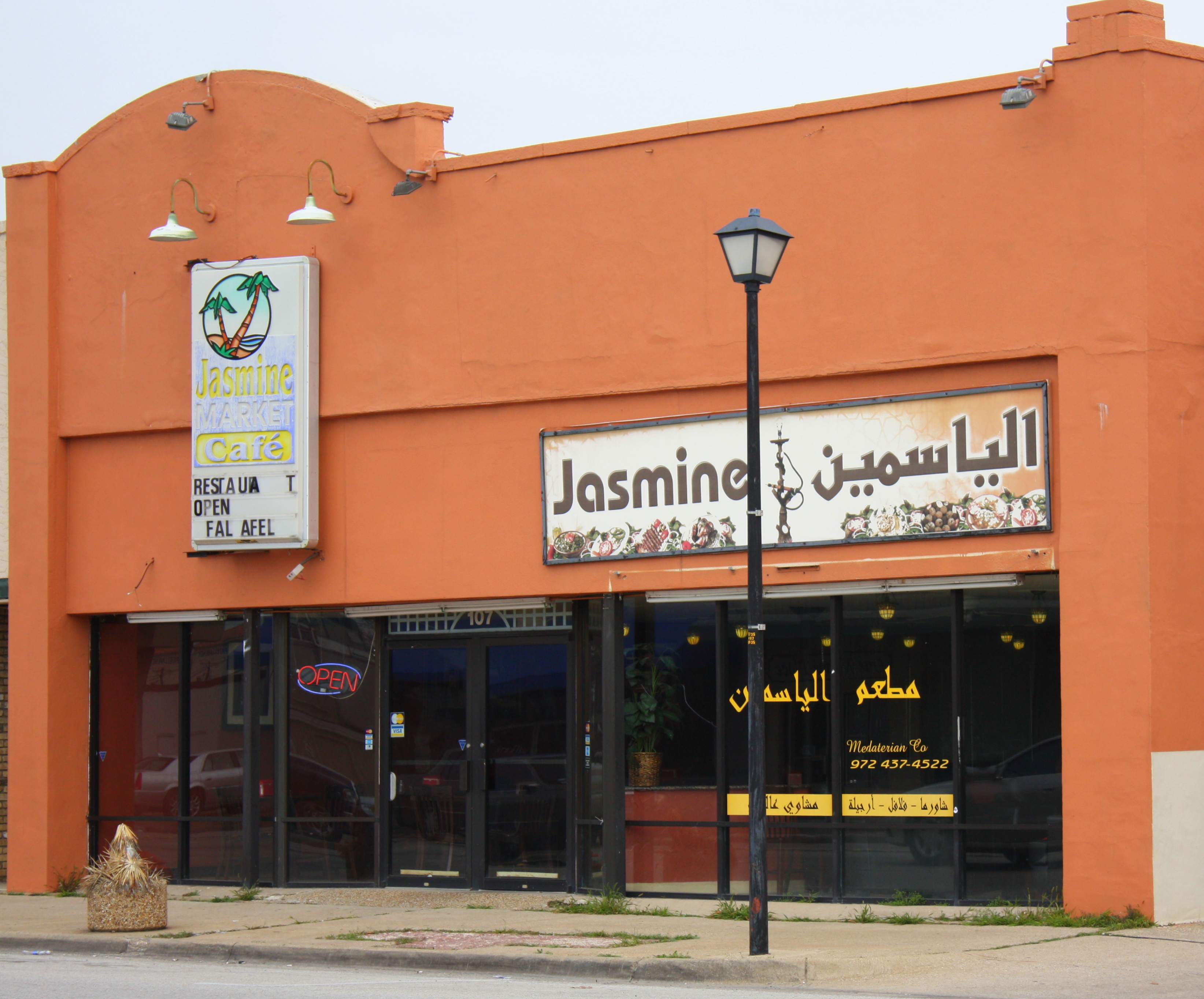
There’s MEDITERRANEAN cooking at Habibi, Afrah, and Jasmine  (you can smoke from a hookah there!)

Habibi Cafe, 102 N McKinney, Richardson
Habibi Cafe, 102 N McKinney, Richardson

Jasmine Market Cafe, 107 E Main St, Richardson

Jasmine Market Cafe, 107 E Main St, Richardson

Afrah Mediterranean Cuisine & Grill, 314 E Main St, Richardson

Afrah Mediterranean Cuisine & Grill, 314 E Main St, Richardson


Within only blocks, three establishments cater to fans of INDIAN cuisine.

Boti Grill, 110 S. Greenville Ave, Richardson, TX

Boti Grill, 110 S. Greenville Ave, Richardson, TX

Boti Grill serves a luncheon buffet, Chameli serves biryani in a fast-casual format, and the Indo-Pak supermarket presumably keeps the kitchens stocked at both!

Chameli, 201 S Greenville Ave, Richardson

Chameli, 201 S Greenville Ave, Richardson


IndoPak Supermarket, 323 E Polk St, Richardson

IndoPak Supermarket, 323 E Polk St, Richardson

Cornerstone Chinese Bible Church, Richardson, TX

Cornerstone Chinese Bible Church, Richardson, TX


It’s the CHINESE, though, who appear to be the best represented here, and not only by restaurants.

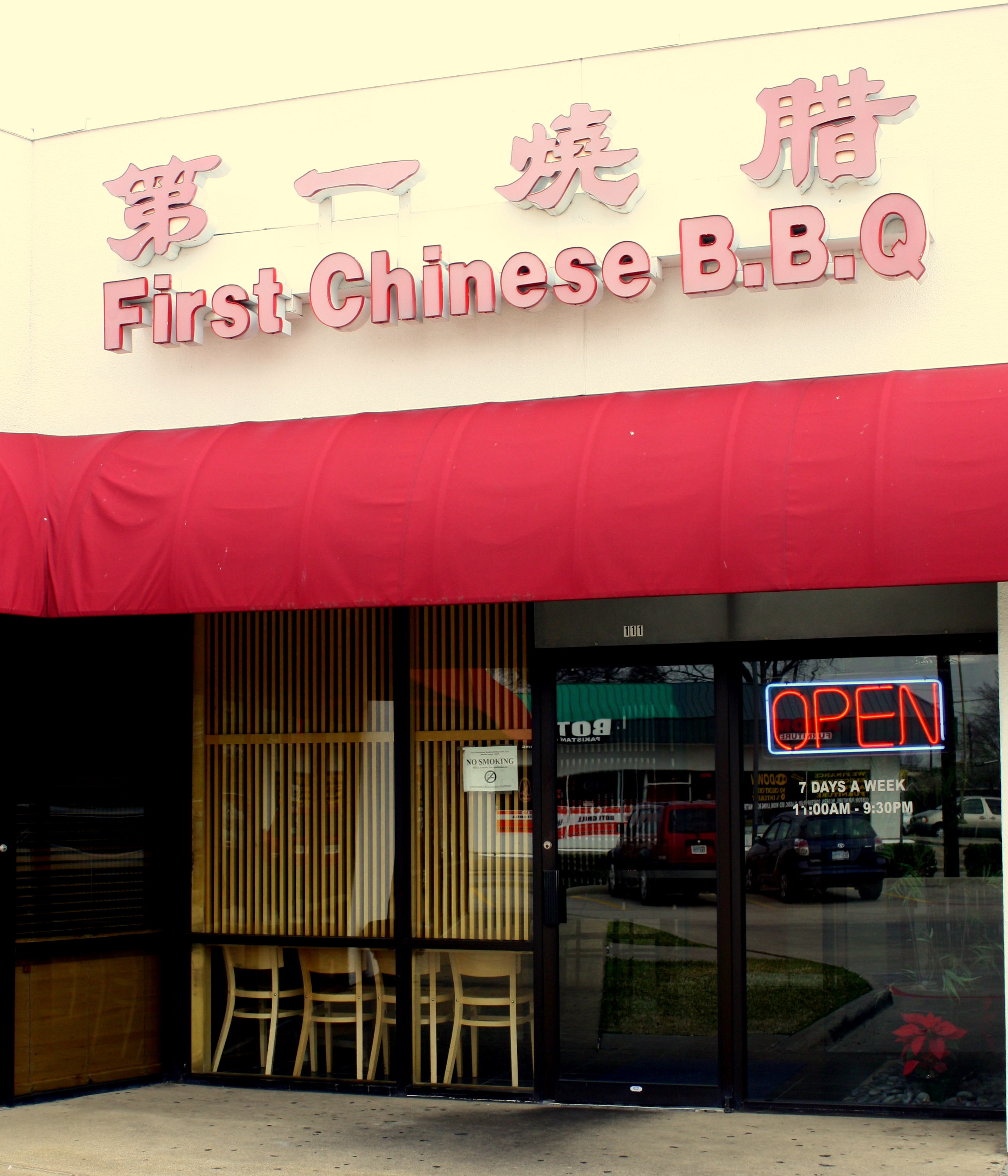
First Chinese BBQ and King Noodles are across the street from each other.

King's Noodles, 201 S Greenville Ave, Richardson
King’s Noodles, 201 S Greenville Ave, Richardson

First Chinese BBQ, 111 S Greenville Ave, Richardson

First Chinese BBQ, 111 S Greenville Ave, Richardson

On Greenville about a quarter of a mile or so north of the intersection is a new neighborhood shopping center sporting the conspicuous sign “DFW Chinatown.”

Chinatown, 400 N. Greenville Ave, Richardson, TX

Chinatown, 400 N. Greenville Ave, Richardson, TX

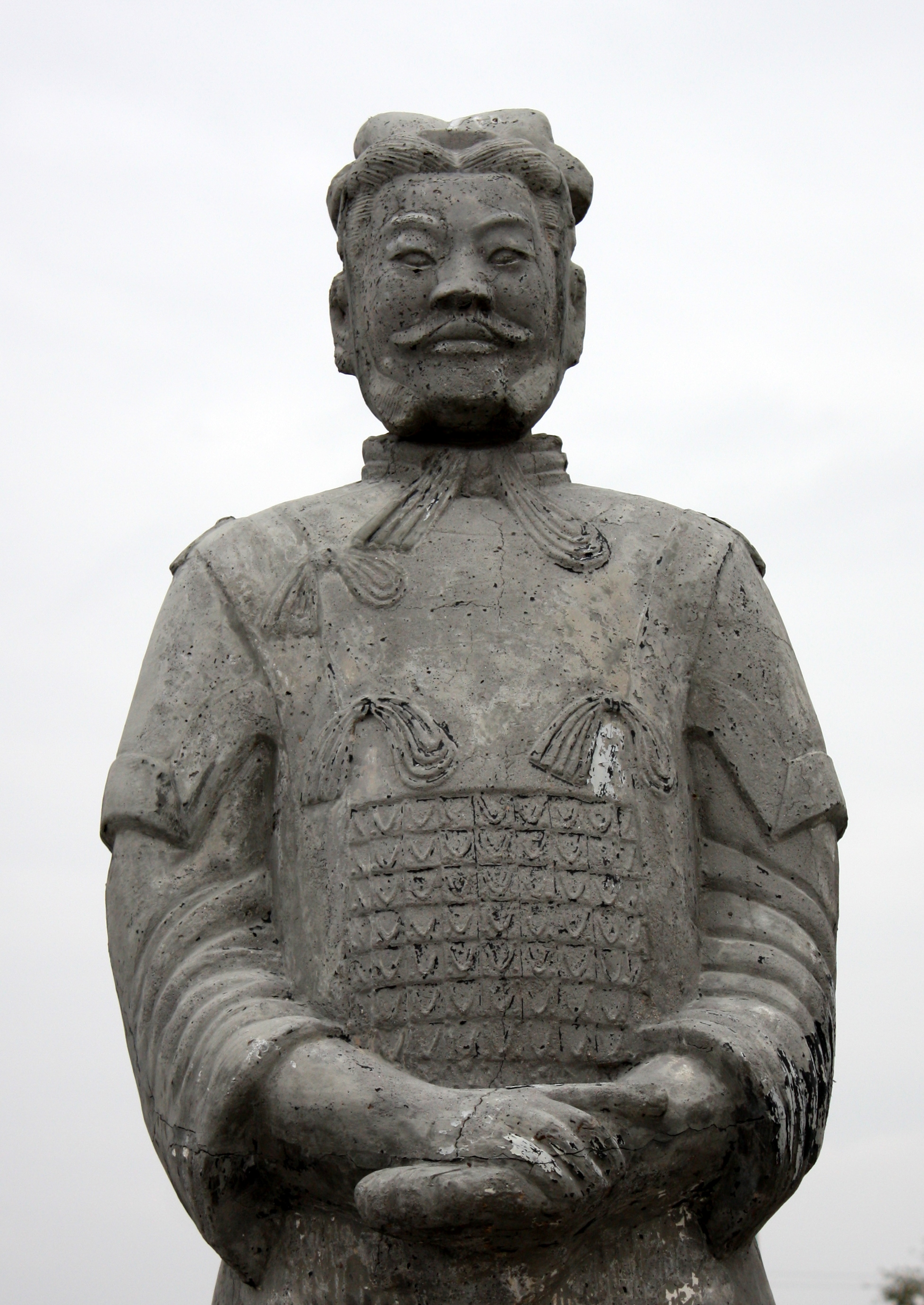
The entrance is imposingly marked by totem-pole-like pillars and concrete chimera dragons.

Chinatown statues, Richardson, TX Chinatown statue, Richardson, TX


Lining the main drive are larger-than-life and very lifelike statutes of ancient Chinese from all walks of life.

Chinese restaurants include Canton, Royal Sichuan, and Yung Kee Chinese BBQ

Canton Restaurant, 400 N. Greenville Ave, Richardson, TX

Canton Restaurant, 400 N. Greenville Ave, Richardson, TX

Royal Sichuan and Yun Kee Chinese BBQ, 400 N. Greenville Ave, Richardson, TX

Royal Sichuan and Yun Kee Chinese BBQ, 400 N. Greenville Ave, Richardson, TX


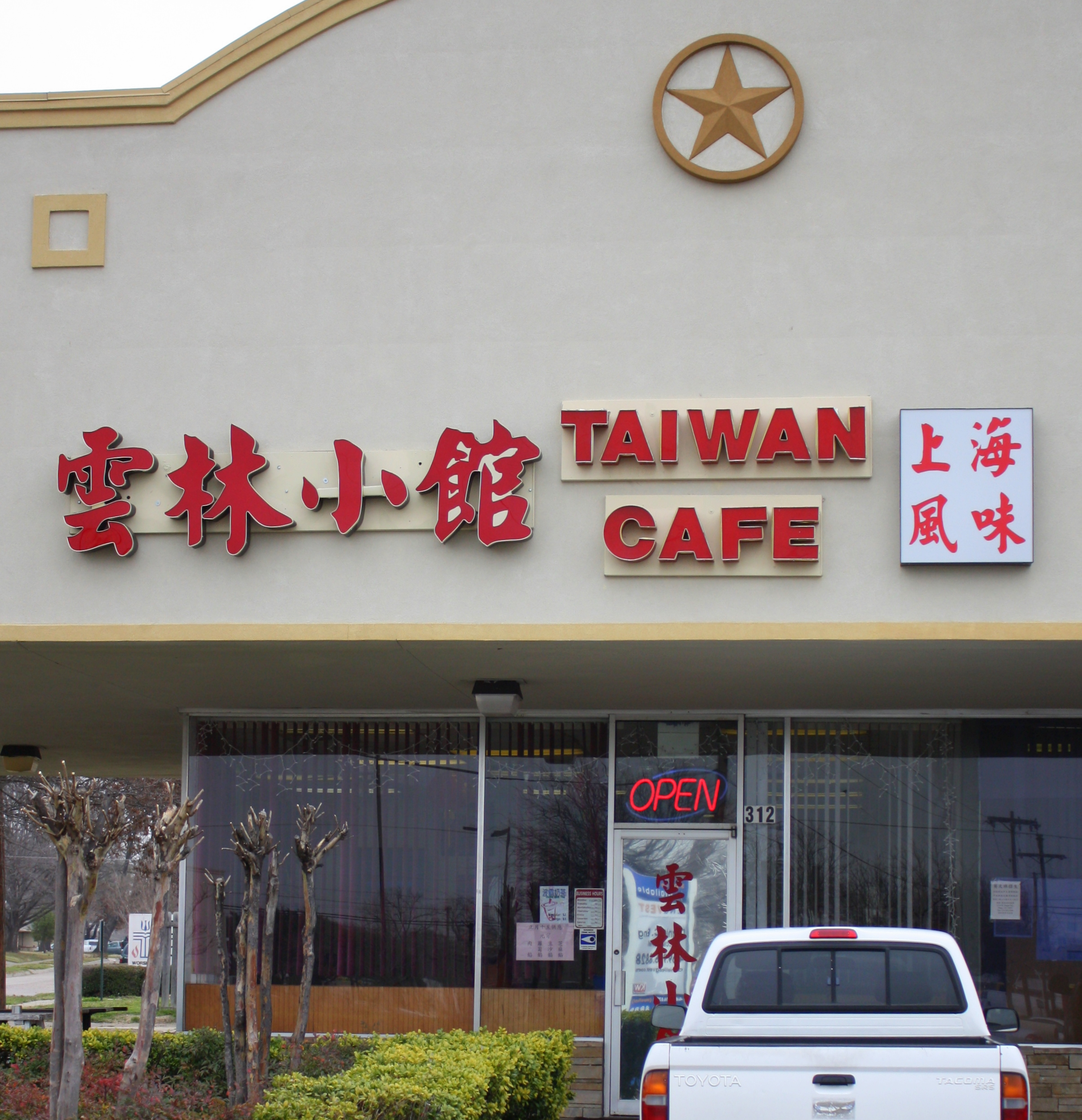
Taiwan Café and Vivian Bakery


Taiwan Cafe, 400 N. Greenville Ave, Richardson, TX

Taiwan Cafe, 400 N. Greenville Ave, Richardson, TX

VIvian Bakery, 400 N. Greenville Ave, Richardson, TX

VIvian Bakery, 400 N. Greenville Ave, Richardson, TX


…and – for anyone who wants to cook their own – the Tian Jian Supermarket.

Tian Jian Supermarket, 400 N Greenville Ave, Richardson, TX

Tian Jian Supermarket, 400 N Greenville Ave, Richardson, TX

While Chinese foodservice establishments predominate, other food to be found includes Japanese…

Sapporo, 400 N Greenville Ave, Richardson

Sapporo, 400 N Greenville Ave, Richardson

Genroku Sushi & Grill, 400 N Greenville Ave, Richardson

Genroku Sushi & Grill, 400 N Greenville Ave, Richardson


Korean and Thai (Best Thai is just across the street).

Chang Jing Korean BBQ & Cuisine, 400 N Greenville Ave, Richardson

Chang Jing Korean BBQ & Cuisine, 400 N Greenville Ave, Richardson

Best Thai, 300 Terrace Dr., Richardson

Best Thai, 300 Terrace Dr., Richardson

Just when I think I’ve covered most of the available ground I realize that Richardson’s Asian food district straddles the North Central Expressway, and on the intersection’s southwest corner is a shopping center in which Indian tenants are prominent.

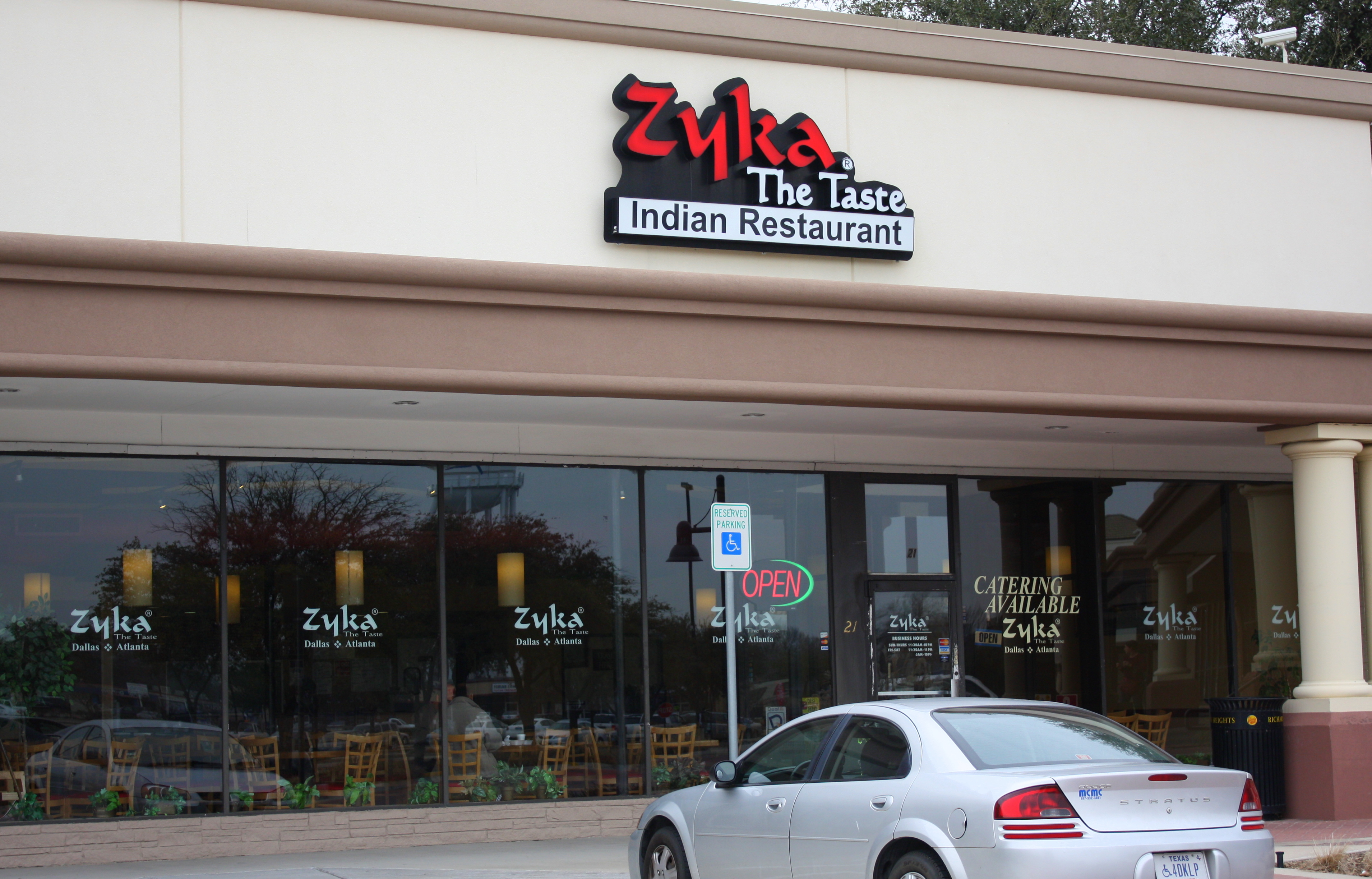
Restaurants here include Udipi Café (vegetarian) and Zyka “The Taste”.

Udipi Cafe,100 S Central Expy, Richardson, TX
Udipi Cafe,100 S Central Expy, Richardson, TX

Zyka Indian Restaurant, 100 S Central Expy, Richardson

Zyka Indian Restaurant, 100 S Central Expy, Richardson


Taj Mahal Imports, 100 S Central Expy, Richardson, TX

Taj Mahal Imports, 100 S Central Expy, Richardson, TX

…but the richest cultural experience by far is the Taj Mahal Imports store, which stocks everything from Hindu religious icons in bronze and Bollywood DVD’s to a mind-boggling selection of grocery staples and produce.
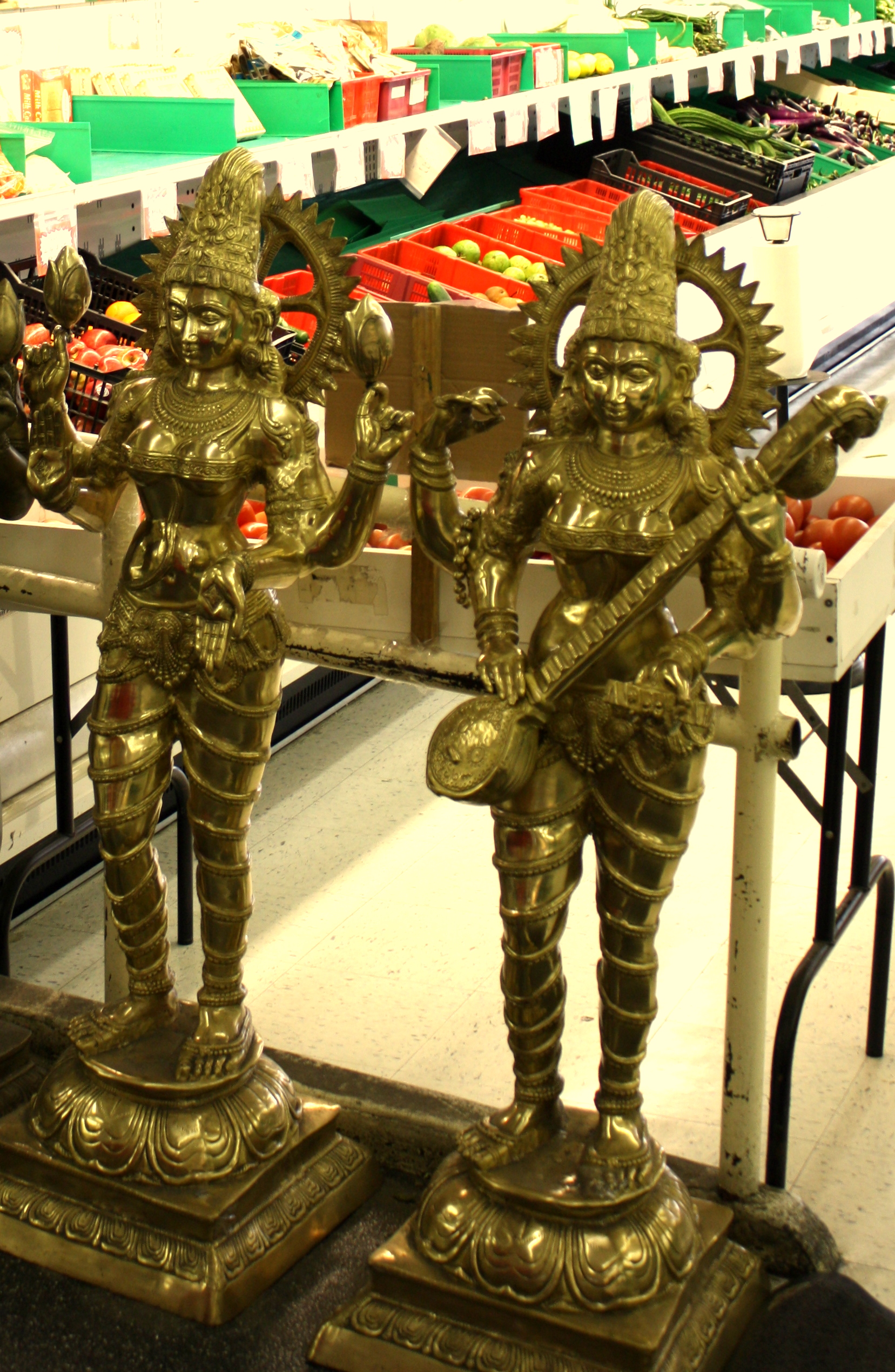
Shivas and produce, Taj Mahal Imports, Richardson, TX

Shivas and produce, Taj Mahal Imports, Richardson, TX

Grocery selection, Taj Mahal Imports, Richardson, TX

Grocery selection, Taj Mahal Imports, Richardson, TX

Few of these are familiar to American palates, and much of the packaging is at once inviting and cryptic. There’s even a bakery and a quick-service diner that serves hot Indian meals.

Bakery case, Taj Mahal Imports, Richardson, TX
Bakery case, Taj Mahal Imports, Richardson, TX

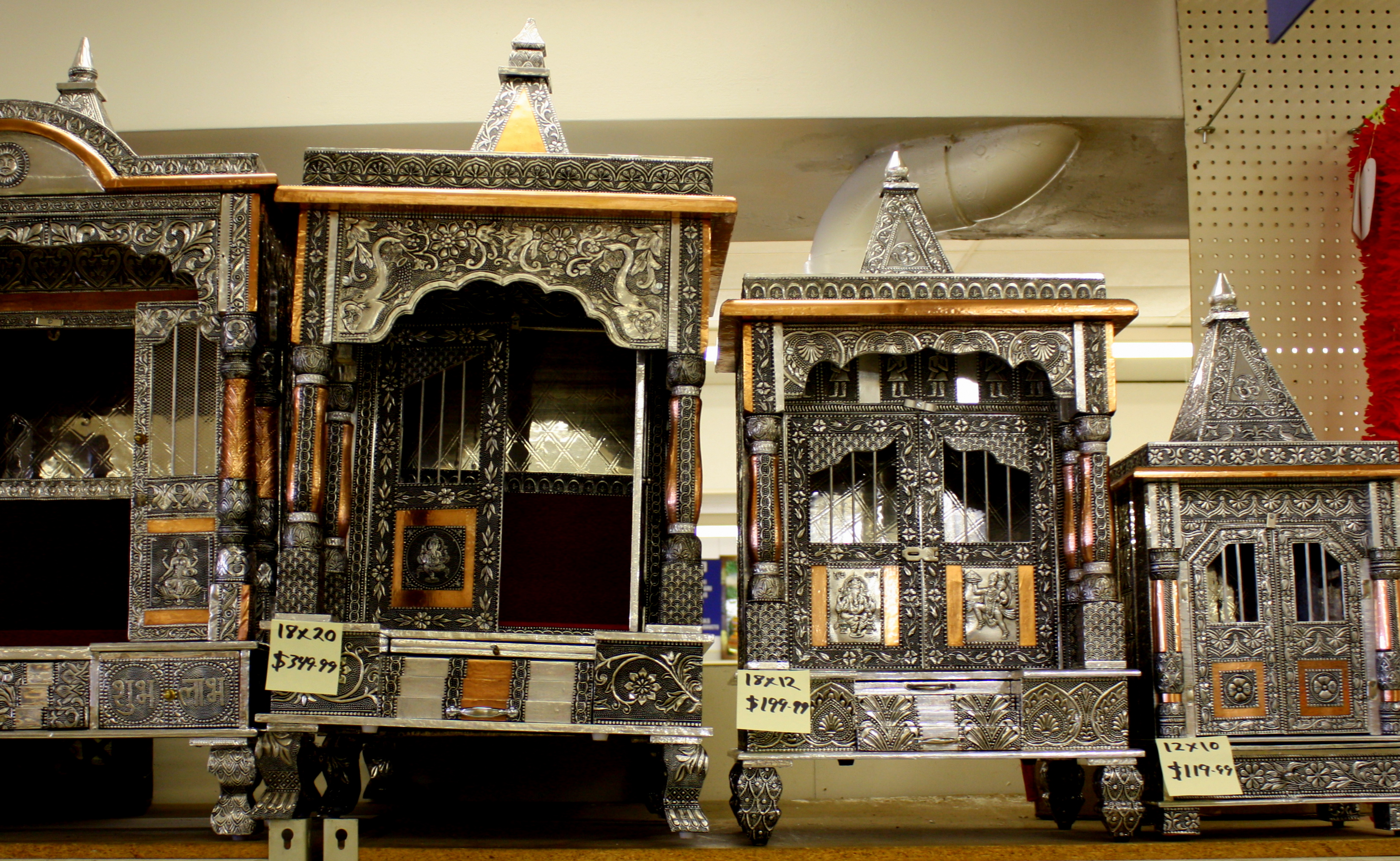
Hindu altars, Taj Mahal Imports, Richardson, TX

Hindu altars, Taj Mahal Imports, Richardson, TX

Grocery selection, Taj Mahal Imports, Richardson, TX

Grocery selection, Taj Mahal Imports, Richardson, TX

Houston has had a robust Asian community and outstanding Asian restaurants dating back to the end of the Vietnam War.  It’s refreshing to see Dallas finally shedding its meat-and-potatoes, white bread past and embracing cosmopolitan tastes.

Whitecaps on White Rock!

White Rock Lake dam & spillway

It’s a bit mind-bending that Dallas, after a summer of record heat and drought, was doused by more than 4″ of rainfall in 24 hours earlier this week.

By Wednesday the spillway below the White Rock Lake dam – bone-dry enough to walk across as recently as September – had become a miniature Niagara flowing so briskly that birds fishing its surface were quickly swept downstream.

By Thursday morning the flood was cresting as upstream runoff continued to swell White Rock Creek.


White Rock Lake boathouse bridge


Rising water had spilled over onto the lake trail loop and was lapping at the undersides of its foot bridges.


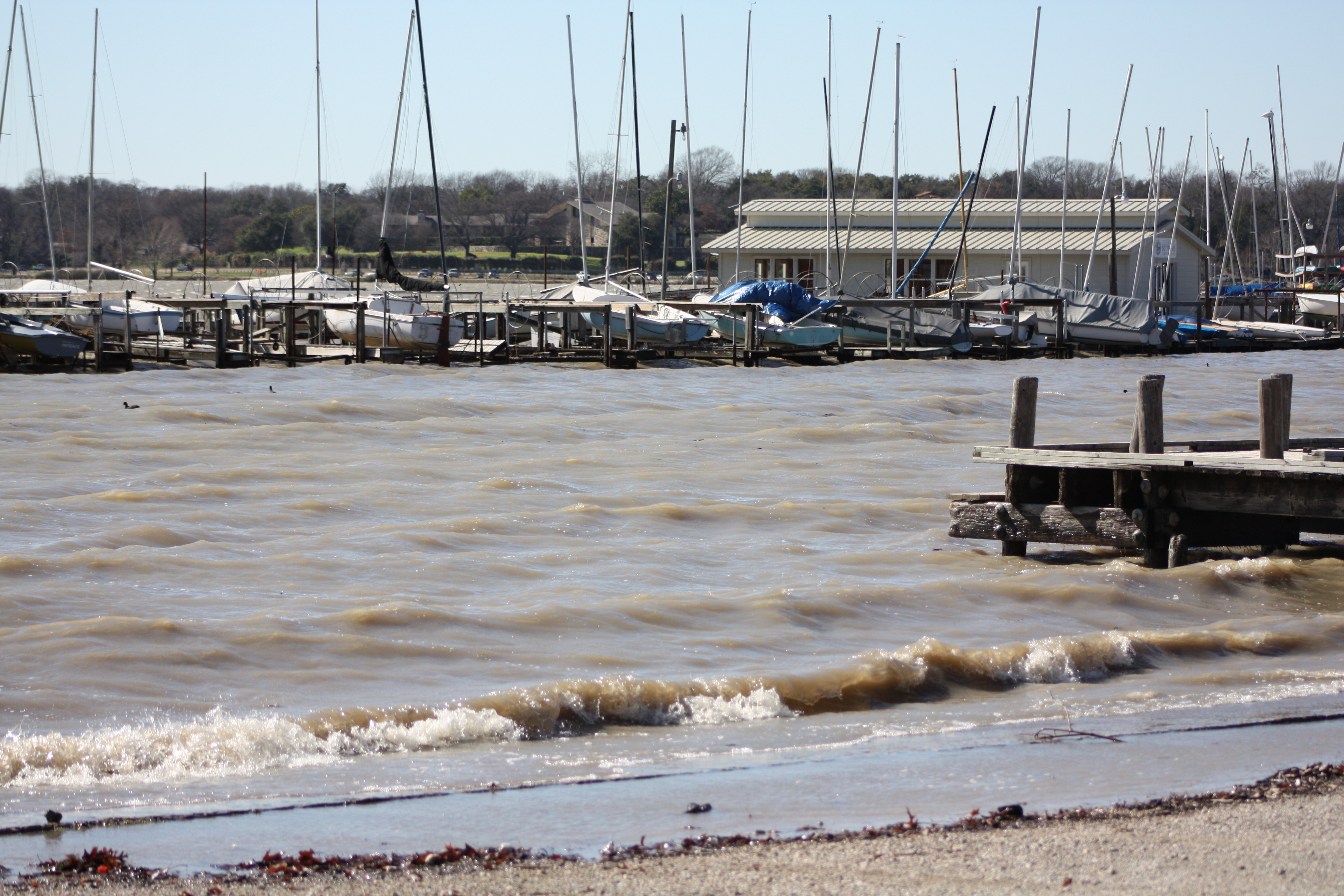
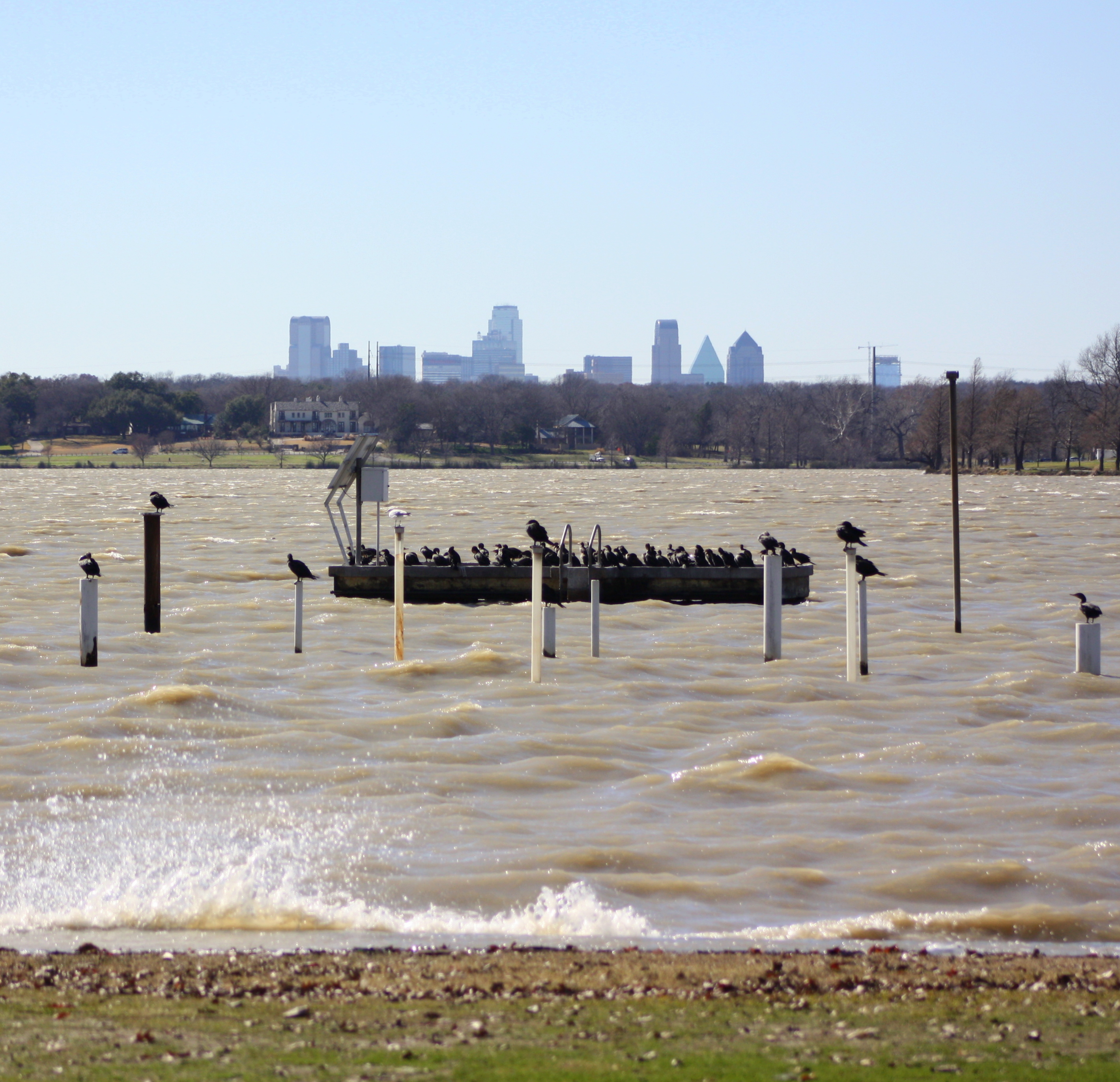
A stiff breeze was whipping up whitecaps.

White Rock Lake Corinthian Yacht Club

Dallas skyline from White Rock Lake Cultural Center

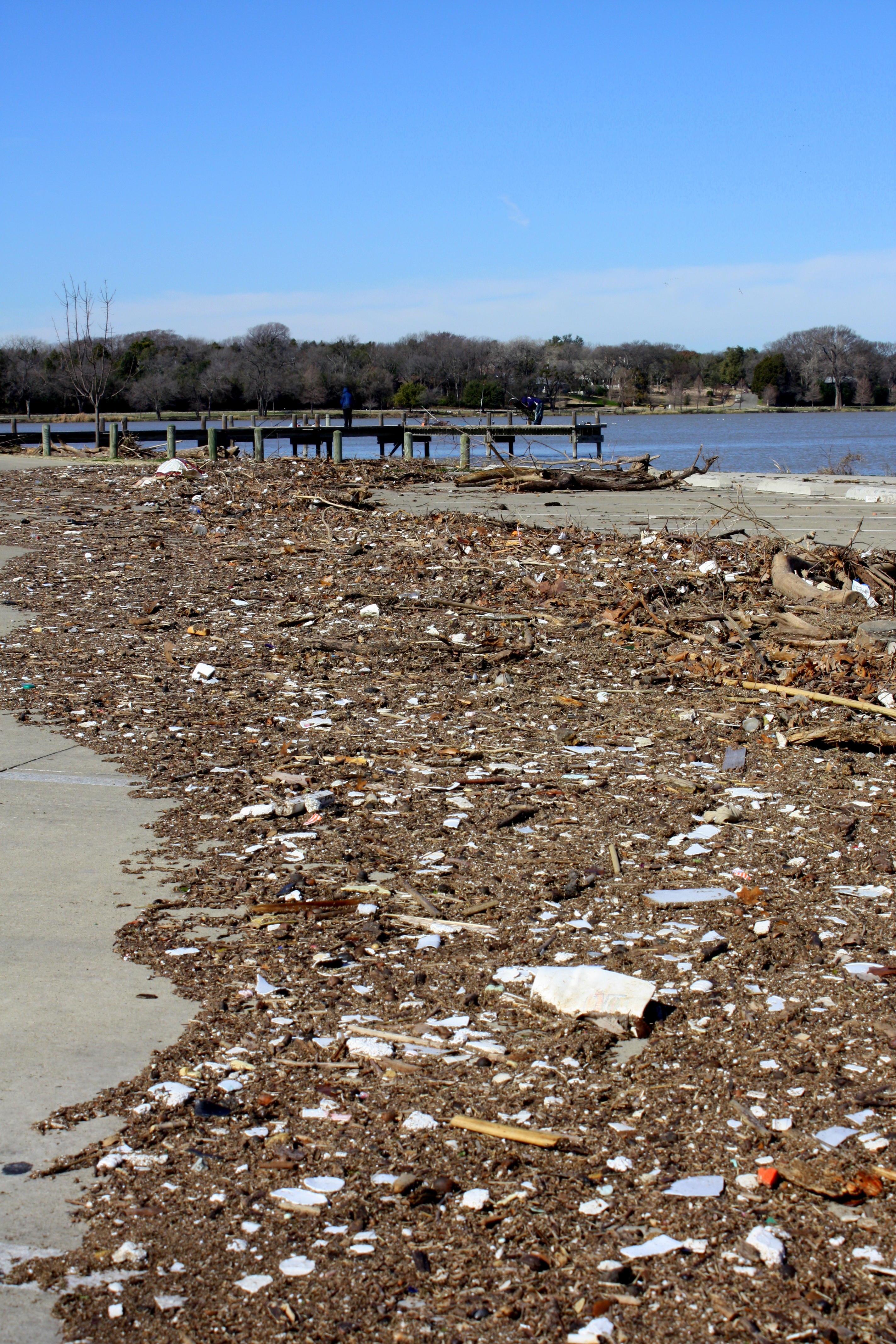
It was no surprise that the storm swept lots of refuse downstream, and as the water began to recede the shoreline was littered with twigs and tree limbs.

White Rock Lake rainstorm aftermath

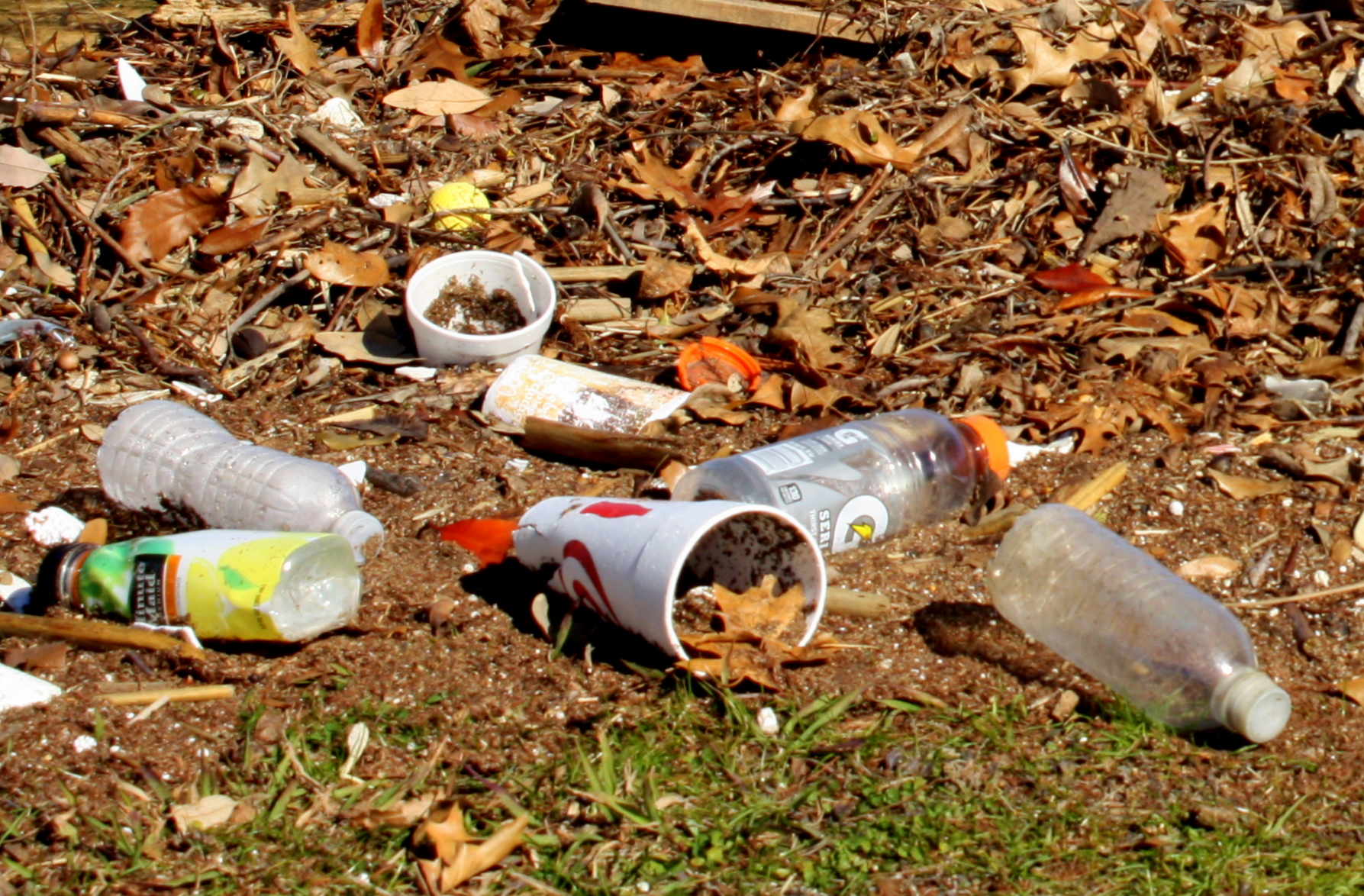
The amount of man-made trash among it was truly sobering, and none among it was more was more prominent than unrecycled plastic and styrofoam packaging bearing the logos of the nation’s largest beverage bottlers and fast food chains.

No one seeing this could help but reflect upon the reality that it was only the tip of an iceberg.  It gives pause to wonder if, centuries into some post-apocalyptic future when man no longer walks this earth, this will be his only legacy.

White Rock Lake rainstorm aftermath

Dallas’s erasable past

In fairness, it must be conceded that late-blooming Sunbelt cities can’t be held accountable for their comparatively short histories.  It should also be allowed that it’s a lot harder to maintain tradition when more residents than not are Rust Belt refugees steeped far more deeply in the traditions of their origins than those of their adopted city.

Dallas, though, seems more than most cities to view its past as an etch-a-sketch pad to be erased and rewritten at will.  Perhaps that’s because it has, dating from the accounts of its earliest years, aspired less to be the first among Texas cities than to become the Big Apple of the Southwest.  If Houston, Austin, Fort Worth and San Antonio seem thoroughly comfortable in their Texan-ness, Dallas often seems almost apologetic about it and bent upon transcending it.

Magnolia Theater, West Village, Dallas

In Dallas there’s no Ghirardelli or Larimer Square and no French Quarter.  No Pike Place Market or Gaslamp Quarter.  Not even a Riverwalk, Sundance Square,  Strand, or Sixth Street.  For its size Dallas has few historic residential neighborhoods (Lakewood and Bishop Arts are notable exceptions), and those like Southside on Lamar and West End are yet insufficient in density to support the merchants of retail goods and services that mark the difference between a residential complex and a vibrant, organic neighborhood.   Almost nothing remains of the historic Cedars neighborhood and in less than 10 years many Oaklawn homes worthy of historic preservation have been razed and replaced by new townhomes or low-rise apartment buildings.

Retail space, West Village, Dallas

Real estate developers and promoters from founder John Neely Bryan to Trammel Crowe have always been a prominent part of Dallas’s past, and it now often seems as if there’s no land in Dallas that can’t be repurposed for a new office skyscraper or luxury condos.   While there seem too few attempts to assure that new construction in historic neighborhoods conforms to historic architecture, there are exceptions worthy of emulation.

Dallas’s West Village, centered on McKinney @ Blackburn may be only 10 years old, but its developers far exceeded the just-enough-to-get-by standard in its design.  It has very much the look of a 1930’s neighborhood, and even though it’s only a couple of miles from Northpark Center has very much the feeling of a self-contained community.

Terilli’s, Greenville Ave., 2010 fire

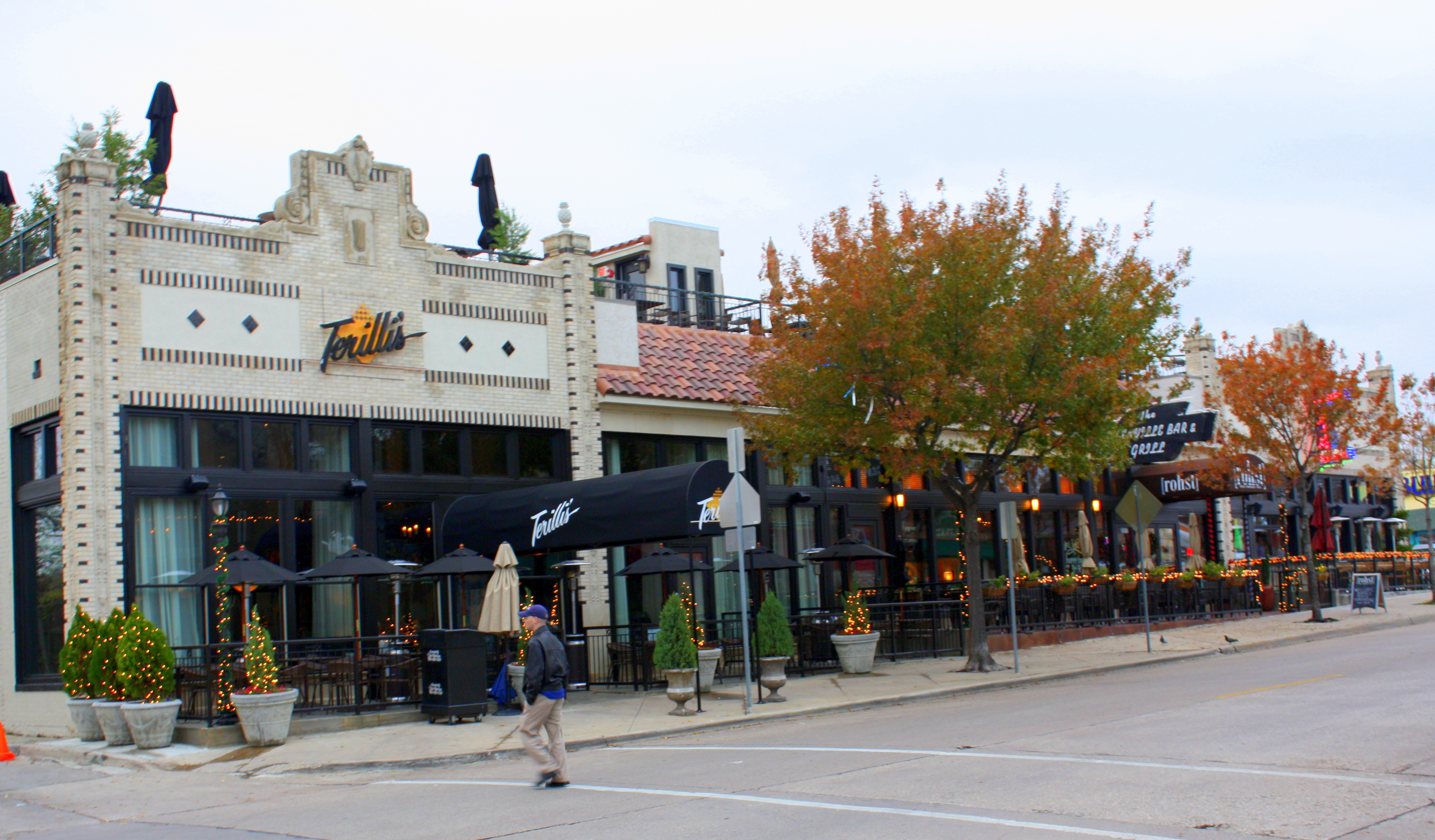
When Terilli’s Café, a longtime Greenville Avenue landmark, burned almost to the ground in the spring of 2010, its reconstruction conformed very closely to the original structure.

Terilli’s, Greenville Avenue, restored 2011

It was such a revered icon of the community that neighbors donated funds to aid a speedy reconstruction, and proceeds from charity sales were sent as relief to waitstaff members made unemployed by the disaster.

These are the kinds of landmarks that distinguish a neighborhood from just-another-complex and that make it memorable and continuously worthy of revisiting.

They’re a lesson admirably embraced in the old town centers of McKinney, Frisco, and Lewisville, but sadly lost on the suburban developers of perfectly gridded streets and look-alike intersections always populated by the same chain retailers.

And they’re a continuously available glimpse into the way we once were that helps us better understand where we’ve come from as a culture and informs where we’re next going.

Dallas’s Italian grocery

When I first moved to Dallas in 1975 the boundaries of “diversity” were defined by the triumvirate of Anglos, African-Americans, and Latinos.  As in many other Sunbelt cities, the greater Dallas area is now checkered with vibrant communities of Asian and African immigrants, but  Dallas was not a significant destination for immigrations of the early 20th century that produced full-blown, self-contained communities of Italian, Greek, Jewish, Polish and Russian and other European immigrants in cities from Boston to Chicago to Baltimore.

Bryan @ Fitzhugh

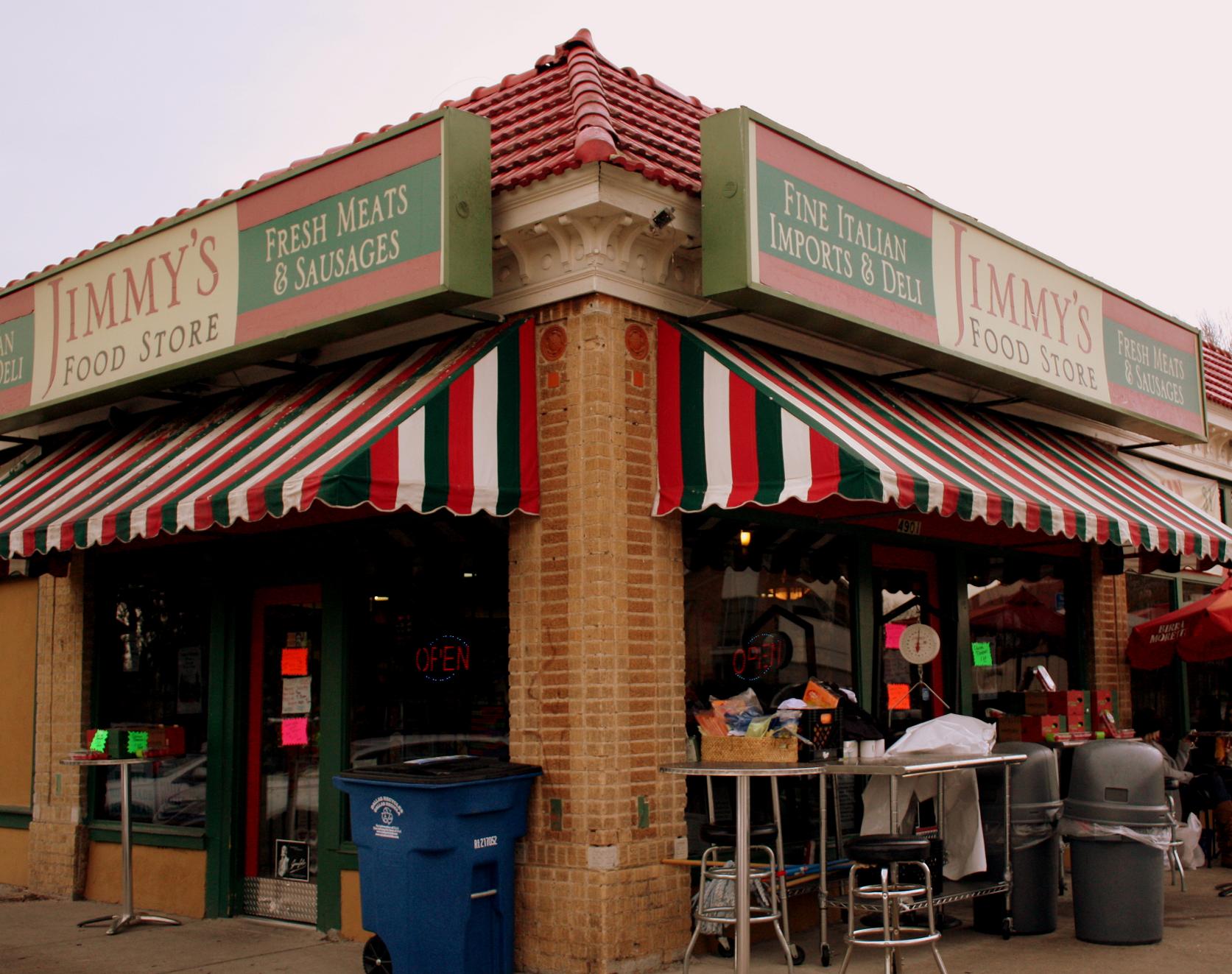
For the descendants of those European immigrants, relocation to Dallas from the large cities of the Northeast and Midwest meant severing ties with the cultural touchstones of their parents’ and grandparent’s neighborhoods.  Fortunately for Italian-Americans, one of those touchstones has been recreated at Jimmy’s Food Store on Bryan @ Fitzhugh.  http://www.jimmysfoodstore.com

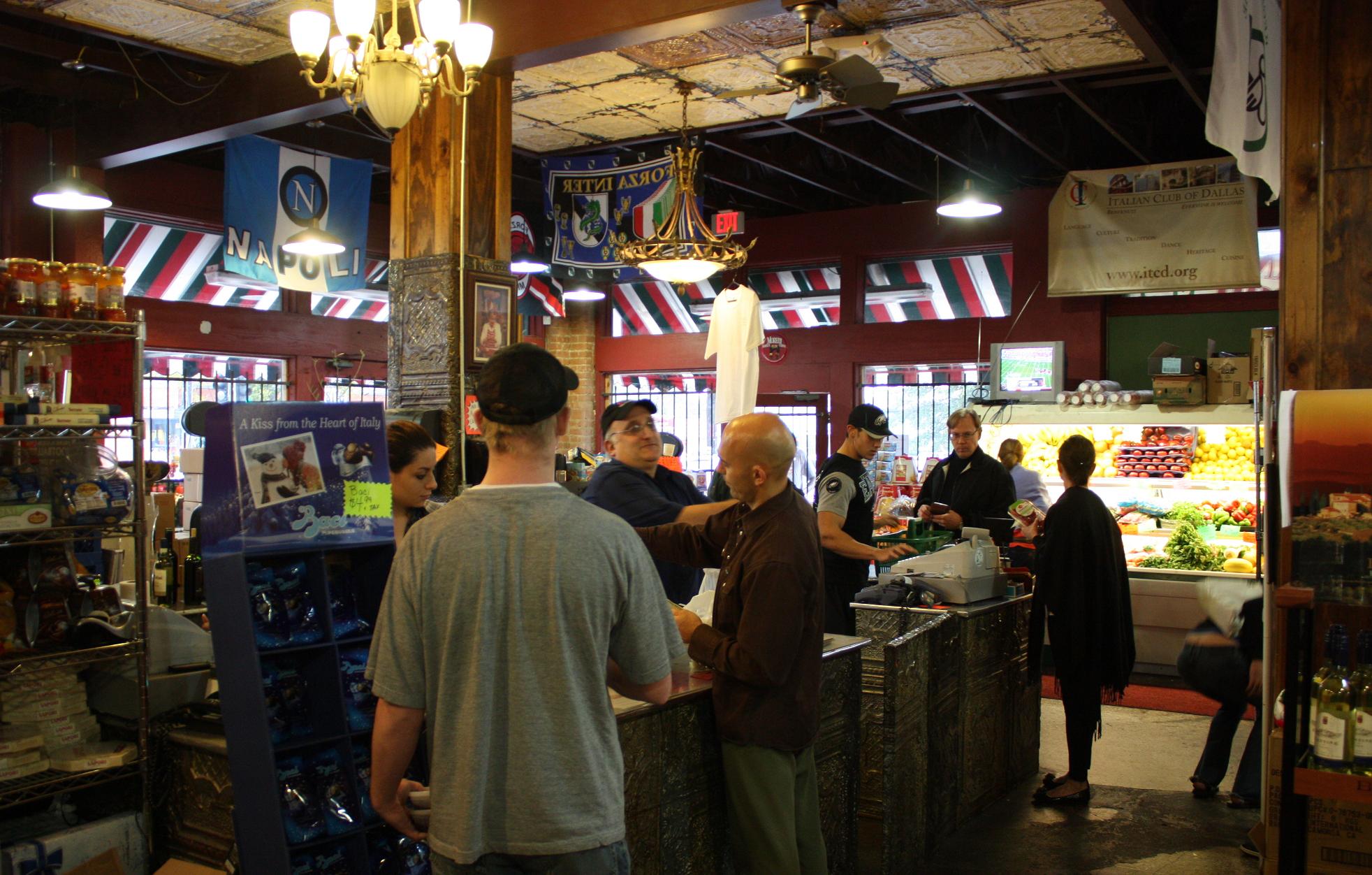
The DiCarlo family has been in the grocery business in Dallas since the 1940’s and operating at its current location since 1966, but it wasn’t recast as an Italian grocery until 1977.

Fire damaged ceiling

A devastating fire in 2004 left it operating out of temporary location for more than a year, but it was back better than ever in time for the 2005 holiday season.  A few fire-damaged, embossed tin ceiling tiles and roof support timbers are part of the new structure and a constant visible reminder of the close call.

Unlike its cousins in the Northeast and Midwest, which tend to specialize in Italian foods from the regions of Italy most prominently represented in each of their cities, Jimmy’s draws on traditions from the entire spectrum of the Italian-American experience and continues to renew them with current offerings from the old country.

Too many choices!

Here exotic and colorfully packaged products, Italian soccer club flags, tantalizing aromas, and the music of Italy and Italian-American artists overwhelm the senses.

Gourmet sandwiches

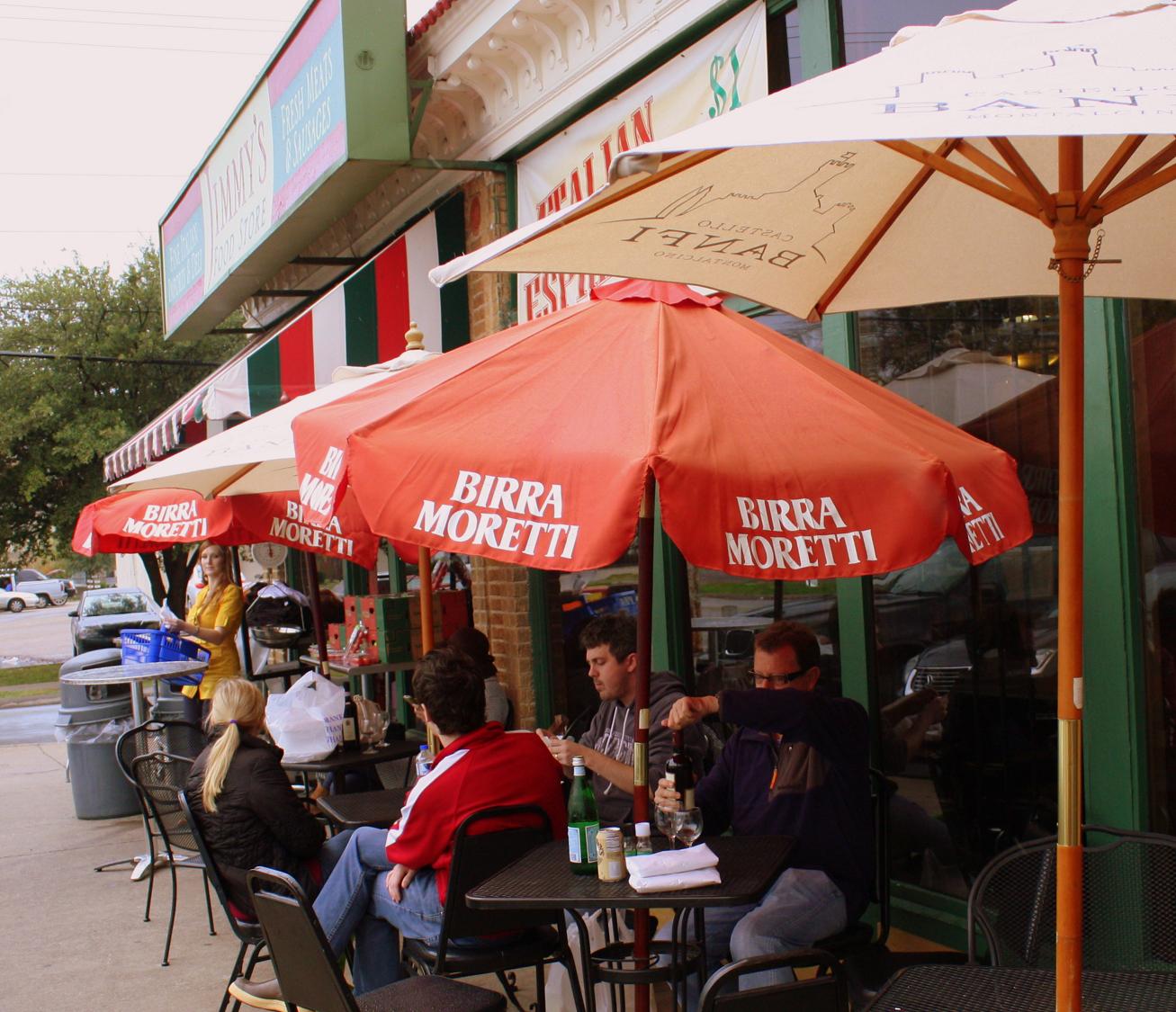
No Italian grocery would be complete without a specialty meat market.  At Jimmy’s it’s also the heart and soul of a deli business that draws devotees of made-to-order sandwiches with names like Italian Beef, Caprese/Prosciutto/Calabrese Panini, and Italian Stallion.  (Jimmy’s also makes killer Muffaletta and Cuban  sandwiches.)  You can eat them at tables right there in the store for a genuine deli experience or – weather permitting – under umbrellas at sidewalk tables.

Thirsts quenched!

Pick your beverage from a 50-foot long bank of coolers that includes alcoholic and non-alcoholic imports as well as old time soda pop favorites.

On weekdays, downtown workers make the short drive for an out-of-the-ordinary lunch.  On Saturdays the store is packed with Italian Americans and others from the suburbs seeking their Italian fix, and the people-watching is almost as entertaining as the experience of the store itself.

Jimmy’s stocks only Italian wines and the selection is so large that it’s easy to find available-nowhere-else varieties.  There are free wine tastings every Saturday afternoon and monthly paid wine tastings.

Only Italian wines


So if you’re looking for an authentic taste of Italy in Dallas, Jimmy’s is a must-do.

Mangia… e buono appetito.

Sidewalk dining


Unsung White Rock Creek

Rivers indelibly stamp the identities of cities like Pittsburgh, Cincinnati, St. Louis, Minneapolis, Kansas City, and New Orleans, but Texas rivers are often an urban footnote and perhaps nowhere more so than in Dallas.  Flood prone and rarely navigable, the Trinity River made it easy for railroads to become the transportation of choice for Dallas passengers and freight.  While Dallas’s Trinity River Project promises to reposition the Trinity as an urban centerpiece, the Elm Fork has been hidden from view only blocks from downtown for the better part of a century and seen by most only in passing over its bridges.

White Rock Creek runs alongside Abrams near Royal

Even more unsung among many Dallasites is White Rock Creek.  Its anonymity is curious since it’s the thread upon which so many Dallas suburbs are strung that it’s arguably the metro’s signature urban waterway.   White Rock Creek travels incognito for almost 30 southwesterly miles from its source near Frisco to feed its namesake lake in Dallas, created by a dam built in 1911.  The lake served as a primary source of city water as late as 1950 and since 1971 as the focal point of the far more widely known White Rock Marathon.  The Creek takes its name from the chalk limestone through which its path was carved over thousands of years, and which is clearly visible for much of its length.

The Creek’s obscurity is in part happenstance, as it’s often well shielded from view by the trees which line its banks. Oddly, though, none of the overpasses which carrying geometrically gridded traffic over its meandering course bear an identifying plaque.

South of the LBJ, the Creek is very publicly accessible from a hiking and biking trail that runs continuously for more than 7 miles along its course, beginning just above the lake at Mockingbird Lane and meandering northwesterly through a wooded corridor before slipping under Greenville Avenue and the North Central Expressway to end at the intersection of Hillcrest and Valley View Lane.   Along the way it’s dotted with parks and recreation areas.

Private pond White Rock Creek pond near Spring Valley and Preston

North of the LBJ, public access is limited to a handful of pocket parks stretching from Addison through Plano.  The Creek is an unmarked water obstacle where it passes through area golf courses including Gleneagles, Preston Trail, Bent Tree, Prestonwood, Northwood, and Royal Oaks.  Hidden from public view in secluded neighborhoods are private ponds created from dammed tributaries.

The effect is to create two very different White Rock Creek experiences.  One is very public and inclusive, where the Creek serves to anchor the neighborhoods that surround it as a sort of public trust.  The other is private and exclusive, where the Creek was merely another piece of real estate to be developed.

American cities are built along rivers, railroads, or highways, but watching water flow lazily between wooded banks delivers a sense of rootedness and tranquility that that’s beyond the reach of a graveled rail bed or trucks speeding down an interstate.  White Rock Creek may be unsung, but it’s hard to imagine Dallas north of the Trinity without it.

Riding the Dallas rails

If anyone had told me when I first moved to Dallas in 1976 that there would be light rail here within in my lifetime I’d have laughed.  At the time only a handful of U.S. cities had light rail, almost all of them east of the Mississippi.

Today I live within walking distance of DART Rail’s Mockingbird Station, my portal to over 70 miles

Dallas’s Mockingbird Station

of track connecting 55 stations.  Its puts me within easy reach of healthcare at Baylor Dallas (4 stops), Texas Health/Presbyterian (3 stops), and UT Southwestern (8 stops).  I’m within also within a no-drive range of events at Victory (6 stops), Arts Plaza (2 stops), and Fair Park (5 stops), as well as of restaurants and entertainment at West End (5 stops), Southside (7 stops) and Deep Ellum (3 stops).  I often take my bicycle on the train to access biking trails otherwise beyond my reach, and to get to and from stations quickly and conveniently.  When the DART Orange line is completed in 2014, DFW International will join Dallas Love Field as a rail-accessible airport.

DART Rail might well not have happened because the “obvious” benefits of light rail had failed to move Dallasites until the last century had drawn nearly to a close. The few rails carrying trolleys and inter-urban trains were deserted and removed or repurposed soon after serious freeway construction began in 1948.  Most Texans migrated directly to automobiles from horses; both seemed better suited to the wide open spaces.  Texans also seemed to lack the herd mentality to queue up for the next train, and the pedestrian mind-set to walk to and from stations.  So what if rail schedules were more reliable than fickle freeway traffic and rail fare far cheaper than driving and parking a car?  So what if rail reduced pollution and was safer?  So what if urban rail was a game-changer for the many large households with two few cars… or those with no car at all?

What finally moved Dallas leadership to action is that highways can only carry so much traffic before further growth is choked off and cities can only expand outward; Dallas was in danger of becoming the hole in the donut of its far-flung suburbs’ increasing prosperity and prominence.  A vibrant central business district is dependent on urban rail to deliver its workforce daily.  As the cost of

Dallas’s Pearl Station

single-family housing in desirable urban neighborhoods becomes increasingly unaffordable, condos and apartments will fill the gap as long as light rail lets them put fewer cars on the streets.  One has only to look at the blocks surrounding more mature DART Rail stations like CityPlace, Mockingbird, and Cedars to see a big uptick in new apartment construction and the retail goods and services that follow it, many of them ‘mom-and-pop’ businesses.  Mass transit can be a powerful engine of redevelopment.

The combination of mass transit and affordable urban housing breeds communities that cut across divisions of race and class.  Adding a healthcare institution to this mix puts the process on steroids.  The DART Rail Baylor Station is the hub of  redevelopment that’s doing more to revitalize Deep Ellum and adjacent neighborhoods than decades of failed initiatives.  Maple Avenue is being transformed by the intersection of DART Rail with UT Southwestern.  The same goes for the intersection of educational institutions and rail; the day is not far away when UNT students will be able to ride urban rails from the Denton campus to the South Dallas campus.

To my great delight, I’ve found that it’s at last truly possible to live an urban lifestyle in Dallas, Texas, and light rail is an important part of the reason.

Bicycle perspective

I blogged earlier about the way in which open windows free us from the quarantine of our airsealed homes and reconnect us to our neighborhood surroundings.

Opening windows is a good first step, but because it goes no further than to let the outside seep in seems to invite action far less passive.  It would be a delusion, though, to think that driving through the neighborhood fits the bill.  Most times we are as firmly airsealed into our vehicles as into our homes, consumed by the chatter of passengers, the blare of the radio, or the distraction of a cellphone.  My East Dallas neighborhood sprawls from Mockingbird Station to the lower end of White Rock Lake, and at almost any time of day plenty of dog walkers, joggers, and baby carriage pushers immerse themselves in the neighborhood at a pedestrian pace.

Bicycling, though, seems to strike a balance distinctively well-suited to this neighborhood.  It plunges the rider into the outside at a pace fast enough to deliver ever-changing scenery that’s still revealed slowly enough to be taken in fully.  Here, where most homes were built in the 1920’s and ‘30’s, it produces a particularly rich experience.  Trolleys and early autos and horse-drawn transit all

Home in Dallas’s Lakewood neighborhood

still shared these streets in their earliest days, and it’s reflected in the neighborhood’s intimate scale.  Here you can still see storefronts built in small clusters no further away from any home than a few blocks’ walk or a couple of trolley stops; more ambitious shopping in a vibrant downtown was within easy reach.   Here there is no tract housing; houses were still hand-crafted one at a time and today they present block after block of charming architectural diversity.  Here churches and schools are less often located at major crossroads and more often nested deep within the neighborhoods they serve.  Here trees are far older than homeowners, and in summer their filtering canopy renders the Texas heat and glare benign.  The Rustbelt neighborhood into which I was born and where I spent my early childhood was not unlike this, and each time I traverse it I’m also reconnected to a past that holds many warm memories.

Every time I drive through the suburbs there seems to me a sameness to them that throws a bland drape over existence there and I can’t wait to get back to my own turf.  Metropolitan Dallas sprawls across the landscape, continuously filling out and filling in.  Its neighborhoods are diced up by expressways that just as often separate as

Another home in Dallas’s Lakewood neighborhood

join together, and inhabited more and more by those born elsewhere who have little sense of Dallas’s soul. I’ve lived in nearly twenty different cities, some with far more going for them than others, but it’s been my experience that where you live in a city is at least as important as what city you live in.  Dallas’ soul is alive and well here in East Dallas, and the lives of those who live here are richer for it.

Chilling in Dallas

An antidote for the sweltering Dallas heat presents itself at 6AM every morning.  Even though eighty degree heat clutches at me as I walk the bicycle out to the street, in only the time it takes to crank through the gears my airstream becomes a steady breeze that chases it away.

1930’s Boat house on White Rock Lake

All across East Dallas a blanket of air chilled by lawn sprinklers hugs the ground beneath the shade of 90-year-old trees.

The route is a time machine that begins in the 1930’s and reaches backward for 50 more years:  Greenland Hills… Vickery Place… Lower Greenville… Swiss Avenue… Junius Heights.  Then it follows the paved Santa Fe Trail until it emerges from the trees at the old art deco public boathouse to reveal White Rock Lake brightening in faintest dawn.

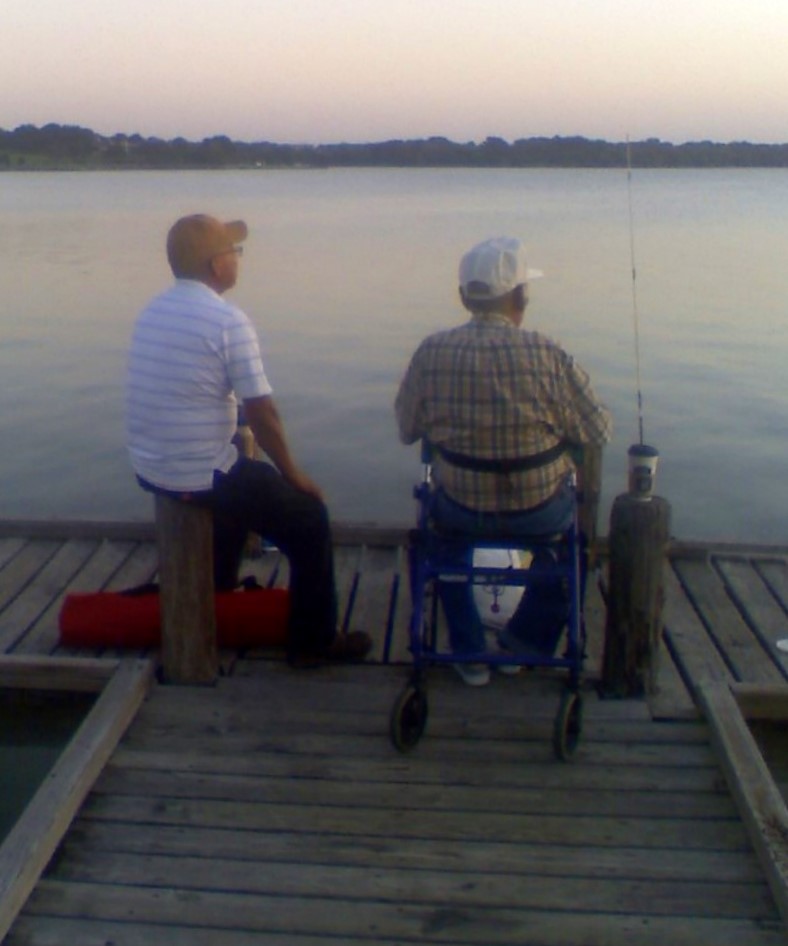
Much of the route is well sheltered by overhanging trees, but nearly half of it circles the lake.  Ducks and geese are beginning to stir along the shoreline, die-hard fishermen are casting lines, and on occasion a lone oarsman pushes a scull through the water ahead of a solitary wake.

Fishermen at dawn on White Rock Lake

These summer doldrums beg for a cooling breeze to skate across the water, but even when the lake is becalmed and glassy the mere sight of so much water seems to refresh.

The rising sun finally catches the brightly colored sailboats bobbing at anchor around the marina and beyond them the downtown Dallas skyline glows a shade of  rose.

Not much further down the trail the cultural center which now occupies the 1930’s bath house is still hours away from opening.  Below the dam the spillway carries only a trickle of water, its parched stone terraces looking like some fairytale giant’s staircase.

The sun arcs toward another 100-plus-degree day, but I arrive home to begin the day thoroughly chilled out by my sunrise excursion.