Archive for September, 2014


Cleveland’s historic architecture

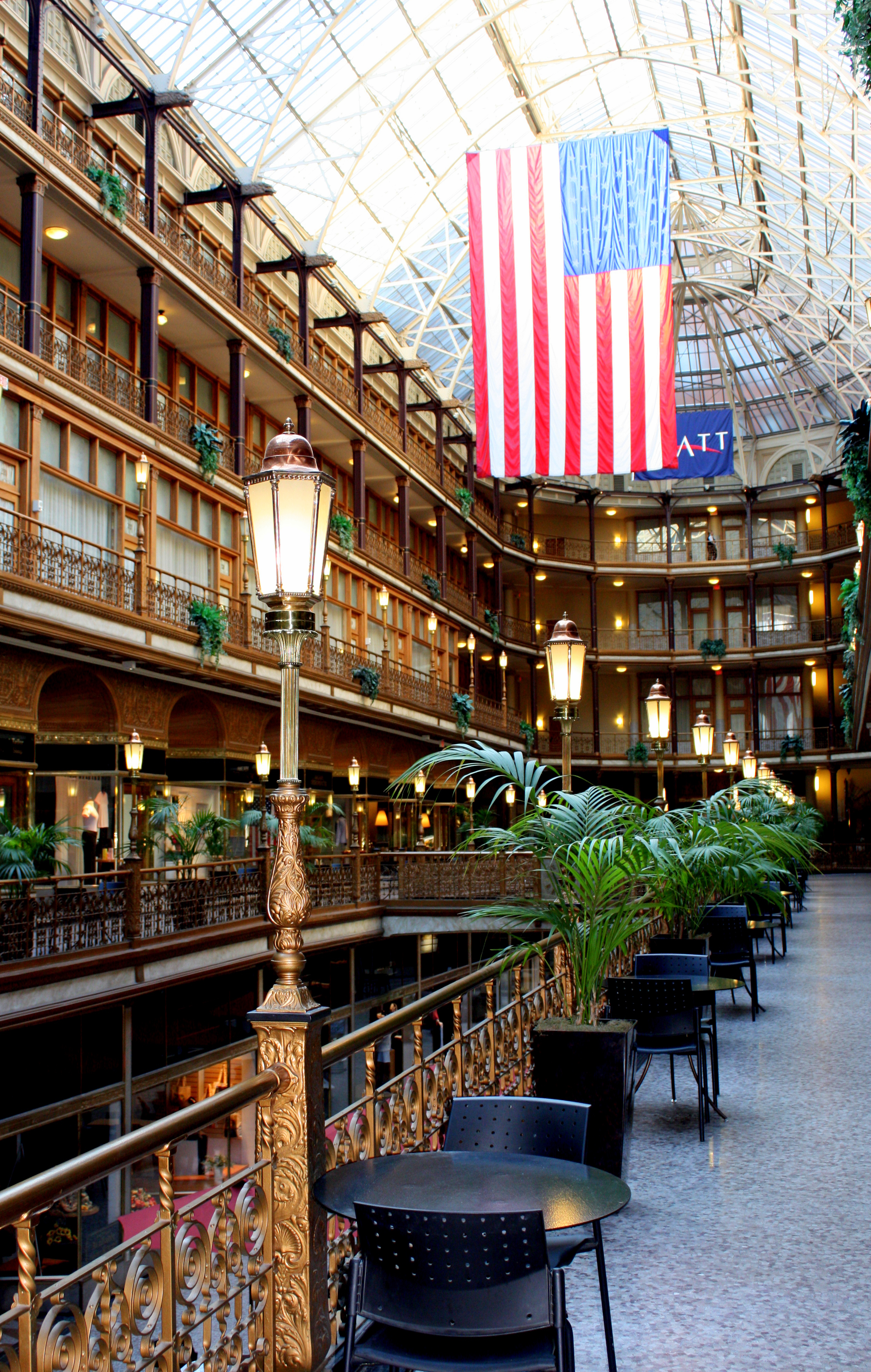
The Arcade, Cleveland

The Arcade, Cleveland

A city’s architecture is like tree rings that tell its life story.    Cleveland’s industrial decline in the last part of the twentieth century left much of the city’s architectural legacy intact, and its buildings now stand as a living timeline.
The Arcade, Cleveland

The Arcade, Cleveland

One of the most notable examples is Cleveland’s Arcade, which opened its doors in 1890 to become one of the nation’s first indoor shopping centers.

Modeled after the Galleria Vittorio Emanuele II in Milano, Italy, the exterior is done in the Romanesque Revival style, and the interior in the Victorian style.

The Arcade, Cleveland

The Arcade, Cleveland


Once known as Cleveland’s Crystal Palace, The Arcade connects five stories of galleries to two ten story towers.

Along its indoor balconies were boutique shops and restaurants.  It was, in 1973, among the first buildings to be placed on the National Register of Historic Places.

A partnership with Hyatt Hotels rescued the Arcade from the wrecking ball with a restoration completed in 2001, and today Cleveland’s Hyatt Regency occupies the twin towers and top three levels of the atrium.

The Arcade’s two entrances connect Euclid and Superior Avenues at 14th Street.   The lower two levels remain open to the public.
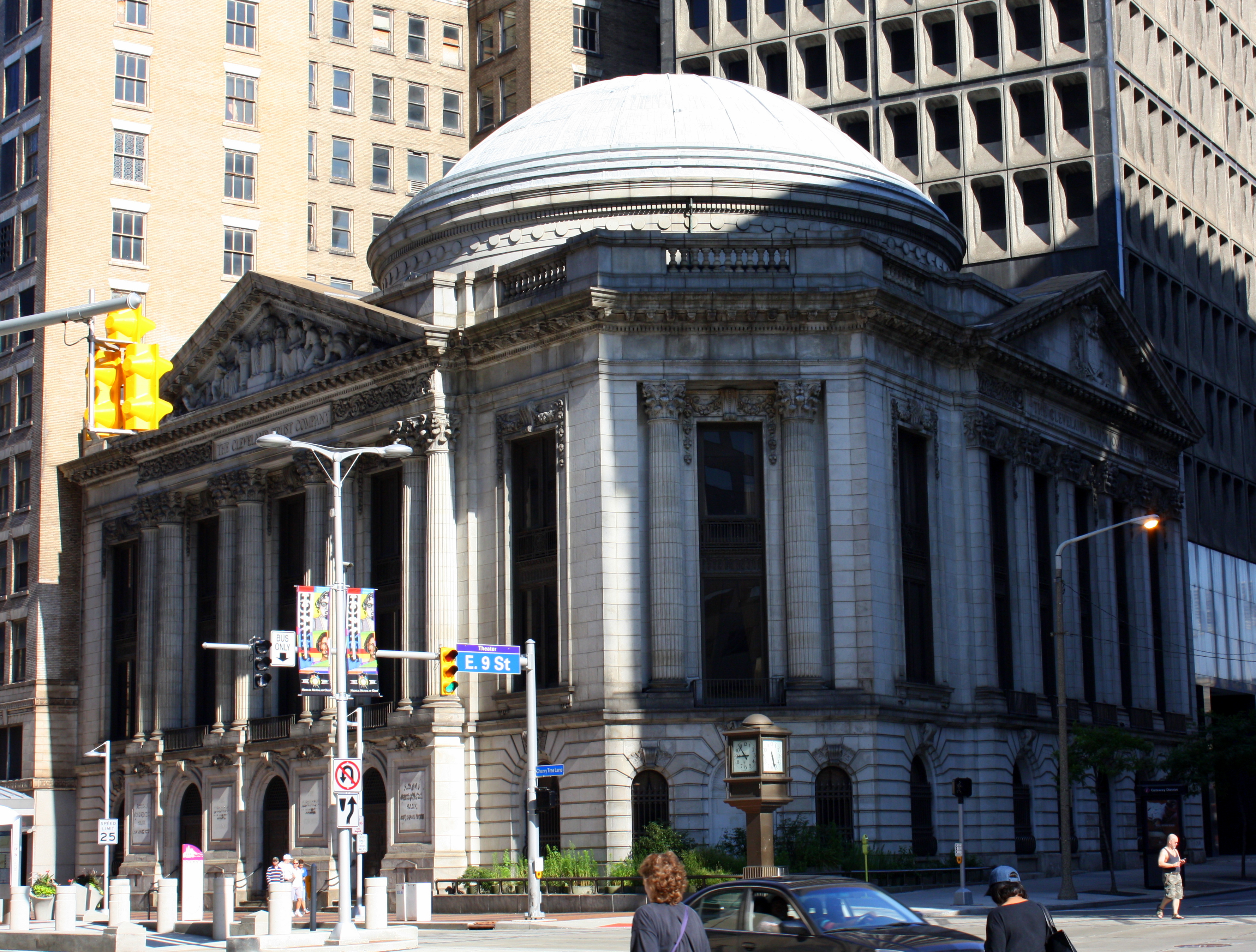
Cleveland Trust Building

Cleveland Trust Building


By 1924, the Cleveland Trust Company, was the nation’s sixth largest bank.


Like many Cleveland buildings constructed early in the century, its home office reflects the neo-classical influence of Chicago’s 1893 Columbian Exposition…. the “White City.”

Cleveland Trust Building facade detail

Cleveland Trust Building facade detail


It’s not surprising that the muralist who did much of the work on the Columbian Exposition was chosen to paint its interior murals.  The building was completed in 1908.
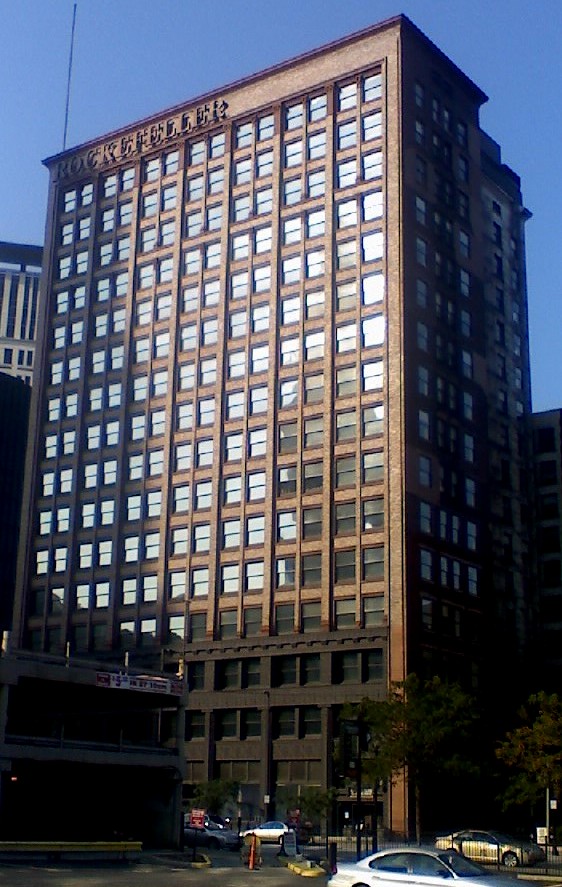
Rockefeller Building, Cleveland

Rockefeller Building, Cleveland

John D. Rockefeller lived in Cleveland for thirty-five years, and founded his Standard Oil Company there.  His seventeen-story Rockefeller Building, completed in 1905, was designed in Chicago’s “Sullivanesque” style.

Art Deco facade, Cleveland

Art Deco facade, Cleveland

Cleveland’s zenith as an industrial powerhouse in the years between the World Wars fueled a building boom which defined a clear break from the city’s past and made Deco a major architectural feature of its central business district.
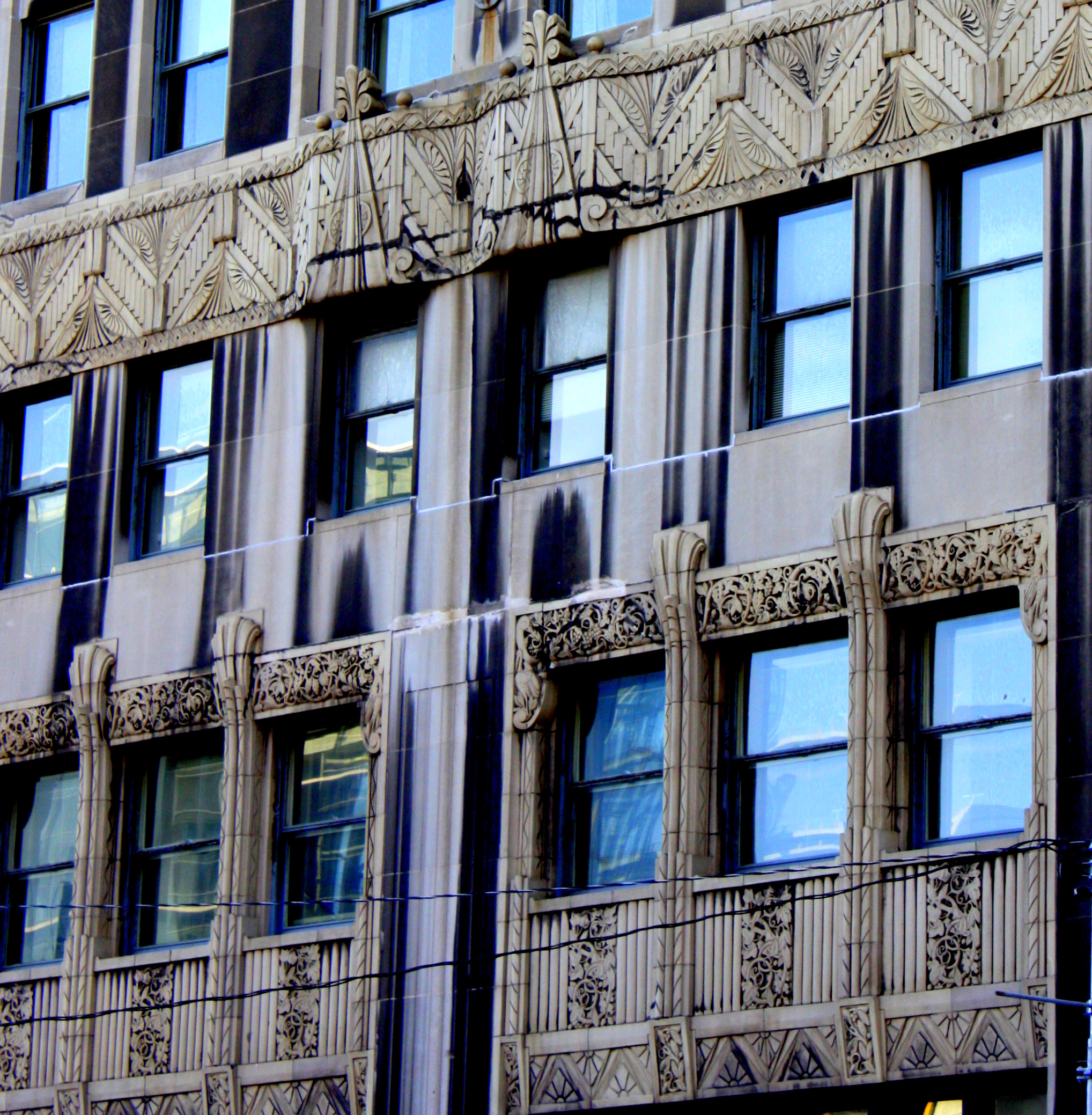
Art Deco facade, Cleveland

Art Deco facade, Cleveland

Art Deco architecture first appeared in France after World War I and became internationally popular from the 1920s until shortly after World War II.

Art Deco facade, Cleveland

Art Deco facade, Cleveland

It’s a style that  integrates craft motifs with Machine Age imagery and materials, employing rich colors, bold geometric shapes and lavish ornamentation.

Art Deco was a reflection of luxury and glamour, and the nation’s exuberance and faith in social and technological progress.


Playhouse Square, Cleveland

Playhouse Square, Cleveland

Playhouse Square is a row of five Euclid Avenue theaters built in the early 1920s.

These temples to the golden age of Hollywood are done in decorative themes that would do any Las Vegas casino proud.  Playhouse Square was named to the National Register of Historic Places in 1978.

The Ohio and State Theaters – both in the Italianate style – the Allen with its Pompeiian motif Allen, the Classical Hanna, and the French Renaissance Palace theaters have a combined total of over 10,000 seats,  making Playhouse Square the largest performing arts center in the U.S. outside of New York City.
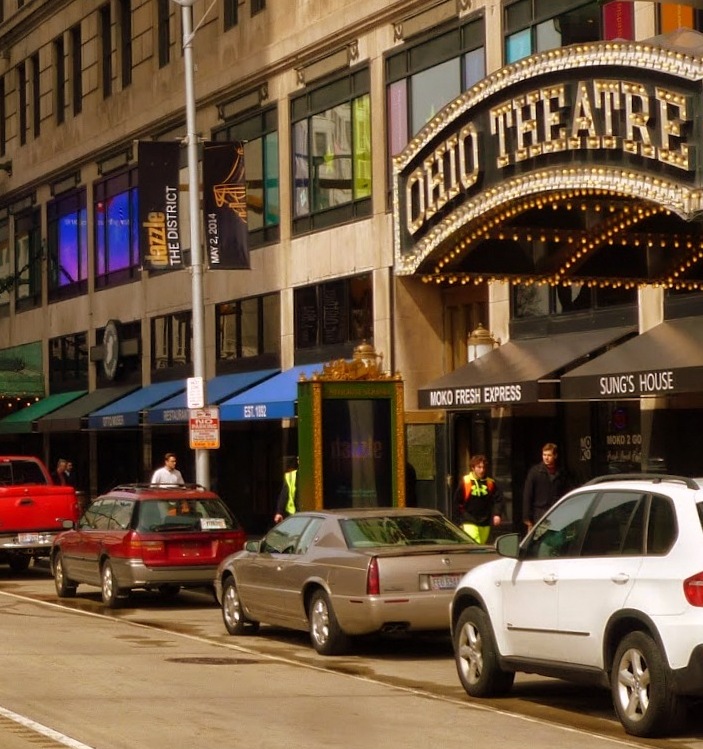
 

Playhouse Square, Cleveland

Playhouse Square, Cleveland

These theaters presented serious theater, vaudeville shows, and movies for nearly half a century,.

The growth of the suburbs and the rise of TV led to their decline in the years after World War II, and by July 1969, all but one of the theaters had closed.

Art Deco facade, Cleveland

Art Deco facade, Cleveland

Plans to raze the vacant theaters in the ’70’s caused a public outcry, and public-private partnerships raised $40 million for the Square’s renovation.

Most of the work was completed between 1979-1988.

In 1978, Playhouse Square became one of nearly 400 Cleveland area sites named to the National Register of Historic Places.

The Euclid Corridor Transportation Project, which connects Public Square to the Cleveland Clinic, opened its Playhouse Square station in 2008.

So far I’ve not ventured more than ten blocks from Cleveland’s Public Square, so there’s still plenty more to see here.

Still to come: An exploration of  Cleveland’s Cuyahoga River roots and the stunning monuments of its Lakeview Cemetery.

See my related Cleveland posts:
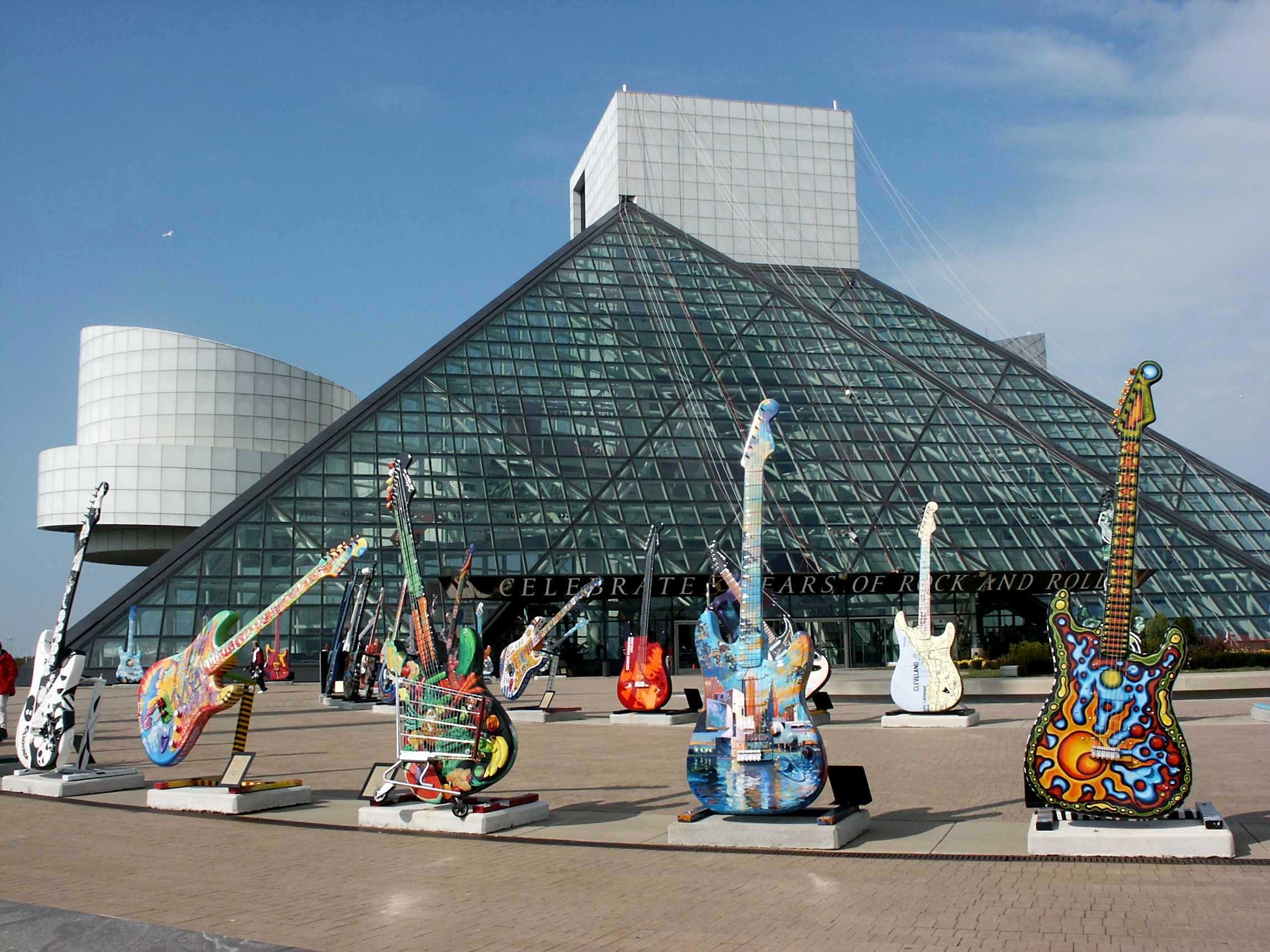
Cleveland’s Public Square

Rock 'n' Roll Hall of Fame, Cleveland

Rock ‘n’ Roll Hall of Fame, Cleveland

Cleveland, Ohio is the home of the Rock ‘n’ Roll Hall of Fame, the Cleveland Clinic, the Cleveland Orchestra, and the AFC’s Cleveland Browns.

It was also, in the ’70’s and 80’s, arguably the Rust Belt’s poster child.

A century ago, though, this home of the Federal Reserve’s Fourth District was the nation’s fifth largest city,  and for nearly half a century one of its industrial and political powerhouses.

Terminal Tower & Old Stone Church, Public Square, Cleveland

Terminal Tower & Old Stone Church, Public Square, Cleveland

It was here that John D. Rockefeller founded Standard Oil, and both he and U.S. President James Garfield, assassinated in 1881, are buried in its Lakeview Cemetery.

Cleveland’s Mark Hanna played Presidential kingmaker before the turn of 20th century, and Democratic Party national  conventions were held here in 1924 and 1936.

Cleveland’s  rich legacy is still very palpable in its historic architecture and the relics of its twentieth century melting pot neighborhoods.


Those who wonder why Cleveland is home to the Rock ‘n’ Roll Hall of Fame may not know that the very first rock ‘n’ roll concert was held in the Cleveland Arena in 1952, promoted by radio disc jockey Alan “Moondog” Freed.

The fire department closed the concert down when attendance far exceeded the Arena’s 20,000-seat capacity.

In the late 1960’s, Cleveland radio station WMMS-FM was a pioneer broadcaster of the ‘progressive rock’ radio format.


The current Cleveland Browns stadium was built in 1996 on the site of an earlier stadium dedicated in 1931, and where the first event held was the Schmeling-Stribling world heavyweight title fight.

Browns Stadium, Cleveland

Browns Stadium, Cleveland

The original structure was one of the first multi-purpose stadiums in the country, and until 1994 also the home field of the Cleveland Indians, who played games from their pennant-winning 1920 and 1948 World Series there.

Terminal Tower, Public Square, Cleveland

Terminal Tower, Public Square, Cleveland

The Browns began play in 1946, the year after the Cleveland Rams won the NFL title and moved to Los Angeles.

The new team won its first NFL championship in 1949, and would win it three more times within the next 15 years.

Cleveland has the distinction of being the only city to retain the name and archives of an NFL franchise when its team moved to Baltimore in 1996.

A revived Cleveland Browns franchise resumed play three years later.


Cleveland was first settled just before the turn of the nineteenth century by families arrived from New England, who brought with them the idea of a  ‘town commons’ and accordingly laid their city out around a Public Square.


Terminal Tower, Cleveland

Terminal Tower, Cleveland

In 1930,  a new rail terminal was constructed on its southwest corner, topped by a fifty-two story structure that came to be known as the Terminal Tower.  It was, at the time, the tallest building west of the Hudson River and the biggest dig since construction of the Panama Canal.

Terminal Tower, Cleveland

Terminal Tower, Cleveland


Terminal Tower, Cleveland

Terminal Tower, Cleveland

While rail traffic has significantly diminished in the eighty years since its construction, the Tower lives on as the hub of the city’s light rail system, and as a vibrant retail and entertainment venue.  Much of the original architecture has been lovingly restored and maintained.

Terminal Tower, Cleveland

Terminal Tower, Cleveland

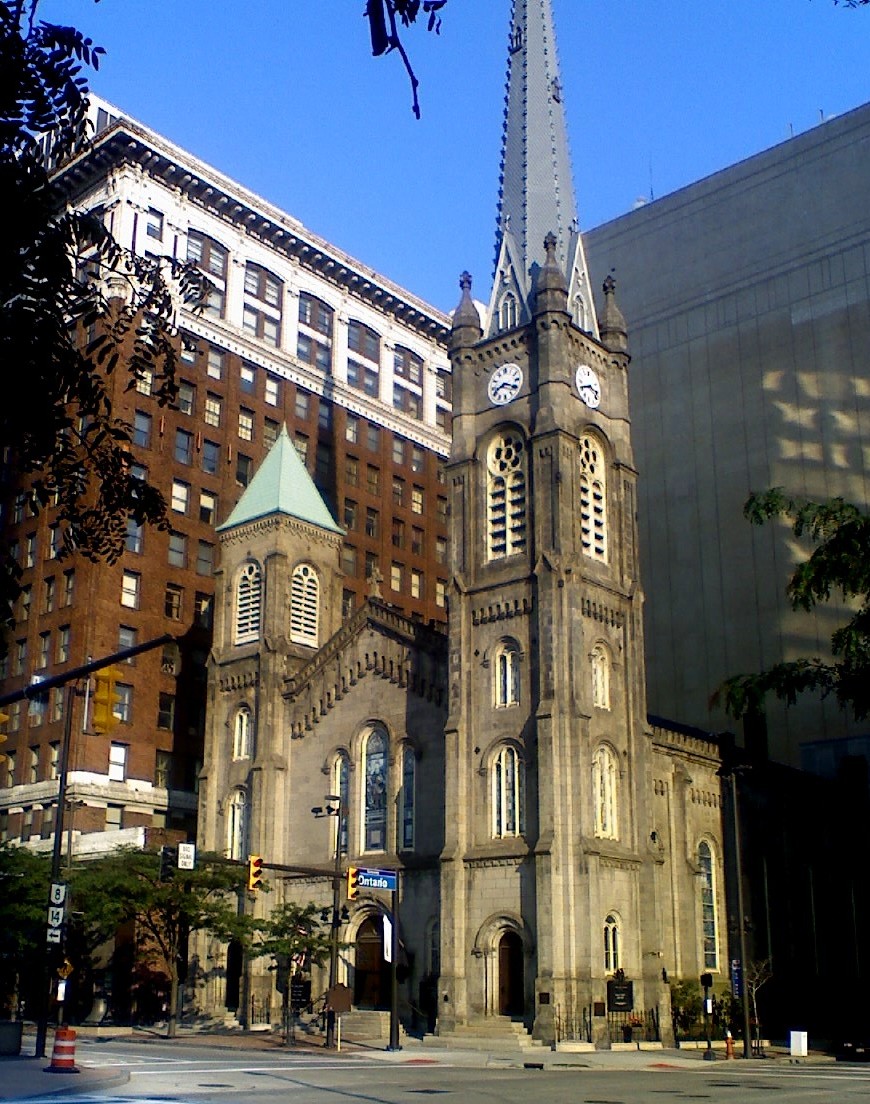
Old Stone Church, Public Square, Cleveland

Old Stone Church, Public Square, Cleveland


The Old Stone Church, a longtime downtown Cleveland landmark, sits opposite the Tower on Public Square.

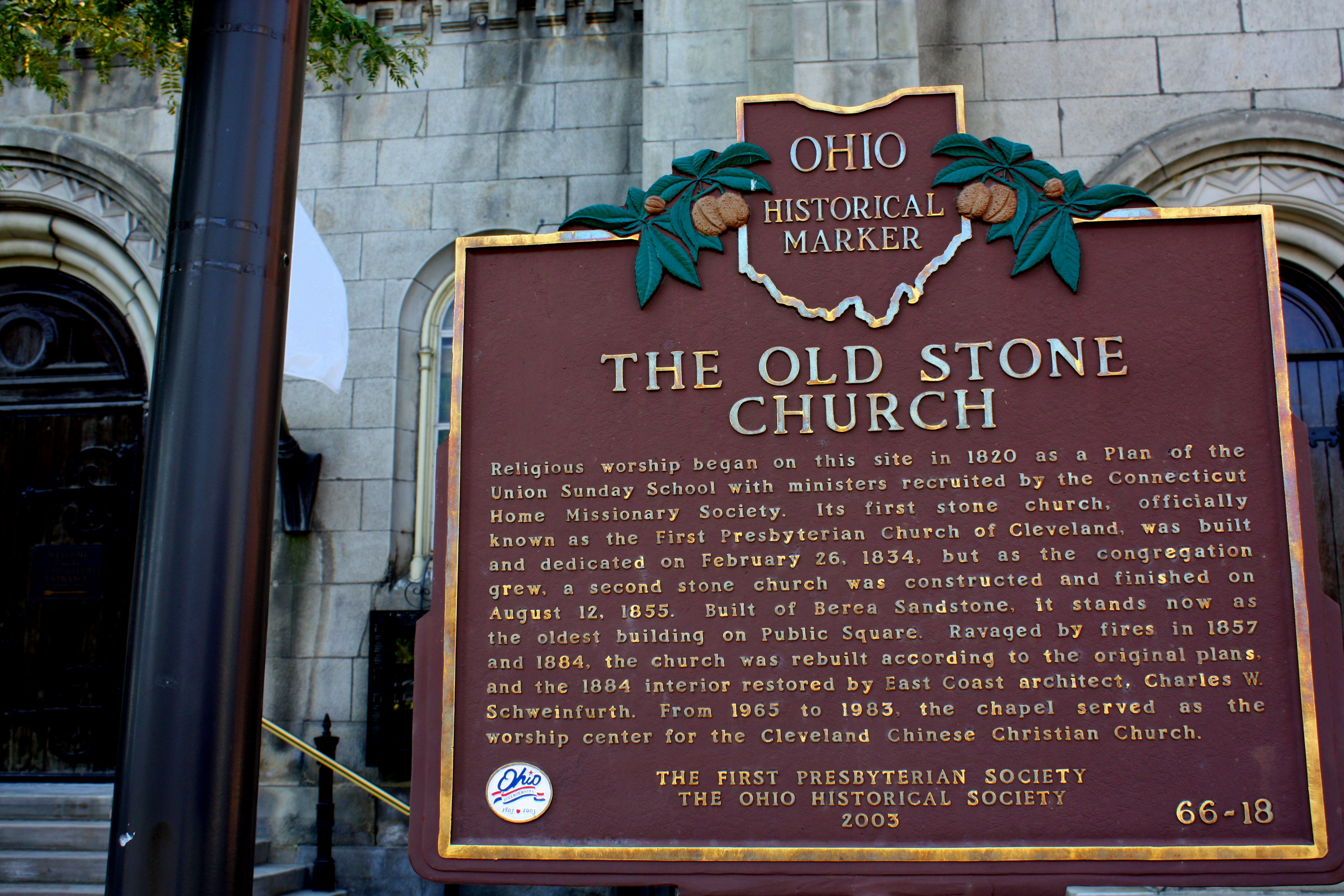
Its congregation dates back to 1820, and the current structure, dedicated in 1858, is the third church on the site.

Historical marker, Public Square, Cleveland

Historical marker, Public Square, Cleveland

Built in the Victorian Romanesque style, its interior is notable for its wood paneling, ornate carvings, stained glass, and a barrel-vaulted ceiling of trussed wood.  The church is the oldest surviving building on the Square.

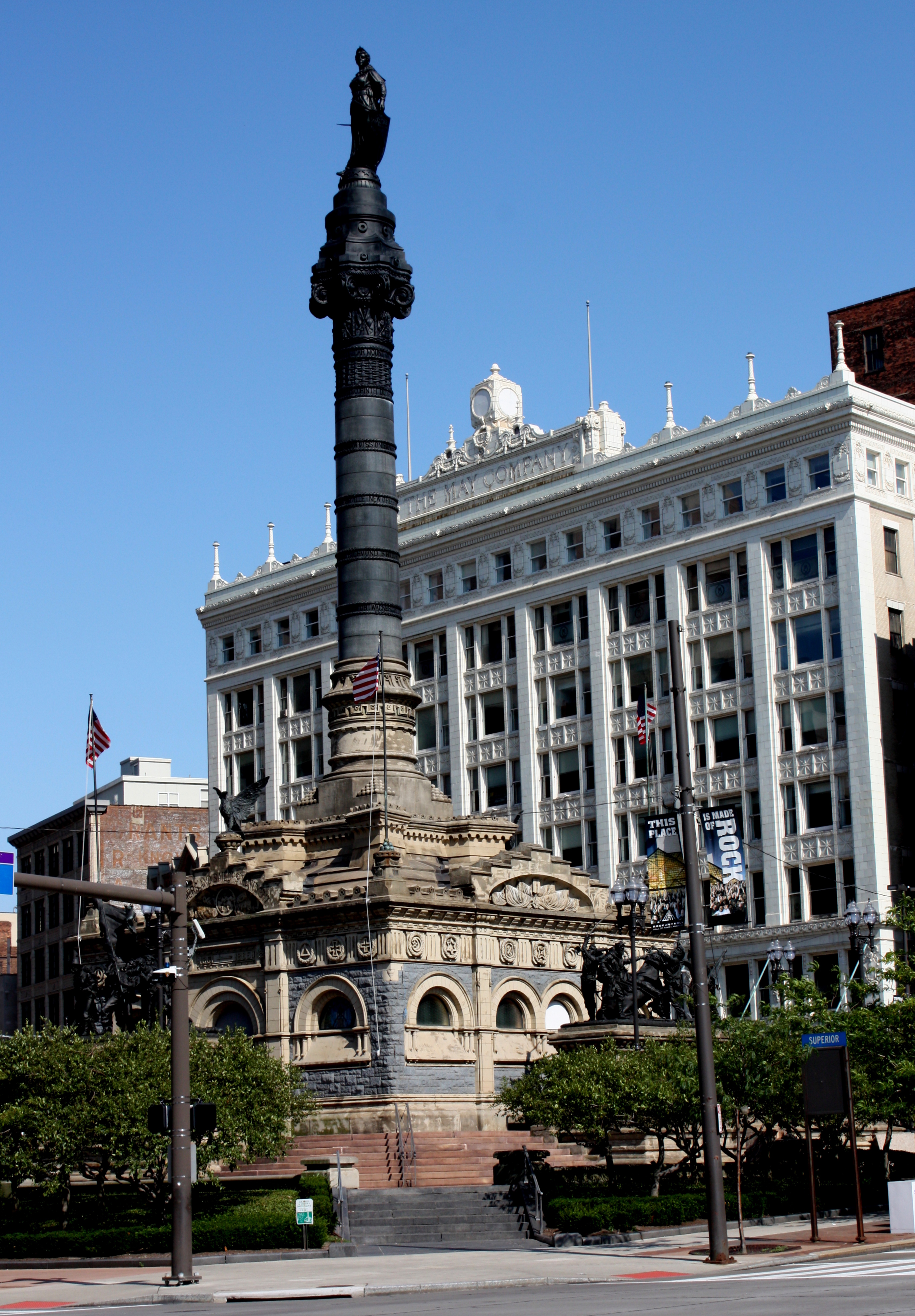
Soldiers' & Sailors' Monument, Public Square, Cleveland, OH

Soldiers’ & Sailors’ Monument, Public Square, Cleveland, OH


Just across the Square, the Soldiers’ and Sailors’ Monument, located within the Square commemorates the Civil War.


Along the monument’s esplanade, bronze groupings depict battle scenes for the  Navy, Artillery, Infantry and Cavalry.  The thirty actions in which soldiers from Cuyahoga County fought are listed on bronze bands.  Perched atop its 125-foot stone is the statue ‘Goddess of Freedom’.


Bronze relief sculptures here are among the first to honor the war role of women nurses, and to show a free black man in a combat role.  Before the Emancipation, Cleveland was a center for Abolitionists and served as fugitive slaves’ last stop on the ‘underground railway’ before Canada.


My walk on this morning has covered only a few blocks of Cleveland’s vintage downtown, but more architectural treats lie just beyond the Square.  Come along when I next post!


Author’s notes:

  • Both Cleveland and its Public Square, along with Cleveland’s Little Italy, figure prominently in my recently published novel Lifelines: An American Dream, available on Amazon.

Rivera’s roots

Bronze of Diego, Casa Diego Rivera, Guanajuato

Bronze of Diego, Casa Diego Rivera, Guanajuato

Diego Rivera was a prominent Mexican painter whose large scale wall frescos dealt mostly with social and political themes arising from Mexico’s 1910 revolution.


He painted in Mexico City and in the U.S. between 1922 and 1953, and was instrumental in establishing the Mural Movement in Mexican art.


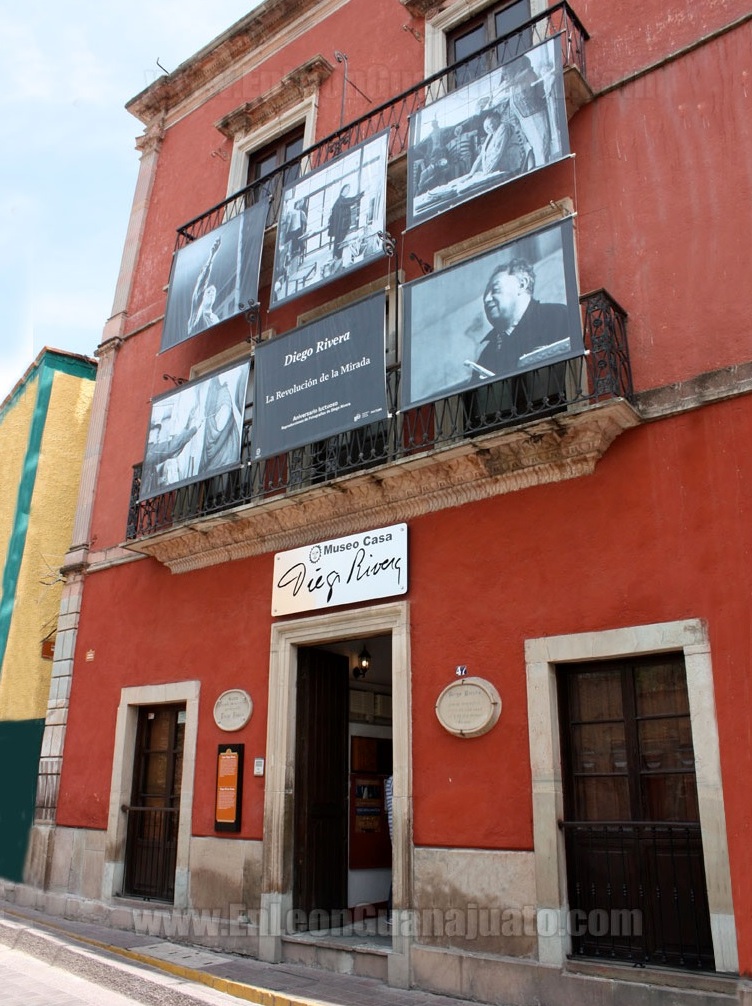
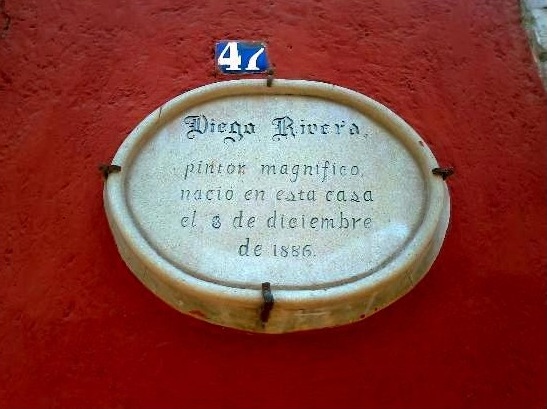
Guanajuato’s Museo Casa Diego Rivera is located in the house where the artist was born, and where he lived until the age of ten, when his family moved to Mexico City.


Exterior, Casa Diego Rivera, Guanajuato

Exterior, Casa Diego Rivera, Guanajuato

Living quarters on the ground floor are furnished in period antiques.

The upper floors house a permanent collection of nearly one hundred original works and sketches that span more than forty years.

Rivera was a man of contradictions.

Born into a well-to-do family, he became an ardent Marxist and his politics made him a persona non grata in Guanajuato for much of his life.

Born the son of a Catholic father and a Converso mother whose Jewish ancestors had been forced to convert to Catholicism, he was a lifelong atheist.

Address plaque, Casa Diego Rivera, Guanajuato

Address plaque, Casa Diego Rivera, Guanajuato

A year after his twin brother died at the age of two, Rivera began drawing on the walls of the family house and his parents installed chalkboards and wall canvasses to encourage his talent.

He was already studying art in Mexico City at the age of ten, and continued his studies in Madrid and then in Paris, where he lived and worked among the Montparnasse artists and where his friend Modigliani painted his portrait.  Rivera also traveled extensively through Italy, studying Renaissance frescoes.

His early work embraced the emerging school of Cubist art, but by 1917 he began to adopt a new style that emphasized simple forms and large patches of vivid colors with an Aztec influence.

Dining room, Casa Diego Rivera, Guanajuato

Dining room, Casa Diego Rivera, Guanajuato

He painted his first significant mural, “Creation,” at the National Preparatory School in Mexico City in 1921.  During the work he carried a pistol to protect himself from right-wing students.

His murals at the Secretariat of Public Education in Mexico City were painted between 1922 and 1928, and soon afterward he produced works for Cuernavaca’s Cortés Palace.

Salon, Casa Diego Rivera, Guanajuato

Salon, Casa Diego Rivera, Guanajuato

Rivera arrived in Moscow in 1927 to celebrate the 10th anniversary of the October Revolution.  Also attending was Alfred Barr, later the founding director of New York’s Museum of Modern Art, where a retrospective exhibition of Rivera’s works was held in 1931.

While in Russia, Rivera received a commission for a mural in Moscow’s Red Army Club, but was expelled from the country because of involvement in anti-Soviet politics, and the next year he was expelled from the Mexican Communist Party.

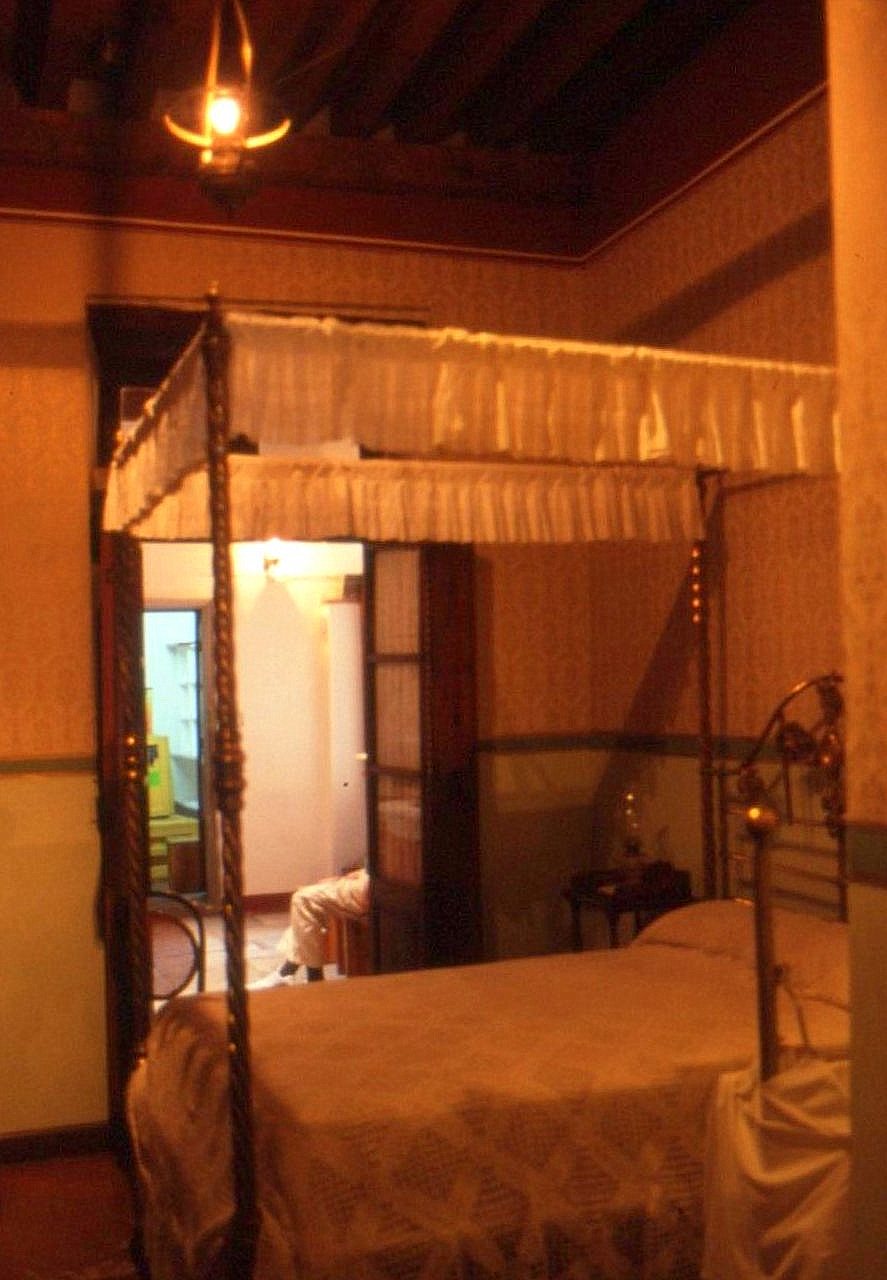
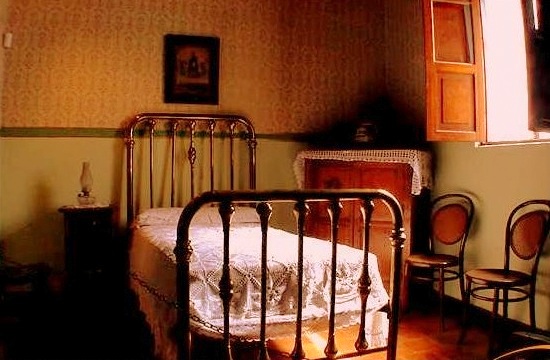
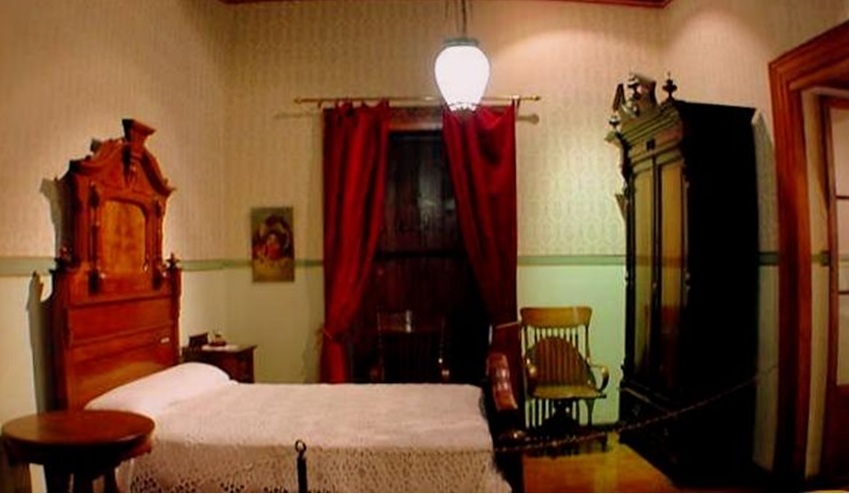
Bedroom, Casa Diego Rivera, Guanajuato

Bedroom, Casa Diego Rivera, Guanajuato

Following his return to Mexico City, he produced a series of murals in the National Palace.

In 1929 he married his third wife, artist Frida Kahlo.  He was 42 and she was 22,  Their mutual infidelities and his violent temper would lead to their divorce in 1939 and remarriage in 1940.

Memorial, Casa Diego Rivera, Guanajuato

Memorial, Casa Diego Rivera, Guanajuato

In 1930, after completing a commission for murals in the National School of Agriculture at Chapingo, and the Palace of Cortés in Cuernavaca, Rivera accepted commissions from the City Club of the San Francisco Stock Exchange and from the California School of Fine Art.  The work he produced there is now on display in the Diego Rivera Gallery at the San Francisco Art Institute.

Between 1932 and 1933, Rivera completed the twenty-seven panels of his work “Detroit Industry”, commissioned by Edsel Ford, on the walls of an inner court at the Detroit Institute of Arts.

Bedroom, Casa Diego Rivera, Guanajuato

Bedroom, Casa Diego Rivera, Guanajuato

His 1933 mural “Man at the Crossroads”, commissioned by John D. Rockefeller, was removed from the Rockefeller Center following a furor over its inclusion of the image of Lenin.

When Diego refused to remove it, Rockefeller ordered Rivera to leave and the mural destroyed.  The censorship became a cause celebre among New York’s artistic community.

Rivera family photos, Casa Diego Rivera, Guanajuato

Rivera family photos, Casa Diego Rivera, Guanajuato

While Rockefeller detested Rivera’s art for its politics, Edsel Ford saw the art separately from the politics, and was a staunch defender of the artist’s talent even during the McCarthy witch hunts of the 1950s.

The negative publicity over the Rockefeller Center mural, though, lost Rivera a commission for the Chicago World’s Fair.

In 1934, Rivera  repainted the Rockefeller Center mural in Mexico city’s Palacio de Bellas Artes.

Bedroom, Casa Diego Rivera, Guanajuato

Bedroom, Casa Diego Rivera, Guanajuato

He returned to the U.S. for the last time in 1940 to paint a ten-panel mural for the Golden Gate International Exposition in San Francisco titled “Pan American Unity”.

The mural and its archives now reside at City College of San Francisco.

There’s plenty more to see on a future visit, but it’s still been a great day trip from San Miguel de Allende.

For more on Guanajuato, check out my earlier posts:

A panel from Diego Rivera’s work “Detroit Industry” appears on the cover of my latest novel, Lifelines: An American Dream, available now on Amazon.


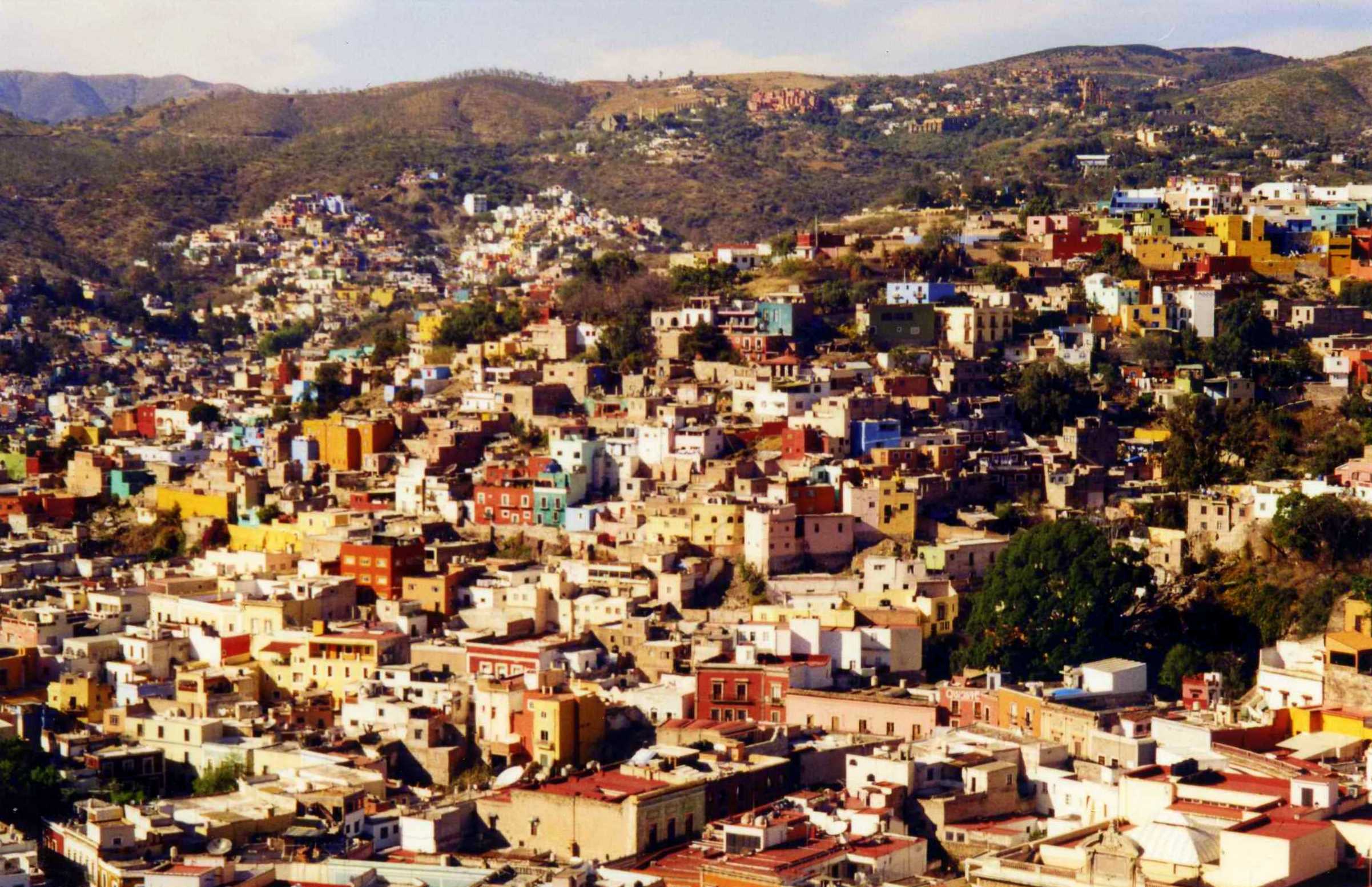
The first sight of Guanajuato is breathtakingly beautiful.  Thousands of brightly colored buildings are draped across the hills like a mosaic carpet, and the colors are warm in the morning sunlight.  It’s picture postcard perfect.

Guanajuato, Mexico

Guanajuato, Mexico

Guanajuato has played an important role throughout much of Mexico’s history, including its service as one of  Mexico’s provisional capitals  up until its capture during the French intervention in 1863 .

Plaza de la Paz, Guanajuato, Mexico

Plaza de la Paz, Guanajuato, Mexico


This city’s spirit is well summed up by its  Plaza de la Paz – the Peace Plaza.


This is where the wealthiest of colonial families built their homes.


It is also the site of the Basílica de Nuestra Señora de Guanajuato – the Basilica of Our Lady of Guanajuato.


One of the plaza’s most distinctive feature is an allegorical sculpture of the woman “Peace”.

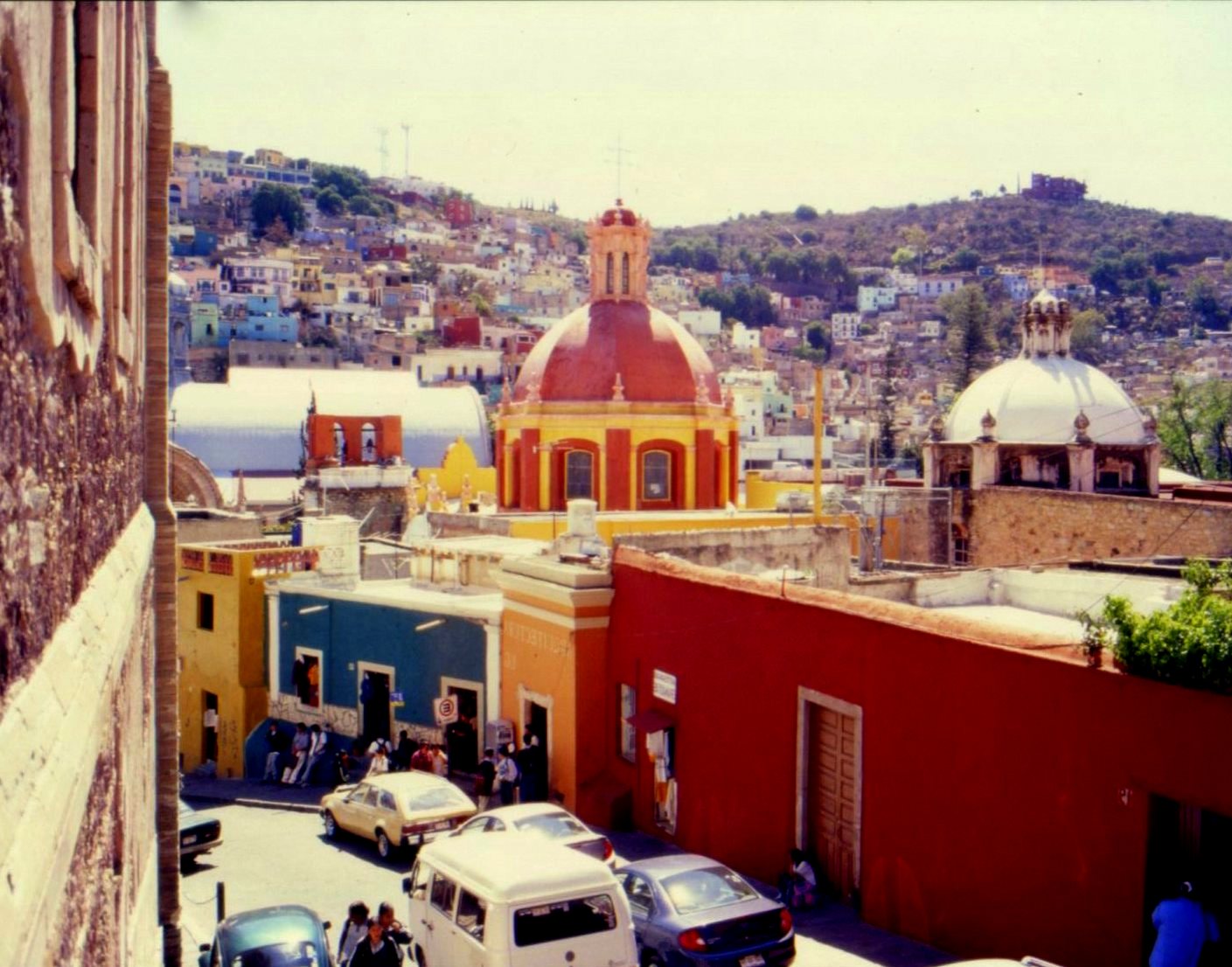
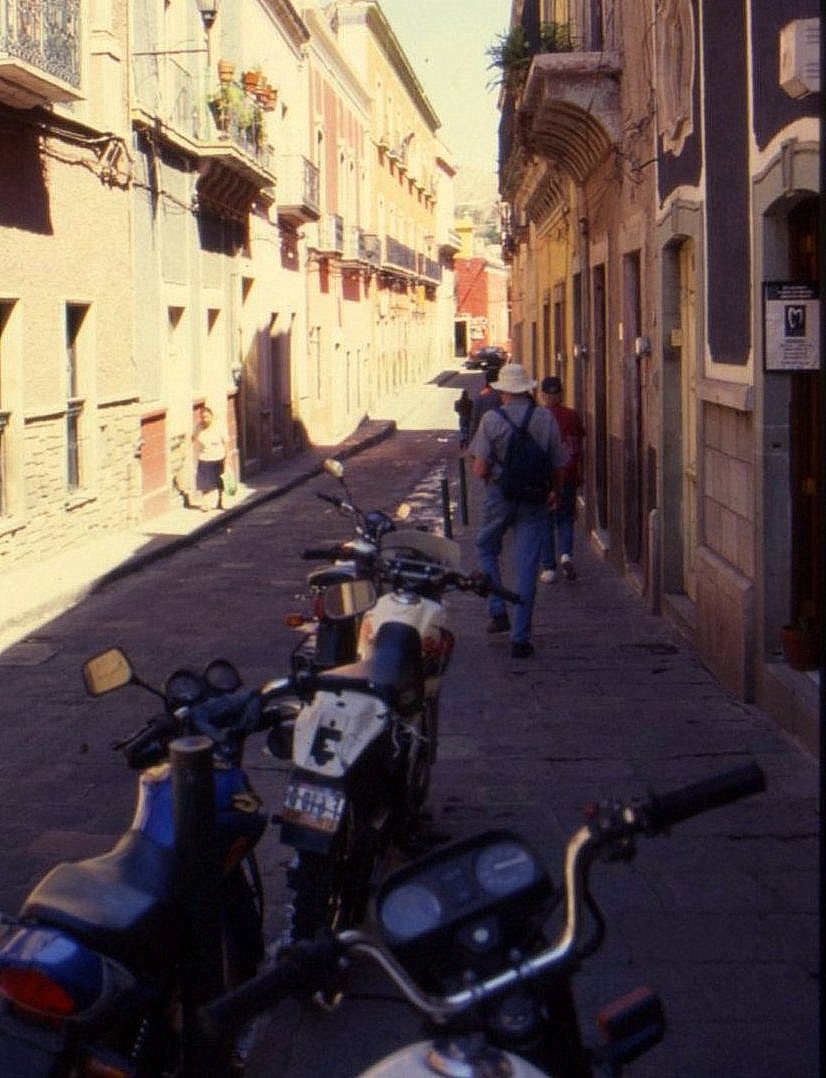
Since much of Guanajuato’s through traffic has been routed through the tunnels of abandoned silver mines which run below it, the narrow streets of the Centro Historico are very pedestrian-friendly, and beg to be walked.

Centro Historico, Guanajuato, Mexico

Centro Historico, Guanajuato, Mexico

Centro Historico, Guanajuato, Mexico

Centro Historico, Guanajuato, Mexico


Centro Historico, Guanajuato, Mexico

Centro Historico, Guanajuato, Mexico


Centro Historico, Guanajuato, Mexico

Centro Historico, Guanajuato, Mexico


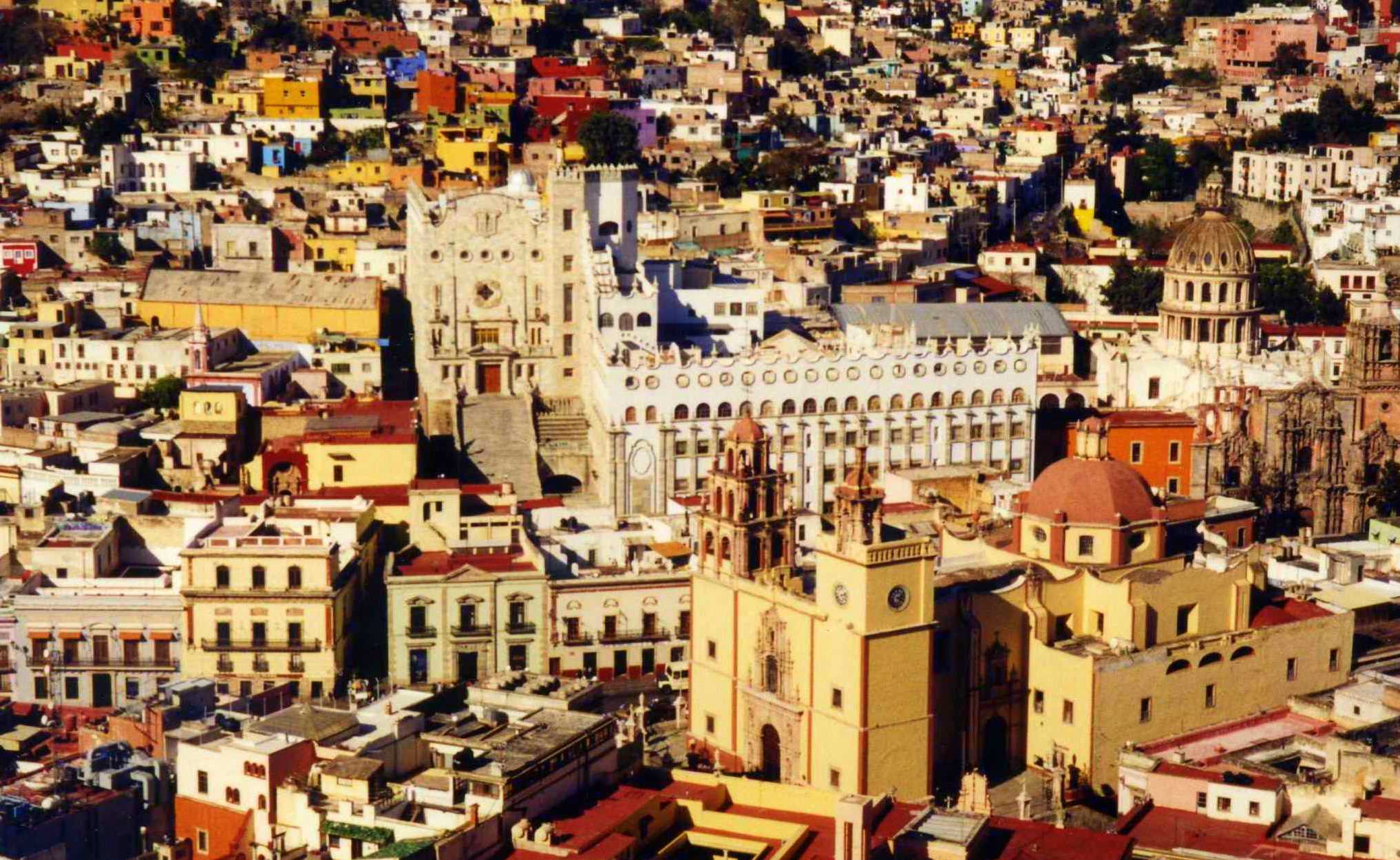
The Alhondigas de Granaditas – The Granary – dominates the  old city, and has played a central role in its history for more than two hundred years.

Alhondigas de Granaditas (center) and Basílica de Nuestra Señora de Guanajuato (lower right), Guanajuato, Mexico

Alhondigas de Granaditas (center) and Basílica de Nuestra Señora de Guanajuato (lower right), Guanajuato, Mexico

Today it is one of the venues for the Festival Internacional Cervantino, held here every fall since 1972.

The festival  celebrates the life and work of Miguel Cervantes, who is considered by Spanish-speakers to be as significant an influence on their literature as Shakespeare is to English literature.

Centro Historico, Guanajuato, Mexico

Centro Historico, Guanajuato, Mexico


The Alhondigas is best known, though, as the site of the first battle in Mexico’s War of Independence.


In 1810, insurgents led by patriot Miguel Hidalgo entered the city to find that Royalist troops and  sympathizers had barricaded themselves – and millions of pesos of silver – in the Alhondigas.


The Royalists were counting upon the granary’s thick and windowless walls and single gated entrance to resist a siege, and they were able to fight the rebels to a stalemate.

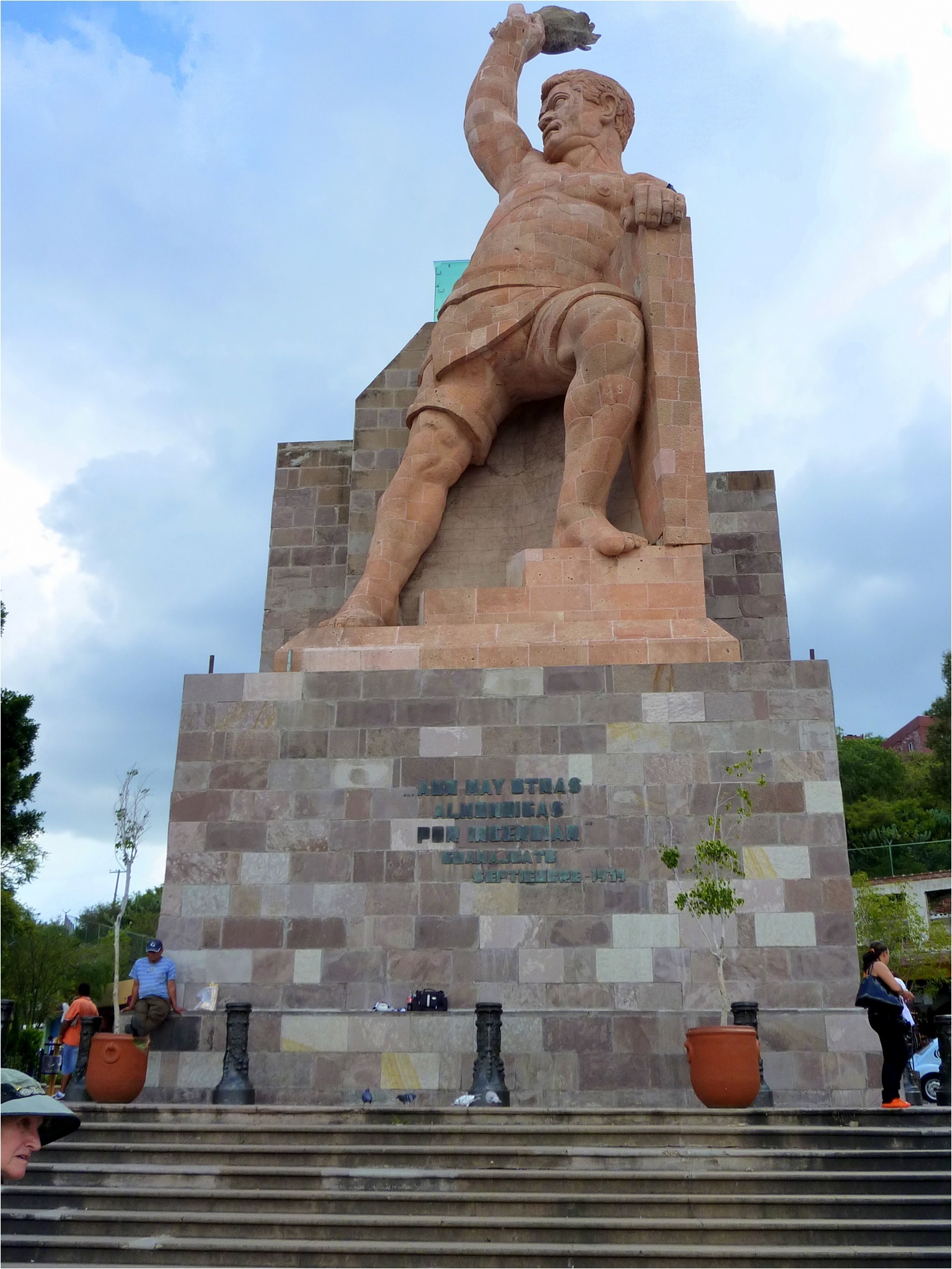
Statue of El Pípila, Guanajuato, Mexico

Statue of El Pípila, Guanajuato, Mexico

The impasse was broken when miner Juan José de los Reyes Martínez, better known to history by his nickname of El Pípila, armored himself with a large flat stone strapped to his back and crawled to the wooden gate with a flask of tar and a torch.

Martínez’s  courageous act enabled the patriots to take the building, and his heroism is commemorated by a colossal statue of him that now overlooks the city.

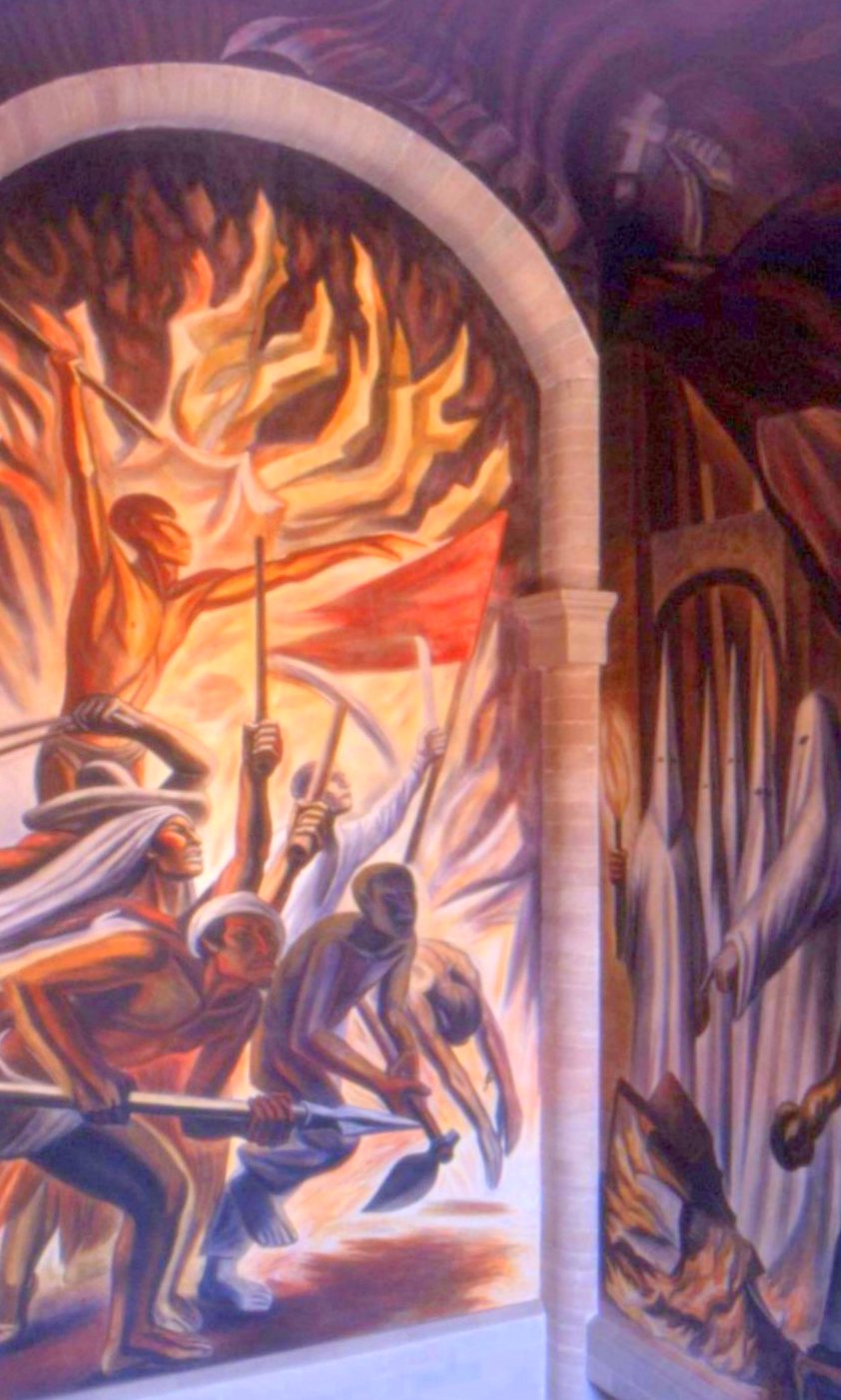
Murals, Alhondigas de Granaditas, Guanajuato, Mexico

Murals, Alhondigas de Granaditas, Guanajuato, Mexico

The building now serves as the Museo Regional de Guanajuato, documenting the city’s history  from before the Spanish Conquest.

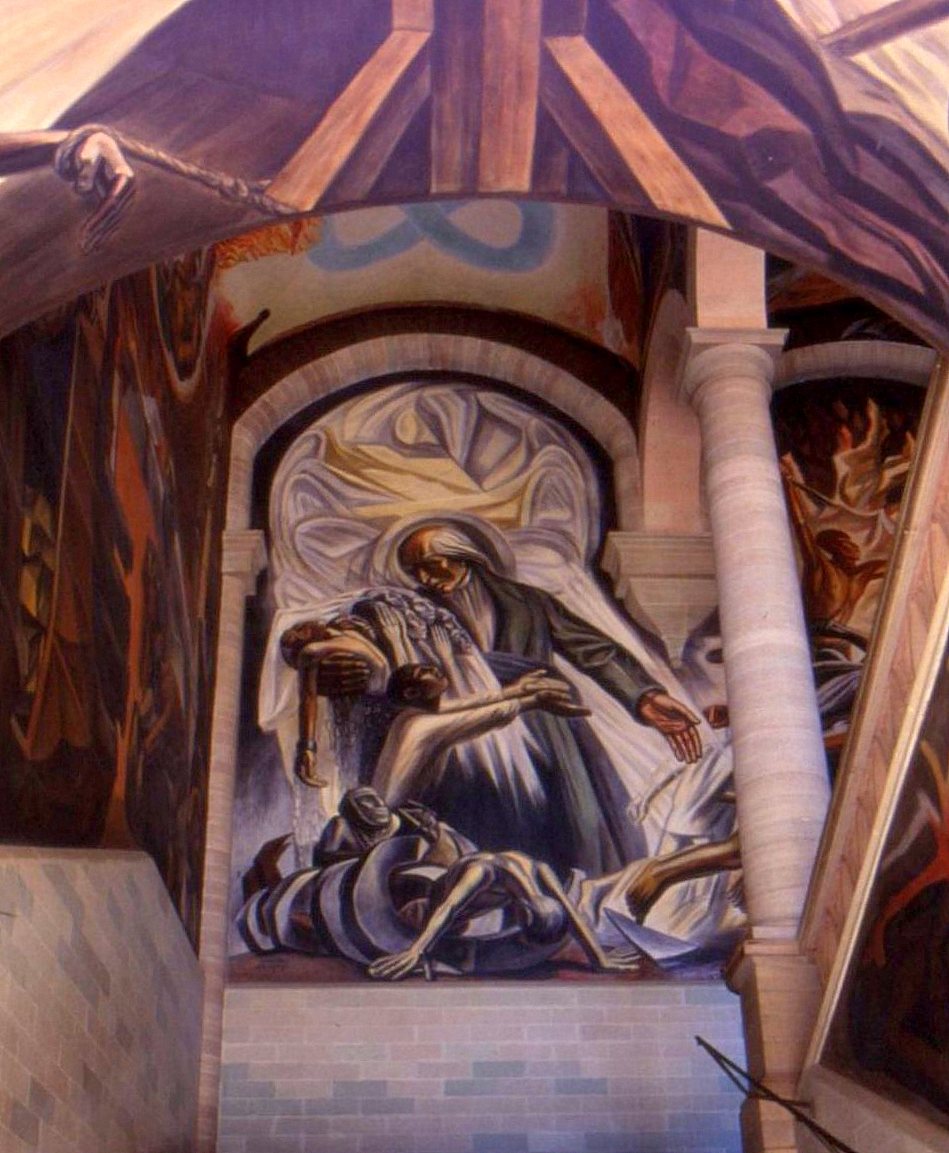
Mural, Alhondigas de Granaditas, Guanajuato, Mexico

Mural, Alhondigas de Granaditas, Guanajuato, Mexico

Its architecture honors heroes of the Mexican Revolution with mascarons, gargoyle-like sculptures that incorporate their faces.

The walls of the main stairwell contain murals by José Chávez Morado that allude to Independence, along with paintings and photographs.

It is a long-standing tradition to celebrate Mexico’s Independence Day with a reenactment of Miguel Hidalgo’s “El Grito de Dolores” – the call to arms – in the Alhondiga’s large courtyard.

An eternal flame is re-lit here each year on the anniversary of the battle.

Centro Historico, Guanajuato, Mexico

Centro Historico, Guanajuato, Mexico

Centro Historico, Guanajuato, Mexico

Centro Historico, Guanajuato, Mexico

It ‘s no surprise that this charming and historic city is one of Mexico’s thirty-two World Heritage Sites.

Coming up next in Guanajuato:  Museo Casa Diego Rivera, the Mexican muralist’s childhood home.

Also in Guanajuato:  Museo Ex-Hacienda San Gabriel Barrera, the opulent home and magnificent gardens built by one of the city’s silver barons.  Read more…