Archive for August, 2014


Hacienda style

Gardens, Museo Ex-Hacienda San Gabriel Barrera, Guanajuato, Mexico

Gardens, Museo Ex-Hacienda San Gabriel Barrera, Guanajuato, Mexico

Guanajuato is one of Mexico’s five colonial “silver cities.”


Silver was discovered here in the 1600’s, and within a century Guanajuato had become the largest single source of silver in the world.
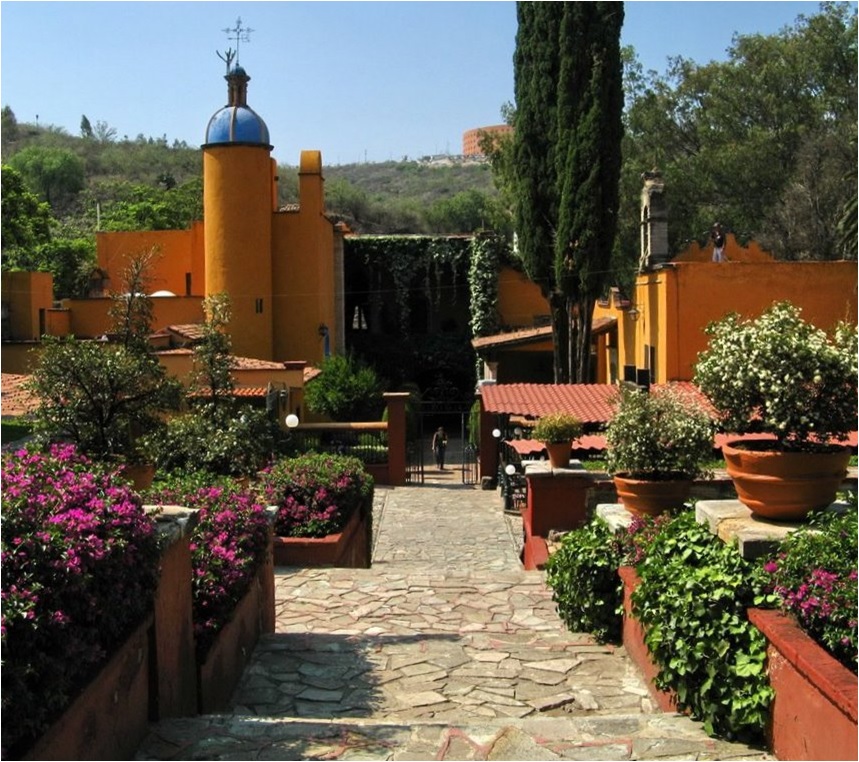


Gardens and house, Museo Ex-Hacienda San Gabriel Barrera, Guanajuato, Mexico

Gardens and house, Museo Ex-Hacienda San Gabriel Barrera, Guanajuato, Mexico


Magnificent churches and mansions were built with the riches, and one of those mansions survives today as a museum.


Gardens, Museo Ex-Hacienda San Gabriel Barrera, Guanajuato, Mexico

Gardens, Museo Ex-Hacienda San Gabriel Barrera, Guanajuato, Mexico


The former Hacienda San Gabriel Barrera, less than three miles from the city center and just off the highway from Irapuato, covers almost five acres.

It was one of several estates owned by Captain Gabriel de la Barrera.


Gardens, Museo Ex-Hacienda San Gabriel Barrera, Guanajuato, Mexico

Gardens, Museo Ex-Hacienda San Gabriel Barrera, Guanajuato, Mexico


The main house sits among themed, formal gardens, several of which evoke the feel of the Alhambra in Granada, Spain.

Main house entrances, Museo Ex-Hacienda San Gabriel Barrera, Guanajuato, Mexico

Main house entrances, Museo Ex-Hacienda San Gabriel Barrera, Guanajuato, Mexico


The hacienda house was divided into living space, hacienda offices, a chapel, and a  work yard where mined minerals were processed.
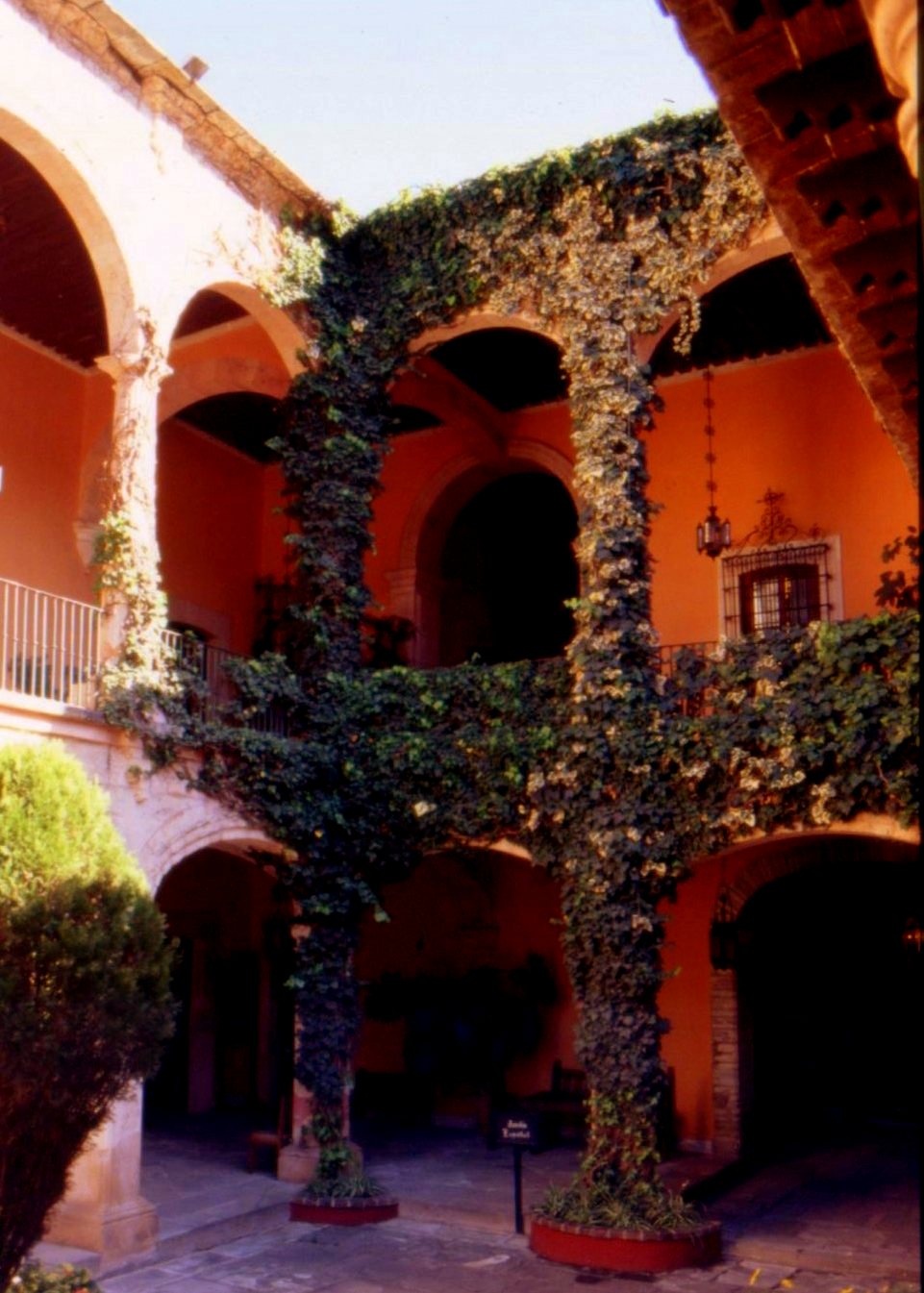


Main house courtyard, Museo Ex-Hacienda San Gabriel Barrera, Guanajuato, Mexico

Main house courtyard, Museo Ex-Hacienda San Gabriel Barrera, Guanajuato, Mexico


The façade has a strong Baroque influence, and the beamed ceilings and handrails are all original

Private chapel altarpiece, Museo Ex-Hacienda San Gabriel Barrera, Guanajuato, Mexico

Private chapel altarpiece, Museo Ex-Hacienda San Gabriel Barrera, Guanajuato, Mexico


The altarpiece in the private chapel, covered in gold leaf, once stood in the cathedral of Jaen, Spain.


Gardens, Museo Ex-Hacienda San Gabriel Barrera, Guanajuato, Mexico

Gardens, Museo Ex-Hacienda San Gabriel Barrera, Guanajuato, Mexico


In Mexico, the word hacienda describes the largest of estates. These were profit-making enterprises that had their origins in land grants made by the Spanish crown to conquistadors and royal officials.

The first was a grant made by the Spanish crown to Hernán Cortés.


Main house, Museo Ex-Hacienda San Gabriel Barrera, Guanajuato, Mexico

Main house, Museo Ex-Hacienda San Gabriel Barrera, Guanajuato, Mexico


Some haciendas were plantations, some were ranches, and others were mines or factories.  Many engaged in more than one of these enterprises.


Main house Museo Ex-Hacienda San Gabriel Barrera, Guanajuato, Mexico

Main house Museo Ex-Hacienda San Gabriel Barrera, Guanajuato, Mexico


While most hacienda owners – known as hacendados or patróns – lived in or near their haciendas, many of the largest landholders were absentee owners.


Main house window, Museo Ex-Hacienda San Gabriel Barrera, Guanajuato, Mexico

Main house window, Museo Ex-Hacienda San Gabriel Barrera, Guanajuato, Mexico


The Catholic Church acquired vast hacienda holdings or loaned money to hacendados.

As mortgage holders, the Church’s interests lay with the landholding class, a relationship which eventually left it on the wrong side of Mexican Revolution.
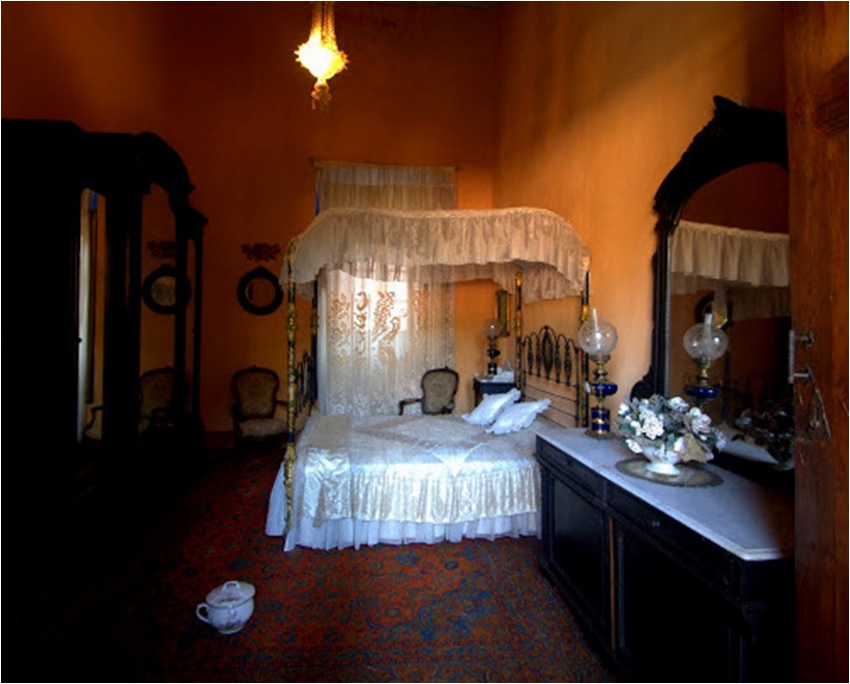


Bedroom, main house, Museo Ex-Hacienda San Gabriel Barrera, Guanajuato, Mexico

Bedroom, main house, Museo Ex-Hacienda San Gabriel Barrera, Guanajuato, Mexico


Haciendas are sometimes confused with encomiendas, another type of royal land grant which included the labor of its indigenous population.

These grantholders were responsible for instructing the natives in the Spanish language and Christian faith, and protecting them from warring tribes, in return for which they were entitled to exact labor or other tribute.


Hacienda offices, Museo Ex-Hacienda San Gabriel Barrera, Guanajuato, Mexico

Hacienda offices, Museo Ex-Hacienda San Gabriel Barrera, Guanajuato, Mexico


While the encomienda technically honored honor Queen Isabella’s command that natives were “free vassals of the crown” not to be enslaved or displaced, many were forced into hard labor and subjected to corporal punishment or death if they resisted.
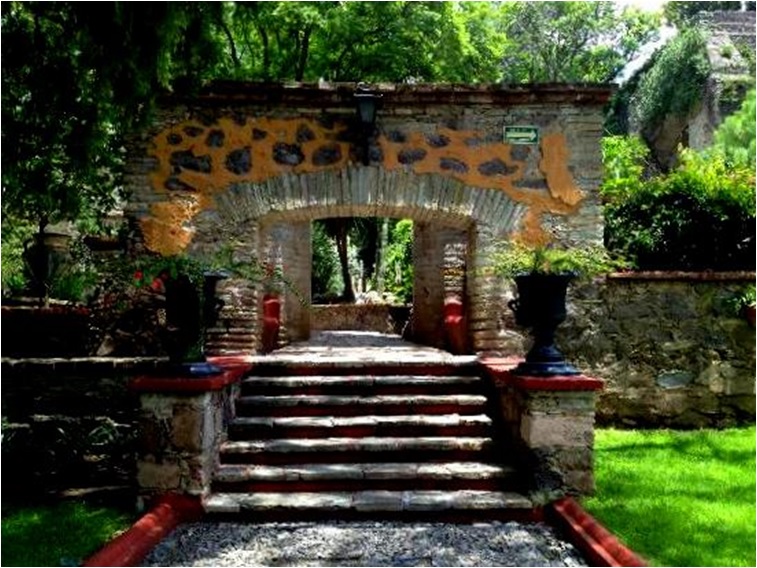


Gardens, Museo Ex-Hacienda San Gabriel Barrera, Guanajuato, Mexico

Gardens, Museo Ex-Hacienda San Gabriel Barrera, Guanajuato, Mexico


Many hacendados were also granted encomiendas, which gave all of their enterprises access to a pool of indigenous labor.

The Hacienda San Gabriel Barrera affords a beautiful setting and unique insight into the lives of the Spanish overlords, but it’s also hard to forget that such prosperity came at a terrible price.  An indigenous Mexican population estimated at twenty-five million persons before the Spanish conquest had, within a century, been reduced by war, disease, and forced labor, and other abuse to a little over one million.

There’s still more to see in Guanajuato, including the boyhood home of twentieth century Mexican muralist Diego Rivera, and the city’s historic center, one of the birthplaces of Mexican independence.

To Live and Die in New Orleans

French Quarter, New Orleans

French Quarter, New Orleans

I’ve been to New Orleans more times than I can count, but as I planned my first post-Katrina trip, I wondered how much of its long-familiar landscape would still remain.

My New Orleans ritual has remained unchanged in all of those years.  It begins with beignets and café au lait at the Cafe du Monde, followed by a stroll around Jackson Square and a climb to the crest of the levee, where I sit and watch the boats plying the Mississippi.

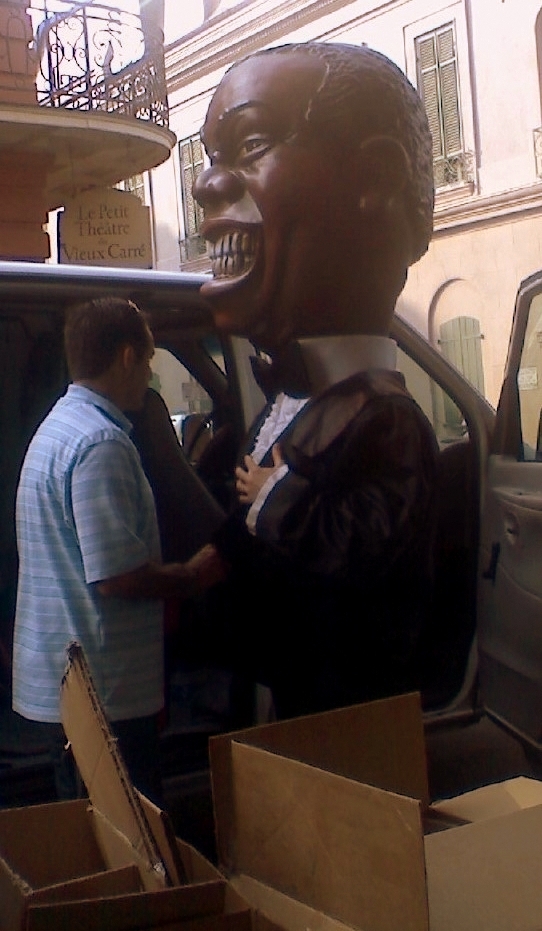
Larger-than-life Louis Armstrong parade mask.

Larger-than-life Louis Armstrong parade mask.

On this morning as I sit in the cafe, a van pulls up and its two occupants extract from it a gigantic paper-mâché mask of Louis Armstrong.

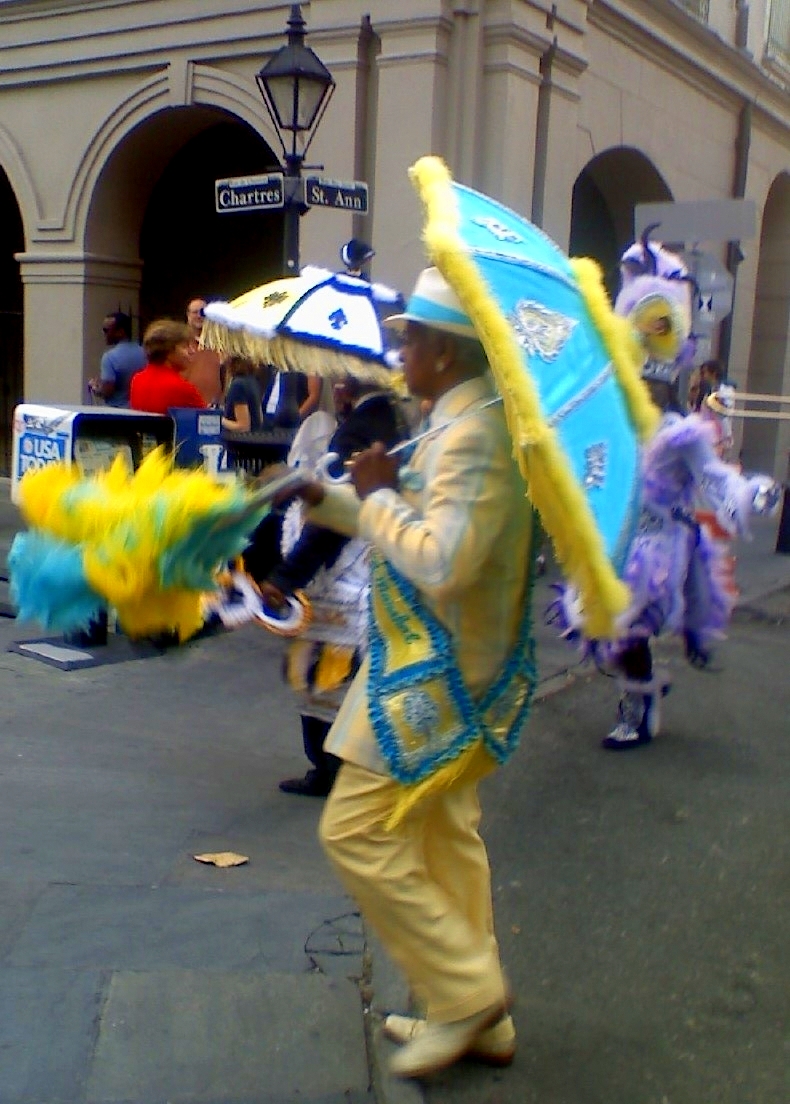
Both men seem improbably short to be walking the streets with it perched upon their shoulders, but an entourage shortly appears, dressed in Mardi Gras finery.

"Second Line" dressed for a parade.

“Second Line” dressed for a parade.

The mask’s occupant appears and suits up, then the troop sets off down the streets for reasons and parts unknown.

More "Second Line"

More “Second Line”


It’s a perfect welcome back to New Orleans.


Jackson Square is always a feast for the eyes.  Artists who hang their work on its wrought iron fences are regulars, but the supporting cast of characters is constantly changing.


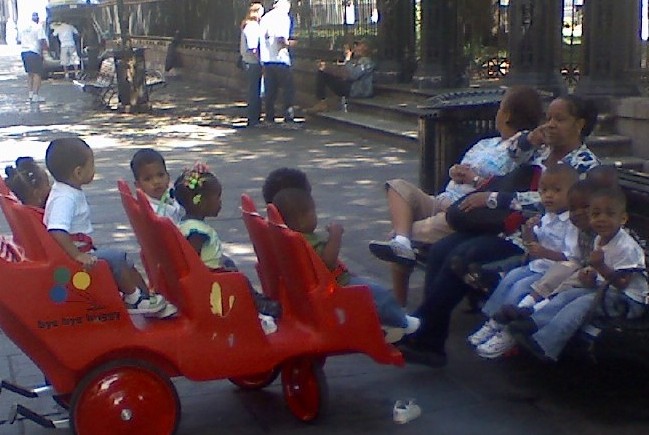
Jackson Square play date.

Jackson Square play date.


Today, two mothers sitting in the shade watch over a play date and what can only be described as the mini-van of baby strollers.


Across the square, a group of choir boys files down the sidewalk.


Choirboys near St. Louis Cathedral, Jackson Square, New Orleans

Choirboys near St. Louis Cathedral, Jackson Square, New Orleans


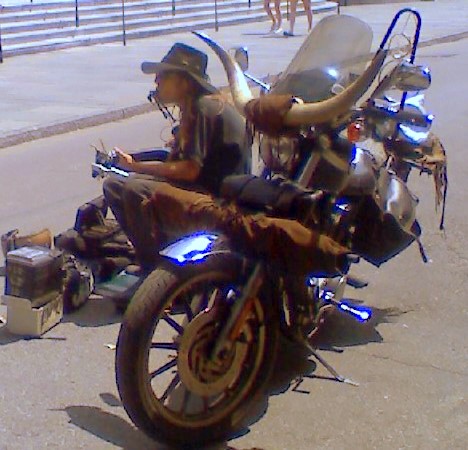
Motorcycle cowboy, Jackson Square, New Orleans

Motorcycle cowboy, Jackson Square, New Orleans


The engine of a motorcycle with longhorn handlebars and an honest-to-God cowboy saddle clicks and cools as its owner sitting nearby with guitar and harmonica, picking out a tune.

Hey, buddy, can you spare some change for gas?


Garden District, Washington St., New Orleans.

Garden District, Washington St., New Orleans.


I decide to revisit old haunts in the Garden District and hop aboard the St. Charles Street trolley, hopeful that I’ll find the District as unchanged by Katrina as the French Quarter seems to be.

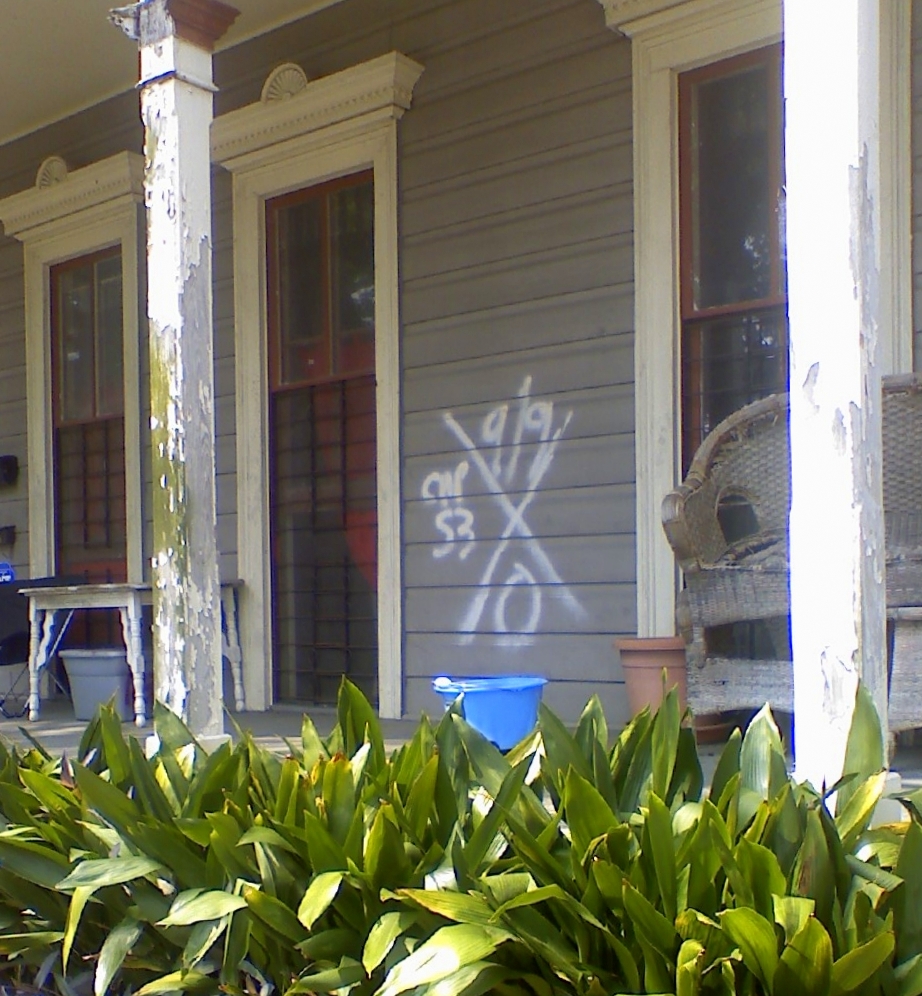
"Katina cross" marks a hurrican damage inspection.

“Katina cross” marks a hurrican damage inspection.

At first not much seems out of place, but after only a few blocks’ walk I come upon my first vacant house marked with the infamous X-code, or “Katrina cross”… which many have mistakenly taken for a demolition flag.

The markings in each of its quadrants actually record the date and time that the house was searched, the identity of the searchers, and a count of people found in the home…  whether alive or not.

Lafayette Cemetery, Garden District, New Orleans

Lafayette Cemetery, Garden District, New Orleans

The Lafayette Cemetery #2 is five blocks off St. Charles St., at the corner of Washington and Loyola, and even though I’ve seen the St. Louis cemetery – the heavyweight among New Orleans burials – on past trips I can’t resist walking its lanes to check out the stories told by its gravestones.

Back in the French Quarter, I stop by the Central Grocery for the world’s best-known muffaletta sandwich before wandering the streets.

Funeral procession, New Orleans

Funeral procession, New Orleans


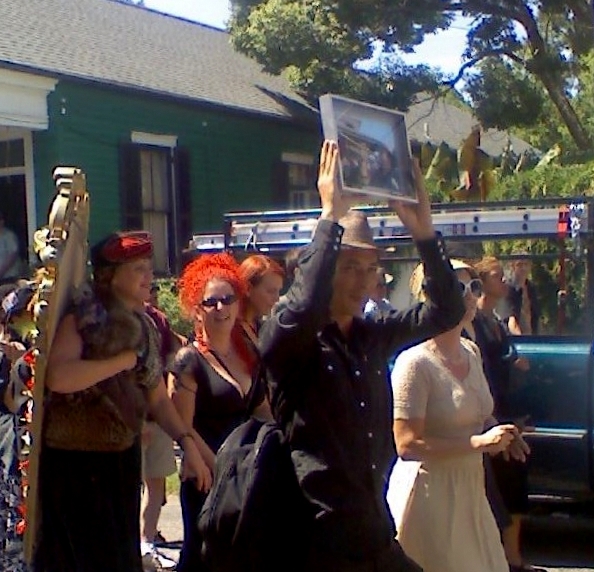
A procession led by a brass band appears, and I realize that I’m about to see my first New Orleans funeral parade.

Although such funeral parades were a widespread practice among both blacks and whites in New Orleans at the start of the 20th century, whites stepped away from the ritual in the years before World War I.


It was not until the 1960’s that it began to spread across ethnic and religious boundaries.

Funeral procession, New Orleans

Funeral procession, New Orleans


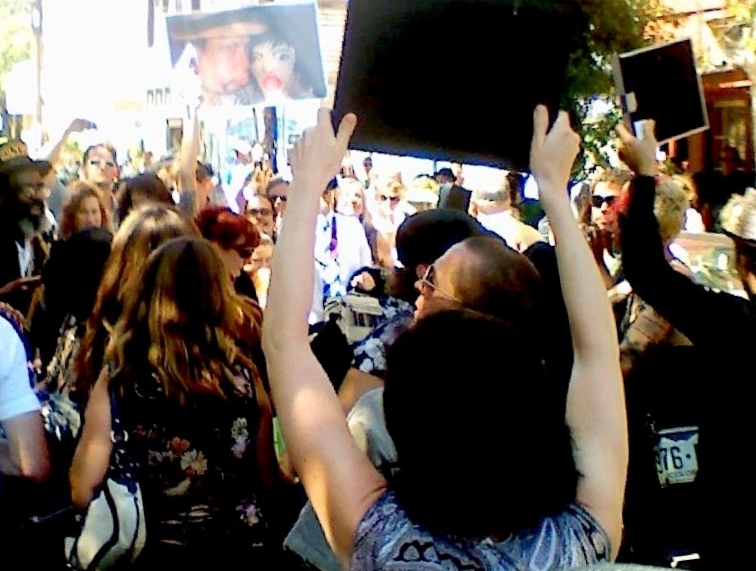
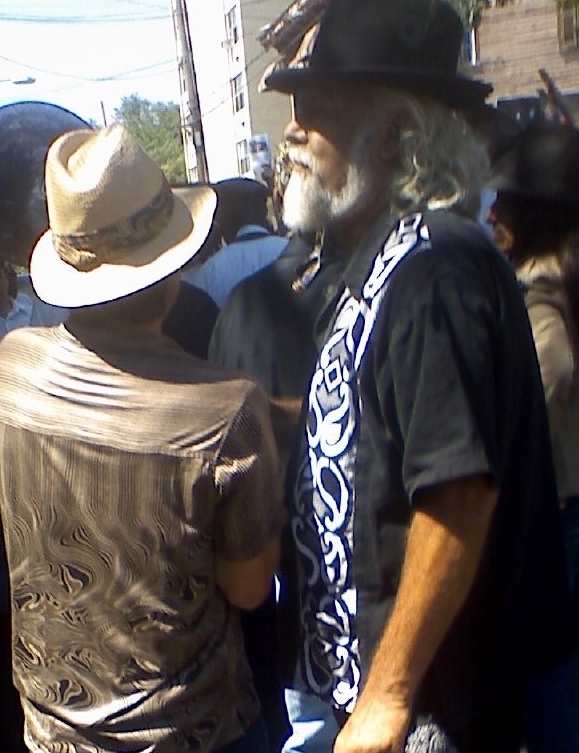
It feels far less like a funeral than it does a wake.


Funeral procession, New Orleans

Funeral procession, New Orleans


Many in the procession are dressed in black, and the mourners hold pictures of the deceased high.


Funeral procession, New Orleans

Funeral procession, New Orleans

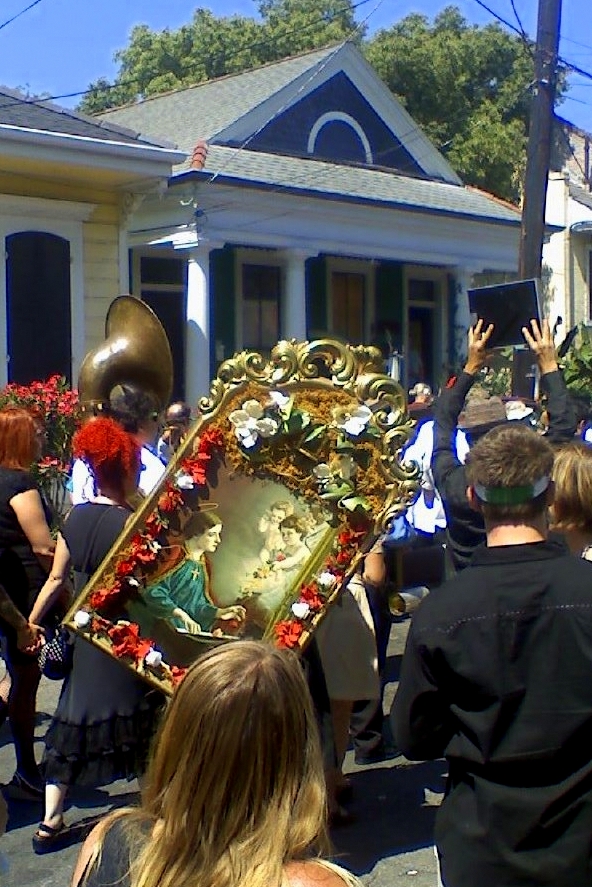
One woman walks, turtle-like, beneath the weight of an ornately framed painting of a saint with cherubs.  From time to time, one or another breaks into dance.

Funeral procession, New Orleans

Funeral procession, New Orleans

I never manage to learn the name of the deceased, but the rousing and worthy send-off tells me that he’s someone who will be sorely missed by many… and that I can cross one more item off my bucket list.

Tantalizing Tlaquepaque

There are countless galleries and artisans' workshops here.

There are countless galleries and artisans’ workshops here.

I’ve been traveling around Mexico since the mid-’70’s, when the local arts and crafts market was a lot like shopping in the former Soviet Union:  All of stores carried much of the same, mundane merchandise, and selection was limited.

A bookworm metal sculpture awaits the rainy season.

A bookworm metal sculpture awaits the rainy season.


In the years since, Mexican artisans have responded to cheaply-made foreign knock-offs of their work with new and original designs, materials, and fabrication techniques.

Their efforts have taken Mexican artisanship and artistry to a new level and made it highly sought after  in the global market place.


El Jardin Hidalgo plaza, Tlaquepaque

El Jardin Hidalgo plaza, Tlaquepaque


San Pedro Tlaquepaque – known to most simply as Tlaquepaque – is one of five municipalities (think NYC boroughs) that make up Metropolitan Guadalajara.


A vendor sells sugar cane treats.

A vendor sells sugar cane treats.

It’s long been the home of talented artists and craftsmen, and today their work is sold here in boutiques that would fit in nicely among the shops on Fifth Avenue, Rodeo Drive, or Magnificent Mile.


Find pottery in every imaginable size, shape, and color.

Find pottery in every imaginable size, shape, and color.

It’s not surprising that Tlaquepaque is best known for its fine pottery, since the town takes its name from indigenous Nahuatl words meaning “place above clay land”, but its artisans also produce elegant blown glass.

Shops here also sell work from all over Mexico including ceramics, wood and bronze sculpture, wood furniture, paper-mâché art, and embroidered cloth.

The variety of materials used to create these works is amazing

The variety of materials used to create these works is amazing

Tlaquepaque was a village in its own right long before the Spanish Conquest, but today retains its Spanish colonial character, and much of its architecture dates back to the 19th century.

It holds a special place in Mexican history, for it was here in a house on the corner of Independencia and Contreras Medellin Streets that the Plan de Iguala, which granted Mexico independence from Spain, was signed.


A mare awaits her next trip.

A mare awaits her next trip.

A statue of Miguel Hidalgo, father of Mexican independence, towers over the central El Jardín Hidalgo plaza.

During the San Pedro patron saint festivities in June, many street stalls and art sellers set up their wares in the plaza.


El Santuario de Nuestra Señora de la Soledad, Tlaquepaque

El Santuario de Nuestra Señora de la Soledad, Tlaquepaque

Adjoining the Jardin are the Santuario de Nuestra Señora de la Soledad (The Sanctuary of Our Lady of Solitude), and the Templo de San Pedro Tlaquepaque , which dates from the 1600’s.

A herd of while horses in metal explodes onto the street.

A herd of while horses in metal explodes onto the street.

Several of the main streets are closed to all but pedestrian traffic, which makes for unhurried strolls through cobblestone streets and alleyways, and plazas and gardens.


Work of Guadalajara artist Sergio Bustamante

Work of Guadalajara artist Sergio Bustamante

One of my favorite galleries is that of Sergio Bustamente, a Mexican artist and sculptor and a Guadalajara resident area since childhood.


First exhibited in Mexico City in 1966, his early work was done in paint and paper mache, but by the mid-1970s he was creating works – many reflecting animal themes – in wood and bronze.


He began designing furniture in 1979, and creating ceramic sculptures into the ’80’s.   Latest among his creations is a line of limited edition jewelry in which each piece is hand crafted and bears a certificate of authenticity.


Photography is prohibited in the gallery, but you can browse the full catalogue of Bustamante’s work  here.

Furniture and decorative items in wood are abundant in Tlaquepaque

Furniture and decorative items in wood are abundant in Tlaquepaque


Just down the block from the Bustament gallery you’ll find the Museo Regional de la Cerámica (Regional Ceramic Museum), which gives a great historical overview of this craft.

There are plenty of great dining choices here. Catty-cornered from the Jardin, the El Parián pavilion is home to a number of restaurants and bars.

You’ll also find a number of cafes and restaurants – many with patio seating – scattered throughout the district’s. Among these, I recommend Casa Fuerte.

El Abajeno, which has another location in Guadalajara on the Glorieta Minerva and had been serving locals for almost 50 years, is also popular.

Be advised, though, that breakfast offerings are limited, and restaurants here are most crowded on Sundays, when many of the shops are closed.

Sculpted metal mariachis silently serenade

Sculpted metal mariachis silently serenade

Expect at any of these to be serenaded by one the mariachi bands for which Tlaquepaque is well known.


Since many cultural activities here are schedule in the evenings, it’s worth making your visit  an overnight stay here.   

The area’s hotels are a short drive from Guadalajara’s city center, and there are a number of delightful B&B’s (click each for TripAdvisor ratings and photos ) including:

The new Plaza Forum Rio Nilo mall is located about 3 kilometers from El Jardin Hidalgo at the intersection of Avenidas Rio Nilo and García Barragán. 

Stores there include the Liverpool and Suburbia department stores, Best Buy, Office Max and a Cineplex.  Nearby you’ll also find Home Depot, WalMart, Auto Zone, Radio Shack.


Teatro de la Paz and Templo del Carmen, Plaza de las Armas, San Luis Potosí, Mexico

Teatro de la Paz and Templo del Carmen, Plaza de las Armas, San Luis Potosí, Mexico

San Luis Potosí sits astride the highway that links Saltillo and Monterrey to México City, and completion of the most recent link in the Highway 80 toll road has cut the drive from Guadalajara to just under four hours.

Museo Nacional de la Mascara, San Luis Potosí, Mexico

Museo Nacional de la Mascara, San Luis Potosí, Mexico

I’ve driven it dozens of times on the way to and from the States, stopping no longer than needed to grab a night’s sleep at a roadside hotel, but I’ve decided to begin seeing it one attraction at a time with each new trip.


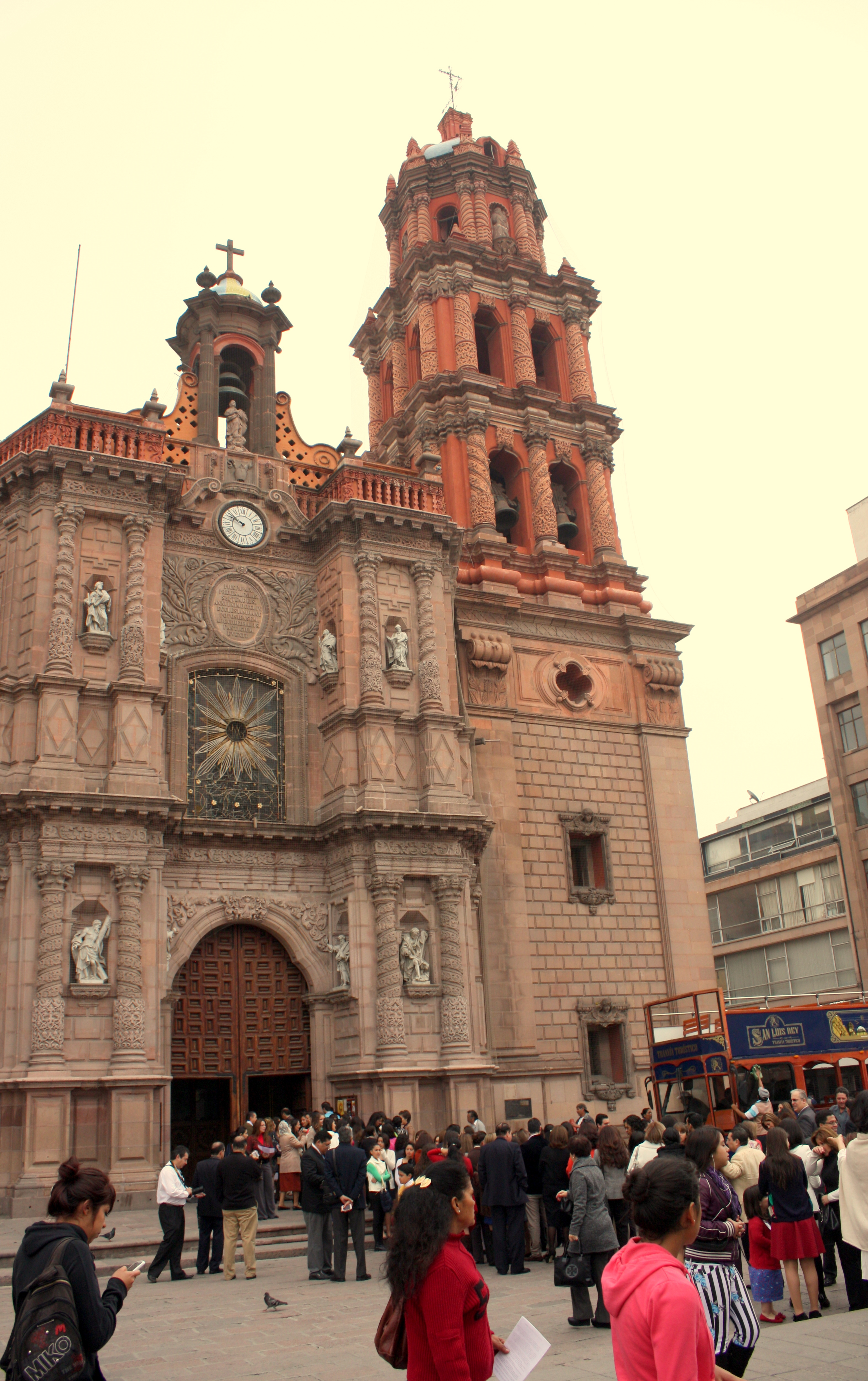
Catedral Potosina, Plaza de Armas, San Luis Potosí, Mexico.

Catedral Potosina, Plaza de Armas, San Luis Potosí, Mexico.


The It was impossible to resist choosing the Museo Nacional de la Mascara – the National Mask Museum – as my first stop.  Its collection numbers more than 25 thousand indigenous masks and dance costumes, most of Mexican origin.  There are also a few Asian masks, mainly from India.

San Luis is one of México’s colonial Silver Cities, and mines in the surrounding mountains were for two hundred years some of the nation’s most prolific producers of minerals and precious metals.

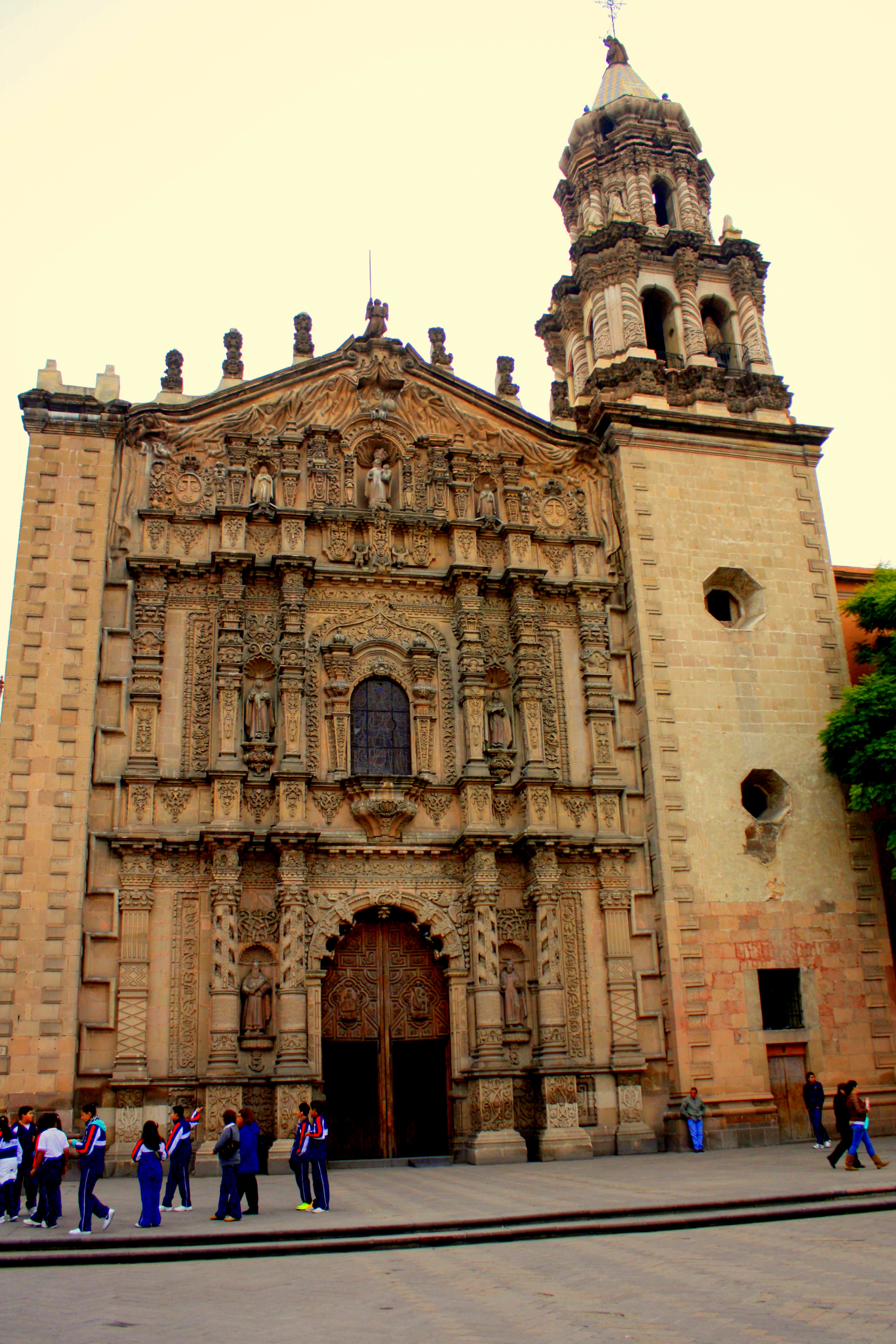
Belltower of Templo del Carmen, Plaza de las Armas, San Luis Potosí, Mexico

Belltower of Templo del Carmen, Plaza de las Armas, San Luis Potosí, Mexico

No surprise, then, that Spanish added the word Potosí  – ” fortune” – to the city’s name when silver was first discovered, or that the image of a mine entrance flanked by two silver and two gold bars appears on the city’s coat of arms.

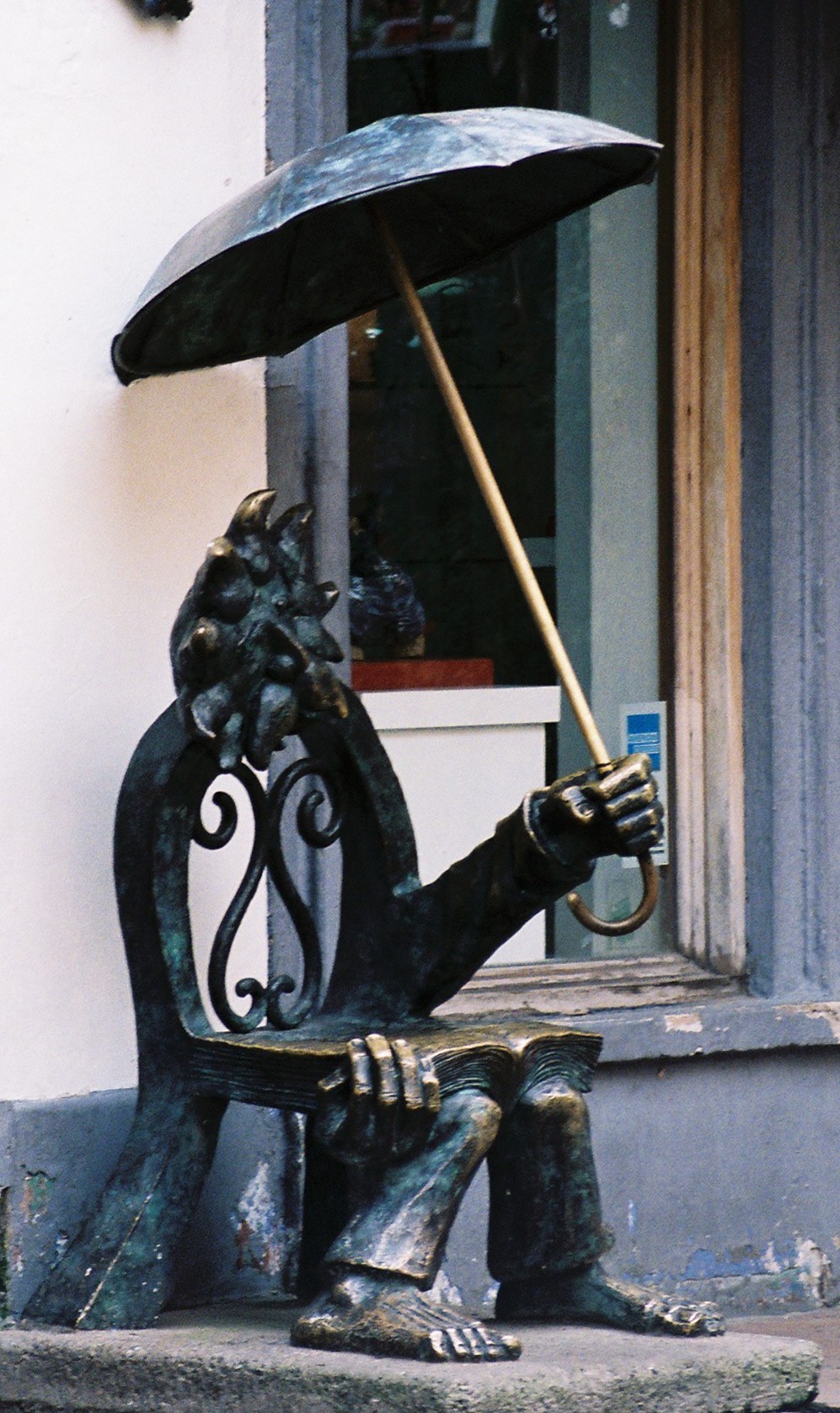
Bronze scultpture of hooded penitent, Centro Historico, San Luis Potosí, Mexico

Bronze scultpture of hooded penitent, Centro Historico, San Luis Potosí, Mexico

Today mining only accounts for a fraction of the local economy.  Only the deteriorating remnants of the American Smelting and Refining Company’s offices in the city’s Colonia de Los Gringos, and ghost towns like  Cerro de San Pedro in the surrounding mountains testify to mining operations that continued until the Second World War.

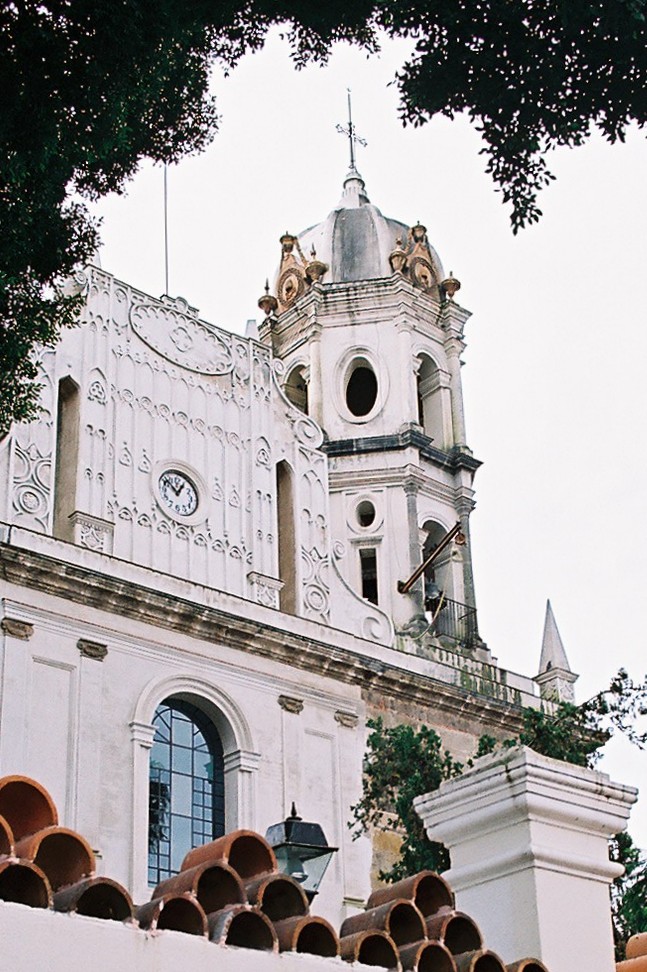
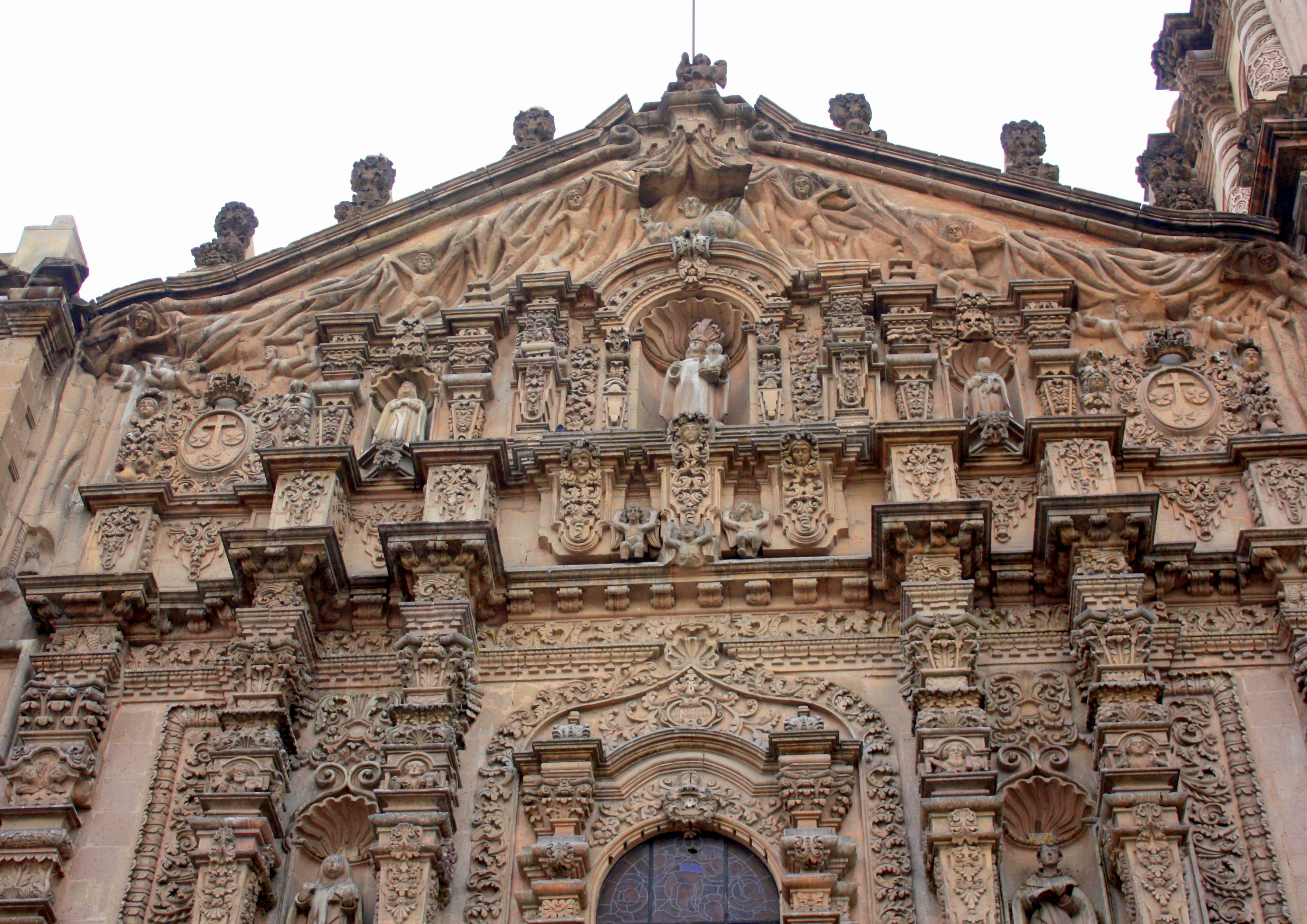
Templo del Carmen, Plaza de las Armas, San Luis Potosí, Mexico

Templo del Carmen, Plaza de las Armas, San Luis Potosí, Mexico

The metro area is now home to more than 2 million people, and mining has now been replaced by manufacturing, services, and  agriculture.

Many foreign companies have been attracted its new and massive multi-modal logistics center.  San Luis is the only inland port in Mexico to be designated a Free Trade Zone.


Facade detail, Templo del Carmen, San Luis Potosí, Mexico

Facade detail, Templo del Carmen, San Luis Potosí, Mexico


Founded only twenty-five years after the Spanish conquest of México, San Luis is one of the nation’s oldest cities and one rich in historical tradition.


In the 1860’s, it was for a time the seat of President Benito Juárez’s government during the French occupation of México.


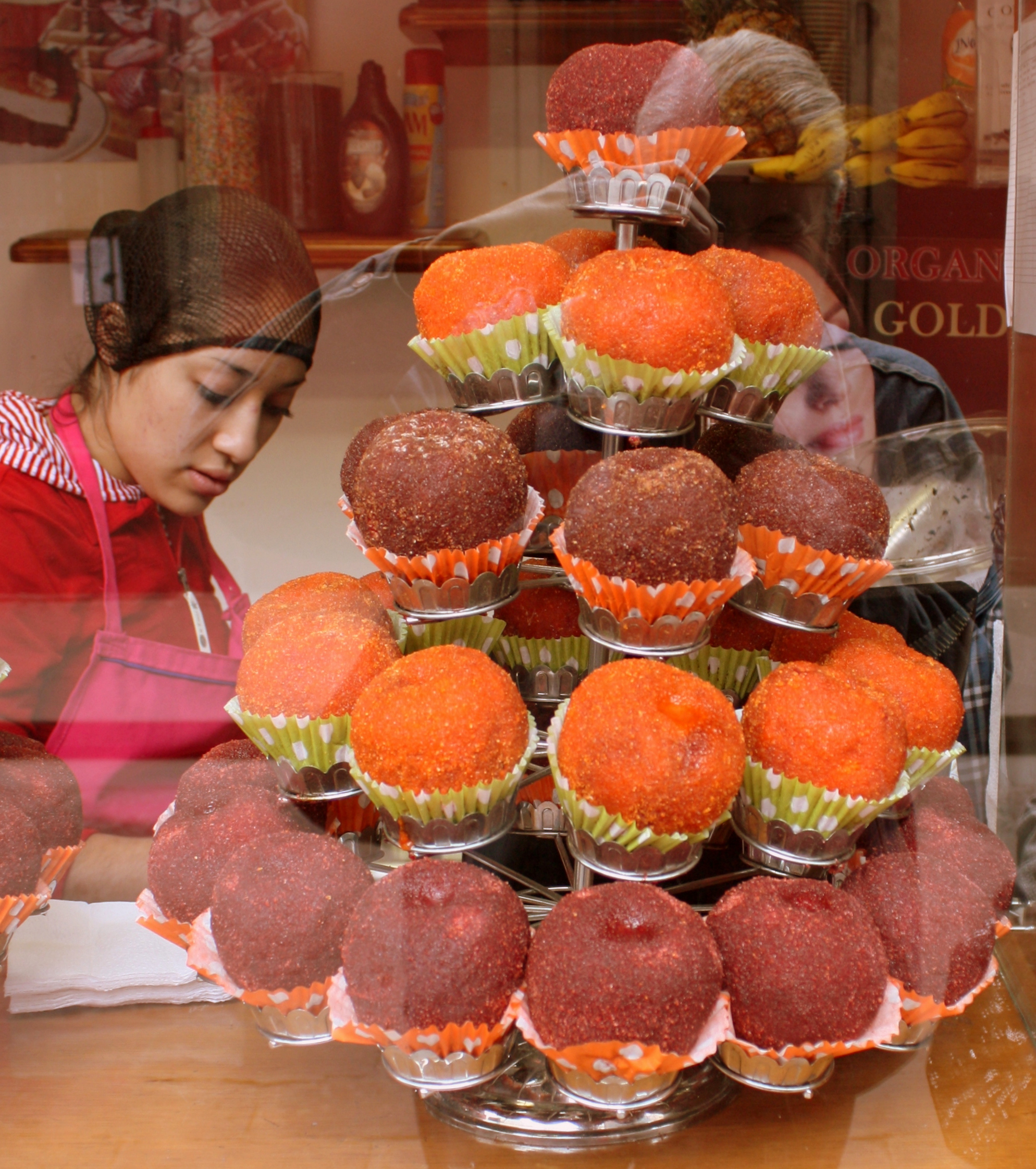
Shop window confections, Centro Historico, San Luis Potosí, México

Shop window confections, Centro Historico, San Luis Potosí, México

Fifty years later, Mexican patriot and president Francisco Madero was held there under arrest until his escape in 1910, when he called his countrymen to revolution with his Plan of San Luis.

The colonial center is home to many beautiful and historically significant colonial buildings, and has been closed off to vehicular traffic.

Teatro Alameda, San Luis Potosí, México

Teatro Alameda, San Luis Potosí, México

Only a couple of miles off the expressway,  I park curbside at the Alameda Central, a public garden park that covers more than ten city blocks.


From there it’s a walk of just one block past the Art Deco Cine Alameda to the Plaza del Carmen, and from there only two blocks further to the Plaza de las Armas.

Marti Palace ceiling detail, San Luis Potosí, Mexico

Marti Palace ceiling detail, San Luis Potosí, Mexico

The museum is housed on the Plaza del Carmen in the magnificent “Marti Palace,” which was completed in 1897 as the residence of a prominent landowner and miner.

Marti Palace interior, San Luis Potosí, Mexico

Marti Palace interior, San Luis Potosí, Mexico

After it passed from family ownership, the building was home to various federal government agencies until 1982, when it became the home of dance masks donated for public viewing by engineer and collector Victor Jose Moya.

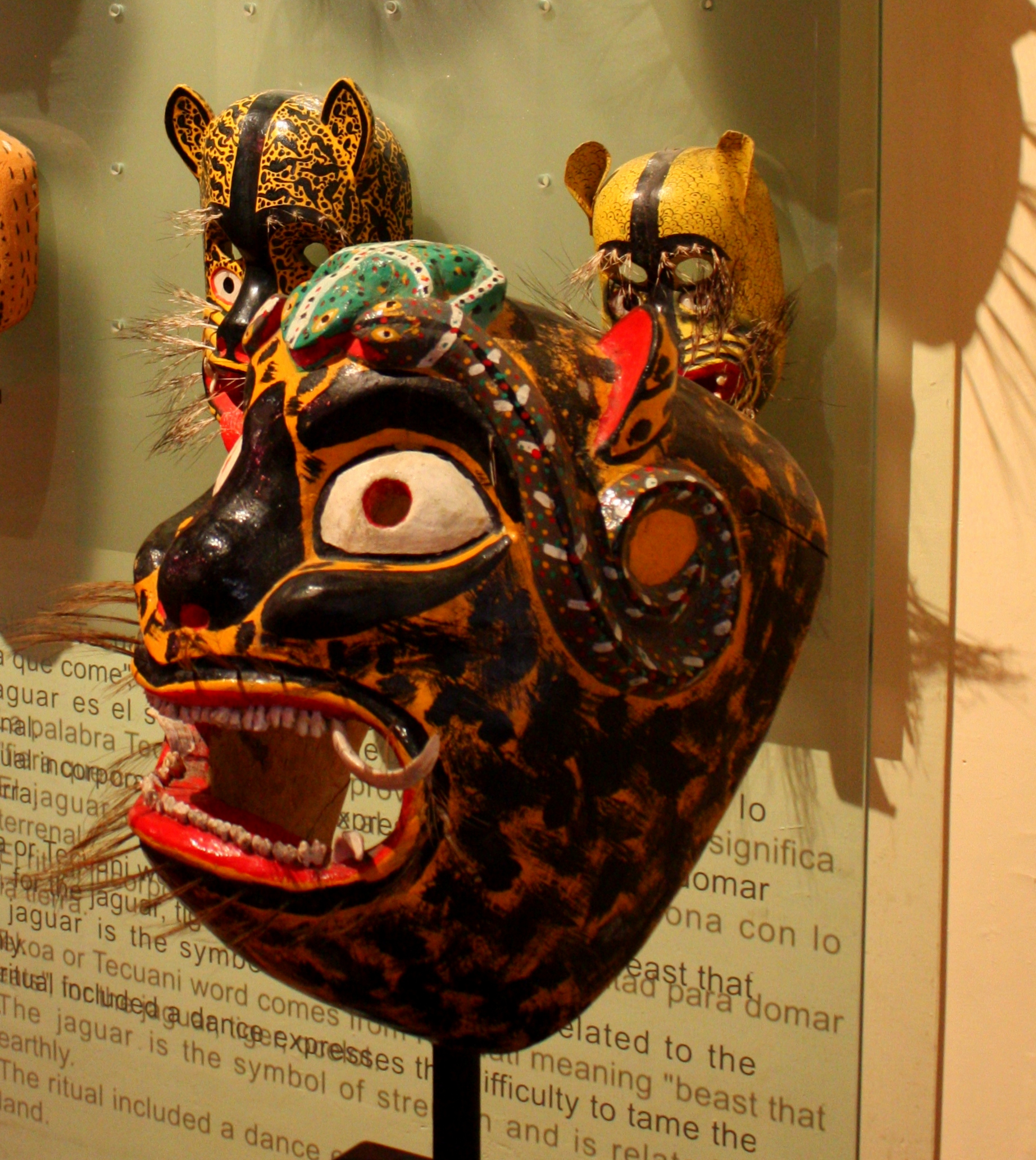
Museo Nacional de la Mascara, San Luis Potosí, Mexico

Museo Nacional de la Mascara, San Luis Potosí, Mexico


The Spanish tried unsuccessfully to ban the use of masks, which was a well-established part of ritual life in Mexico when they arrived.

Museo Nacional de la Mascara, San Luis Potosí, Mexico

Museo Nacional de la Mascara, San Luis Potosí, Mexico

Most are made of wood, but it’s not uncommon to find others made from leather, wax, bone, cardboard, or paper mache.


Their uses are varied, but they are almost always a part of ceremony and ritual, appearing most often in theatrical dance and processions.

Museo Nacional de la Mascara, San Luis Potosí, Mexico

Museo Nacional de la Mascara, San Luis Potosí, Mexico

Priests used masks to incarnate deities, and warriors wore masks of predators like the jaguar and eagle warriors in the belief that they would be imbued with the animal’s strengths.

Museo Nacional de la Mascara, San Luis Potosí, Mexico

Museo Nacional de la Mascara, San Luis Potosí, Mexico

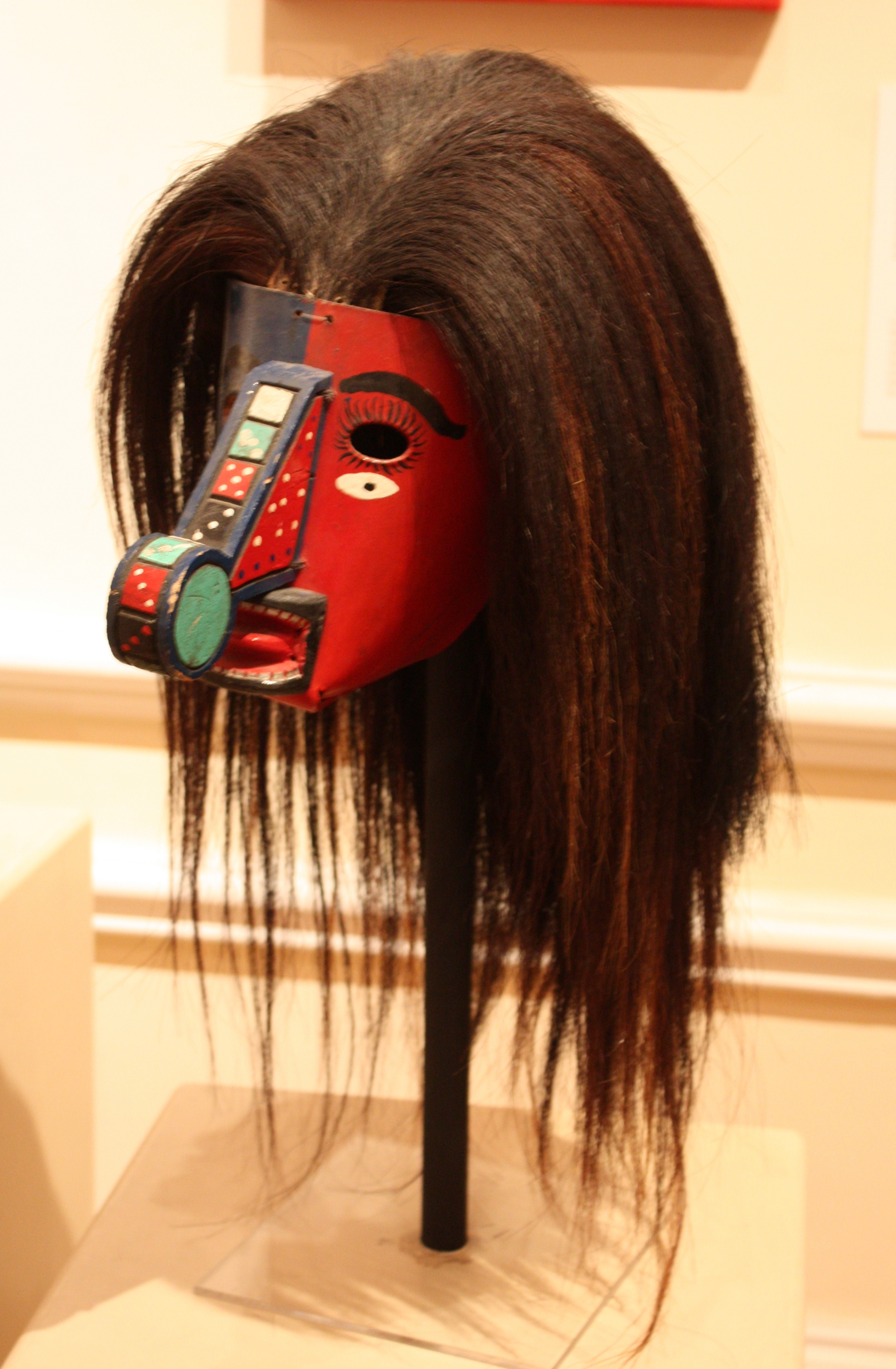
Since Mexican Independence, mask traditions have continued to evolve into forms that depict Mexico’s history and popular culture.

Museo Nacional de la Mascara, San Luis Potosí, Mexico

Museo Nacional de la Mascara, San Luis Potosí, Mexico

It’s taken me less than half a day to walk the Centro Historico and the museum, and it’s been a delightful break from a long road trip.

For the next trip I’ve set my sights on the city’s The Museo del Centro Taurino Potosino  (Potosí Bullfighting Museum), and its collection of bullfighting photographs, posters, clothing and equipment that once belonged to famous matadors.