Archive for February, 2013


Gone full circle

Cajititlan Aztec ceremony 2012-02-02 04

The Jalisco villages of Cajititlan and San Juan Evangelista face each other across a couple of kilometers of lake, but on the day of my visit they’re also separated by 300 years of Mexican history.

I can’t take credit for planning this trip to Cajititlan on the Día de la Candelaria (Candlemas) but – as these photos show – the timing couldn’t have been more fortuitous.
Cajititlan Aztec ceremony 2012-02-02 01


Candlemas observes the Biblical presentation of the infant Jesus at the temple in Jerusalem 40 days after his birth, but here it’s also the last observance of the Christmas holiday season.

Figures of the baby Jesus first displayed in Nativity scenes on Christmas Eve are given presents from the Magi on el Día de los Reyes (King’s Day, January 6).

On the Día de la Candelaria (February 2) they’re dressed in fine clothes and presented at the church for blessing.  Family and friends also traditionally gather on this day to eat tamales.
Cajititlan Aztec ceremony 2012-02-02 02

In Mexico, this holiday is a follow-on to Kings’ Day, when children receive gifts and families and friends break share generous loaves of Rosca de Reyes, a special sweet bread with a figurine hidden inside.

Whoever finds the figurines in their portion must host a party on the Día de la Candelaria.

Cajititlan Aztec ceremony 2012-02-02 03


We arrive in Cajititlan to find streets jammed with cars that surround blocks of the city center cordoned off for a great street festival.

Cajititlan Aztec ceremony 2012-02-02 06

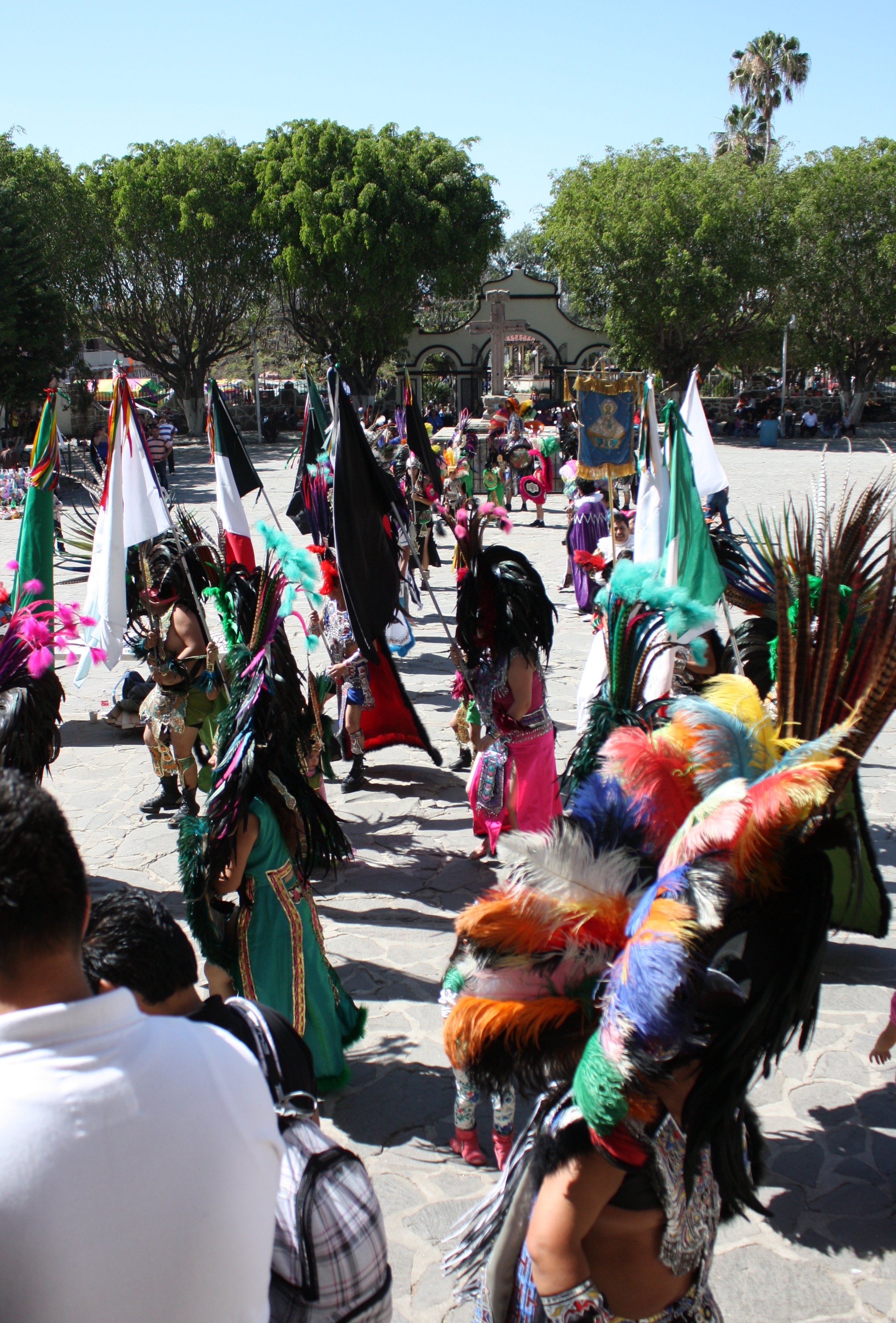
On the approach to the central plaza and the local parish church, the sound of drumbeats grows ever louder.

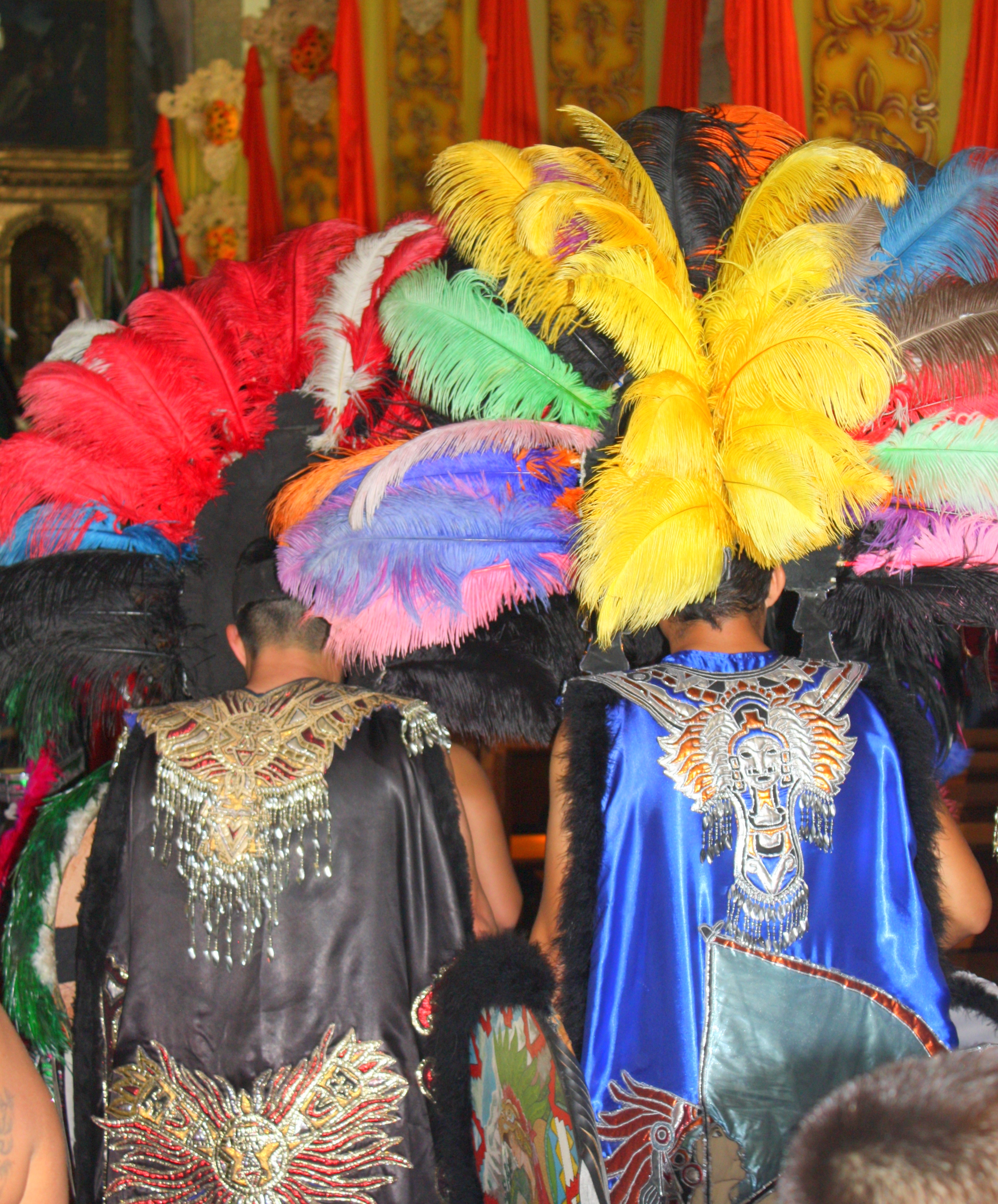
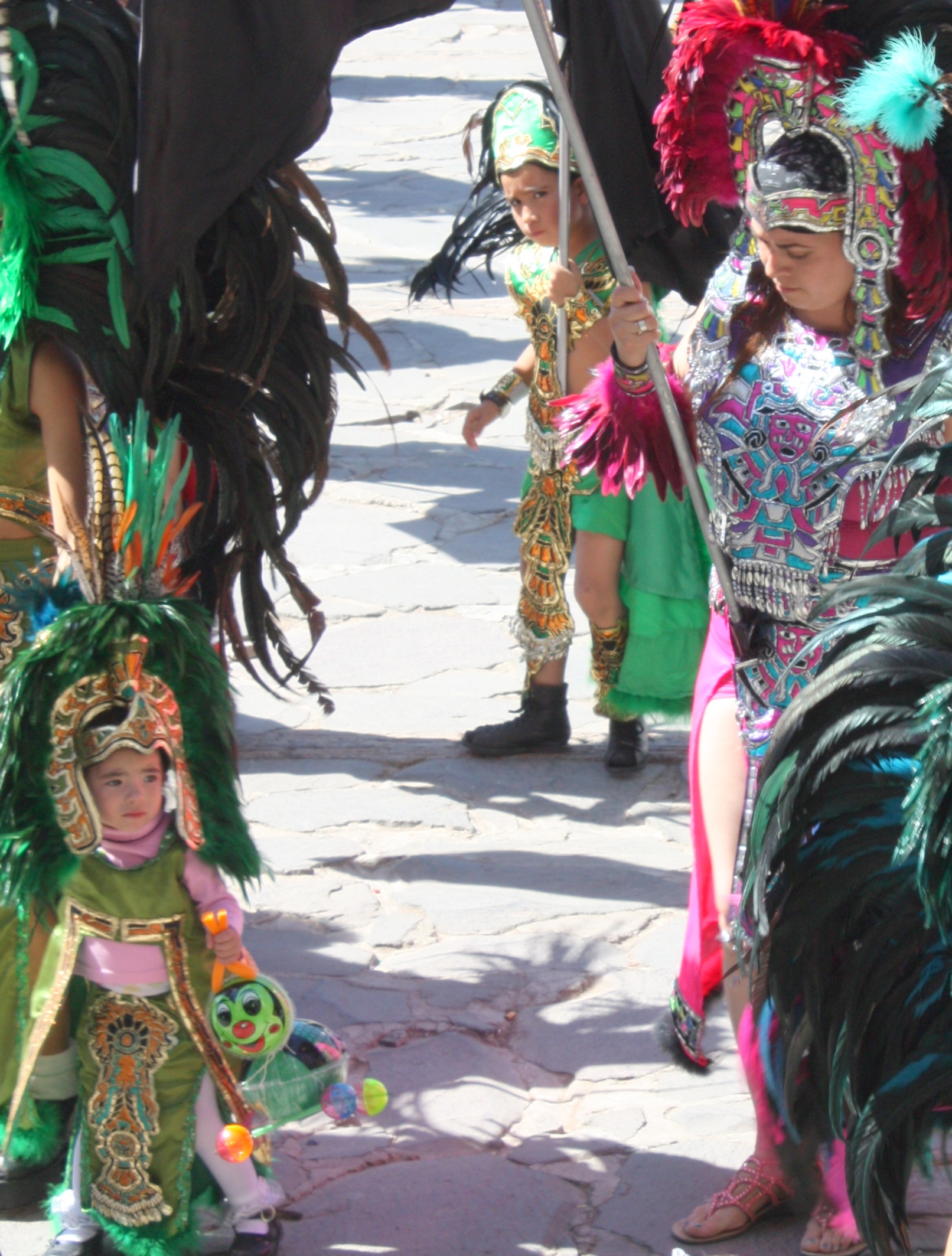
The narrow street opens suddenly onto the plaza, where at least 40 dancers in full Aztec ceremonial garb move about in intricately choreographed lines.

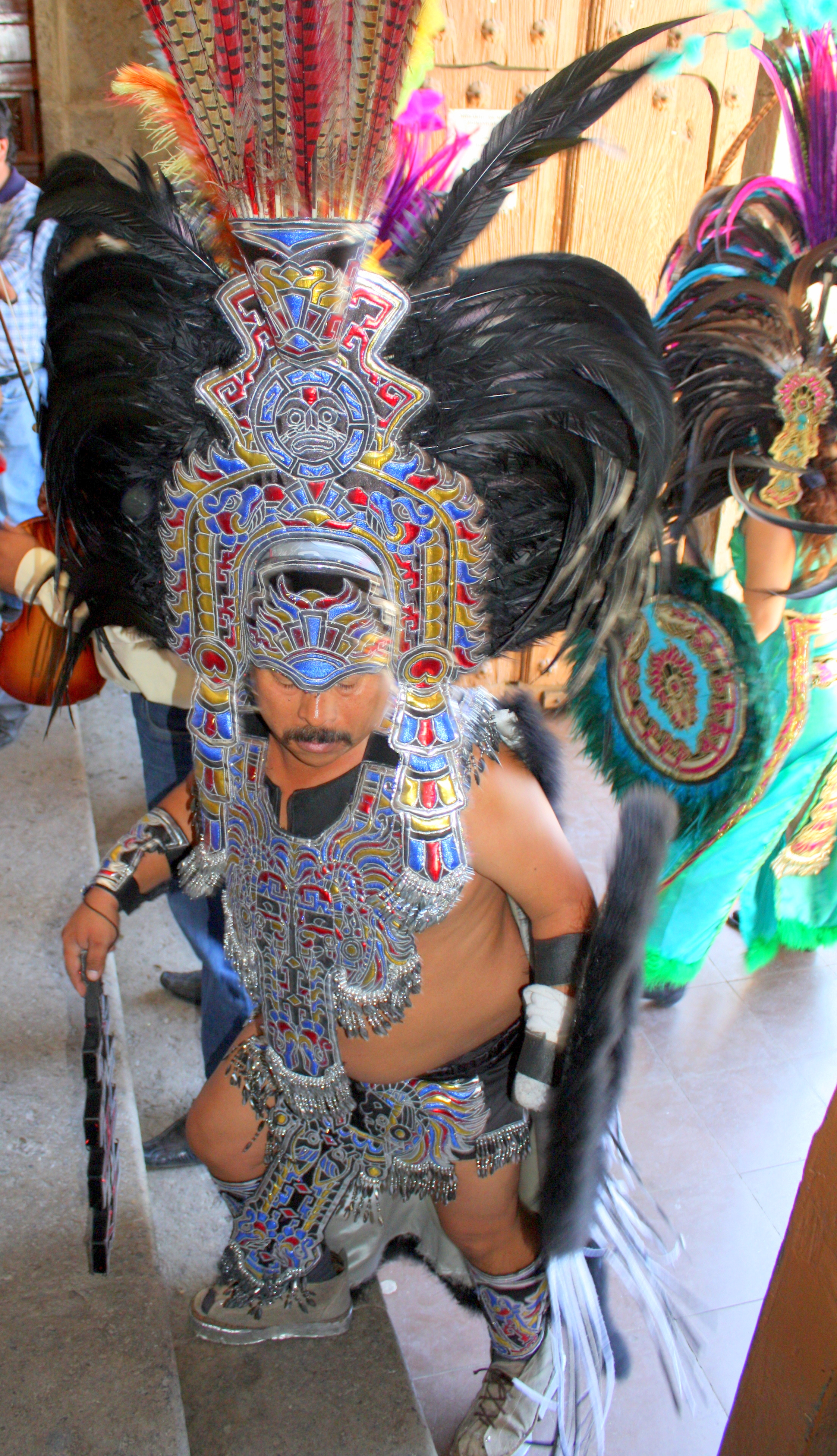
The costumes are elaborate and the pageantry is stunning. The dancers are men and women of all ages, and even a few children participate.

Cajititlan Aztec ceremony 2012-02-02 05

As I draw closer I can hear faint strains of a violin, and in a moment see a fiddler walking among the dancers, an impresario guiding the procession toward the church.

Cajititlan Aztec ceremony 2012-02-02 09


The church is packed as the procession makes its way up the central aisle toward the altar, the drums continuing their steady beat.

Cajititlan Aztec ceremony 2012-02-02 08

Cajititlan Aztec ceremony 2012-02-02 10

Cajititlan Aztec ceremony 2012-02-02 11

It’s startling to see this spectacle of pagan-rooted pageantry occupy a place of Christian worship.

Cajititlan Aztec ceremony 2012-02-02 12

As as the ceremony ends and the procession backs slowly down the aisle and back into the sun-washed plaza, though, its leader makes the sign of the cross and kisses his fingers.

I study the dancers more closely, and can see crosses hanging around the necks of many.
Cajititlan Aztec ceremony 2012-02-02 07

Nearly 500 years after the Conquest, and 400 years after native artisans surreptitiously integrated icons of their native religion into the design of the church in nearby San Juan Evangelista, native tradition has re-emerged as such an integral part of mainstream Catholic ceremony in Mexico that it’s no longer possible to imagine one without the other.

Things have, indeed come full circle.


Read the 3 other posts about my trip around Lake Cajitlan:…
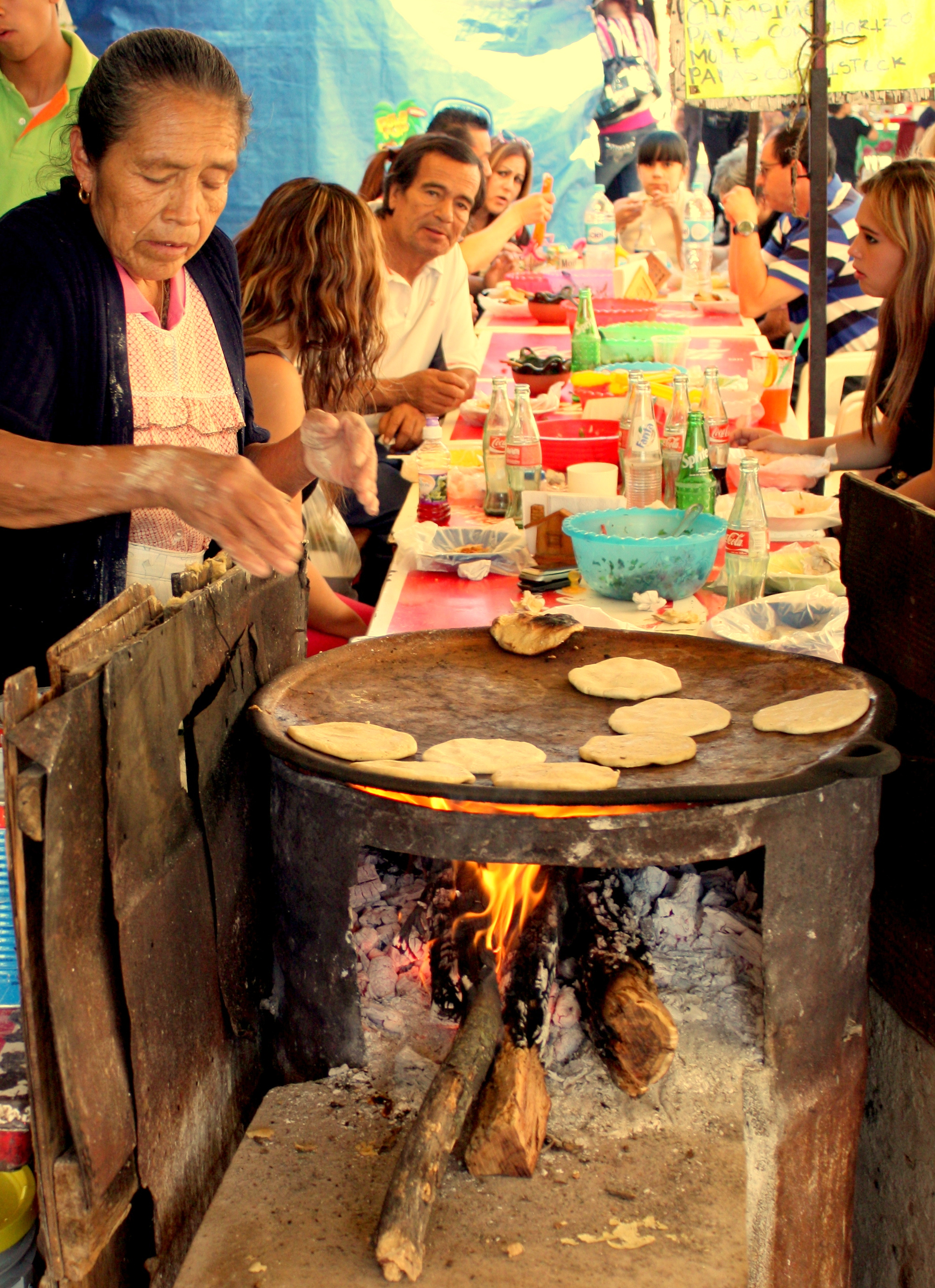
Made-from-scratch tortillas on a wood-fired, clay comal

Made-from-scratch tortillas on a wood-fired, clay comal

No less than for county fairs north of the border there’s both a sameness to Mexican village fiestas and yet always some feature that uniquely ties each to a single place.


Cajititlan’s fiesta del Día de la Candelaria proves itself no exception.


As the ceremony on the plaza ends we plunge into a street fair which begins at its edge, lining the curbs of a dozen or more square blocks that slope gently down to the lake.


Canopied booths line both sides of the cobblestone streets and the crowd threads its way through the narrow passages between.

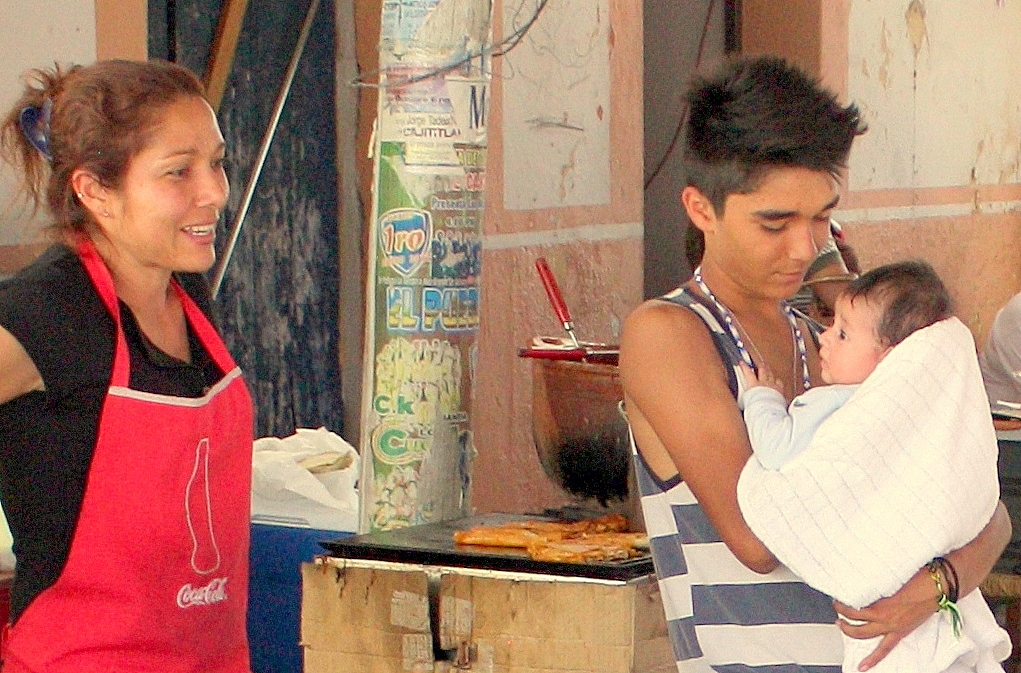
A young fathers cradles his infant son

A young fathers cradles his infant son


The crowd is a mix of villagers and day-trippers from nearby Guadalajara; I seem to be the only gringo within eyesight and the sense of total immersion is a refreshing break from gringi-fied Ajijic.

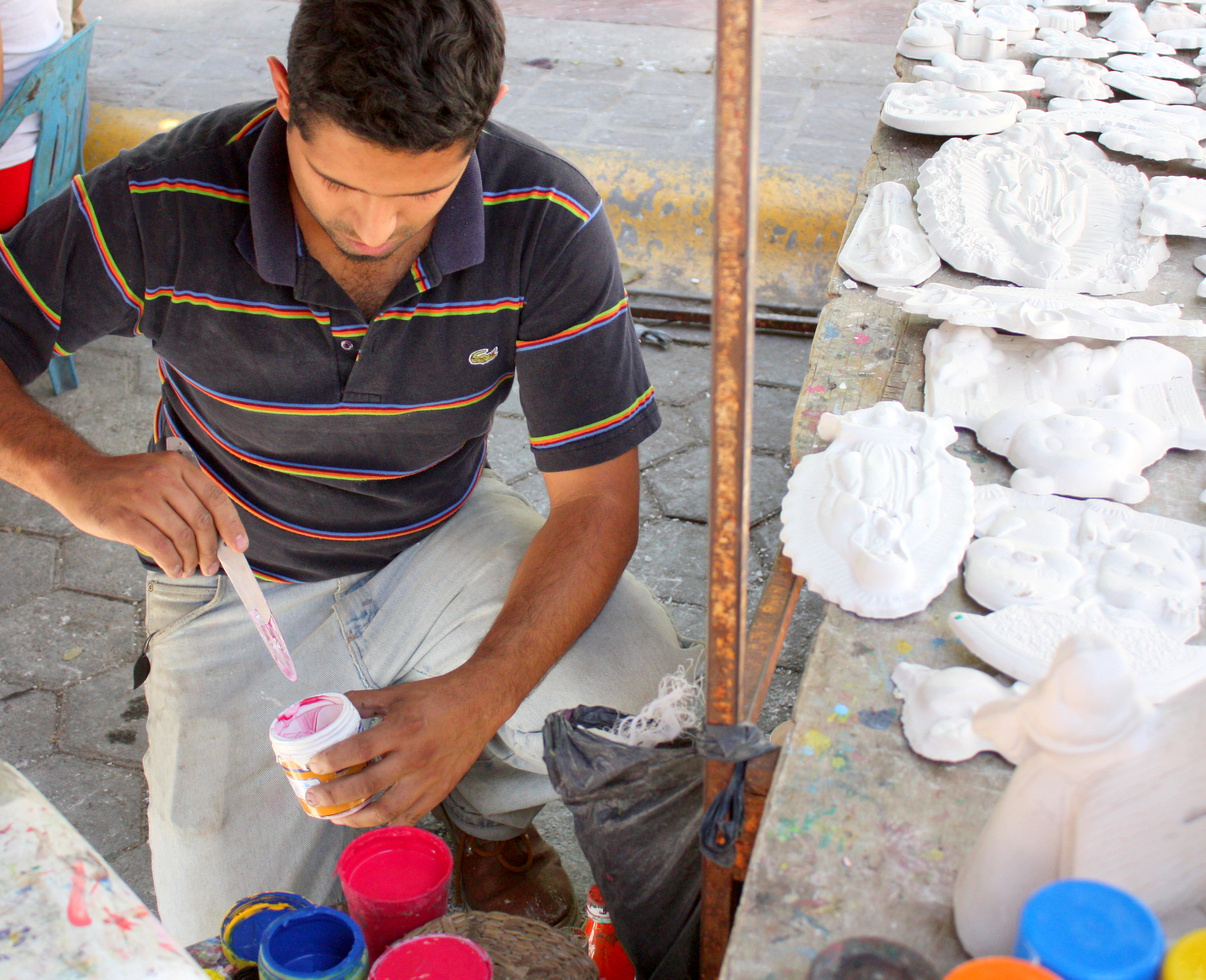
An artisan prepares to apply color to plaster masks

An artisan prepares to apply color to plaster masks


Market stalls feature the predictable mix of street food, artisan crafts, household items, bootleg CD’s and DVD’s, and clothing.

Diners sit family-style at long tables where women hand-form tortillas from masa ground on-the-spot using stone metates and grilled on clay comals over wood fires.

Tacos don’t get any fresher than this!

Roscas de Reyes, King's Day bread

Roscas de Reyes, King’s Day bread


The very last of the Roscas de Reyes – the King’s Day sweet bread – sit forlorn on a baker’s rack in their final day-old sale of the year.

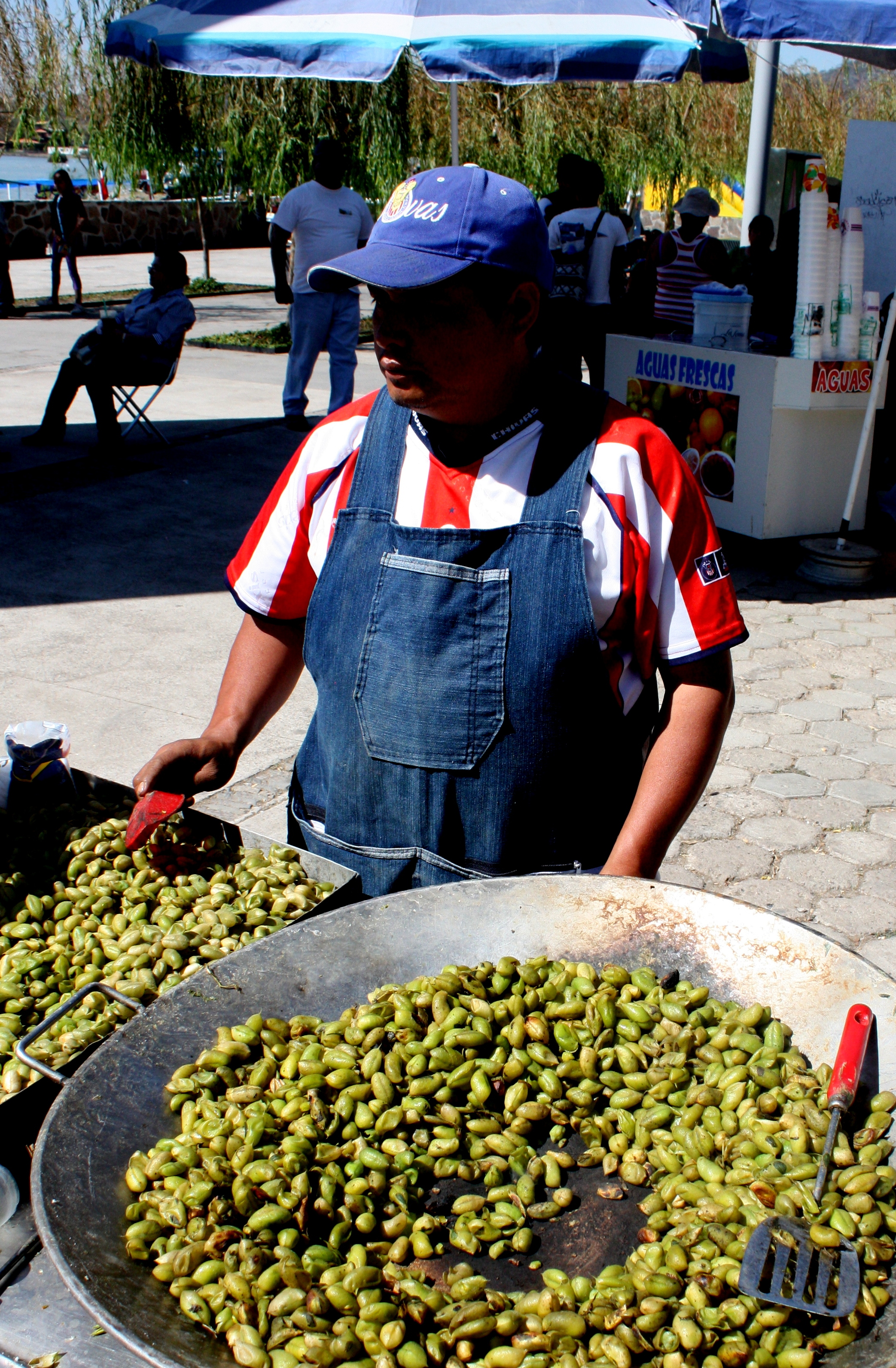
A street vendor cooks unshelled garbanzo beans

A street vendor cooks unshelled garbanzo beans


We pass a centuries-old building that once housed a convent.  It’s closed to the public on this holiday, but I make a mental note to see it on a future visit.


A street vendor cooks bright, unshelled garbanzo beans over a gas-fired griddle.

I buy a small bag and pop the steaming beans free of their pods, eating them by handfuls.  Delicious!

Corn roasts over glowing embers curbside.


Freshly roasted corn cool on a curbside grill

Freshly roasted corn cool on a curbside grill


Under expansive canopies pitched in the soft breeze along the malecon at the water’s edge, a guitarist strolls among families singing ranchera as his listeners share the season’s traditional tamales.

Families share tamales under a canopy along the malecon

Families share tamales under a canopy along the malecon

Weekenders depart from the pier on Cajititlan's malecon

Weekenders depart from the pier on Cajititlan’s malecon


At the pier along the malecon families board small launches for leisurely cruises on the lake.

A musician plays for the crowd on Cajititlan's malecon

A musician plays for the crowd on Cajititlan’s malecon

Nearby a musician absently fingers the keyboard of his accordion, squeezing out tunes so often played that his fingers move unthinkingly over the buttons and keys.

Parish church on the plaza in Cajititlan

Parish church on the plaza in Cajititlan

I can’t help but smile in satisfaction as we retrace our steps to my parked car, passing the now deserted plaza.

This fiesta has been a perfect ending to a perfect day spent driving the villages around Lake Cajititlan.

The bright lights of cosmopolitan Guadalajara are but 30 minutes’ drive away, but here in the country villages along the lake traditional Mexico is alive and well.


Read other posts about my trip around Lake Cajititlan:…
Mexico’s coded past

Cemetery and church in San Juan Evangelista

Cemetery and church in San Juan Evangelista

I’d have counted it a very rewarding day if it ended with my visit to the studio of barra (clay working) maestro Martín Ibarra Morales in Jalisco’s San Juan Evangelista.

I turned out instead that the studio visit was but a taste of what would soon reveal itself along the shores of Lake Cajititlan.

Spanish soldiers and Catholic missionaries arrived here on horseback within 50 years of Columbus’ first arrival in the New World and within 10 after Tenochtitlan (now Mexico City) fell to Cortes, pressing toward the Pacific Ocean and ever in search of more gold.

From its first expansion beyond the boundaries of the Roman Empire, Catholicism has time and again promoted conversion of pagan peoples by incorporating aspects of their religions into its own imagery and rituals.

In few places is its chameleon bent as widely evident as in Mexico, and nowhere in my experience as pervasively as in San Juan Evangelista.

San Juan Evangelista 2013-02-15 02 stone arches

Stone arches at the church of San Juan Evangelista

Martín guides me and my Mexican artist and friend Jesús López Vega across the street to where a church dating from the 1600’s stands adjacent to a graveyard.

San Juan Evangelista 2013-02-15 03 church facade

Front facade, church of San Juan Evangelista

Like many buildings of the period in this part of the world, this church was constructed by indigenous craftsman under the direction of priests.

Martín explains the facade imagery to Jesús.

Martín explains the facade imagery to Jesús.

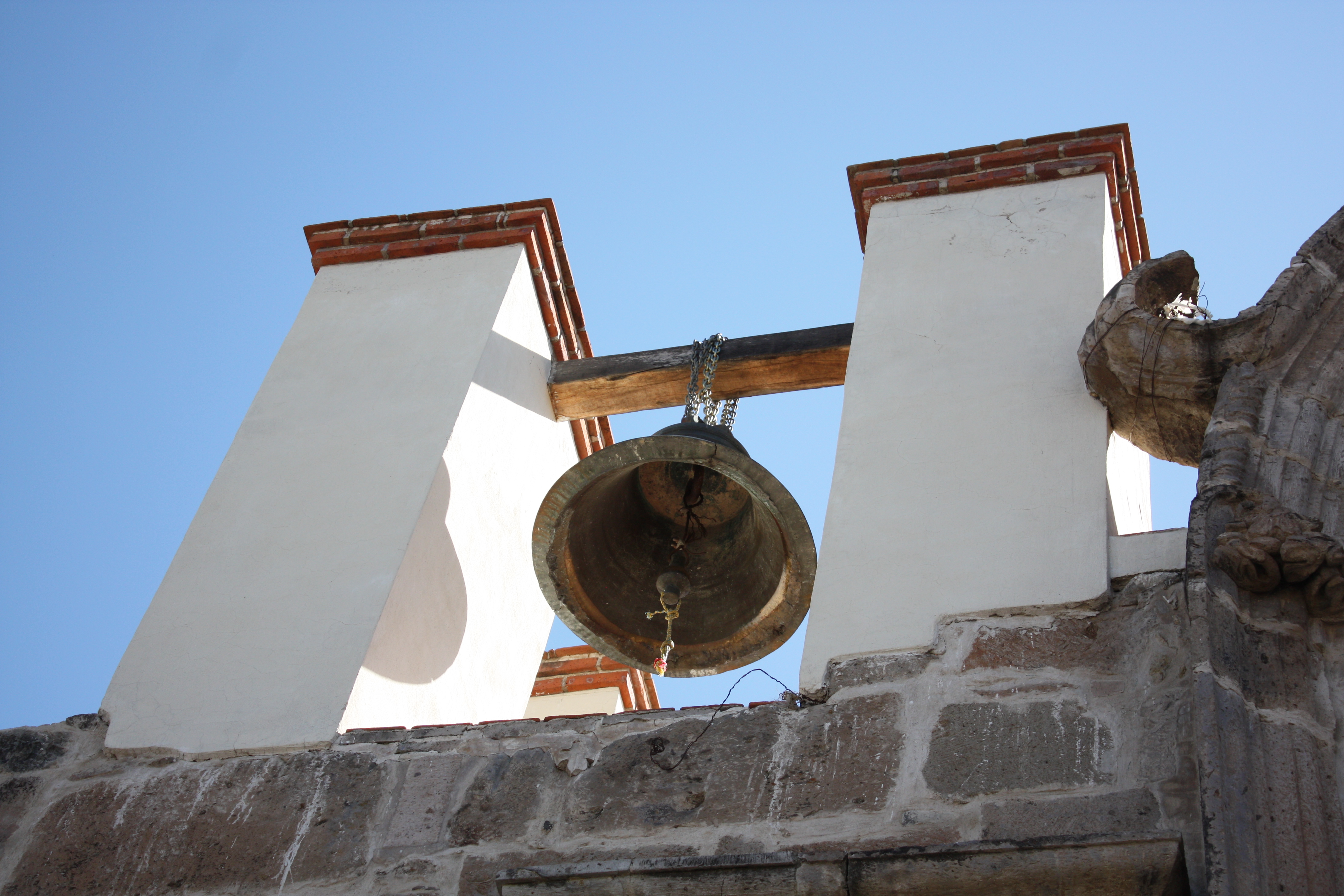
Church belltower in San Juan Evangelista

Church belltower in San Juan Evangelista

To the untrained eye it looks like many Spanish Catholic churches, but Martin knows better and he shares his insights as he points out features of the building’s architectural detail.  It becomes quickly apparent that things are not what they first might seem.

If the priests believed that ministrations backed by Spanish arms would quickly and irrevocably convert native peoples to Christianity, they were indulging far more in wishful thinking than they were ever to know.

Detail of church facade, San Juan Evangelista

Detail of church facade, San Juan Evangelista

Hidden within the elaborate stone façade are icons of the native religion, speaking in seditious code to a people conquered, but undefeated.

In Christian tradition the serpent is a personification of the Devil, but in native religion the plumed serpent is a deity that archeologists say first appeared in Mexico about the time that Christ was born.

Martín sketches in the dust

Martín sketches in the dust

Soon the artist in Martín can resist no longer and he stoops to reproduce the façade’s scrollwork in the dust, showing how its unusual double-scroll pattern is actually a serpent.

Doorway in carved cantera stone

Doorway in carved cantera stone

Feline faces that adorn drain spouts just below the roof line high above are decidedly un-Christian images of jaguars.

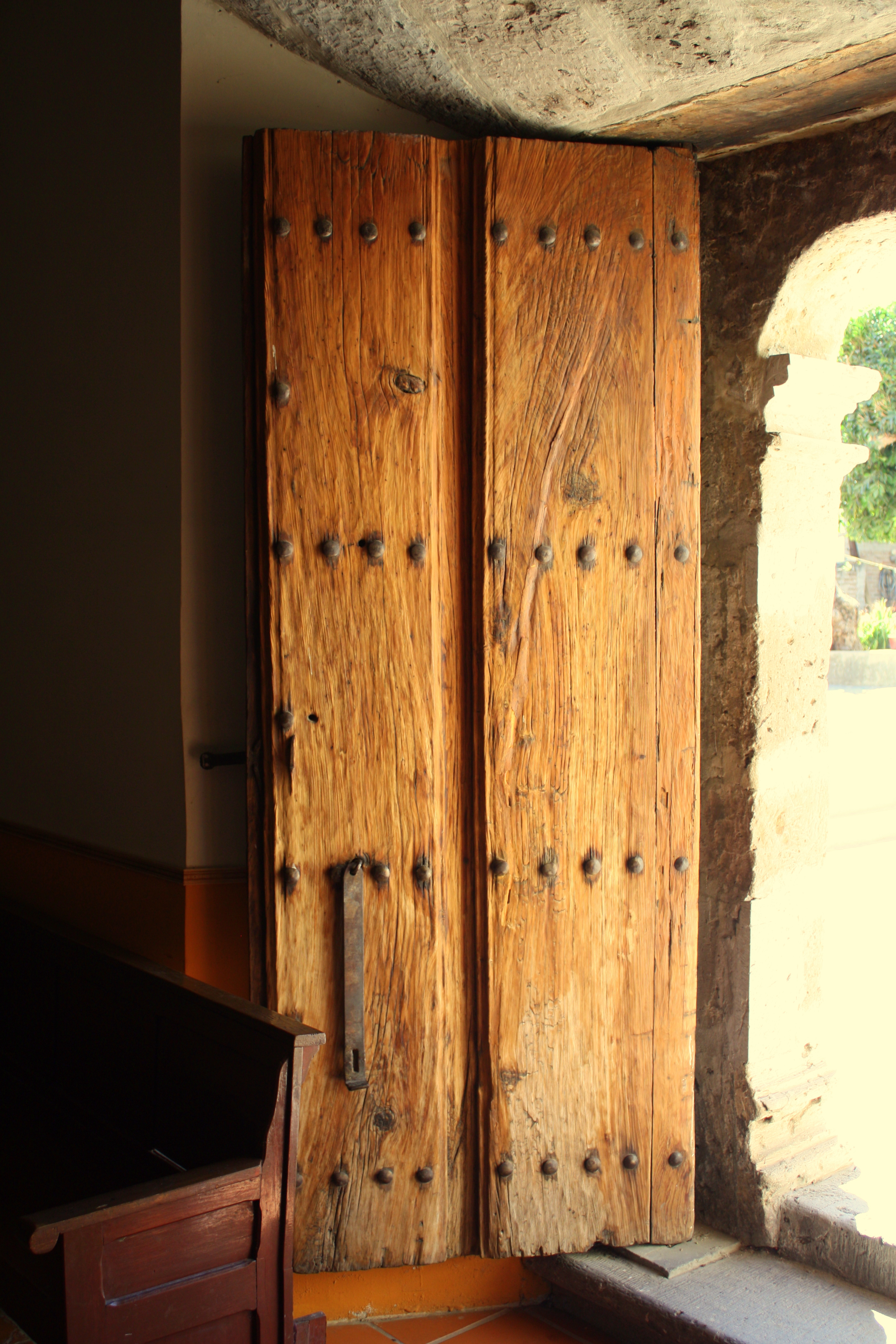
Worn and weathered church door, San Juan Evangelista

Worn and weathered church door, San Juan Evangelista

We enter the church through a side door that shows every sign of being part of the original construction, its edge worn smooth by worshipers’ hands over the course of more than 300 years.

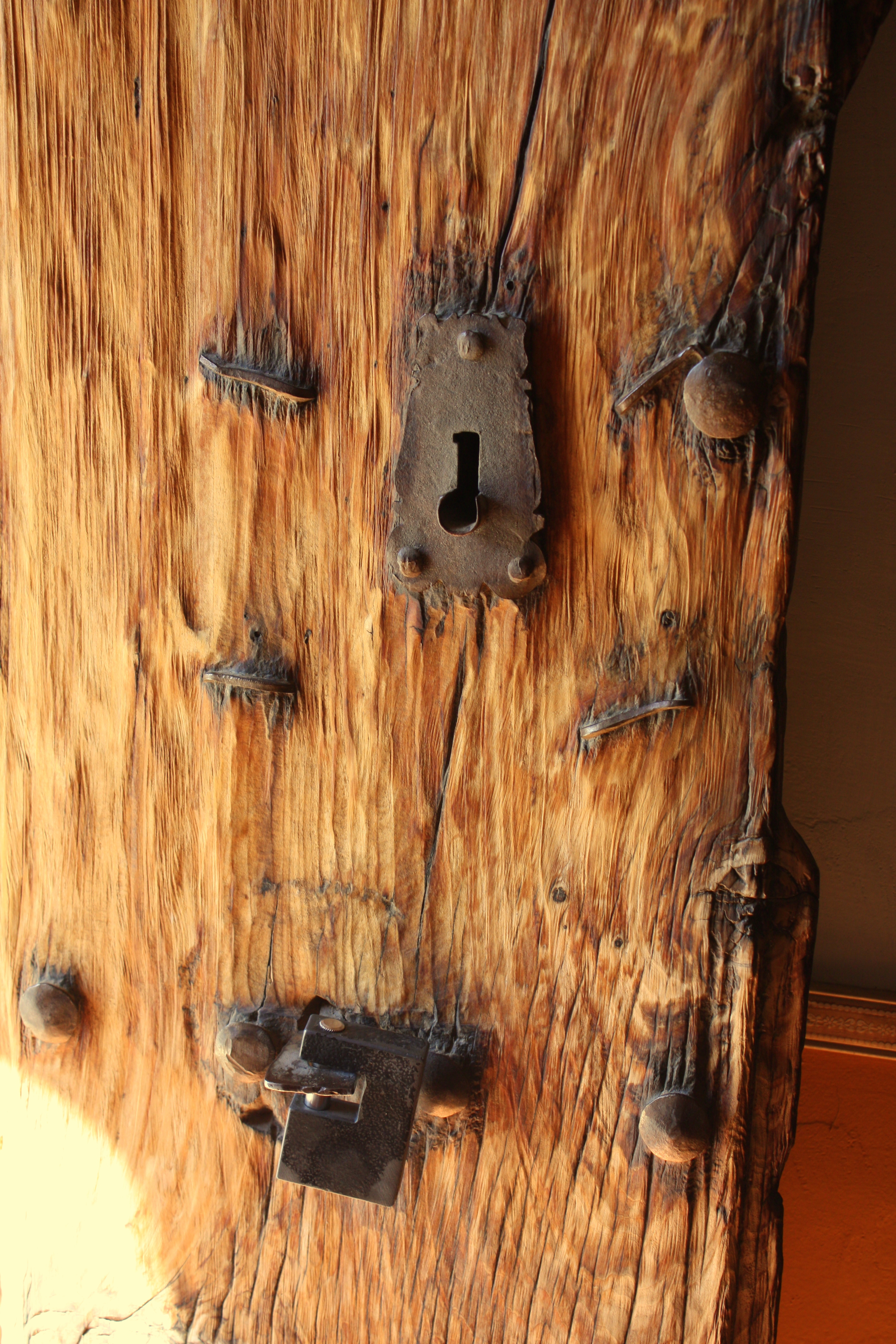
Church door lock and hasp

Church door lock and hasp

Inside, Martín points out more indigenous icons hidden within the three-story-high carved imagery behind the altar, and in designs of carved cantera stone above the doorways.

He recounts a story long told in his village that priests discovered – years after completion of the construction – that the native workers had hollowed out statues of saints which adorn the interior, and placed within their hollowed spaces images of their native gods.

Church alter tableau in carved and gilded wookd

Church alter tableau in carved and gilded wood

Detail of church alter tableau, San Juan Evangelista

Detail of church alter tableau, San Juan Evangelista

It’s a remarkable demonstration of faith and passive resistance that can’t help but inspire.

If I concluded on the strength of this visit that such pagan imagery within Catholic churches was a thing of the distant past, though, my view was soon to be set on its ear by what I next saw as we rounded the western edge of the lake and doubled back on the other side toward the town of Cajititlan…
More on this blog about Mexico’s native artisans…

Maestro in clay

Martin Ibarra Morales 2012-02-02 01

Jesús enters through door in an adobe wall

I first met maestro Martín Ibarra Morales last November when – as one of the artisans invited to Ajijic’s annual Feria Maestros del Arte – he and his family were my houseguests.

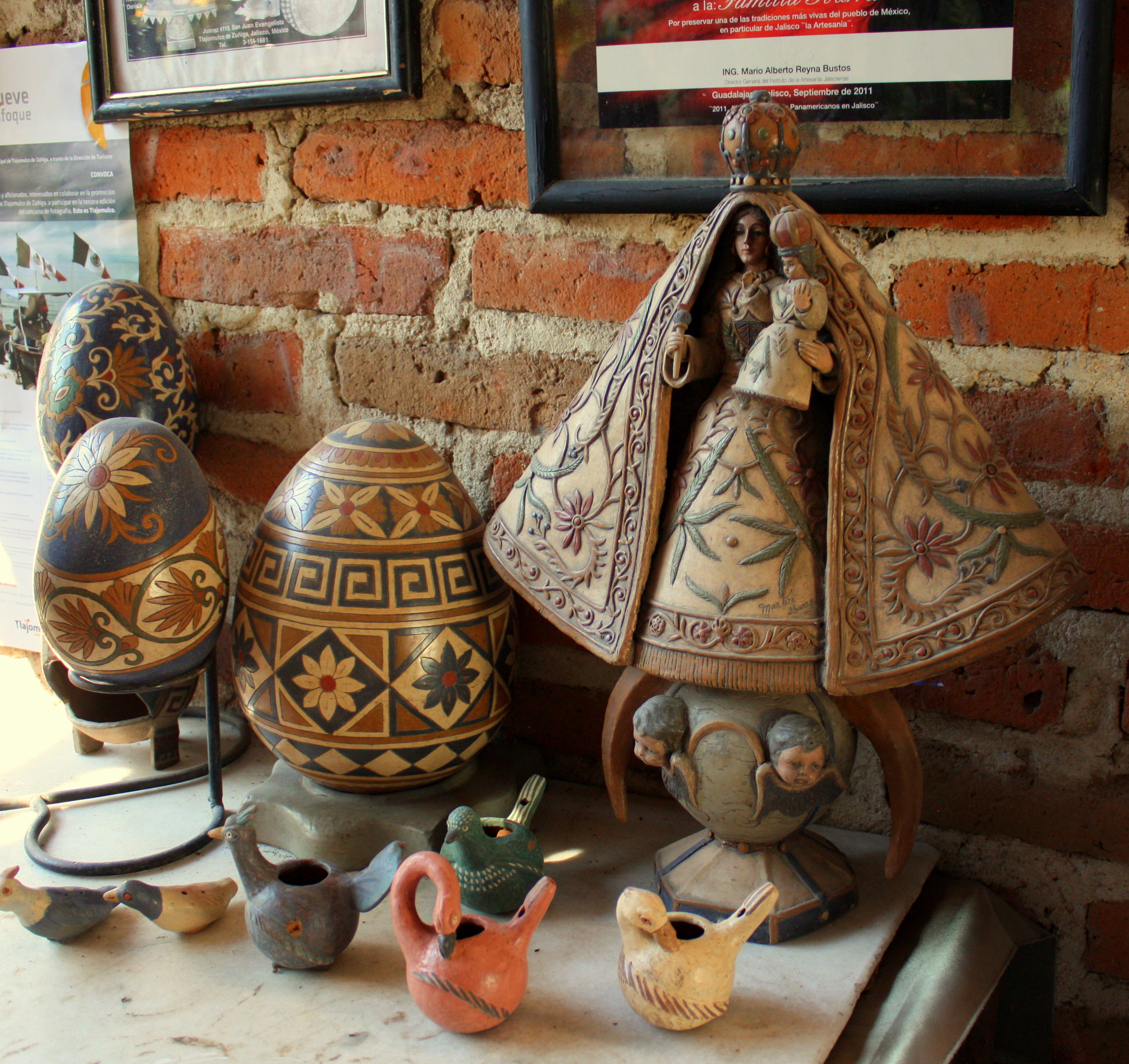
Egg-shaped globes, clay virgin, and clay whistles

Egg-shaped globes, clay virgin, and clay whistles

Martín is a clay sculptor whose work is collected worldwide.  His renowned artisan father taught him his craft, and he’s most well-known for his intricately formed and painted virgins and globes.

Martin Ibarra Morales 2012-02-02 03

He lives on the shore of Lake Chapala’s smaller cousin, Lake Cajititlan, in the village of San Juan Evangelista which is – as the crow flies – not 15 kilometers from Ajijic.  The driveable route around the mountain is about twice the distance.

Martin Ibarra Morales 2012-02-02 04

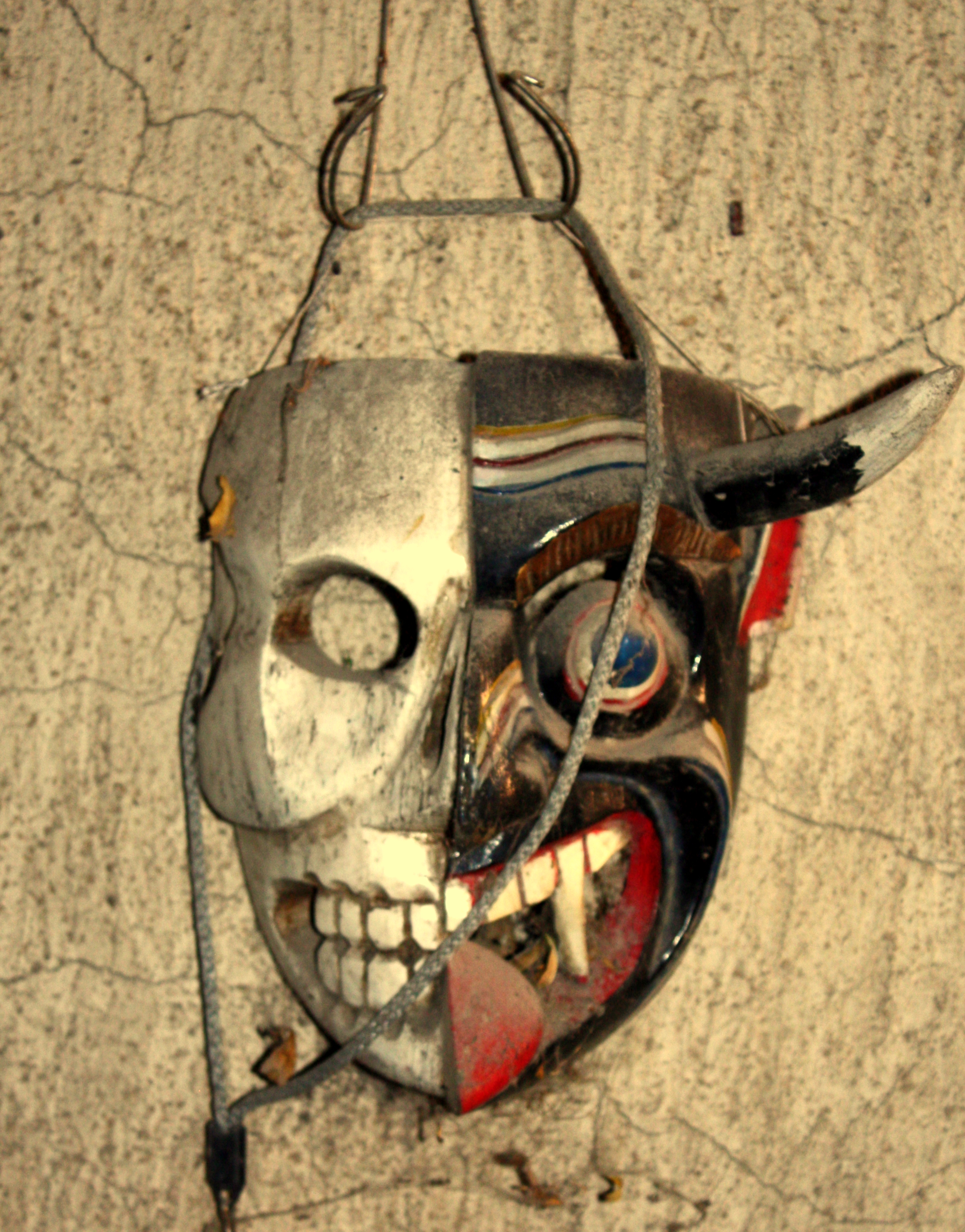
Clay mask with an unforgettable face

Traveling with me is friend and Ajijic artist Jesús López Vega, who has an abiding interest in native artisans and is a welcome bridge over the gaps in my Spanish.

Martin Ibarra Morales 2012-02-02 05

Sol y luna motif

Our directions fail us just a few blocks short of our destination, but we park along the principal plaza opposite the church and graveyard and strangers direct us to a home walled in adobe brick; Martín is clearly also a local celebrity.

A small foyer opens into open air patio, its brick walls adorned with framed news clippings and certificates of recognition, and tables covered with some of the maestro’s work.

Martin Ibarra Morales 2012-02-02 06

Not an inch of unused studio space

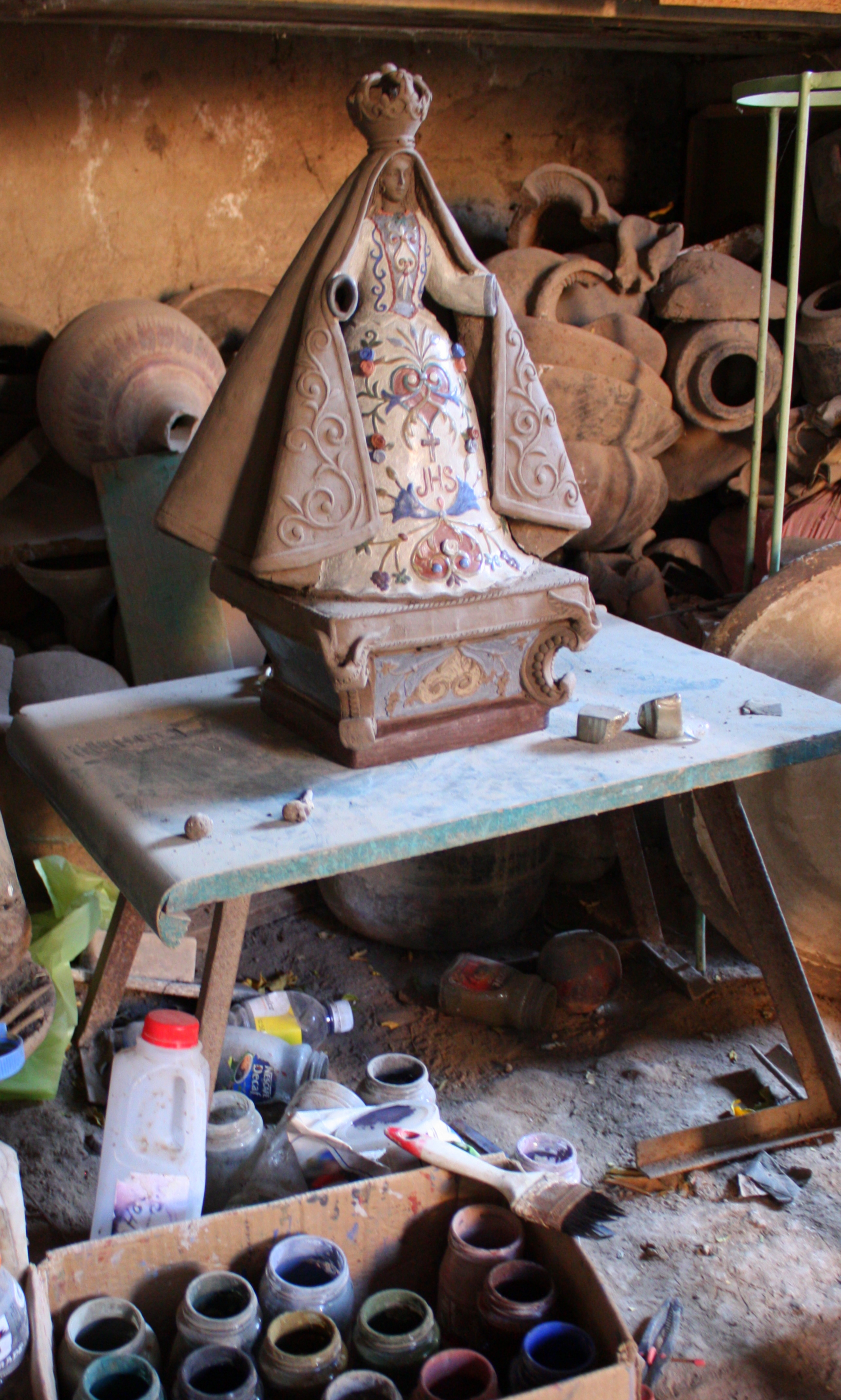
Clay virgin, nearly finished

Clay virgin, nearly finished

We turn the corner into the studio, a Spartan room in aged brick and stucco.

On a table at its center sits one of Martín’s celebrated virgins, which looks to my untrained eye nearly finished.

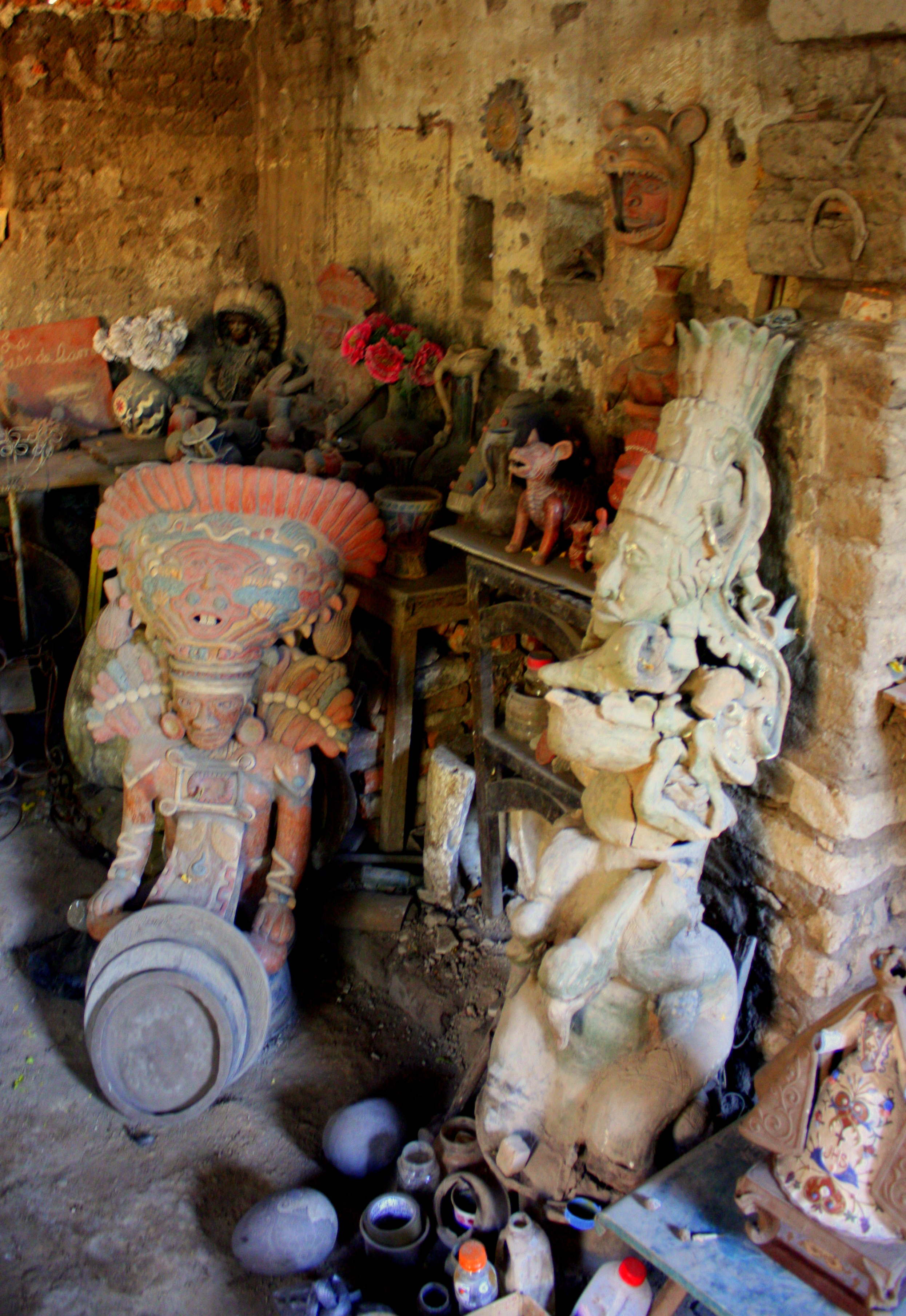
Work in progress covers every inch of the studio

Work in progress covers every inch of the studio

Martin and his articulate hands

Martin and his articulate hands

Works in almost every stage of completion seem to take up every square inch of the room, ranging in size from clay whistles that rest easily in the palm to Aztec statuary nearly as tall as Martín’s diminutive frame.

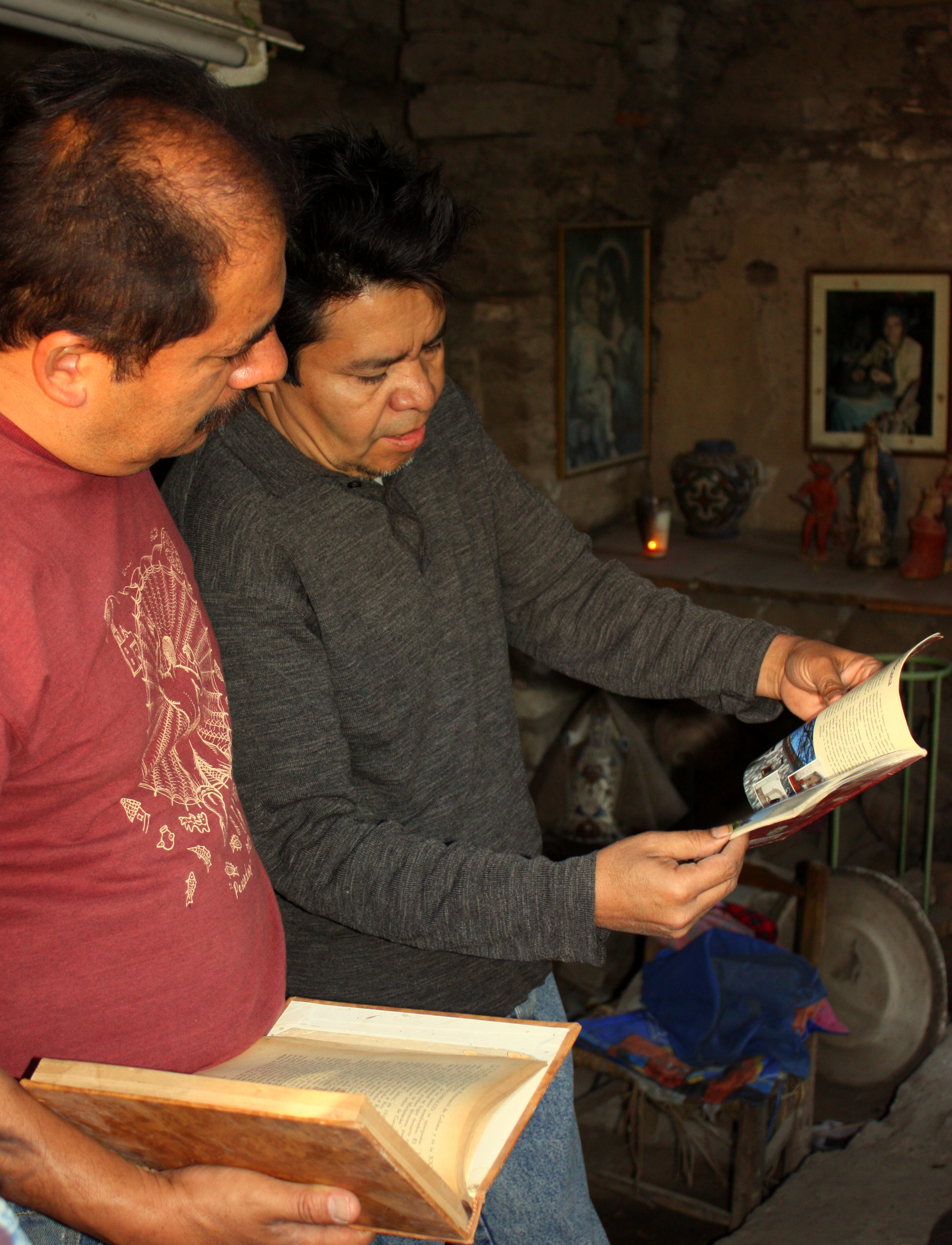
Jesus and Martin compare notes

Jesús and Martín compare notes

Martín is soft-spoken, but not shy, and as he warms to the conversation he talks animatedly, punctuating remarks with his hands.  Often he’ll move the conversation to a quickly sketched explanation of his point.

Martin Ibarra Morales 2012-02-02 12

Joker or devil?

He and my artist friend Jesús quickly plunge into rapid-fire Spanish, comparing notes from old texts of art history that trace the origins of their work back to pre-Hispanic traditions.

Their Spanish soon races past me and I wander the studio as they talk.

Timeless theme

Timeless theme

A statue looking for all the world like a recently excavated museum piece stares at me impassively.

A devilish mask simultaneously smiles and leers at me from the wall behind it.

Finished work sits above the kiln

Finished work sits above the kiln

In one corner finished work sits on a mantel above a brick kiln, its face smoked black by decades of use.

Jesús and Martin

Jesus and Martin

Just as it seems that the visit is about to draw to a close, Martín points through the gate past the cemetery to the church beyond, and asks if we would like him to take us on a tour.

Church yard cemetery just across the street

Church yard cemetery just across the street

It’s a hospitality not to be refused, and we walk into the bright sunlight and across the street.  What he shows us there turns out to be as memorable an experience as the opportunity to see his workspace, and it’s the topic of my next post, so stay tuned…

More about Martin Ibarra Morales…

Glorieta Chapalita 02

Some of Guadalajara’s most memorable public art, like its monumental Minerva Fountain and the Niños Héroes statuary, are centerpieces for its traffic circles (glorietas).

Glorieta Chapalita 06

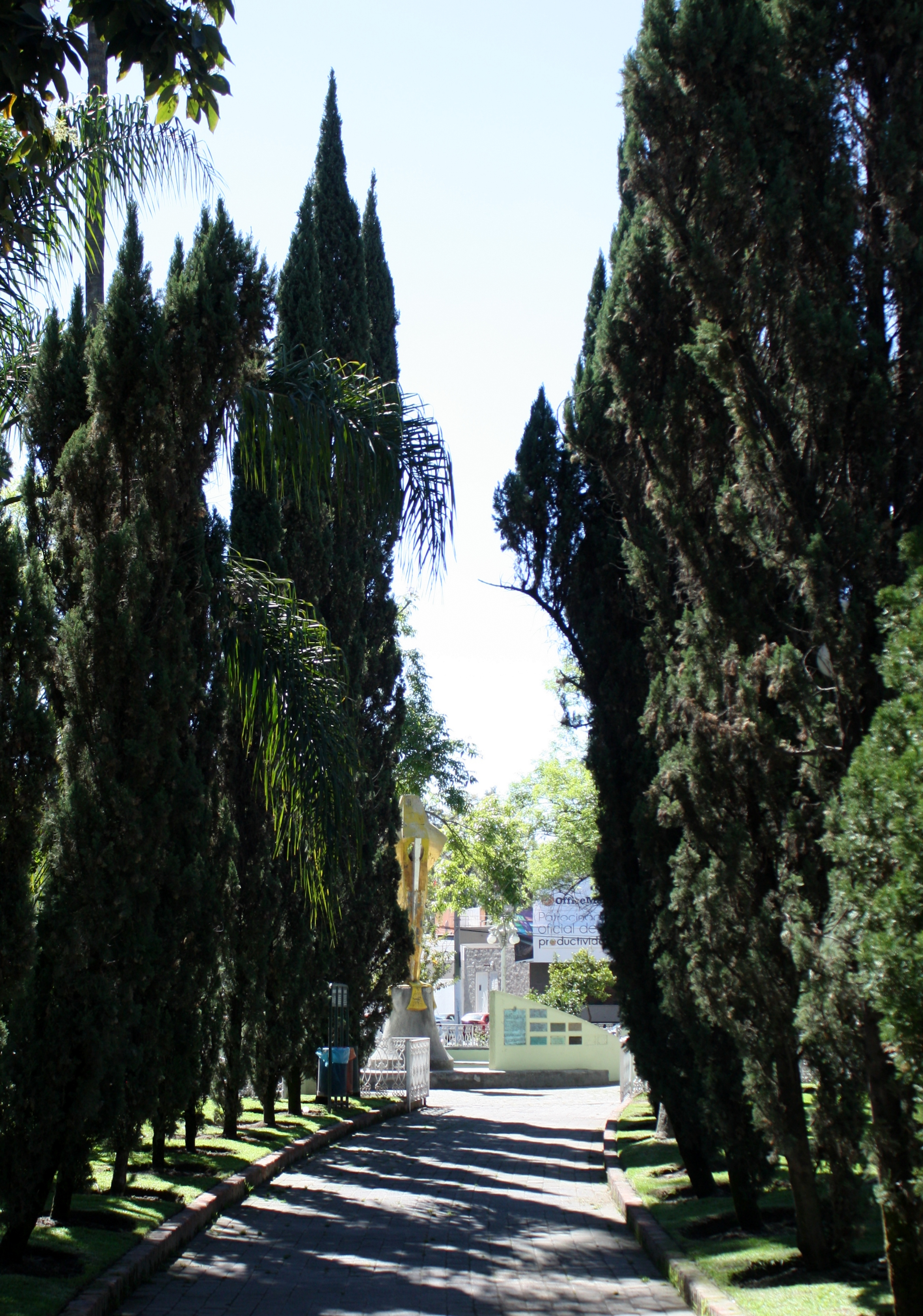
In the Colonia Chapalita, the glorieta appears as far more intimate public space at Chapalita Circle, a delightful pocket park that covers the space of a small city block.

Glorieta Chapalita 04

Glorieta Chapalita 05

Here seven streets intersect at the edge of a quiet and well-established residential neighborhood.

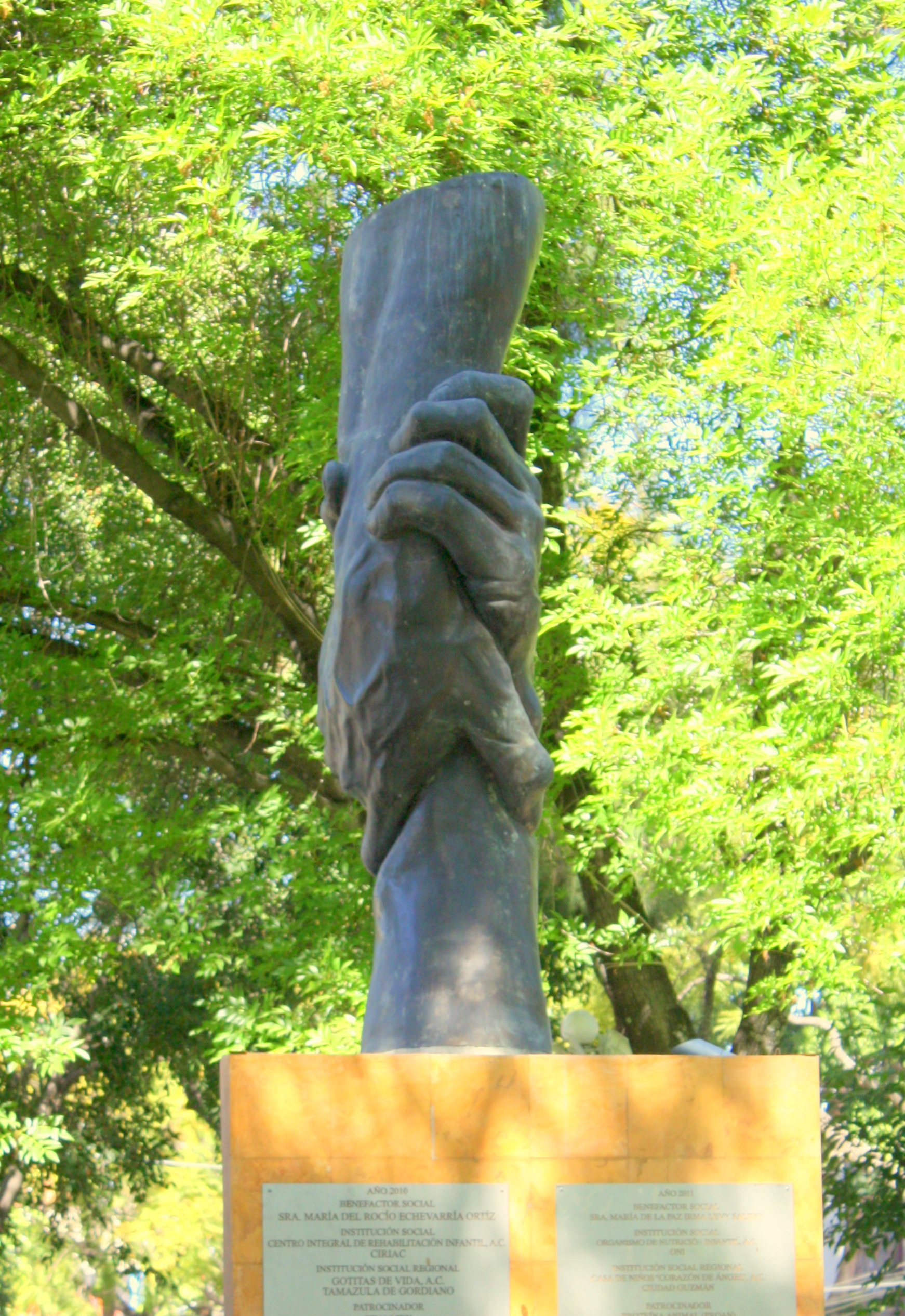
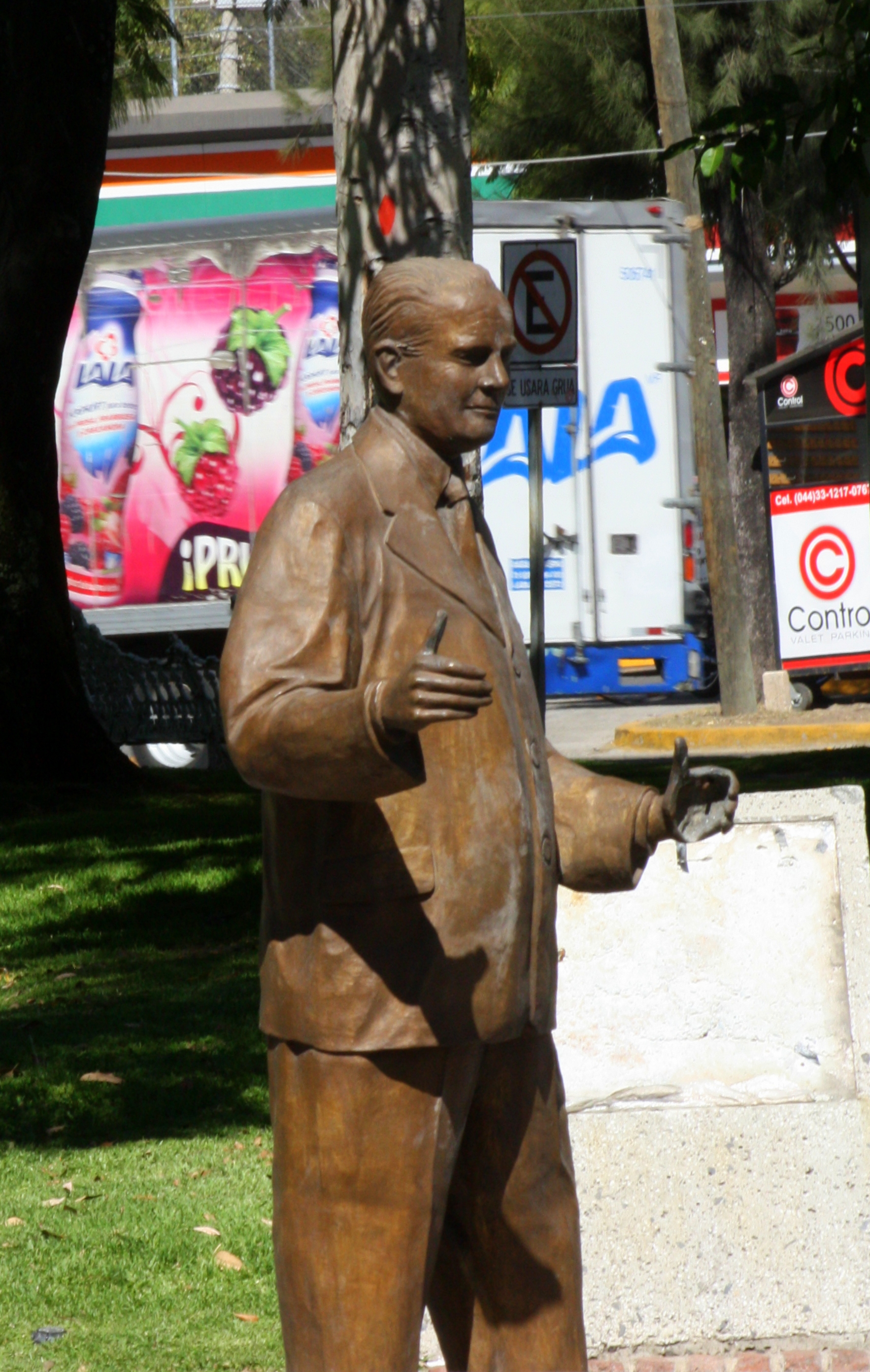
This glorieta is a verdant urban oasis of wrought iron benches painted immaculate white and nestled among fountains, beds of roses, and human scale statues.

At its center stands a classic gazebo.

Glorieta Chapalita 01

Palm trees tower above, and rows of Italian cypress screen much of it from the sights and sounds of circling traffic.

Glorieta Chapalita 03

In some spots only the top of the 42-story Hotel Riu, a kilometer distant, reminds that this place is not far from the heart of the city.

Glorieta Chapalita 08

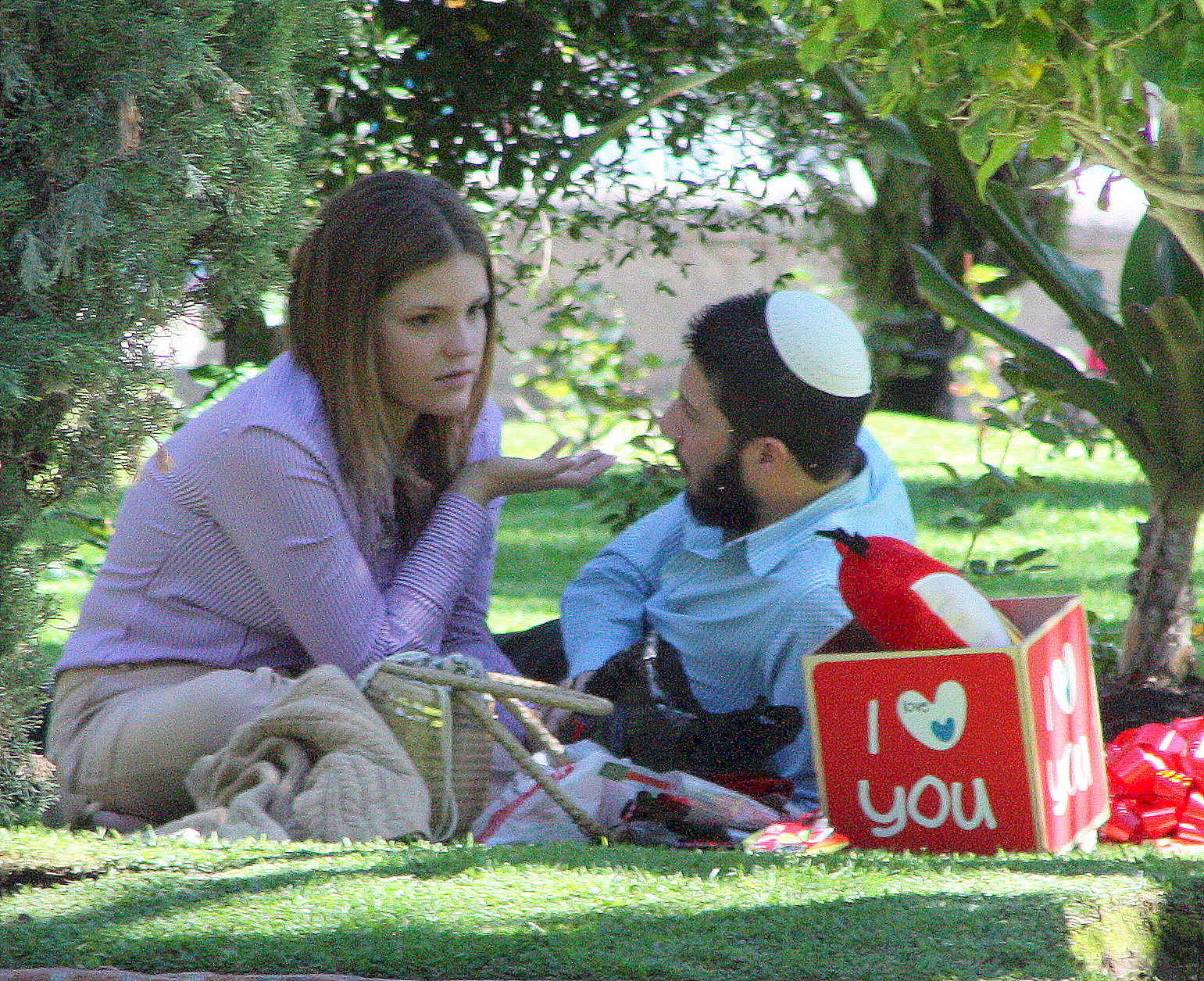
On a typical Saturday visitors here might include pets and their owners, couples, and parents with young children.

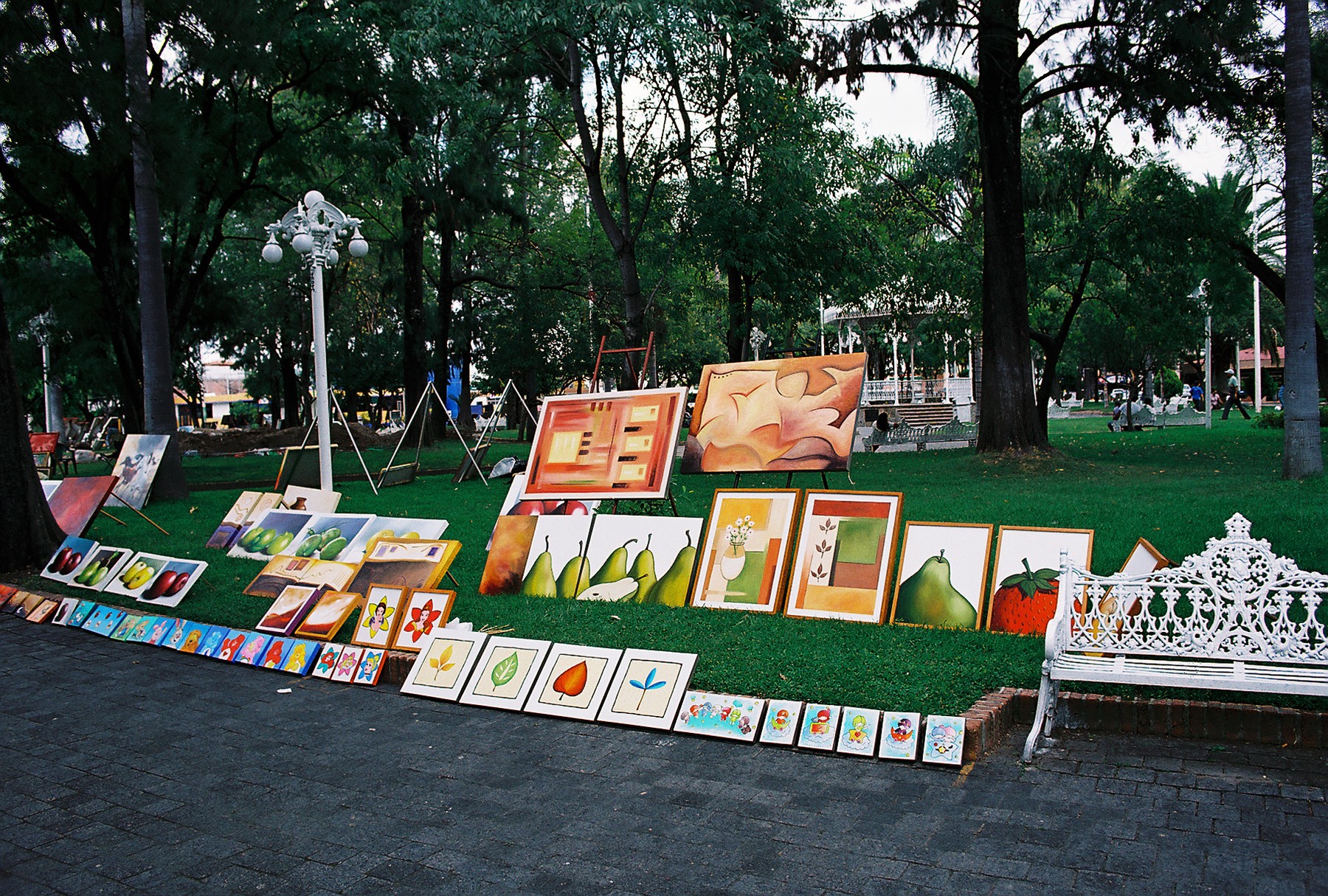
On Sundays, though, it’s transformed into an open-air art gallery where artists display their canvases on easels and park benches.

Glorieta Chapalita 09

Glorieta Chapalita 10

Theme, genre, and scale varies, although on the day of my visit there were lots of contemporary pieces.

Glorieta Chapalita 07

Glorieta Chapalita 11

It’s not uncommon to see some paint as they pass the time, and most are more than glad to chat with browsers about their work and their artistic journey.

Glorieta Chapalita 11-001

Glorieta Chapalita 13

This art show pairs very well with a brunch before strolling through the art, or lunch or dinner after.

The restaurants facing the glorieta are but a few of the dozens within blocks, so you can park once and take in the entire day’s experience on foot.

Glorieta Chapalita 14

These eateries range from upscale to fast casual.

You can top off your meal with a cappuccino from a nearby café or pastry dessert from a neighborhood repostería.

Find out more on the Glorieta Chapalita’s web site.

For the more ambitious visitor, a Sunday at Chapalita Circle fits well into a day including a promenade on the Avenida Vallarta,or a visit to Guadalajara’s open-air antique market.

You may also want to check out also these posts for more things to see and do in Guadalajara: