Archive for October, 2012


Up in smoke

It had been a year since I’d last seen him, but I had – or so I thought – more important things to do on his birthday this year and now he’s gone, one more superstar snatched from us before his time leaving me with guilty regret.

There was some dispute about his true age.  His official birth certificate listed him as 60 years old, but it’s now widely accepted that he was actually born two years earlier in a small town 70 miles from Dallas and given up for adoption by the two men whose names appear on his original birth certificate.   Darker rumors maintain that he was not legally adopted, but sold to the State Fair for a paltry $750 in a slam-dunk case of baby trafficking.

Big Tex, larger than life

Even his most fervent admirers will admit that he had a Howdy Doody sort of caricature look, but that fixed grin belied his shrewd management of a meteoric rise to stardom and six uninterrupted decades of celebrity.

Ringed around the Cotton Bowl

Big Tex was the last of the great carnival barkers, towering above crowds and tents and spinning rides against the backdrop of the Cotton Bowl to welcome visitors to the State Fair of Texas.

Big Tex burns; Photo by Alison Griffin

He was Texan through and through, his skeleton a metal frame made from oilfield drill casing, and he seemed so indestructible that all were stunned when a garden variety circuitry malfunction laid him low. To put it inelegantly, he had a short in his shorts.

The end was mercifully quick.  Flames consumed his paper maché frame in a matter of minutes, but billowing smoke rendered him almost immediately voiceless.

Onlookers could do nothing but watch as his Size 110 blue jeans turned to ash and his parched skin flaked  away to leave only a steel frame and his fallen, giant hands.  Oh, the humanity!

Fried food reigns at the Fair

“B.T.” looked incredibly fit for his age.  Some attributed his slim figure to the fact that he didn’t drink.  Others attributed it to his refusal to indulge in the Fair’s annually featured deep-fried foods like the Fried PBJ & Banana Sandwich, Fried Coke, Fried Cookie Dough, Fried Banana Split, Chicken-Fried Bacon, Fried Beer™, Fried Frito Pie, or Fried Buffalo Chicken-in-a-Flapjack.  (This year Deep Fried Jambalaya won ‘Best Taste’ and Fried Bacon Cinnamon Roll won ‘Most Creative’.)

Tall and lean even in the face of such temptation, B.T. was from time to time the target of accusations that he was a closet anorexic, but adoring fans would hear nothing of such slander and he returned as big as ever in each succeeding year.

Plenty of aerial views

They say they’ll rebuild Big Tex, that he will be taller, and that the reconstruction will incorporate “new engineering and technology techniques.”

I confess to skepticism.

Dallas is, after all, notorious for paving over its history in the name of progress and has not infrequently confused bigger with better (any naysayers should be instantly silenced by the concert acoustics in the nosebleed section of Jerry Jones’ stadium monument!)

The line of booths is endless

Had Dallas managed the Statue of Liberty’s bicentennial renovation, it’s likely that her torch would now be spewing laser-beam fireworks, her gown would be sequined with ever-changing red, white and blue lights like a Las Vegas billboard ( or – uh – Dallas’s new convention center hotel), and she’d be performing the moonwalk on the hour.

There’s been some loose talk that B.T. might return as a fire department spokesman to preach the dangers of faulty wiring. (Say it ain’t so!)

Who needs video games?


There’s something about Big Tex that speaks to a moment in time when Baby Boomers were still kids, and Texas was as it appeared in the classic movie “Giant.”  A Texas before video games and PDA’s and downloadable media, when little boys played cowboy with stick horses and the good guys were not yet all bad boyz.
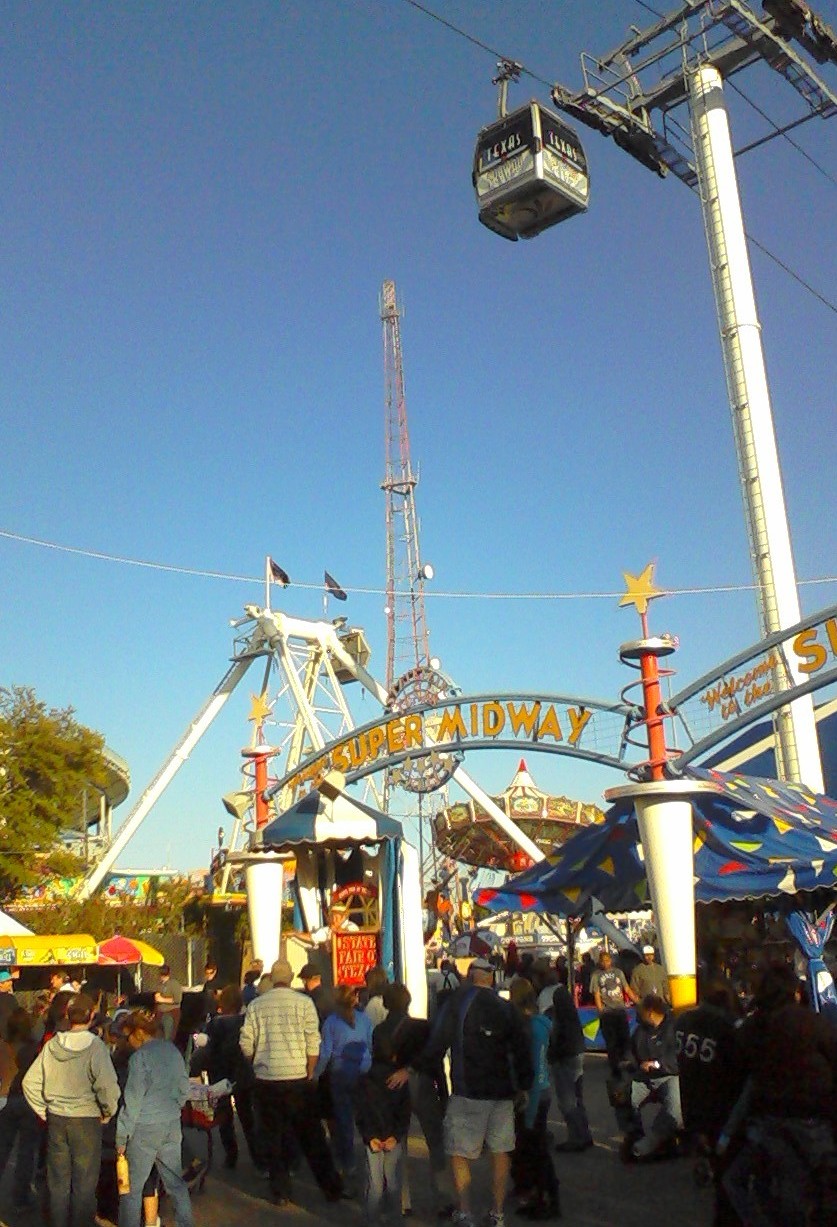
Entrance to the Midway

The Fair ran for two more days after Big Tex’s untimely passing.  The rides and booths and food were all just the same as before.

Art deco sculpture

The Fairground buildings – the Southwest’s largest surviving collection of Art Deco structures – were unchanged, but without Tex’s long, tall shadow creeping across the sun-splashed midway the Fair’s mojo was – at least for the moment – gone.

Rocking horses & rocking chairs

We can only hope that a Big Tex reborn will still have the same campy, carny feel that he exuded for more than 60 years… and not reincarnated like a classic Wurlitzer jukebox slickly and vacantly restored with mp3 guts… reduced to a 21st century drug store cowboy.

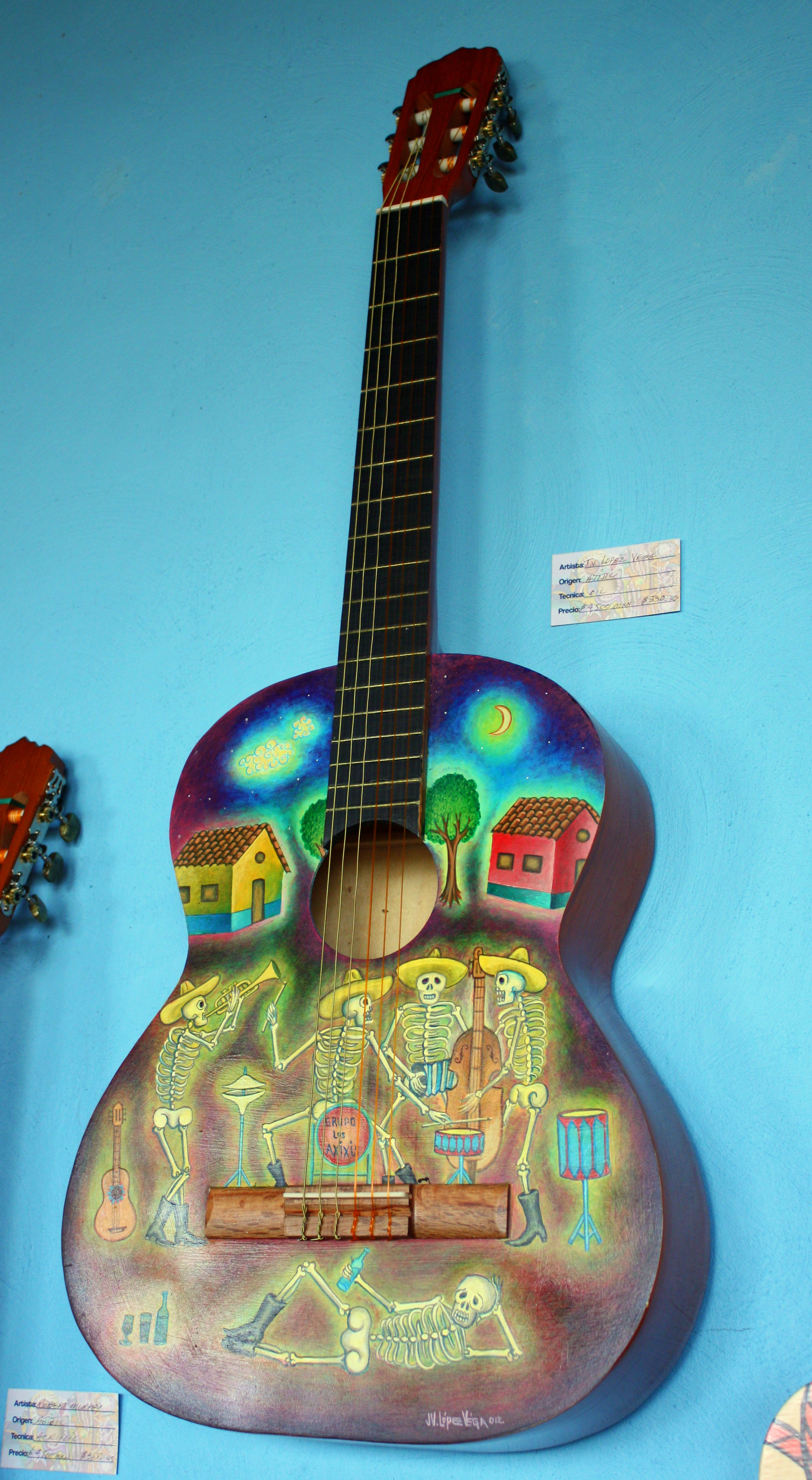
Ajijic’s guitar art

Artist: Teodor Lopez

Perhaps nowhere else in the Spanish-speaking world has the guitar become such an inseparable part of the culture as in Mexico.

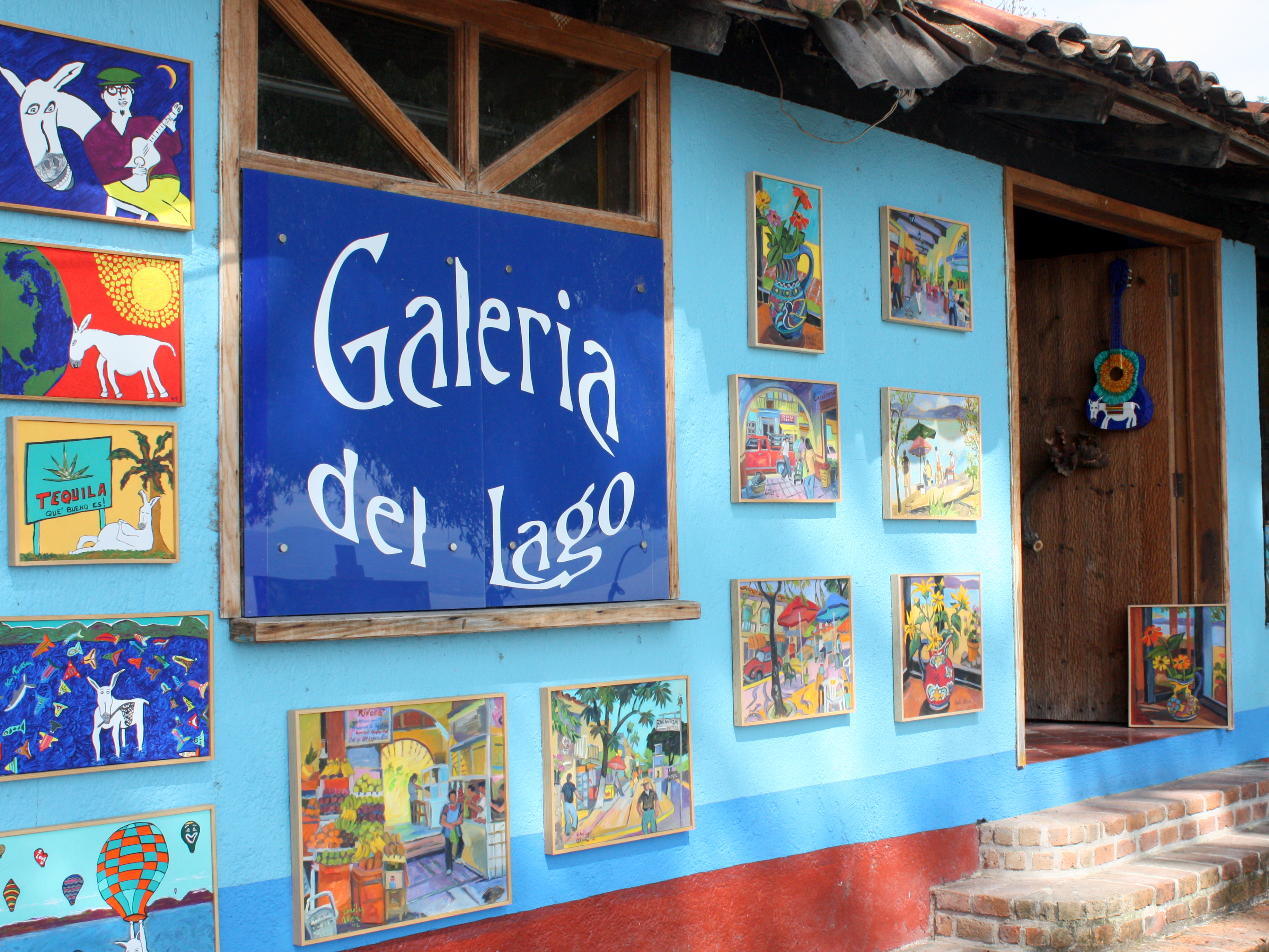
Inside the Galeria del Lago

Here the instrument appears the varying shapes, sizes, and sounds which can be most often seen in the instrumentation of Jalisco’s celebrated mariachi bands.


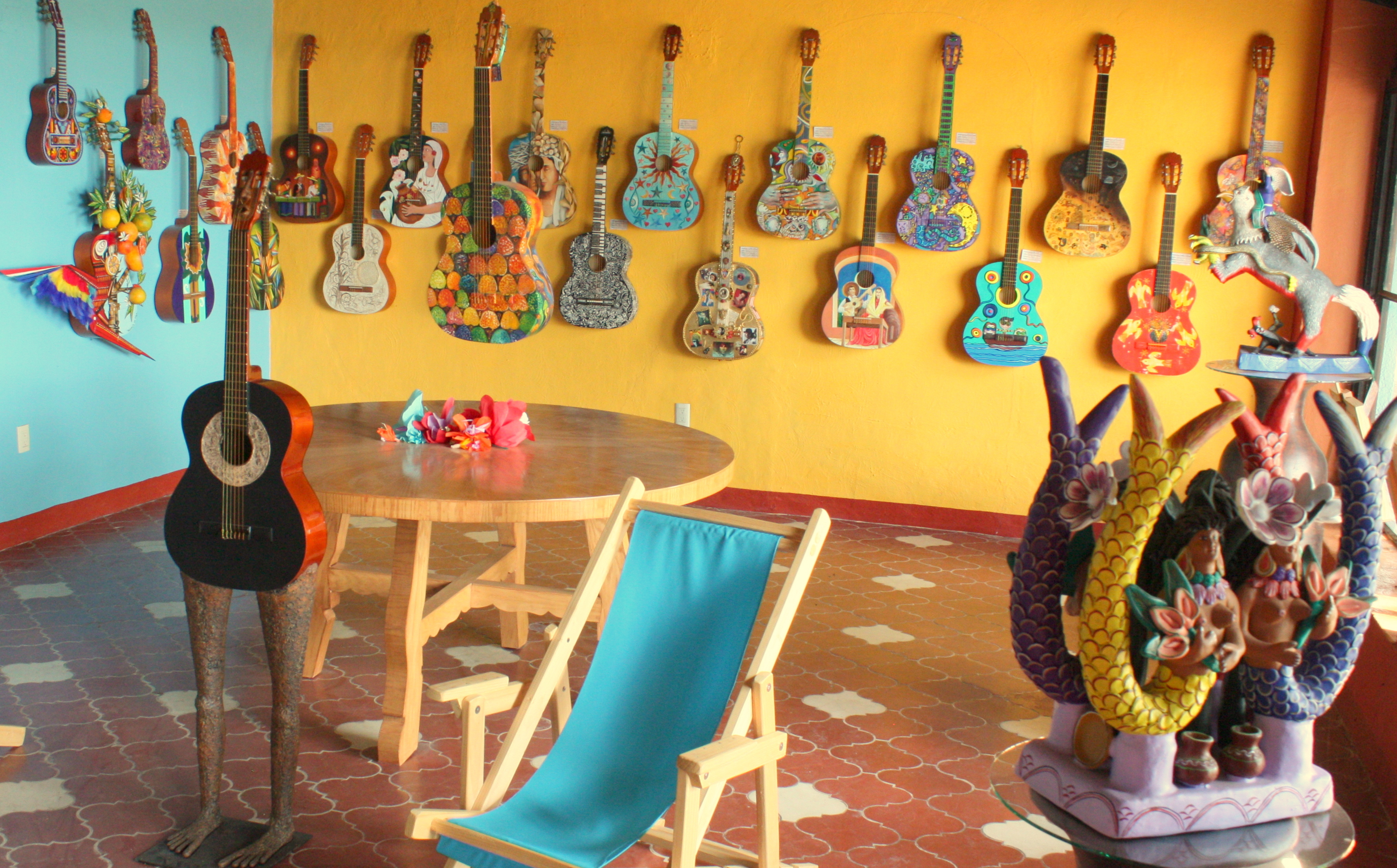
At Ajijic’s Galeria de Lago on the very edge of Lake Chapala the instrument appears in yet a new incarnation:  Guitar Art.

Artist: V. Manuel G. Santillan


It all began when local artist Kim Tolleson made a pilgrimage to the town of Paracho in Michoacan.  The town has long been famous as the center of guitar-making in Mexico, but in the past generation it has produced world class maestro craftsmen and instruments sought by aficionados everywhere.


There are more guitar shops in Paracho than chocolatiers in Switzerland and each August the town hosts a festival that features and honors both musicians and luthiers.


Kim had the idea that these instruments would make an interesting painter’s palette, but soon came to the conclusion that the 30 guitars that he brought back from Paracho was ambition enough for more than a single painter.

Artist: Kathy Seaboyer


He enlisted the aid of local artists and aspirants, and soon much of the space he’d first envisioned as no more than a studio became a guitar art gallery.

Artist: Sergio Xoñu


Kim’s decision to open entries to virtually all comers made the gallery unique not only for its use of guitars as painters’ palettes, but for its diversity of styles.


The artists range from local professionals including Efren Gonzalez to some very talented amateurs.

The inclusiveness is refreshing and the artist community has clearly embraced the concept.

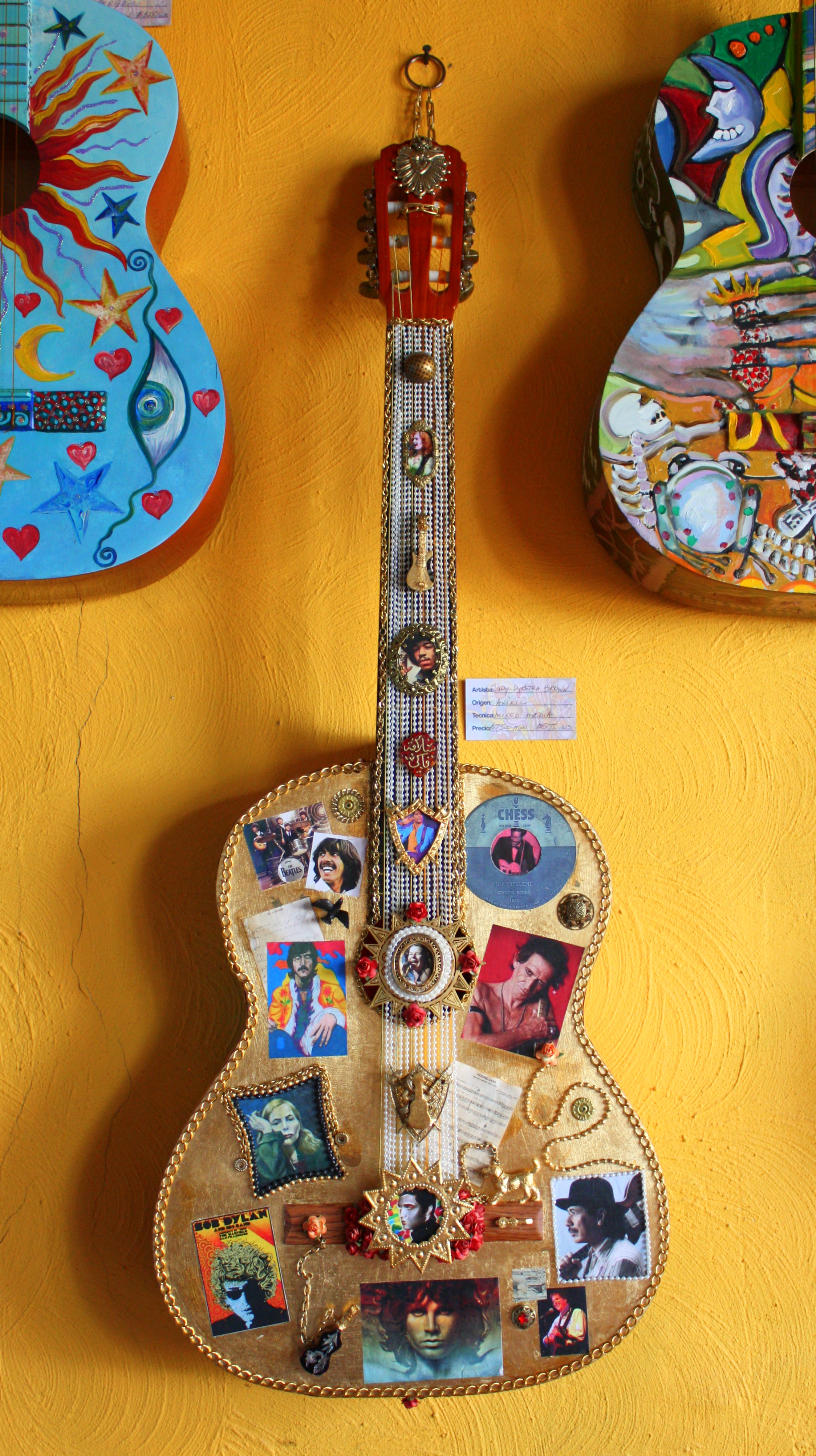
Artist: Judy Dykstra Brown

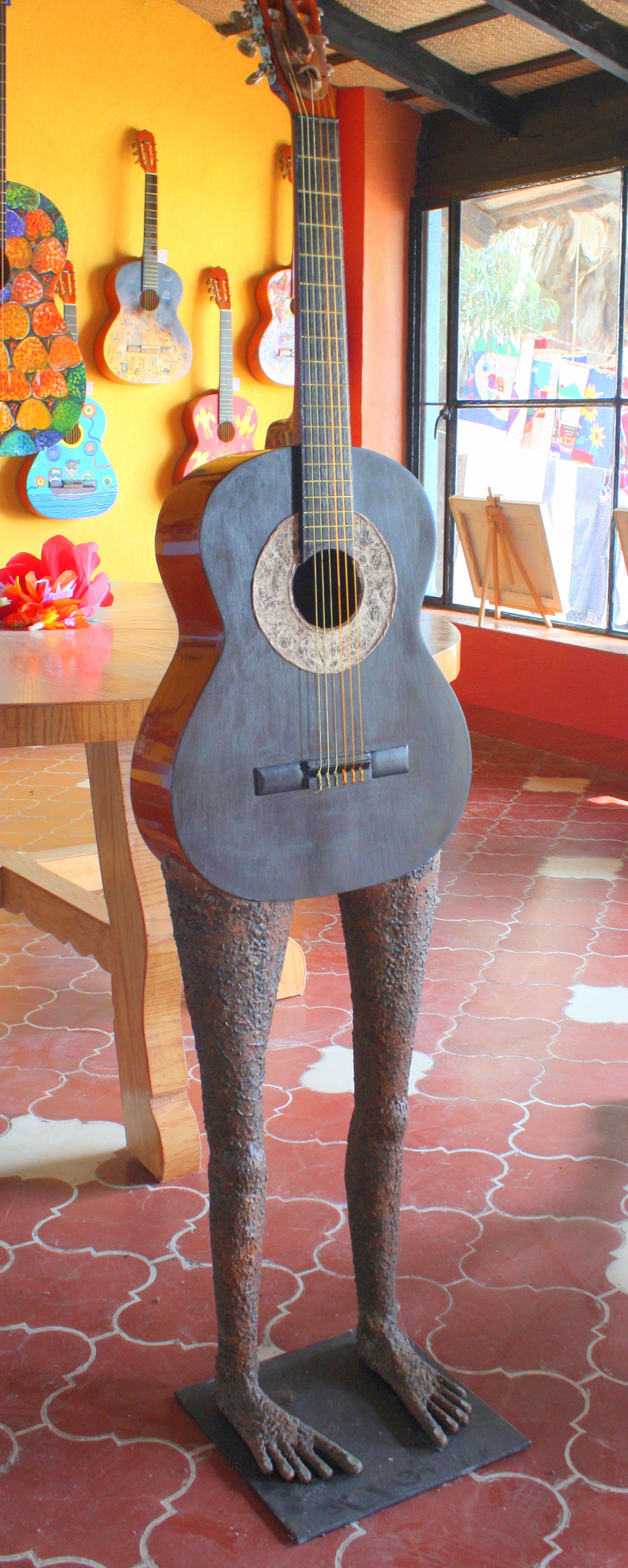
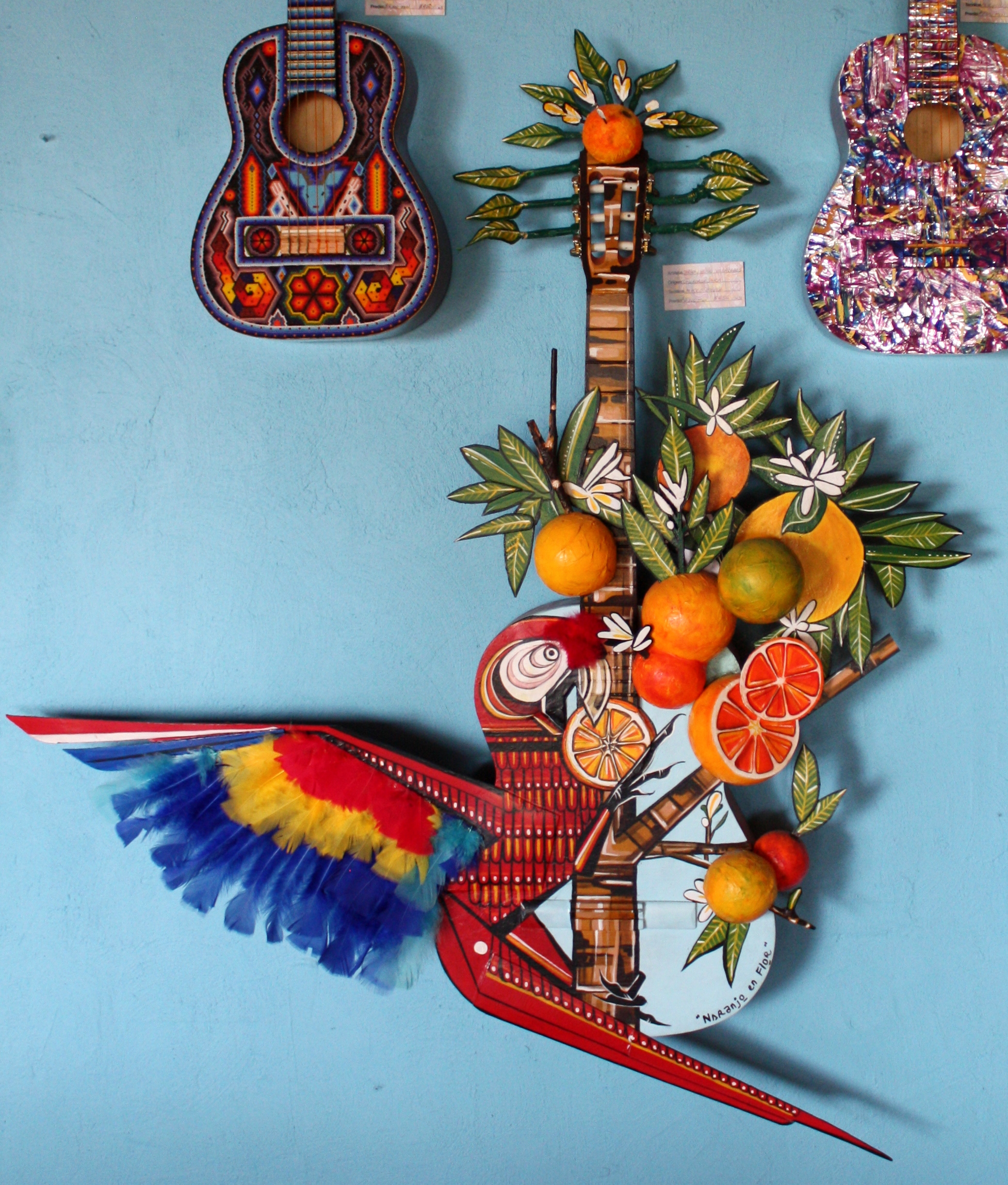
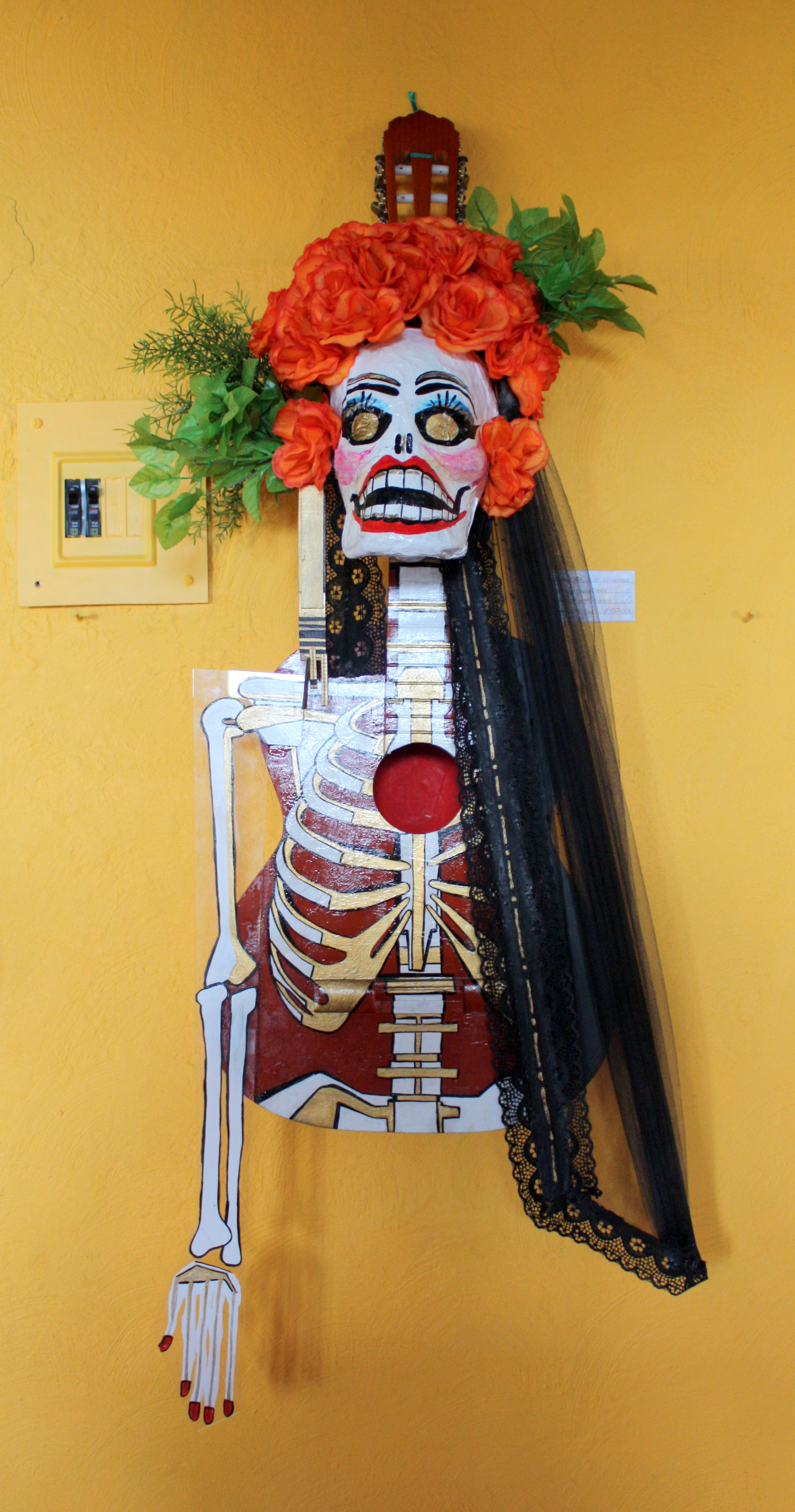
The images range from scenes of colonial Mexico to rock music tributes. Most are painted, but one of the more striking pieces is installed as a sculpture standing on human legs.

Artists: Daniel Palma & Sergio Xoñu

Artists: Hugo & Carlos Villalabos

Part of the Galeria remains a working studio.

On the day I was there Emily Allen had set up her easel there to catch the light flooding in from off the lake, and I stood for a while with my face pressed against the window watching her work.

Artists: Hugo & Carlos Villalabos


Even though the regular gallery hours are Saturday/Sunday, 1-6PM, visitors can browse on many weekdays when the artists are in residence, and the work is readily viewed through big picture windows at any time of the day.

Artist: Jesus Lopez Vega


Galeria del Lago is located right on the lakefront between the Old Posada and Yves Restaurant, within eyesight of the Ajijic Pier.


No surprise, then, that the subject of many currently featured paintings is the white donkey that seems perennially tethered just a few yards away on the beach.


Galeria del Lago

Galeria del Lago


Photos don’t do the work justice, so drop by and see the real deal. It’s guaranteed to bring a smile to your lips!

You can also see photos of work no longer on display when I visited on the gallery’s Facebook page               


Read more about Paracho, Mexico’s guitar capital, here.                              

For more on Ajijic’s unique character see my related posts:

The Riviera rediscovered

Harbor at Monte Carlo, Monaco

An overnight sail after a day spent in Montpelier and Sète, France (read about it here) the ship anchors at Monte Carlo, Monaco.


The harbor sits like the stage of an amphitheater upon which the rest of Monaco looks down from the surrounding heights.

Yachts, harbor at Monte Carlo, Monaco


Riding at anchor here are dozens of luxury yachts so large as to almost defy belief that so many private citizens can afford them.

Hotel L’Hermitage, Monte Carlo, Monaco


Most of the hotels, condos, restaurants, and shops are of modern design.


Fortunately, a few surviving structures like L’Hermitage, a hotel dating from the Belle Époque, evoke the feel of this place when rail service first connected it to Paris and the casino at Monte Carlo was brand new.

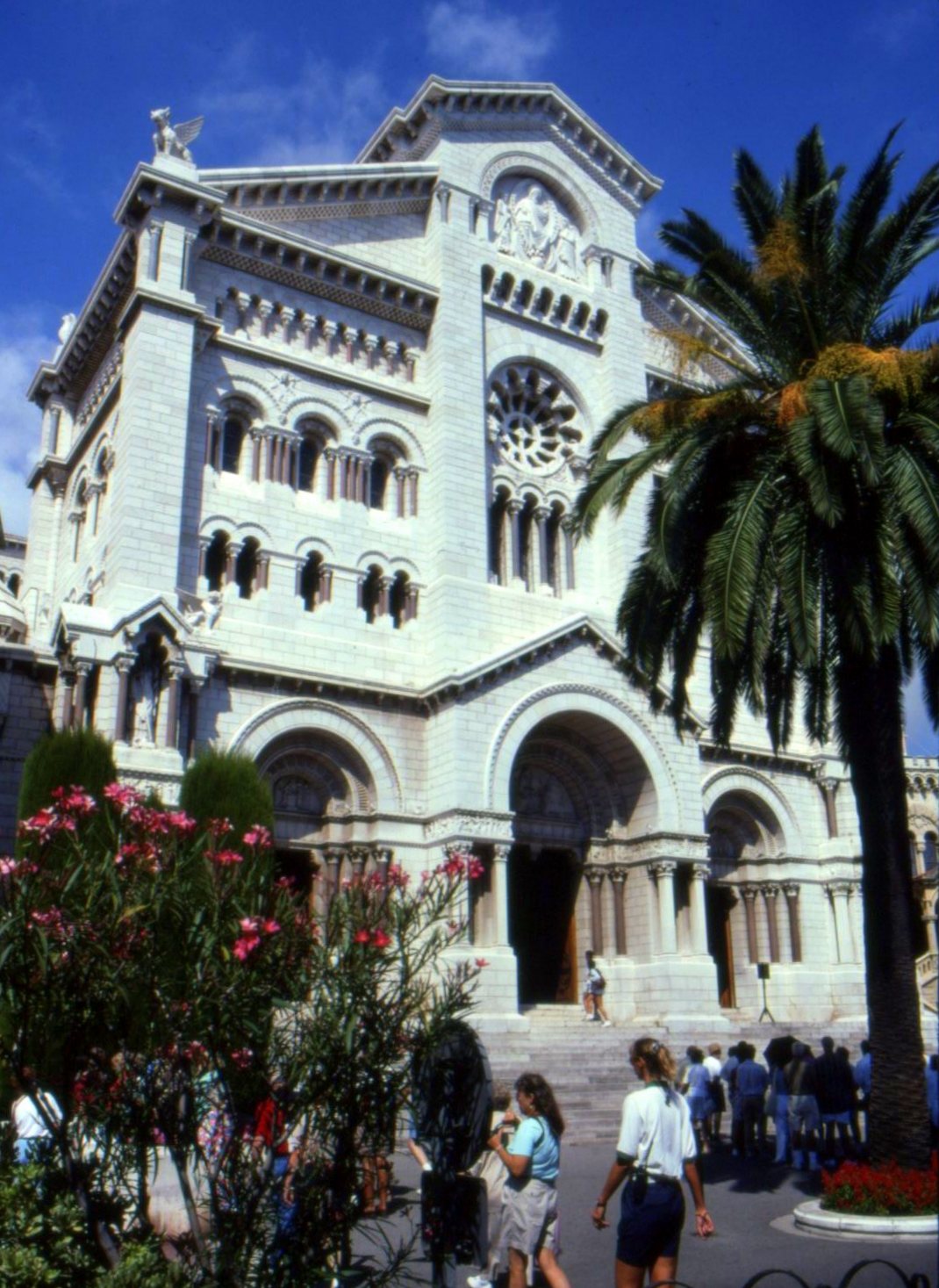
St. Nicholas Cathedral, Monte Carlo, Monaco


The St. Nicholas Cathedral is only 150 years old, but sits on the site of the original cathedral of the same name built in 1252.


It’s the home of the well-known Cathedral Choir School, and it Little Singers of Monaco perform at its masses during the school year.

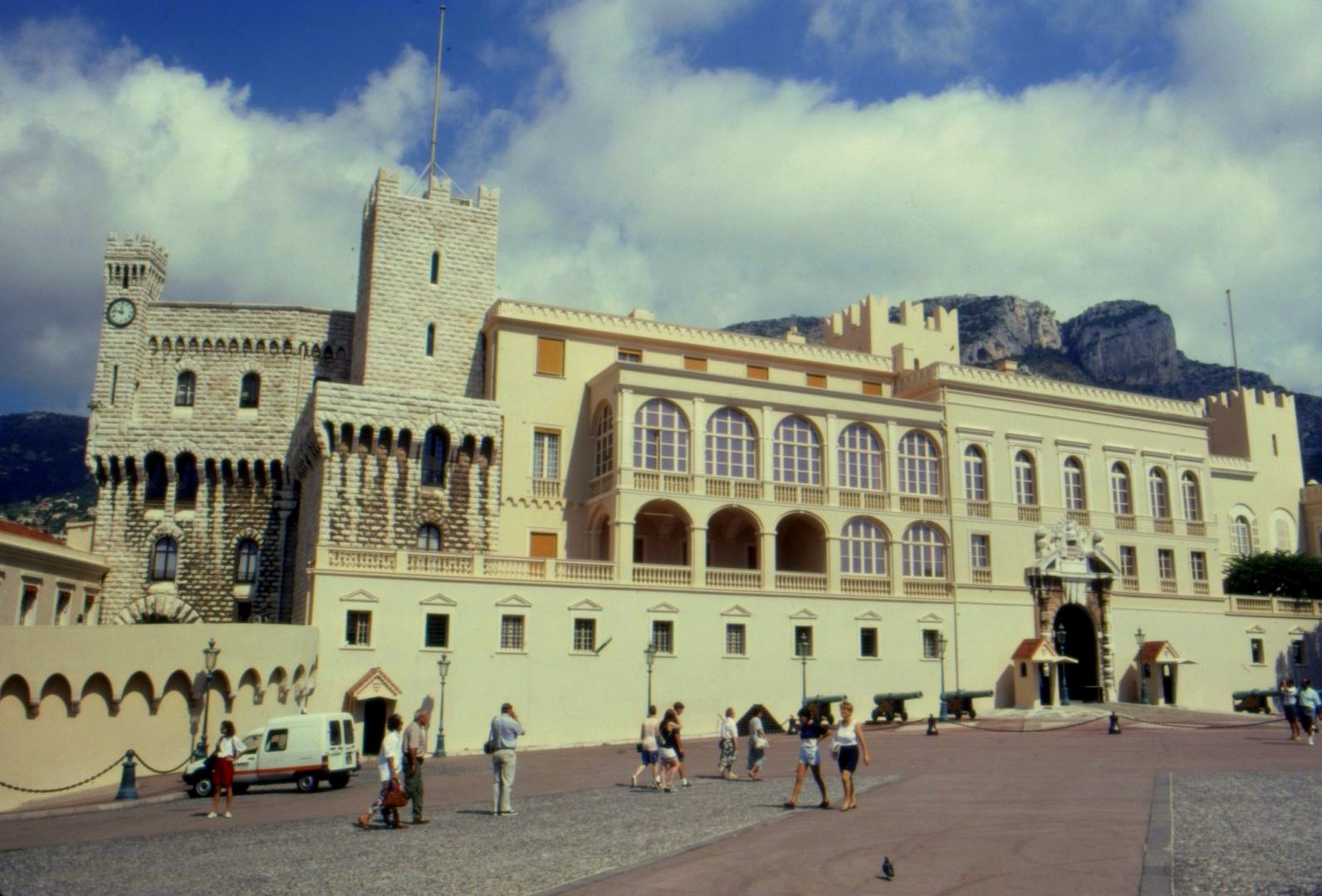
Grimaldi palace, Monte Carlo, Monaco


Other historical architecture worth seeing is the Grimaldi Palace.


It’s been the home of Monaco’s ruling family for more than 800 years and is the one time home of Princess Grace Kelly.

Grimaldi palace, Monte Carlo, Monaco

Shopping district, Monte Carlo, Monaco

Shopping district, Monte Carlo, Monaco

Because Monaco’s land area is too limited to afford its royalty the luxury of multiple residences, this palace has been remodeled and expanded throughout its 700-year history and so it’s a slice through the layer cake of history.


Terrain and language aside, Monte Carlo has very much the feel of Palm Beach.  Immense wealth is now sheltered in – and managed from – Monaco, and many of its owners have at least a pied-à-terre in the Principality.  Chic shops and restaurants prosper here in abundance.

Our Lady of the Assumption church, Eze, France


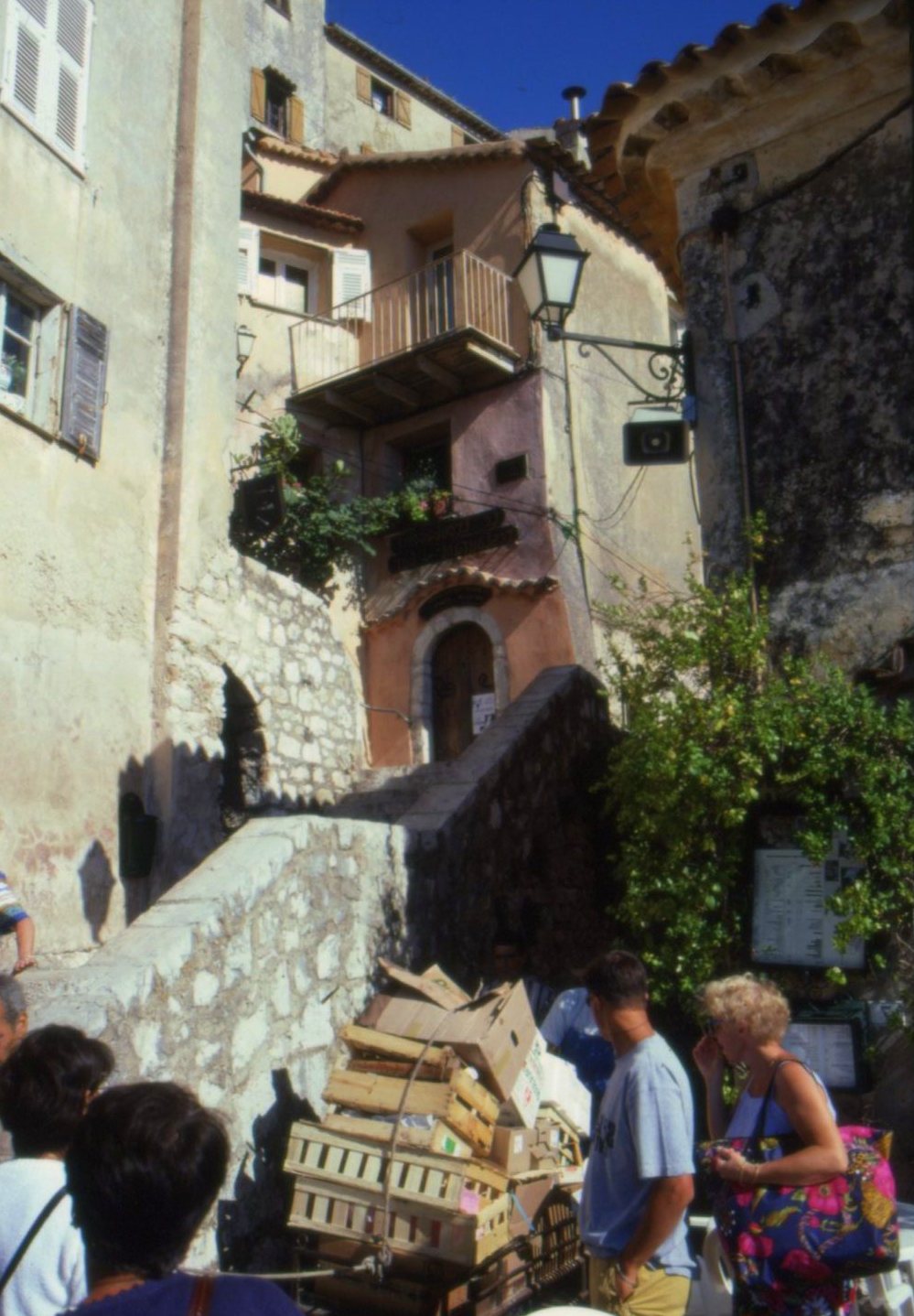
Duty-free shopping for designer goods holds little appeal for me, and I instead take a 5 mile drive into France where the historic village of Eze overlooks the Mediterranean Sea from a 1,500 foot promontory, accessible by roads so narrow that motor vehicles cannot pass into the old town.

Eze, France


The terrain here seems better suited to mountain goats than to people, and the modest uphill climb from the parking spot is the first of several.   Here goods are trundled through narrow cobblestone streets on hand-trucks and wrestled around switchbacks and up endless stairwells.

Eze, France


An easily defended coastal lookout, this site has been highly prized for nearly 4,000 years and has been occupied by the Phoenicians, Romans, Italians, and Moors.

Eze, France


There are several high-end hotels in the area, but the most interesting hotel was one cobbled together from adjoining homes on a pedestrian-only lane which left every doorknob on the lane sporting either a “MAID SERVICE REQUESTED” or “DO NOT DISTURB” sign!

Eze, France


Eze is also the site of a botanical garden created after World War II and known worldwide for an impressive collection of cactus and other succulents from around the Mediterranean and the Americas.


The cruise ship is scheduled to hoist anchor late in the evening. Passengers straggle aboard laden with bags of purchases from the shops of Monte Carlo.


As the boat leaves the harbor the lights and sounds of parties in progress on the big yachts at anchor carries across the water.


My takeaway is instead the memory of looking down at Monte Carlo from the vantage point of the Corniche, and out over the Mediterranean through the charming picture frame of medieval Eze. Tomorrow we’re scheduled to drop anchor in Portofino, Italy.


See earlier posts from this cruise trip:

Barcelona Beckons

Magical Montserrat

France’s Languedoc

Guadalajara’s antique market

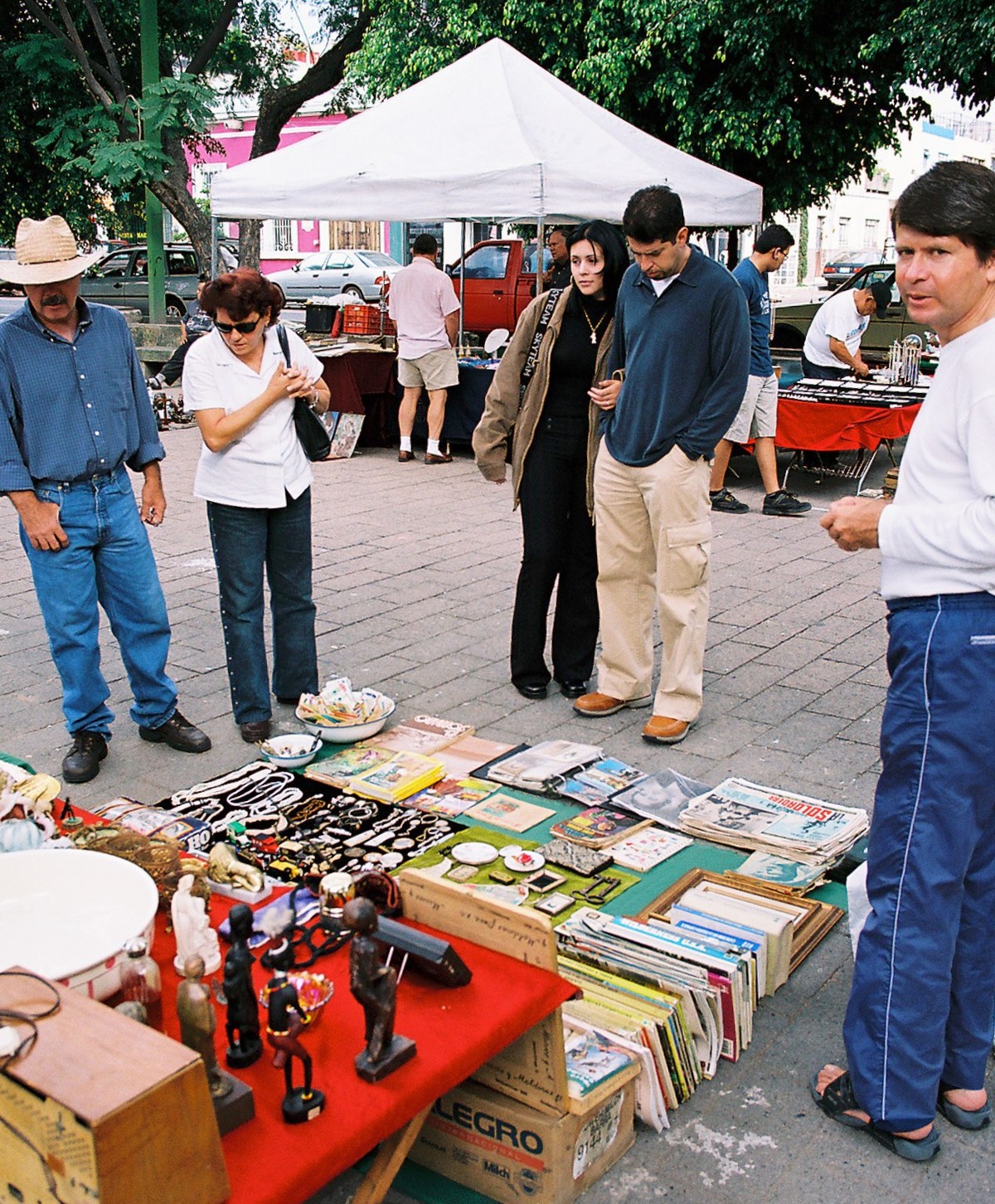
Antique markets afford a window into the lives of each treasure’s original owner, and Guadalajara’s antique flea market is loaded with artifacts that look like they once graced the drawing rooms of the gentrified west side neighborhoods built around the turn of the 20th century.

Guadalajara’s antique market


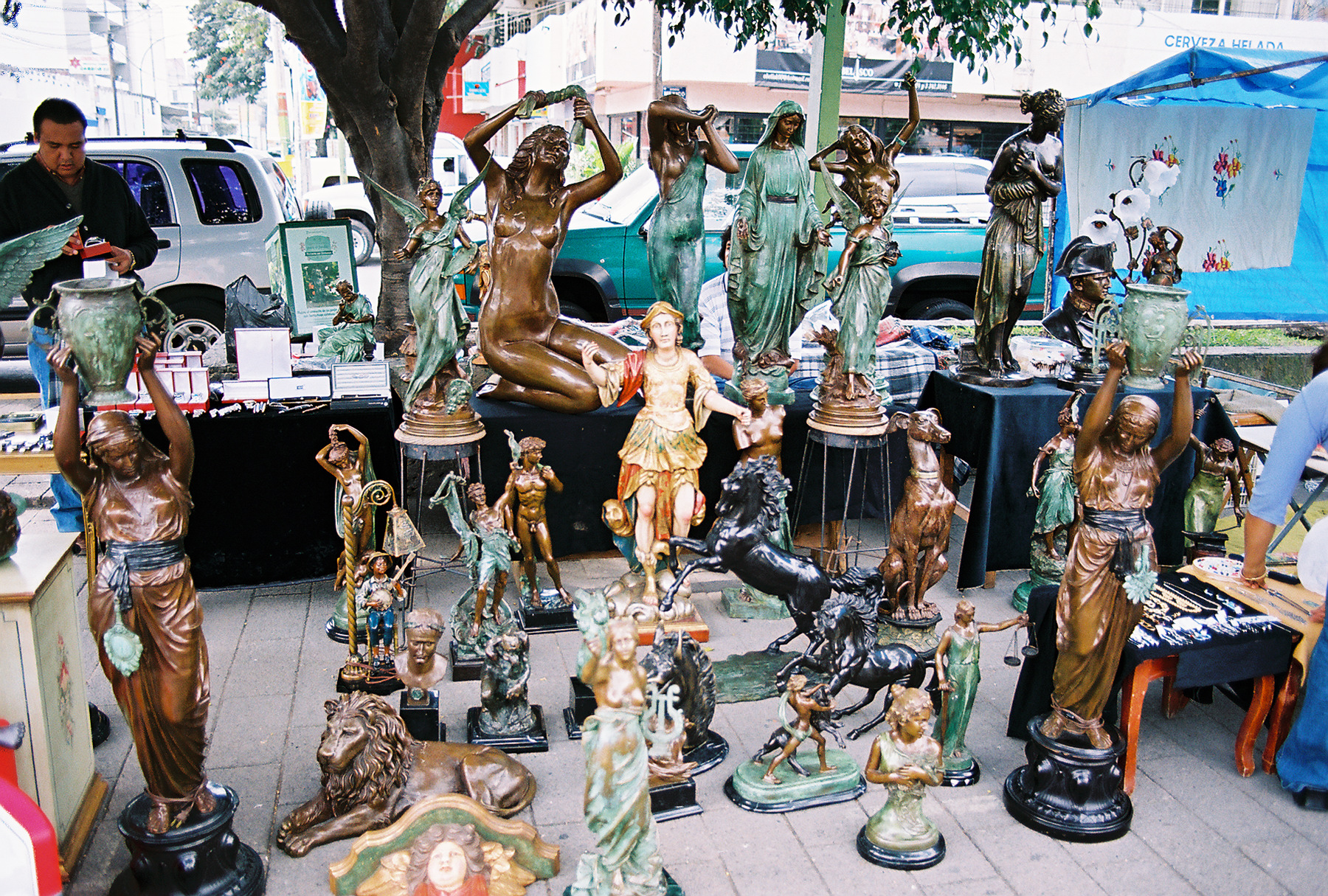
Held on Sundays from 9AM-5PM at the intersection of the Avenida Mexico and Chapultepec Norte in front of the Bodega Aurrera, this outdoor market unwinds over several blocks and the scope of the collection is mind-boggling.

Guadalajara’s antique market


The stalls are chock full of collectibles from statuary to silver and crystal, furniture, and books and records.

Guadalajara’s antique market

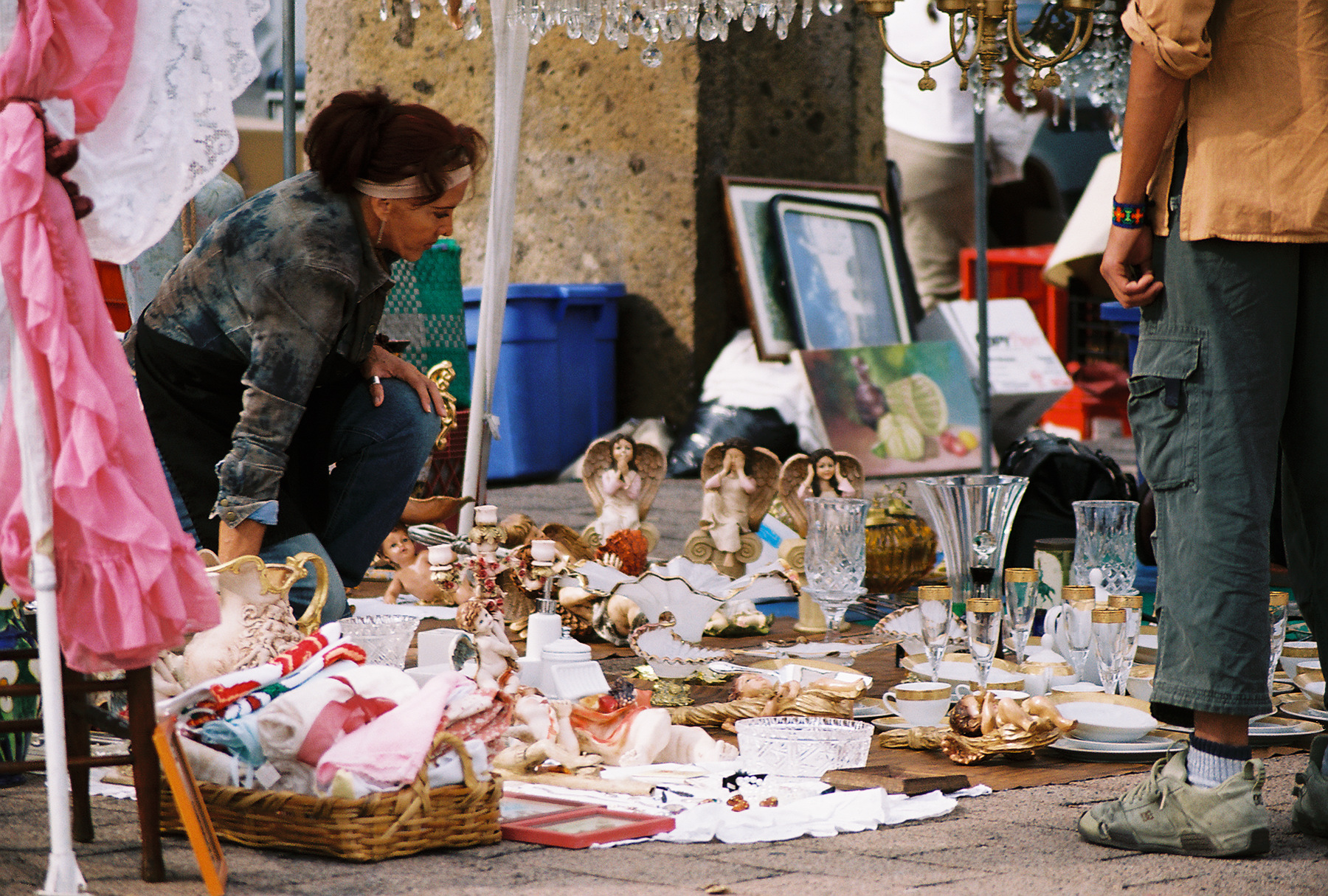
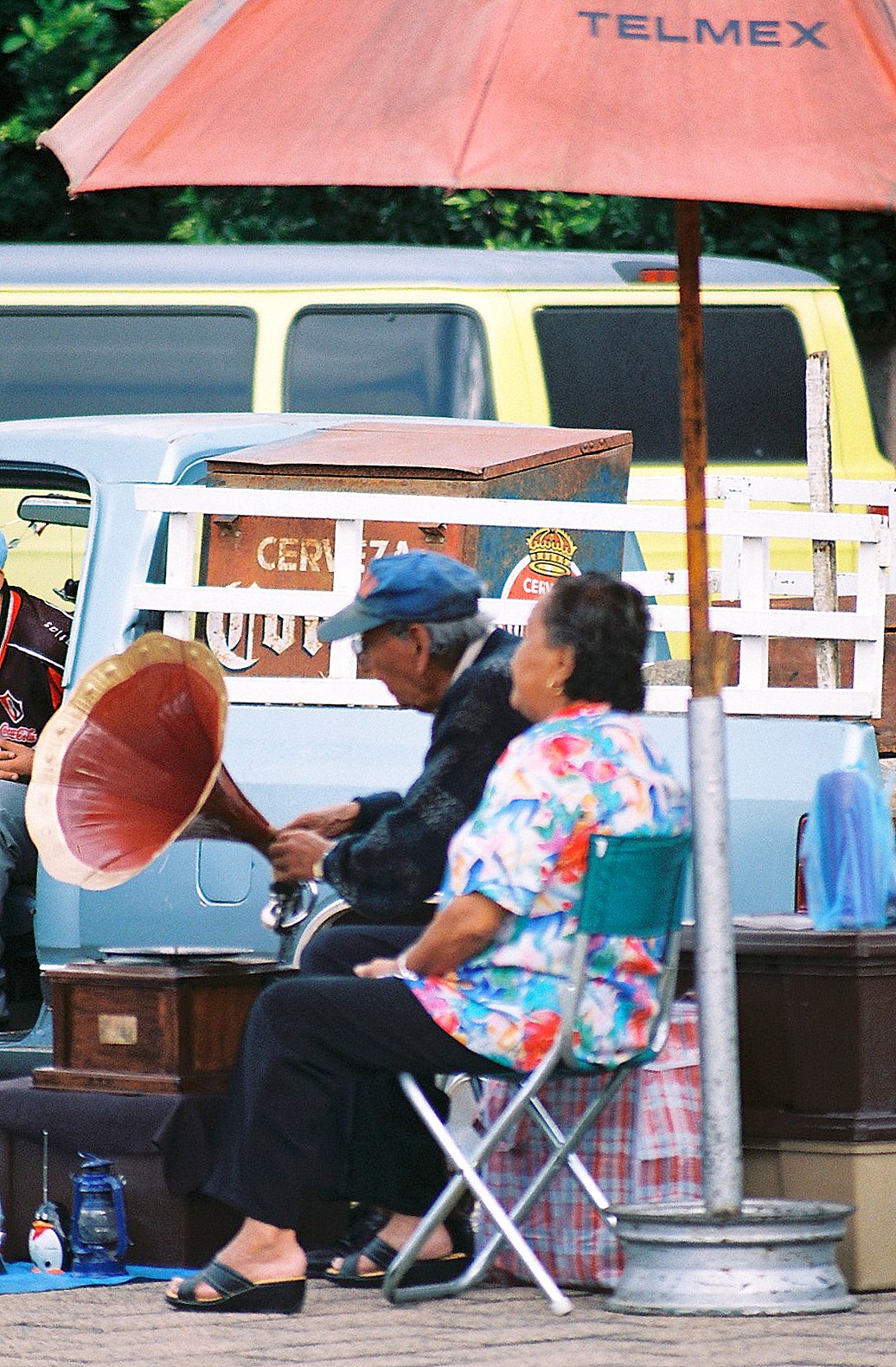
There are also plenty of personal items and memorabilia that often leave the shopper with the sense that the aura of their original owners is somehow still present among them.

If you’re expecting a flea market that requires you to sort through a ton of junk to find a few gems, you’ll be pleasantly surprised by this place.

Guadalajara’s antique market

Much of the merchandise appears to be in museum piece condition, and it’s clear that the vendors know their artifacts intimately and take great pride in their displays.

Guadalajara’s antique market

Here you’re stopped by an item caught out of the corner of an eye and find yourself still browsing the same stall half an hour later, unraveling threads into the past.

Guadalajara’s antique market

This market, though, is not just a window into Guadalajara’s past, but also a snapshot of its present.

Guadalajara’s antique market

The vendors are of all ages, and it’s clear that these folks have come to know each other well over years of Sundays spent here together.

Guadalajara’s antique market


The shoppers are also diverse, but the crowd includes a healthy mix of young urban professionals that the visitor is unlikely to encounter at the city’s more classic tourist sites.

Guadalajara’s antique market

You don’t have to be a collector to appreciate this place, and you don’t have to buy a thing to have an enjoyable day here.

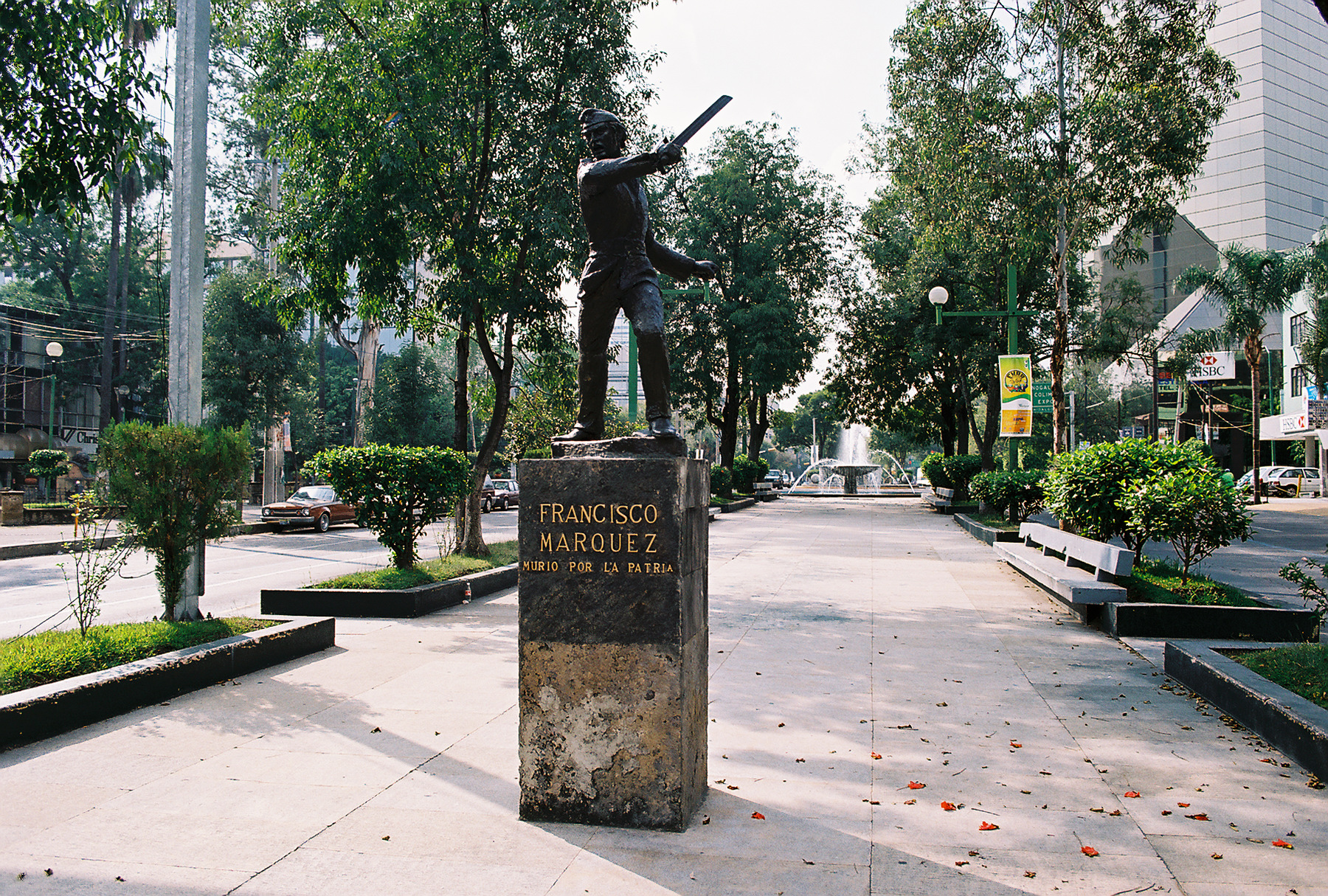
Avenida Chaputepec

Afterwards take a walk down Chapultepec and join the Sunday promenade always in progress on a traffic-free Avenida Vallarta.

See my related posts: