Archive for May, 2012


B.Y.O. chic

If you can do without condescending sommeliers, thrice-marked-up wines, and valet parking… you’ll be pleasantly surprised at the great dining experiences – not to mention great values – to be had at Dallas’s B.Y.O restaurants.

I’m talking about genuine B.Y.O.’s that will uncork your bottle or lend you a corkscrew without charging a corking fee.  In these establishments there’s no worry about whether the wine list will have something which appeals to you at a price less than your car payment.   Here if you’re not drinking a bottle of your very favorite with the meal or if you’ve overpaid for it you’ve no one to blame but yourself!

These three East Dallas B.Y.O.’s prove the point that the food has to be damned good in a restaurant that serves no alcohol!

Bangkok Inn, Dallas

BANGKOK INN.  Located at 6033 Oram just off Skillman (at the edge of the Skillman/Live Oak Shopping Center), this is not one of those Thai restaurants that look like the movie set of The King & I.
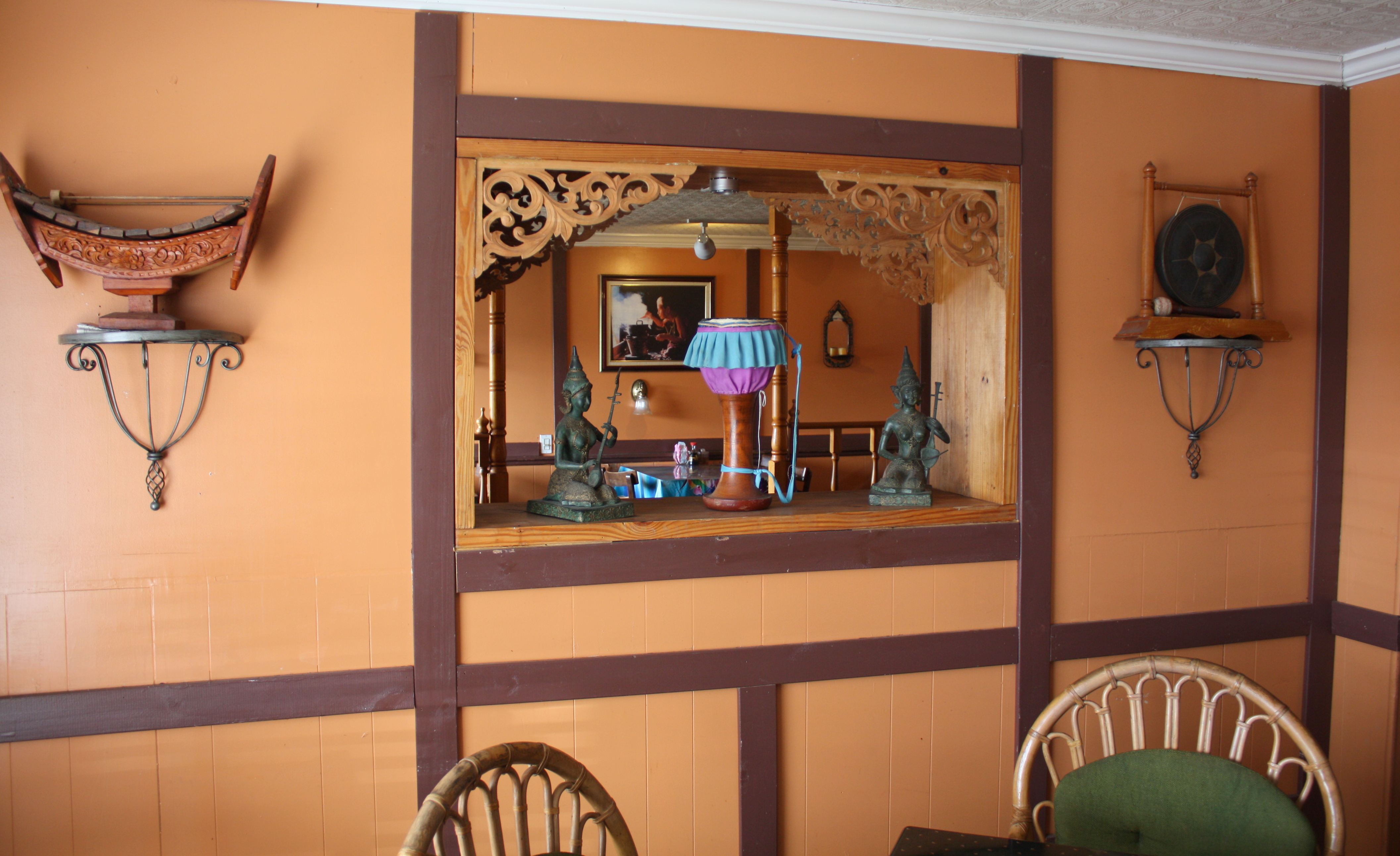
Bangkok Inn, Dallas

It evokes instead the feel of a country village restaurant.  It’s bright and warm with plenty of Thai artifacts on the walls. Twenty or so tables are spread across two adjacent dining rooms to create very intimate spaces.
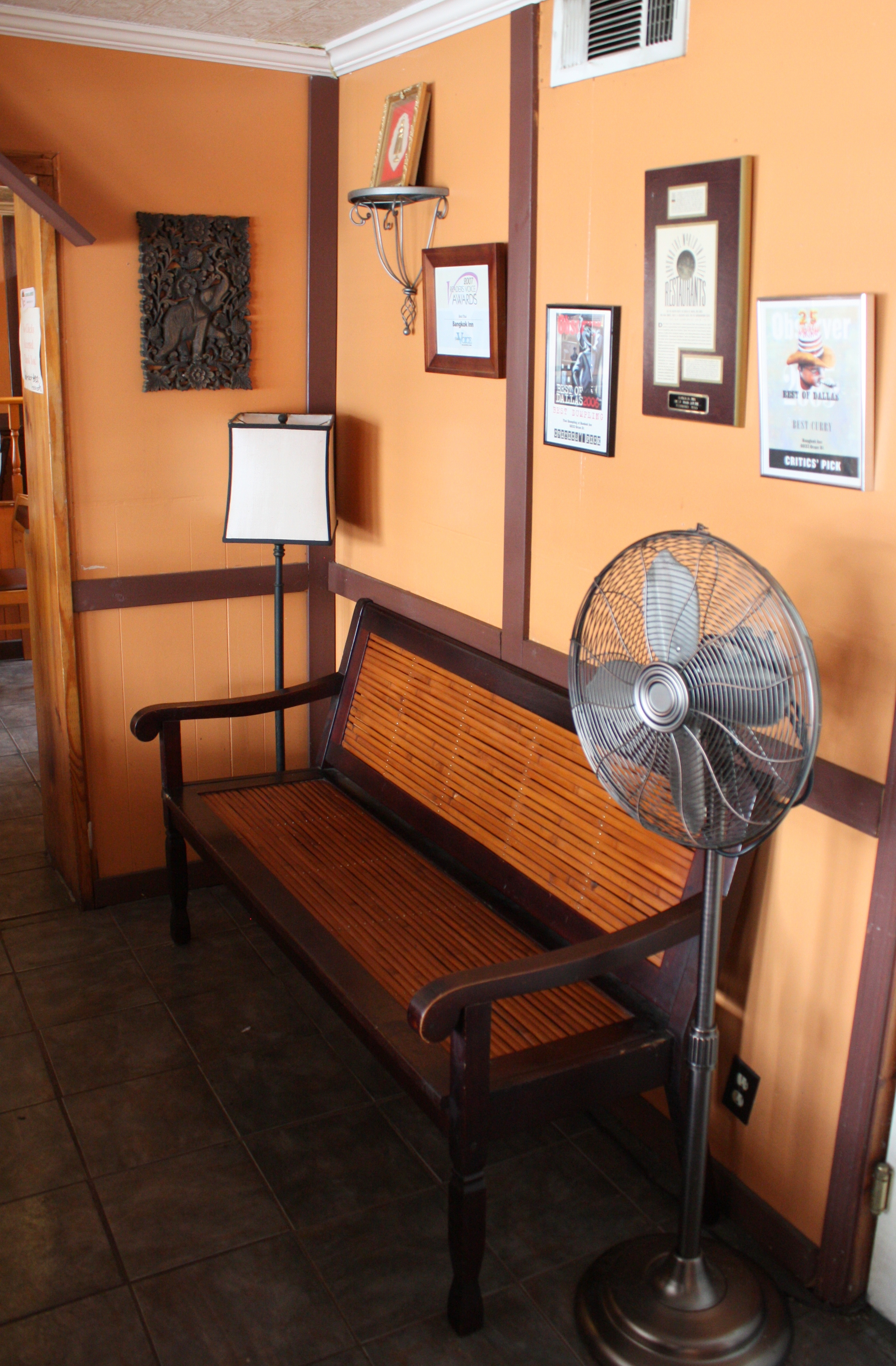
Bangkok Inn, Dallas

Bangkok Inn is owned and operated by the Schuskul family, who came to Dallas from Thailand via Maryland and later Houston.

Expect much of the traditional on this menu.  There are good Tom Yam Kai and Kai Tom Kha soups and egg rolls and spring rolls appetizers.   Also be delighted by a great Thai Dumpling or a satay in pork, shrimp, or chicken.

For me the entrée always comes down to the hard choice between equally tasty green, red and yellow chicken or beef curries.  For dessert check out the fried banana with honey over ice cream or the banana in coconut milk.

There’s a good selection of vegetarian entrees here and no entrée is priced above $10.95


SEVAN G&G CAFE.  Located at 2221 Greenville between Richmond and Belmont, this restaurant’s name reflects the purchase in 2004 of the Sevan restaurant by current owners Grace and George.

Sevan G&G Cafe, Dallas

Walk through covered patio dining to enter the dining room, where wood paneling and a cozy layout create the warm and comfortable atmosphere of a true neighborhood bistro.

The owners are originally from Lebanon, and art and implements from the Mediterranean decorate the walls.  Like an increasing number of restaurants in the area, Sevan G&G draws an eclectic crowd ranging from Lakewood and M Street homeowners to young apartment dwellers.

Sevan G&G Cafe, Dallas

The expected Mediterranean fare – hummus, baba ganoush, dolmas, and gyro are all without exception well done.

Then there are unique offerings like the Pistachio Chicken, an amply-sized chicken breast encrusted with ground pistachios and stuffed with feta cheese.

Sevan G&G Cafe, Dallas

At just under $23, the rack of lamb is the most expensive item on the menu by a far shot; most entrees range between $10-$15.  The owners are always to be seen in both the front and back of the house, and they make you feel like you’ve been invited to dine in their home.


JADE GARDEN.  If there’s an inverse relationship between the flashiness of the restaurant and the quality of the food, then Jade Garden is absolute proof positive.

Jade Garden Restaurant, Dallas

Jade Garden Restaurant, Dallas

Located in a building that looks like it was a Dairy Queen in a past life, the interior can be charitably described as ‘60’s kitsch.

Located at 4800 Bryan and Fitzhugh, Jade Garden sits within eyesight of Jimmy’s Food Store (see my separate post “Dallas’s Italian Grocery“) in a neighborhood best described as transitional.

There’s lots more here, though, than first meets the eye.

A first tip-off is that menu items are listed in English, Chinese, and Vietnamese and there are usually at least as many Asian diners as not.

Jade Garden Restaurant, Dallas

The menu’s so robust as to almost intimidate, but I always order from the whiteboard specials, usually after the owner walks me through my options.  A favorite of mine is the Salt & Pepper Soft Shell Crab.  Trust me… the unassuming name doesn’t even begin to do it justice.

Jade Garden Restaurant, Dallas

(For those who can’t appreciate the kitch there’s always take-out!)

These unique eateries all have in common their focus on great food served in unpretentious surroundings by immigrant owners who take a very personal role in the delivery of customer satisfaction.  They’ve all been around long enough to prove their timeless appeal and you’ll see fanatically-loyal customers regularly at their tables.

Buon appetito!

I’ve just completed my tenth round trip between Dallas and Guadalajara by bus.  At the end of each trip, tactful friends on both sides of the border question me about the experience with a combination of curiosity and skepticism.

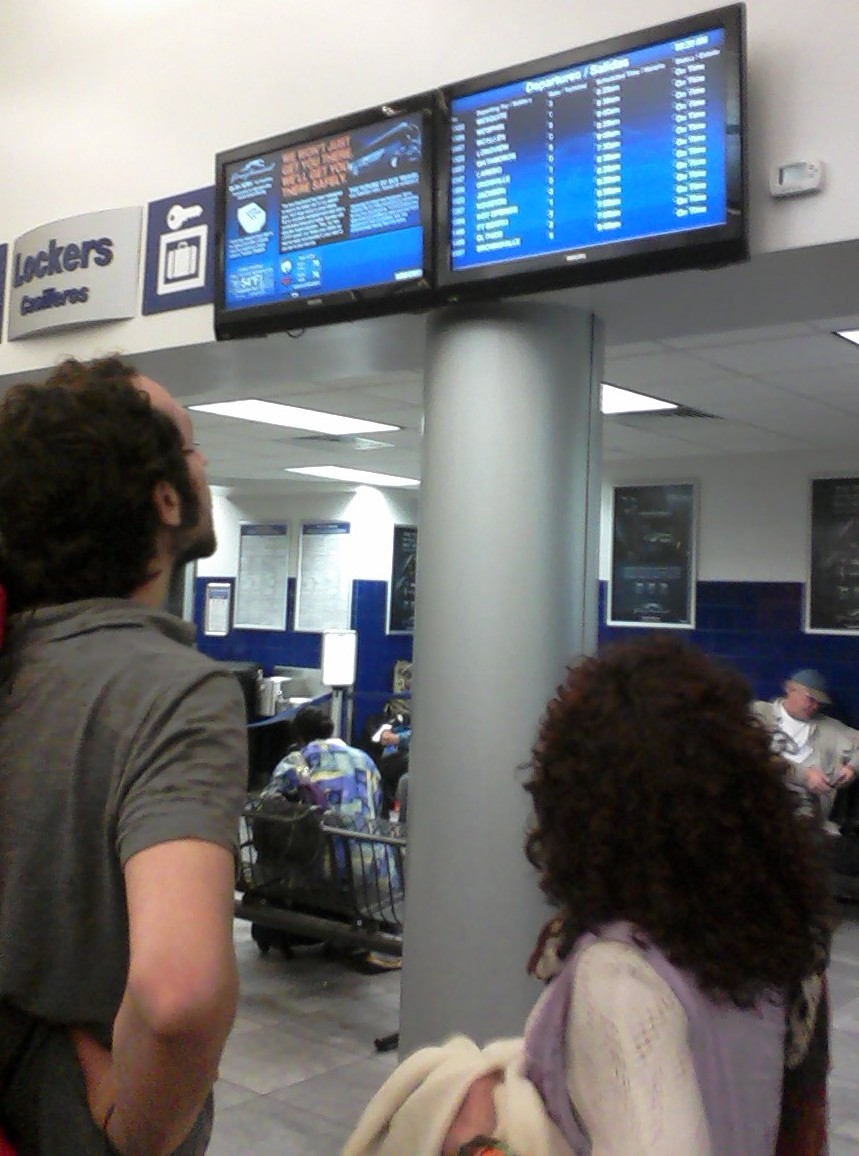
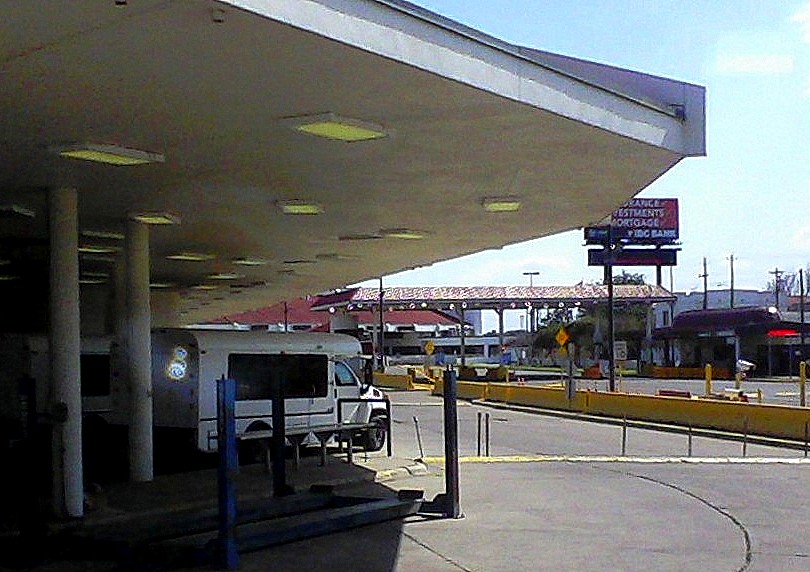
Greyhound bus terminal, Dallas, TX

Tactless friends question my sanity.  After all, the driving distance – which varies depending upon the route taken – runs around 1,100 miles (about the same distance as driving from Dallas to Phoenix, Detroit, or Jacksonville).  By private auto the trip takes a bit over 20 hours.  By bus with occasional station stops it takes a little over 26 hours.

Greyhound bus terminal, Dallas, TX

There are otherwise some really good reasons to travel to Mexico by bus…

Mexico “gets” bus service.  There’s almost no passenger rail service in Mexico and outside of major population centers economics don’t lend themselves to air service a la Southwest Airlines.  The result is that Mexico – as in many other countries I’ve travelled – has refined bus travel to an art.  (See my related post on bus travel in Argentina.)

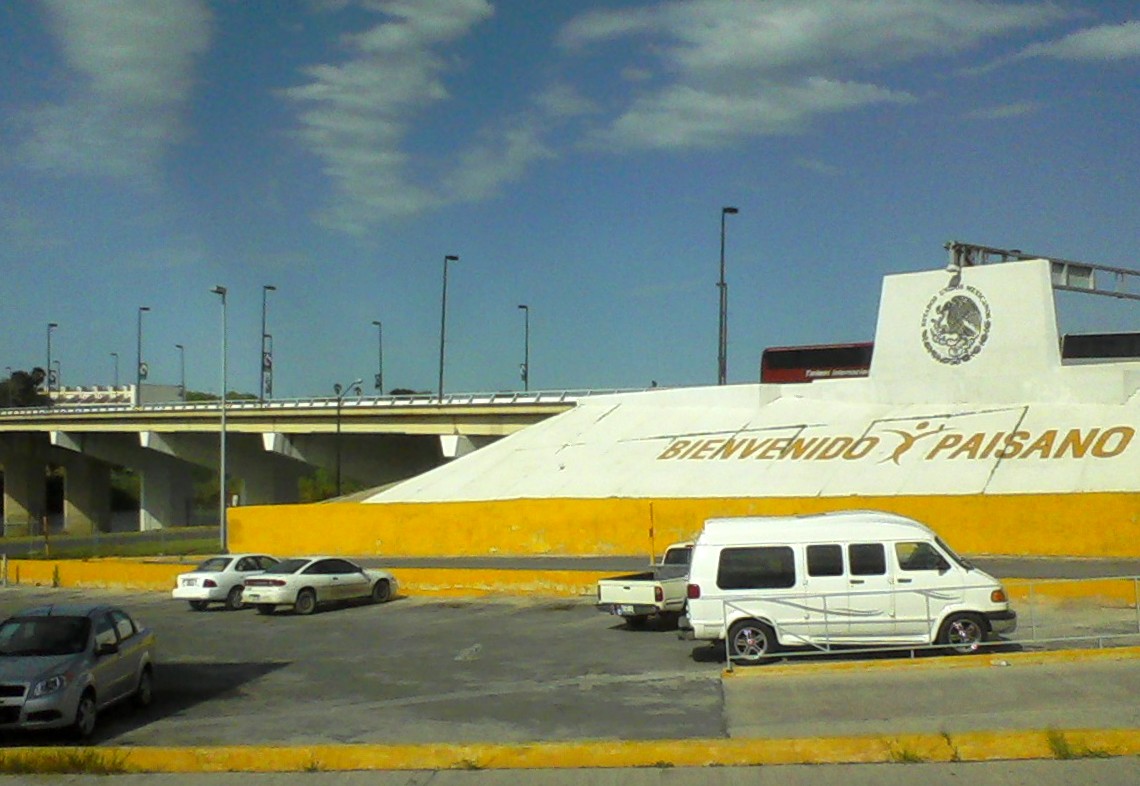
Border crossing, Laredo, TX (U.S. side)

It’s a rich experience.  Bus travel affords an opportunity to see the Mexico – and meet the Mexican people – inaccessible for air travelers.  Even after ten trips I still see something missed on an earlier trip, and I always make new acquaintances.  The route takes me through cities including Monterey, Saltillo, Zacatecas, and Aguascalientes, and since I’m not driving I have every chance to enjoy the views.

It’s comfortable.  In Mexico – as in much of the world outside of the U.S. – bus travel is the transportation of choice, and first class bus seating and service is on par with transatlantic airline business class.  Busses have their own dedicated lines for Customs and Immigration on both sides of the border, and often clear inspection more quickly than the long lines of passenger cars… particularly during rush hours.  There’s a restroom on the bus, and a rest stop with limited foodservice and more restrooms on an average of every 2-3 hours.

Rio Grande from the Lincoln-Juarez bridge, Laredo, TX

It’s convenient.  I book my trip with Greyhound and its Mexican affiliate Americanos, buy my ticket online with a credit card, and receive it by mail.  I’m even enrolled in Greyhound’s Road Rewards frequent traveler program… which earns me further travel discounts.

From Mexican Immigration & Customs, Nuevo Laredo

While air travel requires an hour of travel and car parking and another hour for security screening, I’m routinely on the bus in Dallas within an hour of leaving my home.  If you become bored with the passengers or the scenery, crack open that new novel you’ve been meaning to read or listen to your MP3 player.  I get lots of writing done on the bus.

Two bus drivers kibbitz while their busses await their turn for inspection.

Bus travel to and from Mexico is incredibly economical.  My round trip bus fare costs about one-third of the cheapest Dallas-to-Guadalajara airline ticket… and actually less than the cost of auto tolls alone for the same trip on Mexico’s excellent system of toll roads (the cuotas)… not to mention the cost of gasoline.

Outside the bus terminal, Nuevo Laredo, Mexico

Since there’s no overnight stay on the bus route – the bus changes drivers, but rolls right on through the night – there’s also no hotel expense.  While there’s a modest charge for extra luggage checked on trips originating in the States, there seems to be no such restriction for trips originating in Mexico.  Greyhound charges for ticket changes in the States, but a bus ticket in Mexico can be used at any time within 6 months of issue with no charge for schedule changes between the original ticket destinations.

Inside the bus on the Mexican side

It’s safer.  I view the risk of violence to Americans traveling in Mexico as grossly overstated by both the U.S. media and the State Department.  Particularly between dusk and dawn the risk of hitting stray livestock or pedestrians increases, and if you’re involved in a accident that causes injury or fatality you will go directly to jail until blame is sorted out… and much of what you’ve heard about Mexican jails is probably true.


There are two drawbacks to Greyhound/Americanos.  One is that while busses on the Mexican legs of the trip have spacious seats, plenty of leg room, and video, the Stateside busses are about as (un) comfortably cramped as traveling in airline economy class.  The other is that the trip on Greyhound/Americanos requires anywhere from 2 to 4 bus changes, and while I’ve never arrived late or missed a connection within the Mexican legs of the trip the same cannot be said for the Stateside legs.

Central Nueva bus terminal, Guadalajara, Mexico

For a bit more than the cost of Greyhound/Americanos, travelers can instead book with one of several Mexican bus lines that require no bus changes from U.S. destinations and depart from locations as far-flung as Florida, Tennessee, the Carolinas, and Illinois.  These carriers cater to Mexicans and Mexican-Americans, cost a bit more than the Greyhound option, and typically locate their U.S. terminals in heavily Hispanic neighborhoods.  Just a few are Omnibuses de Mexico, Turimex, El Tornado, and El Conejo.

Central Nueva bus terminal, Guadalajara, Mexico

Bottom line:  Bus travel to/from Mexico is not for everyone, but if you have a spirit of adventure that craves more than a sanitized Epcot Center experience, it’s something you should do… at least once!

American Galapagos

I can’t count the number of times over the years that I’ve driven the Pacific Coast Highway from Ventura to Santa Barbara and passed the silhouetted Channel Islands without giving them a second thought.  It was a visit to friends and family in Ventura that created an opportunity to give them a serious look.

Ventura harbor, California

It’s overcast as I board the ferry from Ventura harbor to cover the 20 miles to California’s largest island, Santa Cruz.

Its 100 square miles of terrain and 77 miles of coastline make it the centerpiece of the Channel Islands National Park.

Seal lions sunning on channel buoy

Along the way we pass seals sunning themselves on a channel marker. Oil rigs dot the water in the distance.

Sea caves from above, Santa Cruz Island

Kayaks ashore, Santa Cruz Island

As the ferry approaches, the Island’s rugged mountain ranges loom larger, and coastal tidepools, beaches and sea caves come into view.


The Island’s Painted Cave may be one of the world’s largest and deepest and a big draw for divers and kayakers, but I’m ready to be back on dry land after almost an hour on the ferry.


Santa Cruz Island kayaks 04

Kayaks in tow

We anchor in Scorpion Bay and I take to the trail and a climb to a better view.

This island is home to more than 600 plant species in ecosystems range from marshes and grasslands to chaparral and pine forests.

Millions of years of isolation have resulted in adaptation to the island’s unique environment by many distinctive plant and animals species, including 9 found nowhere else in the world.

Santa Cruz was first inhabited more than 9,000 years ago by Native Americans, and here the Chumash tribe produced shell-bead money used by tribes throughout California.

Europeans first arrived on the island only late in the 16th century, and more than 200 years would pass before a Mexican land grant established what would become the largest privately owned island in the U.S.

Scorpion Ranch, Santa Cruz Island

It also marked the beginning of a ranching operation which introduced non-native species including French Merino sheep to the island, and the herd swelled to over 20,000 head during the Civil War as demand for wool army uniforms peaked.

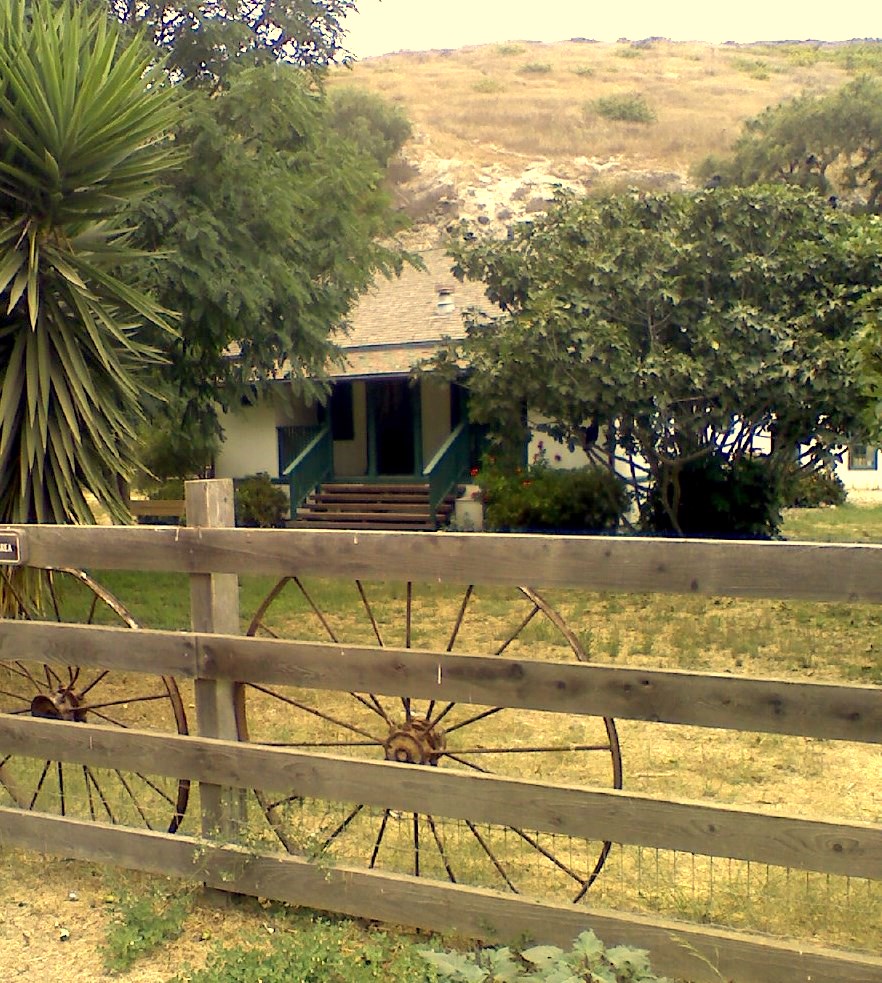
Scorpion Ranch house, Santa Cruz Island

Ranching continued until 1984 through several changes of property ownership. The ranch houses, barns, blacksmith and saddle shops, and wineries all still survive.

Scorpion Ranch farm implements, Santa Cruz Island

Scorpion Ranch cellar

The introduction by Europeans of non-native animals and plants is responsible for the severe disruption of the island’s native plant communities and its archeological sites.

Rooting by pigs gone feral has created bare ground that is easily eroded and colonized by invasive weeds. It has also damaged a large number of Chumash archeological sites.

Feral piglets provide a year-round food source for golden eagles, and the eagles’ growing numbers drove another of their prey – island foxes – to the brink of extinction.

The Santa Barbara Island song sparrow and the Santa Cruz Island monkey, once found only on these islands, are already extinct.

The Nature Conservancy acquired much of the island’s property in 1987 and the Federal government completed acquisition of the remaining land in 1996. In and effort to rescue 10 species from the brink of extinction and to protect more than 3,000 archeological sites, the National Park Service and The Nature Conservancy embarked upon a long term program to restore Santa Cruz Island.

Their eradication of feral pigs, European rabbits, sheep, and burros has already enabled a tremendous natural recovery. In addition, a captive breeding program for island foxes has successfully re-established a wild population and golden eagles have been captured and relocated to northeast California.

Native bald eagles – the last of which perished in the 1950’s from DDT poisoning –  have been reintroduced to drive off any returning golden eagles, and for the first time in more than 50 years bald eagle chicks have hatched unaided from two separate nests on Santa Cruz Island.

Coastline, Santa Cruz Island

Now hikers encounter sweeping ocean and mainland vistas almost completely free of human imprint, broken by deep canyons dotted with year-round springs and streams.

Cypress tree, Santa Cruz Island

Santa Cruz deserves far more than a day trip, and there’s overnight camping available on the Island. Just remember that whether you’re an over-nighter or just a day-tripper this rule applies: You pack out everything that you pack in.

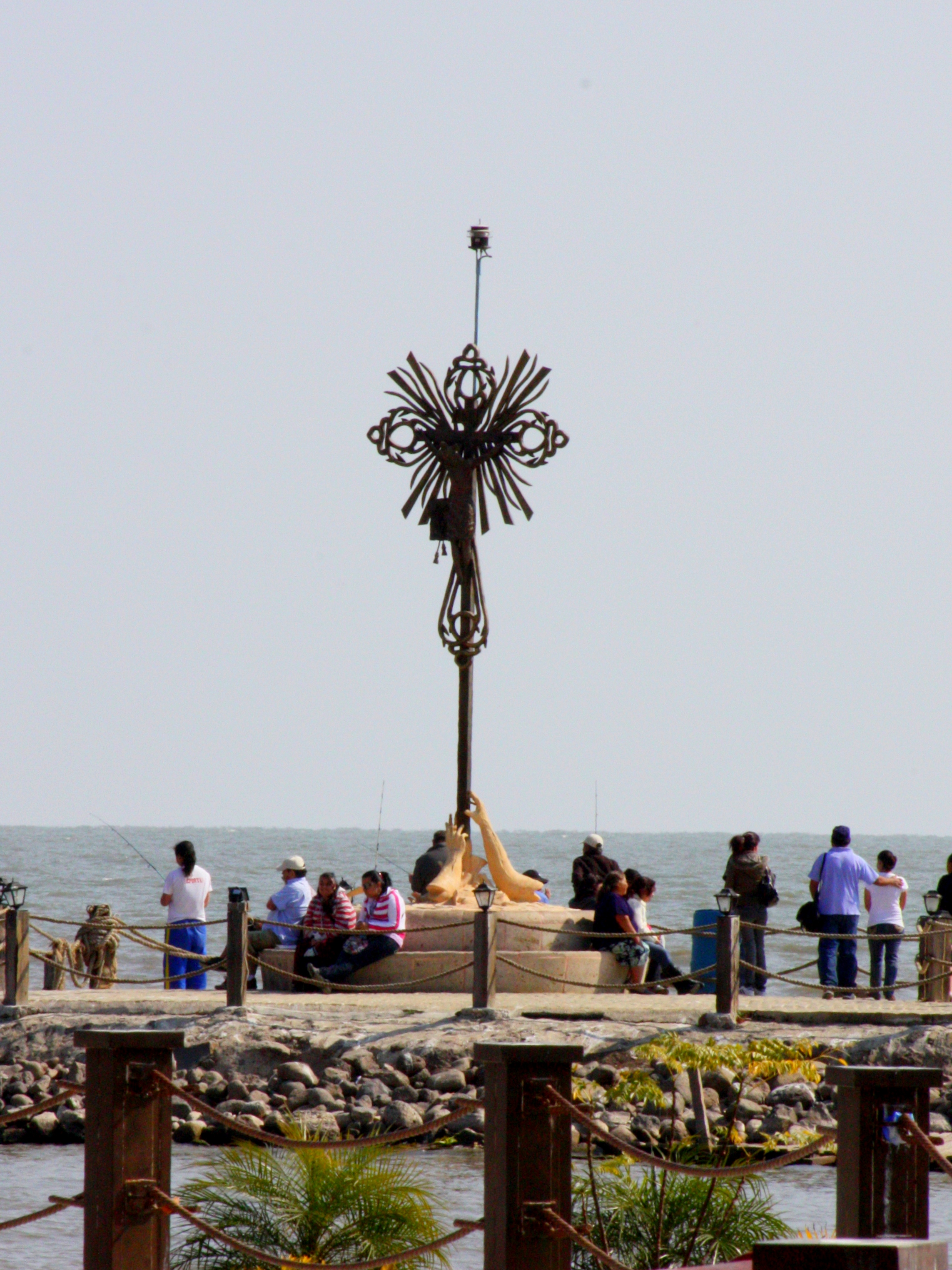
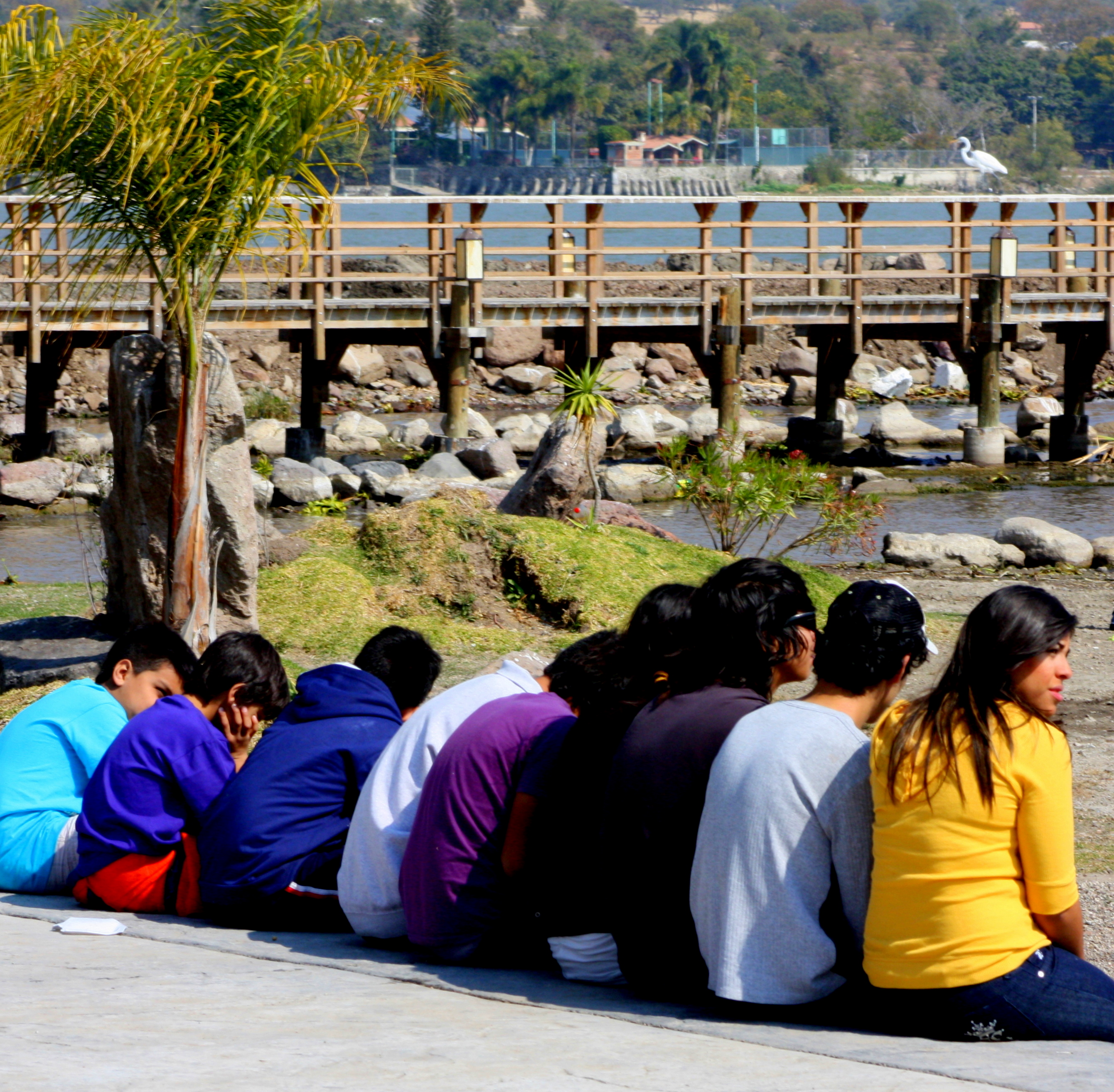
Lakeshore promenade, Ajijic

Something about the sight of a distant horizon anchored by an expanse of blue water makes a walk along the shoreline like no other walk.


For most folks such a view is the stuff of which vacation memories are made.


For anyone living along Lake Chapala’s northwest shore it’s an everyday sight from the ever-expanding public vantage point of walkways along its piers and seawalls… its malecons.

Lakeshore promenade, Chapala


The malecon is a fixture of coastal cities in the Spanish-speaking world and in towns that grew up around them  malecons are invariably community focal points.


Those which I’ve found memorable include Barcelona,  San Juan P.R., and Puerto Vallarta. (Havana’s on my bucket list!)


In these towns the malecons  often feel as if the perimeter of a plaza square has been unraveled to form a thread along the water’s edge, and the waterfront is an organic part of the city.

Lakeshore promenade, Jocotopec


The construction in recent years of malecons along Lake Chapala in San Antonio Tlayacapan, Ajijic, San Juan Cosala, and  Jocotopec (and the renovation of the one in Chapala)  has created miles of lakeshore promenades that reinforce the historic connection between the lake and these one-time fishing villages.


There’s more at work here, though, than history reaffirmed.


These malecons liberate walkers from traffic lights and street intersections; there’s just blue water on one side and a city sunning itself on the other.

Lakeshore promenade, Ajijic


It’s a perspective that makes malecon-walkers in the city, but not  of  the city.


On each malecon the cast of characters may vary little from one day to the next, but the foot traffic has its own seasons and ever-changing images of  lake, city, sky, and mountains creates a kaleidoscope of  endlessly unique tableaus.

Lakeshore promenade, Jocotopec


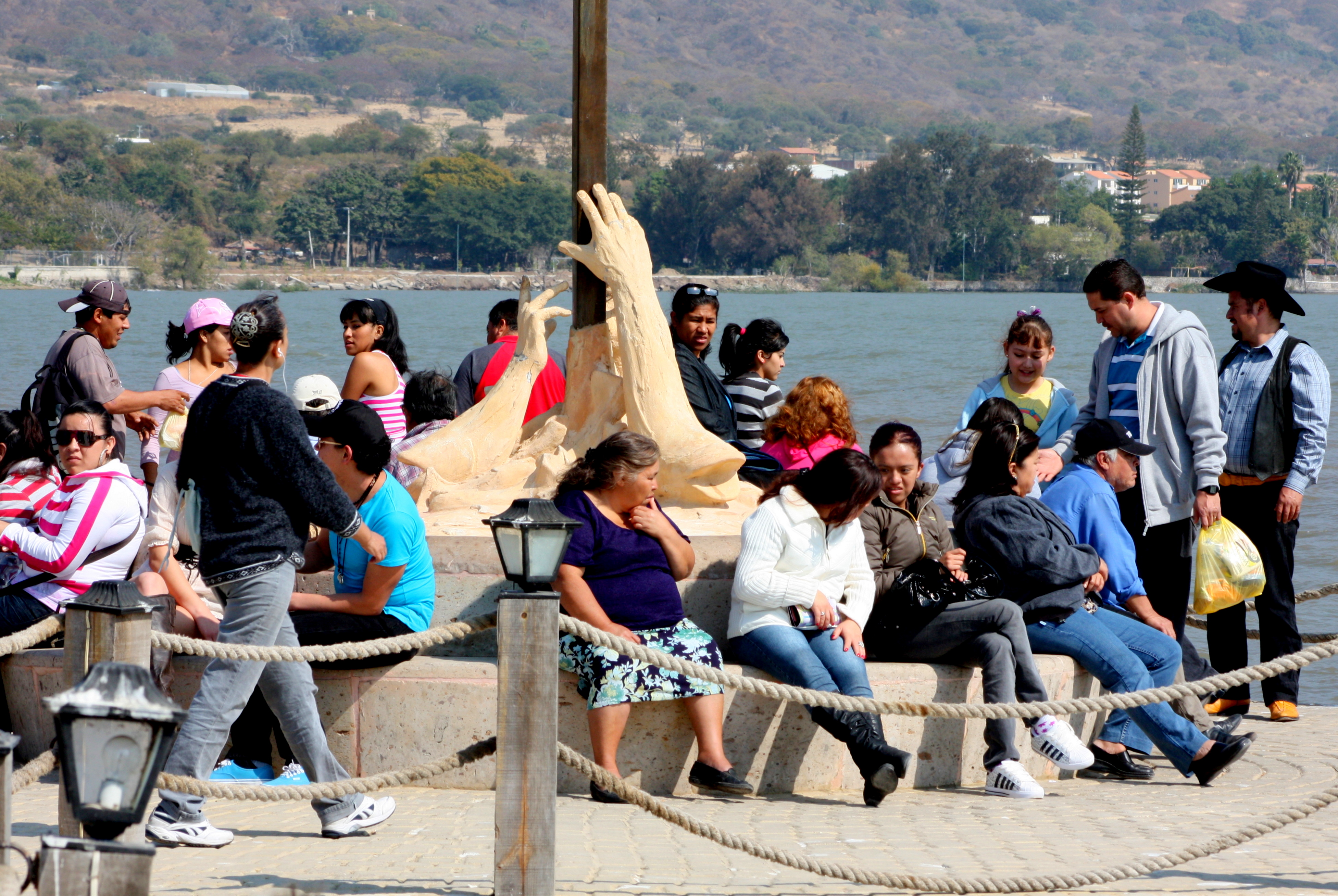
Malecons deliver a great slice of local life. Depending upon time of day and day of week those along Lake Chapala are inhabited by a  mix of everyone from local working men and women to frugal pensioners,  well-off  expats, and Tapatios.


The dog walkers, speed walkers, joggers, runners, bench-sitters and kibitzers are weekday morning fixtures.  So are workday commuters on bicycle and on foot and children on their way to or from school; the malecon is also a sort of pedestrian libramiento.

Lakeshore promenade, Ajijic

Lakeshore promenade, Jocotopec

The malecon takes on a new identity when the mix of local families and Tapatios dials itself up on weekends and holidays.


Mexico is a place where the generations still mingle, and the malecon is a prime venue at which to see and be seen. If you want to see a town unfurled for easy viewing, join the Sunday evening promenade on its malecon.

Lakeshore promenade, Jocotopec


The view of the water is not just about postcard-perfect sunrises and sunsets or about the people-watching.

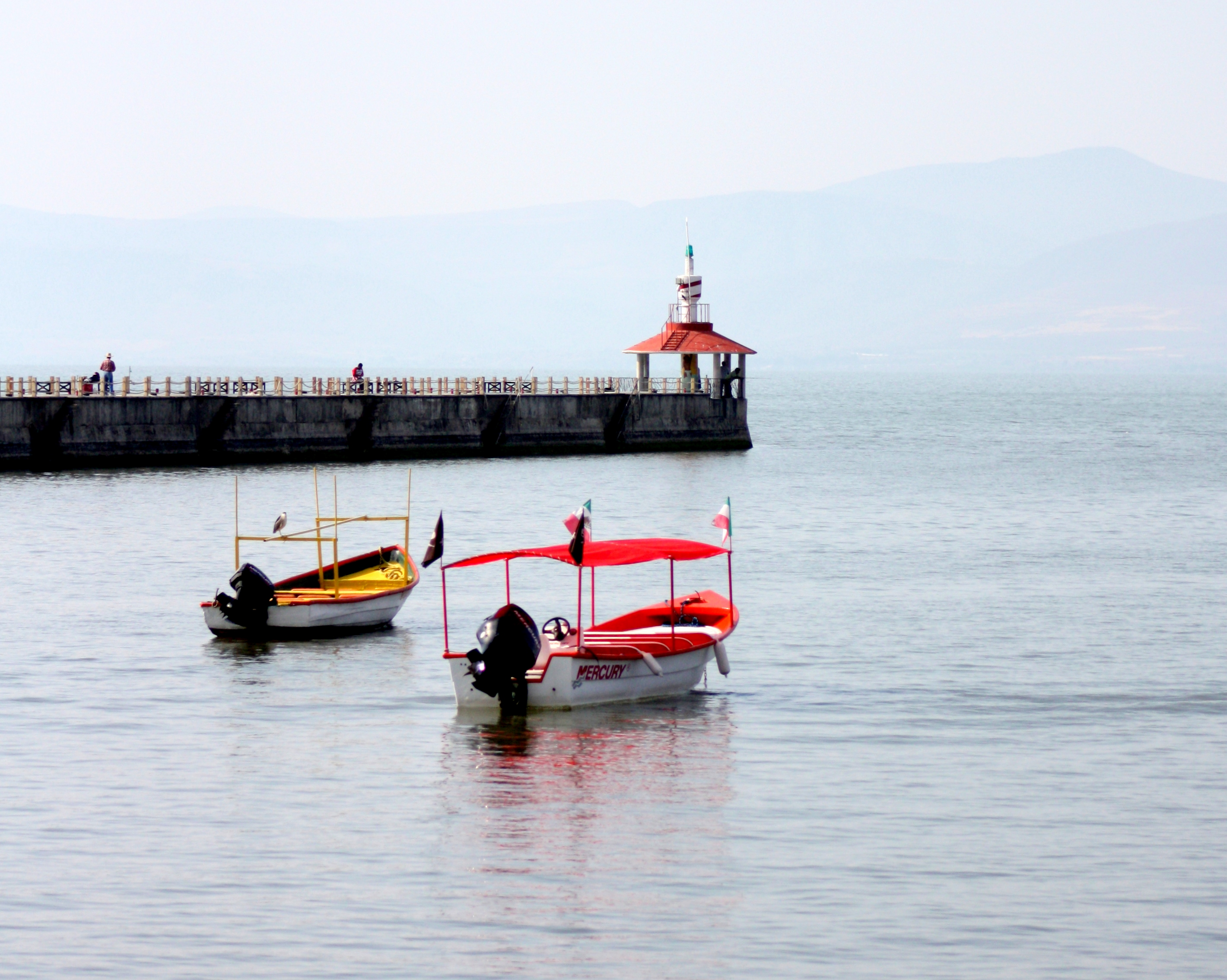
Fishing boats, Chapala pier


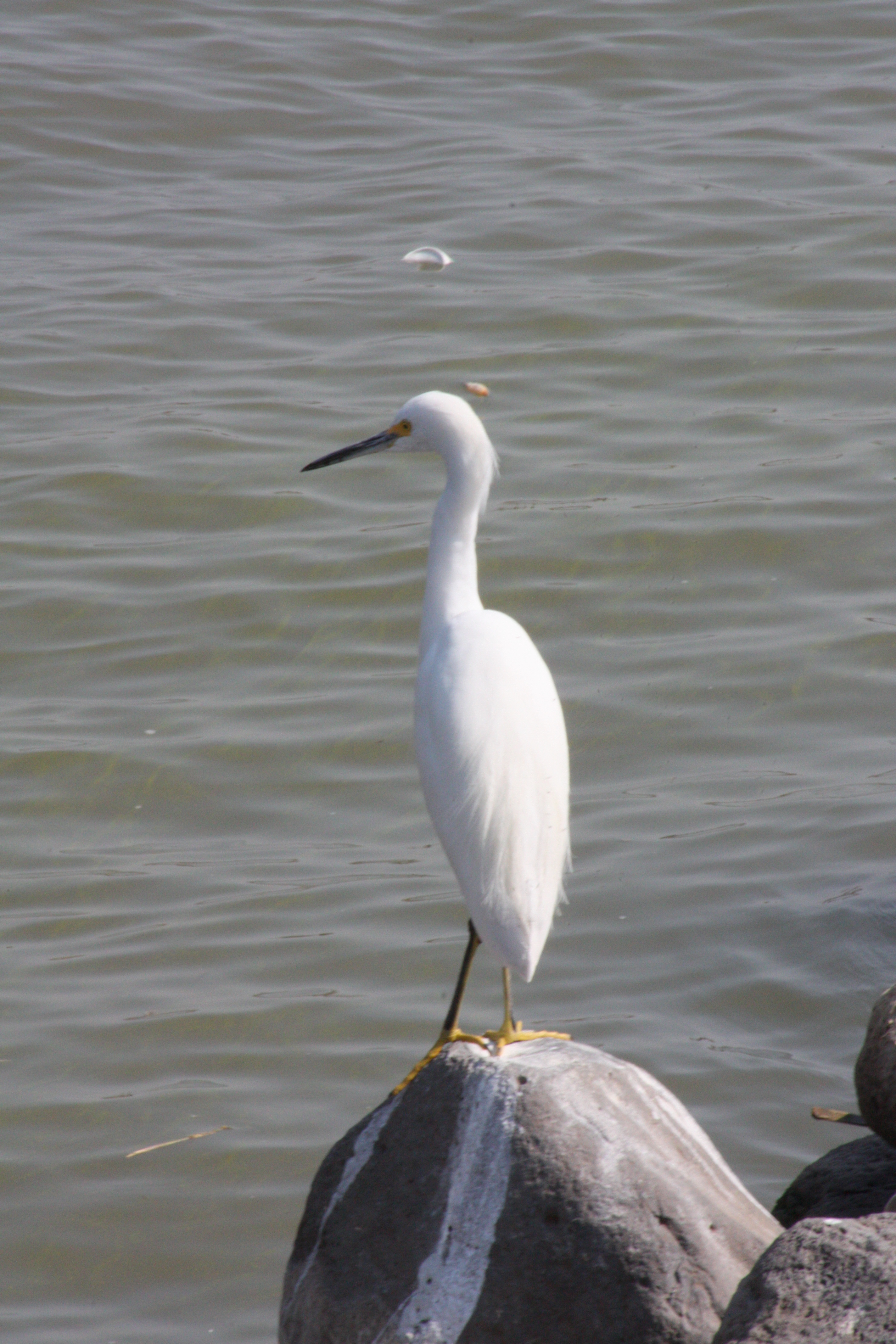
It’s about fishing boats leaving or returning and alabaster egrets at rest or in flight.

Egret, Ajijic lakeshore


It’s about lake currents streaking the water like swirling coffee cream, and the play of the sunlight through the clouds to make shadow puppets against the mountains on the far side.


Perhaps most importantly, the malecon makes its walkers more alike for the duration of their shared experience than they are different in so many other ways.

Lakeshore promenade, Ajijic

Lakeshore promenade, Ajijic