Archive for September, 2012


Basking in Barbados

Palm trees in the Trade Winds

Cruises are not only a great way to enjoy a smorgasbord of travel experiences in a short time, but also a great travel sampler that points the way to return visits.


My first taste of Barbados as a cruise ship port of call made it quickly clear that a return visit was needed to experience the best of what the island had to offer.

Bridgetown’s impressive city center


Bridgetown has the look of a seat of government, much of it dating from the days when the possession was administered by the British colonial service.


Tail end of a military parade
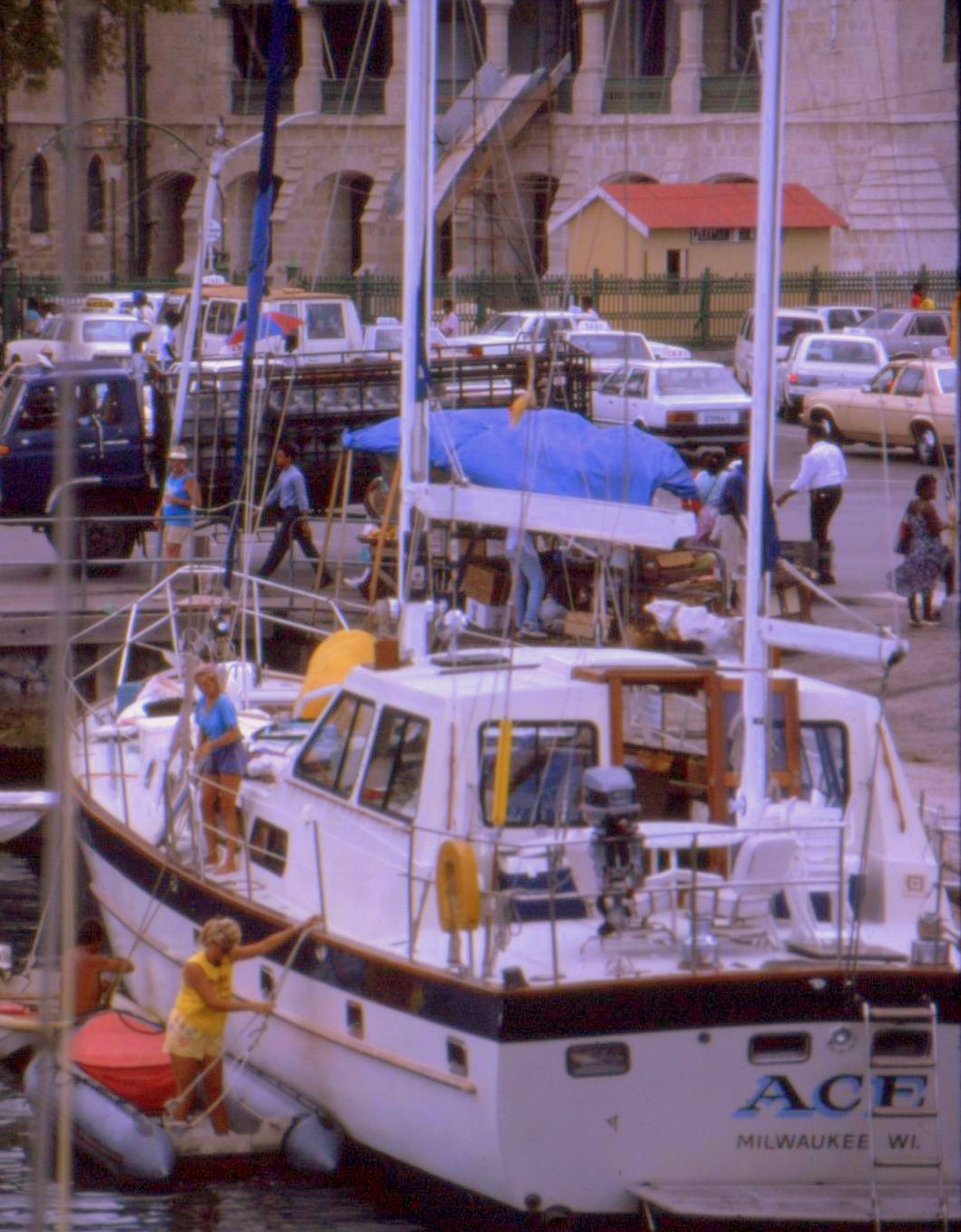
Boats of all types are anchored here


For many, bicycles are the transit of choice


Today it’s the island nation’s capital, and the city has a free and easy tropical gait.


Boats of every type constantly move in and out of its harbor.


Bicycles and donkey carts share the streets with cars.


Cars share the roads with horse-drawn carts


The British ruled and planted sugar cane here for more than 350 years, and as in in so many former British possessions, Barbados marries English culture and African heritage to produce delightful contrasts.
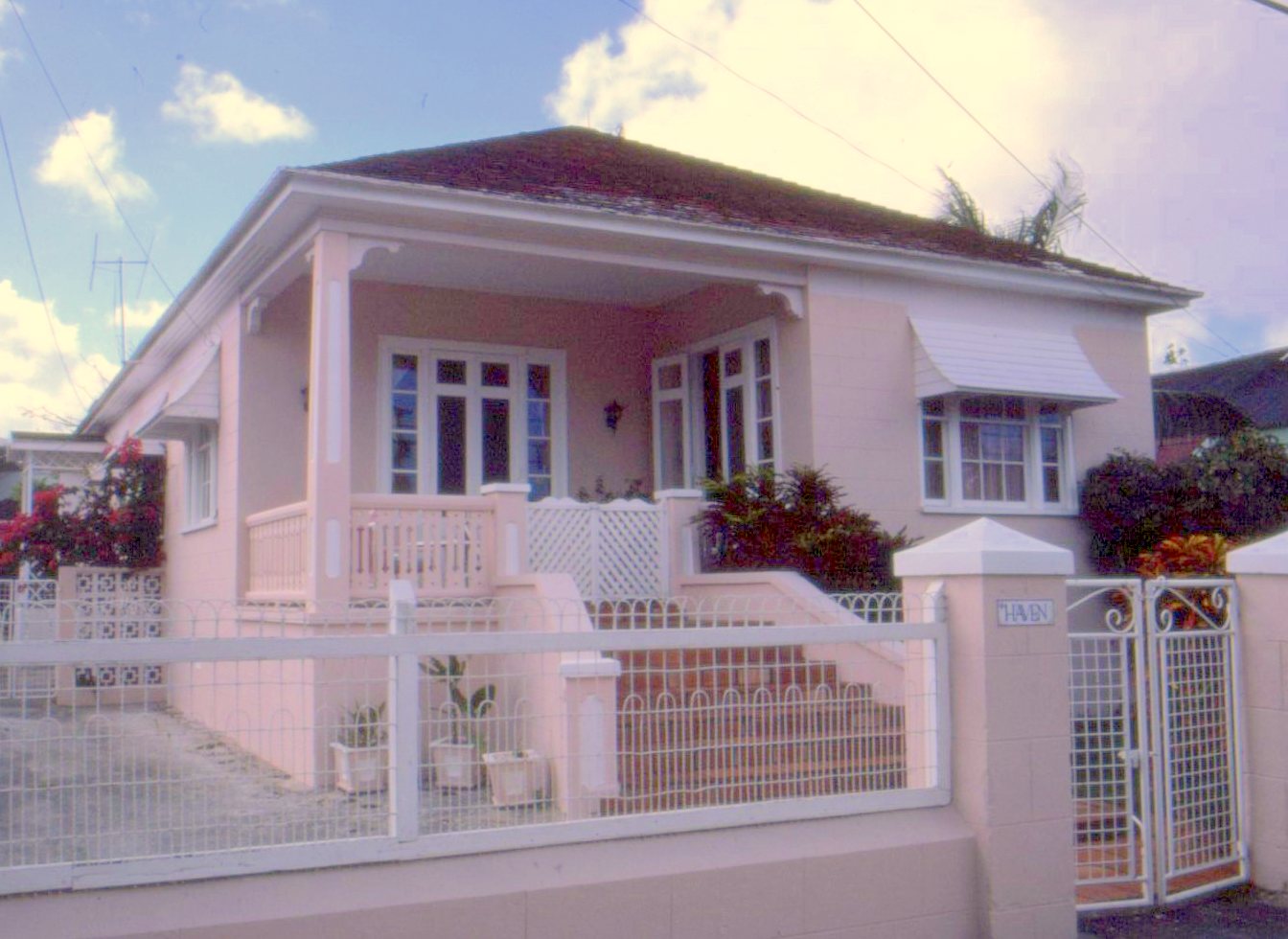
Cottage near Bridgetown

Island cottage near Bridgetown

There are cottages and hedgerows and floral gardens and red postal letterboxes.

There are also Rastafarians, dreadlocks tucked up under rastacaps.

Waiting for the bus

Fruit-vending Rastafarians

Coastal hamlet


About 2 in 5 of the island’s quarter million inhabitants live in and around Bridgetown.


The rest are scattered among small villages and hamlets across barely more than 150 square miles and along 60 miles of coastline.
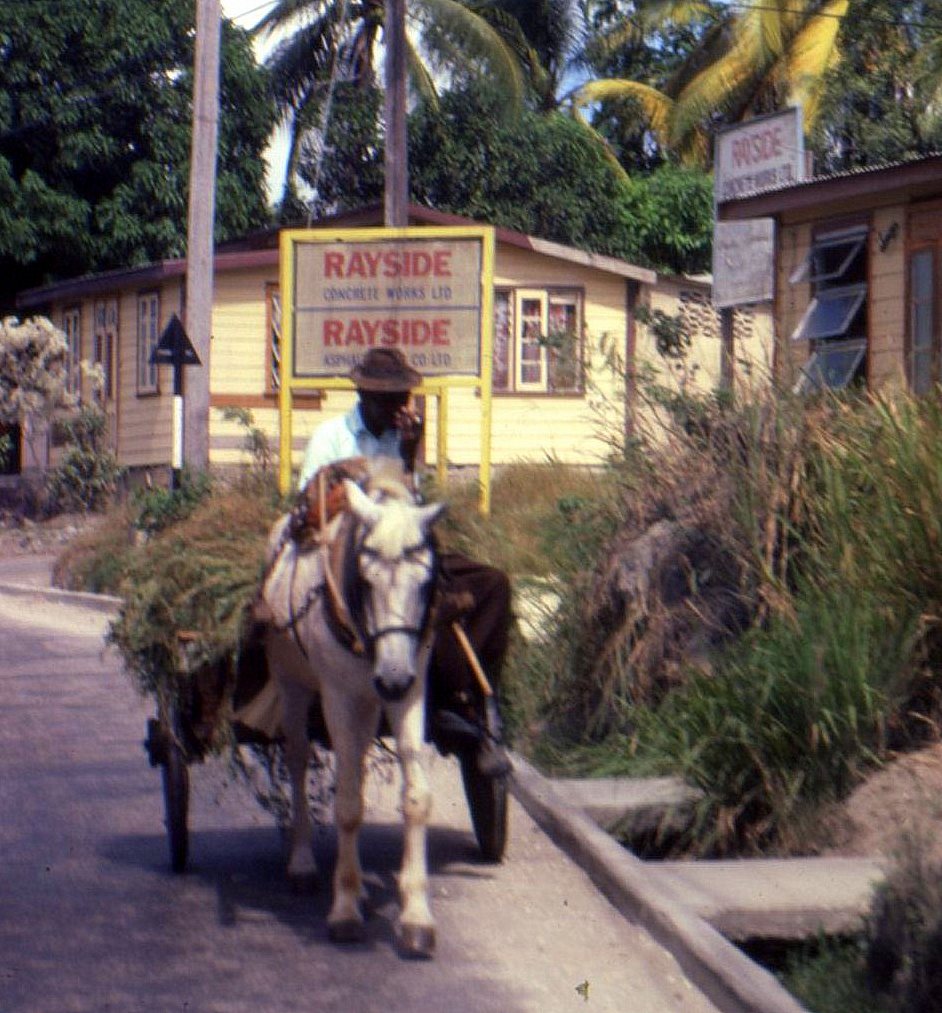
 

Village transport


If you can avoid going in circles it’s hard to get lost here for very long!


Situated around 100 miles beyond the Grenadines into the Atlantic, Barbados is the easternmost of Caribbean islands and on occasion a hurricane bellwether.

Atlantic coast

The rugged coastline of the Eastern shore faces into the Atlantic wind and waves.
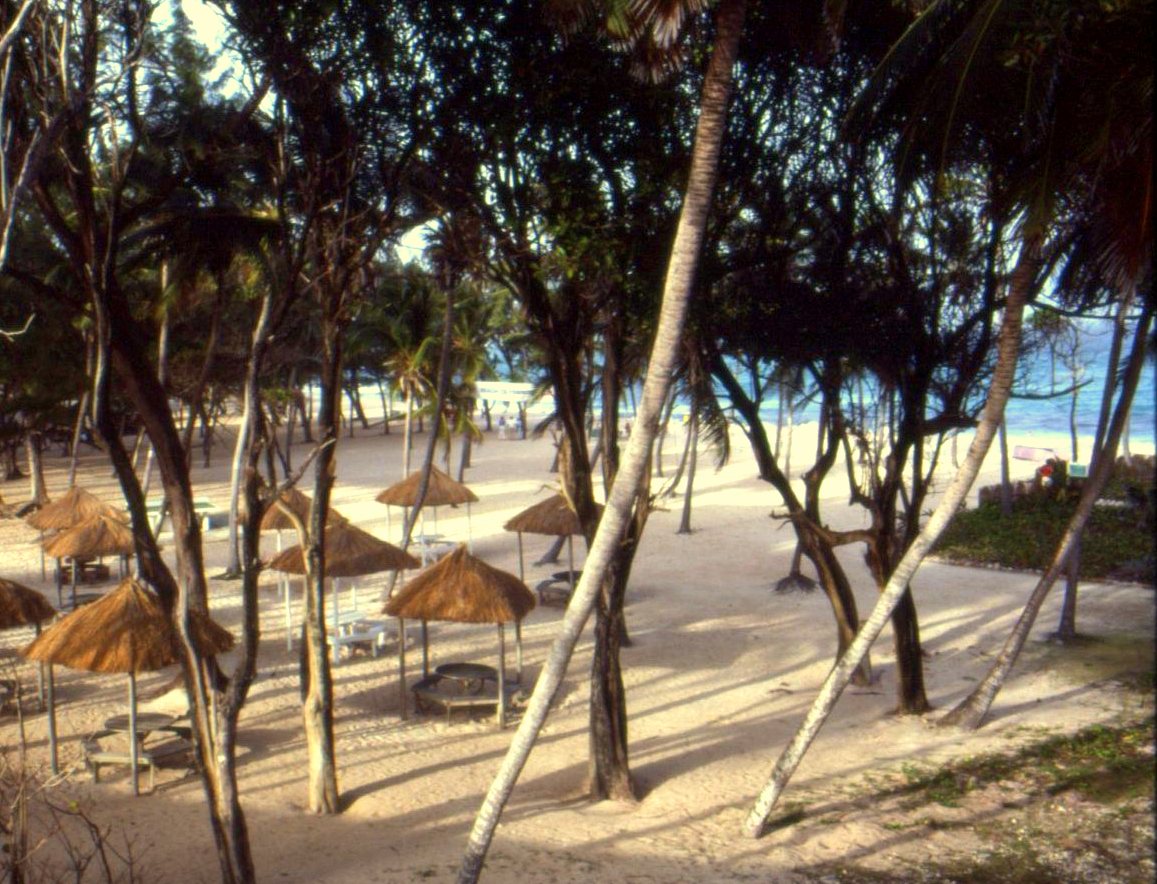
Beach facing the Caribbean

The western and southern shores are marked by fine, white sandy beaches and aquamarine water.
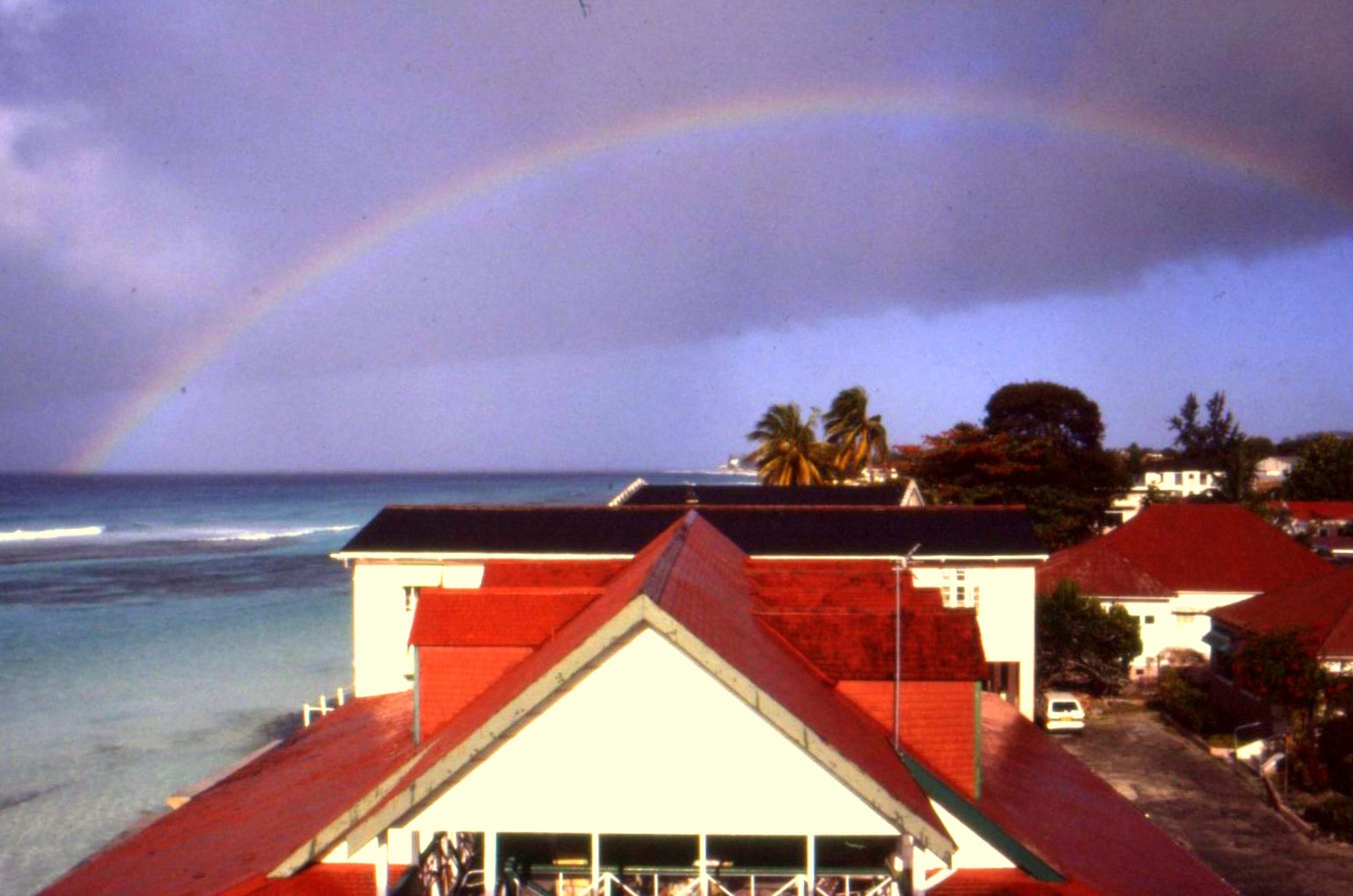
Rainbow at day’s end

There’s lots yet left to see in the days ahead:  Plantation great houses and tropical gardens and a rum distillery.

It seems a good omen that the day closes with a beautiful evening rainbow enjoyed over a rum punch!

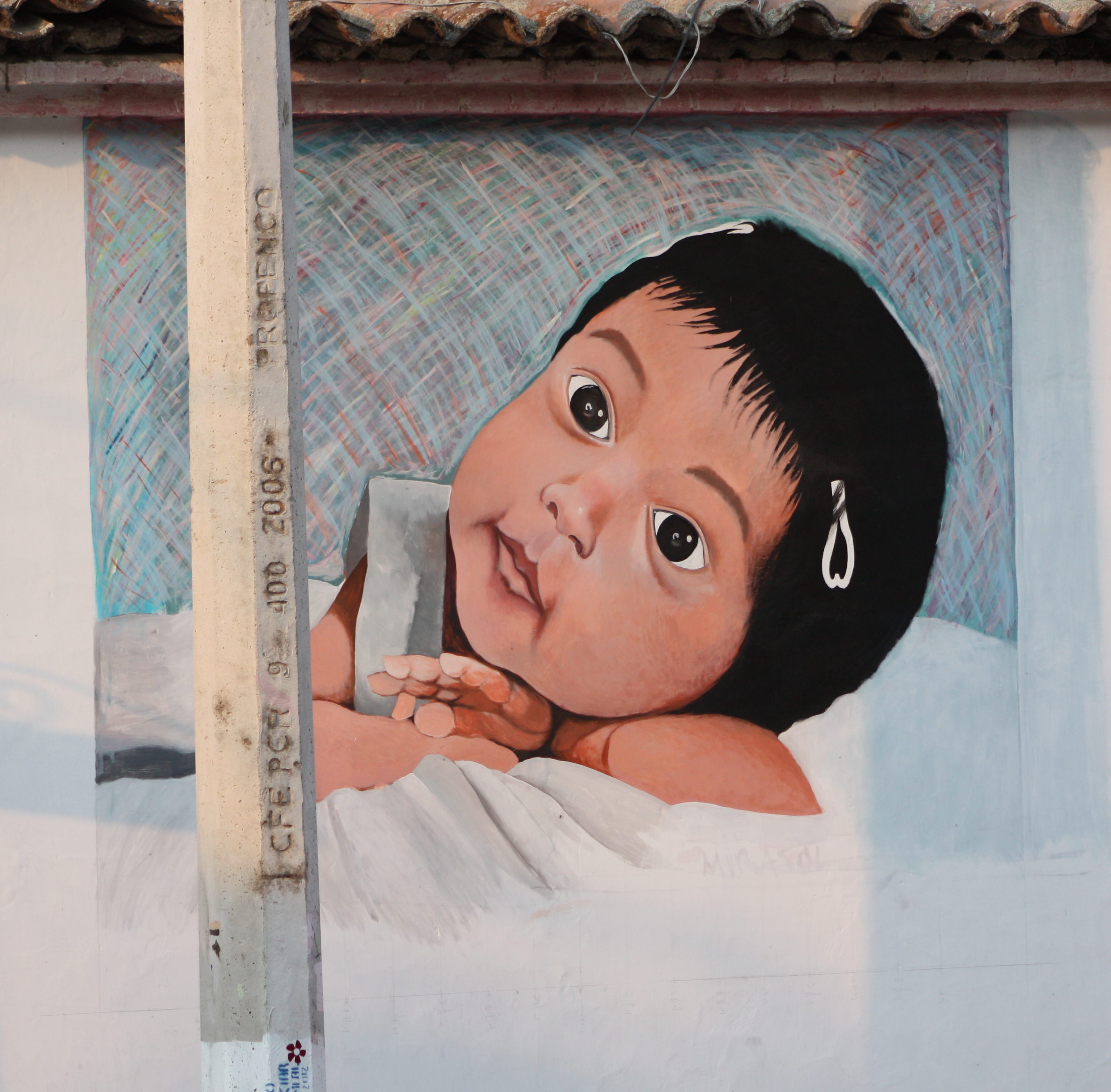
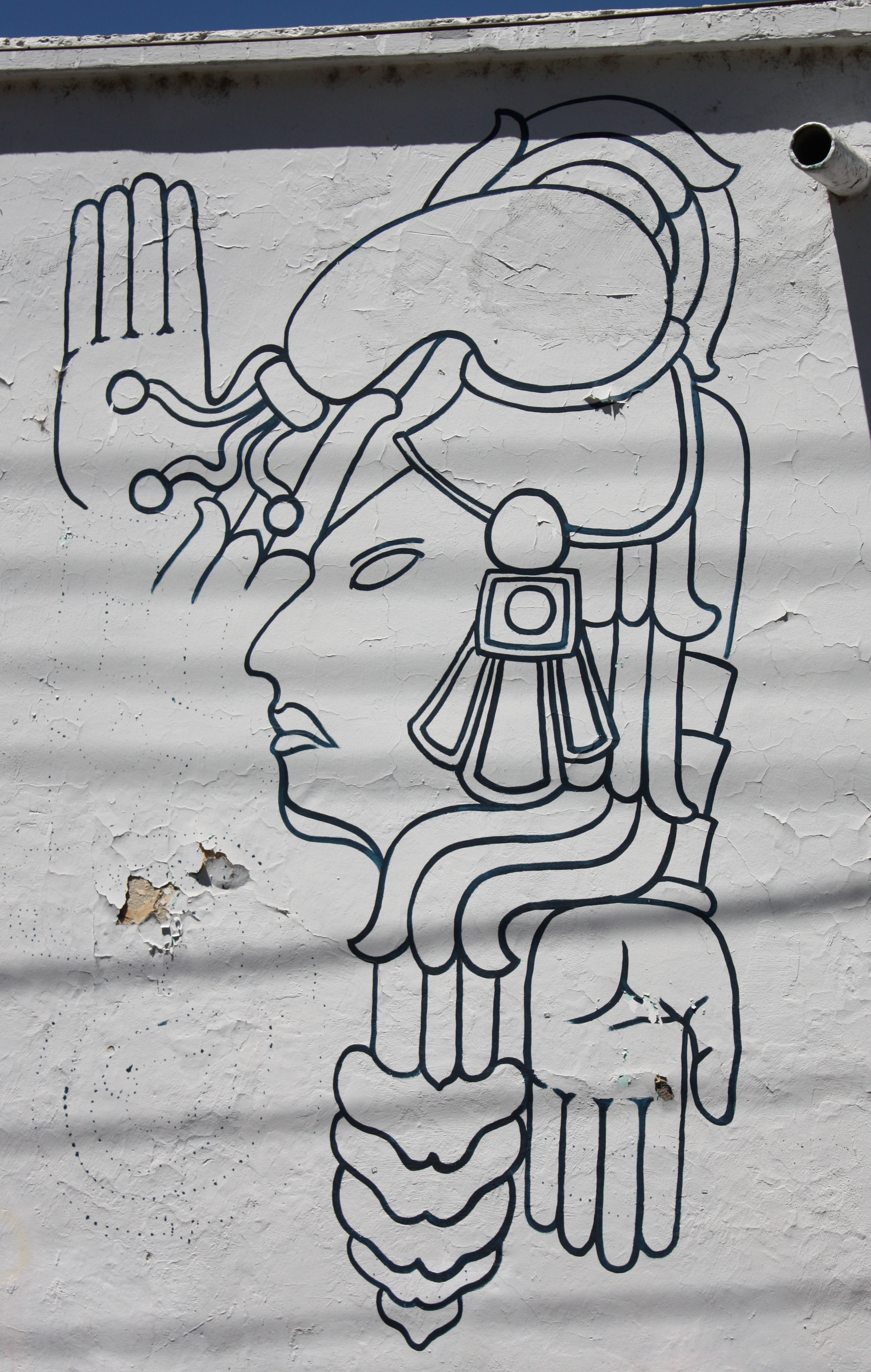
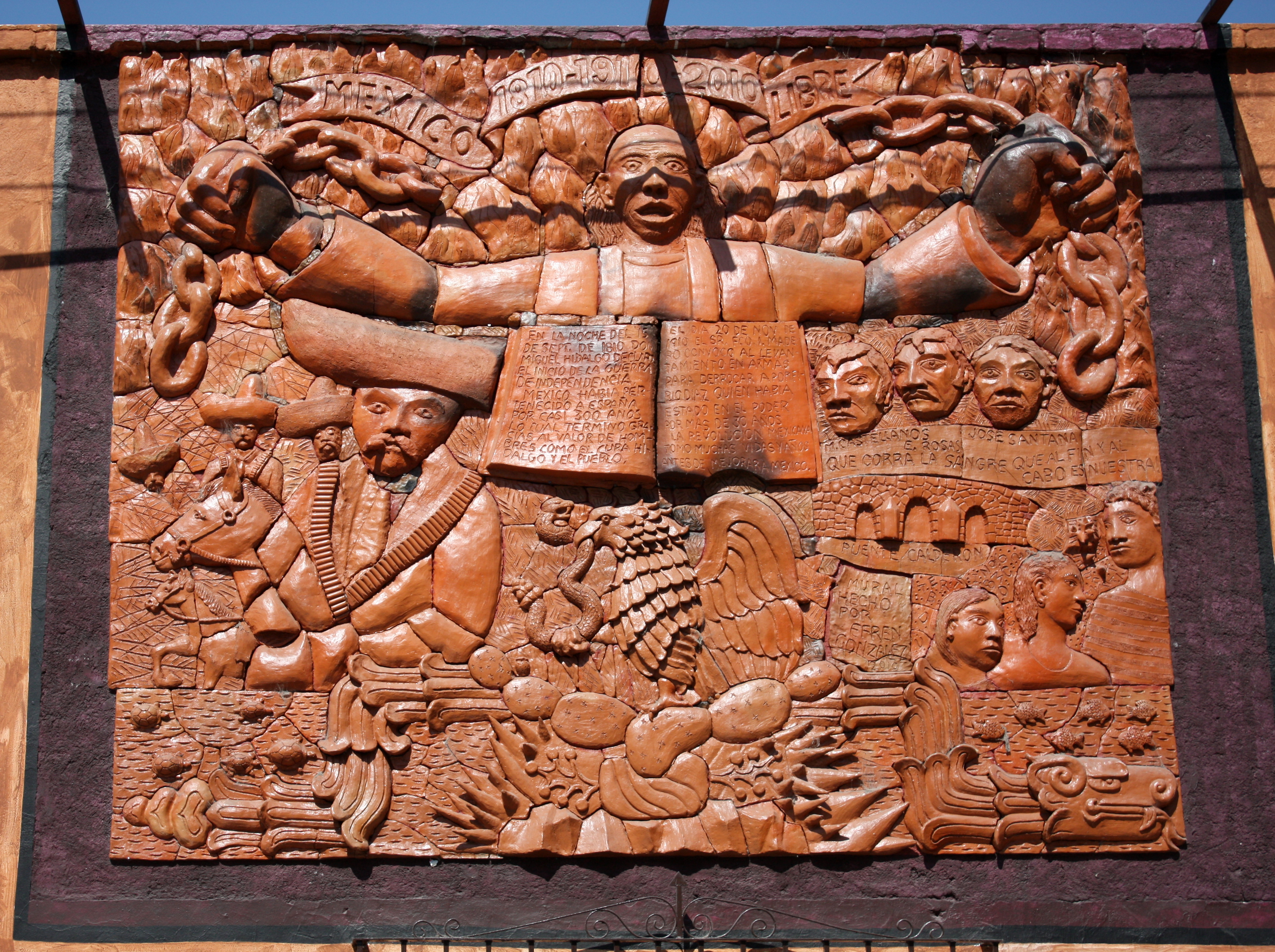
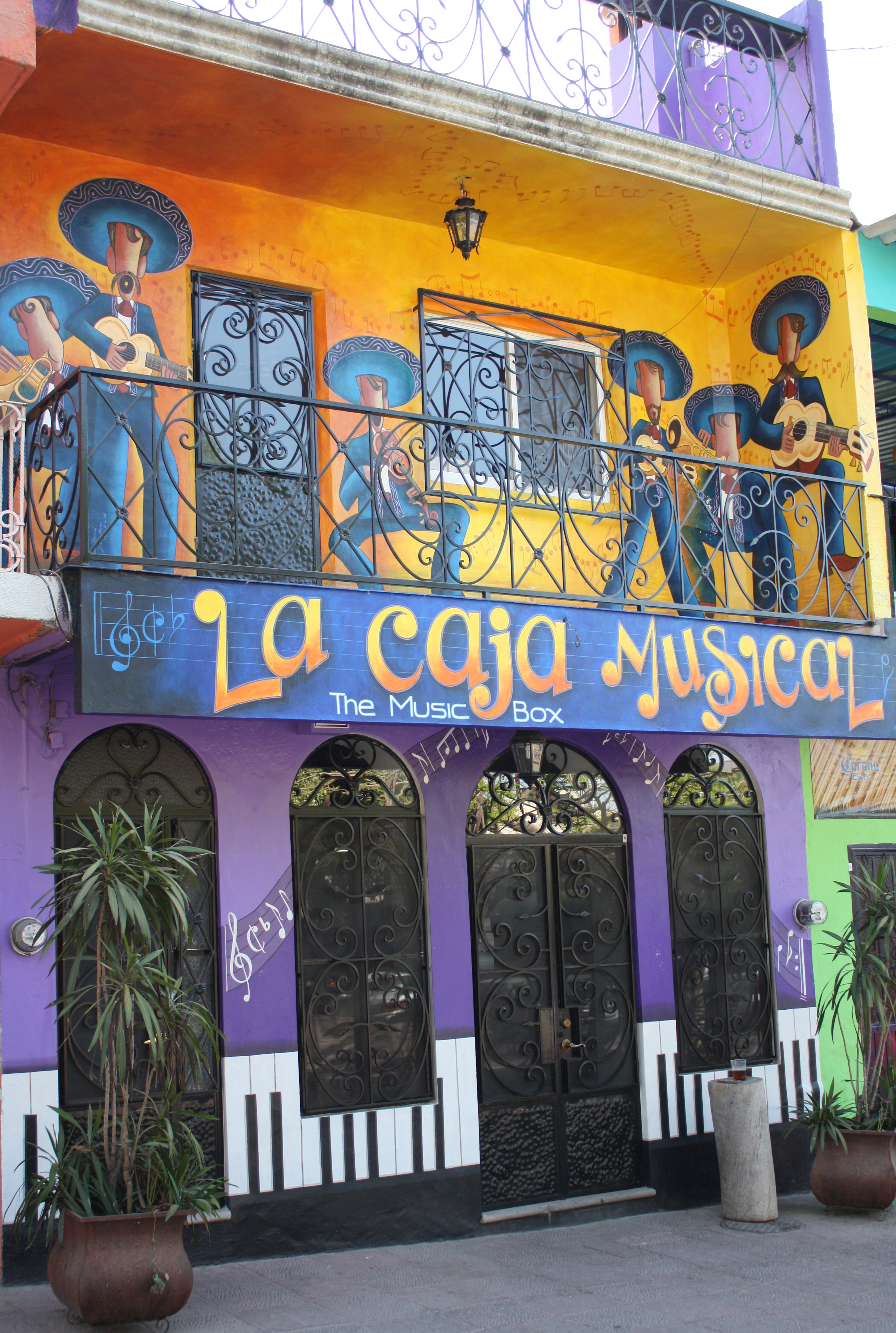
Ajijic’s mural art

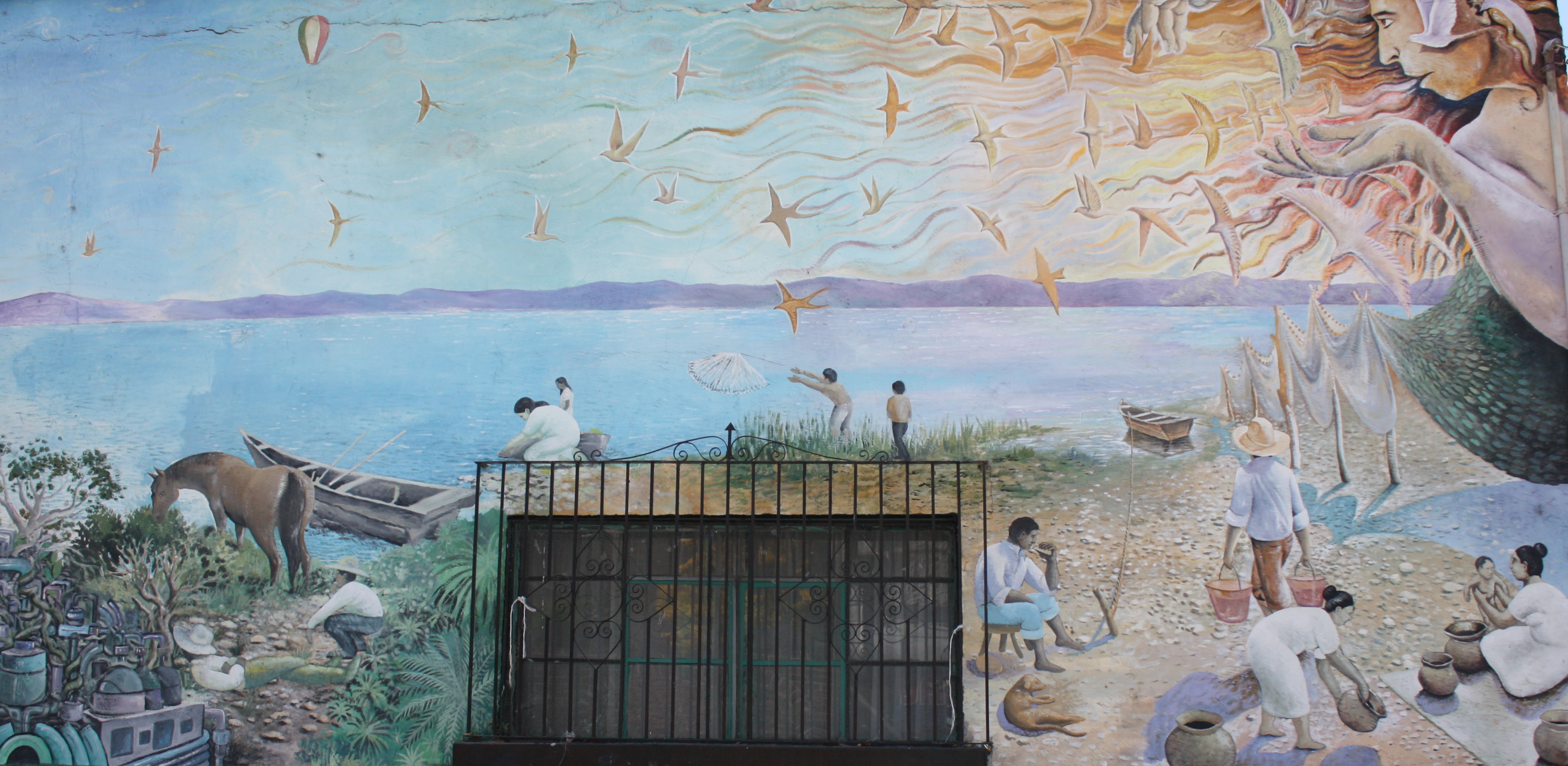
Mexican art is blessed by the rich muralist tradition of Rivera, Orozco, and Siqueiros, and even today murals remain a prominent feature of Mexican public art.


Murals are so commonplace in Ajijic as to be taken for granted, but they’re as much a signature part of the village’s character as spring blossoms or street vendors or views from the malecon.


It’s hard for anyone on the Ribera not to pass at least one daily, and each image indelibly anchors the memory of everything that happens beneath it to a single spot.


Murals made perfect sense as a way to present ideas and to perpetuate sense of history throughout Mexico’s illiterate past, but the art form is as fresh today as ever.


As similar as some murals may seem at first glance, their form is far from formulaic.


The topics may be patriotic or otherwise political, and they’re often historical.


Sometimes, though, the primary object seems to be only to create pleasant diversion for the eyes and to adorn an otherwise unmemorable spot.


Their forms are remarkably diverse, ranging from dayglo-bright ribbons to simple black-and-white images.

Ajijic mural art 05

Ajijic mural art 06


Some borrow their style from Europe and others are purely indigenous.


Some are painted and some in relief.


Some have a commercial agenda.


Many – but not all – are outdoors. The one below adorns the interior stairwell of the Cultural Center.


They all, however, have a couple of things in common.


One is that each is an original work of art.  Some are permanent – or at least as permanent as paint on stucco can be in the Mexican sun – and others only long-lived enough to commemorate a passing event.


Another is that they all tell stories.  Some are short and simple.  Others are like scrolls unrolled, so panoramic that each new look uncovers some detail earlier unseen, like the three panels of the mural below reading left to right.


There was a time when billboard painting was an art north of the border. These days billboards are created in Photoshop, digitally printed by the dozens onto vinyl, and stretched over the frames of boards that were once signpainters’ canvasses.


One thing’s for sure.  It’s impossible to visualize Ajijic without picturing its public murals! For more about Ajijic’s unique character see my related posts:

America’s rain forest

Road ascending into clouds

Seen from the sea, El Yunque Mountain peaks at a modest 3,500 feet, but its slopes are still an imposing knot on the horizon.   It’s the focal point of El Yunque National Forest, the only tropical rain forest in the U.S. National Forest system.  The park is less than 40 miles from the past day’s visit to downtown San Juan, and the drive takes just over an hour.

The name of this place has changed so many times that you’re to be forgiven if you’ve not heard of it before.  King Alfonso XII made it a Spanish forest preserve in 1876, and it became America’s Luquillo National Forest in 1906.  It was renamed Caribbean National Forest in 1935 and the El Yunque National Forest in 2007.

View from observation tower

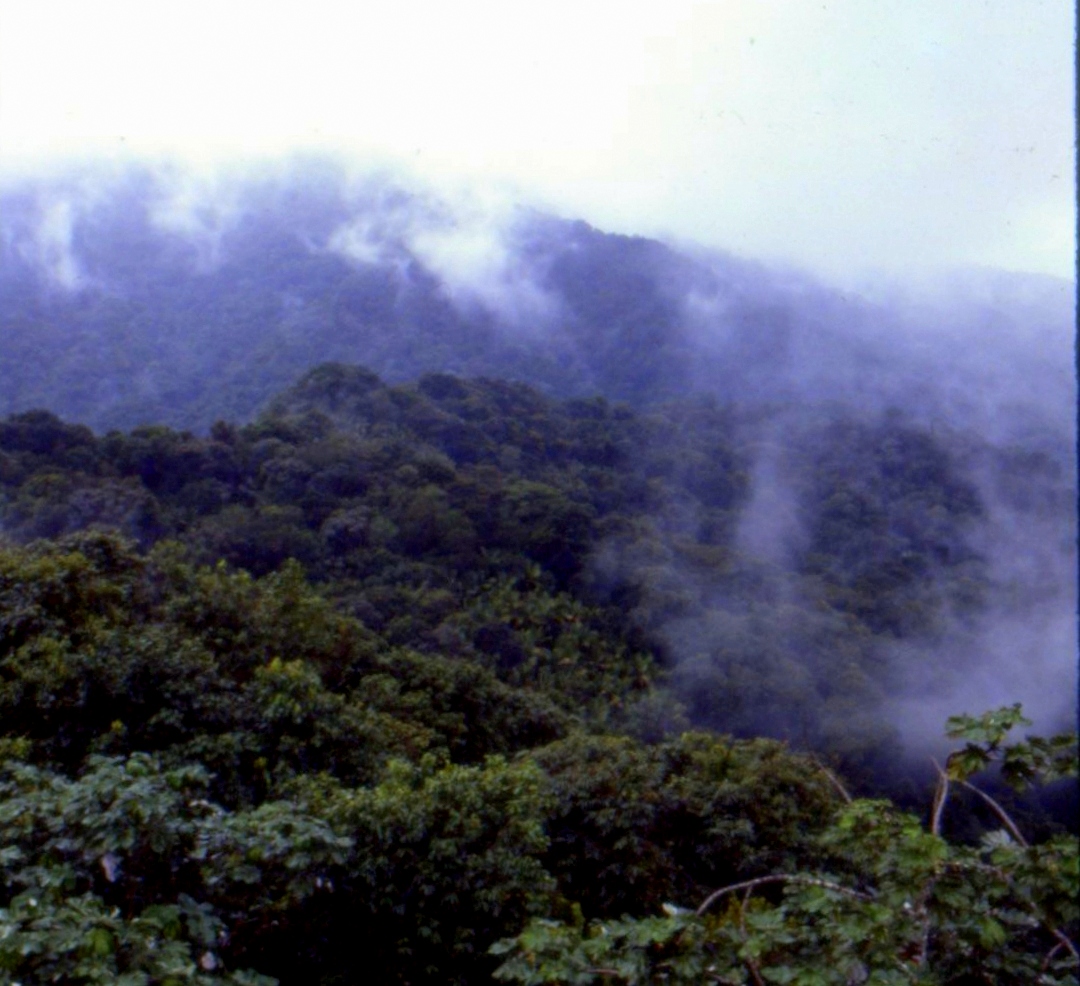
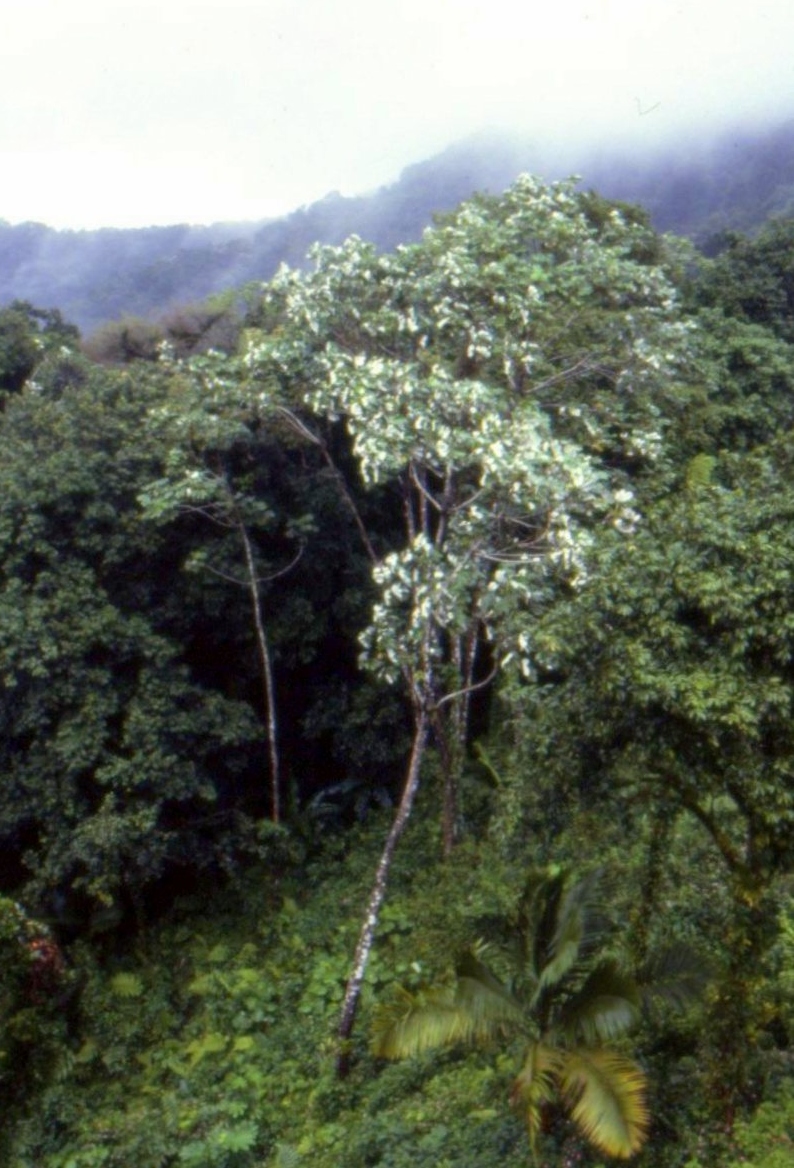
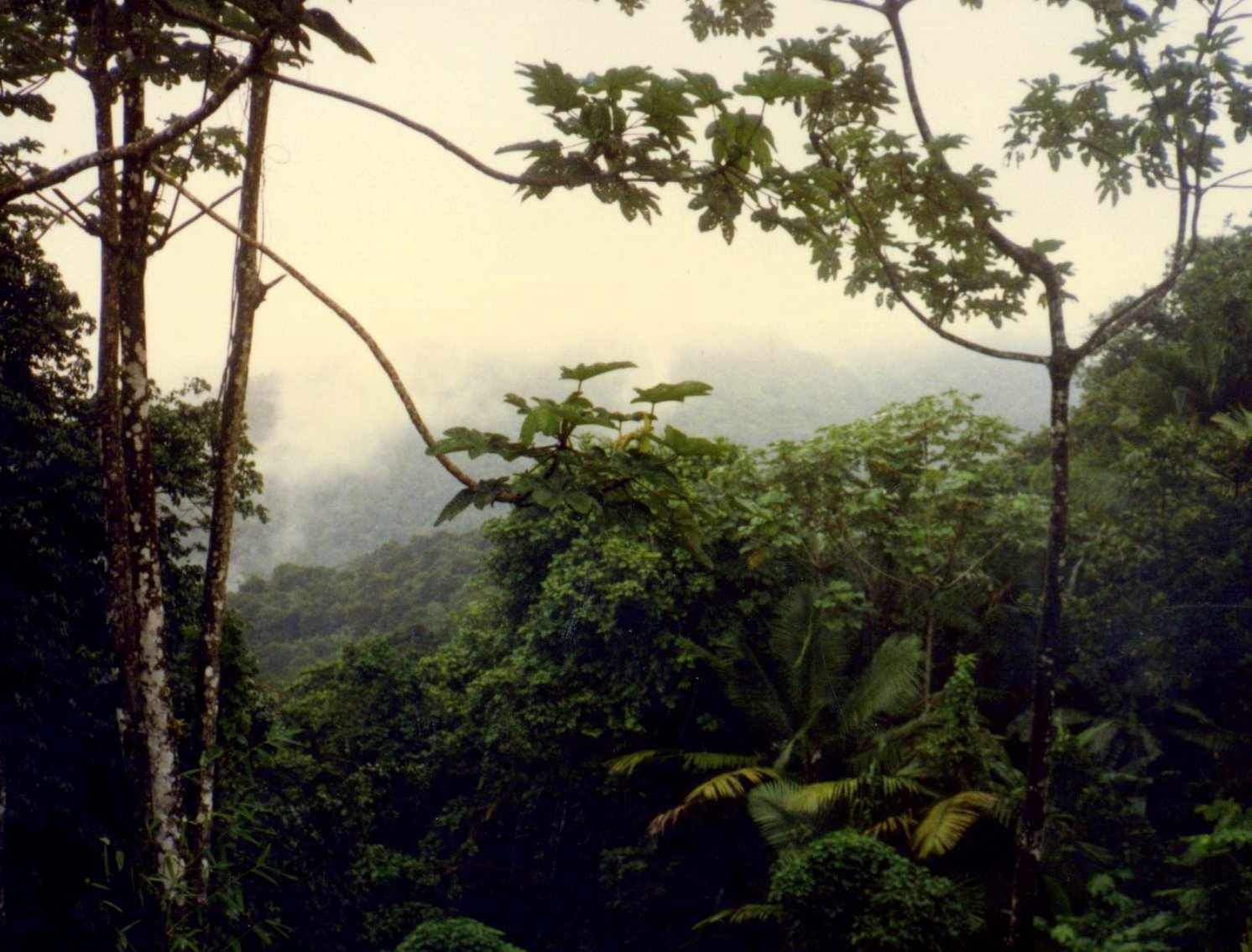
Here Atlantic trade winds smack into the mountains to produce almost 250 inches of annual rainfall and a constant shroud of clouds.

Without a distinct wet or dry season and with constant temperature and daylight, the growing season is year-round and the bio-diversity is incredible.

Waterfalls abound

On this day a misty fog hangs heavily enough in the air to dampen clothing, and the 70-degree temperature feels much chillier in the stiff mountain breeze.

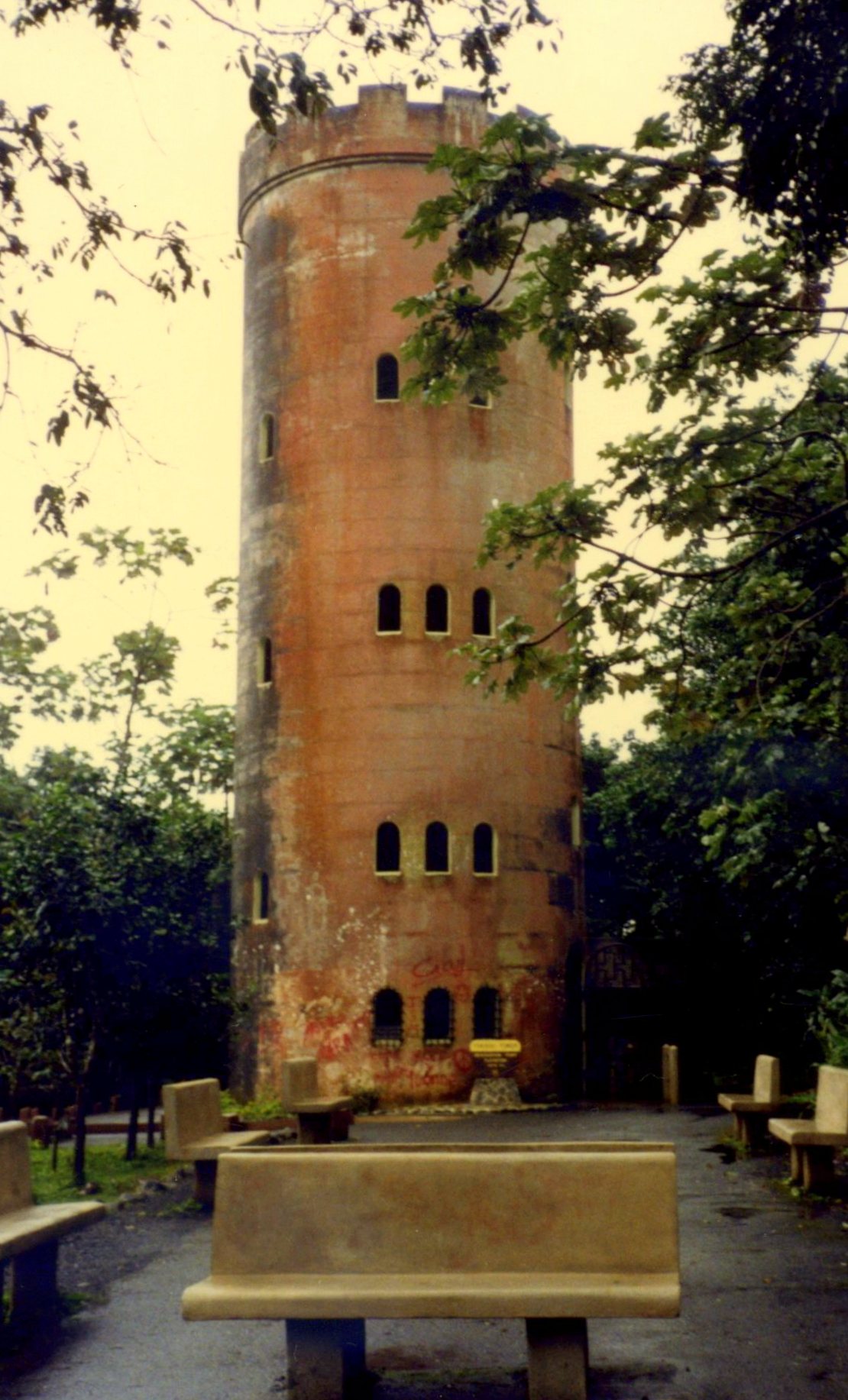
Yokahu Tower lookout

Visitors can survey four different vegetation zones within the park from 6 different trail segments.   There’s also a walkway 60 feet above the ground at the El Portal Rain Forest Center – located about 4 kilometers inside the forest – that allows for a treetop view.

Rain forest canopy

There are also two lookout towers – El Yokahu at around Kilometer 9 and El Britton at around Kilometer 15 – that afford great views.

Rainfall returns to the sea

Anyone who’s come face to face with a bear will be relieved to know that no large wildlife inhabits the park, but small game is abundant, including species unique to this spot like the Puerto Rican Amazon parrot (Amazona vittata).  Its wild population had shrunk to only 30 birds until it was introduced into other local forests in 2006.

The Jurassic forest

Among the forest’s four vegetation zones, the bosque enano… the dwarf forest… is unique to Puerto Rico, and sits at around 3,000 feet.   Their growth stunted by shade of the rainforest canopy and incessant winds, tree trunks are widened and branches have fewer leaves.
Twenty-three species of the forest’s trees occur nowhere else on the planet.

Mountains in the mist

Most species of coqui, small frogs native to the island which have endeared themselves to Puerto Ricans, are found here in abundance. These tree-dwellers have no webbed feet and hatch their young out of water not as tadpoles, but as fully-formed frogs!

El Yunque’s 3,500 foot elevation may seem modest, but the ascent to the peak from just above the Yohaku Tower rises 1,500 feet over just under three kilometers.  Bring a poncho! 

See related posts on my trips to:

Mt. Rainier National Park
Channel Islands National Park

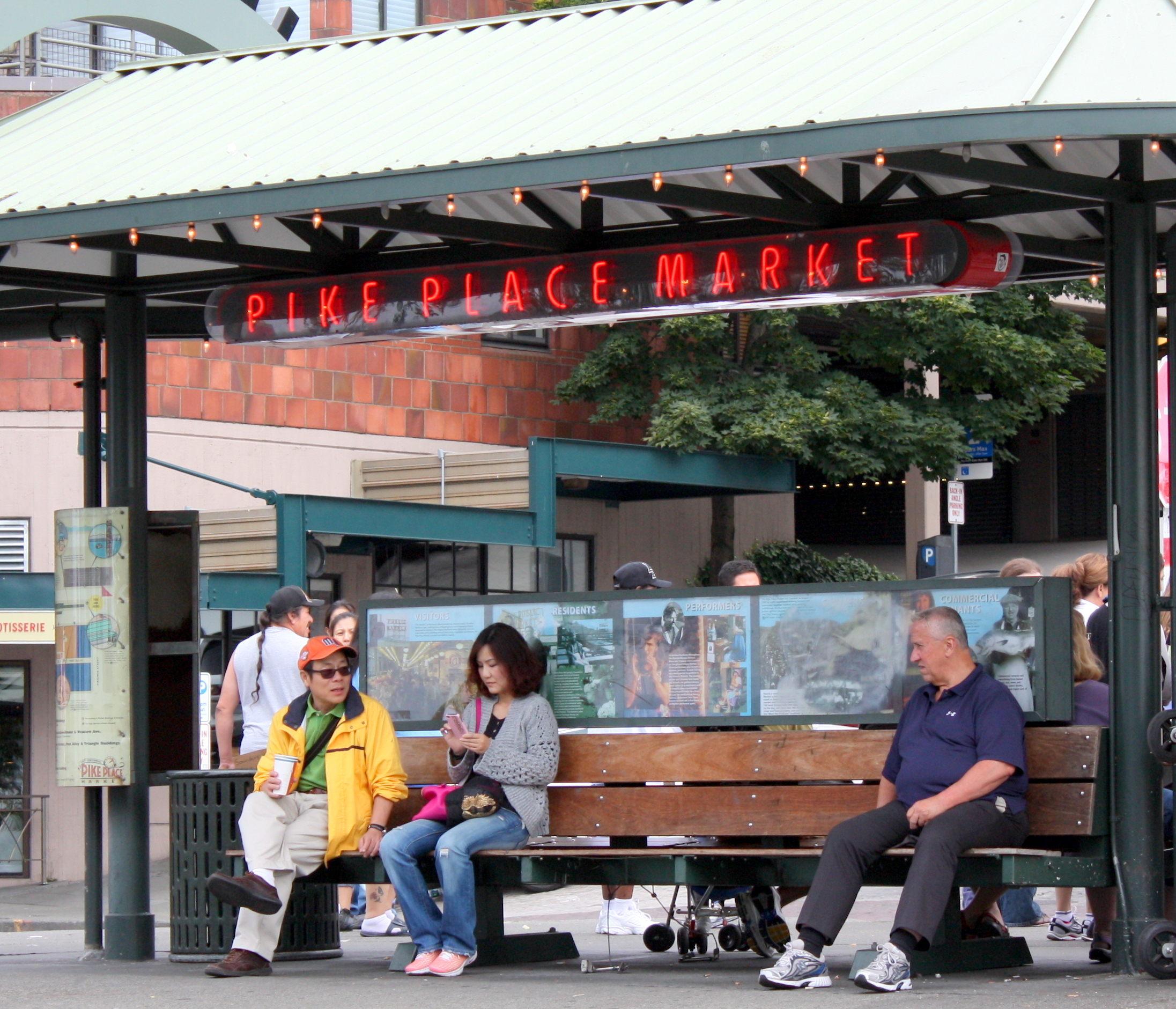
Pike Place market bench

It’s no easier to imagine Seattle without the Pike Place Market than without the Space Needle, but in 1963 private interests came close to demolishing the 56-year-old structure to build in its place a complex of office buildings, apartments, and a hockey arena.

They were prevented by the intervention of a group of public-spirited citizens who succeeded in having the Market designated an historic preservation zone and returning it to public ownership.

A restoration of the Market’s historic buildings in succeeding years honors the original 1907 blueprints and building materials, and the Market is now 105 years old.

Late in the morning of this August Sunday it feels to me like tourists outnumber locals among the shoppers and browsers. The crowd is packed to just this side of discomfort.

No red meat here!

The waterfront is tightly woven into the character of this place.

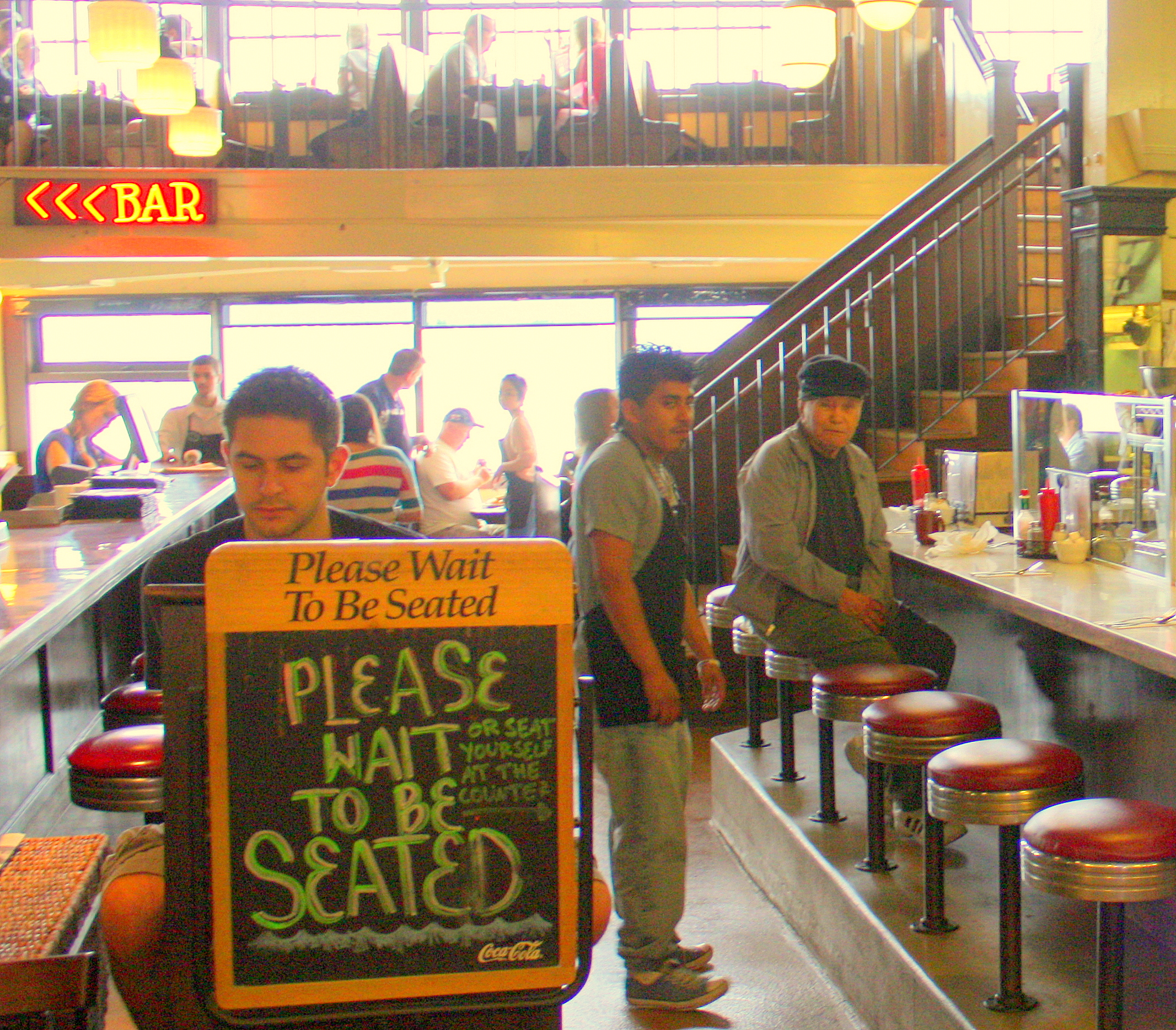
Waterfront dining

Through windows behind the stalls and restaurants on the Puget Sound side of the market, giant wharf cranes tower above ocean-going freighters and ferries churn up wakes.

Flying fish

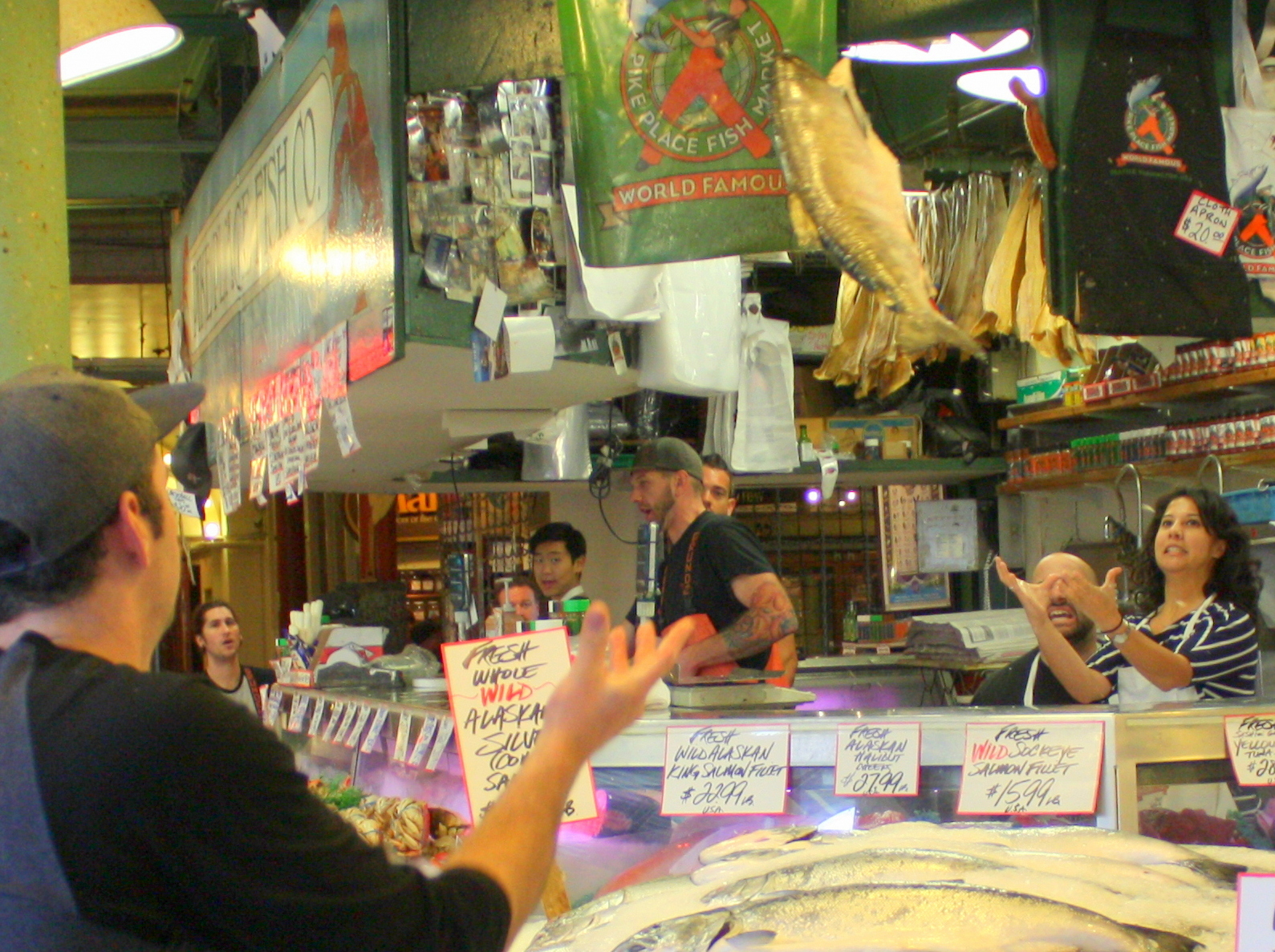
Just inside the market I see a continuously restaged performance of fish-tossing at the Pike Place Fish Company.    A hefty whole fish flies through the air for twenty feet with neither pitcher nor catcher losing a grip on the slippery missile.  I’m sure there was a time when fish was routinely off-loaded from boats in this fashion, but these days it seems mostly a tourist spectacle. (Photo below; just in front of the green banner at 1 o’clock!)

Eat it here!

It’s a particularly colorful market.

Incomparable cut flowers

Neon signs of classic design point the way to stalls and restaurants, and brightly colored produce and flowers seem also to be painted from an electric palette.

There’s great neon everywhere

This market, though, is as much about artisan crafts and artisan foods as about fresh fish and produce.

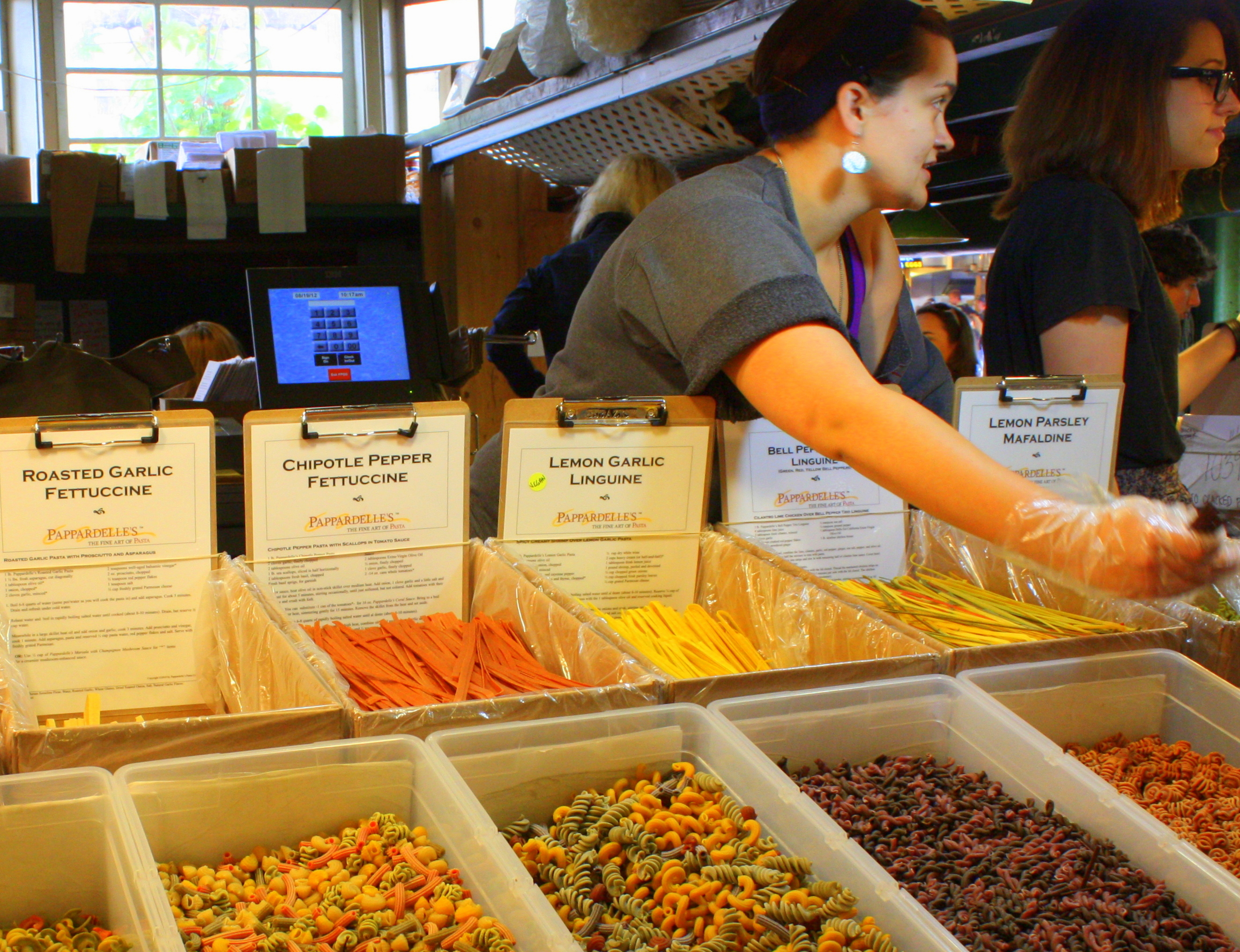
Artisan pastas

There are foods to tempt any gourmet.

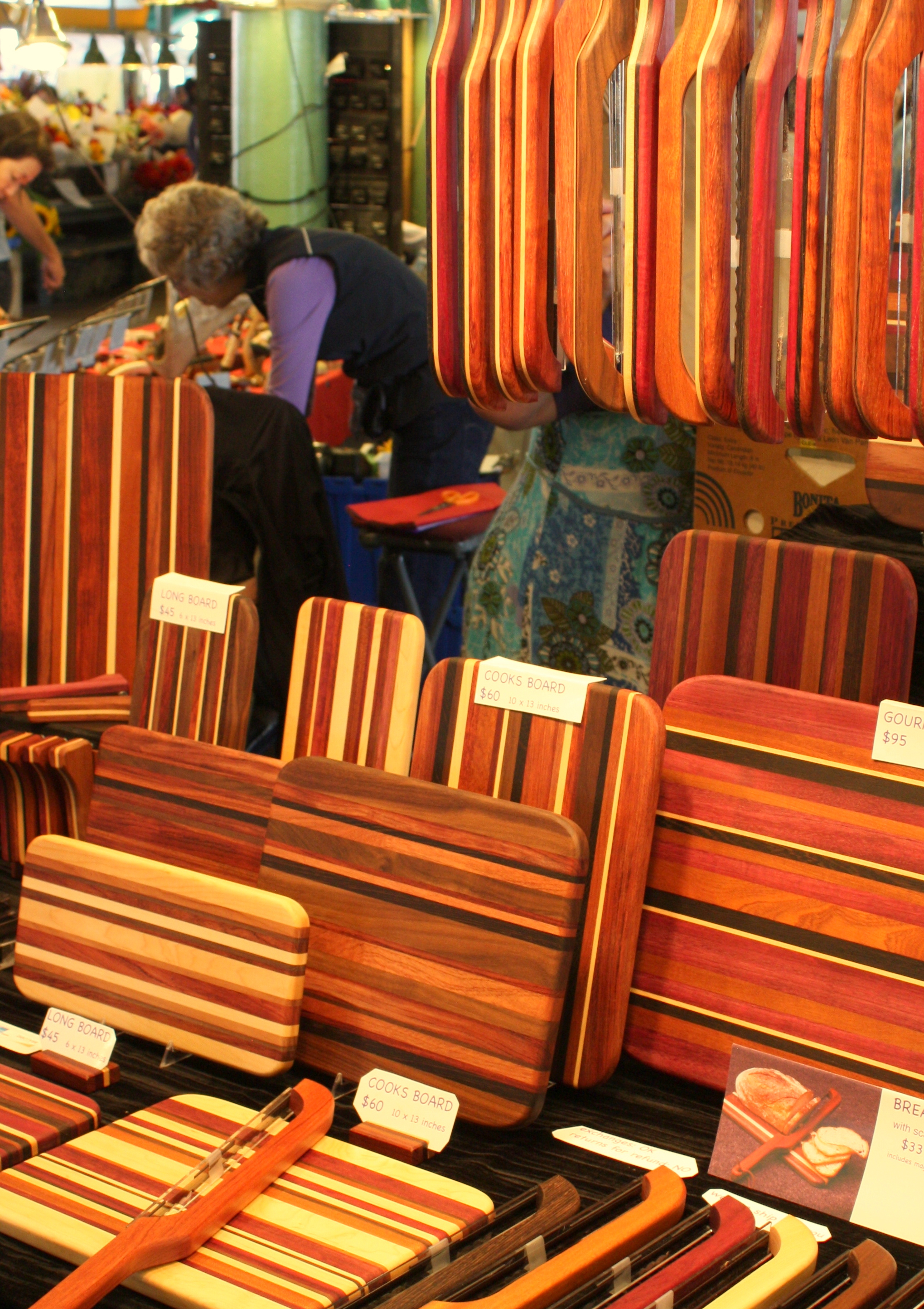
Hand-crafted wooden cutting boards

There are arts and crafts in just about every imaginable medium.  Some of the works are artful twists on useful items. Others are a bit more fanciful.  Most of them can bring a smile to any face.

Cigar-box guitars

Totem pole just outside the market


I pop out into the outdoors near the tallest totem pole I’ve ever seen, thinking I’ve run out of market before I realize that there’s plenty also happening in specialty shops and restaurants on the opposite side of the street.

I’m reeled in by a shop specializing in flavor-infused oils and linger long enough for a tasting of truffle oil.  It’s decadently delicious.

Native American street musician

No public gathering is complete without live entertainment, and street musicians here run the gamut.

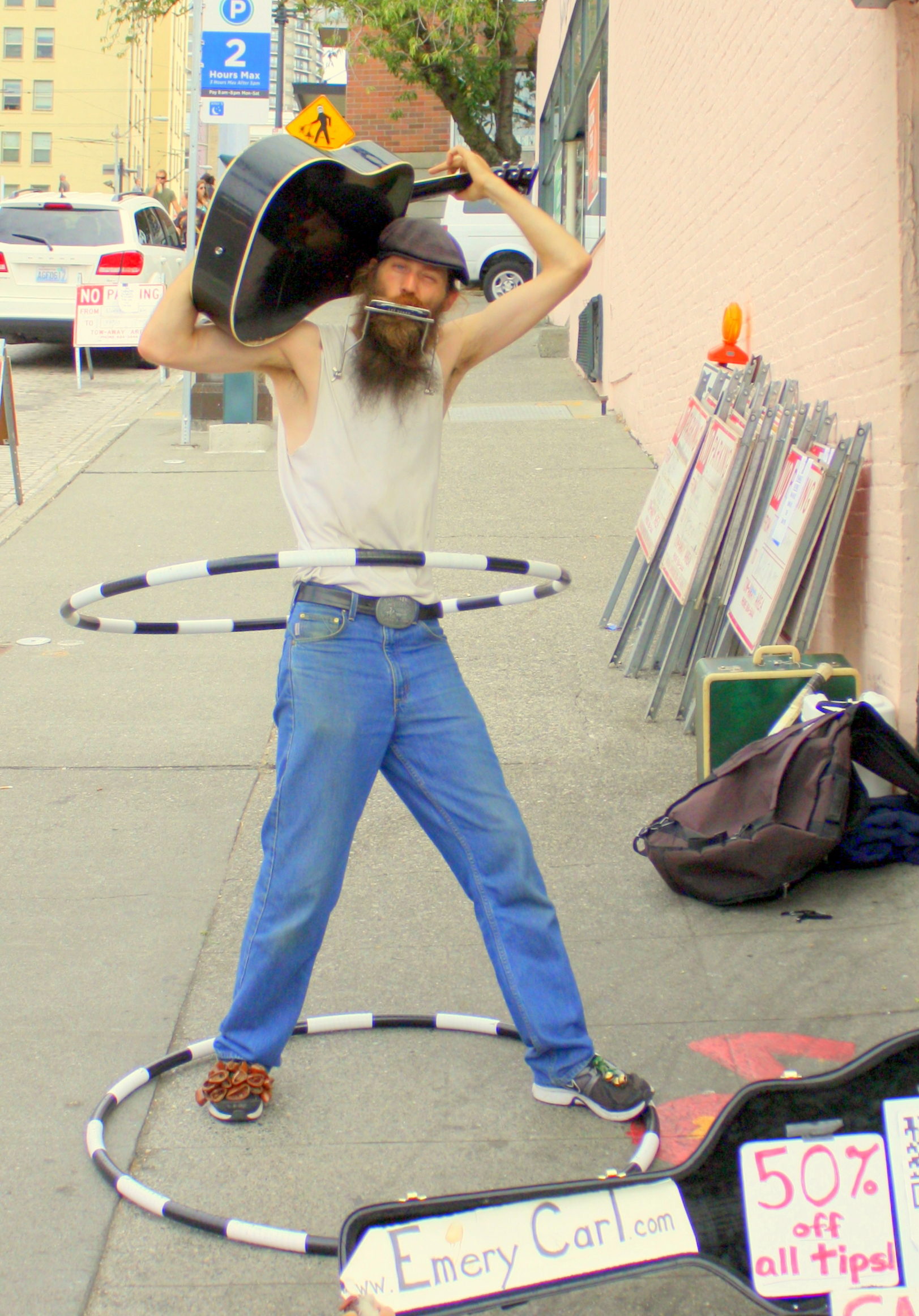
Street musician across from the Market

My favorite, though, is a very entertaining guy who plays the guitar behind his back while also playing a harmonica and twirling a hoola-hoop!

It must be time for a latté because this is, after all, Seattle, and there are more espresso machines within a couple of blocks than stop signs.

The next morning I fly out of Sea-Tac still flush with the memory of 10 fantastic summer days in the Pacific Northwest and I promise myself that this won’t be the last visit.

Read the other two posts from this trip to the Pacific Northwest:

Portland’s Alberta Street

Magnificent Mount Rainier

Guadalajara’s Abastos

There’s no better way to get a crash course on any culture than from watching the street theater of buyers and sellers as they shop and haggle in an open market. If Guadalajara’s Mercado Libertad is the Wal-Mart of mercados, then Guadalajara’s Abastos is the Trader Joe’s.

Here you expect great prices as much as you expect best quality merchandise and items that you just can’t buy anywhere else.

Sign outside Abastos

As I enter I see covering the entire side of an adjacent building a faded sign. I can’t help but think about the many stories that must certainly have unfolded beneath it.

The midway

It’s hard to tell where Abastos ends, because its warehouses and shops cover more than 30 city blocks.


The intersection of Lazaro Cardenas and Mariano Otero is a good place to begin.

Within eyesight is a parking garage which offers a view of the area that can give you a much-needed lay of the land before you plunge in.

The Foodie in me can’t help but be impressed by the fact that this is where the pros in the restaurant and grocery businesses come to shop… and that it’s also open to the public!

Pick o’ the crops

The heart of Abastos is its aisles lined with booths selling fresh produce, meats, and seafood, but in adjacent shops it’s possible to outfit an entire restaurant from tables and chairs to china, flatware, uniforms, and kitchen hardware.

Squash blossoms


The produce is, well, almost too beautiful to eat.

Brilliantly colored and symmetrically shaped, it’s too perfect for a still-life.

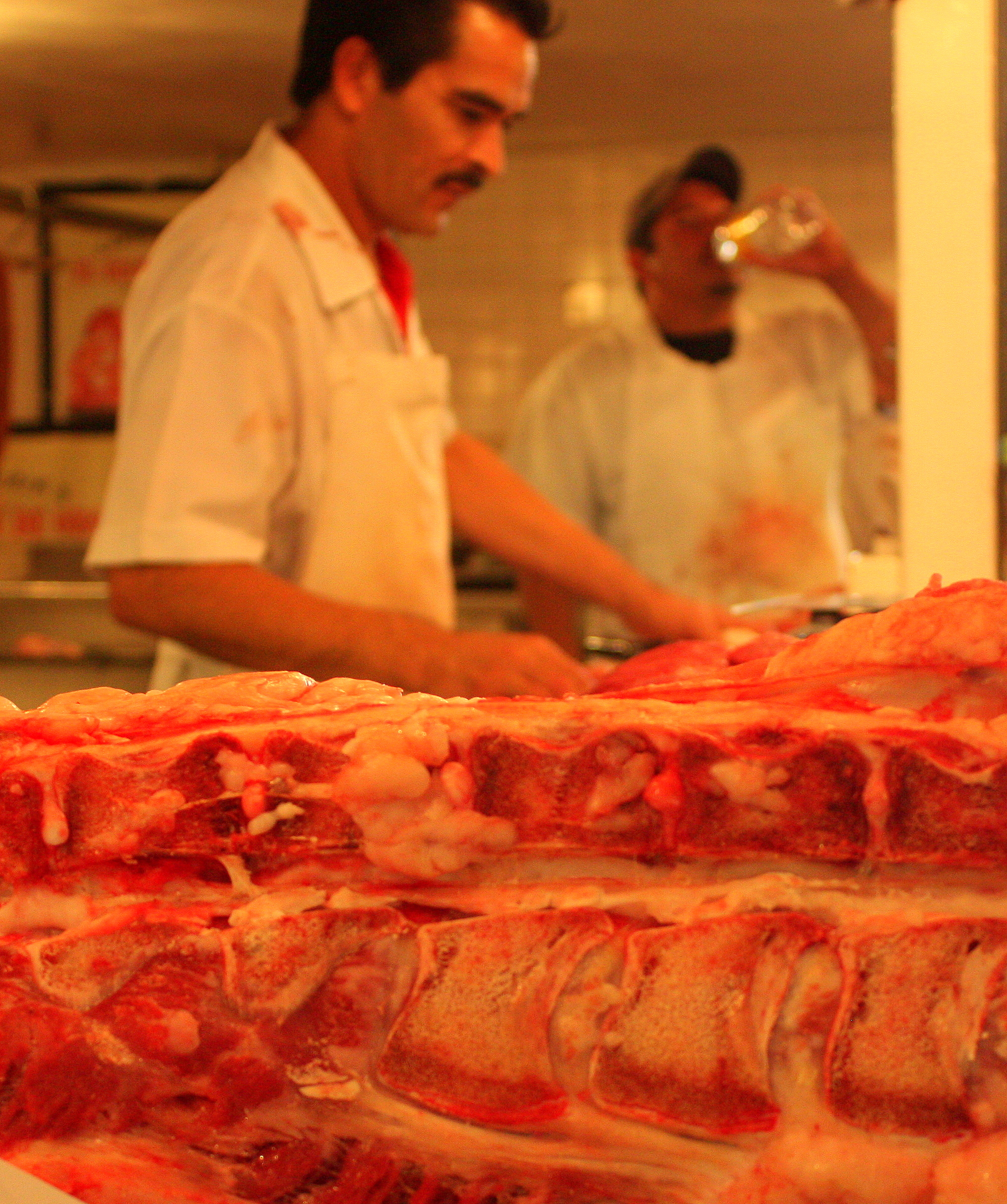
Everything here is offered in the giant commercial size. Meatcutters disassemble entire cows.

Major meatcutting

Ribbons of sausage

There are cheese wheels the size of spare tires and sweets the size of paving bricks.

Monster cheese wheels

Sweets by the case


Never, though, did I see a merchant refuse to sell a smaller quantity.

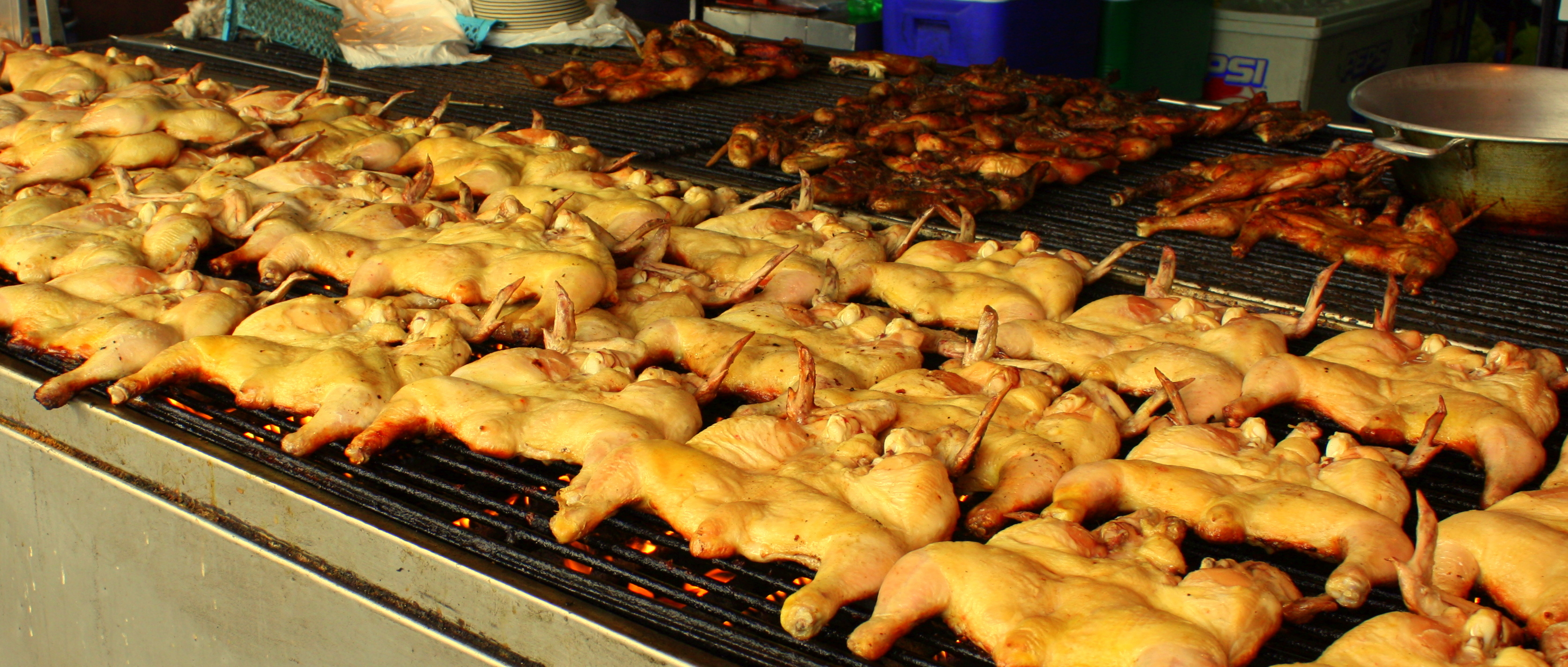
Acres of grilled chicken


This city-within-a-city needs to be fed, and while the eateries are not fancy you can find just about any kind of meal you desire somewhere in one of its pots or on its grills.

Abasto fresh fish


I snap a shot of some great-looking fish on ice and amble slowly down the aisle only to be halted by the sound of someone calling out behind me.

Fish and fishmongers


I turn to find that the fishmongers are following me down the corridor hauling a whale of a fish, inviting me to get a better shot. That’s the kind of place it is.


When you come, drive a big SUV and bring the largest ice chest you can find, because there’s no way you’ll leave here empty-handed!

To get to the Abastos from the Ribera de Chapala:


  • From the Chapala highway exit left on Lazaro Cardenas and drive about 7 kilometers. Abastos is on the left just before the intersection with Mariano Otero.
  • From the Jocotopec highway turn right off Lopez Mateo at Plaza del Sol onto Mariano Otero until you find the Abastos on your right, just before the intersection with Cardenas.

    See also my related posts:Fishy in GuadalajaraGuadalajara’s Mercado Libertad

    France’s Languedoc

    Sète, France

    The cruise departs Barcelona bound for Rome on the day after my visit to the monastery at Montserrat, and the first of three ports of call along the way is the French Mediterranean port of Sète.


    This stop includes a trip of around 20 miles overland to the provincial capital of Montpellier.

    Sète, France

    Sète and Montpellier may not rank high on many bucket lists, but they ably fulfill curiosity about French daily life beyond the big cities and tourist attractions.


    Sète, France


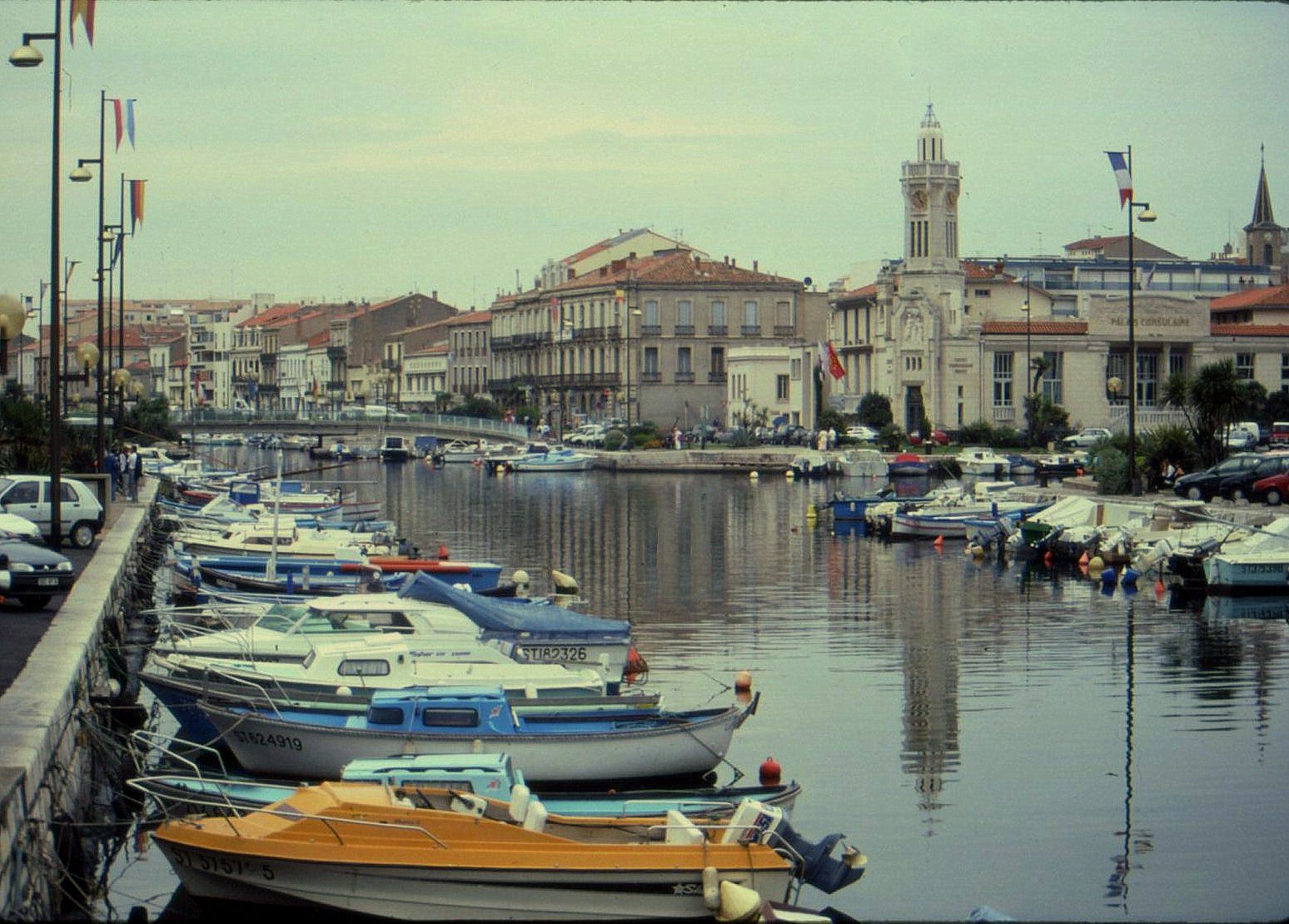
    Sète sits on a spit of land that separates a saltwater lagoon filled with mussel and oyster fields from the sea, and there are plenty of fishing boats in the harbor.


    This is a working seaport, the terminus of a canal that connects the Mediterranean to the Atlantic at Toulouse.

    Sète, France


    The list of tourist sites and events here may be short, but the place is long on atmosphere and it’s a popular local destination for seaside holidays.

    Sète, France


    Sidewalk shops around the marina and along the quay beg to be painted or photographed.

    Montpellier, France


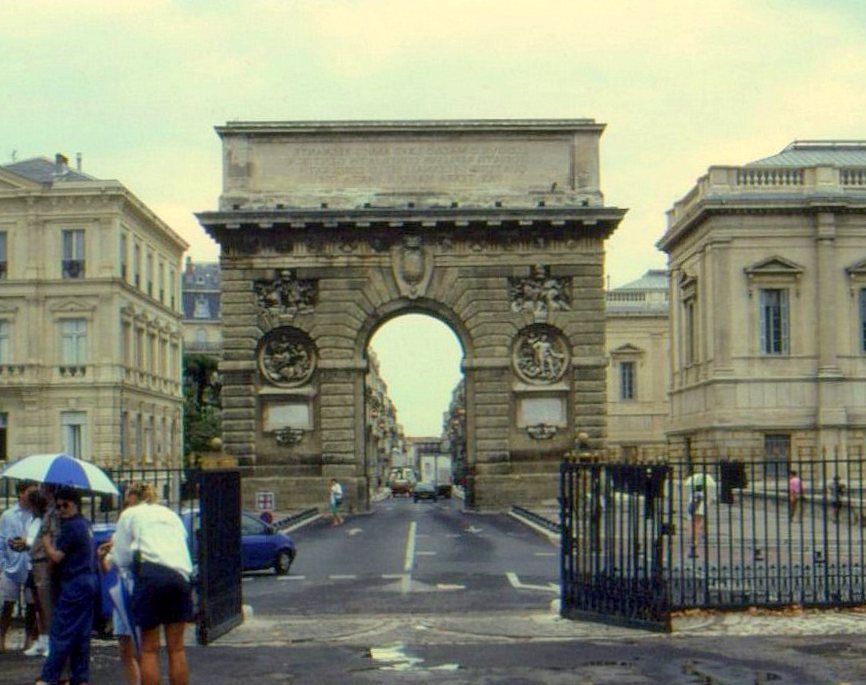
    Only twenty or so miles up the coast and set back from the sea is Montpellier, and the contrast between the two towns couldn’t be more striking.

    Montpellier, France


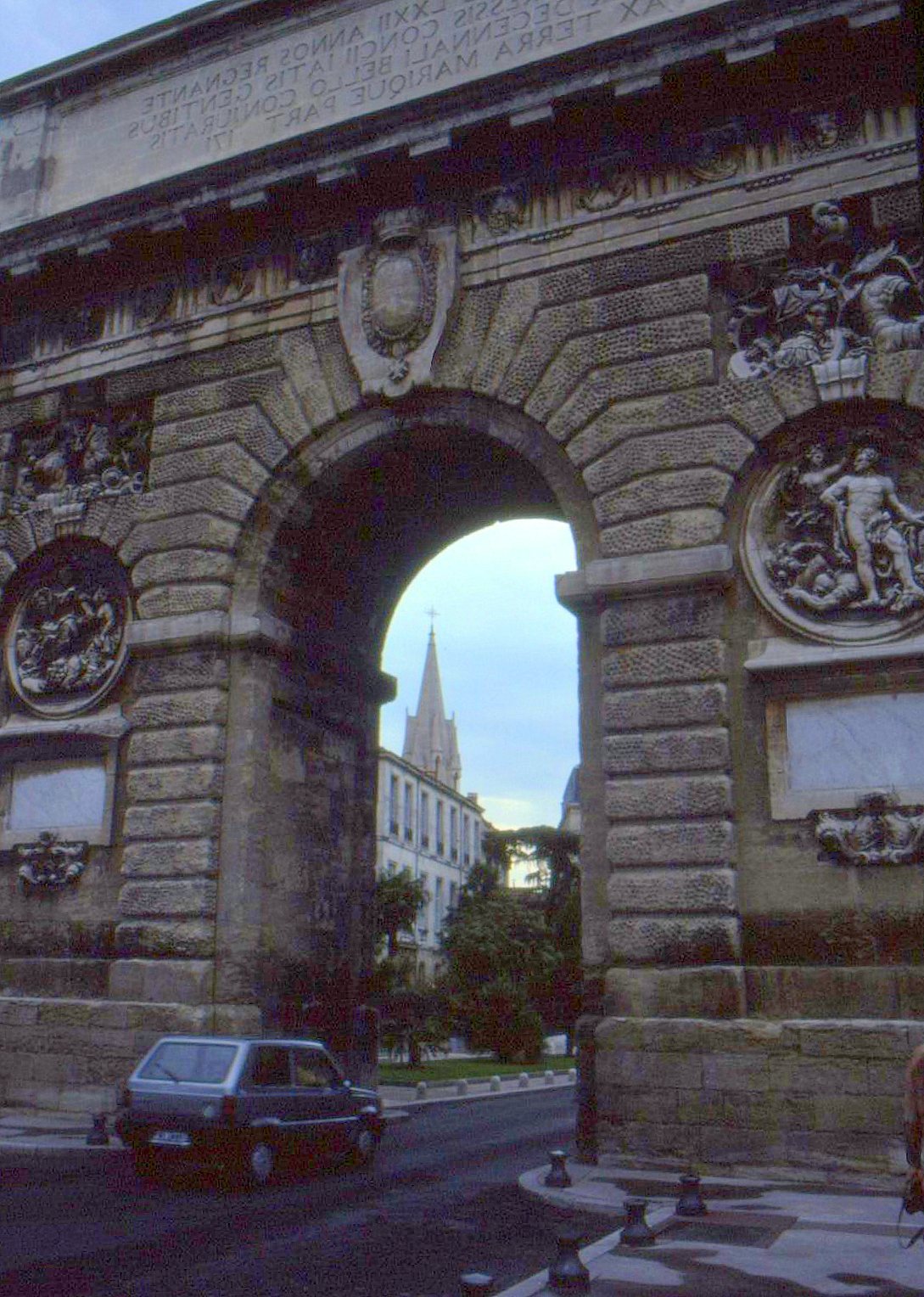
    As a department capital, Montpellier has a decidedly white-collar cast to it, and much more the feeling of a small city than a large village.

    Montpellier, France


    At its heart are buildings and monuments that reflect its official status, but along its side streets the charm of the provincial south of France is everywhere in evidence.

    Montpellier, France


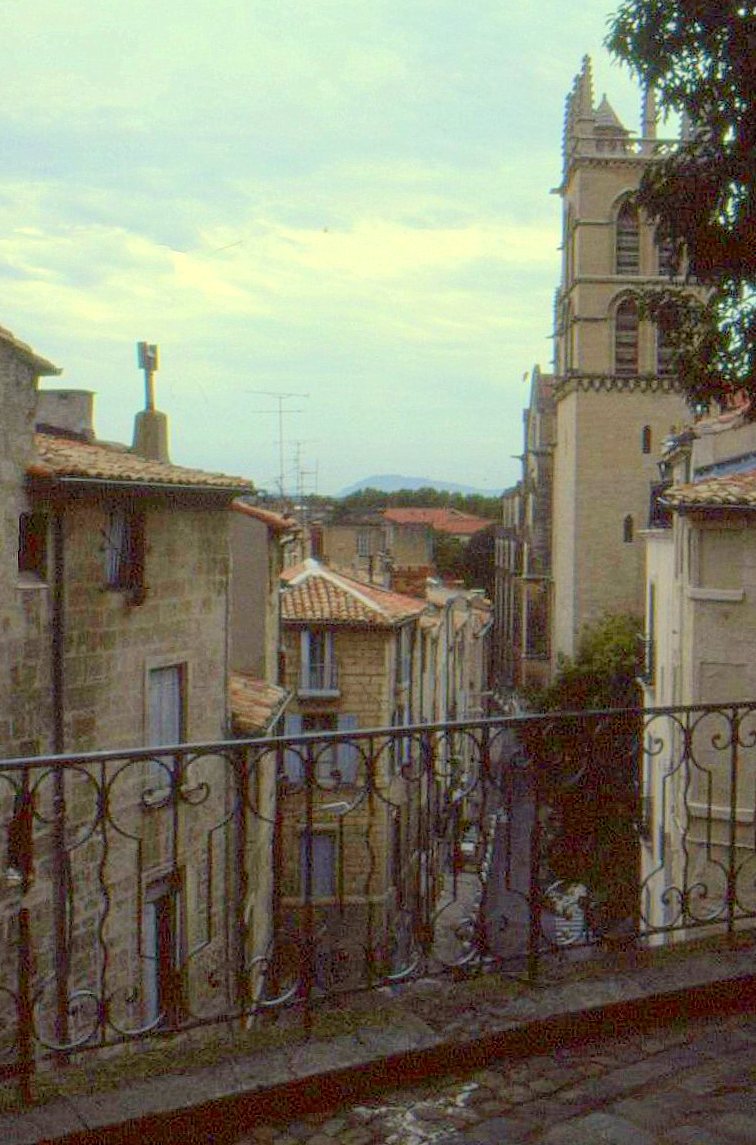
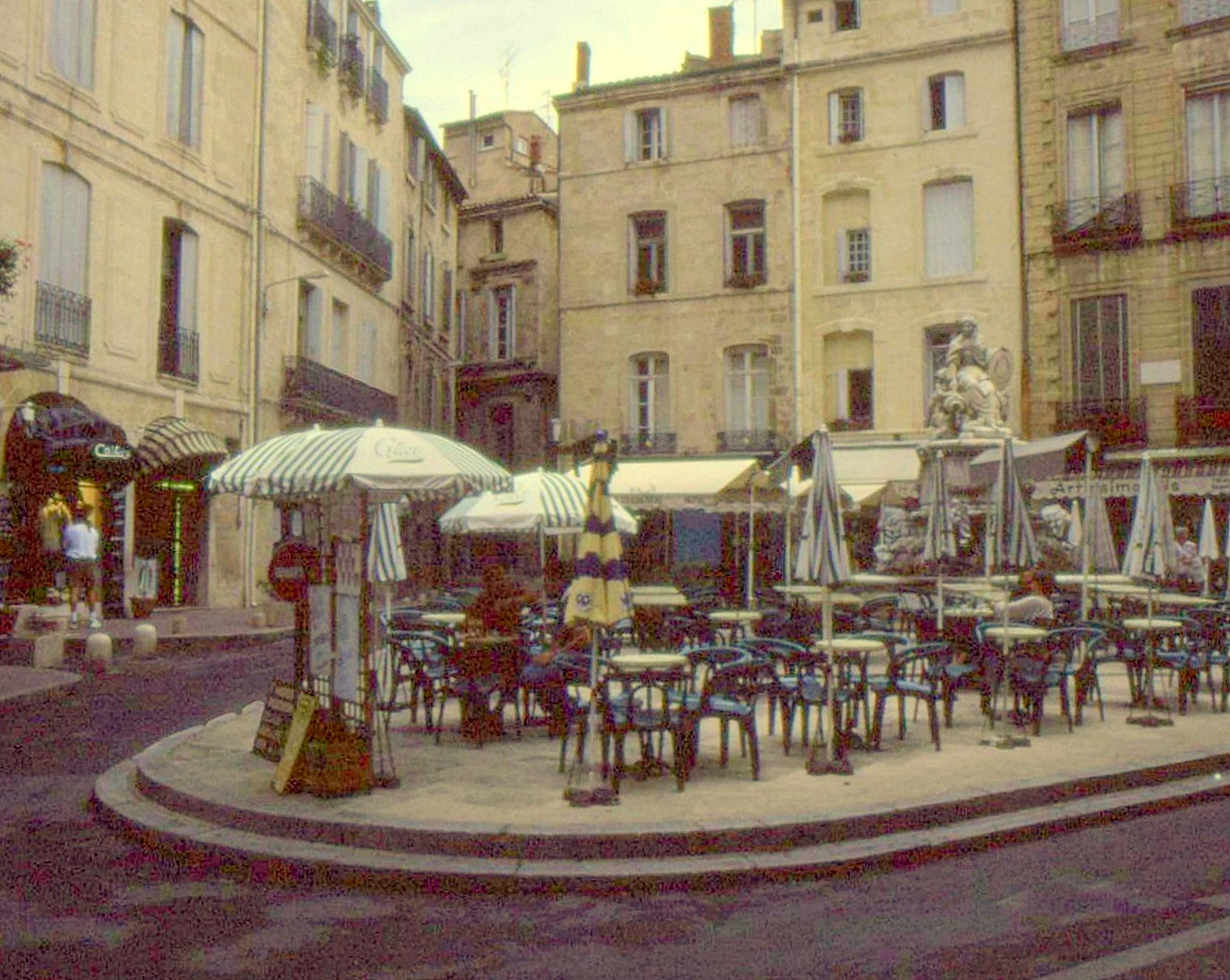
    Narrow side streets wander of at odd angles.  Small markets and sidewalk cafés mark their intersections.

    Montpellier, France

    Country chateau near Montpellier, France


    Plenty of winery tours are available in the surrounding countryside, but it’s hard to pass up instead a tour of a French country villa still owned and occupied by its hereditary nobility.

    Country chateau near Montpellier, France


    It seems that the taxes on the place now dictate that its blueblood owner find a way to make it pay for itself, and he’s become an able tourguide, walking us around the property as he shares his family’s history.

    Country chateau near Montpellier, France


    The vicomte is both a very cultured guy and very approachable one, and he seems to have adjusted to his changed financial circumstances with characteristic French aplomb.


    I’ve toured plenty of villas and wineries, but none where I’ve had quite the same feeling of being an invited guest at a private home.


    Today has been a very laid-back day in the Languedoc, and a great change of pace from Barcelona’s near-overload of sights, sounds, smells and tastes.

    Tomorrow the ship docks at Monte Carlo, where we’ll also make another land excursion into France to see a medieval village with a stunning view of the Mediterranean!  Click here to come along!