Archive for December, 2011


Dallas’s Italian grocery

When I first moved to Dallas in 1975 the boundaries of “diversity” were defined by the triumvirate of Anglos, African-Americans, and Latinos.  As in many other Sunbelt cities, the greater Dallas area is now checkered with vibrant communities of Asian and African immigrants, but  Dallas was not a significant destination for immigrations of the early 20th century that produced full-blown, self-contained communities of Italian, Greek, Jewish, Polish and Russian and other European immigrants in cities from Boston to Chicago to Baltimore.
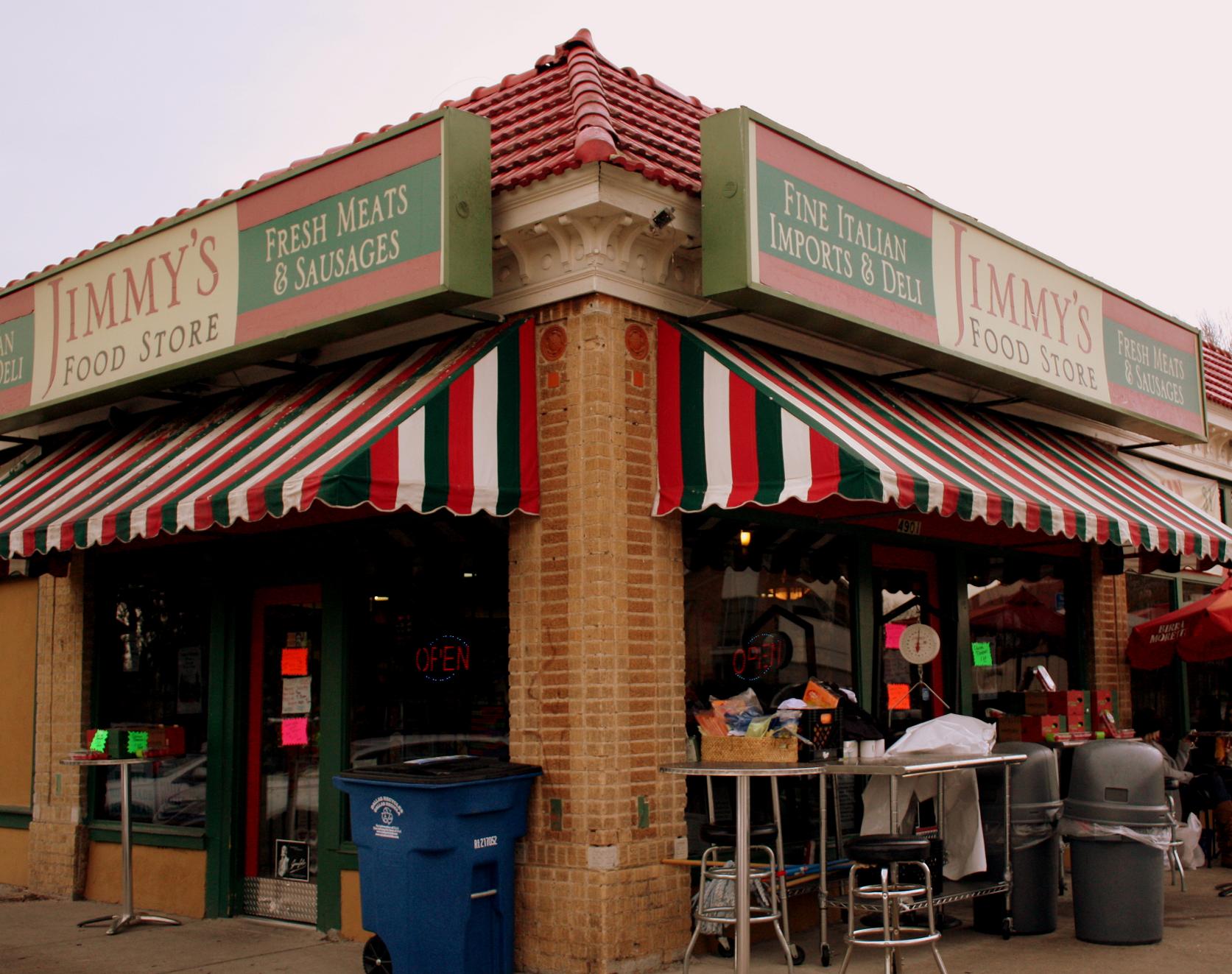
Bryan @ Fitzhugh

For the descendants of those European immigrants, relocation to Dallas from the large cities of the Northeast and Midwest meant severing ties with the cultural touchstones of their parents’ and grandparent’s neighborhoods.  Fortunately for Italian-Americans, one of those touchstones has been recreated at Jimmy’s Food Store on Bryan @ Fitzhugh.  http://www.jimmysfoodstore.com

The DiCarlo family has been in the grocery business in Dallas since the 1940’s and operating at its current location since 1966, but it wasn’t recast as an Italian grocery until 1977.
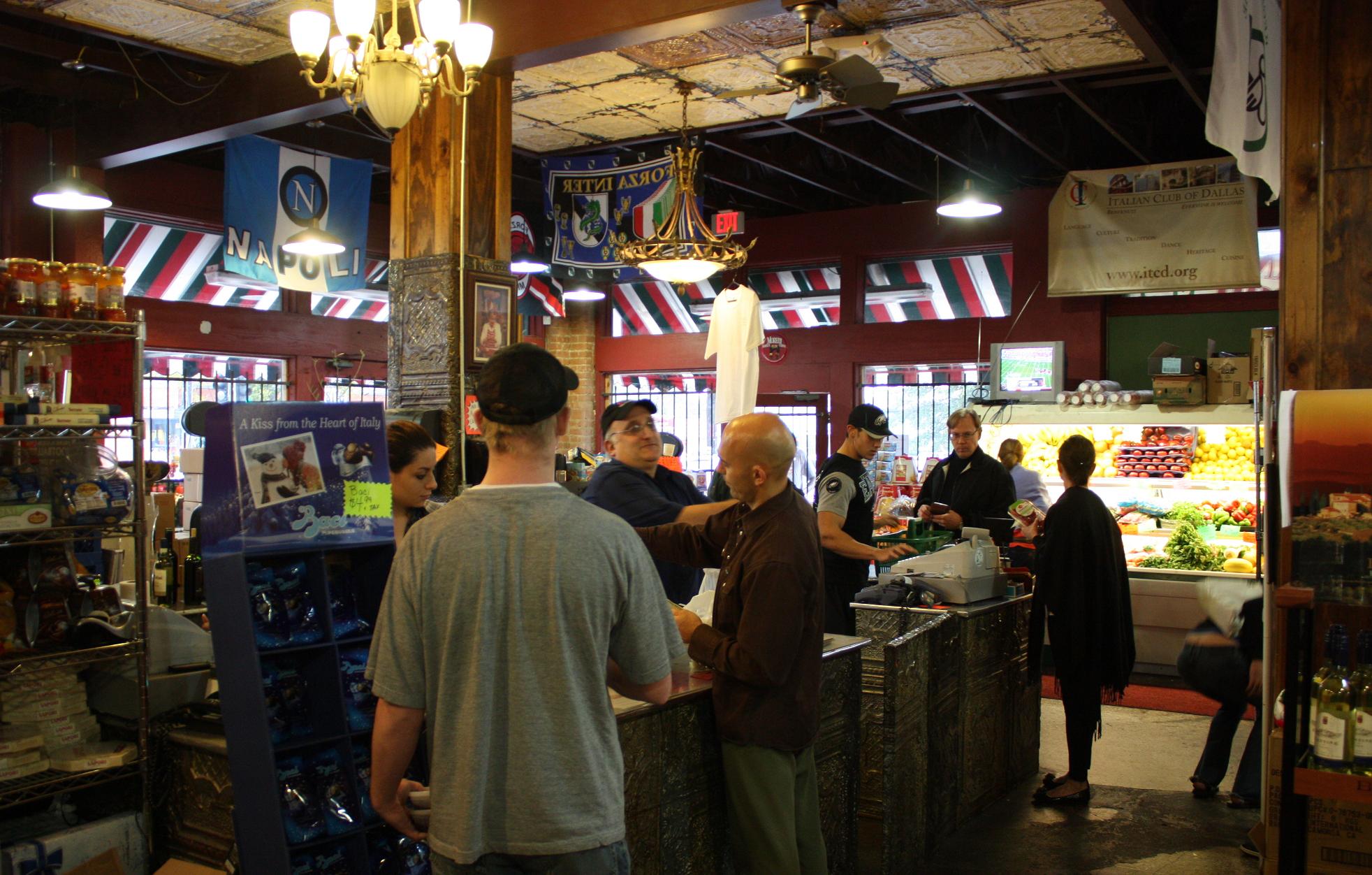
Fire damaged ceiling

A devastating fire in 2004 left it operating out of temporary location for more than a year, but it was back better than ever in time for the 2005 holiday season.  A few fire-damaged, embossed tin ceiling tiles and roof support timbers are part of the new structure and a constant visible reminder of the close call.

Unlike its cousins in the Northeast and Midwest, which tend to specialize in Italian foods from the regions of Italy most prominently represented in each of their cities, Jimmy’s draws on traditions from the entire spectrum of the Italian-American experience and continues to renew them with current offerings from the old country.

Too many choices!

Here exotic and colorfully packaged products, Italian soccer club flags, tantalizing aromas, and the music of Italy and Italian-American artists overwhelm the senses.

Gourmet sandwiches

No Italian grocery would be complete without a specialty meat market.  At Jimmy’s it’s also the heart and soul of a deli business that draws devotees of made-to-order sandwiches with names like Italian Beef, Caprese/Prosciutto/Calabrese Panini, and Italian Stallion.  (Jimmy’s also makes killer Muffaletta and Cuban  sandwiches.)  You can eat them at tables right there in the store for a genuine deli experience or – weather permitting – under umbrellas at sidewalk tables.

Thirsts quenched!

Pick your beverage from a 50-foot long bank of coolers that includes alcoholic and non-alcoholic imports as well as old time soda pop favorites.

On weekdays, downtown workers make the short drive for an out-of-the-ordinary lunch.  On Saturdays the store is packed with Italian Americans and others from the suburbs seeking their Italian fix, and the people-watching is almost as entertaining as the experience of the store itself.

Jimmy’s stocks only Italian wines and the selection is so large that it’s easy to find available-nowhere-else varieties.  There are free wine tastings every Saturday afternoon and monthly paid wine tastings.

Only Italian wines


So if you’re looking for an authentic taste of Italy in Dallas, Jimmy’s is a must-do.

Mangia… e buono appetito.
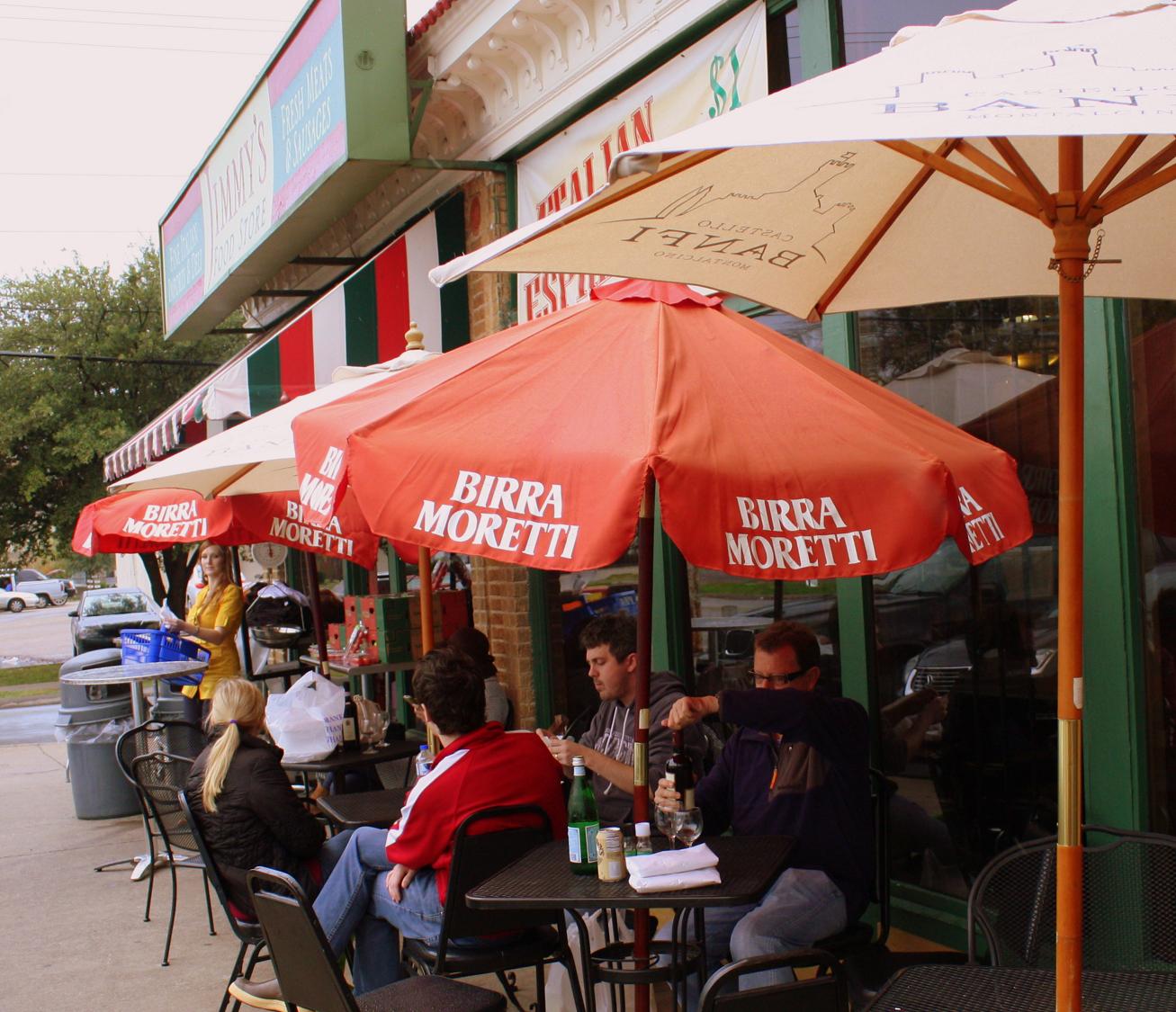
Sidewalk dining

 

Industrial recycling of everything from grocery stores’ delivery cartons to manufacturers’ scrap metal is big business in the U.S., but household-level recycling is still for many Americans too often only a matter of local trash collection mandates or choosing “paper-or-plastic.”

In contrast, Mexico’s recycling emphasis seems less about sorting weekly household trash and more about repairing and re-using what many Americans would label “junk”.  In fact, Mexicans seem to have more of a penchant for squeezing more utility out of just about every imaginable piece of equipment than a Cuban auto repairman nursing a 50’s-vintage Chevy into roadworthiness on the streets of Havana.

Vintage VW Mexican beetle

In Mexico it’s more likely to be the exception than the rule that “it’s cheaper to replace it than to repair it.”

While it may be tempting to attribute the differing approaches to divergent cultural perspectives and values, the truth is that both reflect a shared reality:  Ecologically sustainable practices at the household-level are far more widely embraced when they pay out immediately, meaningfully, and personally.

The paradox is that despite America’s ample public resources for clean-up and ongoing waste management – not to mention a standard of living adequate to pay the higher costs of environmentally friendly products – America lags its neighbor to the south in one important way when it comes to sustainability: Replacement is frequently more cost-effective than repair because mass production – increasingly robotic and/or offshore – drives down the cost of parts and the price of American labor often renders repairs cost-prohibitive. ‘Green’ in America is still too often about advertised perception rather than reality.

While Mexico’s globally competitive wages may be about to propel it into the ranks of the world’s top 5 auto manufacturers, the purchase of many common consumer goods remains well beyond the reach of most families.  The result is that few Mexican villages – including those of the Chapala Lakeside – lack an ample complement of repair shops in which products are continually patched for the owners’ re-use or resale by electricians, carpenters, metalworkers, leatherworkers or painters.  Owners benefit from extended lives of repaired products and an untold number of families are supported by the craftsman who have dodged the rote repetitiveness of the assembly line and instead embrace the trade guild tradition of apprenticeship to master craftsman.  Mexico’s ubiquitous repair industry has created hundreds of thousands of entrepreneurs and sustainable careers.

Organic & renewable!

If this sounds familiar it’s because it’s a model that began its American demise only after the Second World War.

There are many ways to reduce humans’ impact on the environment.  American attention has been focused on the appropriate disposal of toxic or non-degradable products, and the recycling of commodity waste into the manufacture of new goods.  In the meantime planned obsolescence and conspicuous consumption continue to lace American landfills with discarded consumer goods rendered inoperative by a single malfunctioning component.  And plastic trash is reaching epidemic proportions in underdeveloped nations which lack the resources to manage it, to produce more ecologically friendly alternatives, or to incent more responsible consumer behavior.